| Technique | What it changes | Primary goal |
|---|---|---|
| Domain randomization | Simulation parameters: friction, mass, lighting, sensor noise, delays | Force the policy to generalize across a wide parameter range instead of overfitting to one exact simulated physics |
| System identification | The simulator itself, calibrated to match measured real-world dynamics | Reduce the reality gap by making the simulation more accurate rather than more varied |
| Sim-to-real fine-tuning | The policy’s weights, using a smaller amount of real-world data after sim pretraining | Correct residual errors that randomization and calibration alone did not fix |
| Residual dynamics learning | A learned correction term added on top of the simulator’s physics predictions | Model the specific gap between simulated and real dynamics directly |
What the Reality Gap Actually Is
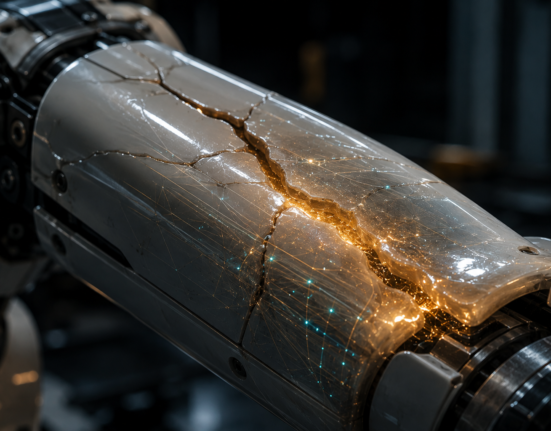
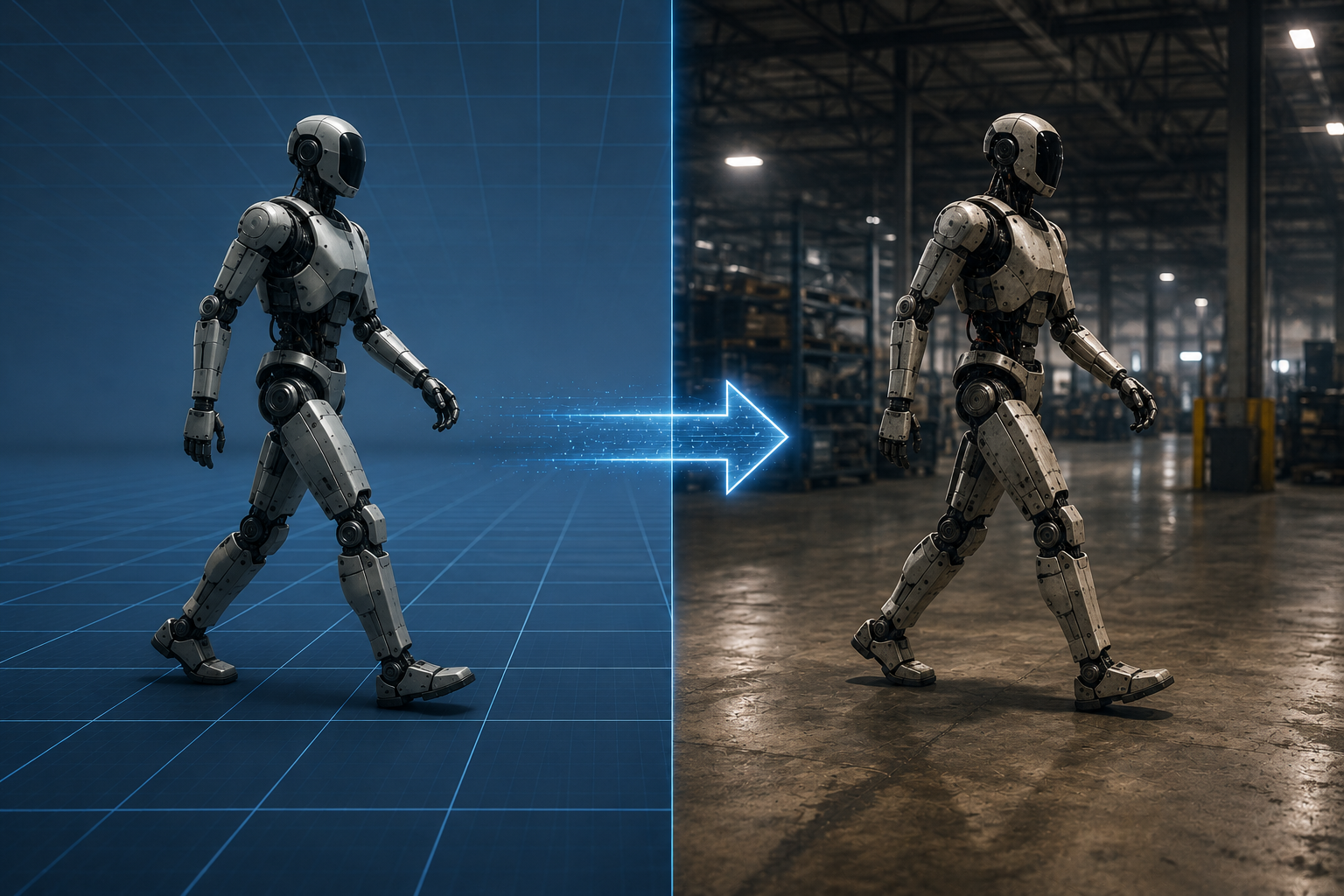
The reality gap is the accumulated difference between how a robot behaves in simulation and how the identical policy behaves on physical hardware, caused by every place a simulator’s model of the world diverges from the real one: friction coefficients that are approximated rather than measured, actuator dynamics that respond slightly differently than the real motors and gearboxes, sensor noise that is either absent or modeled with the wrong statistics, and latency in the real control loop that a simulator often ignores entirely. None of these individual gaps is necessarily large, but they compound, and a policy trained to exploit the exact, slightly-wrong physics of a simulator can fail in ways that look bizarre on real hardware, planting a foot at an angle that only works if friction is a hair higher than it actually is, for instance.
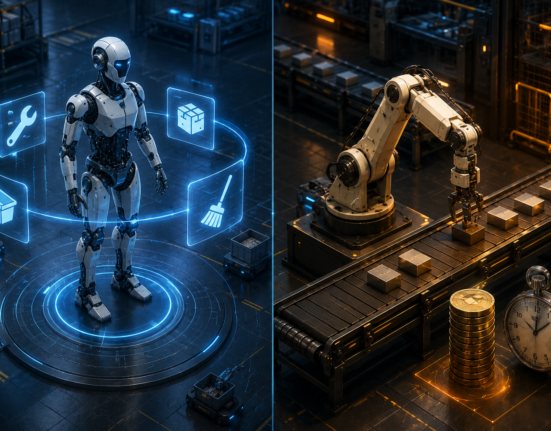
This matters because simulation is otherwise an extremely attractive place to train a robot policy: it is fast, parallelizable across thousands of instances, free of the wear, safety risk, and physical reset time that real robot training demands, and it makes reinforcement learning practical at a scale that would be prohibitively slow and expensive on physical hardware alone. The entire value of simulation for robot learning depends on being able to reliably transfer what was learned there back onto the real robot; sim-to-real transfer techniques exist specifically to make that transfer trustworthy rather than a matter of luck.
It is worth distinguishing this from the broader practice of digital twins in robotics, which is about building and maintaining an accurate virtual replica of a robot and its environment for testing and validation purposes generally, a topic linked near the end of this article for readers who want that infrastructure-level view. This piece focuses specifically on the learning-transfer techniques, how a policy trained in any simulator is made to actually work on real hardware, rather than on the simulation infrastructure itself.
Domain Randomization: Training for a Range, Not a Point
Domain randomization is the most widely used sim-to-real technique, and its core idea is almost the opposite of trying to make the simulator accurate. Instead of trying to match reality exactly, domain randomization deliberately varies simulation parameters, friction, object mass, lighting, camera position, sensor noise, and action delay, across a wide range during training, so the policy never gets to overfit to one specific, precisely-tuned physical model. The bet is that if a policy performs well across thousands of randomized simulated variants, the real world, whatever its exact and unknown parameters turn out to be, will simply look like one more sample from that same distribution the policy already learned to handle.
This technique has powered some of the more widely cited sim-to-real results in robotics, including dexterous in-hand manipulation policies and high-speed autonomous drone racing controllers that trained almost entirely in randomized simulation before transferring to physical hardware. The tradeoff is that overly aggressive randomization can make training harder and slower to converge, or produce an overly conservative policy that sacrifices peak performance in exchange for robustness across the full randomized range; tuning how much to randomize, and along which parameters, is itself a significant part of the practical engineering work.
Domain randomization as distribution coverage
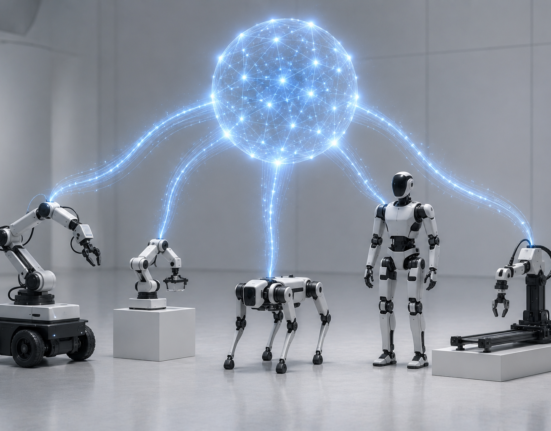
Rather than training on one precise simulated physics setting and hoping it matches reality, domain randomization trains across a deliberately wide spread of friction, mass, and sensor-noise values, so that whatever the real robot’s true, unmeasured parameters turn out to be, they fall inside the range the policy already learned to handle.
System Identification: Making the Simulator Match Reality
System identification takes the opposite approach: rather than training across a wide randomized range, it measures the real robot’s actual physical parameters, motor response curves, joint friction, link masses, sensor latency, and calibrates the simulator to match those measured values as closely as possible. This narrows the reality gap by making the simulation itself more accurate, rather than making the policy more tolerant of inaccuracy. In practice, the two techniques are often combined: system identification narrows the plausible range of real-world parameters, and domain randomization is then applied within that narrower, better-calibrated range rather than an arbitrarily wide one, which tends to produce policies that are both more sample-efficient to train and more reliable at deployment than either technique alone.
| Approach | How it reduces the reality gap | Main limitation |
|---|---|---|
| Domain randomization alone | Makes the policy tolerant of a wide range of possible physical parameters | Can produce overly conservative behavior or slower training convergence |
| System identification alone | Makes the simulator’s model more accurate to the specific real robot | Still leaves unmodeled effects; requires careful, repeated physical measurement |
| Combined approach | Narrows randomization range using measured real parameters | Requires both simulation and hardware-measurement expertise on the same team |
Sim-to-Real Fine-Tuning
Even a well-randomized, well-calibrated simulation-trained policy usually benefits from a final fine-tuning phase using a comparatively small amount of real-world data, collected either through direct policy deployment with careful supervision or through targeted real-world data collection focused on the specific behaviors where the sim-trained policy shows weakness. This stage is deliberately data-light compared to training from scratch on real hardware; the simulation phase has already done the heavy lifting of learning the basic task structure, and fine-tuning exists only to correct the residual, specifically real-world errors that simulation could not have taught. Related residual-dynamics-learning approaches take this further, training a separate, typically much smaller model whose only job is to predict the difference between what the simulator predicts and what actually happens on the real robot, then adding that learned correction term on top of the simulator’s output during subsequent training rounds.
Common mistake
Teams sometimes treat “we used domain randomization” as a checkbox that guarantees sim-to-real success, without validating which parameters were actually randomized or over what range. Randomizing visual textures while leaving friction and actuator delay fixed at one value, for instance, can produce a policy that generalizes across lighting but still fails on real friction it never saw during training. Reality-gap failures need to be diagnosed parameter by parameter, not treated as a single solved category once any randomization has been applied.
What worked
Combining system identification to narrow the plausible physical parameter range with domain randomization applied within that narrower range, followed by a small real-world fine-tuning phase targeted at observed failure modes, has consistently outperformed any single technique used alone across published locomotion and manipulation transfer results. The combination lets each technique compensate for the other’s weak point.
Remaining Failure Modes When the Gap Is Not Fully Closed
Even with these techniques applied carefully, published research on the reality gap documents recurring failure patterns when transfer is incomplete. Policies can exhibit “simulation-exploiting” behaviors, motions that are technically optimal under the simulator’s exact physics but fragile or actively unsafe under real dynamics, since the training process will happily discover and rely on any quirk of the simulator that produces reward. Sensor-domain gaps are a separate, common failure category: a policy trained on clean simulated camera images or noise-free simulated joint encoders can fail specifically because real sensors carry noise statistics, dropout patterns, or latency the simulation never modeled, even when the physical dynamics themselves transferred acceptably. Context-aware policy research addresses this by training the policy to explicitly condition on estimated environment parameters at runtime, letting it adapt its behavior in real time rather than assuming one fixed, average-case physical setting.
Frequently Overlooked Details in Sim-to-Real Practice
- Not all parameters need equal randomizationActuator delay and friction typically matter more for transfer success than visual texture randomization for most manipulation and locomotion tasks.
- Sensor noise modeling is frequently skippedTeams often randomize physical dynamics thoroughly but train on noise-free simulated sensor readings, creating a hidden reality gap in perception rather than dynamics.
- Over-randomization has a real costExcessively wide parameter ranges can slow training convergence and produce unnecessarily conservative policies that underperform their real-world ceiling.
- Contact-rich tasks transfer worse than locomotionManipulation involving frequent, changing contact points is harder for physics engines to model accurately, making sim-to-real transfer less reliable for hands than for legs.
- Fine-tuning data should target known weaknessesCollecting real-world fine-tuning data indiscriminately is less effective than collecting it specifically around behaviors where the sim-trained policy already shows measurable failure.
- The reality gap is not a one-time hurdleHardware wear, actuator aging, and environment changes reopen a version of the reality gap over a robot’s operational lifetime, not just at initial deployment.
Glossary
- Reality gap
- The accumulated difference between a robot’s behavior in simulation and its behavior on physical hardware, caused by imperfect modeling of friction, sensor noise, latency, and other physical properties.
- Domain randomization
- A training technique that varies simulation parameters, such as friction, mass, and lighting, across a wide range so a policy generalizes rather than overfitting to one exact simulated physics setting.
- System identification
- The process of measuring a real robot’s actual physical parameters and calibrating a simulator to match them, narrowing the reality gap by improving simulation accuracy.
- Residual dynamics learning
- A technique that trains a separate model to predict the specific difference between simulated and real robot behavior, then adds that correction on top of the simulator’s predictions.
- Context-aware policy
- A control policy trained to explicitly condition its behavior on estimated environment or physical parameters at runtime, allowing it to adapt rather than assume one fixed physical setting.
Key Takeaways
- The reality gap is the accumulated mismatch between simulated and real robot dynamics, caused by imperfect friction, sensor, and latency modeling.
- Domain randomization trains a policy across a wide range of simulated parameters so real-world conditions fall inside a distribution the policy already handles.
- System identification narrows the reality gap by calibrating the simulator itself to measured real-world physical parameters.
- Combining system identification with domain randomization and a targeted real-world fine-tuning phase outperforms any single technique used alone.
- Residual dynamics learning trains a correction model specifically to predict the gap between simulated and real behavior.
- Contact-rich manipulation transfers less reliably than locomotion, because physics engines model rigid-body contact more accurately than deformable, multi-point finger contact.
- The reality gap reopens over a robot’s operational lifetime as hardware wears and environments change, so sim-to-real is an ongoing practice, not a one-time deployment step.
FAQs
What is sim-to-real transfer in robotics?
It is the set of techniques used to make a robot control policy that was trained in simulation perform reliably on physical hardware, addressing the reality gap caused by differences between simulated and real-world physics, sensors, and latency.
What is domain randomization?
Domain randomization is a training technique that varies simulation parameters, such as friction, object mass, lighting, and sensor noise, across a wide range during training, so the resulting policy generalizes across many possible physical settings rather than overfitting to one exact simulated physics model.
How is system identification different from domain randomization?
System identification measures a real robot’s actual physical parameters and calibrates the simulator to match them, improving simulation accuracy. Domain randomization instead varies parameters widely during training to make the policy tolerant of a range of possible values. They are often used together.
Why doesn’t a perfect simulator eliminate the reality gap?
No simulator perfectly captures every real-world factor, including sensor noise statistics, actuator wear, unmodeled friction variation, and control-loop latency, so some residual gap between simulated and real behavior typically remains even with careful calibration, which is why fine-tuning and randomization are still used alongside accurate simulation.
What is residual dynamics learning?
It is a technique where a separate, usually smaller model is trained specifically to predict the difference between what a simulator predicts and what actually happens on real hardware, and that learned correction is added on top of the simulator’s output during further policy training.
Why does sim-to-real transfer work less reliably for robotic hands than for legs?
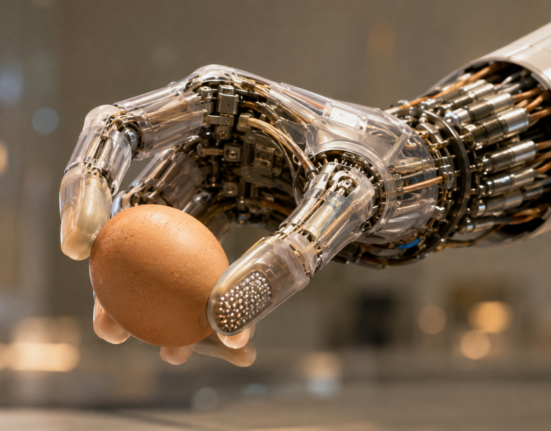
Locomotion involves relatively well-modeled rigid-body contact events, like a foot touching the ground, while in-hand manipulation involves frequent, changing, multi-point contact with friction and deformable-tissue effects that physics engines model far less accurately, making the reality gap larger for manipulation tasks.
Does sim-to-real transfer only matter at initial robot deployment?
No. Hardware wear, actuator aging, and changing real-world environments reopen a version of the reality gap over a robot’s operational lifetime, so sim-to-real techniques, including periodic re-calibration and fine-tuning, remain relevant on an ongoing basis, not just at first deployment.
What are the most common sim-to-real failure modes?
Common failures include policies exploiting quirks of the simulator’s exact physics that do not hold on real hardware, and sensor-domain gaps where a policy trained on clean simulated camera or encoder data fails because real sensors carry noise, dropout, or latency the simulation never modeled.
For the broader simulation and testing infrastructure this transfer process depends on, see digital twins for robotics. The demonstration data that often supplements simulation training is covered in teleoperation data collection. Why contact-rich manipulation is the hardest transfer target is discussed in dexterous manipulation. The policy architectures that these transfer techniques are applied to are examined in vision-language-action models. For the physical constraints that further complicate deployment after transfer, see battery and actuator limits in bipedal robots.
- Annual Reviews, “The Reality Gap in Robotics: Challenges, Solutions, and Best Practices”
- arXiv, “The Reality Gap in Robotics: Challenges, Solutions, and Best Practices”
- arXiv, “Can Context Bridge the Reality Gap? Sim-to-Real Transfer of Context-Aware Policies”
- arXiv, “Domain Randomization for Robust, Affordable and Effective Closed-loop Control of Soft Robots”
- ScienceDirect, “Reinforcement Learning in Robotic Systems: A Review on Sim-to-Real Transfer”
- Labellerr, “How to Bridge the Reality Gap in Robotics Training”