October 18, 2026

Claire Mitchell

Avatar photo
Claire Mitchell holds two degrees from the University of Edinburgh: Digital Media and Software Engineering. Her skills got much better when she passed cybersecurity certification from Stanford University. Having spent more than nine years in the technology industry, Claire has become rather informed in software development, cybersecurity, and new technology trends. Beginning her career for a multinational financial company as a cybersecurity analyst, her focus was on protecting digital resources against evolving cyberattacks. Later Claire entered tech journalism and consulting, helping companies communicate their technological vision and market impact.Claire is well-known for her direct, concise approach that introduces to a sizable audience advanced cybersecurity concerns and technological innovations. She supports tech magazines and often sponsors webinars on data privacy and security best practices. Driven to let consumers stay safe in the digital sphere, Claire also mentors young people thinking about working in cybersecurity. Apart from technology, she is a classical pianist who enjoys touring Scotland's ancient castles and landscape.
    Cybersecurity

    SBOM Implementation: From Generation to Actual Vulnerability Response

    An SBOM is only useful once it drives action, so implementation means generating accurate component inventories at build time and wiring them into


    Read More
    Robotics in Agriculture

    Lunar Surface Robotics and ISRU Prototypes

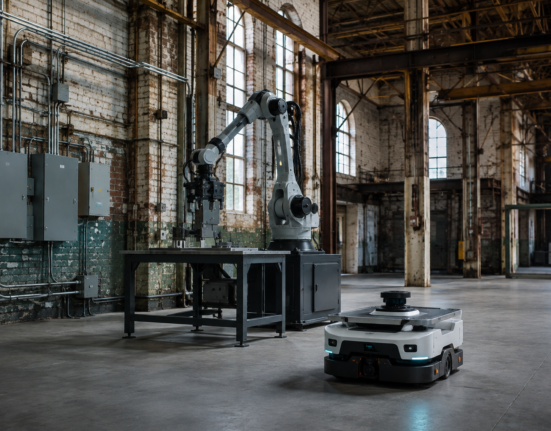
    Lunar surface robotics now includes rovers, excavators, and drilling systems purpose-built to feed In-Situ Resource Utilization prototypes that extract oxygen, water ice, and
    Read More
    Autonomous Logistics

    Retrofitting Legacy Factories for Robotics

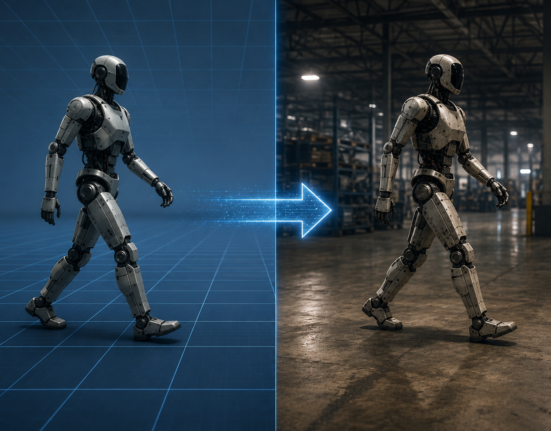
    Retrofitting a legacy factory for robotics is an infrastructure project before it is a robotics project. Floor flatness, power capacity, network reliability, and
    Read More
    Humanoid

    Sim-to-Real Transfer: Closing the Reality Gap in Robot Training

    Sim-to-real transfer is the set of machine-learning techniques, chiefly domain randomization, system identification, and post-transfer fine-tuning, used to make a policy trained entirely

    Read More
    Vibe Coding

    AI Coding Agents Compared: Autonomy, Context, and Real Output Quality

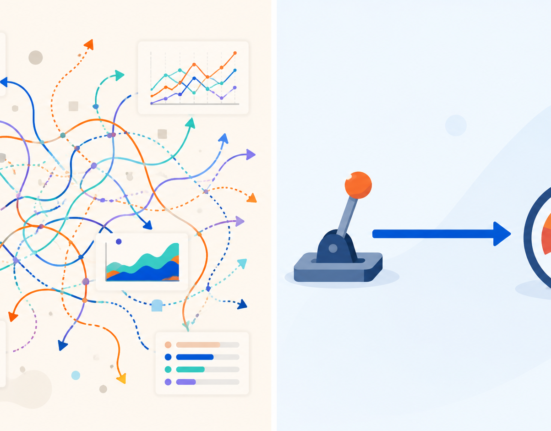
    AI coding agents now split into four autonomy tiers, and picking the wrong one costs more time than it saves. Inline autocomplete tools
    Read More
    Machine Learning

    Causal Inference for Product Decisions: Beyond Correlation

    Product teams routinely treat correlation dashboards as if they were causal proof, and it is costing them real growth. A/B testing is the

    Read More
    Generative AI AI

    Text-to-3D and Generative CAD: The State of Asset Creation

    Text-to-3D generation has moved from experimental novelty to a real part of production asset pipelines, with tools like Meshy, Tripo, Rodin, and CSM

    Read More
    AI Ethics

    AI Transparency Reporting: What to Disclose and to Whom

    An AI transparency report is a structured disclosure of what a model does, what data trained it, and how it performs, aimed at

    Read More
    AI Infrastructure

    Photonic Computing for AI: Status, Promise, and Physics Limits

    Photonic computing uses light instead of electricity to move and process data, and in 2026 the realistic near-term win isn’t an all-optical processor

    Read More
    Agentic AI

    Agent-to-Agent Protocols: The Emerging Standards for Machine Negotiation

    Agents talking to agents across organisational boundaries needs identity, authority and dispute resolution before it needs a message format. Why the unsolved problems

    Read More
    Scaling Inference

    Long-Context vs Retrieval: When a Million Tokens Beats a Vector Store

    Retrieval amortises an index across many queries; long context pays per query and skips the index. The crossover depends on corpus size, query

    Read More
    Micro-Robotics

    The Evolution of Micro-Robotics in Precision Medicine

    The marriage of robotics and healthcare has long been a staple of science fiction, but as of March 2026, this vision has transitioned

    Read More
    Automating Heavy Labor

    Robotics in the Construction Industry: Automating Heavy Labor

    The construction industry, long characterized by manual labor and traditional methods, is undergoing a seismic shift. As of March 2026, construction robotics has

    Read More
    Pediatric Exoskeletons

    Pediatric Exoskeletons: Transforming Child Rehab in the Real World

    Imagine a world where a child, once limited in their ability to stand or walk independently, can rise from a wheelchair and move

    Read More
    Leadership Role

    What is a Chief AI Evangelist? The New Tech Leadership Role

    As of March 2026, the corporate landscape has shifted from questioning “if” artificial intelligence should be used to “how” it can be scaled

    Read More