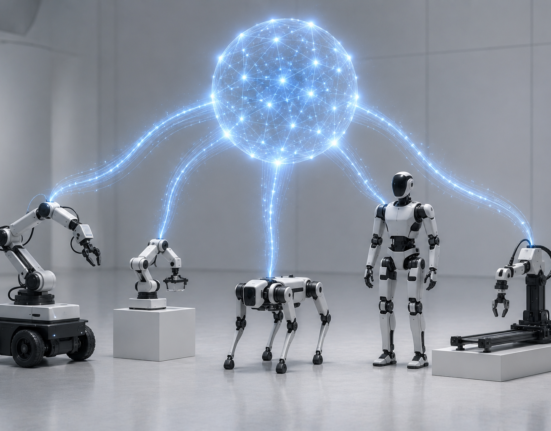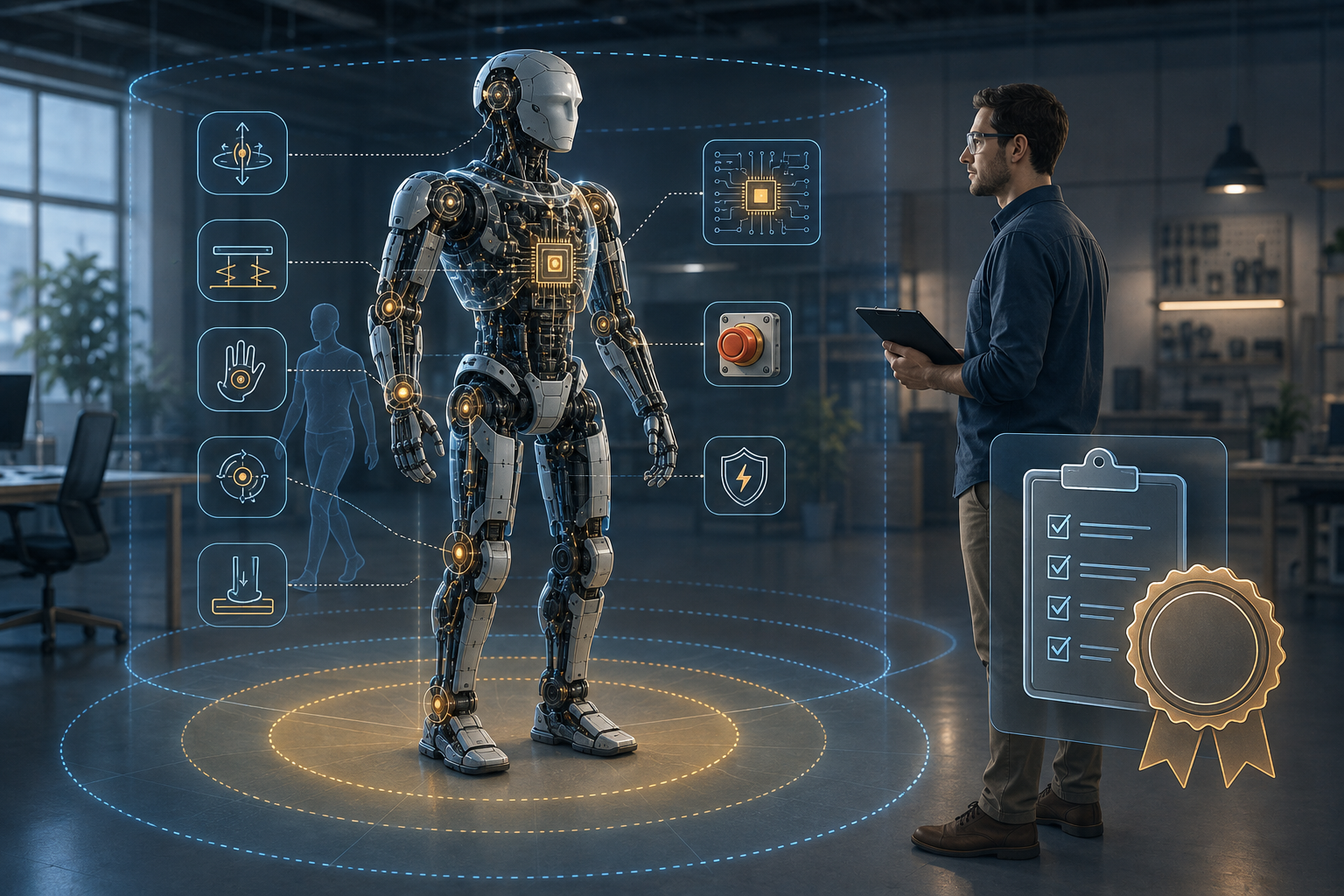
| Myth | Reality |
|---|---|
| A humanoid that passes ISO 10218 and ISO/TS 15066 is fully certified for safe operation as a walking machine. | Those standards govern force limits and separation distance for the arms and body of a collaborative robot; neither was written to assess what happens when a 150-plus pound bipedal machine loses balance and falls, which is the subject of the newer, still-maturing ISO 25785-1. |
| “Collaborative robot” certification means the same thing for a fixed arm and a walking humanoid. | A fixed arm cannot fall over; its worst-case failure mode is a controlled stop. A humanoid’s worst-case failure mode can include an uncontrolled collapse onto a nearby worker, a fundamentally different hazard category current force-and-separation standards do not size for. |
| OSHA and ISO already have humanoid-specific fall-hazard rules in force. | As of 2026, humanoid-specific fall-hazard and dynamic-stability standards are still being drafted; today’s compliance relies on adapting industrial and collaborative robot standards, general machinery risk assessment, and voluntary manufacturer testing protocols. |
Why Humanoid Safety Cannot Simply Borrow Cobot Rules
The existing body of collaborative robot safety standards, most notably ISO 10218 and ISO/TS 15066, was built for a specific hazard model: a robotic arm bolted to a fixed base, sharing a workspace with a human, where the primary risks are crushing, pinching, and impact force during intentional or accidental contact. That model assumes the robot is statically stable. If power is cut, the arm stops where it is. It does not fall down, and it does not move once motion ceases.
A bipedal humanoid violates that core assumption. It is dynamically stable, meaning it is only upright because a continuous control loop is actively balancing it against gravity, dozens or hundreds of times per second. Cut the power, hit an unexpected obstacle, or lose a sensor feed, and a humanoid does not simply stop; it can topple. This single architectural difference is why safety engineers increasingly argue that humanoid robots need a distinct standards track rather than a checkbox exercise against arm-era rules.
The Standards That Currently Apply
Understanding humanoid safety compliance in 2026 requires knowing exactly which standard covers which hazard, because no single document covers the whole machine.
| Standard | What It Governs | Coverage Gap for Humanoids |
|---|---|---|
| ISO 10218-1 | Safety requirements for the industrial robot itself: design, construction, and inherent safety of the manipulator | Written around fixed-base and mobile-platform arms; does not size for bipedal fall dynamics |
| ISO 10218-2 | Safety requirements for robot system integration, now absorbing former ISO/TS 15066 collaborative provisions | Addresses contact force thresholds but not loss-of-balance collapse scenarios |
| ISO/TS 15066 | Biomechanical force and pressure limits for power and force limiting (PFL) contact between robot and human | Assumes contact is a controlled arm motion, not the mass and momentum of a falling full-body machine |
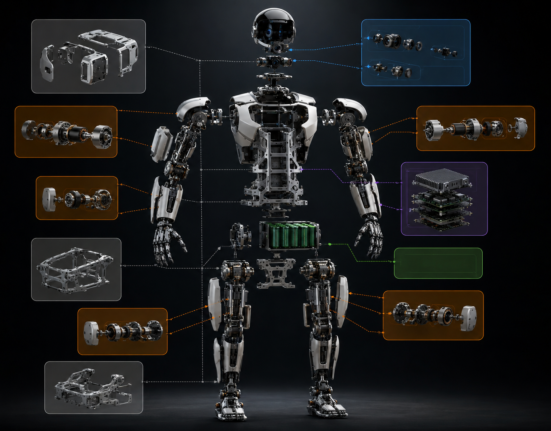
| IEC 61508 | Functional safety of electrical, electronic, and programmable electronic safety-related systems | Covers the safety-instrumented control logic but not the mechanical fall-recovery behavior itself |
| IEC 60204-1 | Electrical safety of machinery: supply, wiring, emergency stop circuits, protective bonding | Assumes a largely stationary electrical installation, not a battery-powered mobile biped |
| ISO 25785-1 (emerging) | Fall hazard assessment and stability behavior specifically for dynamically stable, power-loss-vulnerable robots | Still being finalized; not yet a mature, widely enforced requirement as of 2026 |
The practical upshot is that a humanoid manufacturer today is stitching together compliance across at least four or five separate standards, none of which was written with a walking, human-scale machine as the primary hazard model in mind.
ISO 10218 and the 2025 to 2026 Revision
The most significant recent development is the consolidation of ISO/TS 15066’s collaborative provisions directly into a revised ISO 10218-2, folding biomechanical injury thresholds, speed and separation monitoring, power and force limiting parameters, and hand-guiding requirements into a single integration-level document. This was a meaningful simplification for arm-based cobots. For humanoids, it still leaves the fall-hazard question almost entirely outside the document’s scope, because ISO 10218’s underlying hazard model continues to assume the robot cannot become an uncontrolled falling mass.
IEC’s Role: Electrical and Functional Safety, Not Balance
IEC 61508 and IEC 60204-1 are frequently cited in humanoid compliance documentation, and for good reason: they govern the safety-instrumented systems, emergency stop circuitry, and electrical protection that any powered robot needs regardless of its shape. But these standards were written for electrical and electronic systems in general industrial contexts. They tell you whether the emergency stop circuit is reliable enough to trust; they do not tell you whether a 160-pound biped that loses that circuit’s signal mid-stride will fall safely away from a nearby worker or directly onto them.
The Bipedal Gap: Fall Risk, Balance Failure, and Shared Space
Three hazard categories are specific to walking, human-scale robots and are only weakly covered by the current standards stack.
| Hazard Category | Why Arm-Era Standards Miss It | Current State of Coverage |
|---|---|---|
| Uncontrolled fall or collapse | Force-limiting standards size for a controlled arm motion contacting a person, not the full mass and momentum of a toppling machine | Addressed only by emerging ISO 25785-1 provisions, not yet a mandatory global requirement |
| Dynamic balance failure mid-task | Static-base assumption means no existing standard defines an acceptable recovery-time window before a stumble becomes a fall | Largely left to manufacturer-specific engineering practice and voluntary testing |
| Walking through unstructured shared human space | ISO/TS 15066’s separation-distance model assumes a fixed danger zone around a stationary base, not a robot moving unpredictably through a room | Partially addressed by mobile-platform standards like ISO 3691-4, originally written for driverless industrial trucks, not bipeds |
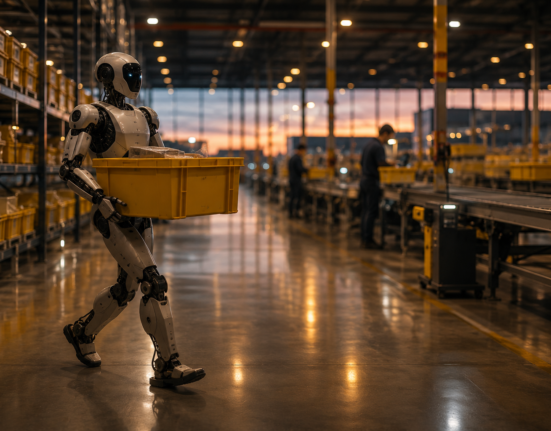
This is the central compliance challenge for 2026: a humanoid deployed in a warehouse aisle or hospital corridor is simultaneously a collaborative manipulator, a mobile platform, and a dynamically balanced structure that can fail catastrophically in a way none of its individual component standards were built to anticipate together.
Where the Standards Stack Leaves a Gap
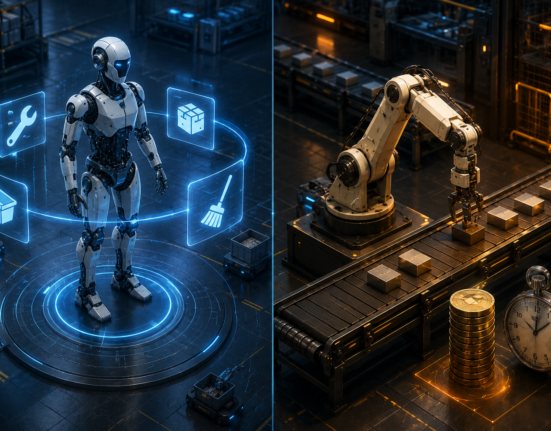
A layered diagram shows three overlapping standard domains, arm-force limits, electrical and functional safety, and mobile-platform separation distance, each shown as a solid ring around a stationary or wheeled robot icon. A fourth ring, labeled as the dynamic-balance and fall-hazard domain, is shown as a dashed, incomplete ring around a bipedal robot icon, visually representing the still-forming nature of fall-specific standards coverage.
How Manufacturers Are Filling the Gap Today
In the absence of a finished, universally adopted fall-hazard standard, humanoid manufacturers in 2026 are relying on a combination of general machinery risk assessment principles, adapted mobile-robot separation rules, and internally developed stability-testing protocols. This typically includes engineering redundant balance sensors, defining a maximum safe fall trajectory that steers a collapsing robot away from any detected human, and building “graceful degradation” behaviors where a robot that detects an imminent balance failure attempts to crouch, sit, or otherwise reduce its effective drop height and momentum rather than falling from full standing height.
Reading a Humanoid’s Safety Documentation
Facility safety officers evaluating a humanoid purchase in 2026 should look specifically for documentation covering: the force and pressure thresholds it meets under ISO/TS 15066’s biomechanical tables, the functional safety integrity level of its balance and emergency-stop control loops under IEC 61508, and, critically, any internal fall-hazard testing data the manufacturer can provide, since no single external certification yet fully covers that risk category.
Practical Compliance Steps for 2026
- Map every hazard to its governing standard individually. Do not assume a single “cobot certified” label covers force limits, electrical safety, mobile separation, and fall risk simultaneously.
- Request manufacturer fall-hazard test data explicitly. Since ISO 25785-1 is not yet a mature, universally enforced requirement, ask directly what stability and collapse-mitigation testing the manufacturer has performed.
- Treat shared walking space as its own risk assessment. Apply mobile-platform separation principles from standards like ISO 3691-4 in addition to, not instead of, arm-level force limiting rules.
- Re-validate after any floor or task change. A humanoid’s balance risk profile changes with floor surface, lighting, clutter, and task load in ways a fixed arm’s risk profile never does.
- Build a “loss of balance” incident response plan. Facilities should have a defined protocol for what happens when a humanoid stumbles or falls, distinct from the protocol for a cobot arm’s emergency stop.
Common mistake
Assuming that a robot certified against ISO 10218 and ISO/TS 15066 has been evaluated for the specific hazard of bipedal collapse. Those standards were designed around stationary or wheeled collaborative robots and do not size for the mass and momentum of a walking humanoid losing balance, a gap only now being addressed by emerging standards like ISO 25785-1.
What worked
Facilities that required manufacturers to supply explicit stability and fall-recovery test data, separate from standard force-limiting compliance paperwork, caught balance-related design weaknesses before deployment rather than after an incident. Treating fall risk as its own line item in the risk assessment, rather than assuming it was covered under general cobot certification, closed the documentation gap.
Frequently Overlooked Elements of Humanoid Safety Compliance
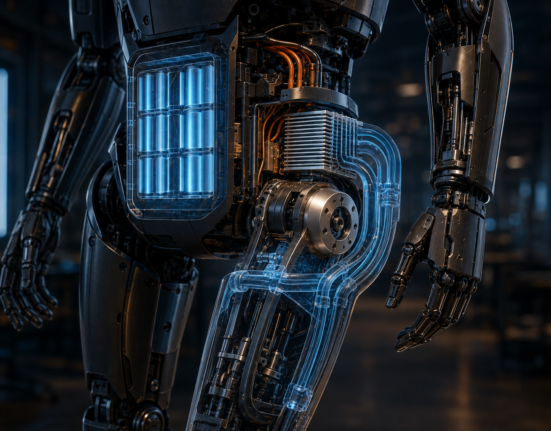
- Battery thermal runaway during a fallA humanoid’s high-density battery pack is a structural part of its torso; standards addressing mechanical fall risk rarely also address battery integrity if the pack itself is struck or crushed during a collapse.
- Recovery behavior after a stumbleFew current standards define what a robot should do in the seconds after detecting instability, whether it should freeze, crouch, or attempt a stepping recovery, leaving this largely to manufacturer discretion.
- Floor surface variabilityForce and separation standards do not account for how a wet, cluttered, or uneven floor changes a bipedal robot’s fall probability in ways that never affect a wheeled or fixed-base machine.
- Cybersecurity of the balance control loopIf a bad actor can interfere with the sensors or control signals that keep a humanoid upright, that is a safety failure with no direct precedent in arm-era standards, which assumed a much narrower attack surface.
- Multi-robot fall propagationIn a facility deploying several humanoids close together, a fall by one unit can create a secondary hazard for nearby robots and workers, a scenario current single-robot standards do not model.
Glossary
- Statically stable
- A machine that remains upright without active control when power is removed, such as a fixed-base robotic arm.
- Dynamically stable
- A machine, such as a bipedal humanoid, that stays upright only through continuous, active balance control and can fall if that control is interrupted.
- Power and Force Limiting (PFL)
- A collaborative robot operating mode, defined under ISO/TS 15066, in which contact with a human is permitted but the force and pressure applied are limited to biomechanically safe thresholds.
- Fall-hazard assessment
- An emerging category of safety evaluation, addressed by developing standards such as ISO 25785-1, that specifically analyzes the risk of a dynamically stable robot collapsing and the resulting injury potential.
- Functional safety integrity level
- A measure, defined under IEC 61508, of how reliably a safety-related control system, such as a balance or emergency-stop loop, will perform its intended function under fault conditions.
Key Takeaways
- ISO 10218 and ISO/TS 15066 remain the foundational standards for collaborative robot force and separation limits but were designed around statically stable machines.
- Bipedal humanoids are dynamically stable, meaning they can fall if power, sensing, or control is interrupted, a hazard category arm-era standards do not size for.
- IEC 61508 and IEC 60204-1 govern electrical and functional safety but stop short of assessing mechanical fall-recovery behavior.
- ISO 25785-1 is the emerging standard specifically addressing fall hazards and dynamic stability, but it is not yet a mature, universally enforced requirement as of 2026.
- Facilities should request explicit fall-hazard and stability test data from manufacturers rather than assuming general cobot certification covers this risk.
- Shared walking space introduces separation and route-planning hazards that mobile-platform standards like ISO 3691-4 only partially address for bipedal machines.
- A humanoid’s risk profile changes with floor condition, clutter, and task load in ways that never affect a fixed-base collaborative arm.
FAQs
Does ISO 10218 cover bipedal humanoid robots specifically?
Not fully. ISO 10218 governs industrial robot design and system integration, including force limits absorbed from ISO/TS 15066, but its underlying hazard model assumes a statically stable machine and does not size for the mass and momentum of a walking humanoid losing balance and falling.
What does ISO/TS 15066 actually limit?
ISO/TS 15066 sets biomechanical force and pressure thresholds for different parts of the human body, defining how much contact force a collaborative robot may apply during power and force limiting operation, based on controlled arm-contact scenarios rather than full-body collapse.
Is there a standard specifically for humanoid fall risk?
ISO 25785-1 is the emerging standard addressing fall-hazard assessment and stability behavior for dynamically stable robots, but as of 2026 it is still being finalized and is not yet a mature, universally enforced requirement across the industry.
What role do IEC standards play in humanoid safety?
IEC 61508 governs the functional safety and reliability of electrical and electronic safety-related control systems, such as balance and emergency-stop loops, while IEC 60204-1 governs electrical supply, wiring, and protective bonding; neither addresses mechanical fall-recovery behavior directly.
Can a facility rely on general cobot certification alone for a humanoid?
No, general cobot certification under ISO 10218 and ISO/TS 15066 addresses contact force and separation distance but does not evaluate the bipedal-specific hazard of an uncontrolled collapse, so facilities should request additional fall-hazard and stability documentation separately.
How does floor condition affect humanoid safety compliance?
Wet, cluttered, or uneven floors materially increase a bipedal robot’s fall probability in ways that never affect wheeled or fixed-base machines, meaning risk assessments for humanoids must account for floor variability as a distinct hazard input.
Do mobile robot standards like ISO 3691-4 apply to humanoids?
Partially. ISO 3691-4 addresses safety requirements for driverless industrial trucks and can inform separation-distance thinking for a walking humanoid moving through shared space, but it was not written with bipedal balance dynamics in mind.
What should a safety officer ask a humanoid manufacturer before deployment?
Request explicit documentation on force and pressure compliance under ISO/TS 15066, functional safety integrity levels under IEC 61508, and internal fall-hazard and stability test results, since no single current certification comprehensively covers all three domains together.
References
- RoboticsBiz, “ISO Safety Standards for Humanoid Robots: What Manufacturers Need to Know in 2026”
- The Robot Report, “ISO 10218 Industrial Robot Safety Standard Receives Major Overhaul”
- Humanoid Liability, “ISO 25785-1: Humanoid Robot Safety Standards and Liability Implications”
- evsint, “Industrial Robot Safety Standards: ISO 10218, ISO/TS 15066 and CE Marking (2026)”
- Renesas, “IEC 61508 Functional Safety for Robotics”
- PMPA, “IEC 60204-1: Safety of Electrical Equipment”
For the broader cobot safety framework this piece builds on, see our overview of human-machine collaboration safety standards for 2026. On the labor and deployment side, see the workforce projections shaping humanoid adoption through 2035. For how balance control actually works at the engineering level, see our deep dive on whole-body control for balance and contact-rich tasks. On the hardware side of fall risk, see our analysis of battery and actuator limits in bipedal robots. For what happens after a stumble damages a joint, see our piece on self-repairing robot systems, and for how fleets share safety-relevant learning across units, see robot fleet learning.