| Factor | General-Purpose Humanoid | Purpose-Built Machine |
|---|---|---|
| Typical unit cost (2026) | $30,000 to $250,000 | $8,000 to $80,000 |
| Task breadth | Retaskable across dozens of job types via a software or skill update | Fixed to one task family for its entire service life |
| Per-task throughput | Moderate, generalized cycle times | High, cycle times tuned specifically for the one job |
| Utilization needed to break even | Lower, because capital is spread across many jobs | Higher, because capital must be recovered from a single job |
| Retooling cost when the job changes | Low, mostly a software or skill-library update | High, often a full hardware swap or line redesign |
| Best fit | Facilities with variable, seasonal, or evolving task mix | Facilities with one stable, high-volume task |
Two Machines, Two Financial Models
Every automation purchase is, underneath the engineering, a financial bet. A company is deciding whether to spend capital now in exchange for lower labor cost later, and how much risk it is willing to accept that the task it automates today still exists in three years. General-purpose humanoid robots and purpose-built machines represent two opposite answers to that bet, and conflating them leads to bad capital-allocation decisions.
A purpose-built machine, whether a palletizing arm, a wire-harness inserter, or a dedicated case-packer, is engineered around a narrow, well-defined motion. Its economics are simple: spend less per unit, get more output per hour on that one task, and accept that if the task disappears, the asset is close to worthless. A general-purpose humanoid inverts that logic. It costs more per unit and moves more slowly through any single task than a specialized machine tuned for that exact job, but it can be re-skilled through software and redeployed to an entirely different task without buying new hardware. The financial question is not “which robot is better” but “which amortization curve fits our task mix.”
What “General-Purpose” Actually Costs to Own
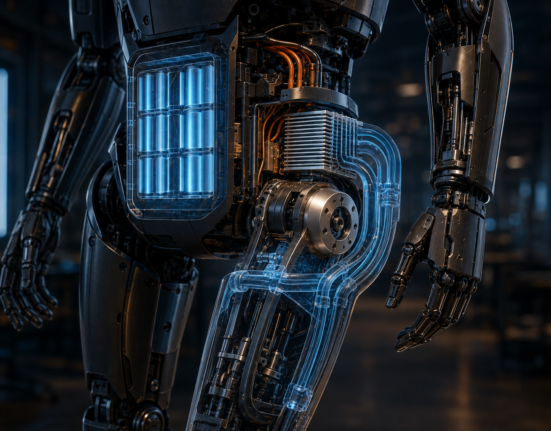
Total cost of ownership for a general-purpose humanoid has four components that matter far more than the sticker price: the capital expenditure, the useful working life in hours, the annual operating expense, and the number of distinct tasks the unit is actually asked to perform. Industry cost trackers in 2026 put industrial-grade humanoid purchase prices anywhere from roughly $30,000 for base research-grade bipeds up to $250,000 or more for ruggedized platforms rated for heavy payloads, with most enterprise deployments clustering in the $80,000 to $150,000 range once integration, safety certification, and fleet-management software licensing are included.
| TCO Component | General-Purpose Humanoid | Notes |
|---|---|---|
| Capital expenditure | $80,000 to $150,000 typical enterprise unit | Higher for ruggedized or high-payload models |
| Expected working life | 4 to 6 years before major overhaul | Actuators and battery packs are the limiting components |
| Annual maintenance and parts | 8 to 12 percent of capex per year | Includes actuator wear, joint recalibration, sensor replacement |
| Software and fleet-management licensing | $3,000 to $9,000 per unit per year | Covers skill updates, fleet orchestration, safety patching |
| Energy cost | Roughly $0.15 to $0.40 per operating hour | Depends on payload and duty cycle |
None of those line items are unique to humanoids in isolation. What is unique is the denominator they get divided by: because the same unit can be re-skilled to pick, place, inspect, and transport across different weeks, its capex can be spread across several revenue-generating task categories rather than one.
What “Purpose-Built” Actually Costs to Own
A purpose-built machine’s TCO model is simpler because it has fewer variables. Capex is lower, often $8,000 to $80,000 depending on complexity, and annual maintenance runs a similar 8 to 12 percent of capex. The critical difference is that every dollar of that capex must be recovered from a single task stream. If the product line changes, the SKU mix shifts, or the facility relocates, the specialized machine typically cannot follow; it is scrapped, resold at a steep discount, or left idle. This is why purpose-built automation has traditionally demanded a longer commitment to a stable process before it pencils out, and why it wins decisively when a task is genuinely fixed for the long term, such as a high-volume, unchanging case-packing line.
The throughput advantage of specialization is real and should not be waved away. A dedicated case-packer engineered for one box size will out-cycle a general-purpose humanoid performing the same motion by a wide margin, because every joint, gripper, and control loop in the specialized machine has been optimized for that single geometry. A humanoid doing the same job carries the overhead of a general-purpose gripper, a general-purpose vision system, and a control stack built to handle variability it isn’t using in that moment.
The Utilization Variable Nobody Models Correctly
The most common mistake in comparing these two categories is evaluating them at 100 percent utilization on a single task, which flatters the specialized machine every time. The real question for a general-purpose robot is how many hours per week it is actually kept busy across all the tasks it is assigned, not just one. A humanoid that sits idle 40 percent of the time because it was purchased for a single job is a bad investment regardless of its versatility. A humanoid that is kept above 70 to 80 percent utilization by rotating across three or four different task types during a shift starts to out-earn a specialized machine that can only ever do one thing, because the capital is working harder across more hours of paid output.
| Utilization Rate | Effective Cost per Productive Hour (Humanoid, $110,000 capex, 5-year life) | Comparable Purpose-Built Cost per Hour |
|---|---|---|
| 30 percent | Approximately $9.10 | Approximately $3.40 |
| 50 percent | Approximately $5.50 | Approximately $3.40 |
| 70 percent | Approximately $3.90 | Approximately $3.40 |
| 85 percent | Approximately $3.20 | Approximately $3.40 |
The crossover point in this illustrative model sits between 70 and 85 percent utilization. Below that band, the specialized machine wins on cost per hour every time. Above it, the humanoid’s ability to fill idle time with a second or third task type starts to close, and then overtake, the gap.
Building a Breakeven Framework: Task-Count as the Deciding Variable
Rather than treating “humanoid versus specialized” as a binary architecture debate, the more useful exercise for a finance team is a breakeven-task-count model: how many distinct task types does a general-purpose unit need to be productively assigned across before its higher capex is offset by not having to buy a separate specialized machine for each one?
The formula is straightforward: take the incremental capex premium of the humanoid over a single specialized machine, divide it by the average avoided capex per additional task the humanoid absorbs, and that gives the number of task categories the humanoid needs to cover before it wins on pure capital efficiency, before even counting the flexibility premium of being able to reallocate labor as demand shifts.
| Scenario | Humanoid Capex | Specialized Machine Capex (per task) | Breakeven Task Count |
|---|---|---|---|
| Light warehouse tasks (pick, sort, transport) | $90,000 | $25,000 each | Roughly 4 task types |
| Mixed manufacturing tasks (inspect, assemble, move) | $140,000 | $45,000 each | Roughly 3 task types |
| Single high-volume packaging task | $110,000 | $60,000 (one-off) | Never breaks even on this task alone |
This framework reframes the decision correctly: the humanoid is not competing against the specialized machine on any single task. It is competing against the sum of every specialized machine a facility would otherwise need to buy to cover the same range of jobs.
The Breakeven Crossover
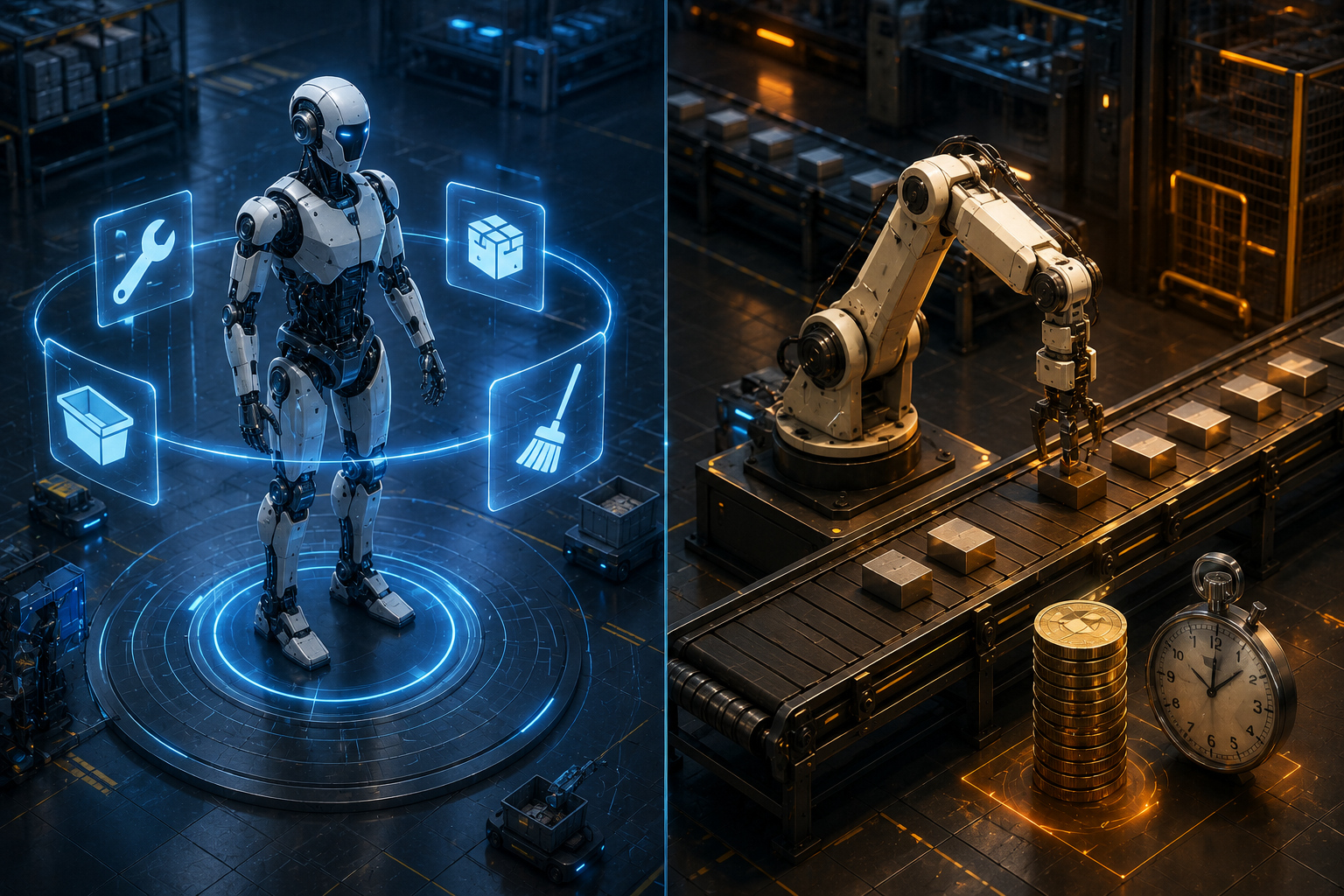
A plotted cost-per-hour curve shows the purpose-built machine holding a flat, low line regardless of utilization, while the general-purpose humanoid’s curve starts high at low utilization and descends steeply as more task types and hours are loaded onto the same unit, crossing below the specialized line once utilization and task-count both clear their respective thresholds.
Case Snapshots: Where Each Model Wins in 2026
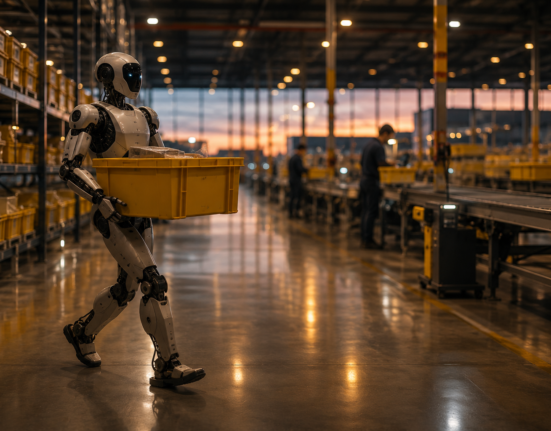
Real deployments in 2026 illustrate both sides of this framework. Figure AI’s arrangement with BMW at the Spartanburg plant places humanoids on a single high-precision assembly task, which looks at first like a purpose-built use case, but the underlying commercial logic is that the same chassis can be re-skilled for a different task on the same line as production needs shift, avoiding a second capital purchase. Agility Robotics’ Digit units handling tote transport in fulfillment centers occupy a similar middle ground: narrow enough in day-to-day use to resemble specialized automation, general enough in hardware to be redeployed if the tote-handling task changes shape.
By contrast, dedicated case-erectors, palletizers, and conveyor-integrated sortation systems remain the correct purchase for facilities with a single, high-volume, unchanging task and no near-term plan to diversify. Their lower capex and higher per-task throughput make the math simple, and no amount of software flexibility from a humanoid changes that when the job truly never varies.
Reading the Deployment Signal Correctly
A useful diagnostic question for any operations leader evaluating this purchase is: “If our SKU mix, product line, or seasonal demand pattern changed materially next year, would we need to buy new automation hardware, or would we re-train the automation we already own?” If the honest answer is that new hardware would be required, that is a strong signal the task is stable enough for a purpose-built machine. If the honest answer is that retraining would suffice, that is the scenario where a general-purpose humanoid’s premium is justified.
Common mistake
Comparing a general-purpose humanoid to a specialized machine using only the single task both could perform, and declaring the specialized machine the winner on cost per unit. This ignores the avoided capex of every additional specialized machine the facility would otherwise need to buy to cover its full task list, which is where the humanoid’s economics actually compete.
What worked
Operations teams that built a simple spreadsheet tracking hours-per-task-type across a shift, rather than a single “robot versus human” cost line, made more accurate purchase decisions. Once utilization crossed roughly 70 percent across at least three distinct task categories, the general-purpose unit’s amortized cost per hour reliably undercut the sum of equivalent specialized machines.
Frequently Overlooked Factors in This Comparison
- Idle-time costA humanoid sitting unused between tasks still accrues depreciation and licensing fees, silently eroding the utilization advantage it is supposed to provide.
- Retasking downtimeSwitching a humanoid between skills is not instantaneous; validation, calibration, and safety re-certification after a skill change all consume paid hours that a pure throughput comparison tends to ignore.
- Resale value divergenceA general-purpose unit retains resale value across a broader buyer pool if a facility closes or pivots, while a highly specialized machine’s resale market shrinks to almost nothing outside its original task niche.
- Integration cost asymmetryPurpose-built machines are frequently bolted into a fixed line and wired into existing controls, a one-time integration cost that is easy to underestimate and rarely appears in vendor list prices.
- Skill-library depreciationA humanoid’s software skills can degrade in relevance as products change shape or packaging changes material, requiring retraining investment that behaves like a second, softer capex line.
- Insurance and liability premiumsGeneral-purpose robots operating across varied tasks and shared human spaces often carry different insurance risk profiles than a fenced, single-task specialized machine, which changes the effective annual cost on both sides.
Glossary
- Total cost of ownership (TCO)
- The full cost of a machine across its working life, including capital expenditure, maintenance, energy, software licensing, and integration, not just the purchase price.
- Utilization rate
- The share of available working hours a machine is actually performing productive, paid tasks rather than sitting idle or being reconfigured.
- Breakeven task count
- The number of distinct task categories a general-purpose robot must be productively assigned across before its capital cost is offset relative to buying separate specialized machines for each task.
- Retasking
- The process of reconfiguring or retraining a general-purpose robot to perform a new job, typically through a software or skill-library update rather than a hardware change.
- Amortized cost per hour
- A machine’s total ownership cost divided by its total productive operating hours over its useful life, used to compare dissimilar automation options on a common basis.
Key Takeaways
- General-purpose humanoids and purpose-built machines represent two different amortization strategies, not a single “better robot” contest.
- Purpose-built machines win decisively when a facility has one stable, high-volume task with no near-term plan to diversify.
- General-purpose humanoids win when their capex can be spread across three or more distinct task categories with a combined utilization rate above roughly 70 percent.
- Comparing the two on a single shared task alone almost always favors the specialized machine and misses the real economic argument.
- Idle time, retasking downtime, and skill-library depreciation are frequently missing from humanoid TCO models and should be included explicitly.
- Resale value and insurance profiles diverge meaningfully between the two categories and belong in any full financial comparison.
- The correct diagnostic question is whether a changing task mix would require new hardware or just retraining of existing hardware.
FAQs
Is a general-purpose humanoid always more expensive than a purpose-built machine?
Yes, on a pure unit-cost basis a general-purpose humanoid almost always costs more upfront than a purpose-built machine designed for one task. The comparison only favors the humanoid once its cost is spread across multiple task categories and a sufficiently high combined utilization rate.
What utilization rate makes a humanoid economically competitive?
Illustrative TCO modeling suggests the crossover typically falls between 70 and 85 percent combined utilization across at least three distinct task types, though the exact figure depends on capex, maintenance rate, and the avoided cost of specialized alternatives.
Can a purpose-built machine ever be retasked like a humanoid?
Some purpose-built machines allow limited reconfiguration through tooling changes or end-effector swaps, but this typically requires a physical hardware change and downtime, unlike a humanoid’s software-driven skill update, which is the core distinction between the two categories.
How many task types does a facility need before a humanoid makes sense?
Illustrative breakeven modeling suggests roughly three to four distinct task categories for typical warehouse and light-manufacturing capex ranges, though facilities with unusually expensive specialized machines can reach breakeven with fewer task types.
Does retasking downtime meaningfully affect the economics?
Yes, switching a humanoid between skills consumes calibration, validation, and in some cases safety re-certification time, which reduces effective productive hours and should be built into any TCO comparison rather than assumed to be instantaneous.
Why do specialized machines win on throughput even when humanoids are cheaper per hour?
A specialized machine’s every joint, gripper, and control loop is engineered around one exact motion, giving it a cycle-time advantage that a general-purpose robot’s broader, less-optimized control stack cannot match on that single task.
Is this the same debate as humanoid form factor versus wheeled or quadruped robots?
No, that is a separate architecture question about physical design. This comparison is about capital allocation and amortization strategy between general-purpose and single-task machines, regardless of whether either uses legs, wheels, or a fixed base.
Does resale value matter in this comparison?
Yes, a general-purpose humanoid typically retains resale value across a wider pool of potential buyers if a facility closes or changes direction, while a highly specialized machine’s resale market can shrink to nearly nothing outside its original task niche.
References
- Goldman Sachs Research, humanoid robot addressable market projections
- Standard Bots, “Humanoid robots in 2026: Types, prices, and what’s next”
- Robozaps, “Humanoid Robot ROI Guide 2026”
- Robotomated, “Humanoid Robots vs. Purpose-Built: When Does Generality Win?”
- There’s A Robot For That, “Humanoid Robot Price 2026: Cost and ROI Breakdown”
- Figure AI Newsroom, BMW Spartanburg manufacturing partnership updates
For related coverage, see how falling humanoid hardware prices are reshaping this breakeven math, how warehouses are actually deploying humanoids on the floor today, and why shared fleet learning changes the retasking cost side of this equation. For the unit-economics companion piece, see our dollar-per-hour breakdown of robot labor cost versus human wages. Readers weighing the architecture question separately from the financial one can also review why the humanoid form factor has become the preferred general-purpose design, and how dexterous manipulation capability affects which tasks a general-purpose robot can actually absorb.