| Vendor / platform | PQC firmware status | FIPS 140-3 L3 with PQC inside boundary |
|---|---|---|
| Entrust nShield 5 | ML-DSA, ML-KEM, SLH-DSA in firmware v13.8.0, CAVP certified | Submitted to CMVP, in process |
| Thales Luna HSM | ML-KEM and ML-DSA native in firmware v7.9 | v7.9.2 positioned as next FIPS candidate, in process |
| Marvell LSM2 | PQC algorithms implemented, CAVP certified | FIPS 140-3 L3 CMVP validation in process |
| Utimaco Atalla | PQC algorithms implemented, CAVP certified | FIPS 140-3 L3 CMVP validation in process |
| AWS CloudHSM / Azure Managed HSM | Hybrid PQC key establishment supported in surrounding services | Validation status tracks underlying HSM partner hardware |
The question every HSM buyer is asking in 2026
Hardware security modules exist to do one thing extremely well: perform cryptographic operations, sign, encrypt, generate keys, inside a tamper-resistant boundary that even a compromised host application cannot reach into. For two decades, that boundary was built around RSA, ECC, and AES. Now that NIST has finalized its first three post-quantum cryptography standards, FIPS 203 (ML-KEM), FIPS 204 (ML-DSA), and FIPS 205 (SLH-DSA), in August 2024, every organization running an HSM fleet is asking the same question: can this hardware actually do post-quantum cryptography, or does it need to be replaced?
The honest answer, as of 2026, is a qualified yes. The leading HSM platforms have shipped firmware that implements the new algorithms and have passed NIST’s Cryptographic Algorithm Validation Program testing for them. Entrust’s nShield 5 firmware v13.8.0 received CAVP certification for ML-DSA, ML-KEM, and SLH-DSA. Thales shipped Luna HSM firmware v7.9 with ML-KEM and ML-DSA integrated natively. For most organizations beginning post-quantum pilots or building defense-in-depth against harvest-now-decrypt-later threats, that capability is genuinely sufficient to start today. But a second, less publicized fact matters enormously for regulated buyers: no major HSM platform has yet achieved a combined FIPS 140-3 Level 3 module validation with those post-quantum algorithms sitting inside the certified boundary. Understanding the difference between those two facts, and what it means for procurement, is the substance of this article.
Why firmware upgrades can add PQC to existing hardware
A reasonable assumption might be that a fundamentally new class of cryptographic algorithm requires fundamentally new silicon. In practice, that is only true for HSMs that rely entirely on fixed-function cryptographic accelerators hard-wired for specific classical operations. Most current-generation enterprise HSMs are built around a general-purpose secure processor plus a set of accelerators for the most performance-critical classical operations, RSA and elliptic curve point multiplication in particular. ML-KEM and ML-DSA are lattice-based algorithms built primarily from polynomial arithmetic and hashing operations, which general-purpose secure processors can execute in firmware without needing new dedicated silicon, albeit sometimes with a performance cost relative to hardware-accelerated classical operations.
This is exactly the pattern vendors have exploited. Entrust has been explicit that nShield 5 PQC acceleration is arriving through a subsequent firmware upgrade rather than a hardware refresh, because the underlying secure processor is reprogrammable. Thales’s Luna G7 and K7 lines followed the same path, adding native ML-KEM and ML-DSA support through firmware rather than a new appliance generation. The practical implication for buyers: if your HSM fleet was purchased within roughly the last three to four years and uses one of these current-generation platforms, a firmware update is very likely your path to PQC support rather than a forklift hardware replacement. Older appliances built entirely around fixed-function classical accelerators, without a general-purpose secure processor capable of running new firmware-based algorithms, are the ones genuinely facing a hardware refresh requirement.
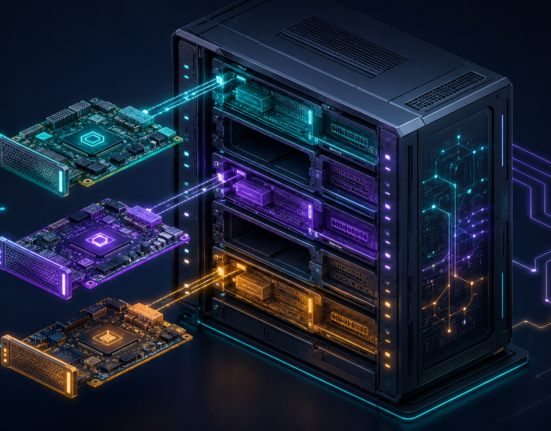
Figure: Where PQC support lives inside an HSM
A general-purpose secure processor inside the tamper-resistant boundary executes both classical and post-quantum algorithms in firmware. Dedicated hardware accelerators continue to handle the most performance-critical classical operations, such as RSA modular exponentiation. When a vendor ships a firmware update adding ML-KEM and ML-DSA, the new algorithms run on the same secure processor, inside the same physical boundary, without requiring new accelerator silicon, though without hardware acceleration they typically run somewhat slower than classical operations that have dedicated circuits.
CAVP versus CMVP: the distinction that actually matters for compliance
The gap between “PQC-ready” as a marketing claim and “PQC-ready” as a compliance fact comes down to two NIST programs that sound similar but validate entirely different things. The Cryptographic Algorithm Validation Program, CAVP, tests a specific implementation of an algorithm against its mathematical specification and issues an algorithm certificate confirming the implementation is correct. The Cryptographic Module Validation Program, CMVP, validates an entire hardware module, the physical HSM appliance, against the FIPS 140-3 standard at a defined security level, Level 3 being the tier most enterprise and government buyers require for key-protecting hardware.
The relationship between the two is sequential and mandatory: an algorithm must pass CAVP testing before it can even be submitted as part of a module going through CMVP validation. NIST moved quickly on its side of this after finalizing the PQC standards, updating its approved-function references so FIPS 204 and FIPS 205 count as approved digital signature methods and FIPS 203 counts as an approved key-encapsulation method within FIPS 140-3 validated modules. But updating the reference list is not the same as any specific vendor’s hardware actually completing that validation. As of early 2026, several vendors, including Entrust nShield 5, Marvell LSM2, Thales Luna G7 and K7, and Utimaco’s Atalla, have obtained CAVP certification for their PQC algorithm implementations and separately hold FIPS 140-3 Level 3 CMVP validation for their modules running classical algorithms. None has yet obtained the combined validation, a FIPS 140-3 Level 3 certificate that explicitly covers the PQC algorithms inside the module’s validated boundary. All are currently sitting in the CMVP queue, at the Modules in Process or Implementation Under Test stage.
| Risk | Cause | Consequence |
|---|---|---|
| Compliance assumption error | Treating CAVP certification for PQC as equivalent to full CMVP module validation | Running PQC in production while believing it sits inside the validated boundary when it does not yet |
| Audit finding | Deploying PQC in production under a strict FIPS 140-3 Level 3 mandate before combined validation lands | Non-compliance discovered during a formal assessment or contract audit |
| Procurement misalignment | Specifying “PQC-ready” in a purchase order without defining the required certification level | Buying hardware capability that does not actually meet the stated regulatory mandate |
| Configuration drift | Enabling PQC algorithms in a way that drops the appliance out of FIPS-approved mode | Loss of Level 3 compliance for the entire partition, not just the new algorithm |
Why the validation queue takes 12 to 18 months
The lag between an algorithm being CAVP-certified and a module completing combined CMVP validation is not vendor foot-dragging; it reflects the structure of the validation pipeline itself. Independent research on quantum-era cryptographic module validation has documented delays of roughly 12 to 18 months between algorithm availability and certified module availability, driven by the volume of the CMVP queue and the thoroughness of the testing requirements applied to each submission. Vendors are openly transparent about where they stand in that queue: Entrust has confirmed it submitted nShield 5 firmware for updated FIPS 140-3 Level 3 validation through CMVP, and Thales describes Luna firmware v7.9.2 as its next FIPS candidate with PQC support, explicitly noting the validation is in progress rather than complete.
There is a second deadline compounding this timeline that buyers frequently overlook. FIPS 140-2 certificates are moving to NIST’s historical list on a defined schedule, after which they stop satisfying validation requirements for new federal procurement. That is pushing regulated buyers toward FIPS 140-3 modules at the same time PQC algorithms are becoming mandatory, meaning the two transitions, standard version and algorithm family, are landing on procurement teams simultaneously rather than sequentially.
A practical evaluation framework
Given the gap between marketing claims and validated compliance, HSM buyers and operators need a structured way to evaluate their actual exposure rather than accepting a vendor’s “PQC-ready” label at face value.
- Define your actual mandate first. Determine whether your regulatory or contractual obligations require cryptography to run strictly inside a FIPS 140-3 Level 3 validated boundary, or whether CAVP-validated algorithms running on current-generation hardware are sufficient for your risk posture.
- Read the certificate, not the brochure. Check the vendor’s specific CMVP certificate and security policy document to see exactly which algorithms are inside the validated boundary and in which configuration, treating CAVP certification and CMVP validation as two separate facts rather than one.
- Separate testing from production posture. Use PQC algorithms freely in development, staging, and pilot environments to validate performance and integration, while making a deliberate, documented decision about whether production PQC traffic may run ahead of combined CMVP validation.
- Track the CMVP queue against your migration timeline. Plan around the documented 12 to 18 month lead time between algorithm certification and module certification, and align your production cutover date with the certification status you actually require rather than the certification you hope will arrive first.
- Preserve FIPS-approved mode deliberately. Confirm exactly how enabling PQC algorithms and handling their keys interacts with your appliance’s FIPS-approved configuration, since some vendor firmware releases restrict specific PQC key operations, such as key wrapping, within approved mode.
- Document the decision trail for auditors. Whatever posture your organization chooses, record the rationale, the certification status relied upon at the time, and the planned transition timeline, so the choice reads as a managed and monitored risk decision rather than an oversight discovered later.
What this means for different roles
- CISOs need a clear answer on whether the organization’s actual PQC deployment plan satisfies its real compliance mandate, not simply whether the HSM vendor markets PQC support.
- Compliance and audit teams must be able to distinguish CAVP certification from CMVP validation on sight and verify precisely what sits inside a given module’s validated boundary before signing off on a deployment.
- Procurement teams should specify exact certification requirements, such as “FIPS 140-3 Level 3 with ML-KEM and ML-DSA inside the validated boundary,” rather than the ambiguous phrase “PQC-ready” in purchase orders and RFPs.
- Cryptography and PKI teams need to plan how PQC gets enabled without compromising FIPS-approved mode, and how the eventual cutover aligns with the CMVP queue timeline for their specific vendor.
- Security architects weigh whether to deploy PQC now for defense-in-depth against harvest-now-decrypt-later threats, or to stage the rollout until combined validation lands, based on the specific threat model and regulatory posture involved.
Migrating between HSM vendors during a PQC refresh
Some organizations are using the PQC transition as an opportunity to reconsider their HSM vendor relationship entirely, whether for cost, support quality, or cloud strategy reasons. This is a materially larger undertaking than a firmware update, and it interacts with crypto-agility in an important way: an organization that has already built an abstraction layer between its applications and its cryptographic provider can migrate HSM vendors with comparatively little application-level disruption, because applications call a generic sign or encrypt interface rather than a vendor-specific SDK directly. Organizations without that abstraction layer typically find that HSM vendor migration and PQC algorithm migration end up happening as one large, tightly coupled project, which increases both the cost and the risk of the transition considerably.
Key migration between HSM vendors also raises PQC-specific considerations that did not exist with classical algorithms. Post-quantum keys and signatures are frequently much larger than their classical counterparts, which can strain assumptions baked into key export formats, backup procedures, and cross-vendor interoperability standards that were designed years before ML-KEM and ML-DSA existed. Testing the full export, backup, and import cycle for post-quantum key material between old and new hardware, well before a production cutover, is a step organizations moving fast on PQC sometimes skip under deadline pressure.
Common mistake
Accepting a vendor’s claim of being “PQC-ready” as equivalent to holding a FIPS 140-3 Level 3 validation that includes the post-quantum algorithms inside the certified module boundary. These are two different facts, and as of 2026 every major HSM vendor is honest about occupying the first state without yet having reached the second. Organizations under a strict validated-boundary compliance mandate that deploy production PQC workloads based on the marketing claim alone, without checking the actual CMVP certificate and its scope, risk a compliance finding that is entirely avoidable with five minutes of reading the vendor’s published security policy document.
What worked
Organizations that navigated this transition smoothly typically separated their PQC rollout into two explicit tracks from the start: an aggressive testing and pilot track using CAVP-certified algorithms in staging and low-risk production traffic immediately, and a more conservative production cutover track gated on the vendor’s combined FIPS 140-3 Level 3 validation actually landing. Tracking the vendor’s CMVP submission status as a standing agenda item, rather than assuming a firmware release automatically implies full validation, let these teams update their migration timeline as real information arrived instead of an optimistic assumption.
Frequently overlooked details
- Key and signature size growthML-DSA signatures and ML-KEM keys are substantially larger than their RSA and ECC counterparts, which can break assumptions in database schemas, network packet budgets, and legacy key export formats.
- Performance under loadLattice-based operations running without dedicated hardware acceleration can be noticeably slower than classical operations at very high transaction volumes, which matters for payment HSMs and high-throughput signing services.
- Hybrid mode key handlingMany deployments run classical and post-quantum keys side by side during the transition, which roughly doubles key management overhead per operation unless the HSM firmware explicitly supports combined hybrid operations.
- Partition-level FIPS mode scopeEnabling a non-approved configuration on one partition of a multi-tenant HSM does not necessarily affect other partitions, but the scope of what counts as “the module” for compliance purposes needs to be confirmed with the vendor.
- Backup and disaster recovery testingPost-quantum key backup and restoration procedures are newer and less battle-tested than decades-old classical key backup workflows, warranting explicit disaster recovery drills before relying on them in production.
- Vendor roadmap transparencyVendors that publish specific CMVP submission dates and queue status are easier to plan around than vendors that only offer vague “coming soon” messaging about validation.
Glossary
- Hardware security module
- A dedicated, tamper-resistant hardware appliance that performs cryptographic operations and protects key material inside a physically and logically isolated boundary.
- CAVP
- The Cryptographic Algorithm Validation Program, a NIST testing program that certifies a specific implementation of an algorithm matches its published mathematical specification.
- CMVP
- The Cryptographic Module Validation Program, a NIST program that validates an entire hardware or software cryptographic module against the FIPS 140-3 standard at a defined security level.
- FIPS 140-3 Level 3
- A federal cryptographic module security standard tier requiring strong physical tamper-evidence and tamper-response protections, commonly mandated for enterprise and government HSM deployments.
- ML-KEM
- Module-Lattice-Based Key-Encapsulation Mechanism, standardized by NIST as FIPS 203, used to establish shared secret keys resistant to quantum computer attacks.
- ML-DSA
- Module-Lattice-Based Digital Signature Algorithm, standardized by NIST as FIPS 204, used to generate quantum-resistant digital signatures.
Key Takeaways
- Most current-generation HSMs from Thales, Entrust, and major cloud providers can add post-quantum algorithm support through a firmware update rather than a hardware refresh.
- NIST finalized ML-KEM, ML-DSA, and SLH-DSA as FIPS 203, 204, and 205 in August 2024, and leading vendors moved quickly to CAVP-certify their implementations.
- As of early 2026, no HSM vendor has achieved combined FIPS 140-3 Level 3 CMVP validation with post-quantum algorithms inside the certified module boundary.
- CAVP algorithm certification and CMVP module validation are two distinct NIST programs, and conflating them is the single most common compliance mistake buyers make.
- The gap between algorithm certification and module validation typically runs 12 to 18 months due to the structure of the CMVP queue.
- Regulated buyers under a strict validated-boundary mandate should treat production PQC deployment as a deliberate, documented risk decision rather than a default assumption.
- Organizations with crypto-agile abstraction layers can migrate HSM vendors during a PQC refresh with far less application-level disruption than those without one.
FAQs
Can existing HSM hardware support post-quantum algorithms without replacement?
In most cases, yes. Current-generation HSMs built around a reprogrammable general-purpose secure processor can add ML-KEM and ML-DSA support through a firmware update. Older appliances relying entirely on fixed-function classical accelerators without such a processor are more likely to require a hardware refresh.
What is the difference between CAVP and CMVP for HSM post-quantum readiness?
CAVP certifies that a specific algorithm implementation, such as ML-KEM, matches its published specification. CMVP validates an entire hardware module against the FIPS 140-3 standard at a given security level. An algorithm must pass CAVP testing before a module containing it can be submitted for CMVP validation.
Are any HSMs currently FIPS 140-3 Level 3 validated with post-quantum algorithms inside the boundary?
As of early 2026, no major HSM platform holds a combined FIPS 140-3 Level 3 validation that includes post-quantum algorithms inside the certified module boundary. Vendors including Entrust, Thales, Marvell, and Utimaco have submitted for this validation and are in the CMVP queue.
How long does it typically take for an HSM to receive combined PQC and FIPS 140-3 validation?
Research on quantum-era cryptographic module validation documents a typical gap of 12 to 18 months between algorithm-level CAVP certification and full module-level CMVP validation, driven by CMVP queue volume and testing thoroughness.
Which HSM vendors have shipped post-quantum firmware support?
Entrust’s nShield 5 firmware v13.8.0 added CAVP-certified ML-DSA, ML-KEM, and SLH-DSA support. Thales shipped Luna HSM firmware v7.9 with native ML-KEM and ML-DSA. Marvell’s LSM2 and Utimaco’s Atalla have also achieved CAVP certification for their PQC implementations.
What should procurement teams specify when buying a PQC-ready HSM?
Procurement should specify the exact certification level required, such as FIPS 140-3 Level 3 with ML-KEM and ML-DSA validated inside the module boundary, rather than accepting the ambiguous term PQC-ready, which can describe either CAVP-only or fully validated hardware.
Does enabling post-quantum algorithms risk breaking FIPS-approved mode on an HSM?
It can. Some vendor firmware releases place restrictions on specific post-quantum key operations, such as key wrapping, within FIPS-approved configuration. Administrators need to confirm with vendor documentation exactly how enabling PQC interacts with their partition’s approved mode before deploying it in production.
Should organizations deploy post-quantum algorithms on their HSMs now or wait for full validation?
For most organizations piloting PQC or building defense-in-depth against harvest-now-decrypt-later threats, deploying CAVP-certified algorithms now is low-risk and sensible. Organizations under a strict validated-boundary compliance mandate should treat early production deployment as a conscious, documented risk decision rather than a default.
References
- NIST, FIPS 203 (ML-KEM), FIPS 204 (ML-DSA), and FIPS 205 (SLH-DSA), August 2024
- Encryption Consulting, “Are Your HSMs PQC-Ready?,” June 2026
- Entrust, “Entrust nShield 5 HSMs Post-Quantum Algorithm Support Now CAVP Certified,” 2025
- Thales, “Luna HSM PQC Quantum-Safe Encryption,” Thales Cloud Protection and Licensing blog
- ABI Research, “What Does Quantum-Safe Really Mean for HSM Vendors? Vendor Playbook for Internal and External PQC Support”
For the broader compliance timeline behind this transition, see our guide to post-quantum cryptography migration and the plain-language breakdown of the NIST PQC standards. Organizations concerned about data captured today and decrypted once quantum computers mature should also read our explainer on harvest-now-decrypt-later attacks. For how these same algorithms are being rolled out at the protocol layer, see post-quantum key exchange in TLS. The organizational discipline needed to plan a vendor-agnostic HSM refresh is covered in our companion piece on designing systems that can swap algorithms, and the inventory step every migration should start with is explained in building a cryptographic bill of materials.