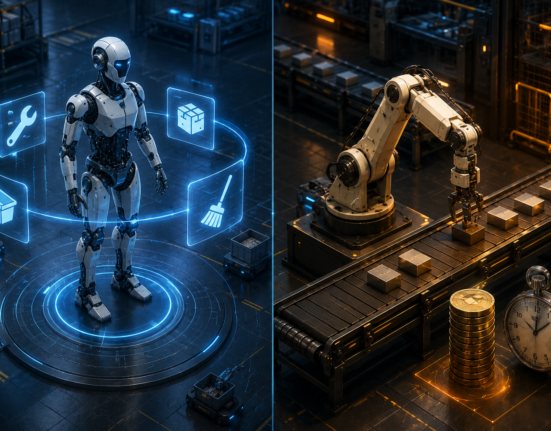
| Myth | Reality |
|---|---|
| Every robot in a fleet learns independently, like a person learning from their own experience. | Most production fleets pool data centrally or through federated averaging, so a single robot’s failure can rewrite the policy running on every other unit. |
| Fleet learning happens in real time, the instant a mistake occurs. | Updates are batched into retraining cycles, often daily or weekly, then validated before being pushed to hardware in a staged rollout. |
| Fleet learning is mostly about faster networking between robots. | The 5G or Wi-Fi 6 connection is only the transport layer; the actual improvement comes from a data pipeline, labeling process, and retraining loop, a distinct engineering problem from network orchestration. |
| A robot that fails once will keep failing until a human reprograms it directly. | In modern fleet learning systems, failure logs are automatically flagged, reviewed, and folded into the next training batch without a human rewriting any code. |
What Robot Fleet Learning Actually Means
Every deployed robot fleet eventually runs into the same problem: an individual unit gets confused. Maybe a warehouse picker robot misjudges the weight of a box and drops it. Maybe a humanoid assistant misreads a cluttered countertop and knocks over a glass. In isolation, that single event is a nuisance. But in a well-designed fleet learning system, that single event becomes a data point that improves every other robot running the same policy, sometimes within a single update cycle.
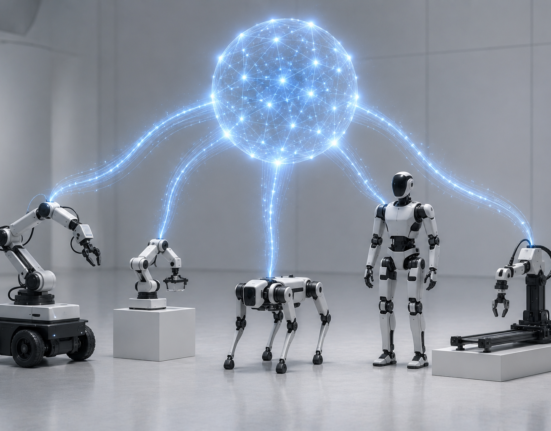
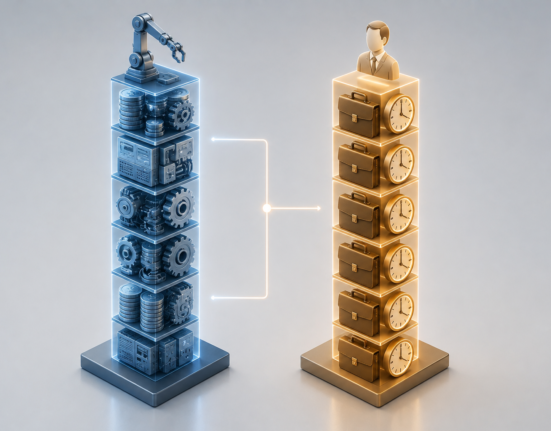
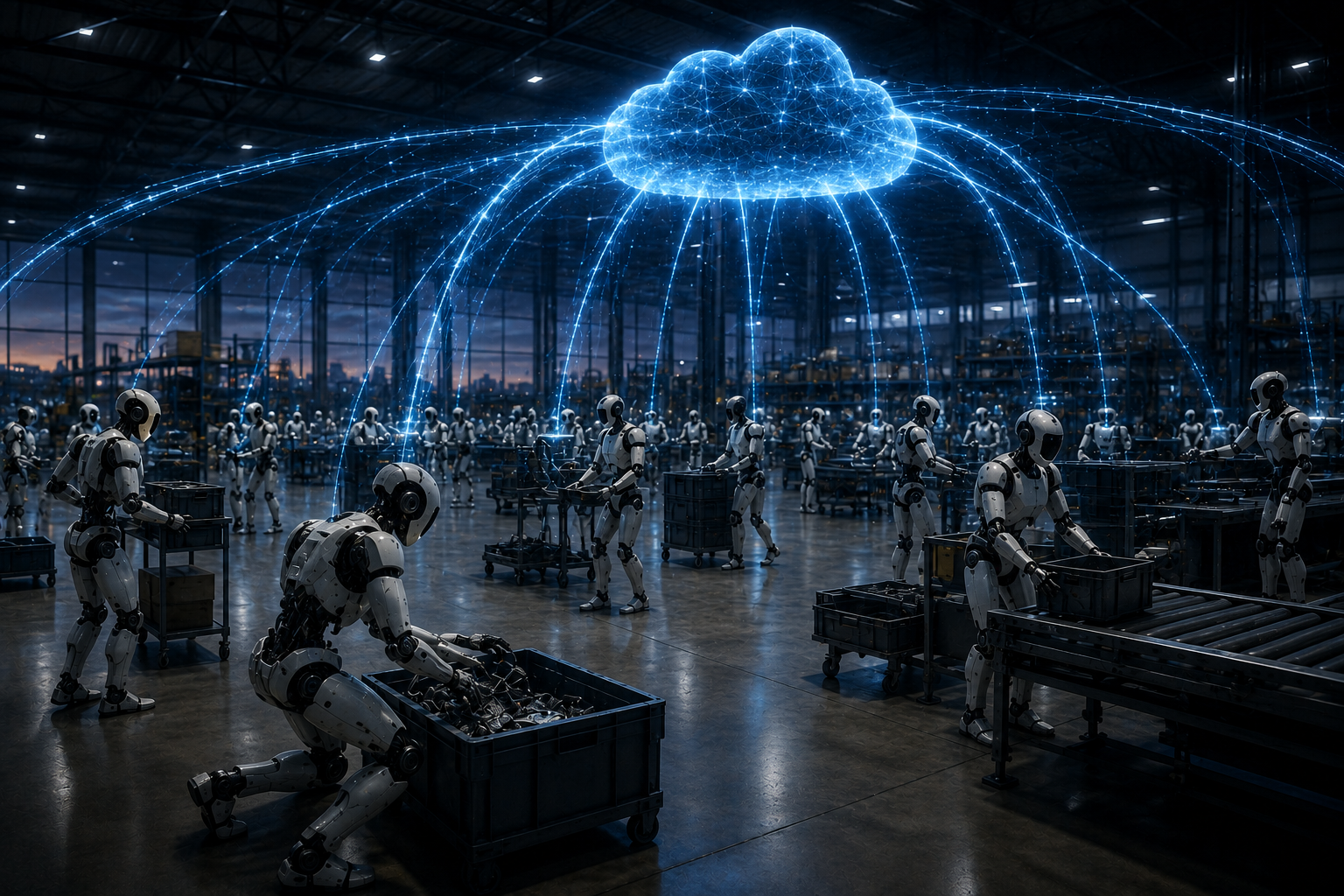
This is fundamentally different from how most people imagine robot learning. It is not one machine reasoning from its own memory the way a person might. It is a centralized or semi-centralized pipeline: perception and outcome data streams off the robot, gets aggregated with data from the rest of the fleet, is used to retrain a shared neural policy, and is then redeployed to every unit in the fleet, including the ones that never made the mistake in the first place.
Researchers now describe this as “learning while deploying,” a fleet-scale reinforcement learning approach for generalist robot policies that closes the loop between deployment, shared physical experience, policy improvement, and redeployment using both autonomous rollouts and occasional human interventions collected across the entire fleet. The core insight is that a fleet of robots operating in the real world generates an enormous, diverse stream of edge cases that no simulator or single-robot training run could ever produce on its own.
The Data Pipeline: From One Robot’s Error to Fleet-Wide Data
The mechanism starts with instrumentation. Every commercial robot in a learning-enabled fleet logs far more than task completion or failure. It records camera frames, force-torque readings, joint states, and the specific moment where its confidence dropped or an action produced an unexpected outcome. When a robot fails, drops something, stalls, or requires a human teleoperator to intervene, that moment is tagged as a high-value training example, because failures are rarer and more informative than the thousands of successful, unremarkable repetitions surrounding them.
These tagged episodes are uploaded to a central data lake, either continuously over a network connection or in batches during charging or downtime. From there, a labeling and curation layer sorts the incoming data: some of it gets discarded as redundant, some gets flagged for human review, and the most valuable slices get promoted into the next training set. This is the layer where mistakes are converted into structured supervision signal, effectively translating “robot 4,281 in Cincinnati fumbled a curved handle at 2:14pm” into a labeled training example that any policy in the fleet can learn from.
| Pipeline Stage | What Happens | Typical Cadence |
|---|---|---|
| Edge logging | Robot records sensor streams, actions, and outcome signals locally | Continuous |
| Upload and aggregation | Flagged episodes sync to central data store or federated aggregator | Hourly to daily |
| Curation and labeling | Automated filters plus human review select high-value examples | Daily |
| Policy retraining | Shared model is fine-tuned or merged using new and existing data | Daily to weekly |
| Validation | Updated policy tested in simulation and on a holdout robot subset | Before every push |
| Staged redeployment | Policy rolled out to a fraction of the fleet, then expanded | Weekly or per release |
Centralized Aggregation Versus Federated Approaches
There are two broad architectural patterns for turning individual robot experience into fleet-wide improvement, and the distinction matters a great deal for anyone evaluating a robotics vendor’s claims about “continuous learning.”
Centralized data aggregation
In the centralized model, raw or lightly processed sensor data and outcome logs from every robot are shipped to a central cloud environment. Engineers and automated curation systems pool this data into a single large training corpus, then retrain the shared policy from that pooled dataset. This is the simplest approach conceptually, and it produces the highest-quality training signal because engineers have full visibility into raw data. The tradeoff is bandwidth and privacy: streaming raw camera and sensor data from thousands of robots is expensive, and in privacy-sensitive deployments such as homes or hospitals, transmitting raw video is not always acceptable.
Federated and policy-merging approaches
Federated learning flips the transport problem around. Instead of sending raw data to a server, each robot trains a local update to its own model using its own recent experience, then sends only the compact model parameters or gradients to an aggregator, which combines contributions from many robots into a new shared global policy. This preserves privacy and cuts bandwidth substantially, but introduces new engineering challenges: robots operating in different environments produce non-identically distributed data, communication rounds must be scheduled carefully, and naive parameter averaging can actually degrade performance if done without care.
A related technique called policy merging addresses a specific wrinkle in federated robot learning: because control policies are often parameterized with recurrent or transformer-based networks, two independently trained policies cannot simply be averaged parameter-by-parameter without accounting for permutation invariance in the network’s internal representations. Approaches built specifically for this problem realign the internal structure of different robots’ policies before merging them, which is what allows disparate fleets, sometimes even fleets from different manufacturers, to contribute to a shared improvement without full raw-data sharing.
| Approach | Bandwidth Cost | Data Privacy | Typical Use Case |
|---|---|---|---|
| Centralized aggregation | High | Lower, raw data leaves the robot | Warehouse and factory fleets under one operator |
| Federated parameter sharing | Low to moderate | Higher, only model weights transmitted | Cross-site or privacy-sensitive deployments |
| Policy merging | Low | Higher | Combining fleets with heterogeneous hardware or vendors |
Why a Single Mistake Can Be More Valuable Than a Thousand Successes
A robot that successfully completes a task provides confirmation that the current policy works under the conditions it just encountered. A robot that fails provides something rarer: a boundary case, a place where the policy’s understanding of the world broke down. Fleet learning systems increasingly weight training data according to this asymmetry, deliberately over-sampling failure and near-failure episodes rather than treating every logged interaction equally.
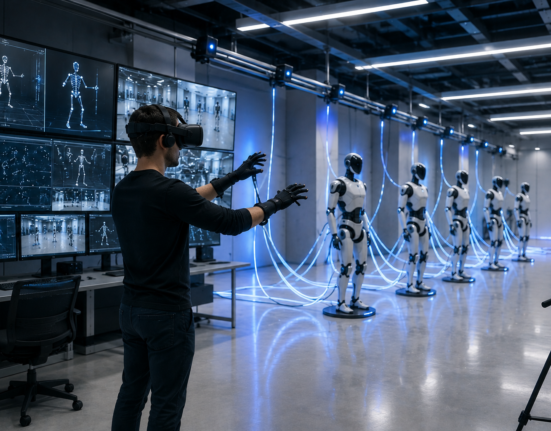
This is part of why “learning while deploying” architectures explicitly fold in occasional human teleoperator interventions as a signal source. When a human operator has to take over because the autonomous policy stalled or was about to make an unsafe move, that moment of intervention is treated as gold-standard supervision, arguably more valuable than either an ordinary success or an uncorrected failure, because it contains both the evidence of what went wrong and a demonstration of the correct recovery action.
From Local Failure to Fleet-Wide Correction
A single robot fumbles an object due to an unfamiliar surface texture. The failure episode is flagged, uploaded, and folded into the next training batch alongside similar edge cases from other robots. Within one to two retraining cycles, the updated shared policy is pushed to the entire fleet, meaning robots that never encountered that surface now handle it correctly on first attempt.
Retraining and Redeployment Cycles
Turning fresh failure data into an actual improvement requires more than just adding examples to a training set. Most production fleets use one of two retraining strategies. The first is periodic full retraining, where the shared policy is retrained from a large rolling window of fleet-wide data on a fixed schedule, commonly daily or weekly, then validated and pushed out as a new version. The second is incremental fine-tuning, where the existing policy is nudged using only the most recent batch of new data, which is faster and cheaper but carries a higher risk of the model forgetting older skills, a well-known failure mode in continual learning called catastrophic forgetting.
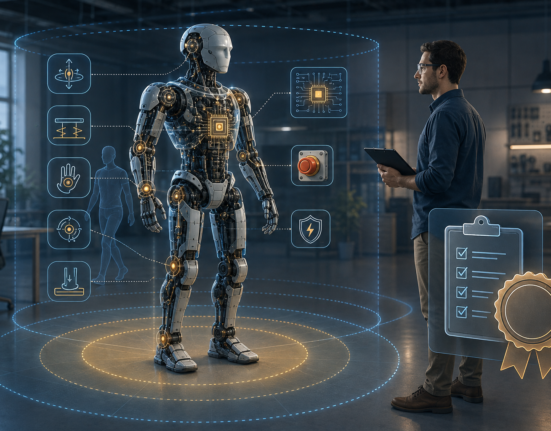
Before any updated policy reaches physical hardware, it passes through validation. This typically includes replaying the new policy against a held-out set of previously logged scenarios to confirm it has not regressed on cases it used to handle correctly, then testing on a small subset of physical robots or in high-fidelity simulation before a full fleet rollout. Only after passing these gates does the update propagate to the broader fleet, usually in stages, an initial cohort, then an expanding rollout, mirroring the way software companies stage production releases to catch problems before they affect every user.
- Failure taggingThe moment a robot’s action produces an unexpected or undesired outcome, that episode is automatically marked for review rather than being discarded as noise.
- Non-IID dataFleet data collected across different sites, lighting conditions, and tasks is rarely uniform, which is why naive averaging across robots can sometimes hurt performance instead of helping it.
- Catastrophic forgettingA model fine-tuned too aggressively on new failure data can lose competence on older, previously mastered scenarios, which is why validation against historical benchmarks matters.
- Staged rolloutUpdated policies are pushed to a small subset of the fleet first, letting engineers catch regressions before every robot receives the change.
- Human-in-the-loop correctionTeleoperator interventions during failures provide labeled, corrective demonstrations that are treated as especially high-value training signal.
- Policy version driftBecause updates roll out in stages, different robots in the same fleet may briefly run different policy versions, requiring careful tracking of which version produced which behavior.
Connectivity Is the Pipe, Not the Pump
It is worth being precise about what fleet learning is not. The reliable, low-latency connectivity that lets robots stream sensor data and receive updated models quickly is a genuinely important supporting technology, and readers interested in how 5G and next-generation wireless networks coordinate large robot deployments in real time should see our companion piece on real-time robot fleet orchestration over 5G networks. But network orchestration solves the problem of moving data and commands quickly and reliably between robots and infrastructure. It does not, by itself, decide what a robot should learn from a mistake, how failure data gets curated, or when a retrained policy is safe to redeploy. Those are data science and machine learning problems layered on top of the network, and they are the actual engine behind fleet-wide improvement.
Common Mistakes When Building Fleet Learning Systems
Common mistake
Teams frequently assume that simply collecting more data automatically produces a better fleet policy, and push every logged interaction into retraining without curation. In practice, unfiltered data dominated by routine successes dilutes the rare, informative failure cases that actually drive improvement, and can even reinforce subtly wrong behavior if a flawed policy generated most of the successful-looking data in the first place. Effective fleet learning pipelines deliberately over-sample failures, near-misses, and human interventions rather than treating all logged episodes as equally valuable.
What worked
Fleets that paired automated failure detection with a lightweight human review step before retraining saw more reliable gains than fully automated pipelines. A brief human sanity check on flagged failure episodes, confirming the failure was genuinely a policy error rather than a sensor glitch or an unreasonable task request, filtered out noise before it reached the training set, producing cleaner updates without materially slowing down the retraining cadence.
Where This Is Headed
The trajectory of fleet learning research points toward tighter integration between vision-language-action models and fleet-scale data pipelines, since foundation-model-style policies can absorb far more diverse failure data than earlier task-specific controllers. Readers who want the underlying model architecture behind these fleet-wide policies can find more detail in our explainer on robot foundation models and our deeper look at vision-language-action models. There is also growing interest in federated approaches that let competing robot manufacturers or operators contribute to shared safety-relevant improvements, such as near-miss data around human proximity, without exposing proprietary raw data, a direction that borrows directly from federated learning techniques originally developed for other domains such as autonomous driving and mobile devices.
None of this eliminates the role of direct demonstration data collection, which remains essential for teaching entirely new skills rather than refining existing ones; see our coverage of teleoperation-based data collection for how that complementary pipeline works, and our piece on sim-to-real transfer for how simulated failure scenarios extend what a fleet can learn beyond what physical robots happen to encounter.
Key Takeaways
Key Takeaways
- Robot fleet learning is a data pipeline, not a single robot’s memory: failure and success data from every unit feeds a shared policy that gets retrained and redeployed to the whole fleet.
- Failures and human interventions are weighted more heavily than routine successes because they carry the most information about where a policy’s understanding breaks down.
- Centralized data aggregation offers the richest training signal but costs more bandwidth and raises privacy questions; federated learning and policy merging trade some signal fidelity for lower bandwidth and better privacy.
- Policy merging techniques specifically address the technical challenge of combining neural network policies trained on different robots without simply averaging incompatible internal representations.
- Retraining cycles typically run daily to weekly, followed by validation against historical benchmarks and a staged rollout to catch regressions before they reach the full fleet.
- Reliable networking such as 5G is the transport layer that makes fast data upload and model redeployment possible, but it is distinct from the machine learning pipeline that decides what gets learned.
- Unfiltered mass data collection can dilute or even harm fleet learning; curation that prioritizes failures and near-misses produces more reliable improvements than treating all data equally.
Glossary
- Fleet learning
- The process of aggregating experience data from many deployed robots to improve a shared policy used across the entire fleet.
- Federated learning
- A distributed training approach where robots train local model updates and share only compact parameters or gradients with a central aggregator, rather than transmitting raw data.
- Policy merging
- A technique for combining separately trained robot control policies into one model while correcting for structural differences such as permutation invariance in neural network layers.
- Catastrophic forgetting
- A failure mode in continual learning where a model loses previously learned skills after being fine-tuned too aggressively on new data.
- Staged rollout
- A deployment strategy in which an updated policy is pushed to a small subset of robots first, then expanded gradually after validation.
- Non-IID data
- Data that is not identically and independently distributed across sources, meaning robots at different sites or tasks generate systematically different data, complicating simple averaging approaches.
FAQs
What is robot fleet learning?
Robot fleet learning is the practice of collecting experience data, including failures and successes, from every robot in a deployed fleet, aggregating that data centrally or through federated methods, and using it to retrain a shared control policy that then gets redeployed across the entire fleet.
How is fleet learning different from a single robot learning on its own?
A single robot learning on its own only improves based on its own limited experience. Fleet learning pools data from thousands of robots operating in different environments, so an edge case encountered by one unit can improve behavior for every other robot, dramatically accelerating the rate of improvement.
Does fleet learning require sending raw robot data to the cloud?
Not necessarily. Centralized approaches do upload raw or lightly processed sensor data, but federated learning approaches instead train updates locally on each robot and transmit only compact model parameters, preserving more privacy while still contributing to a shared global policy.
How quickly does a mistake made by one robot improve the rest of the fleet?
It depends on the retraining cadence, but most production systems operate on daily to weekly cycles, meaning a failure logged today could influence the policy running on the entire fleet within roughly one to two weeks after passing validation and staged rollout.
Is 5G connectivity the same thing as fleet learning?
No. 5G and similar high-bandwidth, low-latency networks are the transport layer that moves sensor data and model updates quickly and reliably. Fleet learning is the separate data science and machine learning pipeline that decides what gets learned from that data and how the shared policy gets improved.
What is policy merging and why does it matter?
Policy merging is a technique for combining neural network control policies trained independently on different robots into a single improved policy. It matters because naively averaging the raw parameters of two policies can fail due to permutation invariance in how neural networks internally represent information, so specialized merging methods realign policies before combining them.
Why do failures matter more than successes in fleet learning data?
Successes mostly confirm that an existing policy already works under familiar conditions, while failures reveal the boundaries of what the policy does not yet understand. Because failures are rarer and more informative, fleet learning pipelines typically over-sample them relative to routine successful task completions.
What is catastrophic forgetting and how do fleet learning systems avoid it?
Catastrophic forgetting occurs when a model fine-tuned too heavily on new data loses previously learned skills. Fleet learning systems typically guard against this by validating updated policies against a held-out set of historical scenarios before allowing a new policy version to roll out to the fleet.
- Learning while Deploying: Fleet-Scale Reinforcement Learning for Generalist Robot Policies, arXiv
- Robot Fleet Learning via Policy Merging, arXiv and OpenReview
- Combining Federated Learning and Control: A Survey, arXiv
- AI-IoT-Robotics Integration: Survey of Frameworks, Emerging Trends, and the Path Toward Connected Robotics, arXiv
- ForgeVLA: Federated Vision-Language-Action Learning without Language Annotations, arXiv