| Myth | Reality |
|---|---|
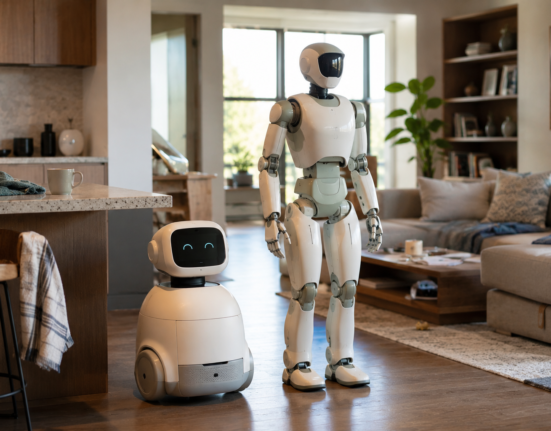
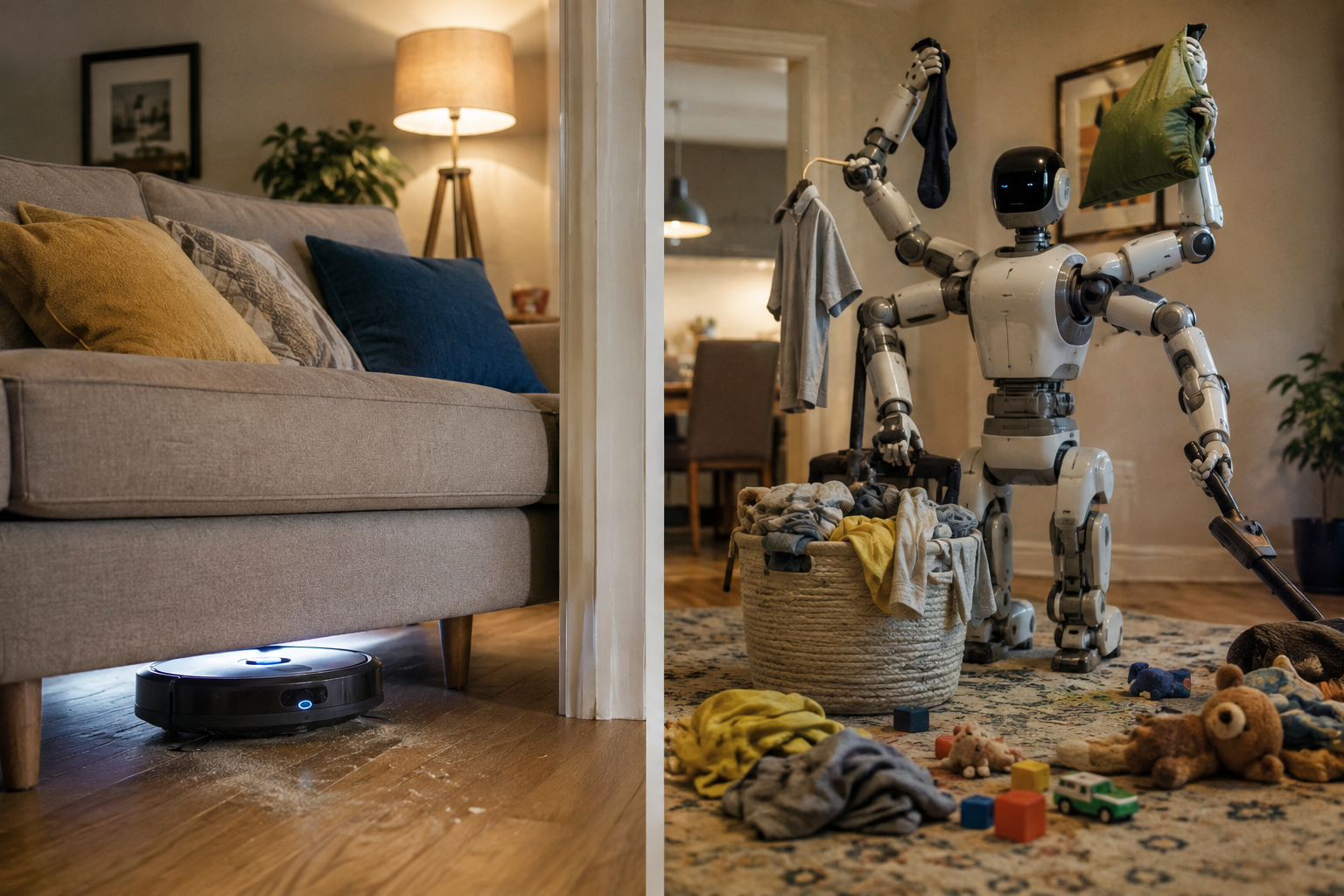
| By 2027, general-purpose home humanoids will be common in ordinary households. | They exist as expensive pre-order and pilot products from companies like 1X, priced around 20,000 dollars, still leaning on remote human assistance for many tasks rather than full autonomy. |
| Robot vacuums are a mature, “boring” category with nothing left to prove. | They are precisely the category that has delivered, with a market estimated near 7 billion dollars in 2026 and genuine year-over-year reliability gains from Roborock, Ecovacs, and iRobot. |
| A robot that can fold one shirt in a demo video can fold your laundry. | Demoed folding robots operate at a small fraction of human speed and cost thousands of dollars, making the actual time and money math unfavorable for nearly every household in 2026 and 2027. |
| CES demos are a reliable predictor of what ships to consumers on schedule. | Samsung’s Ballie was promised for 2025, vanished from CES 2026, and is now widely described as effectively vaporware, illustrating how often flashy demos fail to become shipped products. |
The Argument: We Are Still in the Vacuum Era, and That Is Fine
Here is the opinion this piece is going to argue, plainly: heading into 2027, the home robotics category that actually works is still, overwhelmingly, the same category that worked in 2022, cleaning robots, plus a modest expansion into mobile security and monitoring devices. Everything else marketed as a home robot in 2026, including general-purpose humanoids and multi-task tidying machines, is either a research pilot wearing a consumer price tag or a demo reel that has not yet survived contact with a real living room. This is not a pessimistic take. It is, if anything, a more useful one than the breathless “physical AI is here” framing that dominated CES 2026, because it tells you where to actually spend money right now.
The gap between demonstration and delivery has become the defining feature of this category. CES 2026 declared physical AI the dominant theme of the show, yet the distance between what gets demonstrated on a stage and what a robot reliably does in an actual, cluttered, real-world kitchen remains enormous. That gap is not a minor rounding error to be closed with one more firmware update; it reflects a genuine, unresolved difficulty in getting robots to generalize their manipulation skills across the nearly infinite variety of objects, layouts, and lighting conditions in real homes.
What Has Actually Delivered
Robot Vacuums and Mops
This is the uncontroversial part of the argument. Robot vacuum and mop hybrids with LiDAR mapping, obstacle avoidance, and auto-empty or auto-refill docking stations are, by any reasonable measure, a finished consumer success story. The category is large, competitive, and growing: the robotic vacuum cleaner market is estimated at roughly 7.05 billion dollars in 2026, with a projected compound annual growth rate near 13.5 percent through 2031. Roborock has overtaken the once-dominant iRobot in global market share, commanding roughly 16 percent of the category, while Ecovacs remains a dominant force domestically in China. These are not stagnant, one-trick appliances either; current generations mop, clean windows in some models, avoid pet waste, and increasingly fold monitoring functions into the same hardware.
Mobile Security and Monitoring Devices
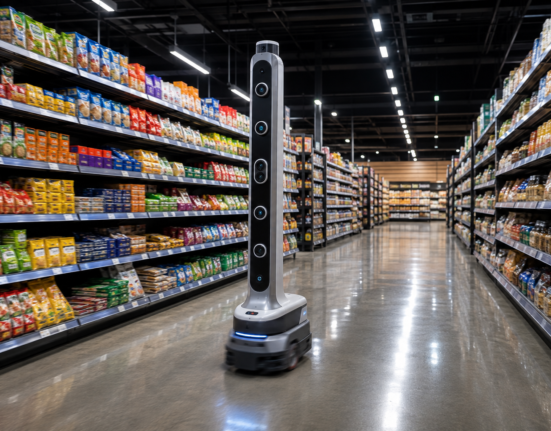
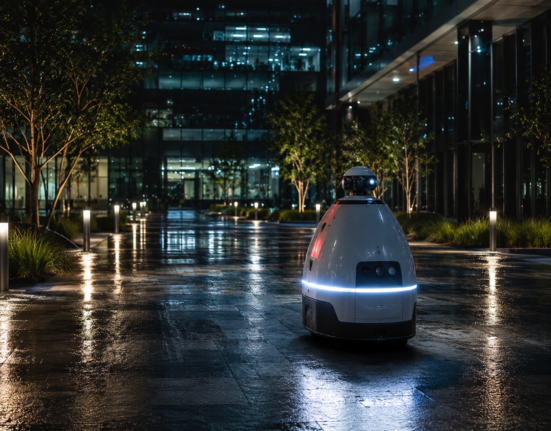
The second genuine success, smaller but real, is the emergence of mobile home security devices that combine cameras with limited movement or patrol capability. These are not full “robots” in the manipulation sense, but they represent a meaningful and durable expansion beyond floor cleaning: always-on monitoring, basic patrol routes around a property, and integration with existing smart home security systems. Unlike ambitious multi-purpose humanoids, these devices succeed because their job description is narrow and their sensors, primarily cameras, are already mature and inexpensive.
| Category | 2027 Verdict | Why |
|---|---|---|
| Robot vacuums and mops | Genuinely delivers | Mature sensors, competitive market, years of reliability iteration |
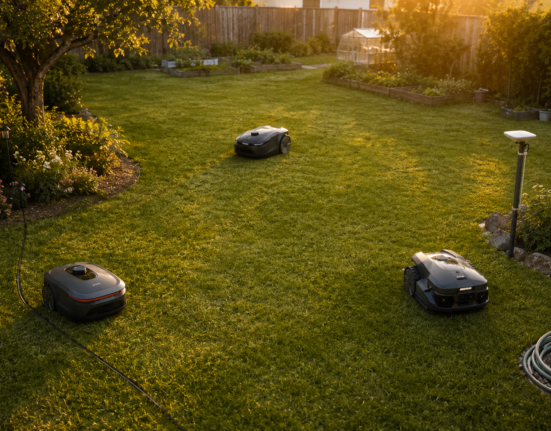
| Robot lawn mowers | Genuinely delivers | Wire-free boundary mapping now standard and dependable |
| Mobile security and monitoring robots | Genuinely delivers, narrow scope | Camera-based sensing is mature; job description stays limited |
| Rolling companion devices (no arms) | Mixed, niche | Useful for monitoring and calls, but not a labor replacement |
| General-purpose home humanoids | Overhyped, underdelivers | Still leans on teleoperation, priced near 20,000 dollars, unproven at scale |
| Complex folding and tidying robots | Overhyped, underdelivers | Too slow and expensive to justify cost versus doing it yourself |
What Still Does Not Work, and Why That Is Not Surprising
The multi-purpose home robots that generate the most press coverage, LG’s CLOi, Samsung’s Bot Handy concept, and Neura’s Aloha 2 among them, remain, in the words of coverage that is otherwise generally favorable to the category, promising but unproven in real-world conditions. The universal recommendation from that same coverage is to wait for independent reviews and at least one more hardware generation. That is a polite way of saying these products are not ready, and buyers should read it as such rather than as a minor caveat.
The clearest first-generation attempt to sell a genuine household humanoid, 1X NEO, is worth taking seriously precisely because it is honest about where it stands. Pre-orders sit at 20,000 dollars outright or 499 dollars a month, with a factory that opened in Hayward, California in April 2026 to begin producing units, first for research and internal home testing, and only later for paying customers. This is real hardware with a real delivery date, which is more than most humanoid announcements can claim. But it is not, by any fair reading, a finished appliance. Early units reportedly depend on meaningful remote human assistance for tasks the autonomous system cannot yet handle alone, which is a sensible engineering strategy for data collection but a poor foundation for a 20,000 dollar purchase marketed as a household helper.
Cost Versus Time Saved: The Honest Math
A simple comparison: a robot vacuum costing a few hundred dollars saves a genuine hour or more of manual cleaning per week, reliably, for years. A folding robot costing several thousand dollars that folds five shirts per hour saves at most a fraction of that time, at many times the cost, and requires supervision that partially offsets any labor saved.
The Ballie Lesson: Demos Are Not Products
If there is one data point that should reset expectations for the entire category, it is Samsung Ballie. A rolling AI companion robot, shown at CES with a promised summer 2025 launch, it was conspicuously absent from CES 2026 with no clear explanation, and industry observers now describe it as effectively vaporware unless Samsung formally revives the project. Samsung is not a scrappy startup; it is one of the largest consumer electronics companies in the world, with manufacturing scale and capital that most robotics startups can only envy. If Samsung could not turn a well-received CES demo into a shipped consumer robot on schedule, that should sharply lower confidence in every other splashy home robot announcement currently circulating, particularly from smaller, less capitalized companies making similar promises.
| Announced Product | Original Promise | 2026 Reality |
|---|---|---|
| Samsung Ballie | Summer 2025 consumer launch | Absent from CES 2026, widely called vaporware |
| 1X NEO | Consumer humanoid for domestic life | Shipping in limited numbers late 2026, teleoperation-assisted |
| Amazon Astro | Broad consumer home robot rollout | Narrowed to a single home model, invite-gated at 1,599 dollars |
Why This Pattern Repeats
It is worth asking why the gap between demo and delivery keeps recurring rather than closing. Part of the answer is that home environments are adversarial in a way factory floors are not: no two kitchens, laundry rooms, or living rooms are laid out identically, lighting varies wildly, and clutter is unpredictable by definition. Manipulation tasks that look simple to a human, picking up an oddly shaped object, distinguishing a placemat from a napkin, require a level of generalized perception and dexterity that current foundation models are still working toward, not tasks a single hardware generation can simply brute-force. Companies like Physical Intelligence are explicitly building general-purpose robotics foundation models meant to eventually power many different robot bodies, an approach likely to matter more for closing this gap than any individual company’s next chassis redesign.
Common mistake
Treating a strong CES demo or a slick pre-order page as evidence a home robot will ship on time and work as advertised. Samsung Ballie’s disappearance after a promised 2025 launch, from a company with immense manufacturing resources, shows that even the most credible-seeming announcements can quietly stall or vanish.
What worked
Consumers and reviewers who applied a simple test, does this robot do one narrow, well-defined task reliably, and is the company shipping in volume today, correctly identified vacuums, mowers, and basic security devices as safe purchases while avoiding disappointment with humanoid and tidying-robot pre-orders.
Frequently Overlooked Details
- Teleoperation as a hidden dependencyMany “autonomous” household humanoid demos and early deployments rely on human operators behind the scenes, a detail rarely emphasized in marketing but critical to judging real readiness.
- Market size as a maturity signalA multi-billion dollar, multi-competitor market, like robot vacuums, is a far stronger maturity signal than any single flagship product announcement.
- The five-shirts-an-hour problemFolding speed for demoed laundry robots remains so low that the labor saved rarely justifies the multi-thousand-dollar price tag, a detail often left out of glowing demo coverage.
- Invite gates as a soft launch signalProducts like Amazon Astro sold behind invite-only access often indicate a company hedging on manufacturing scale or confidence, not genuine mass-market readiness.
- Foundation models as the real bottleneckProgress in home robot manipulation is increasingly gated by general-purpose AI models rather than any single company’s mechanical hardware, meaning hardware announcements can outpace real capability.
- Second-generation discountIndustry coverage consistently recommends waiting for a second hardware generation on any multi-purpose home robot, since first-generation units routinely have costly, unresolved reliability issues.
What Would Change This Verdict
To be fair to the optimists, there is a plausible path by which this verdict could look outdated within a few years rather than a decade. If foundation models for robotic manipulation improve as quickly as large language models did between 2020 and 2024, and if hardware costs fall the way camera and LiDAR sensor costs fell for the vacuum category, a genuinely useful multi-task home robot in the 2,000 to 5,000 dollar range is plausible by the early 2030s. But plausible is not imminent, and nothing in the current 2026 to 2027 product lineup, including 1X NEO’s real but limited shipments, changes the practical buying advice for this year or next: buy the vacuum, buy the mower, consider a monitoring device, and treat every general-purpose humanoid or tidying robot pre-order as a bet on a future product category, not a purchase of a working appliance today.
Readers who want the deeper roadmap behind first-generation consumer humanoids, including pricing tiers and a step-by-step buyer’s framework, along with context on why the humanoid form factor keeps getting chosen despite these limitations, will find both covered in the related reading links below.
Where Robots Do Work Well Right Now
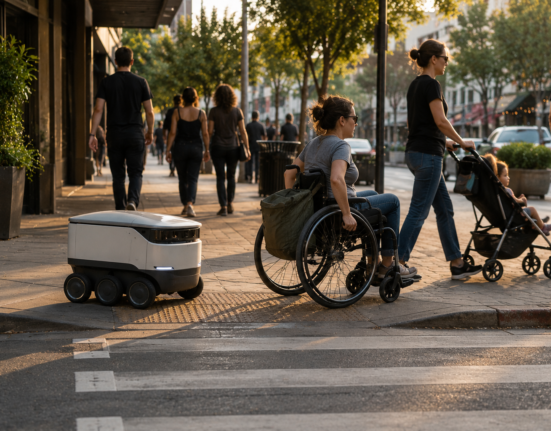
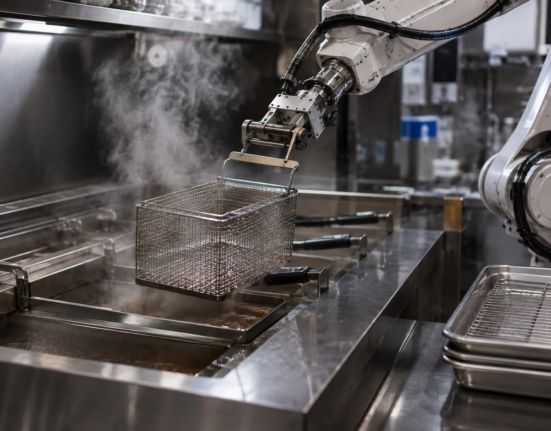
It is worth being specific about the adjacent categories that are quietly succeeding while humanoids grab headlines. Outdoor robotics has matured on nearly the same timeline as indoor vacuums, for the same underlying reason: a narrow, well-defined task with mature sensing requirements. Commercial and semi-commercial deployments of patrol-style security robots show the same pattern outside the home, succeeding specifically because their job is monitoring and alerting, not manipulation. And as robots of every category increasingly interact with people directly, whether on a sidewalk or in a hallway, the same lesson holds across public-space etiquette and food-service deployments alike: narrow scope succeeds, broad ambition struggles.
Key Takeaways
- Heading into 2027, robot vacuums, mops, and mowers remain the only home robot categories that have fully delivered on their promise.
- Mobile security and monitoring robots are a genuine, if narrower, second success story built on mature camera-based sensing.
- General-purpose home humanoids like 1X NEO are real, shipping products, but still early-adopter hardware leaning on remote human assistance.
- Complex folding and tidying robots remain too slow and expensive to justify their cost for nearly any household in 2026 or 2027.
- Samsung Ballie’s disappearance after a promised 2025 launch is strong evidence that CES demos do not reliably predict shipped consumer products.
- Foundation model progress, not hardware alone, is likely to be the real gating factor for when multi-task home robots finally become practical.
- The correct buying strategy in 2026 and 2027 is to invest in mature narrow specialists and treat every humanoid or tidying robot purchase as a speculative bet, not an appliance purchase.
Glossary
- Physical AI
- Industry shorthand, popularized around CES 2026, for AI systems embodied in robots that must perceive and act in the physical world, as opposed to purely digital AI applications.
- Teleoperation
- Remote human control of a robot’s actions, commonly used during early product deployments to complete tasks the robot’s autonomous software cannot yet reliably handle.
- Generalization (robotics)
- A robot’s ability to apply learned skills to new objects, layouts, and situations it was not explicitly trained on, the central unsolved challenge in home manipulation tasks.
- Invite gate
- A limited, waitlist-controlled product rollout used by companies to manage manufacturing capacity or manage expectations before a full public launch.
- Second-generation discount
- The informal practice of discounting the promises of first-generation hardware and waiting for a second product cycle before trusting reliability claims.
FAQs
What home robot categories have actually succeeded by 2027?
Robot vacuums and mops, robot lawn mowers, and mobile security or monitoring robots are the categories that have genuinely delivered, thanks to mature sensors, narrow task scope, and years of reliability iteration across competitive markets.
Are general-purpose home humanoid robots worth buying in 2026 or 2027?
Generally not yet for most households. Products like 1X NEO are real and shipping in limited numbers, priced around 20,000 dollars, but still depend on meaningful remote human assistance and are better understood as early pilot hardware than finished appliances.
What happened to Samsung’s Ballie robot?
Ballie was promised for a summer 2025 launch but was absent from CES 2026 with no clear explanation. Industry observers now describe it as effectively vaporware unless Samsung formally revives the project with a new announcement.
Can home robots reliably fold laundry or tidy rooms by 2027?
No, not at a practical pace or price. Demonstrated folding robots work far slower than a human and cost thousands of dollars, meaning the labor saved rarely justifies the expense for typical households as of 2026 and 2027.
Why do robot vacuums succeed while humanoid robots struggle?
Robot vacuums perform one narrow, well-defined task using mature, inexpensive sensors like LiDAR, refined over many product generations. Humanoids attempt broad, unpredictable manipulation tasks across infinitely varied home environments, a much harder and less solved problem.
What is the honest cost-benefit math on home robots in 2026?
Outside floor cleaning, no home robot in 2026 reduces household labor enough to justify its cost. A multi-thousand-dollar folding or tidying robot typically saves far less time than its price and required supervision would suggest.
Will home robots eventually become genuinely useful for tidying and manipulation?
Plausibly, if robotics foundation models improve as rapidly as large language models did in prior years and hardware costs fall similarly. A practical multi-task home robot in an affordable price range is a reasonable expectation for the early 2030s, not 2027.
How should I decide which home robots to actually buy right now?
Favor mature, narrow-task categories with competitive markets and years of reliability history, such as vacuums, mowers, and security monitoring devices, and treat any general-purpose humanoid or tidying robot as a speculative, early-adopter purchase rather than a dependable appliance.
References
- AI Magicx Blog, “Home Robots in 2026: What’s Actually Available, What It Costs, and Whether to Buy One Now”
- Silicon Snark, “Definitive Guide to Home Robots: Escaping the Vacuum Closet and Finding Your Living Room”
- BGR, “9 Home Robots That Can Solve Everyday Problems”
- The Gadgeteer, “Home Robots in 2026: What’s Shipping, What’s Vaporware”
- RobotShop Community, “Is NEO Your Next Robot Companion? The Arrival of Humanoids in Households Begins in 2026”
- Global Brands Magazine, “1X NEO Humanoid Robot: A Bold 20K Dollar Bet on Robotics”
- Mordor Intelligence, “Robotic Vacuum Cleaner Market Size, Growth Report”
- Spherical Insights, “Top 20 Companies in Global Robot Vacuum Cleaners Market”
- Supertrends AG, “Personal Robots in 2026: Between Useful Appliances and Unfinished Dreams”
Related reading: for the consumer roadmap behind these products, see personal robot assistants and the consumer product roadmap. On the public-facing side of robotics, see our coverage of robot etiquette in shared public spaces, security patrol robots, and kitchen and food service robotics. For form factor context, see why humanoid is the preferred form factor for 2026, and for the one outdoor category that has genuinely matured, see our robot lawn mowers compared.