Skip to content
March 5, 2026
The Tech Trends
The Tech Trends
The Tech Trends
The Tech Trends
AI
AI Ethics
Automation
Deep Learning
Generative AI
Machine Learning
Robotics
Culture
Creator Economy
Digital Nomads
Internet Culture
Remote Work
Tech Careers
Tech Events
Future Trends
5G/6G Networks
BioTech
Metaverse
Quantum Computing
Space Tech
Sustainable Tech
Innovation
AgriTech
EdTech
FinTech
Green Tech
HealthTech
Smart Cities
Gadgets
AR/VR Devices
Drones
Health Tech
Smart Home
Smartphones
Wearables
Software
App Development
Cloud Computing
Cybersecurity
Open Source
Productivity Tools
SaaS
Startups
Disruptive Ideas
Founder Stories
Funding News
Startup Trends
Tech Launches
Unicorn Watch
Web3
Blockchain
Cryptocurrency
DAOs
Decentralization
NFTs
Smart Cities
March 5, 2026
The Tech Trends
AI
AI Ethics
Automation
Deep Learning
Generative AI
Machine Learning
Robotics
Culture
Creator Economy
Digital Nomads
Internet Culture
Remote Work
Tech Careers
Tech Events
Future Trends
5G/6G Networks
BioTech
Metaverse
Quantum Computing
Space Tech
Sustainable Tech
Innovation
AgriTech
EdTech
FinTech
Green Tech
HealthTech
Smart Cities
Gadgets
AR/VR Devices
Drones
Health Tech
Smart Home
Smartphones
Wearables
Software
App Development
Cloud Computing
Cybersecurity
Open Source
Productivity Tools
SaaS
Startups
Disruptive Ideas
Founder Stories
Funding News
Startup Trends
Tech Launches
Unicorn Watch
Web3
Blockchain
Cryptocurrency
DAOs
Decentralization
NFTs
Smart Cities
×
Remote Work
The Tech Trends
Culture
Remote Work
Culture
Remote Work
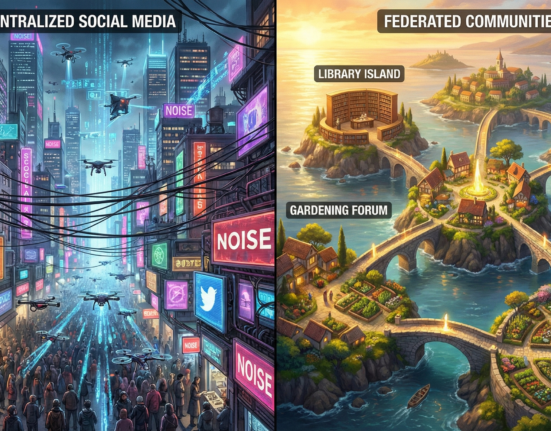
The Return of Forums: Reddit Alternatives & Federated Communities
by
Claire Mitchell
February 9, 2026
Culture
Remote Work
Hybrid Work Becoming the Default: Navigating the New Standard of Flexibility
by
Amy Jordan
February 8, 2026
Culture
Remote Work
AI‑powered productivity tools improving remote collaboration
by
Zahra Khalid
February 8, 2026
Culture
Remote Work
Outcome-Based Performance Models vs. Time-Tracking: The Struggle for Control
by
Tomasz Zieliński
February 7, 2026
Culture
Remote Work
Remote work hubs and decentralized workspaces
by
Sophie Williams
February 7, 2026
Culture
Remote Work
Mental Health Initiatives for Distributed Teams: A Complete Guide
by
Sofia Petrou
February 7, 2026
Culture
Remote Work
Continuous Upskilling and Digital Learning Budgets: The 2026 Guide
by
Rafael Ortega
February 7, 2026
Culture
Remote Work
Sustainability Practices for Remote Workers: Energy Use, Travel, and Green Habits
by
Priya Menon
February 7, 2026
Culture
Remote Work
Taxation and Legal Issues for Cross-Border Employees
by
Oliver Grant
February 6, 2026
Culture
Remote Work
Building culture in asynchronous teams: A comprehensive guide for 2026
by
Noah Berg
February 6, 2026
Culture
Remote Work
Technology for Immersive Meetings: VR/AR Collaboration Spaces
by
Mei Chen
February 6, 2026
Culture
Remote Work
10 Proven Benefits of AI Technology for Remote Collaboration
by
Claire Mitchell
November 16, 2025
Culture
Remote Work
How Machine Learning Supercharges Remote Work Productivity
by
Emma Hawkins
October 25, 2025
Culture
Remote Work
7 Ways AI Is Transforming Virtual Teams for Faster, Smarter Work
by
Sophie Williams
October 23, 2025
Culture
Remote Work
Top 5 AI Tools Transforming Remote Work
by
Laura Bradley
October 23, 2025
1
2
Table of Contents
×
Key takeaways
The driving force: Why leave the giants?
The “Enshittification” lifecycle
The algorithmic fatigue
The quest for a “Third Place”
1. The Federated Web (The Fediverse)
Definition and mechanism
Key advantages of federation
2. Top federated Reddit alternatives
Lemmy
Kbin (and Mbin)
Beehaw
3. The resurgence of standalone forums
The Discourse revolution
Tildes
Hacker News (HN)
4. Walled gardens: The shift to Discord and Slack
Discord: The new default forum
Slack and Mattermost
5. How to choose your new base
Criteria 1: The “Bus Factor” (Ownership)
Criteria 2: Visibility vs. Intimacy
Criteria 3: Moderation Style
6. Challenges of the new era
The “Empty Room” problem
Discovery friction
Fragmentation
7. Technical primer: How to join the Fediverse
8. Looking ahead: The future of online communities
Conclusion
Next steps
FAQs
References
←
Table of Contents