Third-Party Risk Management for SaaS Sprawl
SaaS sprawl has turned third-party risk management into a continuous data problem, not a once-a-year paperwork exercise. The average company now has more


SaaS sprawl has turned third-party risk management into a continuous data problem, not a once-a-year paperwork exercise. The average company now has more
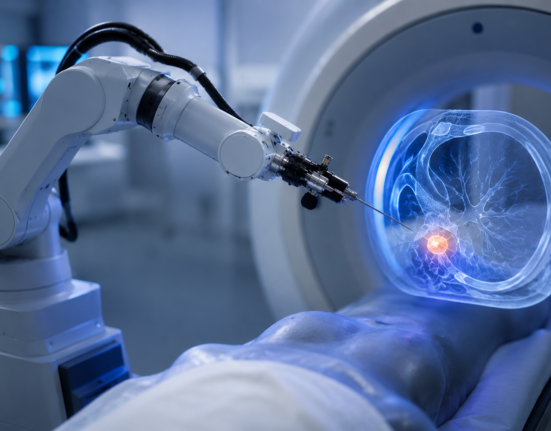
Robotic biopsy systems pair a precision needle-guidance arm with real-time CT, MRI, or ultrasound imaging to hit small, hard-to-reach lesions with sub-millimeter accuracy.

Cab-less freight trucks are purpose-built driverless vehicles with no windshield, seat, or steering wheel at all. Unlike retrofitted autonomous trucks that keep a

Bio-hybrid actuators use living muscle cells, not just muscle-inspired materials, as the force-generating component of a robot. Cultured cardiomyocytes or skeletal muscle tissue

Durable prompt engineering for developers relies on structure, not phrasing tricks. Context files, explicit constraint lists, and few-shot examples pulled from your own

Most enterprise AI investments still cannot prove a measurable profit-and-loss impact. A CFO-credible ROI framework separates hard cost savings from soft productivity claims,

Digital likeness rights now determine whether a studio can create, reuse, or license an actor’s synthetic double, and under what compensation terms. New

Compute governance uses control over advanced chips and large training runs as a policy lever for frontier AI. Export controls, mandatory training-run reporting,

The EU AI Act’s 2026 Omnibus delayed high-risk conformity deadlines, not the whole law. Annex III high-risk systems now have until December 2,

Myth Reality Nuclear power for AI data centers is still a distant, speculative idea Big tech has already committed to over 10 GW

A latency cascade is what happens when one slow step in a multi-agent chain forces every step after it to wait, and every

Task success rate tells you an agent failed, never why. Nine metrics that decompose reliability into diagnosable parts, which ones lead rather than

An LLM judge is a measuring instrument with known, reproducible biases. Position, length and self-preference all inflate scores. How to calibrate against human

As of March 2026, the horizon of marine science is no longer defined by the limits of human divers or the tethered constraints
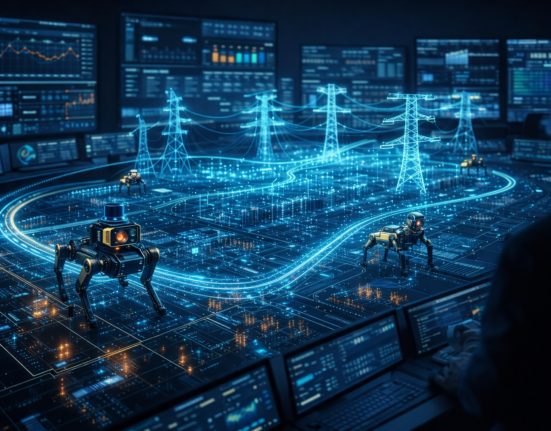
The intersection of the digital and physical worlds has reached a tipping point. For decades, “Artificial Intelligence” primarily lived behind screens—processing text, generating