Secrets Management: Rotation, Vaulting, and Leak Prevention
Most secrets leaks are a process failure, not a tooling failure. Centralized vaulting stops hardcoded credentials, automated rotation shrinks the value of anything


Most secrets leaks are a process failure, not a tooling failure. Centralized vaulting stops hardcoded credentials, automated rotation shrinks the value of anything

Ingestible capsule robots have turned GI diagnostics into a needle-free, swallowable procedure. Modern capsule endoscopy combines miniature cameras, AI-assisted lesion detection, and in

Autonomous rail freight depends on Digital Automatic Coupling replacing manual screw couplers. DAC systems auto-connect brake, power, and data lines between wagons in

Physical grounding may be a genuine requirement for artificial general intelligence, not an optional add-on. A growing body of embodied cognition research and

AI pair programming needs the same explicit norms teams already use for human collaboration, plus a few new ones. Disclosure of AI involvement

An AI maturity model is a staged benchmark for how deeply artificial intelligence is embedded into an organization’s strategy, data, operations, and culture.
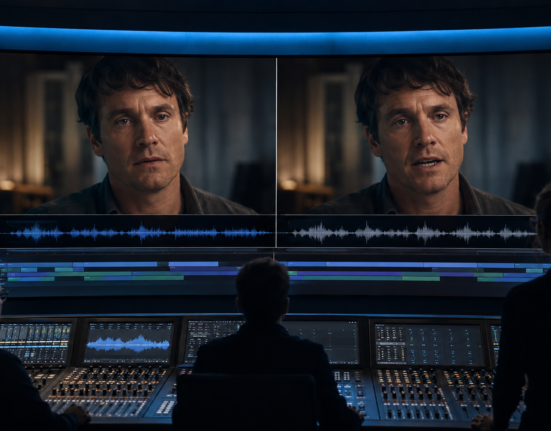
AI dubbing localization now combines voice cloning with visual lip-sync re-animation to make translated dialogue match a performer’s mouth movements in any target

Neurorights are emerging legal protections for brain data and mental privacy in the brain-computer interface era. Chile pioneered constitutional protection in 2021 and

Ambient intelligence is technology that fades into the background, embedded into everyday surroundings, anticipating needs and responding without explicit commands or screens. It

Co-packaged optics moves the optical interface directly next to the chip die instead of at the edge of a server, and by 2026

RPA fails loudly when a screen changes; agents fail quietly by doing something plausible instead. Twelve differences across determinism, exception handling, auditability and

The useful question is not how to stop hallucination but how to detect it before a user sees it. Ten techniques ranked by

In the modern industrial landscape, the intersection of technology and ethics has moved from a niche conversation to a boardroom priority. As of
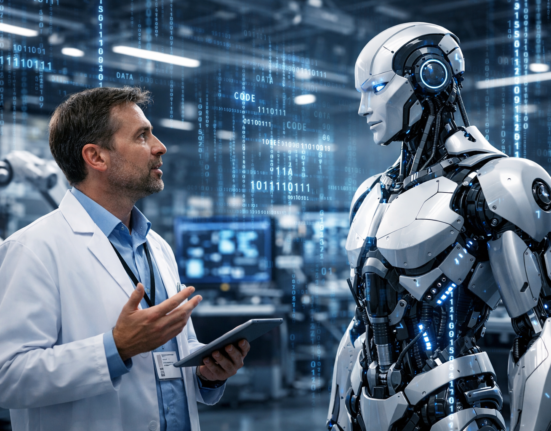
As of March 2026, the landscape of software engineering has undergone a seismic shift. We have moved past the era of manual syntax

The dream of creating a robot that thinks, reacts, and moves with the fluid grace of a biological organism has long been a