October 18, 2026

Amy Jordan

Avatar photo
From the University of California, Berkeley, where she graduated with honors and participated actively in the Women in Computing club, Amy Jordan earned a Bachelor of Science degree in Computer Science. Her knowledge grew even more advanced when she completed a Master's degree in Data Analytics from New York University, concentrating on predictive modeling, big data technologies, and machine learning. Amy began her varied and successful career in the technology industry as a software engineer at a rapidly expanding Silicon Valley company eight years ago. She was instrumental in creating and putting forward creative AI-driven solutions that improved business efficiency and user experience there.Following several years in software development, Amy turned her attention to tech journalism and analysis, combining her natural storytelling ability with great technical expertise. She has written for well-known technology magazines and blogs, breaking down difficult subjects including artificial intelligence, blockchain, and Web3 technologies into concise, interesting pieces fit for both tech professionals and readers overall. Her perceptive points of view have brought her invitations to panel debates and industry conferences.Amy advocates responsible innovation that gives privacy and justice top priority and is especially passionate about the ethical questions of artificial intelligence. She tracks wearable technology closely since she believes it will be essential for personal health and connectivity going forward. Apart from her personal life, Amy is committed to returning to the society by supporting diversity and inclusion in the tech sector and mentoring young women aiming at STEM professions. Amy enjoys long-distance running, reading new science fiction books, and going to neighborhood tech events to keep in touch with other aficionados when she is not writing or mentoring.
    Cybersecurity

    Kubernetes Security Hardening: A Practical Checklist

    Kubernetes is not secure by default, so hardening means layering RBAC, network policies, pod security admission, secrets encryption, and a patch cadence on


    Read More
    Robotics in Agriculture

    Wildfire Detection and Response Robotics

    Wildfire robotics now spans three integrated layers: orbital and airborne detection, autonomous aerial suppression, and ground-based firefighting robots. Together these systems compress ignition-to-response

    Read More
    Autonomous Logistics

    Multi-Robot Traffic Management in Dense Warehouses

    Coordinating dozens or hundreds of robots in narrow warehouse aisles requires intersection reservation systems, deadlock avoidance algorithms, and real-time congestion prediction working together.

    Read More
    Humanoid

    Dexterous Manipulation: Why Hands Are Still the Hardest Problem

    Robotic hands lag years behind arms and legs because tactile sensing bandwidth, actuator packing density, and control complexity all hit hard physical limits

    Read More
    Leadership Role

    Agent Operations: Running a Digital Workforce Day to Day

    Agent operations is the SRE discipline for AI agents, not another KPI framework. It covers the runbook mechanics of keeping a fleet of

    Read More
    Machine Learning

    Graph Neural Networks for Fraud and Risk Detection

    Graph neural networks for fraud detection model transactions as a connected graph, not isolated rows, catching money-laundering rings and mule networks that per-transaction

    Read More
    AI

    AI Music Production Tools Compared for Working Producers

    AI music production tools have split into two camps: full-song generators like Suno and Udio, and DAW-integrated assistants that handle stems, mixing, and

    Read More
    AI Ethics

    Agentic AI Accountability: Auditing Decisions No Human Reviewed

    Agentic AI accountability means being able to reconstruct, after the fact, exactly why an autonomous agent took an action that no human reviewed

    Read More
    Edge Intelligence

    Privacy-First AI: Why On-Device Processing Is Becoming a Selling Point

    The global on-device AI market was valued at $10.76 billion in 2025 and is projected to reach $75.51 billion by 2033, and the

    Read More
    AI Infrastructure

    Renting vs Owning GPUs: A TCO Model for AI Workloads

    The crossover is utilization, not budget size: below roughly 70% sustained GPU utilization, cloud rental wins on total cost; above about 80%, owning

    Read More
    Agentic AI

    Agentic AI Architecture: The 12 Building Blocks of a Production Agent Stack

    A demo agent is a loop and a model. A production agent is twelve components, and the ones teams skip are always the

    Read More
    Scaling Inference

    Fine-Tuning vs RAG vs Prompting: A Decision Framework With Cost Math

    Start with prompting, add retrieval for knowledge, fine-tune only for behaviour. The variables that actually decide, three scenario walkthroughs with different answers, and
    Read More
    Autonomous Field Service Operations

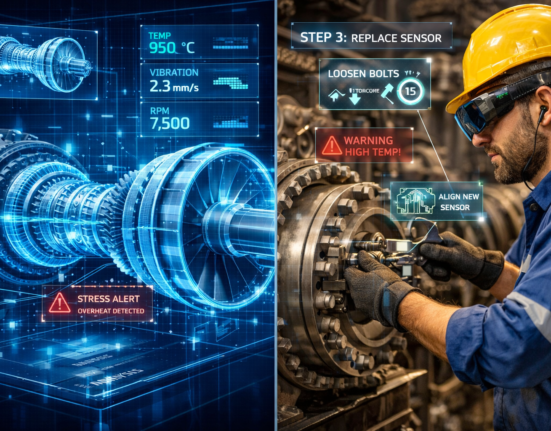
    The Future of Autonomous Field Service Operations: A 2026 Guide

    The landscape of field service has undergone a radical transformation. We have moved past the era of “digitalization”—where mobile apps and GPS tracking

    Read More
    Robots in Space

    Robots in Space: Maintaining Orbiting Infrastructure with AI

    The silent expanse above our atmosphere is no longer just a vacuum for observation; it has become a bustling hub of critical infrastructure.

    Read More
    Soft Brain Implants

    Soft Brain Implants: Merging BCI and Robotics for the Future

    The integration of advanced materials science with neuronal engineering is ushering in a new era of human-machine interaction. This convergence is perhaps most

    Read More