Securing Family Accounts: Shared Devices, Kids, and Elders
Securing family accounts means balancing protection with trust across shared devices, children’s growing independence, and elders’ vulnerability to scams. A family password manager,


Securing family accounts means balancing protection with trust across shared devices, children’s growing independence, and elders’ vulnerability to scams. A family password manager,
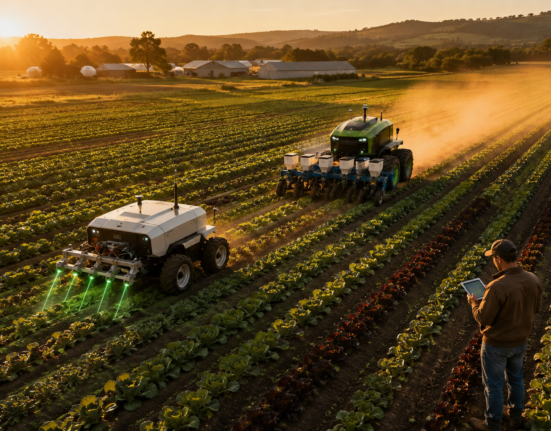
Mid-size farms recover the cost of agricultural robots fastest in high-value, labor-intensive crops. Precision spraying and autonomous weeding often pay back in twelve

The serious version of the robot rights debate is not about granting citizenship to chatbots; it is about whether functional evidence of sentience
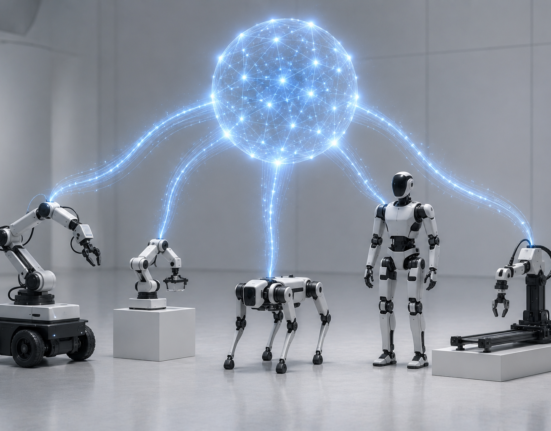
A robot foundation model is a single neural network trained across many different robot bodies that transfers skills between them. Instead of one

Lines of code and acceptance rate are the wrong way to measure AI coding productivity. Engineering organizations are adapting DORA metrics, cycle time,

Models fail quietly in production, not loudly. Model monitoring catches data drift, concept drift, training-serving skew, and label-free performance decay using statistical distance

An 8GB phone has roughly 4GB of RAM actually available for AI inference once the OS takes its share, and a 4-bit quantized

Inference now consumes more than half of AI-optimized infrastructure spending — over $50 billion in 2026 — having overtaken training for the first

A system that checks its own work is only as good as the independence of the checker. Why self-verification fails when it shares

Public benchmarks cannot tell you whether your prompt change broke production. A four-tier eval suite that runs in CI, catches silent regressions, and

Imagine a world where a person who has suffered a debilitating stroke can walk again, not just with assistive devices, but with a

Tactical robotics refers to the deployment of specialized, mobile, and often autonomous machines designed to assist first responders, military personnel, and disaster management
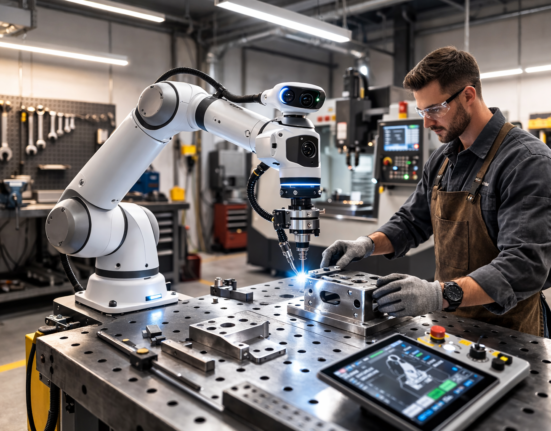
In the landscape of modern production, the “iron curtain” of traditional automation is falling. For decades, industrial robotics was the exclusive playground of
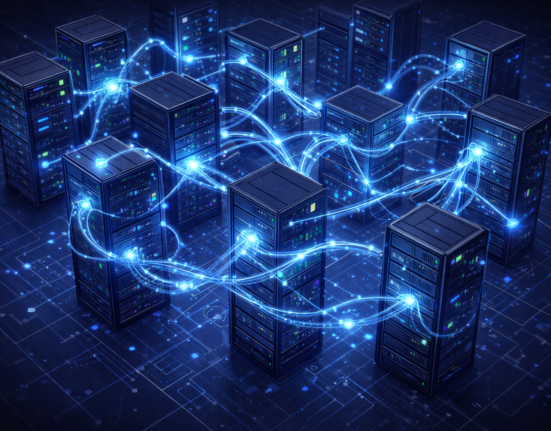
The traditional backend architecture—once a stable world of Relational Database Management Systems (RDBMS), REST APIs, and deterministic logic—is undergoing its most radical transformation

As of February 2026, the landscape of Artificial Intelligence has shifted from “can the model answer this question?” to “can the system complete