Shift-Left Security Without Blocking Developers
Shift-left security works only when it reduces developer friction instead of adding to it. IDE-integrated scanning, pre-commit hooks, and severity-based triage give fast,


Shift-left security works only when it reduces developer friction instead of adding to it. IDE-integrated scanning, pre-commit hooks, and severity-based triage give fast,
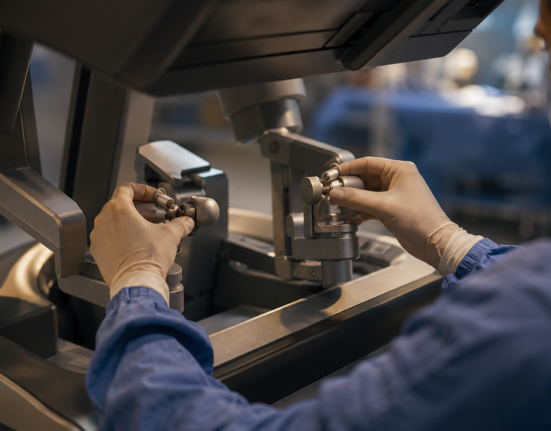
Surgeons using the newest robotic platforms can now feel tissue, not just see it. Da Vinci 5 became the first FDA-cleared platform with

Port automation now combines autonomous yard trucks, automated stacking cranes, and AI-driven terminal software to move containers with minimal onsite driving staff. Fully

A humanoid robot’s true operating cost is its amortized capital expense plus opex, divided by productive hours worked. Built correctly, that dollar-per-hour figure
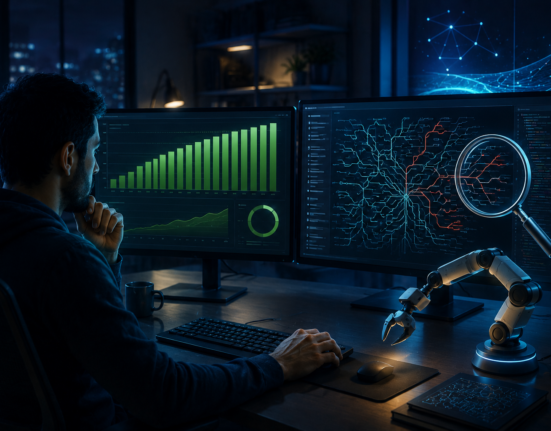
AI test generation raises coverage fast, but coverage alone cannot prove your tests catch bugs. Tools scaffold unit tests, suggest property-based cases, and

Zero-knowledge machine learning lets anyone verify an AI model ran correctly without seeing its weights or inputs. Using zero-knowledge proofs, zkML generates a

Generative AI brand safety now depends on structured guardrails, not luck. Marketing teams that pair approved-prompt libraries, human review gates, brand-voice fine-tuning, moderation

Open-weight models cannot be patched, revoked, or recalled once released, so every safety mitigation has to work before the download link goes live.

A true air-gapped AI environment has no physical WAN connections, no external DNS resolution, and no outbound telemetry at all — a stricter
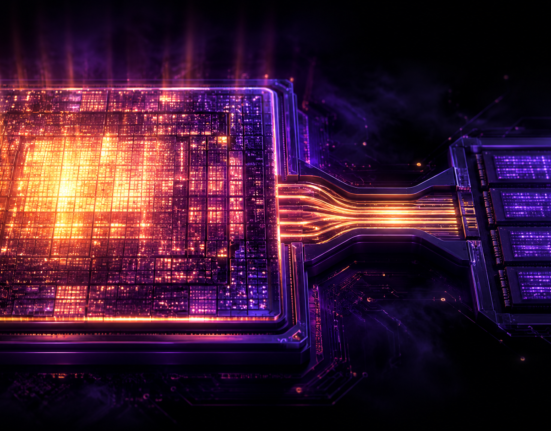
Modern GPUs can compute far faster than traditional memory can feed them data — and in 2026, HBM (high-bandwidth memory), not raw compute,

Updating a model on new data erodes what it already knew, and the erosion is silent. Why forgetting happens mechanically, the four mitigation

LoRA freezes base weights and trains rank decomposition matrices instead. QLoRA adds 4-bit quantization so a 65B model fits one 48GB GPU. Twelve
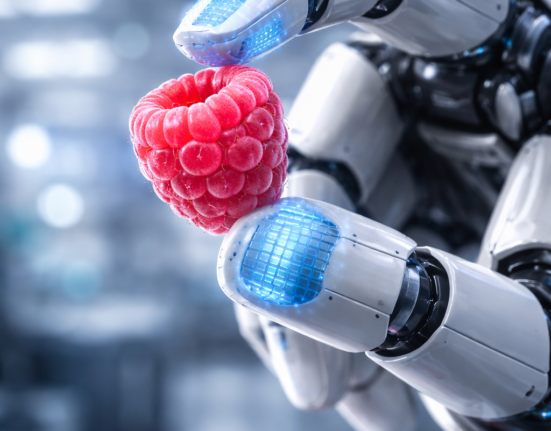
Tactile sensing is the ability of a robotic system to detect physical interaction with its environment through touch. While robots have excelled at

For billions of years, nature has been the ultimate laboratory. Through the relentless process of natural selection, biological organisms have solved complex problems

In the heart of the fourth industrial revolution, the automotive industry is undergoing a seismic shift that transcends the simple transition from internal