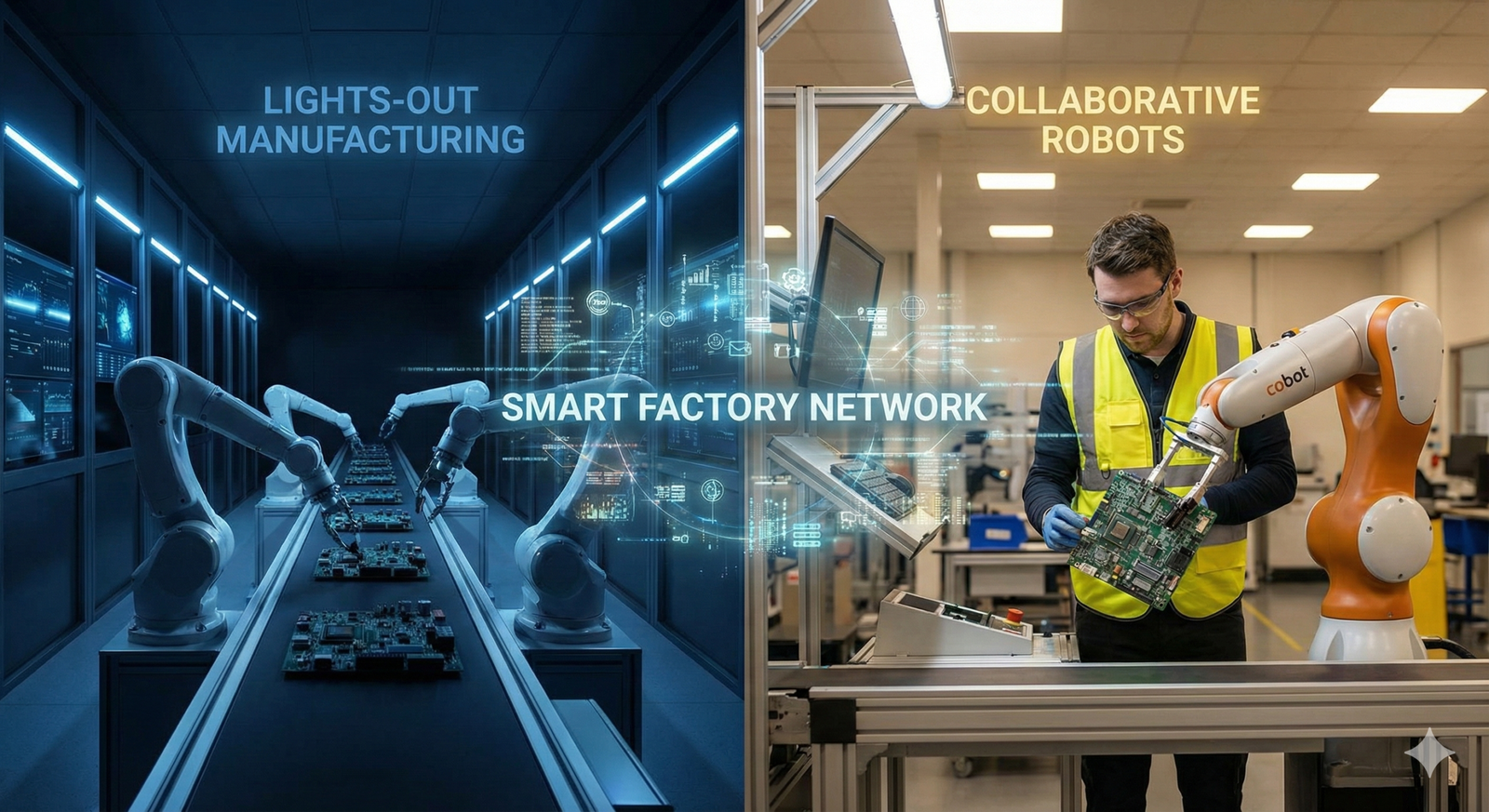
The landscape of industrial production is undergoing a seismic shift, driven by the convergence of connectivity, intelligence, and mechanics. At the heart of this transformation is smart manufacturing automation, a discipline that no longer forces companies to choose between rigid, heavy machinery and manual labor. Instead, today’s decision-makers face a spectrum of possibilities ranging from “lights-out” factories—facilities designed to operate fully autonomously without human intervention—to environments powered by collaborative robots (cobots) that augment human potential rather than replacing it.
Understanding the nuance between these two approaches is critical. While the vision of a factory that runs itself 24/7 is compelling, the reality of implementation often favors a hybrid approach that leverages the precision of machines and the adaptability of humans. This guide explores the mechanisms, benefits, and strategic considerations of these technologies, helping leaders navigate the complex ecosystem of Industry 4.0.
Key Takeaways
- Spectrum of Autonomy: Smart manufacturing is not binary; it exists on a sliding scale from fully manual to fully autonomous “dark” factories.
- Cobot Advantage: Collaborative robots are designed for safety and flexibility, bridging the gap between human dexterity and machine endurance.
- Data as Fuel: Both lights-out and collaborative models rely heavily on the Industrial Internet of Things (IIoT) and real-time data to function effectively.
- Strategic Fit: High-volume, low-mix production suits lights-out automation, while high-mix, low-volume tasks often require cobots.
- Maintenance is Critical: In highly automated environments, predictive maintenance moves from a “nice-to-have” to a mission-critical necessity.
Scope of This Guide
This article covers the operational strategies, technological underpinnings, and decision frameworks for smart manufacturing automation. We will examine the architecture of lights-out manufacturing and collaborative robotics, compare their use cases, and discuss the “how-to” of implementation. We will not cover general manufacturing supply chain logistics or basic lean manufacturing principles in depth, except where they intersect directly with automation technologies.
Defining the Landscape of Smart Manufacturing Automation
Before diving into specific methodologies, it is essential to understand what distinguishes “smart” manufacturing from traditional automation. Traditional automation (Industry 3.0) focused on repetition: a machine performing the exact same weld on the exact same spot, thousands of times a day. If the part arrived slightly askew, the machine would likely ruin it or jam.
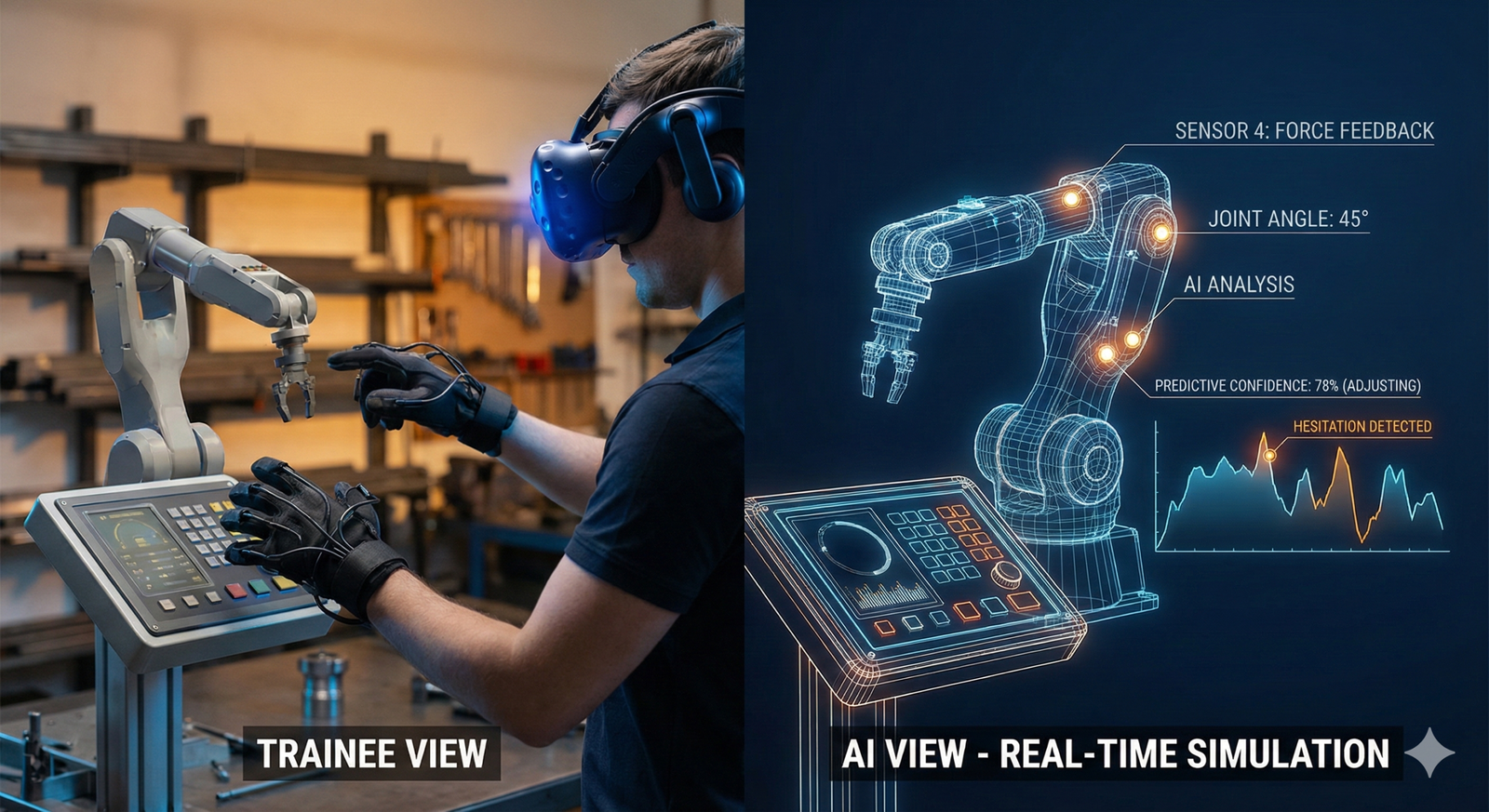
Smart manufacturing automation (Industry 4.0 and beyond) introduces cognition and connectivity. It is not just about the arm moving; it is about the arm “seeing” the part via computer vision, adjusting its grip based on force sensors, and communicating its cycle time to a central cloud dashboard.
The Connectivity Ecosystem
In this environment, every asset—from the torque wrench to the HVAC system—generates data. This interconnectedness allows for:
- Self-Correction: Machines that adjust parameters in real-time to maintain quality.
- Transparency: Real-time visibility into production bottlenecks.
- Flexibility: Production lines that can switch between product variants with minimal downtime.
Whether a facility aims for a lights-out model or a collaborative one, this digital backbone is the non-negotiable prerequisite.
The “Lights-Out” Factory: Concept and Mechanics
The term “lights-out manufacturing” refers to factories that run fully autonomously, theoretically allowing the lights (and HVAC) to be turned off because no human workers are present. While the term is often used metaphorically to describe highly automated shifts (e.g., a night shift running unsupervised), true lights-out manufacturing is a rigorous engineering discipline.
How It Works
A lights-out factory is not simply a standard factory minus the people. It requires a fundamental redesign of the production floor.
- Material Handling: Automated Guided Vehicles (AGVs) or Autonomous Mobile Robots (AMRs) transport raw materials from receiving docks to production lines without human guidance.
- Production: CNC machines, robotic arms, and 3D printers execute fabrication and assembly tasks.
- Quality Control: Automated Optical Inspection (AOI) systems use high-resolution cameras and AI to detect defects faster and more accurately than the human eye.
- The “Dark” Environment: Because robots rely on sensors, LIDAR, and data streams rather than visible light, these facilities can operate in conditions uncomfortable or impossible for humans (e.g., extreme temperatures, absence of oxygen, or total darkness).
Ideal Use Cases
Lights-out automation is most effective in scenarios characterized by High Volume, Low Mix.
- Precision Machining: creating thousands of identical metal gears where consistency is paramount.
- Hazardous Environments: Handling toxic chemicals, radioactive materials, or extreme heat where human safety is a liability.
- Semiconductor Manufacturing: Where human presence introduces contaminants (dust, skin cells) that can ruin microchips.
The Challenge of Rigidity
The primary trade-off of the lights-out model is rigidity. If a fully autonomous line is designed to make Product A, retooling it to make Product B can be an expensive and time-consuming engineering project. The system struggles with “edge cases”—unexpected anomalies that a human would solve instinctively (like jiggling a stuck latch) but which might cause a robot to halt operations entirely to prevent damage.
Collaborative Robots (Cobots): The Human-in-the-Loop
On the other end of the smart manufacturing automation spectrum lies the collaborative robot, or “cobot.” Unlike traditional industrial robots, which are often caged behind yellow safety fences to prevent them from injuring workers, cobots are designed to work alongside humans.
Safety and Interaction
Cobots utilize advanced force-limiting sensors and computer vision. If a cobot’s arm bumps into a human arm, it stops instantly. This safety profile allows them to be integrated directly into existing workflows without the massive footprint of safety cages.
How It Works in Practice
In a collaborative setup, the robot handles the “dull, dirty, and dangerous” parts of a task, while the human handles the “dexterous, decision-based, and delicate” parts.
- Example: In an electronics assembly, a cobot might apply a precise bead of glue to a casing (a task requiring steady, repetitive motion). A human worker then places the delicate circuit board into the casing and snaps it shut (a task requiring tactile feedback and visual judgment), after which the cobot moves the finished unit to a tray.
Ideal Use Cases
Cobots shine in High Mix, Low Volume environments.
- SME Manufacturing: Small to mid-sized enterprises that produce variable batches and cannot afford massive industrial automation.
- Complex Assembly: Products like medical devices or luxury watches where human judgment is required for quality assurance.
- Picking and Packing: E-commerce fulfillment where package sizes and shapes vary wildly.
Comparative Analysis: Autonomy vs. Collaboration
To choose the right path for smart manufacturing automation, organizations must evaluate their operational goals against the capabilities of each model.
Key Comparison Criteria
| Feature | Lights-Out Automation | Collaborative Robots (Cobots) |
| Primary Goal | Maximizing throughput and consistency. | Maximizing flexibility and worker augmentation. |
| Initial Investment | High (requires total system overhaul). | Low to Medium (can be deployed incrementally). |
| Flexibility | Low (difficult to reconfigure). | High (easy to reprogram and move). |
| Space Requirements | Large (often requires safety caging/dedicated zones). | Small (shares space with workers). |
| Skill Requirement | Specialized automation engineers/programmers. | General operators (intuitive interfaces). |
| ROI Horizon | Long-term (volume dependent). | Short to Medium-term (efficiency gains). |
The Hybrid Reality
In practice, few factories are 100% lights-out. A common approach is to run lights-out shifts during nights and weekends for standard parts, while using day shifts populated by humans and cobots for complex assembly, finishing, and custom orders. This “hybrid” model optimizes asset utilization without sacrificing the agility needed to respond to market changes.
Core Technologies Enabling the Smart Factory
Whether a factory is dark or collaborative, the “smart” in smart manufacturing automation is derived from a suite of underlying technologies. These enablers transform disconnected machines into a cohesive ecosystem.
1. The Industrial Internet of Things (IIoT)
IIoT is the nervous system of the smart factory. It consists of thousands of sensors attached to machinery that measure vibration, temperature, pressure, and power consumption.
- Role: Connectivity ensures that a robot doesn’t just work; it reports on how it is working. If a motor begins to vibrate abnormally, the IIoT network flags it before failure occurs.
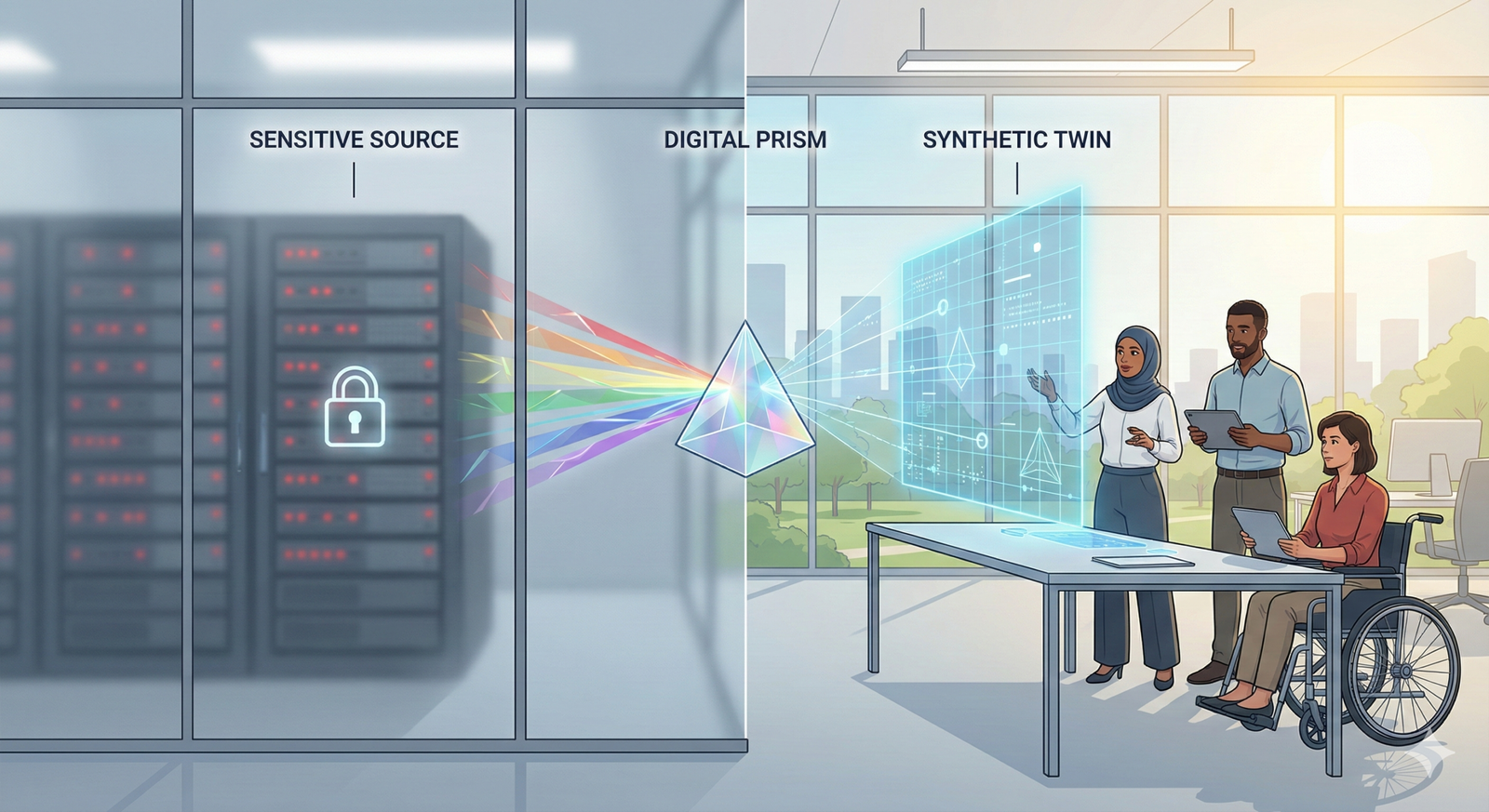
2. Digital Twins
A digital twin is a virtual replica of a physical asset, process, or system.
- Role: Before a company builds a lights-out production line, they simulate it using a digital twin. They can test how the robots behave if the conveyor belt speed increases by 10%. This simulation capability de-risks the massive capital expenditure of automation. In operations, the digital twin receives real-time data, allowing managers to visualize the factory status remotely.
3. Artificial Intelligence and Machine Learning
AI is the brain that interprets IIoT data.
- In Lights-Out: AI optimizes the flow of AGVs to prevent traffic jams on the factory floor.
- In Cobots: Machine learning allows cobots to “learn” by demonstration. A human can guide a cobot’s arm through a motion, and the AI optimizes that path for speed and smoothness.
4. Edge Computing
Sending terabytes of sensor data to the cloud introduces latency (delay).
- Role: Edge computing processes data locally—right on the machine or a nearby server. For a fast-moving robotic arm, a split-second delay in processing visual data could result in an error. Edge computing ensures decisions are made in milliseconds.
Strategic Implementation: How to Transition
Moving toward smart manufacturing automation is not a “plug and play” process. It requires a phased roadmap.
Phase 1: Assessment and Data Foundation
Before buying a single robot, manufacturers must understand their current processes.
- Audit: Identify bottlenecks. Is the slowdown caused by human fatigue, machine downtime, or material shortages?
- Connectivity: Ensure existing machines can output data. This may involve retrofitting legacy equipment with IoT sensors.
Phase 2: Pilot Projects
Start small to validate the technology and the ROI.
- Cobot Pilot: Deploy a cobot at a single station where ergonomic strain is high (e.g., lifting heavy boxes onto a pallet). Measure the change in cycle time and worker injury rates.
- Automation Pilot: Automate a single, repetitive sub-process, such as machine tending (loading/unloading a CNC machine), to run unattended during lunch breaks.
Phase 3: Integration and Scaling
Once the pilots prove successful, scale the solution.
- Integration: Connect the new robots to the Manufacturing Execution System (MES) and Enterprise Resource Planning (ERP) software. The sales team should know instantly when a lights-out shift finishes a batch of products.
- Standardization: Create standard operating procedures (SOPs) for programming and maintaining the automation assets.
Phase 4: Optimization
Use the data generated by the new systems to refine operations.
- Predictive Maintenance: Shift from “repair when broken” to “repair when the data indicates wear.”
- Loop Closure: Feed quality data back into the design process to improve product manufacturability.
Challenges and Pitfalls in Automation
While the benefits of smart manufacturing automation are clear, the path is fraught with obstacles. Companies often underestimate the complexity of removing humans from the loop.
1. The “Automation Paradox”
Over-automation can lead to fragility. A famous example involves the automotive industry in the late 2010s, where aggressive attempts to automate final assembly (tasks like installing wiring harnesses) led to massive production delays. Humans are incredibly efficient at tasks requiring tactile feedback and complex manipulation; replacing them with robots for the sake of “modernization” can sometimes slow production down and increase costs.
2. Data Silos and Interoperability
Factories often possess a “zoo” of machines from different vendors—some brand new, some 30 years old. Getting a German robotic arm to talk to a Japanese CNC machine and an American ERP system is a significant integration challenge. Without unified data standards, smart manufacturing automation becomes a series of disconnected islands.
3. Cybersecurity Risks
Connecting a factory to the internet opens it to cyberattacks.
- Ransomware: Attackers can hold a production line hostage, costing millions of dollars per day.
- IP Theft: Competitors or state actors may attempt to steal digital designs from the network.
- Safety Hacking: In a worst-case scenario, a hacker could theoretically override safety protocols on a robot, endangering physical infrastructure.
4. The “Long Tail” of Reliability
In a lights-out factory, reliability must be near-perfect. If a system is 99% reliable, but executes 10,000 operations a day, that is 100 errors a day. In a dark factory, one error can cascade into a massive pile-up of damaged goods before anyone notices. Achieving “five nines” (99.999%) reliability requires rigorous engineering and redundancy.
The Human Impact: Jobs and Skills
The narrative that smart manufacturing automation leads to mass unemployment is nuanced. While it is true that distinct roles (e.g., manual machine tending, basic assembly) are disappearing, the demand for new roles is outstripping supply.
From Operator to Supervisor
The role of the factory worker is shifting from doing the work to supervising the work.
- New Roles: Robot coordinators, digital twin analysts, predictive maintenance technicians, and AI trainers.
- Upskilling: This transition requires a massive investment in education. A worker who used to weld must now learn to program the welding robot.
Accessibility and Inclusion
Cobots, in particular, are making manufacturing more inclusive. By taking over the heavy lifting and physically strenuous tasks, they allow older workers or those with physical limitations to extend their careers. The interface for modern cobots is often tablet-based and intuitive, lowering the barrier to entry for non-engineers to manage automation.
Future Trends: What to Watch (2026–2030)
As of 2026, smart manufacturing automation is evolving beyond simple task execution toward autonomous decision-making.
Generative AI in Manufacturing
Generative AI is moving from the office to the factory floor. It is being used to generate optimal factory layouts, write PLC (Programmable Logic Controller) code for robots, and even design fixtures and jigs that robots use to hold parts—speeding up the deployment phase from months to weeks.
Software-Defined Manufacturing
Hardware is becoming commoditized; the value is shifting to software. Future factories will be “software-defined,” meaning the functionality of a production line can be completely changed by updating the code, rather than physically moving machines. This supports the ultimate goal of “batch size one”—producing a custom item for the cost of a mass-produced one.
Sustainability and Energy Efficiency
Smart automation is a key driver of green manufacturing.
- Energy Optimization: AI systems can put robots into “sleep mode” between cycles or optimize their motion paths to consume the minimum amount of electricity.
- Waste Reduction: Precision automation reduces scrap rates, ensuring raw materials are utilized with near-100% efficiency.
Common Mistakes to Avoid
When implementing smart manufacturing automation, organizations frequently stumble on these pitfalls:
- Automating Waste: Automating an inefficient process just makes the inefficiency happen faster. Lean manufacturing principles (simplifying the process) must be applied before automation is introduced.
- Ignoring the Culture: If workers perceive robots as the enemy, they may sabotage the implementation or fail to maintain it properly. Change management and transparency about job roles are crucial.
- Underestimating Maintenance: Automated systems are complex. They require a rigorous schedule of calibration and software updates. Failing to budget for this ongoing OpEx (Operational Expenditure) can lead to system degradation.
- Chasing “Cool” Factors: Buying a robot because it looks high-tech, rather than because it solves a specific business problem (like a bottleneck or quality issue), is a recipe for low ROI.
Related Topics to Explore
For those looking to deepen their understanding of the industrial ecosystem, the following topics provide valuable context:
- Cybersecurity in Operational Technology (OT): Protecting the factory floor from digital threats.
- Additive Manufacturing (3D Printing): How it complements subtractive manufacturing in smart factories.
- The Circular Economy: Designing products and processes for reuse and recycling.
- 5G in Manufacturing: The role of ultra-low latency wireless networks in robot coordination.
- Manufacturing Execution Systems (MES): The software layer that manages production.
Conclusion
Smart manufacturing automation is not a distant sci-fi future; it is the current standard for operational excellence. Whether through the uncompromising efficiency of lights-out factories or the flexible synergy of collaborative robots, manufacturers are finding new ways to drive productivity and quality.
The choice between lights-out and collaborative models is not binary. Most successful manufacturers will find themselves managing a dynamic ecosystem that includes both. The “dark” autonomous zones will handle the high-speed, repetitive baseload work, while well-lit collaborative zones will leverage human creativity for customization and complex problem-solving.
Success in this new era requires a holistic view—one that respects the technology but prioritizes the strategy. It demands leaders who are willing to invest not just in silicon and steel, but in the skills and adaptability of their workforce. As factories become smarter, the opportunities for innovation grow brighter, regardless of whether the lights are on or off.
Next Steps: Assess your current production line for a single “dull, dirty, or dangerous” task that creates a bottleneck, and investigate whether a cobot pilot program could resolve it within six months.
FAQs
What is the difference between a traditional robot and a collaborative robot (cobot)?
A traditional industrial robot is designed for high speed and heavy payloads but is generally unsafe for human proximity, requiring safety cages. A collaborative robot (cobot) is designed with force-limiting sensors and rounded edges to work safely alongside humans, stopping immediately upon contact. Cobots are typically slower and lift less weight but offer far greater flexibility and ease of deployment.
Is lights-out manufacturing cheaper than human labor?
In the long run, lights-out manufacturing can be cheaper for high-volume production due to 24/7 operation and consistency. However, the upfront capital expenditure (CapEx) for equipment and engineering is massive. For low-volume or high-mix production, human labor or cobots are often more cost-effective due to their flexibility and lower initial setup costs.
Can small businesses afford smart manufacturing automation?
Yes, primarily through cobots and modular automation. The cost of robotic arms has dropped significantly, and “Robots-as-a-Service” (RaaS) models allow small businesses to lease automation equipment with operational budgets rather than capital budgets. This lowers the barrier to entry, allowing SMEs to automate specific tasks like palletizing or machine tending.
What happens if a robot breaks in a lights-out factory?
In a lights-out factory, reliability is paramount. If a robot fails, the system usually alerts a remote technician via the IIoT network. In some advanced setups, redundant systems can take over the workload, or “self-healing” protocols may attempt to reset the machine. However, physical breakage typically requires a human technician to enter the facility and perform repairs.
How does 5G affect smart manufacturing?
5G technology provides the ultra-low latency and high bandwidth necessary for wireless industrial automation. It allows robots, AGVs, and sensors to communicate in near real-time without the constraints of physical cabling. This enables “mobile” robots that can be easily reconfigured to different factory areas, which is essential for flexible manufacturing.
Does automation improve product quality?
Generally, yes. Smart manufacturing automation removes the variability of human fatigue and distraction. Machines perform tasks with consistent precision, and automated inspection systems can detect microscopic defects that humans might miss. This leads to lower scrap rates and higher overall product consistency.
What is the role of the “digital twin” in automation?
A digital twin allows manufacturers to simulate changes before implementing them physically. By testing a new automation sequence in the virtual world, engineers can identify collisions, bottlenecks, or inefficiencies without risking expensive equipment or halting production. It serves as a testing ground that significantly de-risks automation projects.
Are lights-out factories completely human-free?
Rarely. While the actual production run may occur without humans, the factory still relies on humans for maintenance, programming, supply chain management, and oversight. “Lights-out” usually refers to the production shifts themselves, not the entire existence of the facility. Human oversight remains a critical component of the system.
References
- National Institute of Standards and Technology (NIST). (2025). Framework for Cyber-Physical Systems: A Guide to Smart Manufacturing. NIST Publications. https://www.nist.gov/el/cyber-physical-systems
- International Federation of Robotics (IFR). (2025). World Robotics 2025: Industrial Robots and Cobots Market Report. IFR Statistical Department.
- International Organization for Standardization (ISO). (2016). ISO/TS 15066:2016 Robots and robotic devices — Collaborative robots. ISO. https://www.iso.org/standard/62996.html
- U.S. Department of Energy (DOE). (2024). Smart Manufacturing: Energy Efficiency and Supply Chain Resilience. Office of Energy Efficiency & Renewable Energy.
- World Economic Forum (WEF). (2025). Global Lighthouse Network: The Playbook for Responsible Manufacturing Transformation. WEF White Papers.
- European Commission. (2024). Industry 5.0: A Transformative Vision for Europe – Human-Centric, Sustainable and Resilient. Publications Office of the European Union. https://research-and-innovation.ec.europa.eu/research-area/industrial-research-and-innovation/industry-50_en
- Rockwell Automation. (2025). The State of Smart Manufacturing Report: Annual Review. Rockwell Automation Library.
- Siemens Digital Industries. (2024). The Industrial Metaverse and the Future of Automation. Siemens White Papers. https://www.siemens.com/global/en/products/automation/topic-areas/future-of-automation.html