Disclaimer: This article is for informational purposes only and does not constitute medical advice. While many AI health monitoring devices discussed here offer advanced insights, they are not a replacement for professional medical diagnosis or treatment. Always consult with a qualified healthcare provider regarding any health concerns or before making significant changes to your health regimen.
In the last decade, wearable technology has evolved from simple pedometers that counted steps into sophisticated, AI-driven health companions capable of detecting irregular heart rhythms, analyzing complex sleep architecture, and even predicting illness before symptoms appear. The integration of Artificial Intelligence (AI) into health monitoring devices has fundamentally shifted the paradigm of personal health from reactive—treating issues after they arise—to proactive and preventive.
This guide explores the landscape of AI health monitoring devices, breaking down how they work, their practical applications, the critical balance between innovation and privacy, and what consumers need to know to navigate this rapidly expanding market.
Key Takeaways
- From Tracking to Coaching: AI has moved wearables beyond merely recording data (descriptive) to providing actionable advice and predictions (prescriptive).
- Predictive Power: Advanced algorithms can now detect anomalies like Atrial Fibrillation (AFib), sleep apnea, and infection onset often before the user feels sick.
- Data Integration: The true power of AI lies in synthesizing multiple data streams—Heart Rate Variability (HRV), temperature, motion, and oxygen saturation—to create a holistic health profile.
- Regulatory Distinction: It is crucial to distinguish between “wellness gadgets” and FDA-cleared medical devices; not all wearables are vetted for clinical accuracy.
- Privacy Is Paramount: Users must understand where their sensitive biometric data lives, who owns it, and how it is secured.
Who This Is For (And Who It Isn’t)
This guide is designed for:
- Health-Conscious Individuals: People looking to optimize their sleep, fitness, and general well-being using data.
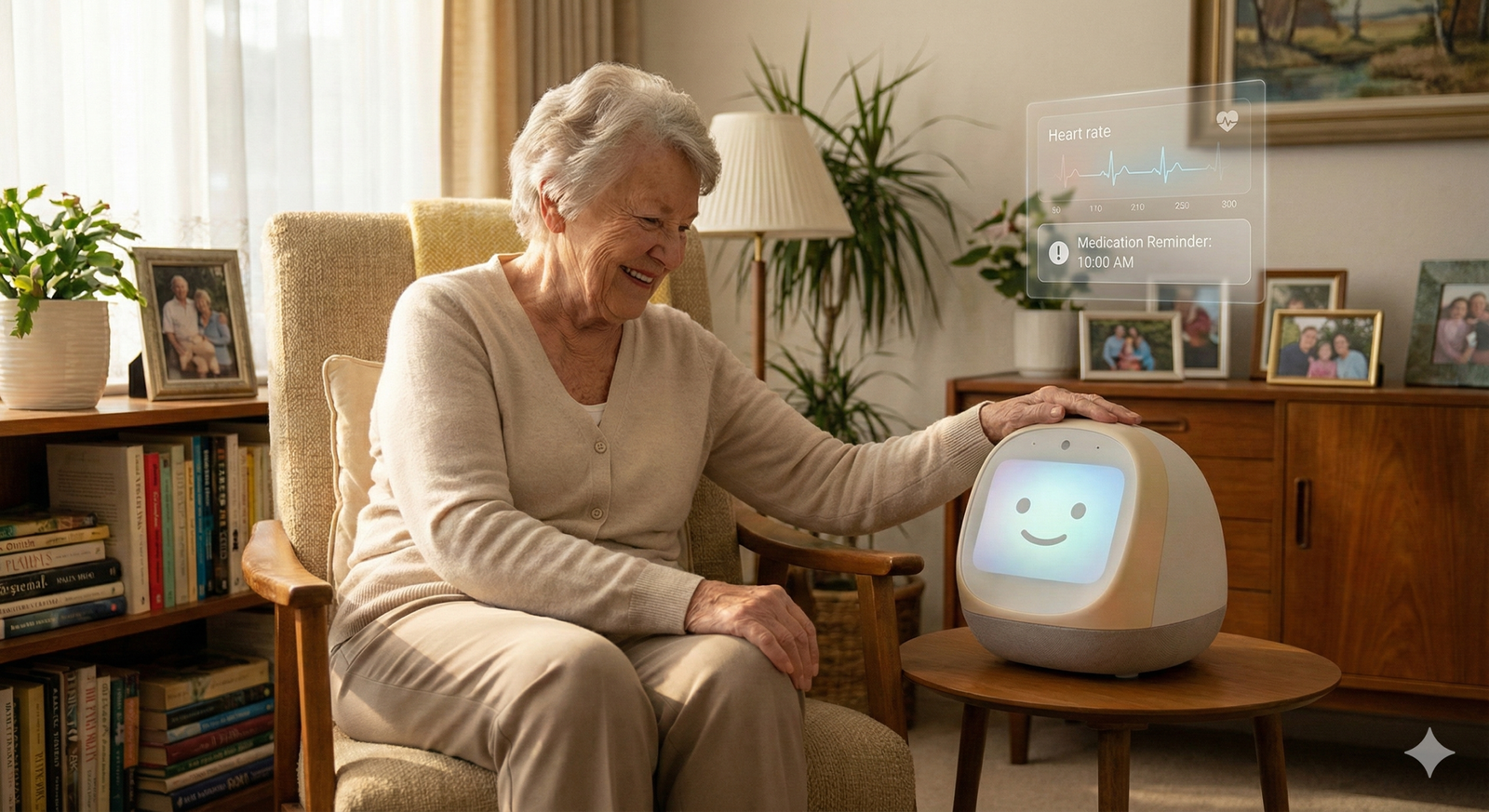
- Caregivers: Those monitoring aging parents or family members with chronic conditions.
- Tech Enthusiasts: Early adopters interested in the convergence of biological sensors and machine learning.
- Patients with Chronic Conditions: Individuals managing issues like hypertension or diabetes who want to understand remote monitoring options.
This guide is not for:
- Medical Professionals seeking clinical guidelines: While we discuss medical-grade tech, this is a consumer-focused overview, not a clinical practice guideline.
- Developers: We cover the “what” and “why” of the technology, not the deep code implementation of the algorithms.
What Are AI-Enhanced Wearables?
AI-enhanced wearables are electronic devices worn on the body—most commonly as watches, rings, wristbands, or patches—that utilize artificial intelligence and machine learning (ML) algorithms to interpret biological data.
The Shift from Raw Data to Intelligence
Traditional wearables (circa 2010–2015) were sensors that collected raw data. They could tell you that you walked 5,000 steps. The user then had to interpret what that meant for their health.
AI health monitoring devices bridge that gap. They don’t just count the steps; they analyze your walking speed (gait analysis) to assess fall risk. They don’t just record your heart rate; they compare your current heart rate against your 30-day baseline, factor in your recent sleep quality, and tell you if your body is under recovered or fighting an infection.
In this context, AI acts as a personal data scientist, constantly sifting through noise to find significant physiological signals.
How AI Transforms Health Data
Understanding the mechanism behind these devices helps in evaluating their reliability. The process generally involves three stages: Sensation, Processing, and Insight Generation.
1. Multi-Sensor Fusion
Modern wearables are equipped with a suite of sensors:
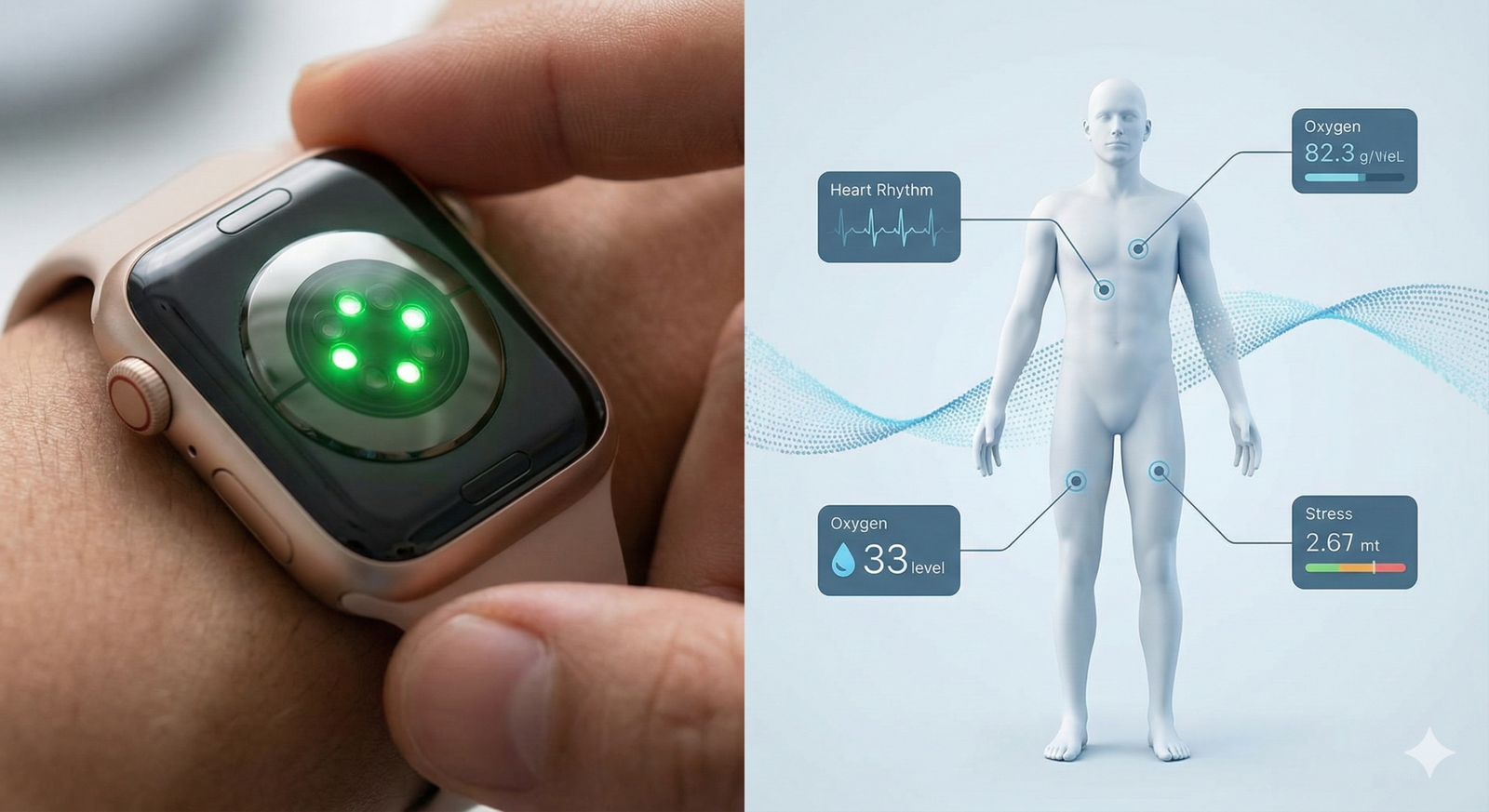
- Photoplethysmography (PPG): Uses light to measure blood volume changes, providing heart rate, heart rate variability (HRV), and blood oxygen (SpO2).
- Accelerometers and Gyroscopes: Measure motion and orientation to track activity and sleep.
- Electrodermal Activity (EDA): Measures electrical changes in the skin (sweat) to estimate stress levels.
- Thermometers: Track skin temperature variations.
AI algorithms practice “sensor fusion,” meaning they do not look at these metrics in isolation. For example, a high heart rate while moving suggests exercise (healthy). A high heart rate while completely still might suggest stress, illness, or a cardiac event (concern).
2. Machine Learning and Pattern Recognition
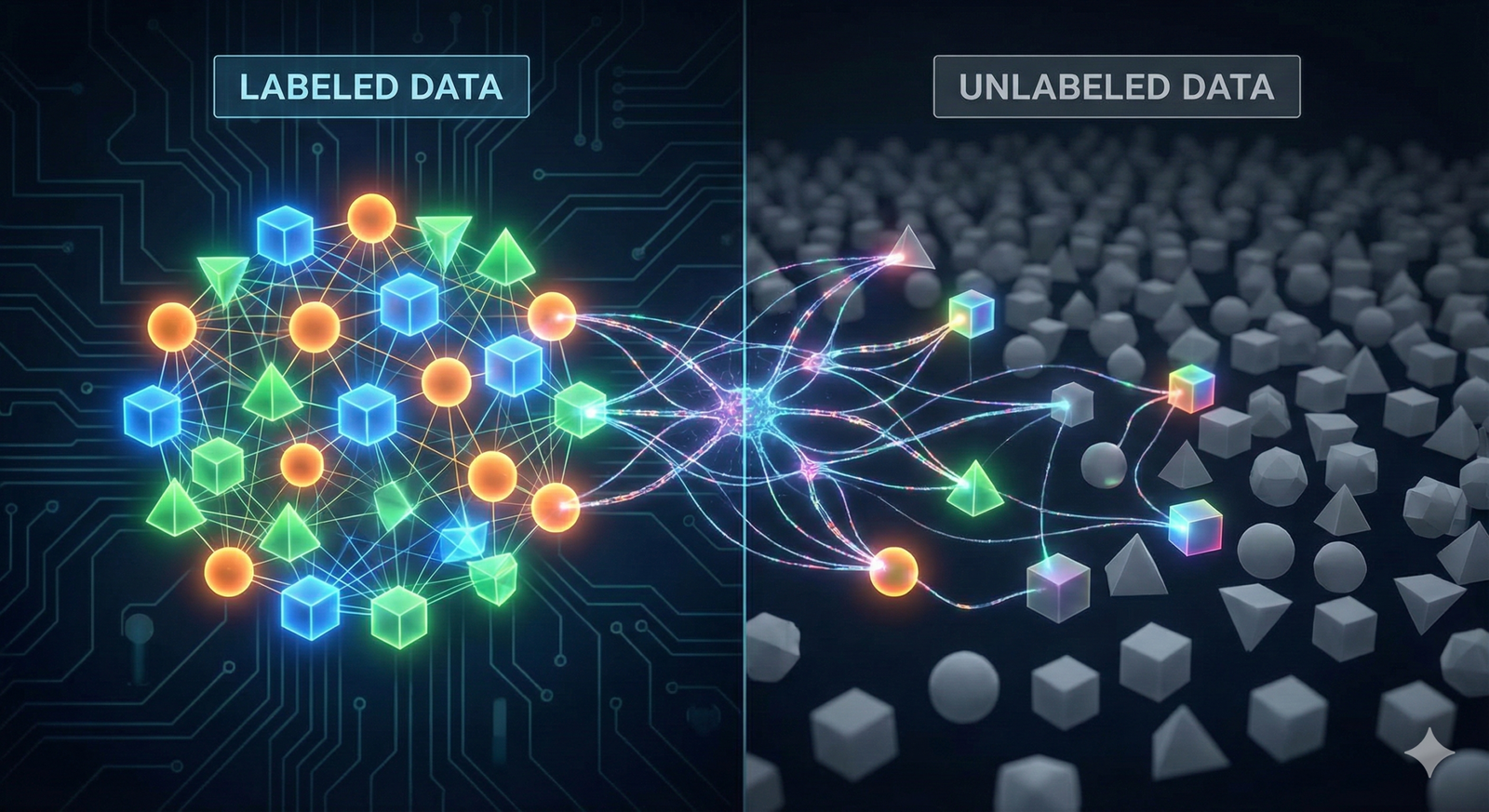
The core value of AI health monitoring devices is pattern recognition. Machine learning models are trained on vast datasets—millions of hours of ECG readings or sleep cycles—to learn what “normal” looks like across a population.
Once the device is on your wrist, it begins “edge computing” (processing data directly on the device) or sending data to the cloud to learn your specific normal. This personalization is vital. A resting heart rate of 50 bpm might be bradycardia (dangerously slow) for one person, but a sign of elite athletic conditioning for another. AI context-awareness prevents false alarms by learning the user’s unique baseline.
3. Predictive Analytics
This is the frontier of wearable tech. By analyzing trends over time, AI can predict future states.
- Infection Detection: Studies have shown that subtle changes in HRV and respiratory rate can signal the onset of viral infections (like the flu or COVID-19) up to three days before symptoms manifest.
- Cycle Tracking: Algorithms use temperature trends to predict menstrual cycles and ovulation windows with increasing accuracy.
Key Capabilities and Features
When evaluating current AI health monitoring devices, specific capabilities stand out as the most impactful for daily users.
Cardiac Monitoring and Health
Heart health is the most mature category in wearable AI.
- High/Low Heart Rate Notifications: The device alerts the user if their heart rate rises above or falls below a selected threshold during a period of inactivity.
- AFib Detection: Atrial Fibrillation (AFib) is a common irregular heart rhythm that can lead to stroke. Wearables use optical sensors to check pulse rhythm occasionally. If an irregularity is detected, the device prompts the user to take an ECG (if the hardware supports it).
- Heart Rate Variability (HRV): This is a measure of the time variation between heartbeats. A higher HRV generally indicates a relaxed, recovered state (parasympathetic dominance), while a low HRV indicates stress or fatigue (sympathetic dominance). AI uses HRV as a primary metric for “readiness” scores.
Sleep Architecture Analysis
Old trackers simply estimated “hours slept” based on movement. AI-enhanced devices now estimate “sleep architecture”:
- Sleep Stages: Differentiating between Light, Deep (Slow Wave), and REM sleep.
- Disturbances: Identifying wakefulness periods that the user might not remember.
- Oxygen Variation: Monitoring SpO2 levels overnight to identify potential signs of sleep apnea (though this often requires a follow-up medical study). The “AI” component here is the correlation engine. It might tell you, “Your deep sleep was 20% lower than usual; this may be why you feel groggy, and it correlates with the alcohol you logged yesterday.”
Stress and Mental Well-being
Measuring mental states is notoriously difficult, but AI health monitoring devices are getting closer by using proxies.
- cEDA Sensors: Continuous Electrodermal Activity sensors measure microscopic amounts of sweat. When combined with heart rate data, the algorithm can infer a “stress response” event.
- Intervention: Upon detecting a stress spike, the device might prompt the user to perform a breathing exercise, closing the loop between detection and management.
Metabolic Health (Glucose Monitoring)
While traditional smartwatches cannot yet measure blood glucose non-invasively (without breaking the skin), there is a booming market of Continuous Glucose Monitors (CGMs) paired with AI apps.
- The Food-Response Link: These sensors (usually patches worn on the arm) send data to a smartphone. AI analyzes the glucose spike after a meal and assigns a “score” to that food based on the user’s unique metabolic response.
- Behavioral Nudging: The AI learns that oatmeal spikes user A’s blood sugar but not user B’s, providing hyper-personalized nutritional advice.
Benefits of AI in Personal Health
The adoption of AI health monitoring devices offers tangible benefits that extend beyond simple curiosity.
Early Detection and Prevention
The “silent” nature of many conditions—hypertension, sleep apnea, arrhythmia—is a major health challenge. Wearables act as a 24/7 sentinel. Early alerts allow users to seek medical attention before a catastrophic event, such as a stroke caused by undiagnosed AFib.
Democratization of Health Data
Historically, getting an ECG or a sleep study required a doctor’s referral, an appointment, and significant cost. Wearables put simplified versions of these diagnostics into the hands of consumers. While they do not replace clinical tools, they lower the barrier to entry for gaining insight into one’s body.
Remote Patient Monitoring (RPM)
For healthcare providers, these devices are revolutionizing chronic care. A doctor can monitor a heart failure patient’s weight and fluid status via connected scales and wearables, using AI to flag patients who are deteriorating. This allows for intervention before hospitalization is necessary, reducing healthcare costs and improving patient quality of life.
Behavioral Accountability
The “Hawthorne Effect” suggests that individuals modify their behavior in response to being observed. AI wearables “observe” the user, and the gamification of health data (closing rings, maintaining streaks) has proven effective in motivating sedentary populations to increase physical activity.
Accuracy and Reliability: The Reality Check
It is critical to maintain a healthy skepticism regarding the data provided by consumer electronics.
Medical Grade vs. Wellness Grade
Not all AI health monitoring devices are created equal.
- FDA Cleared: This means the FDA has reviewed the specific feature (e.g., the ECG app on an Apple Watch or Fitbit) and determined it is substantially equivalent to existing medical tools for specific uses.
- Wellness Devices: Many trackers claim to measure “stress” or “energy batteries.” These are proprietary metrics not regulated by medical bodies. They are estimations, not diagnoses.
The Problem with Optical Sensors
Most wearables use optical heart rate sensors (PPG). These sensors can be less accurate during high-intensity interval training (HIIT) or activities with lots of arm movement. Furthermore, historical data has shown that some optical sensors perform less accurately on darker skin tones due to light absorption differences. While manufacturers have improved algorithms to correct for this (“calibration”), it remains a consideration for inclusive design and accuracy.
The “Nocebo” Effect and Anxiety
There is a phenomenon known as “orthosomnia”—a preoccupation with perfecting sleep data that actually causes insomnia. Constant notifications about high heart rates or poor sleep scores can induce anxiety in some users, which ironically worsens their health metrics. AI needs to be tuned to be helpful, not alarmist.
Privacy and Security Risks
When you wear an AI health monitoring device, you are generating a continuous stream of highly sensitive biometric data.
Who Owns Your Data?
In most cases, the user technically owns the data, but they grant a license to the manufacturer to use it. Terms of Service (ToS) agreements are often long and complex. Users should check:
- Does the company sell de-identified data to third parties (insurers, advertisers, researchers)?
- Can the data be shared with your employer if the device is part of a corporate wellness program?
Data Security and HIPAA
Consumer wearables generally do not fall under HIPAA (Health Insurance Portability and Accountability Act) in the United States unless the data is being transmitted directly to a covered healthcare provider. This means the strict privacy protections found in a hospital setting may not apply to the cloud server hosting your sleep stats.
Algorithmic Bias
AI is only as good as the data it is trained on. If the datasets used to train the health algorithms are predominantly from young, white, male populations, the predictions may be less accurate for women, older adults, or people of color.
Types of Devices on the Market
The form factor of the wearable often dictates the type of data it can collect and how intrusive it feels to the user.
Smartwatches
- Examples: Apple Watch, Samsung Galaxy Watch, Google Pixel Watch, Garmin.
- Pros: Screen provides instant feedback; supports third-party apps; often includes ECG and Fall Detection.
- Cons: Short battery life (often needs daily charging); can be bulky for sleep tracking.
Smart Rings
- Examples: Oura Ring, Samsung Galaxy Ring, Ultrahuman.
- Pros: Discreet; excellent battery life (3–7 days); comfortable for sleep; often more accurate for SpO2 (fingers have better blood flow than wrists).
- Cons: No screen (requires phone for data); harder to check real-time metrics during a run; usually no ECG capability.
Hearables (Smart Headphones)
- Pros: The ear is an excellent place for measuring core body temperature and heart rate.
- Use Case: Primarily for fitness coaching and real-time feedback during exercise.
Smart Patches (CGMs)
- Examples: Dexcom, Abbott Libre (often used with apps like Levels or Nutrisense).
- Pros: Continuous molecular data (glucose) rather than just motion/pulse.
- Cons: Semi-invasive (filament sits under skin); expensive ongoing cost; needs replacement every 10–14 days.
Integrating AI Wearables into Healthcare
The future of medicine involves a handshake between consumer tech and clinical practice.
The “Bring Your Own Data” Era
Patients are increasingly bringing their wearable data to doctor appointments. “Look, doctor, my heart rate spikes every Tuesday at 2 PM.” While this provides context, doctors are often overwhelmed by raw data.
AI as the Filter
The solution is AI that acts as a filter for the physician. Instead of showing the doctor six months of minute-by-minute heart rates, the clinical dashboard (integrated with the Electronic Health Record) would flag only the relevant anomalies: “Patient exhibited 3 episodes of suspected AFib lasting >10 minutes in the last month.”
As of January 2026: The Regulatory Landscape
Regulators are catching up. The FDA and the European Medicines Agency (EMA) are creating clearer pathways for “Software as a Medical Device” (SaMD). This allows manufacturers to update AI algorithms without re-submitting the entire hardware for approval, provided the changes don’t alter the intended medical use. This agility is crucial for keeping AI models current.
Future Trends (2026 and Beyond)
Where is this technology heading?
Digital Twins
AI will eventually create a “digital twin” of the user—a virtual simulation of your physiology. You could ask the AI, “What happens to my heart health if I start running 5k three times a week?” and the digital twin would simulate the outcome based on your current biometrics.
Non-Invasive Metabolic Tracking
The “holy grail” remains tracking blood pressure and blood glucose via a standard smartwatch without an inflatable cuff or a needle. While proprietary technologies are in development, reliable, medical-grade, non-invasive glucose monitoring in a watch form factor remains a significant engineering challenge as of early 2026.
Emotion AI
Future sensors may map voice intonation and facial micro-expressions (via user-facing cameras or glasses) combined with biometric data to provide deep psychological insights, potentially aiding in the management of depression and anxiety disorders.
Common Mistakes and Pitfalls
When adopting AI health monitoring devices, users often fall into specific traps that reduce the utility of the device.
1. The “Data Silo” Trap
Using a ring for sleep, a watch for running, and a different app for food often results in fragmented data. AI works best with a consolidated view.
- Fix: Use a central aggregator (like Apple Health or Google Health Connect) that pulls data from various sources into one repository.
2. Ignoring the Fit
Optical sensors require a snug fit against the skin. Wearing a watch too loose (“bracelet style”) allows light leakage, resulting in inaccurate heart rate readings.
- Fix: Tighten the band during exercise. Ensure the sensor is clean and free of sweat/lotion buildup.
3. Obsessing Over Micro-Fluctuations
Freaking out because your sleep score dropped from 85 to 82 is counterproductive.
- Fix: Focus on long-term trends (weekly or monthly averages) rather than daily variance. The body is dynamic and naturally fluctuates.
4. Ignoring Battery Maintenance
AI features drain power. A dead watch collects no data.
- Fix: establish a charging routine (e.g., while showering or working at a desk) that doesn’t interfere with sleep tracking if that is a priority.
How to Choose the Right Device: A Buyer’s Framework
With dozens of options available, how do you choose? Use this criteria checklist.
1. Define Your Primary Goal
- Heart Health: Look for FDA-cleared ECG and irregular rhythm notifications (e.g., Apple Watch, Fitbit Sense, Withings).
- Sleep Optimization: Prioritize form factor comfort and battery life (e.g., Oura Ring).
- Athletic Performance: Look for advanced GPS, recovery metrics, and durability (e.g., Garmin).
2. Ecosystem Compatibility
Does the device play nice with your phone?
- Apple Watches generally require iPhones.
- Samsung Watches work best with Samsung phones.
- Garmin, Fitbit, and Oura are platform-agnostic (work with both iOS and Android).
3. Subscription Models
Many hardware companies have shifted to a subscription model for their AI insights.
- Check if the device requires a monthly fee to access historical data or advanced sleep analysis. Factor this into the total cost of ownership over two years.
4. Battery Life vs. Features
- If you hate charging daily, avoid full-featured smartwatches with AMOLED screens and look for e-ink or hybrid watches, or smart rings.
Related Topics to Explore
- Telemedicine and Remote Care: How wearables connect you to your doctor without a visit.
- The Science of Sleep: Understanding REM, Deep Sleep, and Circadian Rhythms.
- Data Privacy in the Age of AI: A deeper dive into how to secure your digital health footprint.
- Biohacking for Beginners: Using data to experiment with diet and lifestyle changes.
- Smart Home Health: How smart mattresses and air quality monitors integrate with wearables.
Conclusion
AI health monitoring devices represent a monumental leap forward in self-care. They empower individuals with data that was previously locked away in hospital machinery, democratizing access to physiological insights. Whether it is catching an arrhythmia early, optimizing sleep for better productivity, or simply encouraging a daily walk, these tools are powerful allies in the pursuit of longevity.
However, they are tools, not magicians. They require a user who understands their limitations, respects privacy implications, and views the data as a guide rather than a verdict. As we move through 2026, the integration of these devices into standard healthcare will likely deepen, making the line between “consumer gadget” and “medical device” increasingly blurred.
Next Steps: If you are ready to invest in an AI wearable, start by auditing your current health goals. Do you need a cheerleader for fitness or a sentinel for heart health? Choose the device that solves your specific problem, and remember: the best wearable is the one you actually wear consistently.
FAQs
1. Are AI health monitoring devices accurate enough for medical diagnosis? Generally, no. While some devices have FDA clearance for specific features like detecting Atrial Fibrillation (AFib), they are intended for screening and information, not final diagnosis. If your device alerts you to an irregularity, the correct action is to consult a doctor for clinical-grade testing (like a 12-lead ECG) to confirm the results.
2. Can smartwatches really predict a heart attack? Currently, smartwatches cannot predict a heart attack (myocardial infarction) in the way they detect rhythm irregularities. A heart attack involves a blockage of blood flow, which doesn’t always present with the rhythm changes watches look for. However, they can detect high resting heart rates or low fitness levels, which are risk factors for heart disease.
3. Is my health data safe with wearable companies? Safety varies by company. Reputable major brands use encryption for data in transit and at rest. However, many “free” apps or cheaper devices may monetize your data. Always read the privacy policy. Look for companies that pledge not to sell data to third parties and allow you to delete your data locally and from their cloud.
4. Do I need a subscription to use these devices? It depends on the brand. Some devices (like the Apple Watch or Garmin) offer most insights with the upfront hardware cost. Others (like Oura or Whoop) operate on a membership model where the hardware is useless or severely limited without a monthly subscription fee. Always check the long-term cost before buying.
5. How does AI help with sleep tracking? AI analyzes signals from the accelerometer (movement) and the heart rate sensor. By looking at the variation between heartbeats (HRV) and the slowing of the heart rate, the AI can probabilistically determine if you are in Light, Deep, or REM sleep. Over time, it learns your specific sleep patterns to provide more accurate coaching on how to improve rest.
6. What is the difference between SpO2 and VO2 Max? SpO2 (Pulse Oximetry) measures the oxygen saturation in your blood at that exact moment; it is useful for checking for sleep apnea or acclimation to high altitude. VO2 Max is a metric of cardiovascular fitness—the maximum amount of oxygen your body can utilize during intense exercise. AI estimates VO2 Max based on your heart rate response to walking or running speed.
7. Can wearables detect COVID-19 or the flu? Retrospective studies have shown that wearables can detect changes in physiological metrics (like increased respiratory rate, heart rate, and temperature) days before symptoms appear. Some apps use this to provide an “illness risk” score, prompting you to rest or isolate, though they cannot specifically diagnose which virus you have.
8. Do these devices work for people with dark skin tones? Older optical heart rate sensors struggled with accuracy on darker skin due to how light is absorbed and reflected (melanin absorbs green light). Modern sensors and updated AI algorithms have significantly improved performance across skin tones, but inaccuracies can still occur, particularly during high-intensity activity.
9. What is “Fall Detection” and how does it utilize AI? Fall detection uses the accelerometer and gyroscope to detect the specific G-force signature and impact trajectory of a hard fall. The AI distinguishes this from, say, clapping hands or plopping onto a couch. If a fall is detected and the user doesn’t move for a minute, the device can automatically call emergency services.
10. How often should I upgrade my health wearable? Unlike phones, wearable sensors don’t change drastically every year. A device is usually good for 3–4 years. You should upgrade if the battery no longer holds a charge, the sensors are physically damaged, or if a new generation releases a specific new sensor (like blood pressure monitoring) that is critical for your specific health needs.
References
- U.S. Food and Drug Administration (FDA). (2025). Digital Health Center of Excellence: Software as a Medical Device (SaMD). https://www.fda.gov/medical-devices/digital-health-center-excellence/software-medical-device-samd
- Mayo Clinic. (2024). Wearable technology in clinical practice: Possibilities and pitfalls. Mayo Clinic Proceedings. https://www.mayoclinic.org
- The Lancet Digital Health. (2023). Accuracy of wrist-worn wearables for heart rate and energy expenditure: A systematic review. https://www.thelancet.com/journals/landig/home
- American Heart Association (AHA). (2024). Using Wearables to Detect Arrhythmias. AHA Journals: Circulation. https://www.ahajournals.org
- National Institutes of Health (NIH). (2024). The role of wearable sensors in the early detection of viral infections. PubMed Central. https://www.ncbi.nlm.nih.gov
- Nature Medicine. (2023). longitudinal analysis of wearable data reveals pre-symptomatic signals of illness. https://www.nature.com/nm/
- Office of the National Coordinator for Health Information Technology (ONC). (2025). Privacy and Security of Health Data in Non-Covered Entities. https://www.healthit.gov
- Scripps Research Digital Trials Center. (2024). DETECT Study: Analyzing wearable data for infectious disease tracking. https://detect.scripps.edu
- European Medicines Agency (EMA). (2025). Artificial Intelligence in Medicine: Regulatory guidelines for adaptive algorithms. https://www.ema.europa.eu
- Journal of Clinical Sleep Medicine. (2024). Orthosomnia: Are sleep trackers making our sleep worse? https://jcsm.aasm.org