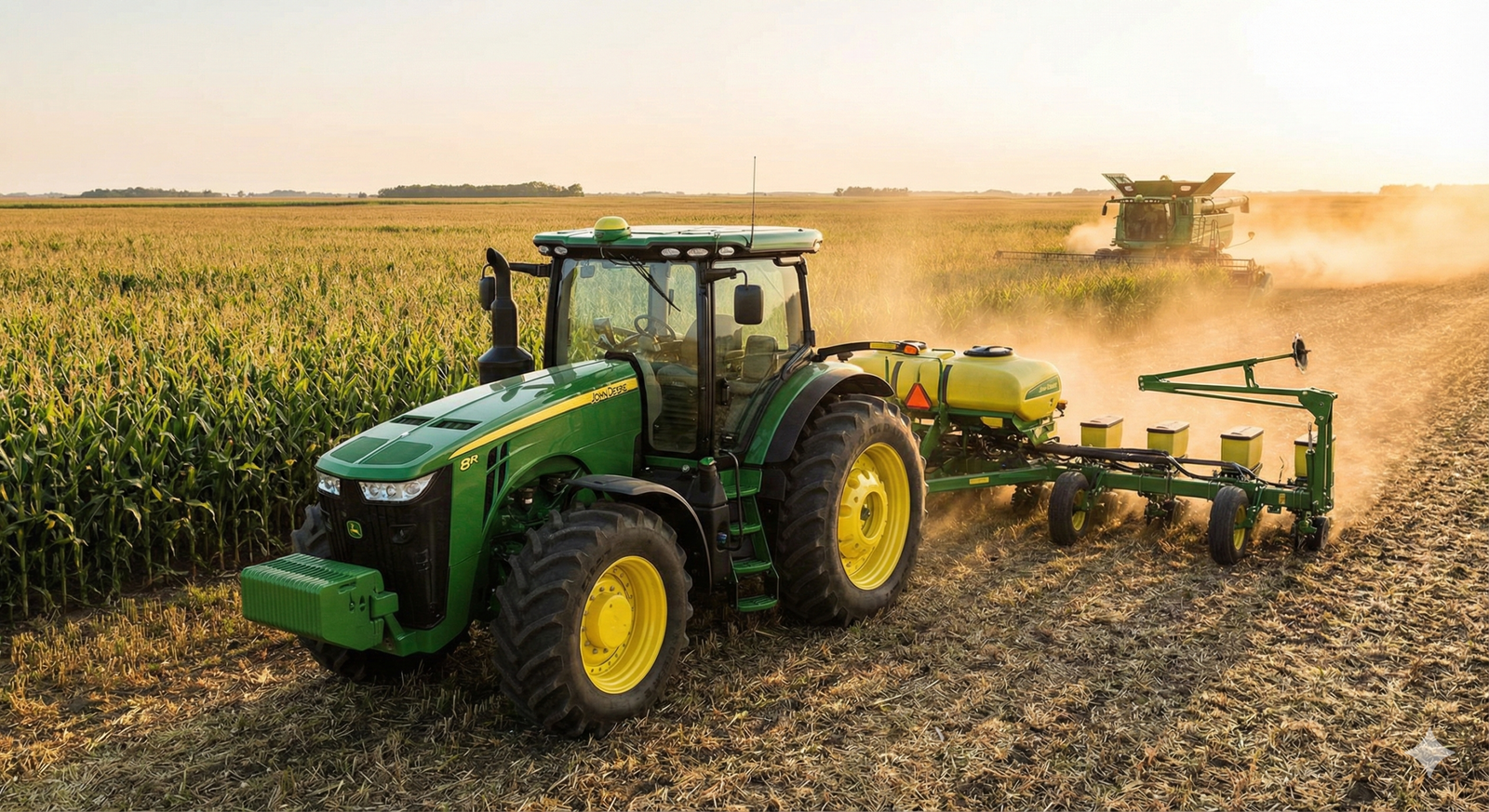
The image of the solitary farmer toiling from dawn until dusk is rapidly being updated by a new reality: machines that toil on their own, supervised from a smartphone screen. Autonomous tractors and harvesters represent the most significant shift in agricultural mechanization since the replacement of the horse by the internal combustion engine. These advanced systems are not merely “self-driving” vehicles; they are data-gathering, decision-making nodes in a connected farm ecosystem designed to feed a growing population with fewer resources.
In this comprehensive guide, we explore the landscape of agricultural automation, breaking down the technology, the economics, and the practical realities of deploying driverless machinery on the modern farm.
Key Takeaways
- More Than Just GPS: Modern autonomy relies on a fusion of RTK-GPS, LiDAR, computer vision, and machine learning to perceive the environment and make safety decisions in real-time.
- Labor Crisis Solution: The primary driver for adoption is the chronic shortage of skilled farm labor, allowing one operator to manage multiple machines.
- Precision at Scale: Autonomous units can operate 24/7 with consistent accuracy, reducing soil compaction and optimizing input usage (seeds, fertilizer, sprays).
- Retrofit vs. Replace: Farmers can choose between purchasing purpose-built autonomous vehicles or installing autonomy kits on existing equipment.
- Data is the Crop: These machines harvest terabytes of agronomic data alongside the physical crop, enabling smarter year-over-year decisions.
Who This Is For (And Who It Isn’t)
This guide is designed for farmers, agribusiness managers, and agricultural technology investors who are evaluating the feasibility of integrating autonomous systems into their operations. It is also suitable for students and researchers looking for an up-to-date overview of the sector as of January 2026.
This article is not a technical engineering manual for repairing specific sensor arrays, nor is it a guide for hobbyist gardeners. The focus is on commercial-scale agricultural operations where efficiency and ROI are paramount.
Scope of This Guide
In this guide, “autonomous tractors and harvesters” refers to heavy field machinery capable of performing tasks (tillage, planting, harvesting, spraying) without a human operator inside the cab. While we will touch on aerial drones and small scouting robots, the primary focus is on the large-scale ground vehicles that form the backbone of arable farming.
Defining Autonomy in Agriculture
To understand where the industry is heading, we must first clarify what we mean by “autonomy.” In the automotive world, we use levels 0 through 5. Agriculture uses a similar framework, though the operational context is vastly different—a field has no lane markers, traffic lights, or pedestrians, but it has dust, mud, ditches, and unpredictable vegetation.
The Levels of Agricultural Autonomy
- Guidance (Level 1-2): This is the standard “AutoTrac” or autosteer technology familiar to most farmers for decades. The operator is in the cab, handling turns and obstacle avoidance, while the tractor follows a GPS line.
- Supervised Autonomy (Level 3-4): The machine performs the task (e.g., grain cart operation) autonomously but requires a nearby human supervisor, often in another vehicle, to take over if an edge case arises.
- Full Autonomy (Level 5): The machine operates entirely without a human present in the field. It handles navigation, implement control, and obstacle avoidance. The farmer monitors the operation remotely from an office or home.
As of January 2026, the industry is firmly transitioning from Supervised Autonomy to Full Autonomy for specific tasks like tillage and spraying, while harvesting remains more complex due to the nuances of crop handling.
The Core Technologies Powering Autonomy
Autonomous tractors and harvesters are not magic; they are the result of a convergence of several mature technologies. Understanding these components helps in evaluating the reliability and limitations of different systems.
1. Perception Systems (The Eyes)
Unlike a human who can squint through dust, a machine needs a suite of sensors to “see.”
- Stereo Cameras: Provide depth perception and color recognition, essential for distinguishing between a crop row and a weed, or a shadow and a ditch.
- LiDAR (Light Detection and Ranging): Shoots millions of laser pulses to create a 3D map of the surroundings. This is critical for obstacle detection (e.g., a rock, a telephone pole, or a stray animal) regardless of lighting conditions.
- Radar: Used primarily for speed detection and long-range object detection, cutting through thick dust and fog where cameras might fail.
2. Navigation and Positioning (The Feet)
Standard GPS on a phone is accurate to within a few meters—useless for planting corn.
- RTK-GPS (Real-Time Kinematic): This technology uses a fixed base station to correct satellite signals, providing pass-to-pass accuracy of 2.5 cm (1 inch). This ensures the tractor drives exactly between the rows, preventing crop damage and reducing overlap.
- IMUs (Inertial Measurement Units): Gyroscopes and accelerometers that detect the tractor’s roll, pitch, and yaw. If the tractor hits a bump, the IMU tells the steering system to compensate instantly so the line remains straight.
3. Artificial Intelligence and Compute (The Brain)
- Edge Computing: Autonomous tractors process data locally (on the machine). They cannot rely on the cloud for safety decisions because rural internet connectivity is often spotty. If a child runs in front of the tractor, the AI on board must stop it immediately, without waiting for a server ping.
- Machine Learning (ML): The systems are trained on millions of images of agricultural environments. They “learn” that a tumbleweed can be driven over, but a rock cannot.
The Driving Force: Why Automation is Non-Negotiable Now
The shift to autonomous tractors and harvesters is not merely about “cool tech”; it is a response to existential threats facing the agricultural industry.
The Labor Crisis
The most immediate pressure is the lack of skilled labor. In many developed nations, the average age of a farmer is over 58. Younger generations are moving to cities, and seasonal labor is becoming harder and more expensive to secure. Autonomy allows one skilled manager to oversee a fleet of three or four machines, effectively multiplying the workforce.
The Window of Opportunity
Farming is a game of timing. There are narrow windows for planting and harvesting. If it rains for a week, a farmer might only have 48 hours to plant thousands of acres before the yield potential drops.
- Human limitation: A human can drive for 12–14 hours before fatigue sets in and mistakes happen.
- Machine advantage: An autonomous tractor can run for 24 hours straight, stopping only for fuel and maintenance, ensuring the crop gets in the ground during the optimal window.
Efficiency and Compaction
Heavy machinery compacts soil, which kills root growth and reduces yield. By using highly accurate autonomous guidance, farmers can practice Controlled Traffic Farming (CTF). This means the machines drive on the exact same wheel tracks year after year, sacrificing a small percentage of the field to compaction while leaving 80-90% of the soil untrampled and aerated for crops.
Major Players and Innovations (As of January 2026)
The market involves a mix of legacy titans and agile startups.
The Titans: Integrated Ecosystems
- John Deere: A market leader who introduced the fully autonomous 8R tractor. Their strategy focuses on ease of use—farmers can use the same “Operations Center” app they already know. Their system uses six pairs of stereo cameras for 360-degree obstacle detection.
- CNH Industrial (Case IH / New Holland): Has focused heavily on autonomous tillage and grain cart automation (where the tractor syncs with the combine). They have also unveiled electric autonomous prototypes.
- AGCO (Fendt/Massey Ferguson): Their “Xaver” project explores the concept of swarm robotics—using many small, lightweight autonomous units rather than one giant tractor, reducing soil compaction.
The Disruptors: Retrofits and Robotics
- Monarch Tractor: Focuses on the intersection of electrification and autonomy. Their MK-V tractor is fully electric, driver-optional, and targeted at high-value crops like vineyards and orchards.
- Sabanto: Offers a “Farming as a Service” model and retrofit kits. Instead of selling a tractor, they might deploy a fleet of smaller autonomous units to plant a farmer’s field for a fee.
- Carbon Robotics: Famous for the “LaserWeeder,” an autonomous implement that uses computer vision and lasers to zap weeds without chemicals. While usually towed, it represents the high-tech implements that autonomous tractors pulls.
What This Looks Like in Practice: A Workflow
How does a farmer actually use an autonomous tractor? It is not as simple as pressing “Go.” Here is a realistic workflow.
Phase 1: Mapping and Path Planning
Before the machine enters the field, the boundaries must be geofenced.
- The farmer drives the perimeter of the field (or uses existing GPS maps) to define the “work zone.”
- Obstacles like telephone poles, irrigation hydrants, and wet spots are marked as “keep-out zones.”
- The software generates a path plan—the most efficient route to cover the field with the fewest turns and least fuel consumption.
Phase 2: Deployment and Setup
- The tractor is driven to the field (currently, most regulations require a human to drive the machine on public roads).
- The implement (e.g., a chisel plow) is set correctly.
- The farmer initiates “Auto Mode” via a tablet app and leaves the cab.
Phase 3: Monitoring and Exception Handling
- The tractor begins working. The farmer leaves to do other work or sleep.
- Live Feed: The farmer can check a live video feed and data stream (speed, fuel level, engine load) on their phone.
- Anomalies: If the tractor detects an unknown object (e.g., a large plastic bag blown into the field), it stops and sends an alert. The farmer must look at the camera feed and either classify it as “safe to proceed” or drive out to remove it.
Phase 4: Completion
- Once the job is done, the tractor notifies the farmer.
- The farmer returns to drive the machine to the next field or refuel it.
Economic Implications: ROI and Cost Structure
Investing in autonomous tractors and harvesters is a massive financial decision. The sticker price of these machines is significantly higher than standard models due to the sensors and computing power.
The Cost Equation
As of 2026, a fully autonomous, high-horsepower tractor can cost upwards of $600,000 to $800,000.
- Upfront Cost: Higher than conventional machinery.
- Recurring Costs: Subscription fees for autonomy software, connectivity data plans, and specialized maintenance.
The Return on Investment (ROI)
The ROI comes from operational savings and yield increases.
- Labor Savings: Removing the driver saves $20–$30 per hour (or more for skilled operators), but the real saving is eliminating the need to find that person.
- Input Optimization: Autonomous sprayers can use “See & Spray” technology to reduce herbicide use by up to 70%, which can save tens of thousands of dollars annually on large farms.
- Yield Preservation: Planting at the perfect time and depth, regardless of the time of day, translates directly to bushels per acre.
Mini-Example: The 2,000-Acre Corn Farm
Imagine a farm growing 2,000 acres of corn.
- Scenario A (Traditional): Requires 2 large tractors and 2 operators working 12-hour days for 10 days to plant. If one operator calls in sick, the window is missed, and yield drops by 5%.
- Scenario B (Autonomous): Uses 1 autonomous tractor working 24 hours a day. It finishes in the same 10 days.
- Result: The farm saves the cost of one tractor operator and, crucially, reduces the risk of yield loss. If the machine enables planting 2 days faster due to running at night, the agronomic gain could cover the technology subscription cost alone.
Environmental and Agronomic Benefits
Beyond the balance sheet, autonomous tractors and harvesters offer significant environmental advantages, aligning with the global push for sustainable agriculture.
Precision Application
Conventional spraying often involves blanketing an entire field with chemicals. Autonomous systems with computer vision can identify individual weeds and apply herbicide only to the weed. This drastically reduces chemical runoff into waterways and lowers the chemical load on the soil.
Energy Efficiency
Autonomous driving is smoother than human driving. Humans tend to over-accelerate and over-brake. Algorithms drive optimally for fuel efficiency, maintaining consistent engine RPMs. Furthermore, the rise of electric autonomous tractors (like Monarch) allows farms to run on renewable energy (solar/wind) generated on the farm itself, closing the energy loop.
Soil Health
As mentioned earlier, smaller, lighter autonomous swarms can replace massive 20-ton tractors. Heavy tractors crush soil pore space, making it hard for roots to penetrate and water to infiltrate. Swarms of small robots cause a fraction of the compaction, leading to healthier soils that absorb carbon and water more effectively.
Challenges and Dilemmas in Adoption
Despite the benefits, the road to full automation is paved with potholes. Adoption is not instantaneous, and several hurdles remain.
1. Connectivity and Infrastructure
Autonomous machines generate massive amounts of data. While they process safety decisions locally, they need to upload agronomic data and receive job files. In many rural areas, cellular coverage is nonexistent. Farmers often have to set up private 5G or Wi-Fi mesh networks to support these machines, adding to the cost.
2. Right to Repair
This is a contentious issue. As machines become more software-dependent, manufacturers often lock down the code to prevent tampering with safety protocols. However, this prevents farmers from fixing simple mechanical issues themselves. The balance between “proprietary safety code” and “farmer’s right to fix their property” is an ongoing legal battle.
3. Liability and Safety
If an autonomous tractor malfunctions and drives through a neighbor’s fence—or worse, onto a public road—who is responsible? The farmer? The manufacturer? The software provider? Insurance models for autonomous farming are still evolving.
4. Technical Complexity and Trust
Farmers are inherently risk-averse regarding equipment reliability because downtime is expensive. A diesel engine is easy to understand; a LiDAR sensor glitch is not. There is a learning curve, and “trusting the machine” takes time. If a machine stops 50 times a night for false alarms (shadows thinking they are obstacles), the farmer will turn it off and drive it themselves.
Retrofitting vs. Buying New: A Decision Framework
Farmers do not always have to buy a shiny new green or red tractor to get autonomy. The aftermarket retrofit market is booming.
| Feature | Buying New (OEM Integrated) | Retrofitting (Aftermarket Kit) |
| Cost | High ($500k – $900k+) | Moderate ($50k – $150k + Installation) |
| Integration | Seamless; built into the chassis and hydraulics. | Can be complex; relies on mechanical actuators. |
| Support | Single dealer support for the whole unit. | Split support: one for tractor, one for autonomy kit. |
| Resale Value | Generally holds value well. | Kit value may depreciate; tractor value remains standard. |
| Best For | Large operations replacing aging fleet. | Farmers with reliable older iron who want to upgrade capabilities. |
Common Decision Rule: If your current tractor fleet is mechanically sound (engine/transmission) but lacks technology, a retrofit kit from companies like Sabanto or bear Flag (if available) is a viable entry point. If the fleet is aging out, buying an autonomy-ready OEM tractor is the better long-term investment.
Related Topics to Explore
To fully understand the ecosystem surrounding autonomous tractors, consider exploring these related technologies:
- Agricultural Drones (UAVs): Used for aerial scouting to create the prescription maps that autonomous tractors follow.
- Vertical Farming Automation: A different branch of ag-tech focusing on indoor, controlled environments.
- Variable Rate Technology (VRT): The software logic that tells the autonomous sprayer to apply different rates of fertilizer to different parts of the field.
- Farm Management Information Systems (FMIS): The software dashboards where farmers plan the missions for their robots.
Conclusion
Autonomous tractors and harvesters are no longer science fiction; they are a commercial reality operating in fields globally today. They represent a fundamental restructuring of farm labor and management. By shifting the farmer from the steering wheel to the control room, these technologies offer a path to sustain productivity in the face of labor shortages and climate variability.
However, adoption requires a clear-eyed assessment of connectivity, cost, and the willingness to learn new software skills. The future farm will not be empty—but it will be quieter, more precise, and managed by data-driven decisions executed by machines that never sleep.
Next Steps: If you are a producer considering autonomy, start by auditing your connectivity (4G/5G/Wi-Fi) in your furthest fields, as this is often the hidden bottleneck to deployment.
FAQs
1. Are autonomous tractors legal on public roads? In most jurisdictions, fully autonomous operation (no driver) is currently restricted to private land (the fields). Moving machinery between fields usually requires a human operator in the cab or close supervision, though regulations are evolving rapidly in states like California and countries like Australia.
2. Can an autonomous tractor work in the rain or at night? Yes, this is one of their main advantages. GPS and LiDAR systems function perfectly in total darkness. While heavy rain can sometimes interfere with certain laser sensors or create mud conditions too slippery for driving, autonomous tractors generally have a wider operating window than human drivers.
3. What happens if the internet goes down? Safety-critical systems on autonomous tractors rely on local processing (Edge computing), so the machine will not crash if the internet cuts out. However, it may stop if it cannot verify its position via GPS correction signals, or it may be unable to send alerts to the farmer until the connection is restored.
4. Do autonomous tractors replace farmers? They replace the task of steering, not the farmer. Farming involves agronomy, marketing, mechanical repair, and strategy. Autonomy frees the farmer from the repetitive, low-value task of driving in straight lines, allowing them to focus on high-value management decisions.
5. How accurate are autonomous tractors? With RTK-GPS guidance, autonomous tractors can achieve pass-to-pass accuracy of +/- 2.5 centimeters (1 inch). This level of precision is difficult for human drivers to maintain consistently over a 12-hour shift.
6. Can I retrofit my old tractor to be autonomous? Yes, several companies offer aftermarket kits that can turn standard tractors into autonomous units. These kits usually require the tractor to have electronic steering and throttle controls (drive-by-wire), so they work best on relatively modern machines (post-2010 models usually).
7. How does the tractor detect obstacles? They use “sensor fusion,” combining data from cameras (visual), LiDAR (laser mapping), and sometimes radar. The AI analyzes this data to identify objects. If the system is unsure what an object is, it is programmed to stop and ask the human supervisor for confirmation.
8. What is the difference between “Auto-Steer” and “Autonomous”? Auto-steer (automated steering) keeps the tractor in a straight line, but a human must sit in the seat to turn at the end of the row and watch for obstacles. Fully autonomous tractors can perform the turning, implement control, and obstacle avoidance without a human in the cab.
References
- John Deere. (2025). Autonomous 8R Tractor: Technical Specifications and Safety Systems. Deere & Company Official Documentation.
- CNH Industrial. (2024). The Future of Farming: Autonomy and Automation Tech Stack. CNH Industrial Reports.
- Monarch Tractor. (2025). MK-V Smart Tractor: Electrification and Autonomy Data Sheet. Monarch Tractor.
- University of Nebraska-Lincoln. (2024). CropWatch: Economics of Autonomous Equipment in Row Crops. UNL Institute of Agriculture and Natural Resources. https://cropwatch.unl.edu/
- Purdue University. (2023). Digital Agriculture: Adoption Trends and Barriers for Autonomy. Center for Commercial Agriculture. https://ag.purdue.edu/commercialag/
- ISO (International Organization for Standardization). (2025). ISO 18497: Agricultural machinery and tractors — Safety of partially automated, semi-autonomous and autonomous machinery. https://www.iso.org/standard/
- Western Growers Association. (2024). Global Harvest Automation Report: Specialty Crops. https://www.wga.com/
- AgFunder. (2025). AgriFoodTech Investment Report: Robotics and Automation Trends. https://agfunder.com/research/
- National Institute of Food and Agriculture (NIFA). (2023). Robotics and Automation for Agriculture. USDA. https://www.nifa.usda.gov/