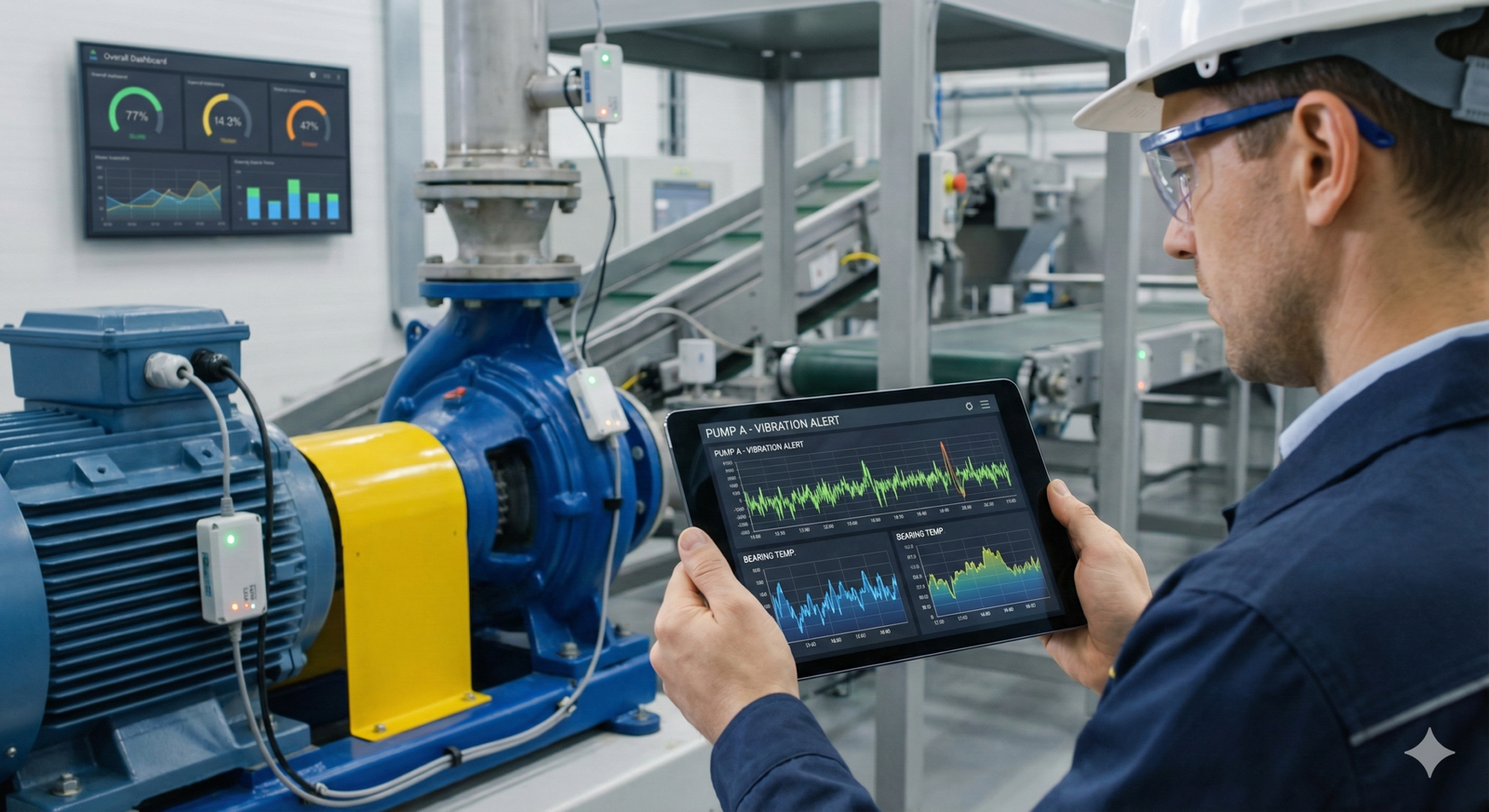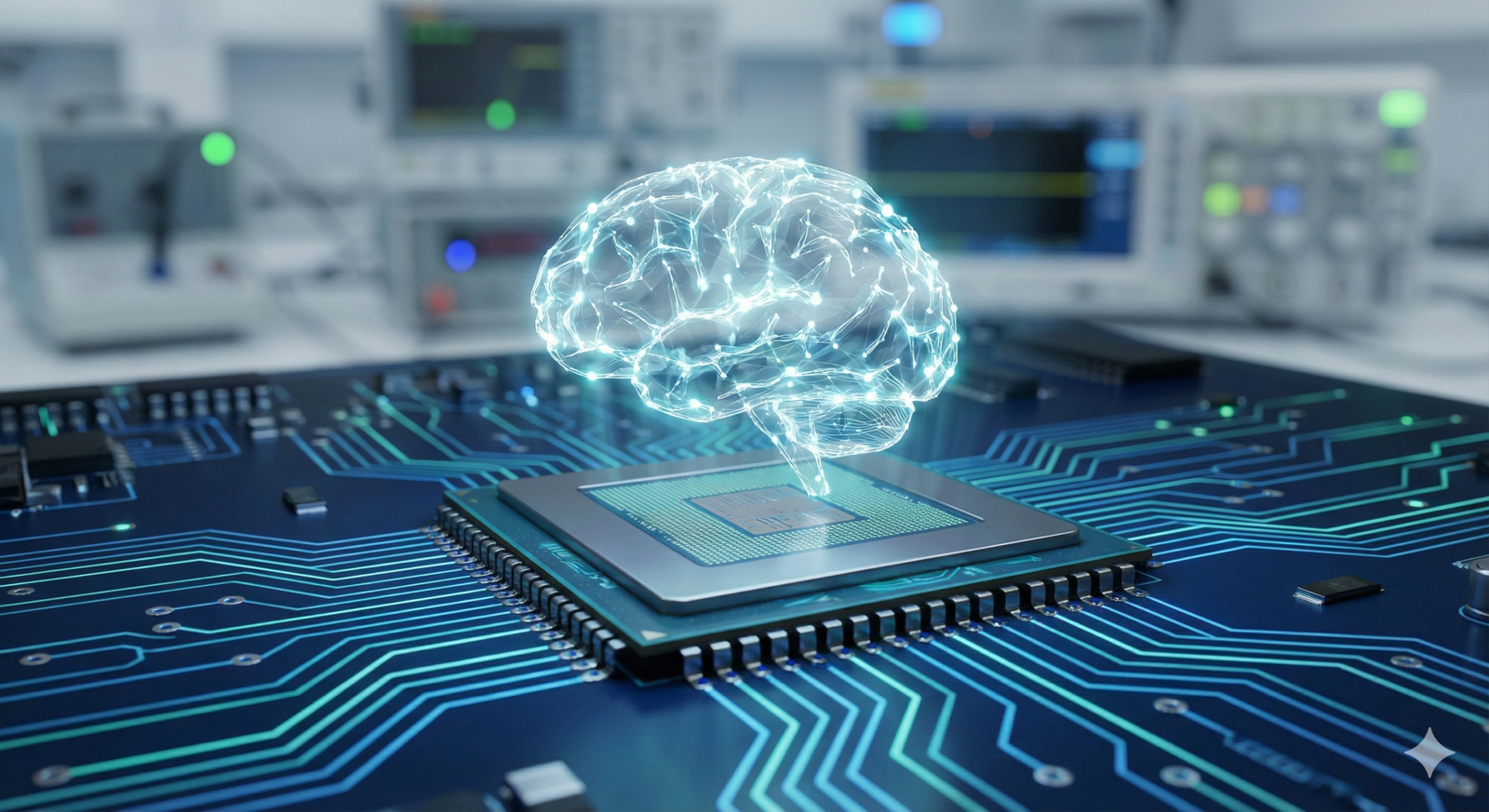
Imagine a smart sensor on a wind turbine that can predict a bearing failure weeks before it happens, or a battery-powered wildlife camera that only records when it sees a specific endangered species, ignoring swaying trees and clouds. Now, imagine these devices operating for years on a coin-cell battery, without needing an internet connection to process the data. This is not science fiction; this is the reality of TinyML.
Tiny Machine Learning, or TinyML, represents a paradigm shift in the Artificial Intelligence landscape. While the headlines are often dominated by massive Large Language Models (LLMs) running on power-hungry server farms, a quiet revolution is happening at the very edge of the network. TinyML brings machine learning inference to microcontrollers (MCUs)—the ubiquitous, low-power chips that inhabit everything from your washing machine to your car key.
In this comprehensive guide, “TinyML” refers to the field of applying machine learning technologies to embedded systems that operate in the milliwatt power range. We will explore how this technology bridges the gap between the physical world and digital intelligence, turning “dumb” IoT devices into smart sensors that process data locally.
Key Takeaways
- Local Intelligence: TinyML allows devices to make decisions locally, removing the need to send raw data to the cloud.
- Ultra-Low Power: By optimizing models for microcontrollers, intelligence can run on batteries for months or years.
- Privacy First: Data stays on the device, significantly reducing privacy risks associated with cloud storage.
- Reduced Latency: Decisions are made in milliseconds, critical for real-time industrial and safety applications.
- Optimization is Key: Success relies on techniques like quantization and pruning to fit complex models into kilobytes of memory.
What is TinyML?
At its core, TinyML is the intersection of embedded systems and machine learning. To understand its significance, we must first look at the hardware spectrum.
Traditionally, Machine Learning (ML) has been categorized into two main buckets:
- Cloud AI: Massive models running on GPUs/TPUs in data centers (e.g., ChatGPT, Midjourney). These require kilowatts of power and constant connectivity.
- Edge AI: Models running on edge devices like smartphones or Raspberry Pis (e.g., FaceID, local object detection). These typically run on operating systems like Linux or Android and consume watts of power.
TinyML sits below Edge AI. It targets microcontrollers—devices that are typically bare-metal (no full OS) or run Real-Time Operating Systems (RTOS). These chips generally have:
- Processor Speeds: 10 MHz to 400 MHz.
- Memory (RAM): 2 KB to 512 KB (rarely up to a few MB).
- Storage (Flash): 32 KB to 2 MB.
- Power Consumption: Milliwatts (mW) or microwatts (μW).
The goal of TinyML is to fit useful ML inference—the process of using a trained model to make predictions—into these highly constrained environments. It is not about training the model on the chip (though that is an emerging research area); it is about taking a trained model, shrinking it down, and running it efficiently on the hardware that is already embedded in billions of devices.
The Scope of TinyML
In this guide, we are focusing on inference on microcontrollers. We are excluding standard “Edge AI” devices like the NVIDIA Jetson or Raspberry Pi 4, which are powerful enough to run full Linux distributions and standard Python ML frameworks. We are talking about devices like the Arduino Nano 33 BLE Sense, the ESP32, and the STM32 series—devices where every byte of RAM counts.
Why Run ML on Microcontrollers?
Why bother squeezing neural networks onto chips with less memory than a 1990s floppy disk? The answer lies in the limitations of the cloud-centric IoT model.
1. Bandwidth and Data Tsunami
The world generates more data than we can transmit. A vibration sensor on an industrial machine might sample at 10 kHz. Streaming that raw waveform to the cloud 24/7 consumes massive bandwidth and storage costs. With TinyML, the device processes the vibration data locally and only sends a ping when it detects an anomaly. This reduces data transmission by 99% or more.
2. Latency and Real-Time constraints
If a factory robot detects a safety breach, it needs to stop now. It cannot afford the round-trip time required to send an image to a server, wait for inference, and receive a stop command. Network latency is unpredictable. TinyML executes logic directly on the hardware, guaranteeing deterministic, millisecond-level response times.
3. Energy Efficiency
Transmitting data wirelessly is expensive in terms of energy. Sending a single bit of data over LTE or Wi-Fi can consume as much energy as executing thousands of instructions on a microcontroller. By processing data locally (compute), TinyML devices save the battery power that would otherwise be used for radio transmission (communication). This is crucial for remote sensors where battery replacement is difficult or impossible.
4. Privacy and Security
Voice assistants are a prime example. Users are increasingly uncomfortable with their raw audio being streamed to the cloud. A TinyML keyword spotting model (like “Hey Siri” or “Okay Google”) runs entirely on the device. No audio leaves the chip until the wake word is detected. Keeping personal data (video, audio, biometric) on the device fundamentally alters the privacy equation.
5. Reliability
Internet connections fail. A smart lock using facial recognition or a medical wearable detecting arrhythmias must function regardless of Wi-Fi status. TinyML ensures core functionality is decoupled from connectivity.
How TinyML Works: The Architecture
Implementing TinyML involves a pipeline that is slightly different from traditional data science. It requires a tight coupling between the data scientist (who builds the model) and the embedded engineer (who deploys it).
Phase 1: Data Collection and Engineering
Data for TinyML is often time-series data from sensors: accelerometers, microphones, temperature sensors, or low-resolution cameras.
- Data Quality: Because the models must be small, they have less capacity to learn from noisy data. High-quality, clean datasets are essential.
- Feature Extraction: On constrained devices, we often cannot feed raw data into a deep neural network. We use Digital Signal Processing (DSP) to extract features. For example, in audio, we convert raw sound waves into spectrograms or MFCCs (Mel-frequency cepstral coefficients) before feeding them to the model. This drastically reduces the input size and model complexity.
Phase 2: Model Training
Training typically happens on a powerful machine (cloud or workstation), usually in Python using frameworks like TensorFlow or PyTorch.
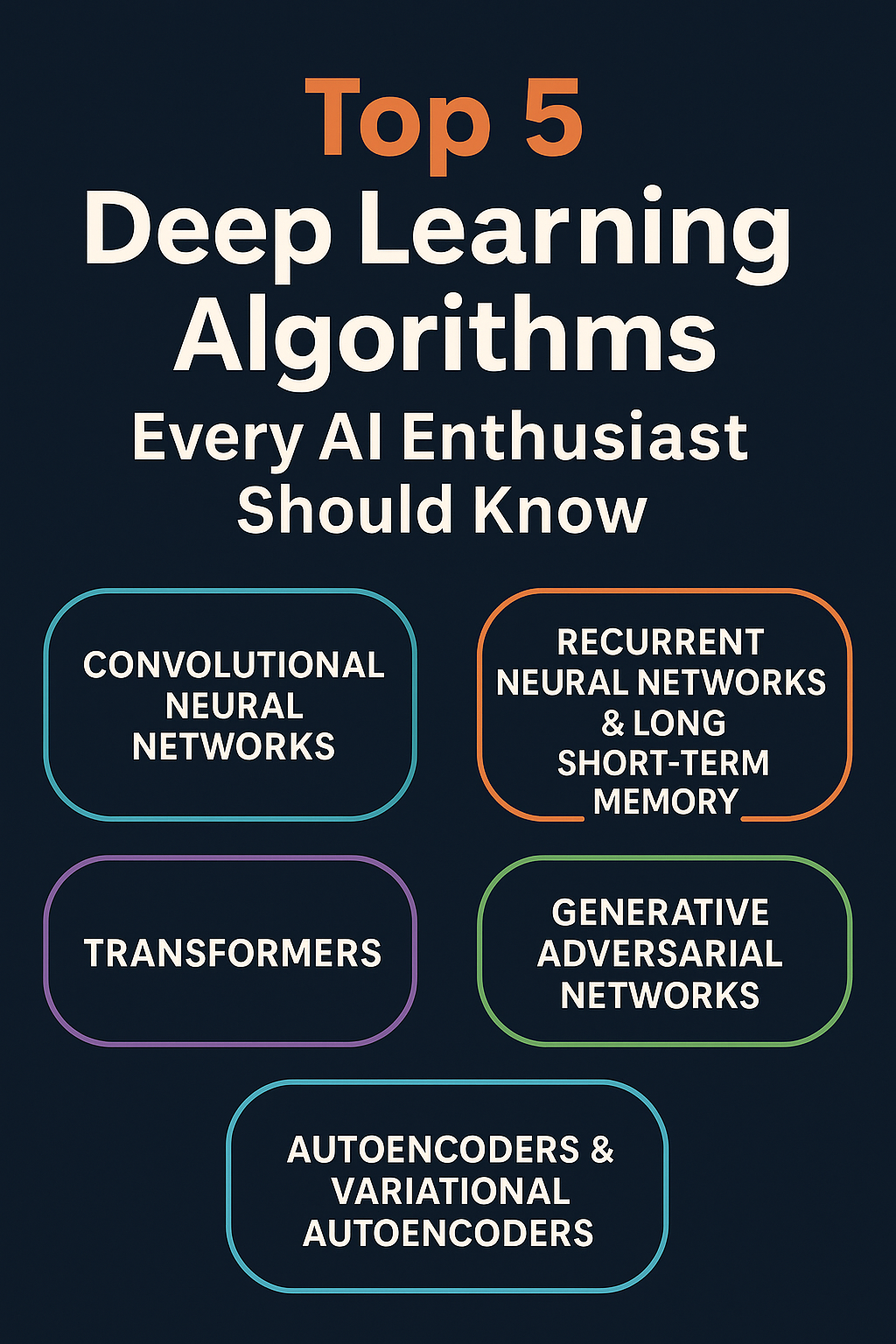
- Model Selection: We choose architectures known for efficiency, such as MobileNets for vision or tiny Convolutional Neural Networks (CNNs) and Recurrent Neural Networks (RNNs) for time-series data.
- Constraint Awareness: The developer must know the target hardware limits during training. If the target MCU has 256 KB of RAM, you cannot design a model with 5 million parameters.
Phase 3: Model Compression
This is the “magic” step that makes TinyML possible. A standard 32-bit floating-point model is too large and slow for most microcontrollers.
- Quantization: This process reduces the precision of the model’s numbers (weights and biases) from 32-bit floating-point representations to 8-bit integers (int8). This shrinks the model size by 4x and allows it to run on MCU arithmetic logic units (ALUs) that are optimized for integer math. While this introduces a small amount of error, modern quantization techniques can often preserve 98-99% of the original accuracy.
- Pruning: This involves removing connections (weights) in the neural network that contribute least to the output. By setting near-zero weights to exactly zero, we create sparse matrices that can be compressed efficiently.
Phase 4: Compilation and Deployment
Once the model is quantized, it must be converted into a C++ byte array that can be compiled onto the microcontroller.
- Conversion: Tools like TensorFlow Lite Converter transform the model into a flat buffer format.
- Inference Engine: A lightweight interpreter runs on the microcontroller. The most popular is TensorFlow Lite for Microcontrollers (TFLM). It loads the model from flash memory and executes the layers using the available RAM.
- Code Generation: Tools like Edge Impulse or STM32 Cube.AI can generate optimized C++ libraries specifically tuned for the target processor’s instruction set (e.g., using CMSIS-NN instructions for ARM Cortex-M cores).
The Hardware Landscape: Where TinyML Lives
As of early 2026, the hardware ecosystem for TinyML is diverse, ranging from generic microcontrollers to specialized Neural Processing Units (NPUs).
1. ARM Cortex-M Series
This is the workhorse of the TinyML world.
- Cortex-M0+: Extremely low power, suitable for very simple sensor analysis.
- Cortex-M4F: Includes Floating Point Units (FPU) and DSP instructions. Very popular for audio and motion classification. (e.g., Arduino Nano 33 BLE Sense).
- Cortex-M7 / M55 / M85: High-performance MCUs. The newer M55 and M85 series feature Helium vector processing technology, specifically designed to accelerate ML math by up to 15x compared to previous generations.
2. Espressif Systems (ESP32)
The ESP32 and ESP32-S3 are favorites in the maker and industrial IoT communities. They offer a balance of Wi-Fi/Bluetooth connectivity and dual-core processing power capable of running fairly complex vision models (like person detection) at usable frame rates.
3. Specialized AI Microcontrollers
A new breed of chips is emerging that integrates hardware accelerators (NPUs or TPUs) directly alongside the MCU core.
- Syntiant: Produces “Neural Decision Processors” specifically for audio and sensor processing that consume microwatts.
- Sony Spresense: A powerful multi-core board designed for high-resolution audio and vision processing.
- Ethos-U: ARM’s micro-NPU, designed to be paired with Cortex-M cores to offload matrix multiplication tasks, boosting performance by 100x over software alone.
4. RISC-V
The open-standard RISC-V architecture is gaining traction in TinyML. Because the instruction set is customizable, manufacturers can add custom instructions specifically for tensor operations without paying licensing fees, potentially lowering the cost of AI-enabled chips.
Core Techniques: Pruning and Quantization Explained
To truly master TinyML, one must understand how we shrink giant brains into tiny chips.
Quantization: The Art of Approximation
Standard neural networks use 32-bit floating-point numbers (float32). A float32 can represent a massive range of numbers with high precision. However, neural networks are surprisingly resilient to “noise.” They don’t need 7 decimal places of precision to know that an image is a cat.
Post-Training Quantization (PTQ) maps the range of floating-point values in the model’s weights to a smaller range of 8-bit integers (0 to 255 or -128 to 127).
- Concept: Imagine measuring the height of everyone in a city in millimeters. You get precise data, but the numbers are large. If you instead group people into “height buckets” (Small, Medium, Large), you lose precision, but the data is much easier to store.
- Benefit: Memory usage drops by 75%. Integer arithmetic is also significantly faster on MCUs than floating-point arithmetic.
Pruning: Cutting the Dead Wood
Biological brains prune synapses that aren’t used. Artificial networks work similarly.
- Weight Pruning: During training, many weights in the neural network end up very close to zero, meaning they have little influence on the next neuron. Pruning forces these small weights to exactly zero.
- Structured vs. Unstructured: Unstructured pruning removes individual weights, creating sparse matrices that are hard to accelerate on standard hardware. Structured pruning removes entire neurons or filters, shrinking the matrix dimensions and leading to direct speedups on standard MCUs.
Software Frameworks and Tools
The barrier to entry for TinyML has lowered significantly thanks to robust software ecosystems.
TensorFlow Lite for Microcontrollers (TFLM)
This is the industry standard open-source framework from Google. It is a port of TensorFlow Lite designed to run with kilobytes of memory. It does not require dynamic memory allocation (malloc), which is crucial for the stability of embedded systems. It supports a subset of TensorFlow operations suited for inference.
Edge Impulse
Edge Impulse has become the de-facto platform for professional TinyML development. It provides a web-based interface that manages the entire lifecycle:
- Data Acquisition: Connect your board and stream sensor data directly to the browser.
- DSP & Feature Generation: Visual tools to tune spectrograms or spectral analysis.
- Training: Train models in the cloud using transfer learning.
- Deployment: Export the model as a C++ library, Arduino library, or binary firmware. Edge Impulse includes the EON Compiler, which optimizes models to use significantly less RAM and Flash than standard TFLM interpreters.
MicroTVM (Apache TVM)
TVM is a deep learning compiler stack. MicroTVM brings this to bare metal. Unlike interpreters (like TFLM) which read the model at runtime, TVM compiles the model into optimized machine code before it runs on the device. This can lead to faster execution times because there is no interpreter overhead.
Real-World Use Cases
TinyML is not a solution looking for a problem; it is already solving critical issues across industries.
1. Predictive Maintenance (Industrial IoT)
- The Problem: Motors, pumps, and fans in factories eventually fail. Unplanned downtime costs millions.
- The TinyML Solution: A small sensor (accelerometer + MCU) is attached to the motor casing. It learns the “normal” vibration pattern of that specific motor.
- The Outcome: When the vibration signature shifts—perhaps a bearing is starting to wobble—the device infers a potential failure and sends a “Check Motor #4” alert. It ignores transient vibrations from passing forklifts. This is “Anomaly Detection.”
2. Audio Analytics and Keyword Spotting
- The Problem: Glass break detectors often trigger false alarms due to loud noises like dropped pans or slamming doors.
- The TinyML Solution: A model trained specifically on the acoustic signature of breaking glass (high frequencies, specific temporal decay) runs on the sensor.
- The Outcome: High accuracy detection with minimal power consumption. This is also used for “Baby Cry” monitors, gunshot detection in smart cities, and voice control in appliances.
3. Smart Agriculture / Wildlife Conservation
- The Problem: Monitoring pests or poachers in remote areas with limited connectivity and solar power.
- The TinyML Solution: Cameras with vision models wake up only when motion is detected. The ML model classifies the image: is it a deer, a human, or a swaying branch?
- The Outcome: The device only transmits images of “humans” (potential poachers) or specific pests, saving battery and satellite data costs.
4. Health and Wearables
- The Problem: Detecting falls in the elderly or tracking complex gym exercises using a smartwatch.
- The TinyML Solution: Accelerometer and gyroscope data is processed on the watch’s MCU.
- The Outcome: Immediate fall detection triggers an alert. Gesture recognition identifies a “bicep curl” vs. a “squat” without needing a phone connection.
Tutorial: Conceptual Workflow for Building a TinyML Project
Let’s walk through what it looks like to build a “Magic Wand”—a device that recognizes gestures (like waving a circle or a “W”) using an accelerometer.
Step 1: Requirements and Hardware
We need a board with an accelerometer and a Cortex-M4 or better processor. The Arduino Nano 33 BLE Sense is a perfect candidate.
Step 2: Data Collection
We write a simple firmware script to read the x, y, and z axis data from the accelerometer at 100Hz. We connect the board to a computer and perform the gestures repeatedly:
- Wave a “Circle” 50 times.
- Wave a “W” 50 times.
- Wave random noise (idle movement) for 2 minutes. This data forms our training set.
Step 3: Signal Processing
Raw accelerometer data is noisy. We apply a low-pass filter to smooth out jitter. We might also compute the “energy” of the movement. We window the data, chopping the continuous stream into 2-second clips.
Step 4: Training the Model
We feed these 2-second windows into a Convolutional Neural Network (CNN). Why a CNN for motion? Because motion data over time looks a lot like an image (spectrograms). The CNN learns that a “Circle” looks like a sine wave on the X-axis phase-shifted from the Y-axis. We train until we reach roughly 90%+ accuracy.
Step 5: Optimization
We convert the model to TensorFlow Lite and apply full integer quantization. We check the size. If it’s 15 KB, and our Arduino has 256 KB RAM, we are safe.
Step 6: Deployment (Inference)
We export the model as a C byte array. We include the TensorFlow Lite library in our Arduino sketch. The loop code looks like this:
- Read sensor.
- Feed data buffer to the interpreter.
- Run interpreter->Invoke().
- Read output probabilities.
- If probability(Circle) > 0.8, turn on the LED.
Challenges and Limitations
TinyML is not magic; it requires careful engineering and compromise.
1. Memory Constraints
This is the biggest hurdle. You are often fighting for every kilobyte. Running out of RAM causes the device to crash or behave unpredictably. Developers spend significantly more time managing memory buffers than in traditional ML.
2. Lack of Debugging Tools
Debugging a neural network is hard. Debugging a neural network running on a black-box chip with no screen and limited serial output is harder. If the model predicts poorly, is it the sensor noise? The DSP preprocessing? Or the quantization error? Isolating the root cause requires specialized embedded skills.
3. Hardware Fragmentation
Code optimized for an ST Microelectronics chip might not run efficiently on a Nordic Semiconductor chip, even if both use ARM cores. Peripheral drivers (reading the microphone or accelerometer) differ vastly between manufacturers.
4. Over-the-Air (OTA) Updates
Updating a model on a device deployed in a forest or inside a concrete wall is difficult. Robust OTA mechanisms are needed to patch models if they drift or if new data reveals a flaw.
The Future of TinyML
The trajectory of TinyML points toward ubiquity. As of 2026, we are seeing the emergence of:
- TinyML Ops (MLOps for Edge): Standardized pipelines for monitoring model performance in the field and automating retraining loops.
- On-Device Training: Currently, most devices only run inference. New techniques are enabling “few-shot learning” on the device, allowing a smart speaker to learn a new user’s voice without sending data to the cloud.
- Neuromorphic Hardware: Chips inspired by the biological brain (spiking neural networks) that consume even less power and are event-driven, perfectly matching the sparse nature of real-world sensor data.
Who is this for? (And who it isn’t)
- It IS for: Embedded engineers looking to add intelligence to products; Data scientists who want to deploy models to the physical world; Product managers seeking to reduce cloud costs and improve privacy.
- It IS NOT for: Running Large Language Models (LLMs) or generative AI (yet). If you need to generate text or high-res images, you still need edge servers or the cloud. TinyML is for perceiving and classifying, not heavy content generation.
Conclusion
TinyML is democratizing Artificial Intelligence. By decoupling intelligence from high-power computing and internet connectivity, it enables a smarter physical world. Whether it’s saving energy in factories, protecting wildlife, or making our homes more intuitive, the smallest chips are solving some of the biggest problems.
The barrier to entry has never been lower. With cheap hardware like Arduino and powerful tools like Edge Impulse, you can build your first TinyML device this weekend. The future of AI isn’t just in the massive data center; it’s in the palm of your hand, running on a coin cell battery.
Next Steps
- Buy a Board: Pick up an Arduino Nano 33 BLE Sense or an ESP32-Eye.
- Try a Demo: Use Edge Impulse to build a simple “Hey World” keyword spotter.
- Learn C++: While Python trains the model, C++ is the language of deployment. Basic familiarity is crucial.
FAQs
1. What is the difference between TinyML and Edge AI? Edge AI is a broad term that includes powerful devices like autonomous car computers and smartphones. TinyML is a subset of Edge AI focused specifically on resource-constrained microcontrollers (mW power range) that usually run on batteries and utilize bare-metal or RTOS environments rather than full Operating Systems like Linux.
2. Can I run ChatGPT or Llama on a microcontroller? No. Large Language Models (LLMs) require gigabytes of RAM and massive processing power. TinyML is suited for tasks like classification (What is this sound? Is this machine vibrating strangely?) and regression (predicting a temperature value), not generative text or image tasks.
3. Do I need to know C++ to use TinyML? Ideally, yes. While you can train models in Python, deploying them to a microcontroller usually requires C++. However, platforms like Edge Impulse and Arduino are abstracting much of this away, allowing you to deploy with minimal coding for standard use cases.
4. How much power does TinyML consume? It varies by application, but typically ranges from under 1 milliwatt (μW range for sleep modes) to a few hundred milliwatts during active inference. This allows for battery life measured in months or years.
5. What is the best microcontroller for beginners in TinyML? The Arduino Nano 33 BLE Sense is widely considered the best starter board. It is packed with sensors (microphone, accelerometer, environment), has a capable Cortex-M4 processor, and is supported by TensorFlow Lite and Edge Impulse tutorials.
6. What is quantization in TinyML? Quantization is the process of reducing the precision of the numbers used in the model (e.g., from 32-bit floating point to 8-bit integers). This reduces the model size by roughly 4x and speeds up execution, with usually negligible loss in accuracy.
7. Can TinyML work without the internet? Yes, that is its primary advantage. Once the model is flashed onto the microcontroller, it runs entirely locally. It does not need Wi-Fi or LTE to make predictions.
8. What sensors work with TinyML? Almost any sensor can be used: microphones (audio), accelerometers/gyroscopes (motion), cameras (vision), gas sensors (smell/environmental), temperature/humidity sensors, and current/voltage sensors (electrical monitoring).
References
- TensorFlow Lite for Microcontrollers (TFLM). Official Documentation. TensorFlow.org.
- Edge Impulse. “What is TinyML?”. Edge Impulse Documentation.
- Warden, P., & Situnayake, D. (2019). TinyML: Machine Learning with TensorFlow Lite on Arduino and Ultra-Low-Power Microcontrollers. O’Reilly Media.
- (Foundational textbook for the field)
- Arm Limited. “Arm Helium Technology”. Arm Developer Documentation.
- Banbury, C. et al. (2020). “MLPerf Tiny Benchmark”. MLCommons.
- Arduino. “Getting Started with Machine Learning on Arduino”. Arduino Official Docs.
- STMicroelectronics. “STM32Cube.AI – AI expansion pack for STM32CubeMX”.
- Harvard John A. Paulson School of Engineering and Applied Sciences. “TinyML” (Course materials and research).