| Device Category | Typical FDA Pathway | Autonomy Oversight Tool | EU Equivalent |
|---|---|---|---|
| Diagnostic AI / SaMD (imaging triage, retinopathy screening) | 510(k) or De Novo | PCCP for algorithm updates | MDR Class IIa-III plus AI Act high-risk annex |
| Autonomous surgical robots | PMA or De Novo | PCCP plus human-in-the-loop mandate | MDR Class III plus Notified Body review |
| Autonomous micro-robots (capsule, vascular) | De Novo (novel) or PMA | Emerging; case-by-case autonomy limits | MDR Class III, novel-technology consultation |
| At-home autonomous diagnostics | 510(k) or De Novo under General Wellness/TEMPO pathway | Risk-tiered PCCP for consumer-facing AI | MDR Class IIa/IIb, home-use annex |
Why Autonomous Medical Devices Broke the Old Regulatory Model
For most of the FDA’s modern history, a medical device was a fixed artifact. Engineers built it, tested it, submitted a file, and the agency cleared or approved a static object that would not change again without a new submission. Autonomous medical devices break that assumption in two distinct ways. First, many of them are software, or software-driven hardware, that makes clinical judgments without a human directly interpreting each data point in real time. Second, many of them are built on machine learning models that are explicitly designed to keep learning after they reach the market. Neither of those properties fits neatly into a framework written for scalpels, stents, and pacemakers.
This is why “autonomous medical devices” is not really a single regulatory category. It is a description that spans at least four very different kinds of products: software as a medical device (SaMD) that triages or diagnoses from images and signals, autonomous or semi-autonomous surgical robots, autonomous micro-robots such as steerable capsules and vascular micro-swimmers, and increasingly, at-home diagnostic and monitoring robots aimed at consumers. Each of these categories intersects the FDA’s classification system, its premarket pathways, and its newer tools for adaptive AI in a different way. This Policy Analysis maps the full landscape across all four categories, rather than focusing narrowly on any single type of device.
For a deep dive specifically on the surgical robotics side of this picture, including the FDA’s human-in-the-loop expectations for Level 3 and Level 4 autonomous procedures, see our companion piece, Autonomous Surgical Robotics: The Future of Machine Procedures. That article goes deep on surgery specifically; this one zooms out to the regulatory architecture that governs autonomous medical technology as a whole.
The FDA’s Core Classification System: Where Autonomy Enters the Picture
Before any pathway question can be answered, the FDA first classifies a device into Class I, Class II, or Class III based on the level of risk it poses to a patient. Class I devices carry the lowest risk and are usually exempt from premarket review. Class II devices carry moderate risk and generally require a 510(k) premarket notification demonstrating substantial equivalence to an already-cleared predicate device. Class III devices carry the highest risk, including life-sustaining or life-supporting devices, and generally require a Premarket Approval (PMA) application, the most rigorous review track the agency runs.
Autonomy complicates this classification because it often increases the risk tier of an otherwise familiar device category. A camera that simply records images is low risk. The same camera paired with an algorithm that autonomously flags a lesion and recommends a course of action is functioning much closer to a clinical decision-maker, and the FDA treats it accordingly.
510(k): The Workhorse Pathway, With Limits for True Autonomy
Roughly 95 to 97 percent of AI- and ML-enabled devices cleared by the FDA have gone through the 510(k) pathway rather than De Novo or PMA, because most of these tools are framed as assistive: they flag, they prioritize, they suggest, but a clinician still makes the final call. That framing lets manufacturers point to a predicate device and argue substantial equivalence.
The 510(k) pathway starts to strain, however, once a device is marketed as making an autonomous clinical determination rather than assisting one. The FDA has been explicit that AI/ML functions that directly inform or make clinical decisions typically do not qualify for the Cures Act’s clinical decision support exemptions, meaning a genuinely autonomous diagnostic tool needs full marketing authorization rather than a lighter-touch clearance.
De Novo: The On-Ramp for Devices Without a Predicate
Many autonomous devices are novel enough that no legitimate predicate exists. For these, the De Novo pathway lets a manufacturer request that FDA classify a new, low-to-moderate-risk device type directly, creating a new regulatory category (and often a new predicate for the next company that follows). This was historically the route for genuinely first-of-a-kind autonomous diagnostic tools, such as the autonomous retinopathy-screening system IDx-DR, which the FDA required to go through full marketing authorization precisely because it issued a screening determination without a clinician reviewing each image.
As of 2026, the eSTAR electronic submission template is mandatory for De Novo requests, and the FDA’s Quality Management System Regulation (QMSR), which aligns the agency’s quality system requirements with ISO 13485, became enforceable in February 2026, adding a harmonization layer that autonomous device manufacturers now have to build into their design and change-control documentation from day one.
PMA: Reserved for the Highest-Risk Autonomous Systems
Premarket Approval remains the standard for devices where failure could be catastrophic and irreversible, a description that fits many autonomous surgical platforms and implantable or semi-implantable autonomous micro-robots operating inside the vascular system. PMA review demands clinical trial data, not just a substantial-equivalence argument, and it is the slowest and most expensive of the three main pathways.
The Four-Category Autonomy Map
A simplified way to visualize the landscape: diagnostic SaMD sits mostly in 510(k)/De Novo territory with PCCP overlays; surgical robots straddle De Novo and PMA with mandatory human-in-the-loop conditions; micro-robots skew toward De Novo and PMA because they lack predicates; and at-home diagnostic devices increasingly route through a lower-friction wellness-style track, provided any invasive function (like autonomous needle insertion) is walled off for stricter review.
The Predetermined Change Control Plan: Letting AI Devices Learn After Clearance
The single biggest regulatory innovation for autonomous and adaptive medical devices is the Predetermined Change Control Plan, or PCCP. Before PCCPs existed, any meaningful change to an AI/ML model, including retraining on new data, generally required a brand-new submission. That made it nearly impossible for a manufacturer to ship a model that kept improving in the field.
A PCCP flips that arrangement. It is an FDA-authorized plan, submitted and reviewed as part of the original marketing submission, that pre-specifies exactly what kinds of modifications the manufacturer intends to make in the future, the methodology used to implement and validate each modification, and the ongoing assessment protocol that proves the device remains safe and effective after each change. Once the PCCP is authorized, the manufacturer can execute those pre-agreed changes without filing a new 510(k), De Novo, or PMA supplement for each one.
This matters enormously for the four autonomy categories in different ways:
- Diagnostic SaMD can update its underlying model as more imaging data becomes available, improving sensitivity and specificity over time without a submission every quarter.
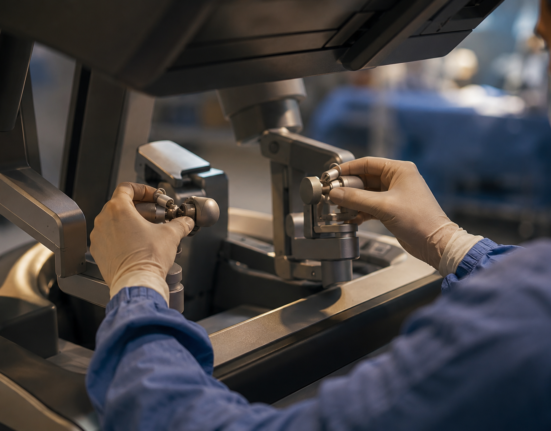
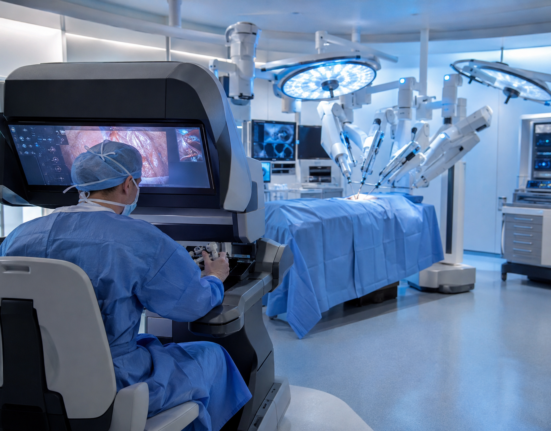
- Surgical robots can refine path-planning and tissue-recognition algorithms as they log more procedures, subject to the human-in-the-loop constraints discussed in our surgical robotics deep dive.
- Autonomous micro-robots are only beginning to get PCCP treatment, since locomotion and targeting algorithms for capsules and vascular micro-swimmers are still relatively novel and the FDA is handling them largely case-by-case.
- At-home diagnostic devices benefit from PCCPs to refine consumer-facing risk scoring, though anything that crosses into invasive or high-risk autonomous action, such as autonomous needle insertion for at-home phlebotomy, is walled off from the lighter PCCP treatment and reviewed far more conservatively, as we cover in The Future of Longevity Stations: At-Home Diagnostic Robots.
| Myth | Reality |
|---|---|
| A PCCP lets an AI device change however it wants after approval. | A PCCP only authorizes the specific, pre-described modifications and validation methodology submitted and reviewed by the FDA in advance; anything outside that scope still requires a new submission. |
| All autonomous medical devices need PMA because they are high risk. | Risk tier depends on clinical function, not just autonomy; a low-risk wellness-tier at-home sensor with autonomous scoring can still qualify for 510(k) or an exempt wellness pathway. |
| The EU and US frameworks are basically identical. | The EU layers a horizontal AI Act high-risk classification on top of the existing MDR/IVDR CE-marking system, creating a dual compliance track that has no direct US equivalent. |
| Autonomous surgical robots can already operate without a licensed surgeon present. | As of 2026 the FDA still requires a human-in-the-loop for Level 3 and Level 4 autonomous surgical procedures; full unsupervised Level 5 autonomy remains experimental. |
Diagnostic AI and Software as a Medical Device (SaMD)
The largest and fastest-growing category of autonomous medical technology is not a physical robot at all; it is software that ingests images, waveforms, or sensor streams and issues an autonomous clinical output. By early 2026, the FDA had cleared or approved more than a thousand AI- and ML-enabled medical devices, the overwhelming majority through 510(k).
What separates a merely “AI-assisted” tool from a genuinely autonomous one, in regulatory terms, is whether a human is required to review the underlying data before the output is acted upon. A radiology triage tool that reorders a worklist so a radiologist looks at the most urgent case first is assistive. A tool that issues a diagnostic determination that a clinician does not need to independently verify, such as an autonomous diabetic retinopathy screening result, is autonomous, and the FDA has treated that distinction as decisive when granting or denying Cures Act exemptions.
A notable 2026 development in this space was the FDA’s clearance of the first large language model functioning as a medical device under a 510(k), a milestone that signals regulators are extending established SaMD logic to generative AI tools, not just narrow classifiers.
Autonomous Micro-Robots: A Regulatory Category Still Being Written
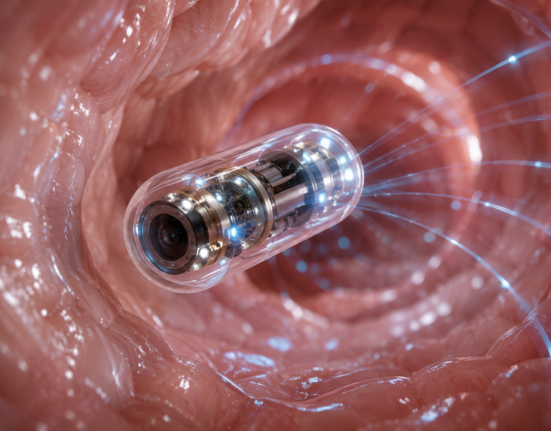
Ingestible capsules, magnetically steered vascular micro-swimmers, and other micro-scale autonomous devices sit in an unusual regulatory position: there is often no predicate device at all, because the locomotion, targeting, or biopsy mechanism is genuinely new. That pushes most of these devices toward De Novo or PMA rather than 510(k).
Our companion article, The Evolution of Micro-Robotics in Precision Medicine, covers the clinical side of magnetically-guided micro-swimmers used for targeted drug delivery and minimally invasive vascular and ophthalmic procedures, while our sibling piece on ingestible capsule diagnostics dives into the specific regulatory and technical detail of swallowable, GI-tract-focused devices. From a pure regulatory-pathway standpoint, both sub-categories currently lack a mature PCCP framework, meaning changes to autonomous navigation or targeting algorithms in these devices usually still trigger new submissions rather than falling under a pre-authorized change plan, a gap regulators are actively working to close.
At-Home Autonomous Diagnostics: The Consumer-Facing Frontier
At-home diagnostic robots, from optical vitals scanners to autonomous robotic phlebotomy devices, represent the newest and arguably most regulatory-sensitive category, because they operate without any clinical staff present at all. The FDA’s General Wellness policy and newer pilot programs allow faster clearance for low-risk wellness devices, while functions involving autonomous invasive action, such as unsupervised venous blood draws, remain subject to much stricter review and are not yet broadly cleared for unsupervised home use in the United States, even though some are further along under CE marking in Europe.
| Regulatory Tool | Purpose | Applies Most To |
|---|---|---|
| 510(k) Premarket Notification | Clear moderate-risk devices via substantial equivalence to a predicate | Assistive diagnostic AI, incremental SaMD updates |
| De Novo Classification | Establish a new regulatory category for novel low-to-moderate risk devices | First-of-kind autonomous diagnostics, novel micro-robots |
| PMA (Premarket Approval) | Rigorous clinical-trial-backed approval for high-risk devices | Autonomous surgical robots, implantable/vascular micro-robots |
| Predetermined Change Control Plan | Pre-authorize future AI/ML model updates without new submissions | Adaptive diagnostic AI, learning surgical robots |
| QMSR / ISO 13485 alignment | Harmonize US quality system rules with the international standard | All device classes as of February 2026 |
The EMA and the European Framework: A Parallel, Not Identical, Track
In the European Union, autonomous medical devices are governed first by the Medical Device Regulation (MDR) or In Vitro Diagnostic Regulation (IVDR), which determine CE-marking classification (Class I, IIa, IIb, or III) largely along the same risk logic as the FDA’s Class I-III system. But the EU has layered an additional, horizontal requirement on top: the AI Act. Any AI system embedded in or functioning as a device regulated under MDR or IVDR is automatically treated as high-risk under the AI Act, meaning autonomous medical devices in Europe must satisfy both their existing Notified Body CE-marking obligations and the AI Act’s high-risk requirements around risk management, data governance, transparency, and human oversight.
The compliance timeline has itself become a live policy question. In March 2026 the Council of the EU agreed to push back key deadlines, moving standalone high-risk AI system obligations to December 2027 and high-risk AI embedded in regulated products, including medical devices, to August 2028. As of May 2026, the Council and Parliament confirmed that MDR- and IVDR-regulated devices remain within the full scope of the AI Act rather than being carved out, though the European Commission retains power to narrow that scope through future implementing acts if MDR/IVDR compliance is judged to already deliver an equivalent level of protection.
For manufacturers, the practical upside is that AI Act compliance can often be folded into the existing Notified Body assessment process, producing a single EU Declaration of Conformity and one CE mark rather than two entirely separate certification tracks. That is a meaningfully different structure from the US system, where the FDA’s PCCP mechanism and its clinical pathways are handled through a single agency, without a second horizontal AI-specific statute layered on top.
Common mistake
Treating “autonomous” as a single regulatory checkbox rather than a spectrum tied to specific clinical claims. A manufacturer that markets an SaMD tool as “autonomous” in its investor materials but files it as clinical-decision-support software risks a mismatch between marketing claims and its cleared indications for use, which is exactly the kind of gap FDA reviewers and post-market surveillance teams flag. The fix is aligning labeling, the 510(k)/De Novo submission narrative, and any PCCP scope so they describe the same level of autonomy consistently across every document.
What worked
Manufacturers that built their PCCP submission around a narrow, well-documented modification protocol, rather than a broad statement that the model may improve over time, saw meaningfully smoother FDA review cycles. Specificity about retraining data sources, performance thresholds, and rollback procedures gives reviewers a concrete basis to authorize the plan rather than negotiate it clause by clause.
Frequently Overlooked Regulatory Details
- Predicate lineageMany 510(k)-cleared AI devices trace their predicate back through several prior AI devices, not a pre-AI original, a chain regulators are now requiring more transparency around.
- Human-in-the-loop scopeThe requirement is not just a person in the room, but a defined intervention capability at specific decision points in the autonomous workflow.
- Post-market surveillance dutyA cleared PCCP does not remove the obligation to monitor real-world performance and report adverse trends; it changes how updates are made, not whether oversight continues.
- Wellness vs. medical claim lineAt-home devices can slip between general wellness and medical device classification depending on the specific claim made in labeling, which changes the entire applicable pathway.
- eSTAR mandateElectronic submission templates are now mandatory for De Novo requests, changing how documentation must be structured even before the substantive review begins.
- EU implementing actsThe European Commission can narrow AI Act scope for MDR/IVDR devices through future implementing acts, meaning the European framework is still actively being finalized, not fixed.
Comparing Regulatory Burden Across Device Categories
| Category | Predicate Availability | Typical Review Timeline | Adaptive AI Tooling Maturity |
|---|---|---|---|
| Diagnostic SaMD | High (large predicate pool) | Months (510(k)) to over a year (De Novo) | Mature; PCCP widely used |
| Surgical robots | Moderate | 1-3 years depending on autonomy level | Growing; PCCP plus human-in-the-loop conditions |
| Autonomous micro-robots | Low to none | 2+ years, often De Novo or PMA | Early; largely case-by-case |
| At-home diagnostics | Moderate for non-invasive functions | Months for wellness-tier; longer for invasive functions | Emerging; risk-tiered |
What This Means for Manufacturers, Hospitals, and Patients
For device manufacturers, the practical takeaway is that “autonomous” is not a marketing label you can bolt onto an existing submission strategy. It changes which pathway applies, whether a predicate exists at all, and whether a PCCP is even a mature enough tool for the specific autonomy claim being made. Early engagement with the FDA through a Q-Submission meeting, before committing to a full De Novo or PMA strategy, remains the most reliable way to avoid a costly pathway mismatch discovered late in development.
For hospital systems and procurement teams, understanding which pathway a device went through is a genuine due-diligence question, not a technicality. A 510(k)-cleared assistive tool carries a different evidentiary base than a PMA-approved autonomous system, and that distinction should inform how aggressively a given tool is trusted in clinical workflows, especially during the early deployment period before extensive real-world data accumulates.
For patients and the general public, the regulatory patchwork described here is the invisible infrastructure behind every autonomous scan, capsule, or surgical assist they may encounter. None of this replaces the judgment of a licensed clinician, and none of the devices described in this article are intended to substitute for professional medical evaluation.
Key Takeaways
- Autonomous medical devices are regulated across a spectrum of FDA pathways, 510(k), De Novo, and PMA, chosen based on risk tier and predicate availability, not a single autonomous device category.
- The Predetermined Change Control Plan (PCCP) is the FDA’s primary tool for letting adaptive AI/ML devices update after clearance without a brand-new submission for every change.
- Diagnostic AI and Software as a Medical Device (SaMD) represent the largest and most mature autonomous device category, with over a thousand AI/ML devices cleared as of early 2026.
- Autonomous surgical robots still require a human-in-the-loop for Level 3 and Level 4 procedures under current FDA expectations; full unsupervised autonomy remains experimental.
- Autonomous micro-robots, including capsules and vascular micro-swimmers, mostly lack predicates and default to De Novo or PMA review, with PCCP tooling still maturing for this category.
- At-home autonomous diagnostics split into a lower-friction wellness track for non-invasive functions and a much stricter track for any autonomous invasive action.
- The EU layers AI Act high-risk obligations on top of existing MDR/IVDR CE-marking requirements, creating a dual-compliance structure with its own extended 2027-2028 timeline that has no direct US equivalent.
Glossary
- Software as a Medical Device (SaMD)
- Software intended for one or more medical purposes that performs those purposes without being part of a hardware medical device.
- Predetermined Change Control Plan (PCCP)
- An FDA-authorized plan, submitted with the original marketing application, that pre-specifies future AI/ML modifications and their validation methodology so they can be implemented without a new submission.
- De Novo Classification
- A regulatory pathway that establishes a new device category for novel, low-to-moderate risk devices that lack an existing predicate.
- Premarket Approval (PMA)
- The FDA’s most rigorous review pathway, generally required for high-risk Class III devices and supported by clinical trial data.
- Human-in-the-loop
- A design and regulatory requirement that a qualified human remains able to monitor, intervene in, or stop an autonomous system’s actions at defined points.
- MDR / IVDR
- The EU’s Medical Device Regulation and In Vitro Diagnostic Regulation, which govern CE marking and classification for devices sold in the European Union.
- Predicate device
- An already-legally-marketed device to which a new device can be compared to establish substantial equivalence under the 510(k) pathway.
FAQs
What regulatory pathway applies to a fully autonomous diagnostic AI tool?
It depends on whether a predicate device exists. If a similar autonomous tool has already been cleared, 510(k) may apply; if not, the FDA typically requires De Novo classification, and higher-risk autonomous diagnostic claims can require a PMA depending on the clinical consequences of an incorrect determination.
What is a Predetermined Change Control Plan and why does it matter for autonomous devices?
A PCCP is an FDA-authorized plan that pre-specifies how an AI/ML device’s model may be modified after clearance, including the validation methodology, so manufacturers can update the algorithm without filing a brand-new submission for every change.
Can an autonomous surgical robot operate without a surgeon present under current FDA rules?
Not yet in standard clinical practice. As of 2026 the FDA still expects a human-in-the-loop for Level 3 and Level 4 autonomous surgical procedures, meaning a licensed surgeon must be able to monitor and intervene even when the robot is performing tasks autonomously.
How does the EU’s AI Act interact with existing medical device rules?
Any AI system embedded in a device regulated under the EU’s MDR or IVDR is automatically classified as high-risk under the AI Act, so manufacturers must satisfy both the existing CE-marking requirements and the AI Act’s additional high-risk obligations, though these can often be integrated into a single Notified Body assessment.
Why do autonomous micro-robots often need De Novo or PMA rather than 510(k)?
Many autonomous micro-robots, such as steerable capsules or vascular micro-swimmers, use locomotion, targeting, or biopsy mechanisms novel enough that no legitimate predicate device exists, which rules out the substantial-equivalence logic that 510(k) relies on.
Are at-home autonomous diagnostic robots FDA-cleared in the United States?
Many non-invasive components, like smart scales and optical vitals scanners, are cleared as general wellness or Class II devices. Fully autonomous invasive functions, such as unsupervised robotic blood draws, remain in clinical trials in the US even though some are further along under CE marking in Europe.
What changed in FDA device regulation in 2026 specifically?
The Quality Management System Regulation, which aligns FDA quality system requirements with ISO 13485, became enforceable in February 2026, and the eSTAR electronic submission template became mandatory for De Novo requests, both adding new procedural requirements for autonomous device manufacturers.
Does a 510(k) clearance mean an autonomous device has been proven safe through clinical trials?
Not necessarily. A 510(k) clearance is based on demonstrating substantial equivalence to a predicate device rather than requiring the same level of original clinical trial evidence that a PMA approval demands, which is an important distinction when evaluating how much independent evidence supports a specific autonomous claim.
References
- U.S. Food and Drug Administration, Marketing Submission Recommendations for a Predetermined Change Control Plan for Artificial Intelligence/Machine Learning (AI/ML)-Enabled Device Software Functions guidance
- U.S. Food and Drug Administration, Quality Management System Regulation (QMSR) enforceable February 2026, aligning FDA quality system requirements with ISO 13485
- IntuitionLabs, FDA Pathways for AI SaMD: 510(k), De Novo and PMA Guide
- IntuitionLabs, FDA Clears First LLM as a Medical Device: Inside UpDoc’s 510(k)
- IntuitionLabs, FDA PCCP Guide for AI/ML Software as a Medical Device
- National Center for Biotechnology Information (PMC), Beyond the 510(k): The regulation of novel moderate-risk medical devices in the FDA’s De Novo pathway
- National Center for Biotechnology Information (PMC), Machine Learning-Enabled Medical Devices Authorized by the US Food and Drug Administration in 2024
- Medical Device Network, EU AI Act meets MDR/IVDR: clarity or chaos?
- MedTech Europe, Joint industry voice calls for one coherent framework for AI-enabled medical technologies (May 2026)
- European Commission Health Directorate, Medical Devices Joint Artificial Intelligence Board coordination documents
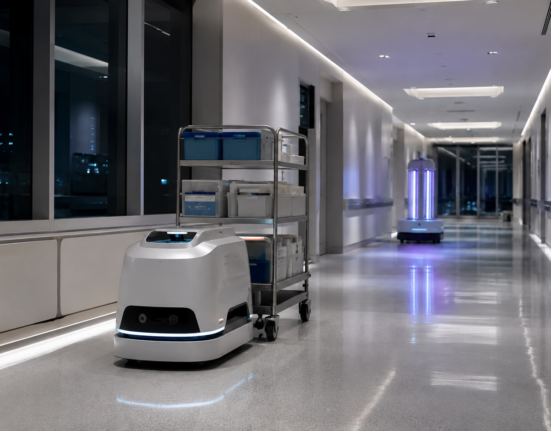
Explore related coverage on The Cybersecurity of Medical Robotics, our companion piece on Capsule and Micro-Robotics for Diagnostics, our deep dive into Robotic Biopsy and Image-Guided Intervention, and our coverage of Hospital Logistics Robots for how connected hospital technology fits into this regulatory picture.
Medical Disclaimer: The information in this article is provided for educational and informational purposes only and does not constitute medical or legal advice. Regulatory status changes frequently; always consult official FDA and EMA guidance and a qualified healthcare or regulatory professional before making decisions related to autonomous medical devices.