| Dimension | Genuine Multi-Cloud | Cargo-Cult Multi-Cloud |
|---|---|---|
| Driver | Regulatory requirement, resilience target, or documented negotiating strategy | “Best practice,” fear of lock-in, or an executive mandate with no specific requirement behind it |
| Workload placement | Deliberate — each workload sits where its constraints (data residency, latency, cost) dictate | Accidental — workloads land on whichever cloud a team or acquisition happened to use |
| Skills investment | Budgeted and staffed; teams trained on each platform in use | Assumed to be “the same everywhere,” leading to shallow expertise on all platforms |
| Tooling | Unified via abstraction layers (Kubernetes, Terraform, common observability) chosen deliberately | Duplicated per cloud with no unification plan, multiplying operational load |
| Cost outcome | Higher than single-cloud, but justified by the specific risk or requirement it addresses | Higher than single-cloud with no offsetting benefit — pure overhead |
The State of Multi-Cloud in 2026
Multi-cloud is no longer a minority position — it’s the default. Flexera’s 2026 State of the Cloud research puts multi-cloud usage at 89% of enterprises, and Gartner-adjacent industry analysis puts the figure at 92%, with the average organization running workloads across more than 2.6 cloud platforms simultaneously. But adoption numbers hide an uncomfortable truth: most of those organizations don’t have a multi-cloud strategy, they have a multi-cloud situation — the result of shadow IT, mergers, SaaS sprawl, and decentralized teams picking whatever cloud was convenient at the time, not a deliberate architectural decision. This mirrors the broader adoption curve tracked in cloud software growth and adoption data, where hybrid and multi-provider setups are now the norm rather than the exception.
This distinction matters because the costs of running more than one cloud are real and largely fixed regardless of whether the multi-cloud footprint is deliberate or accidental. The difference is whether you get anything back for paying them. This site’s earlier look at multi-cloud and sovereign cloud orchestration touched on the operational side of this; here we go deeper into when the trade-off actually pays for itself.
Three Genuine Multi-Cloud Patterns
Active-Active
In an active-active pattern, workloads run simultaneously across two or more cloud providers, all actively serving live traffic. If one provider suffers a regional or platform-wide outage, the others continue serving without a failover event. This is the most resilient pattern and also the most expensive and complex: it requires data synchronization or replication across providers, consistent identity and access management, and traffic routing that can shift load in real time. It’s justified when downtime cost genuinely exceeds the cost of running duplicate infrastructure continuously — payment processors, critical healthcare systems, and some financial trading infrastructure fit this profile.
Active-Passive
Active-passive keeps one cloud as the primary, live environment and a second cloud on standby, ready to take over via a failover event. The passive environment runs a reduced footprint until triggered, which is considerably cheaper than active-active while still providing genuine cross-provider resilience. The trade-off is accepted downtime during failover and potential data loss for whatever wasn’t replicated before the failure. This pattern suits organizations that need provider-level disaster recovery but can’t justify paying for fully duplicated live capacity around the clock.
Workload-Specific Placement
The most common genuine pattern in practice isn’t full redundancy at all — it’s routing specific workloads to whichever provider best suits their constraints. GPU-heavy training might run on a neocloud or a specific hyperscaler’s GPU allocation, as covered in this site’s comparison of bare-metal and neocloud alternatives to hyperscalers, while customer data subject to EU residency rules stays on a provider with the right regional footprint and certifications, and a legacy application stays wherever it was originally built because migrating it isn’t worth the risk. This pattern doesn’t require full active-active tooling because each workload has exactly one home — the complexity is in governance and routing decisions, not real-time cross-cloud synchronization.
Figure 1: Three Multi-Cloud Patterns by Cost and Resilience
A scatter plot with resilience (x-axis) against operational cost and complexity (y-axis). Active-active sits in the top-right (highest resilience, highest cost). Active-passive sits in the middle (moderate resilience, moderate cost). Workload-specific placement sits in the bottom-left relative to the other two on the resilience axis for any single workload, but spans a wide horizontal band because its aggregate cost depends entirely on how many workloads are split and how divergent their toolchains are.
The Real Costs Nobody Puts in the Slide Deck
Networking
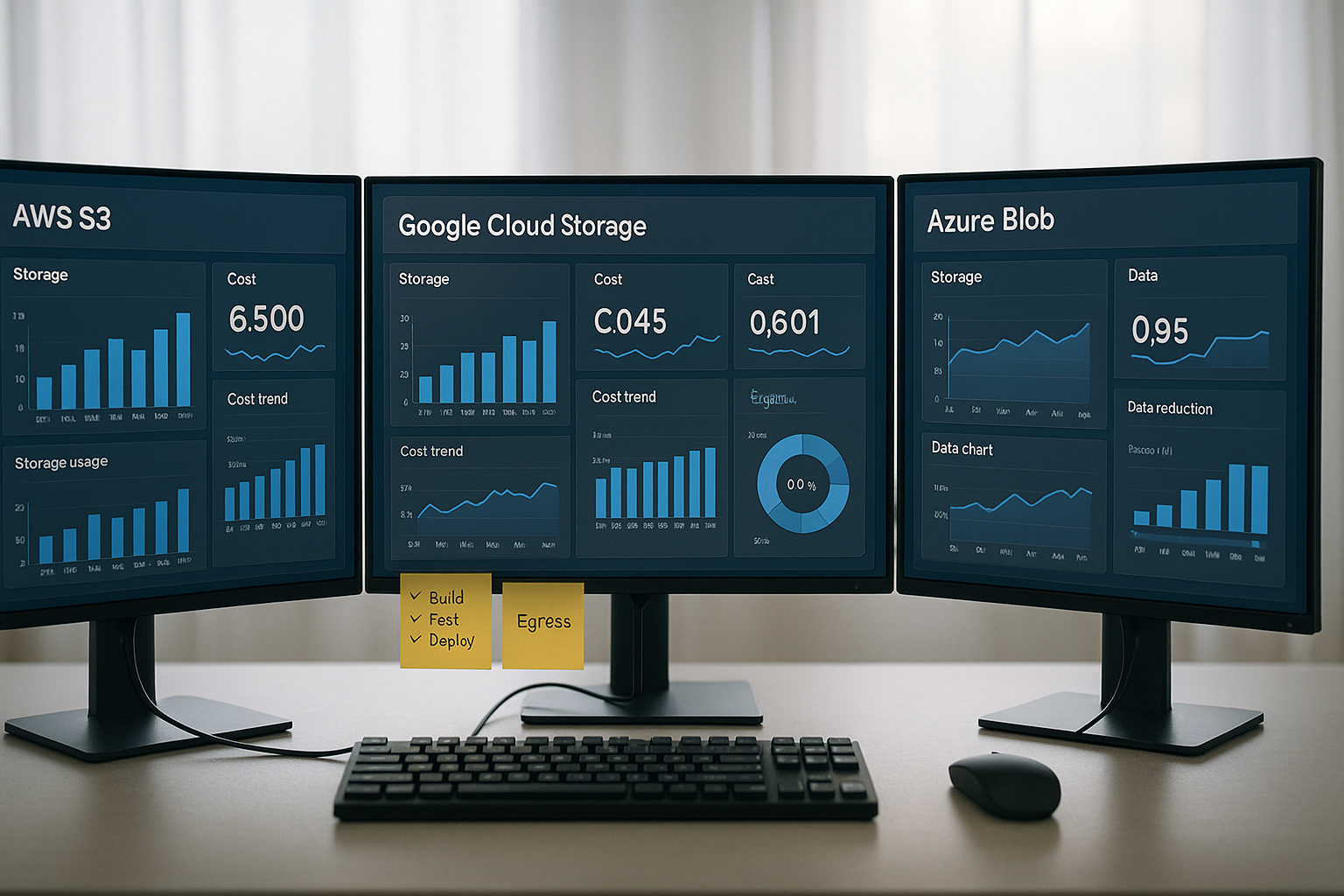
Cross-cloud data movement is not free, and it is rarely small. Standard internet egress runs around $0.09/GB on AWS, $0.087/GB on Azure, and $0.12/GB on GCP, and a workload that reads from one cloud’s storage and writes to another’s database pays egress on the source side and ingestion-adjacent costs on the destination side for every byte that moves. Add NAT gateway processing fees, cross-AZ transfer charges, and load balancer data processing costs, and networking-related charges can represent a meaningful double-digit percentage of total cloud spend for organizations running genuinely interconnected multi-cloud workloads. Dedicated interconnects reduce this — AWS Direct Connect–class options run roughly 80% cheaper than public internet egress for qualifying traffic — but they require upfront design and commitment, not just a checkbox.
Tooling Duplication
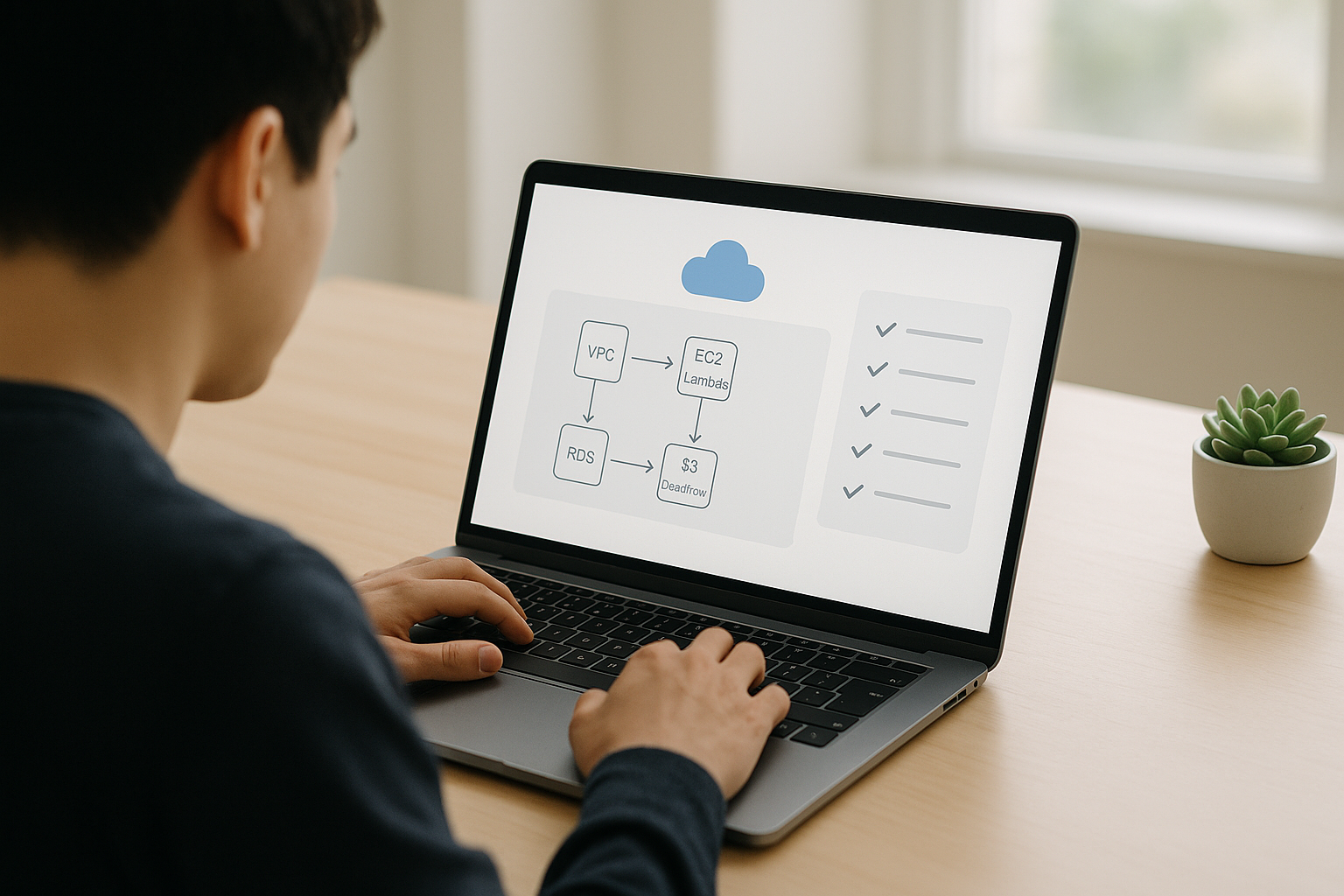
Every cloud has its own IAM model, its own networking primitives, its own managed database flavors, and its own monitoring and logging stack. Multiple CI/CD tools, infrastructure-as-code frameworks, and incompatible monitoring systems across clouds create duplication and integration gaps that someone has to own. Teams that don’t deliberately standardize on cross-cloud abstractions (Kubernetes, Terraform, a unified observability layer) end up maintaining parallel toolchains indefinitely, which is where a lot of multi-cloud’s promised savings quietly evaporate.
Skills
Industry projections put over 90% of organizations at risk of facing severe IT skills shortages, and multi-cloud makes that shortage bite harder — every additional platform in production is another certification path, another set of failure modes, and another on-call rotation that needs training. A team that’s excellent on AWS and merely competent on Azure hasn’t gained resilience; it’s added a second point of failure staffed by people who don’t yet know where the bodies are buried.
Common Mistakes
- Adopting multi-cloud as an abstract risk-mitigation policy without identifying which specific workloads need which specific pattern.
- Building active-active resilience for a workload where the business impact of downtime doesn’t justify running duplicate live infrastructure continuously.
- Assuming Kubernetes or containers alone make workloads portable — cloud-specific managed services (databases, queues, IAM) are usually the actual lock-in, not the compute layer.
- Underinvesting in cross-cloud networking design, then discovering egress and NAT gateway fees have eaten the projected savings.
- Treating “multi-cloud” as a single strategy rather than a decision made per workload — the right answer for a GPU training job and a regulated customer database is rarely the same.
When Multi-Cloud Is a Real Requirement
Regulatory
Data residency and sovereignty rules — GDPR in the EU, sector-specific rules in finance and healthcare, and a growing list of national data localization requirements — sometimes force workloads onto specific regional providers or specific certified environments that no single hyperscaler covers everywhere a company operates. In these cases, multi-cloud isn’t a resilience choice, it’s a compliance floor, and one of the misconceptions this site has previously debunked about cloud computing is the assumption that any single provider’s regional footprint automatically satisfies every jurisdiction’s rules.
Resilience
For workloads where a full cloud-provider outage would be catastrophic to the business — not just inconvenient — genuine cross-provider redundancy is a legitimate insurance policy. The bar here should be high: single-region, single-provider outages are already rare, and the cost of active-active multi-cloud only clears that bar for a minority of workloads at most organizations.
Negotiating Leverage
Enterprises that can credibly run production workloads on more than one provider negotiate better committed-use pricing than those locked into a single vendor with no exit path. This is a legitimate, if less glamorous, reason to maintain genuine multi-cloud capability for at least a subset of workloads — even if most production traffic stays on one provider day-to-day, provable portability is itself the value.
- Step 1Identify whether you have an actual regulatory, resilience, or negotiating requirement — write it down, with the specific workload it applies to.
- Step 2If no specific requirement exists, default to single-cloud for that workload and stop there.
- Step 3For workloads with a real requirement, choose the lightest pattern that satisfies it — workload-specific placement before active-passive, active-passive before active-active.
- Step 4Standardize on cross-cloud abstractions (IaC, container orchestration, observability) before scaling the pattern to more workloads.
- Step 5Budget and staff for the skills gap explicitly — don’t assume existing single-cloud expertise transfers for free.
- Step 6Revisit annually — a workload’s placement rationale can expire as regulations, pricing, and provider capabilities change.
In Practice
Organizations that manage multi-cloud well treat it as a portfolio decision made workload by workload, not a company-wide mandate. A typical mature setup: core transactional systems on one primary hyperscaler with deep platform investment and negotiated pricing; a documented, tested active-passive failover to a second provider for the handful of systems where outage cost genuinely justifies it; specific regulated workloads pinned to whichever provider satisfies the residency requirement; and GPU-heavy compute routed to whichever platform — hyperscaler or neocloud — offers the best price and availability for that specific job, following the pattern covered in hybrid compute strategies for inference scaling. What ties it together is a small, well-funded platform team that owns the cross-cloud abstractions, rather than every application team reinventing its own multi-cloud wiring.
Glossary
- Active-active
- A multi-cloud pattern where two or more providers simultaneously serve live production traffic, with no single point of failure.
- Active-passive
- A multi-cloud pattern where one provider serves live traffic and a second stands by at reduced capacity, activated only on failover.
- Workload-specific placement
- Routing individual workloads to whichever cloud provider best fits their constraints (cost, latency, compliance) rather than replicating every workload everywhere.
- Cargo-cult multi-cloud
- Adopting multiple cloud providers as a stated best practice or risk-avoidance gesture without a specific regulatory, resilience, or commercial requirement driving the decision.
- Data sovereignty
- The principle that data is subject to the laws and governance of the country or region in which it is collected or stored, often forcing regional workload placement.
- Egress fee
- A per-gigabyte charge for data leaving a cloud provider’s network, a major hidden cost driver in genuinely interconnected multi-cloud architectures.
- Committed-use discount
- A negotiated price reduction granted in exchange for a customer’s contractual minimum spend or usage commitment, often leveraged more effectively by credibly multi-cloud-capable buyers.
- Cloud Center of Excellence (CCoE)
- A centralized team or governance function responsible for setting cloud architecture standards, cost controls, and cross-platform best practices across an organization.
Key Takeaways
- 89-92% of enterprises now use multiple cloud providers, but most have a multi-cloud situation, not a multi-cloud strategy — adoption numbers don’t imply deliberate architecture.
- The three genuine multi-cloud patterns are active-active (highest resilience and cost), active-passive (moderate resilience, lower cost), and workload-specific placement (targeted, governance-driven, usually the cheapest to operate well).
- Networking costs (egress, NAT gateway fees, cross-AZ transfer) are a real and often underestimated tax on multi-cloud architectures that move data between providers.
- Tooling duplication across CI/CD, IaC, and observability stacks is where multi-cloud’s promised savings most often quietly disappear if not deliberately standardized.
- The three legitimate drivers for genuine multi-cloud are regulatory/data-residency requirements, resilience needs that clear a high bar, and documented negotiating leverage — not vague lock-in fears.
- Multi-cloud decisions should be made per workload, choosing the lightest pattern that satisfies the actual requirement rather than applying one pattern company-wide.
- A small, well-funded platform team owning cross-cloud abstractions consistently outperforms a model where every application team builds its own multi-cloud wiring.
FAQs
Is multi-cloud always more expensive than single-cloud?
Almost always, yes — duplicated tooling, networking costs, and skills investment add up regardless of whether the multi-cloud footprint is deliberate. The question isn’t whether it costs more, it’s whether the specific regulatory, resilience, or negotiating benefit you get back is worth that added cost for that specific workload.
What’s the difference between active-active and active-passive?
Active-active runs two or more providers simultaneously serving live traffic, so an outage on one causes no interruption. Active-passive keeps one provider live and a second on standby, activated only during failover, accepting some downtime and potential data loss in exchange for lower ongoing cost.
Does using Kubernetes make my workloads cloud-portable?
Partially. Kubernetes standardizes the compute and orchestration layer, but most real lock-in lives in managed services — proprietary databases, message queues, IAM systems, and serverless platforms — that don’t have a direct equivalent on other clouds. True portability requires deliberately avoiding or abstracting those dependencies too.
How do I know if my organization has “cargo-cult” multi-cloud?
If nobody in the organization can name the specific regulatory requirement, resilience target, or negotiating strategy that a second cloud provider serves, and workloads landed on their current provider by accident rather than design, that’s cargo-cult multi-cloud — cost without a clear corresponding benefit.
Can multi-cloud actually improve my negotiating position with a hyperscaler?
Yes, if the multi-cloud capability is credible — meaning you could actually move meaningful workload volume to another provider within a reasonable timeframe. Vendors negotiate harder discounts with customers who have demonstrated technical and contractual ability to leave than with customers who are effectively locked in regardless of what they say at the table.
What’s a realistic first step for a company with accidental multi-cloud sprawl?
Inventory what’s actually running where and why, then classify each workload against the three genuine drivers (regulatory, resilience, negotiating leverage). Anything that doesn’t map to one of those drivers is a consolidation candidate, not a strategy to formalize.
Do egress fees really matter if my workloads mostly stay within one cloud?
Less so — egress costs are proportional to actual cross-cloud data movement, so a workload-specific placement pattern with minimal cross-provider traffic largely avoids them. They matter most for active-active patterns that continuously synchronize data between providers.
How big does a company need to be before multi-cloud makes sense?
Size matters less than the presence of an actual driver. A small fintech subject to strict regional data residency rules may need genuine multi-cloud earlier than a much larger company with no regulatory constraint and no resilience requirement beyond standard single-provider redundancy.
What’s the single biggest predictor of multi-cloud success?
A dedicated, adequately staffed platform or Cloud Center of Excellence team that owns cross-cloud standards, rather than leaving each application team to solve multi-cloud independently. Organizations with this in place report far less tooling duplication and skills strain than those without.
References
- Flexera — 2026 State of the Cloud Report
- Layer27 — “Multicloud Strategy in 2026: How to Stop Managing Chaos and Start Managing Choice”
- Gartner — “How to Decide Between a Single-Cloud or Multicloud Strategy”
- AWS — “Disaster Recovery Options in the Cloud”
- TechTarget — “From Chaos to Control: Multi-Cloud Development Strategies”
- SIOS — “Active-Active vs. Active-Passive Architecture Guide”