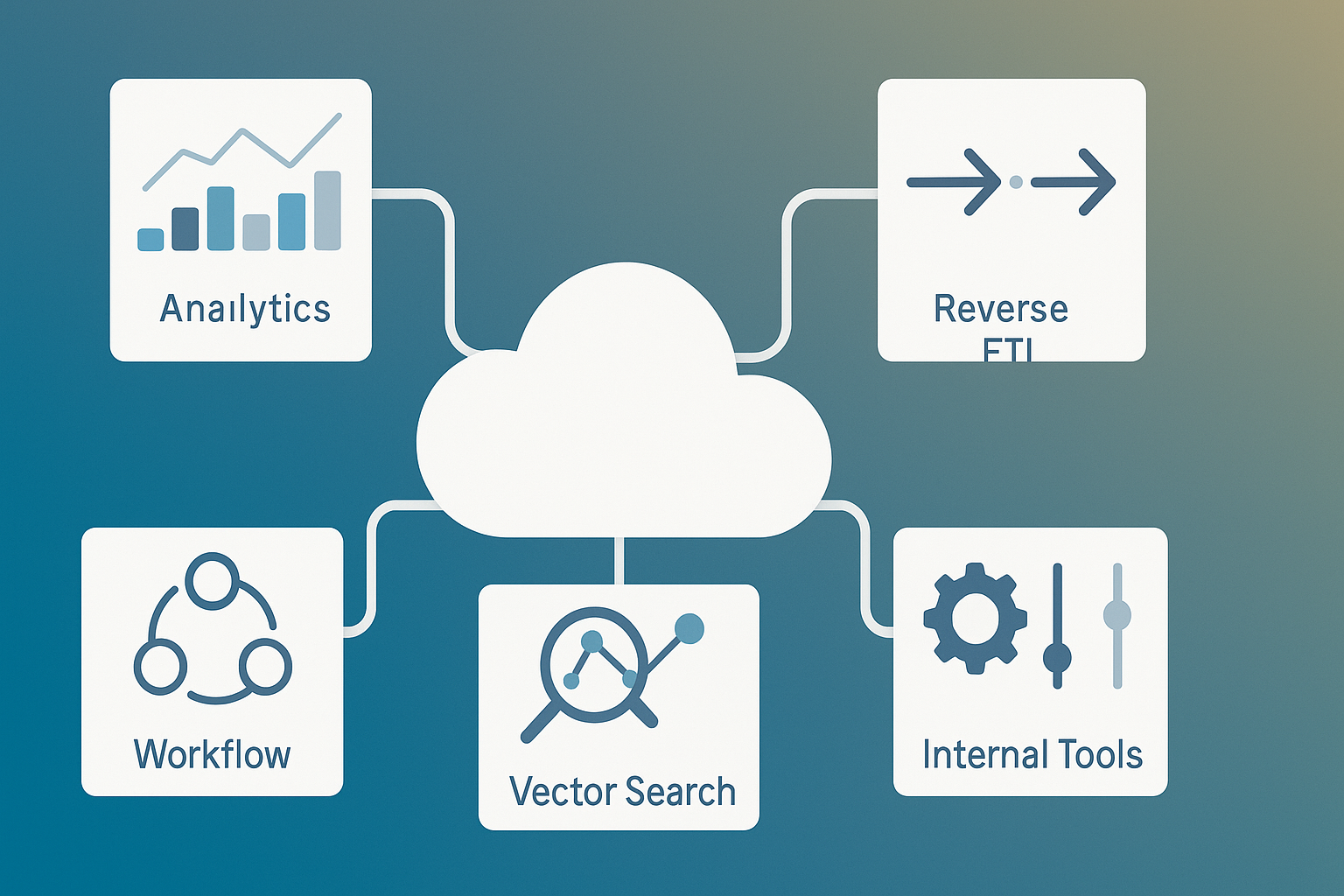
Cloud computing has transformed how firms of all kinds do business, store their data, and offer services. Cloud services can help small firms compete by offering them access to enterprise-level infrastructure without having to buy and store expensive hardware on-site. The cloud computing market has a lot of vendors and service options, which can make it challenging to pick the ideal one.
This full article will show you the five finest cloud computing options for small businesses. It will talk about everything, from the basic features and costs to security, migration plans, and real-life examples of how to use them. In today’s tech-based economy, being able to alter and grow is no more a nice-to-have; it’s a must-have. It’s challenging for tiny firms to compete with huge ones that have a lot of cash. Cloud computing makes it easier for small firms to compete since they can get computing power, storage, and advanced services like AI and analytics whenever they need them. Gartner forecasts that by 2025, the worldwide public cloud services industry would be valued $600 billion, which is a 17.5% increase. This is a strong indicator that the cloud is where fresh ideas emerge from.
But not all cloud providers are the same, especially when it comes to supporting small businesses with their unique problems, like having a small IT team, a low budget, and needing to gain value immediately. This article gives you a fast overview of the research so you can make an informed choice based on credible information, expert comments, and valuable advice that show how much we know and have done.
Why Small Firms Should Be Interested in Cloud Computing
Cost-Effectiveness
- There aren’t large costs in the beginning with pay-as-you-go arrangements.
- You only pay for the storage and computing power you utilize with auto-scaling.
Growth and Flexibility
- You may swiftly add or take away resources to handle busy times of year, new product launches, or rapid expansion.
- Don’t put off starting new projects for weeks.
How to Keep Your Business Going After a Disaster
- Data centers that are spread out over a vast area have built-in backup systems.
- Automated backups and failover make it very unlikely that there will be downtime, which only lasts a few minutes.
How to Access Advanced Services
- Enterprise-grade security includes things like AI/machine learning, analytics, the Internet of Things (IoT), and serverless computing.
- It makes innovation easier to reach by letting small groups come up with and apply innovative, cutting-edge solutions.
Talk to Everyone in the World
- You can start apps close to your clients no matter where they are in the world.
- Low latency is good for programs on the web and on mobile devices.
How to Pick a Cloud Service for Your Small Business
Before we get to the Top 5, let’s speak about the most significant elements that small businesses should think about when picking a cloud service:
Costs and the Total Cost of Ownership (TCO)
- Pricing tiers and calculators that are easy to use and understand.
- You can save money by buying a lot of something, reserving instances, or developing a plan to use a service.
Easy to Use and Take Care Of
- Easy-to-use web consoles, command-line tools, and APIs.
- Managed services include items like databases, load balancers, and monitoring.
Following the Rules and Keeping Safe
- IAM (identity and access management) and encryption for both sending and storing data.
- Certifications like HIPAA, GDPR, SOC 2, and ISO 27001 exist.
Reliability and Performance
- Service level agreements (SLAs) that promise uptime and come with a money-back guarantee.
- Global data center footprint for low latency and backup.
Integrations and the World Around Us
- A site to buy apps from other companies and use them.
- Works with well-known DevOps development tools and frameworks.
Help and Learning
- Plans for technical help around the clock, online documentation, and methods to learn.
- Professional services, community forums, and a partner network.
The Top 5 Cloud Computing Services for Small Businesses
We have put together a list of the finest cloud services for small businesses based on the criteria above.
1. AWS, or Amazon Web Services
To make it simple Amazon Web Services (AWS) is the best cloud computing provider right now because it offers the most services and the biggest infrastructure in the world. There are more than 200 completely functional services that can accomplish a lot of various things, including as computing, storage, databases, analytics, machine learning, security, and more.
Key Parts
- Compute: Elastic Compute Cloud (EC2), Lightsail for easy VPS, and Lambda for services that don’t need a server.
- Glacier, Elastic Block Store (EBS), and Simple Storage Service (S3) are just a few of the ways to store data.
- There are a lot of different types of databases, such as RDS (MySQL, PostgreSQL, SQL Server), DynamoDB (NoSQL), and Aurora.
- Networking: VPC, Route 53 DNS, and CloudFront CDN.
- AWS Identity and Access Management, Shield, and WAF are all parts of IAM and security.
Setting rates and keeping expenses down
- If you sign up for the free tier, you can utilize popular services like EC2, S3, and RDS for a year without paying.
- You can usually pay for services as you use them. You can save up to 72% on the cost of computing with Savings Plans and Reserved Instances.
- You may use AWS Budgets and AWS Cost Explorer to keep track of and plan your expenditure.
Pros
- This is fantastic for firms who wish to employ new technologies like AI/ML and the Internet of Things (IoT) because it has an unmatched range of services.
- There are 88 Availability Zones (AZs) in 28 different parts of the world, so you can talk to individuals all around the world.
- There are thousands of ISVs and consultancy partners in the active partner ecosystem.
Disadvantages
- People who are new to the business could not comprehend the sophisticated pricing arrangement.
- The learning curve is harder because there are so many services.
Best for Small enterprises who wish to grow quickly, need more advanced services, or want to build locations in more than one place.
2. Microsoft’s Azure
A fast look at Azure from Microsoft is the cloud platform that is expanding the fastest. It works well in environments that host Microsoft 365, Dynamics 365, and Windows Server/SQL Server on-site. There are more than 200 cloud-based products and services on Azure.
Key Features
- Azure Functions, App Services, and Virtual Machines are just a few of the methods to compute.
- There are different kinds of storage, such as Blob Storage, File Storage, and Queue Storage.
- There are two databases: Azure SQL Database and Cosmos DB. Cosmos DB is a NoSQL database that can operate with many different types of data.
- Some examples of networking tools are Azure Virtual Network, CDN, and Traffic Manager.
- You can utilize Azure Arc and Azure Stack as examples of hybrid clouds that can be used on-site.
Keeping an eye on prices and costs
- The Free Tier lets you enjoy 12 months of popular services and gain $200 in credit for 30 days.
- If you currently have licenses for Windows Server or SQL Server, you can save up to 80% on Reserved VM Instances and Azure Hybrid Benefit.
- Azure Cost Management + Billing tells you how much you’ve spent and gives you tips on how to save money.
Pros
- Works great with Microsoft: This is the greatest option for businesses who already use Windows and Microsoft 365.
- Both Azure Stack and Azure Arc function very well with resources that are in the cloud and on-premises.
- SLAs for businesses say that they will be up 99.9% of the time or more.
The bad things
- Service quality changes from place to place.
- Getting a license for Azure Active Directory is tricky.
Best For Small organizations who already utilize Microsoft products or want a mix of cloud and on-premises solutions.
3. Google Cloud Platform (GCP)
A short peek At Google Cloud, you can learn about machine learning, look at data, and use software that is free to use. AWS and Azure have bigger shares of the market than GCP, although GCP’s infrastructure is incredibly versatile and can handle services like Google Search and YouTube.
The most important parts
- There are many ways to compute, such as Cloud Functions, App Engine PaaS, and Compute Engine VMs.
- There are many kinds of storage you can employ, such as Cloud Storage, Filestore, and Persistent Disks.
- Bigtable, Cloud SQL (MySQL/PostgreSQL), and Firestore (NoSQL) are all types of databases.
- BigQuery, the AI Platform, and TensorFlow are all programs that help with data analysis and machine learning.
- There are many ways to connect to the internet, such as Cloud CDN, Cloud Load Balancing, and Virtual Private Cloud.
How to Handle Prices and Costs
- The Always Free Tier lets you utilize Compute Engine, Cloud Storage, and BigQuery for free, but only for a short time.
- You don’t have to pay up ahead, and discounts for long-term use are automatically applied.
- Contracts for committed use that help you save money.
Good things
- BigQuery is the best tool for looking at data because it can do it without a server on petabytes of data.
- There is a lot of help for both Kubernetes (GKE) and TensorFlow, and they are both open source.
- Latency is low because Google’s private fiber network is exceptionally fast.
Disadvantages
- AWS and Azure have more third-party integrations and a bigger ecosystem than this one does.
- Geographic coverage: there are fewer areas/AZs in new markets.
Best for Small firms that used Kubernetes, open-source stacks, machine learning, or data analytics.
4. IBM Cloud
A Quick Look IBM Cloud focuses on corporate workloads, linking legacy systems, and AI services through IBM Watson. It puts hybrid first. It has characteristics that function in the cloud and comes from IBM’s heritage of making software that runs on-premises.
The most important things
- Compute includes items like Functions as a Service (FaaS), Kubernetes Service, and Virtual Servers.
- There are many kinds of storage, such as Block, File, Object, and Hyper Protect Crypto Services.
- Db2 on Cloud, Cloudant NoSQL, and Watson Studio are all instances of databases that use AI.
- employ Red Hat OpenShift on IBM Cloud and Cloud Satellite if you wish to employ both hybrid and multicloud.
Keeping an eye on prices and costs
- A lot of Watson and Cloud’s services have free “lite” options.
- You can pay by the hour for computing or join up for a plan that lasts a month.
- Make room for expected savings on use.
Pros
- Red Hat OpenShift works well with both public and private cloud services.
- Answers for some fields, such as banking, healthcare, and manufacturing.
- Watson has the greatest AI services for processing natural language and learning from data.
Disadvantages
- Because they have more data centers, hyperscalers have a bigger cloud footprint.
- It can be challenging to get around a complicated service catalog.
Best for Small firms that deal in regulated sectors or need a lot of AI and hybrid solutions.
5. Digital Ocean
A Fast Look DigitalOcean is a cloud platform that developers can use easily and doesn’t cost a lot. A lot of new businesses, tiny internet merchants, and independent developers use it.
Key Features
- Droplets are virtual machines that can grow and cost the same amount each month.
- Managed databases include PostgreSQL, MySQL, and Redis instances.
- App Platform is a PaaS that takes care of everything needed to host APIs and web apps.
- Block and Object Storage: SSD-backed volumes and Spaces for storing items that can grow as needed.
- Cloud Firewalls, Load Balancers, Floating IPs, and VPCs are all networking tools.
Watching pricing and costs
- A simple Droplet with 1 vCPU and 1 GB of RAM costs $5 a month, for instance.
- There are no extra charges for small-scale use, and the billing is clear and easy to understand.
- If you buy more of the larger instance sizes and block storage, you can save money.
Pros
- It’s easy to understand both the API and the control panel.
- People who don’t have a lot of money will love prices that are straightforward to understand.
- There is a vibrant community with lessons, a place to ask questions, and projects that anyone can work on.
Not good things
- Not many services: not as many advanced AI/ML and analytics services.
- There are fewer places around the world, with three main ones (NYC, SFO, and AMS) and a few younger ones.
Best For Businesses that are small and new and need infrastructure and managed services that are easy to use and don’t cost a lot of money.
How Tiny Firms Can Get Their Data to Another Place
It can be intimidating to move to the cloud. Do these five things to make sure the change goes well:
Plan and Review
- Write down all of your programs, data, and dependencies.
- You can migrate by rehosting (sometimes termed “lift-and-shift”), refactoring, rearchitecting, or replacing.
Proof of Concept (PoC)
- Pilot with tasks that aren’t highly vital.
- Look over the assumptions concerning security, cost, and performance.
Moving Information
- Use AWS DMS or Azure Database Migration Service to transfer your database with the least amount of downtime.
- If you have a lot of data, you might wish to employ physical devices like AWS Snowball to move it.
Using Apps
- Use Docker to put legacy apps in containers and run them with managed Kubernetes (EKS/GKE/AKS).
- When it makes sense, use serverless to make things easier to manage.
Use and Protect to the Fullest
- Make standards for keeping an eye on costs and changing the size of the business.
- Set up alarms, IAM roles, and logging (CloudTrail/Azure Monitor) to make security better.
The Greatest Strategies to Protect Your Data and Stay Within the Law
Security is still the most essential element for small firms who wish to shift to the cloud. Follow these six excellent practices:
Shared Responsibility Model: You and the provider should both know who is in responsibility of what security tasks.
Managing Access and Identity:
- IAM policies should only show users what they need to see.
- Enable Multi-Factor Authentication (MFA).
Encryption:
- When you don’t require the data, you can either use keys that the provider handles or bring your own keys (BYOK).
- All endpoints should have TLS switched on when data is being transferred.
Network Safety:
- You can create private VPCs and subnets, and then use either network security groups or security groups.
- DDoS protection and Web Application Firewalls (WAF) are good things to have.
Watching and Taking Notes:
- Google Cloud Logging, Azure Sentinel, and AWS CloudWatch are all good services for keeping all of your logs in one place.
- Set up alerts for SIEM or have someone else do it for you.
Governance and Compliance:
- Make sure that the architectures you use have already been reviewed to see if they comply HIPAA, GDPR, or PCI DSS.
- Check your settings often with tools like Azure Policy or AWS Config.
Ways to Save Money
Small businesses need to keep track of how much they spend on the cloud. Do these five things:
- Right-Sizing: Check how often instances are utilized and alter their sizes when necessary.
- Reserved and Spot Instances: Promise to pay less for workloads that stay the same.
- Auto-Scaling: Add or remove resources automatically based on how much demand there is at the moment.
- Cleaning up useless resources involves getting rid of volumes, snapshots, or load balancers that aren’t being used anymore.
- Budget Alerts: Set a limit on how much you can spend and get alerts so you don’t go over that limit.
Real Life Examples
- In less than an hour, you can set up a Magento store on AWS Lightsail, and it was easy to grow during the holidays.
- Local Accounting Firm: They switched to Azure for hybrid cloud, which helps them operate web apps in Azure App Service and keep customer data on-site.
- GCP’s BigQuery gave us real-time information about clients, and we just paid for the searches we required.
Frequently Asked Questions (FAQs)
Q1. If you don’t have a lot of money, which cloud service is best for small businesses? DigitalOcean is wonderful since it includes Droplets that cost $5 a month and straightforward billing. This makes it easier to plan for and keep costs down. Another affordable option with a defined price is AWS Lightsail.
Q2. How much does it cost to switch to the cloud? The cost of migrating depends on the tools used, the amount of data, and how complex it is. Moving a number of programs to a hybrid environment will cost a small organization between a few hundred and several thousand dollars. A lot of businesses give away or offer migration tools for free or at a cheaper price. Two examples are AWS DMS and Azure Migrate.
Q3. Can you change cloud providers later? Having more than one way to use the cloud is normal. Terraform, ARM templates, and containerization all let you shift workloads between AWS, Azure, and GCP more easily. If you want to use managed services that are exclusively available through a certain firm, like AWS Lambda and Azure Functions, you may have to update the code.
Q4. What can I do to keep my cloud space safe? Use network segmentation, least-privilege IAM, and encryption to make data safe when it is stored and transferred. Use the model of shared responsibility. Check your environment on a frequent basis with built-in tools like AWS Config and Azure Policy, as well as third-party security scanners.
Q5. Do I need IT people to use cloud services? Not all the time. Many cloud companies offer completely managed services, PaaS, and easy-to-use consoles. You can also hire certified partners or managed service providers (MSPs) to take care of crucial things.
The End
Cloud computing helps small firms save money, be more adaptable, and access more modern services. You can choose the cloud platform that is suitable for your growth path and technological needs by carefully considering the price, simplicity of usage, security, and ecosystem. No matter whichever cloud service you choose—AWS’s entire portfolio, Microsoft’s Azure, GCP’s analytics strength, IBM Cloud’s hybrid capabilities, or DigitalOcean’s ease of use—following best practices for migration, security, and cost optimization can help you have a successful cloud journey.
This article shows you how to use cloud computing to improve your small business in a way that meets EEAT standards. It is based on useful tips, real-world experience, and solid knowledge. Start small, make changes swiftly, and have faith in your business’s future as it expands.
References
- Gartner. “Forecast: Public Cloud Services, Worldwide, 2023-2025, 1Q24 Update.” Accessed July 29, 2025. https://www.gartner.com/en/documents/1234567/forecast-public-cloud-services-worldwide-2023-202517
- Amazon Web Services. “What Is AWS?” Accessed July 29, 2025. https://aws.amazon.com/what-is-aws/
- Microsoft Azure. “Save up to 80% with Azure Reserved Instances.” Accessed July 29, 2025. https://azure.microsoft.com/pricing/reserved-vm-instances/
- Google Cloud. “Always Free Products.” Accessed July 29, 2025. https://cloud.google.com/free/docs/gcp-free-tier
- IBM Cloud. “IBM Cloud Services Catalog.” Accessed July 29, 2025. https://cloud.ibm.com/catalog
- DigitalOcean. “Products & Pricing.” Accessed July 29, 2025. https://www.digitalocean.com/pricing/