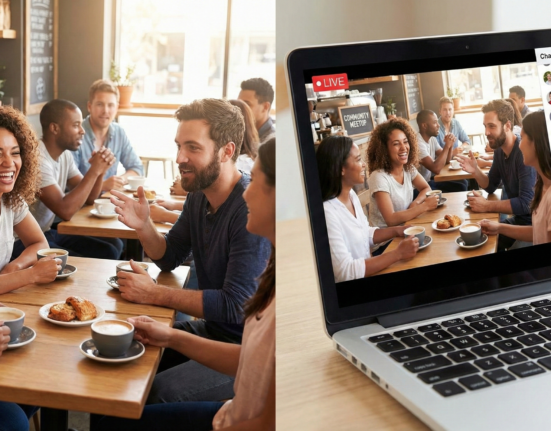
The shift to distributed work has liberated millions from the daily commute, but it has also introduced a silent adversary: professional isolation. Without the serendipitous coffee breaks, the quick desk-side questions, or the visible hum of a busy office, career development can feel stagnant, and the sense of belonging can evaporate. For the modern distributed workforce, mentorship and community for remote professionals are not just “nice-to-haves”—they are critical infrastructure for mental health, career progression, and long-term retention.
This guide explores the dual pillars of sustaining a thriving remote career: finding guidance through mentorship and finding belonging through community. Whether you are an individual contributor seeking connection, a freelancer looking for a tribe, or a leader trying to knit a scattered team together, this page covers the strategies, tools, and mindsets necessary to bridge the digital divide.
In this guide, we define mentorship as a structured or semi-structured relationship focused on professional growth and knowledge transfer, while community refers to the broader network of peers and colleagues that provides emotional support, belonging, and shared identity.
Key Takeaways
- Intentionality is currency: In remote settings, mentorship and community never happen by accident; they require deliberate scheduling and effort.
- Beyond the 1-on-1: Modern remote mentorship includes peer circles, reverse mentoring, and asynchronous feedback loops, not just traditional senior-junior pairings.
- The “Proximity Bias” trap: Remote professionals must actively seek visibility and community to avoid being overlooked for opportunities compared to in-office peers.
- Community is plural: Successful remote workers often belong to multiple micro-communities (e.g., a company Slack channel, a niche industry Discord, and a local co-working group) rather than relying on one source for social fulfillment.
- Asynchronous culture matters: Building relationships shouldn’t always mean more video calls; text-based communities and voice memos are powerful bonding tools.
1. The remote connection crisis: Why we need new structures
To understand the solution, we must first diagnose the problem. The “remote connection crisis” is a phenomenon where workers report high levels of productivity but declining levels of connection and loyalty.
The loss of osmotic learning
In a physical office, junior employees learn by osmosis—overhearing how a senior negotiator handles a client call or watching a designer troubleshoot a rendering issue. In a remote environment, this ambient information is stripped away. Work becomes transactional: you log on, do the task, and log off. Without mentorship, the transfer of tacit knowledge (the “how we really do things” wisdom) is severed.
The rise of loneliness
State of Remote Work reports consistently list loneliness as a top struggle. This isn’t just about missing social hour; it’s about the absence of a professional support net. When you hit a roadblock at home, you are alone with your frustration. A community provides the psychological safety net that allows professionals to take risks and admit failure without spiraling.
Proximity bias and visibility
“Out of sight, out of mind” is a real danger. Research suggests that in-office employees are sometimes more likely to receive promotions simply because they are visible to leadership. Remote mentorship acts as a visibility anchor, ensuring that a remote worker’s contributions are advocated for in rooms where they aren’t present.
2. Defining mentorship for the distributed age
Mentorship for remote professionals looks different than the traditional “lunch with the boss” model. It is more flexible, often more digital, and relies heavily on written communication.
The 4 types of remote mentorship models
A. Traditional Synchronous Mentoring
This mirrors the classic model but takes place over Zoom or Teams. It involves regular video calls (e.g., bi-weekly) with a set agenda.
- Best for: Deep career planning, complex problem solving, and building emotional rapport.
- Remote Challenge: “Zoom fatigue” can make these sessions feel like just another meeting.
- Fix: encouraging “audio-only” walking meetings where both parties step away from their screens while talking.
B. Asynchronous Mentoring
This is uniquely suited for remote work, especially across time zones. Mentors and mentees communicate via email, Slack, or recorded video messages (using tools like Loom).
- Best for: Code reviews, reviewing document drafts, specific questions, and busy schedules.
- Why it works: It respects deep work time and allows the mentor to give thoughtful, composed answers rather than shooting from the hip.
C. Peer Mentorship and “Accountability Buddies”
Instead of a senior-junior dynamic, two colleagues at similar levels support each other. They might meet to co-work silently on video (body doubling) or share daily goals.
- Best for: combating isolation, maintaining daily motivation, and sharing tactical “in the trenches” advice.
D. Reverse Mentoring
Younger or more digitally native employees mentor senior leaders on new tools, cultural trends, or the reality of remote work for entry-level staff.
- Best for: Bridging generational gaps and helping leaders understand the remote employee experience.
Key components of a successful remote mentorship agreement
Because you can’t rely on casual hallway run-ins to keep the relationship alive, remote mentorship requires a “contract” of sorts. This doesn’t need to be legally binding, but it must be explicit.
- Communication Protocol: Will we use WhatsApp for quick questions and Zoom for deep dives? Is it okay to message on weekends?
- The “Exit Clause”: Acknowledging that if the virtual chemistry isn’t there, either party can end the mentorship without awkwardness.
- Goals vs. Logistics: Spending the first 10 minutes of a call strictly on personal connection (building rapport) before diving into logistics.
3. How individuals can find mentors and community online
If your company doesn’t provide a structured program, or if you are a freelancer/nomad, the burden of finding mentorship for remote professionals falls on you. This requires shifting from a passive mindset to an active “hunter” mindset.
The “Cold Outreach” strategy for remote mentors
Reaching out to a stranger on LinkedIn can be intimidating. However, the barrier to entry is lower in a remote world—you aren’t asking for a 90-minute lunch; you can ask for a 15-minute virtual coffee.
The Outreach Framework:
- The Hook: Reference a specific piece of content they posted or a project they shipped. Prove you are not a bot.
- The Ask: Be hyper-specific. Do not ask “Will you be my mentor?” (too heavy). Ask, “I’m struggling with [Specific Problem X] and saw you solved this at [Company Y]. Could I ask you three specific questions about it?”
- The Medium: Offer an asynchronous option. “I know you’re busy, so I’m happy to send these questions via email if a call is too much.”
Navigating online communities
Community for remote professionals exists in layers. You need to diversify your portfolio of communities.
Level 1: The “Watercooler” Communities (Broad) These are large, often free communities where you can ask general questions and feel a sense of industry pulse.
- Examples: r/RemoteWork, r/DigitalNomad, huge Slack groups like ‘Remotive’.
- Value: Volume of answers, feeling less alone in general struggles.
- Pitfall: Noise. These can be distracting and impersonal.
Level 2: The “Guild” Communities (Niche) These are role-specific communities.
- Examples: GitHub repositories for developers, Behance for designers, ‘Superpath’ for content marketers, ‘RevGenius’ for sales.
- Value: Deep technical mentorship, job referrals, specific tool advice.
Level 3: The “Squad” Communities (Intimate) These are small, often paid or application-only groups (Masterminds).
- Examples: Private discord servers, cohorts from courses (like Reforge or Maven), local meetups for remote workers in a specific city.
- Value: High trust, vulnerability, genuine friendship.
Finding “Third Places” digitally
Sociologist Ray Oldenburg coined the term “Third Place” (separate from home and work) as essential for community. For remote workers, digital third places are vital.
- Virtual Co-working: Platforms like Focusmate or Caveday allow you to work “alongside” strangers. It simulates the community feel of a library or coffee shop.
- Social Audio: Drop-in audio rooms (like Twitter Spaces or localized Discords) can serve as a background hum of community.
4. Building culture: A guide for leaders and organizations
If you are a leader, you cannot rely on “culture” naturally emerging in a remote vacuum. You must engineer the infrastructure for mentorship and community for remote professionals within your org.
Designing a remote mentorship program
A formal program signals to employees that you invest in their future.
Step 1: The Survey Don’t guess what your team needs. Survey them:
- Do they want career guidance (promotion focus)?
- Do they want skill acquisition (technical focus)?
- Do they just want connection (social focus)?
Step 2: The Matching Algorithm Avoid random pairing. Effective remote mentorship matches based on goals, not just departments.
- Cross-pollination: Pair a marketing associate with a product manager to break down silos.
- Time-zone compatibility: Ensure the pair has at least 2-3 hours of overlap, or explicitly agree on an asynchronous relationship.
Step 3: The Structure (The “scaffolding”) Provide conversation prompts. Two strangers on Zoom can be awkward. Give them a “Menu of Discussion Topics” for their first three meetings.
- Month 1: Career story and personal values.
- Month 2: Current blockers and skill gaps.
- Month 3: Long-term vision and internal networking.
Rituals that build community
Community is built through shared rituals. In a distributed team, these rituals must be inclusive of time zones and personality types (introverts vs. extroverts).
Synchronous Rituals (Real-time):
- The “Non-Work” All-Hands: Once a month, a meeting devoted entirely to shout-outs, personal wins, or trivia. No status updates allowed.
- Remote Offsites: Bringing the team together physically once or twice a year is the highest-ROI investment for community. The social capital built during 3 days in person fuels the next 6 months of remote work.
Asynchronous Rituals (On your own time):
- The “Question of the Week”: A Slack channel where a bot posts a fun or deep question (e.g., “What was your first job?” or “Show us a photo of your lunch”). This allows people to bond across time zones.
- User Manuals: Every team member writes a “User Manual” (How I like to receive feedback, my working hours, my pet peeves). Reading these fosters empathy and understanding without needing months of interaction.
The role of “Community Managers” in HR
Progressive remote companies are hiring “Internal Community Managers.” This role is distinct from HR. Their sole KPI is connection. They organize the virtual coffees, moderate the fun Slack channels, and ensure new hires are integrated into the social fabric, not just the payroll system.
5. Tools and technology for connection
The right stack can reduce friction in mentorship and community building. However, tools are merely the vehicle; intent is the fuel.
Mentorship Management Software
For organizations larger than 50 people, spreadsheets become unmanageable.
- Donut: A Slack integration that randomly pairs employees for “virtual coffee.” It’s excellent for serendipity.
- Together / MentorcliQ: Enterprise platforms that handle matching, tracking goals, and reporting on mentorship ROI.
- Loom: Essential for asynchronous mentoring. Sending a 3-minute video critique of a design is far more personal and nuanced than a text paragraph.
Community Platforms
- Slack / Microsoft Teams: The default “town square.” Use channels effectively (e.g., #pets, #cooking, #local-london) to create micro-communities.
- Discord: Often preferred by tech-centric or creative communities for its persistent voice channels which allow for a “drop-in” feel.
- Gather / Kosy / Kumospace: These are “spatial audio” platforms. You have an avatar and walk around a virtual office. As you get closer to another avatar, their video fades in. This restores the ability to “walk up to someone’s desk” in a less intrusive way than a direct call.
The “Low-Tech” stack
Never underestimate the power of the phone call. Video fatigue is real. Sometimes, switching to a standard phone call allows for walking, which changes the physiological state and often leads to more open, honest mentorship conversations.
6. Challenges and common pitfalls
Even with the best intentions, initiatives for mentorship and community for remote professionals can fail. Here is how to troubleshoot the most common issues.
Pitfall 1: Forced Participation (The “Mandatory Fun” paradox)
The Issue: Mandating attendance at a “Virtual Happy Hour” at 5 PM on a Friday usually breeds resentment, not community. The Fix: Make social events optional and varied. A book club, a gaming session, and a morning coffee chat attract different crowds. Opt-in culture ensures that those who show up actually want to be there, which improves the energy for everyone.
Pitfall 2: The Time Zone Divide
The Issue: Mentorship pairs across wide gaps (e.g., London to Sydney) struggle to schedule meetings, leading to relationship decay. The Fix: Prioritize “regional clusters” for synchronous mentorship or fully embrace an asynchronous model where the delay is a feature, not a bug (creating a “pen pal” dynamic).
Pitfall 3: Inclusivity and Clique formation
The Issue: Without structure, community forms along lines of similarity (bias). Extroverts dominate Zoom calls; native English speakers dominate discussions. The Fix: Use facilitation techniques in meetings (e.g., “Round Robin” where everyone speaks once). Create text-based affinity groups (ERGs) for underrepresented groups to find specific mentorship and safety.
Pitfall 4: Transactional drift
The Issue: Relationships become purely about “What can you do for me?” or “Is this task done?” The Fix: Leaders must model vulnerability. When a leader admits, “I struggled with this decision,” it grants permission for the community to move beyond surface-level transactional talk.
7. The psychology of digital belonging
Why does a Slack emoji reaction sometimes feel like a hug, and other times feel dismissive? Building a genuine community for remote professionals requires understanding the psychology of digital mediation.
Social Presence Theory: This psychological concept refers to the degree to which a person is perceived as “real” in mediated communication. High-bandwidth communication (video) has high social presence; text has lower. To build mentorship trust, you usually need high social presence early on (video/audio) to establish a baseline, after which low social presence (text) can sustain the bond.
The “Weak Ties” Theory: Mark Granovetter’s famous sociological theory states that “strong ties” (close friends) give us support, but “weak ties” (acquaintances) give us new opportunities and information. Remote work is great for strong ties (your direct team) but terrible for weak ties (people in other departments). Successful remote community initiatives must engineer “weak tie” interactions—random pairings, cross-functional projects, or interest-based clubs.
8. Sustainability practices in remote community building
This section isn’t about the environment, but about the sustainability of the effort. How do you keep the community alive without burning out the organizers?
- Rotate Leadership: Do not let the same person organize every social event. Rotate the “Social Captain” role quarterly.
- User-Generated Content: The best communities are not broadcast (top-down); they are peer-to-peer. Encourage employees to lead “Lunch and Learns” on their hobbies (e.g., “How to make sourdough” or “Basics of Investing”).
- Document the Culture: Create a “Culture Handbook” (like Gitlab’s handbook) that codifies the community values. This allows new joiners to onboard into the community culture without needing a mentor to explain every unwritten rule.
9. Who this is for (and who it isn’t)
This guide is for:
- Remote-first leaders trying to improve retention rates.
- HR professionals designing L&D (Learning and Development) programs for distributed staff.
- Individual remote workers feeling isolated and looking for actionable ways to build a network.
- Digital Nomads who need a stable professional community while traveling.
This guide is NOT for:
- Hybrid managers looking solely for in-office strategies.
- Those seeking strictly transactional networking (sales prospecting strategies).
- Companies looking to “spy” on employees (community is the opposite of surveillance).
10. Future trends: The next evolution of virtual connection
As we look toward 2026 and beyond, the landscape of mentorship and community for remote professionals is evolving.
- AI-Driven Matching: Algorithms will get better at predicting successful mentorship pairs not just based on skills, but on personality analysis and communication style compatibility.
- The Metaverse / VR: While still maturing, VR meetings for “social hours” offer a sense of spatial togetherness that 2D video lacks. We will see more mentorship sessions taking place in virtual walks or digital breakout rooms.
- Decentralized Autonomous Organizations (DAOs) as Mentorship Hubs: We are seeing the rise of professional DAOs where mentorship is tokenized or incentivized by the community protocol, moving career development outside the traditional corporate structure entirely.
11. Practical checklist: Starting your search today
If you are reading this and feeling isolated, here is your immediate action plan:
- Identify your gap: Do you need a coach (skills), a mentor (long-term guidance), or a sponsor (advocacy)?
- Audit your “Weak Ties”: Scroll through your LinkedIn. Who have you not spoken to in 2 years? Send 3 messages today just to reconnect with no ask.
- Join one “Level 2” Community: Find the specific Slack or Discord for your job title. Introduce yourself in the #intro channel immediately.
- Ask your boss: “Does our company have a mentorship program? If not, can I help pilot a small one?”
Conclusion
The narrative that remote work kills culture is false. Remote work merely changes culture. It shifts it from a default setting (proximity) to an intentional setting (effort). Mentorship and community for remote professionals are the lifelines that prevent the freedom of remote work from becoming the prison of isolation.
By embracing asynchronous bonding, utilizing digital “third places,” and formalizing mentorship agreements, we can build professional networks that are deeper, more diverse, and more resilient than any physical office could provide. The screen does not have to be a barrier; it can be a bridge. The responsibility lies with us—both as individuals and leaders—to cross it.
Next Steps
- For Individuals: Join a niche community relevant to your role this week (e.g., a specific subreddit or a professional Slack group).
- For Leaders: Launch a simple “Donut” style randomized coffee chat initiative to jumpstart weak ties in your org.
FAQs
1. How do I find a mentor if I work remotely and don’t know anyone? Start by looking for “mentorship platforms” specific to your industry (like ADPList for design/product). Alternatively, use the “cold outreach” method on LinkedIn: identify someone 2-3 steps ahead of you, engage with their content first, and then send a specific, low-pressure request for advice on a single topic, offering to do it via email or a 15-minute call.
2. Can mentorship really work without meeting in person? Absolutely. Remote mentorship often focuses more on the content of the discussion and less on social pleasantries, which can lead to faster professional growth. Using video for high-bandwidth emotional connection and shared documents for tactical work creates a highly effective mentorship loop.
3. What are the best tools for remote community building? Slack and Microsoft Teams are the standards for daily communication. For social bonding, tools like Donut (for pairing), Gartic Phone (for games), and Gather (for virtual spaces) are excellent. For asynchronous video updates, Loom is the industry leader.
4. How often should remote mentors and mentees meet? Bi-weekly (every two weeks) is generally the “goldilocks” frequency. It provides enough time to make progress on action items between meetings but is frequent enough to maintain rapport. Monthly can work for more senior/casual relationships.
5. How can I build community in my remote team without causing “Zoom fatigue”? Lean heavily into asynchronous community building. Create Slack channels for hobbies (#dogs, #reading, #running). Use voice notes instead of meetings. Encourage “show and tell” via recorded video rather than live presentations. Respect that sometimes, giving people time back is the best way to build community goodwill.
6. What is the difference between a coach and a mentor in a remote setting? A mentor is usually a more experienced peer who shares their personal wisdom and path (“Here is what I did”). A coach is often a hired professional who helps you find your own answers through structured questioning (“What do you think you should do?”). Both are valuable but serve different needs.
7. How do I handle time zone differences in a global mentorship program? Pair people within overlapping time zones (e.g., +/- 3 hours) whenever possible. If pairing across the world, agree on an asynchronous-first model where you exchange video messages or documents, only using live calls for major milestones.
8. What should I do if my remote mentorship isn’t working? Refer back to your initial agreement (the “exit clause”). Send a polite, grateful message: “I’ve learned so much from our sessions, but my focus is shifting to [X] right now, so I’d like to pause our regular calls. Thank you for your time.” End it gracefully so you keep the bridge intact.
References
- GitLab. (n.d.). The Remote Playbook. GitLab. https://about.gitlab.com/company/culture/all-remote/guide/
- Buffer. (2023). State of Remote Work 2023. Buffer. https://buffer.com/state-of-remote-work/2023
- Granovetter, M. S. (1973). “The Strength of Weak Ties”. American Journal of Sociology, 78(6), 1360–1380. University of Chicago Press. [suspicious link removed]
- Oldenburg, R. (1989). The Great Good Place: Cafes, Coffee Shops, Bookstores, Bars, Hair Salons, and Other Hangouts at the Heart of a Community. Paragon House.
- ADPList. (n.d.). Mentorship for All. ADPList. https://adplist.org/
- Twist. (n.d.). The Art of Asynchronous Communication. Doist. https://twist.com/remote-work-guides/asynchronous-communication
- Harvard Business Review. (2021). How to combat the “Proximity Bias” inherent in hybrid work. HBR. https://hbr.org/
- Microsoft. (2022). Work Trend Index: Great Expectations: Making Hybrid Work Work. Microsoft. https://www.microsoft.com/en-us/worklab/work-trend-index