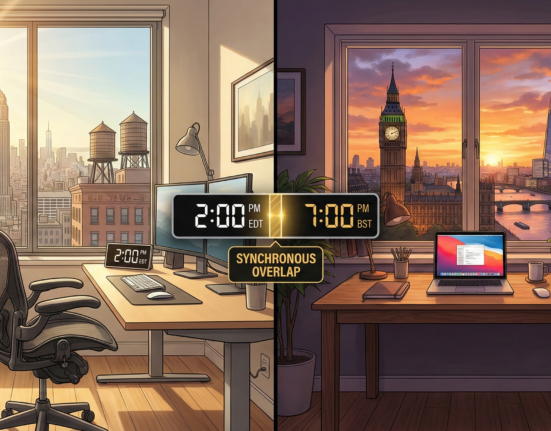
The modern workplace is currently navigating a profound identity crisis. For over a century, the primary currency of employment was time. You traded eight hours of your day for a set salary or wage, and in return, the employer assumed that presence equaled productivity. However, the rapid acceleration of remote work, distributed teams, and digital nomadism has fractured this traditional equation. As of January 2026, organizations are increasingly forced to choose between two divergent paths: maintaining visibility through rigorous time-tracking, or surrendering control of the clock in favor of outcome-based performance models.
This is not merely an operational choice; it is a cultural line in the sand. On one side lies the security of data, billable hours, and known quantities—often accompanied by the specter of micromanagement and digital surveillance. On the other side lies the promise of autonomy, high engagement, and efficiency—fraught with the difficulties of defining ambiguous goals and managing scope creep.
In this guide, we will dissect the outcome-based vs. time-tracking debate. We will explore the mechanics of each, the psychological impact on employees, and the practical realities of implementing these models in diverse industries. Whether you are a founder trying to scale a remote startup, an HR director rewriting policies, or a manager trying to stop looking over shoulders, this deep dive will provide the framework you need to decide how to measure value.
Key Takeaways
- The fundamental shift: We are moving from paying for “availability” to paying for “value created,” but legacy infrastructure often lags behind this philosophy.
- Context matters: Time-tracking remains essential for agencies billing by the hour and roles requiring synchronized coverage (like support), whereas outcome-based models thrive in creative, strategic, and development roles.
- The psychological toll: Excessive time-tracking can lead to “performative busyness” and trust erosion, while poorly managed outcome models can lead to burnout and “always-on” anxiety.
- Hybrid potential: The best approach often uses time-tracking as a personal productivity tool for the employee, rather than a surveillance tool for the manager.
- The definition problem: Outcome-based models fail without crystal-clear definitions of success (KPIs, OKRs); ambiguity is the enemy of autonomy.
Who This Is For (And Who It Isn’t)
This guide is for:
- Remote and Hybrid Leaders: Managers struggling to gauge productivity without physical oversight.
- HR Professionals: Those designing performance review cycles and compensation packages.
- Agency Owners: Leaders balancing client billing requirements with employee satisfaction.
- Freelancers and Contractors: Individuals negotiating how their work is valued and compensated.
This guide isn’t for:
- Strictly Industrial/Manufacturing Sectors: If the work is purely physical and tied to a machine’s operation line (e.g., assembly lines), time-tracking is often a safety and operational necessity that leaves little room for debate.
- Hourly Retail Management: While principles of engagement apply, the logistical necessity of shift coverage makes pure outcome-based scheduling impractical.
1. The Time-Tracking Paradigm: History and Modern Utility
To understand why we are moving away from time-tracking, we must first understand why it became the standard. The concept of the “9-to-5” is a relic of the Industrial Revolution, solidified by Henry Ford and labor unions to protect workers from being overworked. In a factory, output was linearly correlated with time. If you stood at the conveyor belt for four hours, you made X widgets. If you stood there for eight hours, you made 2X widgets. Time was a perfect proxy for output.
In the knowledge economy, this correlation has broken down, yet the infrastructure remains.
How It Works in Practice
Modern time-tracking has evolved from punch cards to sophisticated software. In 2026, tools range from simple stopwatches (like Toggl or Harvest) to invasive surveillance suites (like Hubstaff or Time Doctor) that take screenshots, track mouse movements, and record keystrokes.
The logic is transactional: The employer purchases a block of the employee’s time. The employee is accountable for filling that block with work-related activities.
The Arguments for Time-Tracking
Despite its bad reputation in creative circles, time-tracking offers specific, tangible benefits:
- Billable Hour Economics: For law firms, consultancies, and marketing agencies, time is the product. Clients are billed based on the effort expended. Without accurate time logs, revenue leakage occurs, and profitability becomes a guessing game.
- Resource Planning and Forecasting: If a manager knows a specific coding task takes 20 hours on average, they can accurately scope future projects and prevent team overload.
- Legal Compliance: In many jurisdictions, labor laws regarding overtime, breaks, and maximum working hours for non-exempt employees are strict. Time-tracking protects the company from lawsuits regarding unpaid wages.
- Process Optimization: When used benevolently, time audits reveal bottlenecks. An employee might realize they spend 15 hours a week on email—a data point that justifies hiring an assistant or changing communication protocols.
The Pitfalls: Theater of Work
The dark side of time-tracking is the phenomenon of “performative work.” When performance is measured by green dots on a dashboard or hours logged:
- Parkinson’s Law: “Work expands to fill the time available for its completion.” If an employee is given eight hours for a task they can finish in four, they will subconsciously or consciously slow down to fill the eight hours, rather than asking for more work (which might feel like a punishment for efficiency).
- Mouse Jigglers and Evasion: As surveillance tech advances, so does evasion tech. Employees buy mechanical mouse movers to appear “online” while doing laundry or napping, creating a cat-and-mouse game that destroys culture.
- Stress and Cognitive Load: The awareness of being watched creates a low-level “fight or flight” response. This anxiety reduces the deep focus required for complex problem solving, ironically lowering the quality of work produced during those tracked hours.
2. The Outcome-Based Performance Model: The Autonomy Revolution
Outcome-based working, sometimes formalized as a Results-Only Work Environment (ROWE), flips the script. It asserts that the employer is purchasing a result, not a specific block of time. If you hire a designer to create a logo, and they create a brilliant logo in 30 minutes, the value to the company is the logo, not the 30 minutes.
How It Works in Practice
In this model, managers and employees agree on deliverables, deadlines, and quality standards.
- The Agreement: “Build this feature by Friday, ensuring it passes these three unit tests.”
- The Process: The employee chooses when, where, and how to work. They might work 12 hours on Monday and take Tuesday off. They might work purely at night.
- The Evaluation: Did the feature ship on Friday? Did it pass the tests? If yes, performance is 100%.
The Arguments for Outcome-Based Models
- Incentivizing Efficiency: In a time-based model, efficiency is punished (you get more work). In an outcome-based model, efficiency is rewarded with time back. This aligns the incentive structure: get the work done well and fast, and you own your life.
- Accessing Flow States: Without the pressure to “look busy,” employees can engage in deep work. They can take a walk to think through a problem without worrying that their “idle time” metric is spiking.
- Talent Attraction: High performers gravitate toward autonomy. Offering an outcome-based culture is a massive competitive advantage in recruiting top-tier senior talent who resent micromanagement.
- Inclusivity: This model supports parents, caregivers, and neurodivergent individuals who may need unconventional schedules to thrive.
The Pitfalls: The Ambiguity Trap
Outcome-based work is not a utopia; it requires a higher caliber of management.
- Definition Difficulty: It is easy to measure hours. It is incredibly hard to define “success” for a role like Community Manager or HR Generalist. Is it sentiment analysis? Retention rates? Number of conflicts resolved? Ambiguous goals lead to anxiety.
- The “Always-On” Curse: Without the boundary of “clocking out,” employees often feel they should always be delivering more. If the outcome is “increase sales,” there is no upper limit to the effort one could expend, leading to burnout.
- Collaboration Friction: If everyone works purely on their own schedule to hit personal outcomes, synchronous collaboration (meetings, brainstorming) can become a logistical nightmare.
3. Scope and Definitions: What Are We Actually Measuring?
Before diving deeper, we must clarify the terminology, as confusion here leads to policy failure. In this guide, “outcome” refers to the value generated, distinct from “output” or “input.”
The Input-Output-Outcome Chain
- Input (Time/Effort):
- Metric: “I worked 40 hours this week.”
- Focus: Presence and activity.
- Model: Strict Time-Tracking.
- Output (Deliverables):
- Metric: “I wrote 5 code commits and sent 50 emails.”
- Focus: Volume of production.
- Model: Hybrid/Task-based. This is often mistaken for outcome-based work, but it is actually piecework.
- Outcome (Impact/Results):
- Metric: “I improved user retention by 5%.”
- Focus: Value created for the business.
- Model: True Outcome-Based Performance.
Crucial Distinction: A developer can write sloppy code for 10 hours (High Input), produce 5 new features (High Output), but crash the server, causing customers to churn (Negative Outcome). A true outcome-based model penalizes the crash, whereas a time-tracking model might reward the 10 hours.
4. Comparing the Models: A Decision Framework
To determine which model fits your organization, we must evaluate them against critical business dimensions.
Trust Mechanics
- Time-Tracking: Operates on Verification. Trust is “earned” by proving presence. This often creates an adversarial relationship where the manager acts as a warden.
- Outcome-Based: Operates on Validation. Trust is assumed, and validated by delivery. The manager acts as a coach or blocker-remover.
Management Overhead
- Time-Tracking: High overhead in Monitoring. Managers spend time reviewing timesheets, checking screenshots, and policing behavior.
- Outcome-Based: High overhead in Planning. Managers must spend significant upfront time defining clear goals, writing detailed briefs, and setting metrics. However, the monitoring time drops significantly.
Culture and Morale
- Time-Tracking: Can foster a culture of Presenteeism. Employees value looking busy over being effective. It can create equality (everyone works the same hours) but lowers equity (different people work at different speeds).
- Outcome-Based: Fosters a culture of Accountability. It can feel meritocratic, but it can also isolate struggling team members who need guidance rather than just a deadline.
Impact on Quality
- Time-Tracking: Quality typically remains consistent but average. There is no incentive to innovate if it doesn’t fit the time block.
- Outcome-Based: Quality can be variable. High performers excel, but without check-ins, an employee might rush to the finish line to save time, delivering subpar work. “Definition of Done” becomes critical here.
5. Why Outcome-Based Models Are Gaining Ground in 2026
Several trends have converged to make outcome-based models the dominant preference for knowledge workers today.
The Death of the “Average” Worker
AI and automation have widened the gap between high and low performers. A senior engineer utilizing AI coding assistants can do in 2 hours what used to take 20. If you pay them by the hour, you are penalizing them for using AI effectively. If you pay them for the outcome, you align with the technological reality.
Asynchronous Globalization
Companies hiring globally cannot rely on a single “9-to-5” time zone. Time-tracking becomes arbitrary when your team spans Tokyo, London, and San Francisco. Outcome-based work is the only logical way to manage a team that never sleeps simultaneously.
The Wellness Imperative
Post-pandemic mental health awareness remains high. Employees demand the flexibility to go to therapy, pick up kids, or exercise during the day. Outcome-based models facilitate this life-work integration without the guilt of “stealing time.”
6. Implementing Outcome-Based Performance: A Step-by-Step Guide
Transitioning from time-tracking to outcomes is dangerous if done overnight. It requires a fundamental shift in how managers communicate.
Step 1: Audit Roles for “Outcome Viability”
Not every role is ready for this shift immediately.
- High Viability: Sales, Development, Writing, Design, Project Management.
- Low Viability: Front-desk reception, Live Customer Support (requires coverage), Security monitoring.
- Action: Categorize roles. For coverage-based roles, stick to scheduling/time-tracking but focus on service level outcomes during shifts.
Step 2: Define “Done” (The OKR/KPI Framework)
You cannot manage by outcome if the outcome is “do a good job.” You need specifics.
- Bad Goal: “Write blog posts.”
- Good Goal: “Publish 4 articles per month that generate at least 5,000 unique views collectively.”
- Bad Goal: “Code the new landing page.”
- Good Goal: “Ship the landing page by Tuesday with a Lighthouse performance score of 90+.”
Step 3: Establish Communication Rhythms
In the absence of constant presence, you need intentional touchpoints.
- Daily Async Standups: What did I achieve yesterday? What will I achieve today? (Focus on results, not hours).
- Weekly 1:1s: Review progress against the agreed outcomes.
- Retrospectives: Analyze how work was done and refine the process.
Step 4: The “Guardrails” Strategy
Pure outcomes can lead to sloppy work. Implement guardrails:
- Core Hours: “We don’t care when you work, but we need everyone reachable between 11 AM and 2 PM EST for collaboration.”
- Quality Gates: “You can finish early, but if the code fails review, you fix it on your own time.”
7. The Hybrid Approach: Time-Tracking as a Tool, Not a Master
Many successful organizations in 2026 are finding a middle ground. They use Time-Tracking for Self-Quantification.
In this model, employees track their own time, but the data is private or aggregated.
- Why? To help the employee understand their own habits. “Wow, I spent 40% of my week in meetings. I need to decline more invites.”
- Why? To help managers identify burnout risk. “Team, I see the average hours logged is 55 this week. We need to cut scope.”
This approach reframes time-tracking from a tool of surveillance to a tool of support. It builds trust because the data is used to protect the employee, not punish them.
Best Practices for Hybrid Models
- Anonymized Data: Managers see team averages, not individual timestamps.
- No Screenshots: Absolutely no spyware features.
- Outcome-First Reviews: Performance reviews focus 90% on results and 10% on work habits/capacity.
8. Common Mistakes and Pitfalls
When companies try to switch to outcome-based models, they often stumble on these specific hurdles.
The “Hidden Hours” Fallacy
Managers stop tracking hours but keep assigning the same volume of work, assuming it fits into a normal week. Without time data, they don’t realize the team is working 60 hours to hit the “outcomes.”
- Solution: Regular capacity checks. Ask, “How sustainable was this sprint?”
Neglecting the “How”
An employee might hit their sales numbers (outcome) by lying to customers or bullying colleagues. If you only look at the outcome, you might reward toxic behavior.
- Solution: Include “Values alignment” and peer feedback in the definition of success.
The Junior Employee Struggle
Senior staff thrive on autonomy. Junior staff often drown in it. They need structure and sometimes even time-boxing to learn how to work professionaly.
- Solution: Use a graduated model. Juniors start with more structure and check-ins; autonomy is earned as competence is demonstrated.
9. Tools and Technologies
The software you choose dictates the culture you build.
For Time-Tracking (The “Old Guard” & “The Auditors”)
- Tools: Hubstaff, Time Doctor, Teramind.
- Use Case: High-security environments, hourly contractors, billing-centric agencies.
- Vibe: High control, low trust.
For Outcome-Management (The “New Guard”)
- Tools: Asana, Monday.com, Jira, Linear, Lattice (for OKRs).
- Use Case: Managing projects, sprints, and goals.
- Vibe: Visualizing progress, not time.
For Hybrid/Capacity Planning
- Tools: Toggl Track, Harvest, Timely.
- Use Case: Freelancers, agencies wanting lightweight billing, self-quantifiers.
- Vibe: “Track time to get paid or get better,” not to get caught.
10. Legal and Financial Implications
Moving to outcome-based models requires navigating labor laws.
Hourly vs. Salaried (Non-Exempt vs. Exempt)
In the US and many other regions, you must track time for non-exempt (hourly) employees to calculate overtime. You cannot legally say “Just get the job done” if it takes them 50 hours and you only pay for 40.
- Solution: For hourly workers, you can implement outcome-based goals but strict time-tracking compliance. For salaried workers, outcome-based models are safer.
Contractor Misclassification
If you track a freelancer’s hours, require specific start times, and monitor their screen, tax authorities (like the IRS or HMRC) may classify them as an employee, triggering tax liabilities.
- Solution: Outcome-based SOWs (Statements of Work) are the safest way to engage freelancers. Paying for a project deliverable rather than hours worked reinforces the B2B relationship.
Conclusion: The Future is Nuanced
The debate between outcome-based performance and time-tracking is not a binary choice between “good” and “bad.” It is a choice between “complex trust” and “simple control.”
Time-tracking is simple. It provides data that is easy to read, easy to bill, and easy to present in a lawsuit. But it is often a lie. It measures presence, not contribution.
Outcome-based models are complex. They require managers to actually manage—to set goals, give feedback, and measure intangible impact. But they are the only sustainable path forward for a workforce that demands autonomy and leverages AI to work faster than the clock allows.
Next Steps for Leaders:
- Stop equating busy with productive. Catch yourself when you praise late nights instead of great results.
- Run a pilot. Pick one senior team. Remove their time-tracking requirements for a quarter. Define their KPIs. Measure the change in output and morale.
- Audit your “coverage” roles. Be honest about which roles require presence versus which require output, and stop applying a one-size-fits-all policy.
In 2026, the best talent will not work for companies that count their minutes. They will work for companies that count their contributions. The question is not whether you should switch, but how quickly you can adapt your management style to support the shift.
FAQs
1. Can outcome-based models work for customer support teams?
Yes, but the “outcome” changes. Instead of “tickets closed per hour” (which is effectively piecework), outcome metrics might be Customer Satisfaction Score (CSAT), First Contact Resolution rate, or retention. However, because support requires availability during business hours, a hybrid model is best: define “coverage blocks” (time-based) but evaluate performance on resolution quality (outcome-based).
2. How do I prevent employees from slacking off without time-tracking?
If an employee is slacking off in an outcome-based model, it will show up immediately in missed deadlines and poor quality work. If they are meeting all deadlines and quality standards but still seem to have free time, they aren’t “slacking”—they are efficient. You should either reward that efficiency or, if appropriate, collaboratively increase their scope.
3. Does outcome-based work mean no meetings?
No. Collaboration is often a necessary input to achieve an outcome. However, meetings should be viewed as distinct tools to achieve a specific result (e.g., “Decide on a launch date”), rather than routine obligations. In outcome-based cultures, meetings often become optional for those who don’t directly contribute to the decision at hand.
4. How do agencies bill clients if they don’t track time?
Agencies can switch to value-based pricing or retainer models. Instead of charging $150/hour, you charge $5,000 for a completed logo package. This incentivizes the agency to be efficient. If the agency takes 10 hours or 20 hours, the fee is the same. This protects the agency’s margin as AI tools reduce the time required for tasks.
5. What if an employee finishes their work in 20 hours? Do I pay them for 40?
In a salaried outcome-based role, yes. You are paying for the value of the role, not the hours. If they deliver full value in half the time, they have earned that time back. However, if they consistently finish early, it may be time to discuss a promotion or an expansion of responsibilities with a commensurate salary increase.
6. Is time-tracking ever good for employees?
Yes. Freelancers often undercharge because they underestimate how long tasks take. Time-tracking helps them price accurately. Additionally, for employees prone to burnout, seeing that they have logged 50 hours can be a “wake-up call” to stop working for the week. It validates their effort in data form.
7. How do we handle underperformers in an outcome-based model?
Outcome-based models actually make managing underperformance easier. In a time-based model, an underperformer can hide by staying late and “looking busy.” In an outcome model, if the result isn’t there, there is nowhere to hide. The conversation shifts from “You were late today” to “You missed the sales target.” This is a more objective and actionable conversation.
8. Do outcome-based models require more documentation?
Absolutely. Because you cannot rely on “stopping by their desk” to check in, the initial project briefs, goal definitions, and documentation of “what good looks like” must be impeccable. Writing culture is essential for outcome-based success.
References
- Results-Only Work Environment (ROWE). CultureRx. Founders Cali Ressler and Jody Thompson. (Foundation of the ROWE concept).
- State of Remote Work 2025. Buffer/AngelList. (Statistics on remote work trends and autonomy).
- The Fair Labor Standards Act (FLSA). U.S. Department of Labor. (Compliance rules for hourly vs salaried employees).
- Drive: The Surprising Truth About What Motivates Us. Daniel H. Pink. (Psychological research on autonomy, mastery, and purpose).
- Microsoft Work Trend Index. Microsoft. (Data on digital debt, meeting fatigue, and productivity metrics).
- GitLab Remote Playbook. GitLab. (Comprehensive guide on managing output over hours in an all-remote setting).
- Parkinson, C. Northcote. Parkinson’s Law: The Pursuit of Progress. (Concept of work expanding to fill time).
- Harvard Business Review. “Don’t Let Metrics Undermine Your Business.” (Analysis of how measuring the wrong things leads to poor behavior).