| Approach | When It Runs | What It Catches | Blast Radius If Skipped |
|---|---|---|---|
| No IaC scanning | Never, misconfigurations found only in production | Nothing before deployment | Full production exposure, often discovered by an external researcher or attacker first |
| Manual peer review only | At pull-request time, human eyes only | Obvious, well-known issues a reviewer happens to notice | Subtle misconfigurations across hundreds of resource blocks routinely slip through |
| Automated IaC scanning in CI | Every commit and pull request, before merge | Hundreds of known misconfiguration patterns automatically, consistently | Limited to whatever the policy set does not yet cover |
| IaC scanning plus runtime CSPM correlation | Pre-deployment and continuously in production | Both the original misconfiguration and any drift introduced after deployment | Smallest, since drift is caught and remediated automatically |
Why Scanning Infrastructure Definitions Matters as Much as Scanning Code
Cloud infrastructure is now defined almost entirely in code. Terraform, CloudFormation, Pulumi, and Kubernetes manifests describe every storage bucket, security group, IAM role, and network path an organization runs, and a single misplaced configuration value can expose a database to the public internet just as easily as a vulnerable application dependency can. The difference is that an infrastructure misconfiguration often needs no exploit at all, it is simply reachable the moment the resource is created.
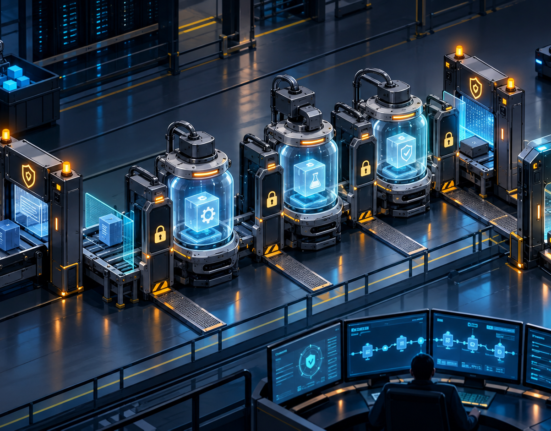
Infrastructure as code security scanning applies the same static-analysis discipline that application security teams have used for source code, but pointed at the templates that provision cloud resources. Done well, it catches an exposed S3 bucket, an unrestricted security group, or a database created without encryption at rest before a single API call ever reaches the cloud provider. Done poorly, or not at all, those same misconfigurations become the single most common root cause behind cloud data exposure incidents.
The Core Scanning Tools and How They Differ
Checkov
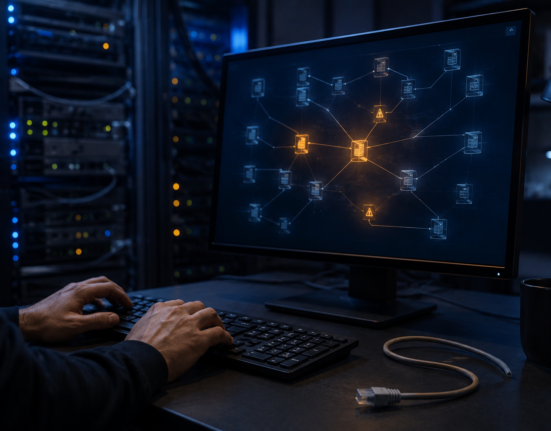
Checkov is an open source static-analysis engine with deep coverage of Terraform, CloudFormation, Kubernetes, Helm, ARM templates, and serverless frameworks. Its distinguishing feature is graph-based analysis: rather than checking each resource block in isolation, it maps relationships across resources so it can flag issues that only become dangerous in combination, such as a storage bucket with weak access controls that is also referenced by a public-facing compute resource.
tfsec and Trivy
tfsec began as a dedicated, fast, Terraform-native static scanner from Aqua Security, focused specifically on HCL syntax and Terraform provider resource types. It has since been absorbed into Trivy, which now carries forward its full rule library while also covering container images and dependency scanning in a single binary, making it a practical choice for teams that want one tool spanning both infrastructure and artifact scanning.
Terrascan
Terrascan, maintained by Tenable, applies Open Policy Agent Rego policies across Terraform, Helm, Kustomize, Dockerfiles, and Kubernetes manifests. Its policy-as-code model is well suited to organizations that already have OPA expertise and want to write custom compliance rules rather than relying solely on a vendor’s built-in rule set.
KICS and Commercial Options
KICS offers broad multi-framework coverage similar to Checkov with a strong open source community, while commercial options such as Snyk IaC add hosted policy management, prioritization scoring, and tighter integration with broader application security platforms. The right choice usually comes down to how much of the stack you want a single tool to cover and whether you need custom policy authoring versus a curated out-of-the-box rule set.
| Tool | Primary Strength | Frameworks Covered | Best Fit |
|---|---|---|---|
| Checkov | Graph-based cross-resource analysis | Terraform, CloudFormation, Kubernetes, Helm, ARM, Serverless | Teams wanting the deepest Terraform-specific logic |
| tfsec / Trivy | Speed and combined artifact plus IaC scanning | Terraform, containers, dependencies | Teams wanting one binary for multiple scan types |
| Terrascan | Custom policy-as-code with OPA Rego | Terraform, Helm, Kustomize, Dockerfile, Kubernetes | Teams with existing OPA investment and custom compliance needs |
| KICS | Broad open source multi-framework coverage | Terraform, CloudFormation, Kubernetes, Ansible, Dockerfile | Teams wanting free, wide framework support |
| Snyk IaC | Hosted policy management and prioritization | Terraform, CloudFormation, Kubernetes, ARM | Teams wanting a managed platform tied to broader AppSec tooling |
Common Misconfigurations Scanners Are Built to Catch
- Storage buckets or blob containers created with public read or write access enabled by default.
- Security groups or network ACLs that allow inbound traffic from any address on sensitive ports.
- Databases and storage volumes provisioned without encryption at rest.
- IAM roles and policies granting wildcard permissions instead of least-privilege scopes.
- Missing logging or monitoring configuration on resources that handle sensitive data.
- Hardcoded credentials or access keys embedded directly in template files.
- Kubernetes workloads running as root or without resource limits and network policies defined.
Integrating Scans Into the Pull-Request Workflow
Scan at Commit Time, Not Just at Apply Time
The highest-value place to run an IaC scan is inside the pull request, before a human reviewer even opens the diff. When the scan runs as a required CI check, findings show up as inline comments directly on the lines that introduced them, giving the author immediate, specific feedback instead of a generic failure notice discovered later during a deployment attempt.
Fail the Build Only on Severity Thresholds That Matter
Blocking every pull request over a low-severity finding trains developers to treat the scanner as noise and look for ways around it. Mature pipelines fail the build on critical and high-severity findings, surface medium and low findings as visible but non-blocking comments, and track those lower-severity items in a backlog with an expectation of remediation on a reasonable timeline.
Provide an Auditable, Time-Boxed Suppression Path
Some findings are legitimate false positives or accepted risks with compensating controls elsewhere. Rather than letting developers silently comment out a check, the workflow should require a suppression annotation tied to a ticket, an owner, and an expiration date, so waived findings get revisited instead of becoming permanent, invisible exceptions.
Correlate Pre-Deployment Scans With Runtime Posture
A clean scan at merge time does not guarantee a clean resource six months later, since manual console changes and drift can reintroduce the exact misconfiguration the scan blocked. Pairing IaC scanning with continuous cloud security posture management closes that gap by catching drift after deployment, not just at the point of initial provisioning.
Figure: IaC Scanning Inside the Pull-Request Lifecycle
A developer opens a pull request modifying a Terraform module; the CI pipeline automatically runs the scanner against the diff, posts inline comments on any newly introduced misconfigurations, blocks merge only on critical or high-severity findings, and logs medium and low findings to a remediation backlog visible to the platform team.
Building an IaC Scanning Program That Developers Actually Use
- Start with a curated policy set scoped to your actual cloud footprint rather than enabling every available rule on day one.
- Run scans locally in the developer’s editor or pre-commit hook so feedback arrives before a pull request is even opened.
- Set severity-based merge gates instead of an all-or-nothing pass or fail threshold.
- Require ticketed, time-boxed suppressions for accepted findings instead of silent rule disabling.
- Feed scan results into the same dashboard used for runtime cloud posture so drift and pre-deployment issues are visible together.
- Review and tune the policy set quarterly, retiring rules that generate high false-positive rates and adding rules for newly relevant services.
- Cross-resource risk combinationsA misconfiguration that looks minor in isolation can become critical when combined with another resource’s configuration, which is why graph-based scanners catch issues single-resource checks miss.
- Suppression governanceWaived findings without an owner or expiration date quietly become permanent blind spots, since nobody revisits a suppression that was never tracked.
- Local, pre-commit feedbackRunning the scanner in the developer’s own environment before a pull request is opened saves review cycles and avoids the perception that security only shows up as a blocker late in the process.
- Post-deployment driftA clean scan at merge time does not account for manual console changes made afterward, which is the item most teams overlook until an audit or incident exposes the gap.
Common mistake
Enabling every default rule in a scanner on day one and setting the pipeline to block merges on any finding at all. This produces an overwhelming wall of low-value alerts, developers start disabling checks wholesale just to ship, and the scanner loses credibility before the team ever tunes it to their actual risk profile.
What worked
Teams that rolled out IaC scanning in report-only mode for the first few weeks, then graduated to blocking only critical and high-severity findings, saw far higher long-term adoption than teams that turned on hard blocking immediately. The gradual rollout let engineers fix a manageable backlog first instead of facing a wall of blocked pull requests on day one.
Where This Connects to the Rest of Your Cloud Security Program
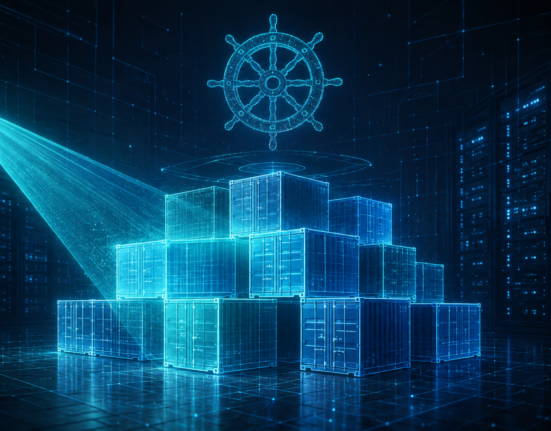
IaC scanning is most effective when it is one layer in a broader program rather than a standalone gate. It pairs naturally with cloud security posture management tools to catch drift after deployment, with Kubernetes security hardening for teams whose IaC templates provision cluster workloads, and with CI/CD pipeline security since the scanner itself runs inside that same pipeline and inherits its trust boundaries. Because IaC templates frequently reference credentials and connection strings, disciplined secrets management is a close companion practice, and teams provisioning containerized workloads should also review container security guidance for the runtime side of what these templates define. If your team is also addressing upstream risk, the patterns in software supply chain attack detection share the same pre-deployment gating philosophy described here.
Glossary
- Infrastructure as Code (IaC)
- The practice of defining and provisioning cloud infrastructure through machine-readable configuration files rather than manual console changes.
- Static analysis (for IaC)
- Automated inspection of infrastructure template files against a rule set to identify misconfigurations before the templates are applied to a live environment.
- Policy as code
- Expressing security and compliance rules as executable policy definitions, commonly using a language such as Rego, so they can be version-controlled and applied automatically in a pipeline.
- Configuration drift
- The divergence between a deployed resource’s actual state and the state originally defined in its infrastructure as code template, often introduced by manual out-of-band changes.
- Cloud Security Posture Management (CSPM)
- A category of tooling that continuously monitors live cloud environments for misconfigurations and compliance violations after resources have been deployed.
Key Takeaways
- IaC security scanning catches misconfigurations in Terraform, CloudFormation, and Kubernetes templates before they are ever deployed to a live cloud environment.
- Checkov, tfsec/Trivy, Terrascan, and KICS each take a different approach, from graph-based cross-resource analysis to policy-as-code with OPA Rego.
- Running scans inside the pull-request workflow gives developers inline, specific feedback instead of a late-stage generic failure.
- Severity-based merge gates prevent the scanner from becoming background noise that developers learn to route around.
- Ticketed, time-boxed suppressions keep accepted risk visible instead of letting it disappear into disabled rules.
- A clean pre-deployment scan does not guarantee a clean resource later, so pairing IaC scanning with runtime CSPM closes the drift gap.
- Gradual, report-only rollout drives far higher long-term developer adoption than turning on hard blocking from day one.
FAQs
What is infrastructure as code security scanning?
It is the automated inspection of infrastructure template files, such as Terraform, CloudFormation, or Kubernetes manifests, against a rule set of known misconfiguration patterns, catching issues like public storage buckets or open security groups before the infrastructure is actually provisioned.
Which IaC scanning tool should a team start with?
Checkov is a strong default for Terraform-heavy environments needing cross-resource analysis, tfsec or Trivy suits teams wanting one fast tool spanning both infrastructure and container scanning, and Terrascan fits teams that already use Open Policy Agent for custom compliance rules.
How does IaC scanning differ from cloud security posture management?
IaC scanning inspects template files before deployment, catching misconfigurations at the source, while cloud security posture management continuously monitors already-deployed resources for drift and violations introduced after the fact, making the two complementary rather than interchangeable.
Should IaC scans block a pull request from merging?
Only for critical and high-severity findings in most mature programs; medium and low-severity findings are better surfaced as visible, tracked comments so the pipeline does not become an all-or-nothing gate that developers learn to bypass.
What is the most common misconfiguration IaC scanners catch?
Publicly accessible storage buckets and overly permissive security groups allowing inbound traffic from any address are among the most frequently flagged issues, since both are easy to introduce accidentally and are immediately reachable once deployed.
How should accepted-risk findings be handled?
Accepted findings should be suppressed with an annotation tied to a ticket, an owner, and an expiration date, so the exception is auditable and gets revisited rather than becoming a permanent, invisible gap in coverage.
Can IaC scanning run before a pull request is even opened?
Yes, most of these scanners can run locally through a pre-commit hook or directly inside a developer’s editor, giving feedback on misconfigurations before code is pushed at all, which reduces both review cycles and the perceived friction of the check.
Does IaC scanning replace the need for manual security review?
No, automated scanning catches known, well-defined misconfiguration patterns at scale, but it does not replace human judgment on architectural risk, business context, or novel attack patterns that fall outside the scanner’s existing rule set.
- Spacelift, “Top 7 Terraform Scanning Tools You Should Know in 2026,” spacelift.io
- DevSecOps.ae, “IaC Scanning 2026: Checkov vs tfsec vs Terrascan vs KICS vs Snyk IaC,” devsecops.ae
- Scalr, “Getting Started with Terraform Vulnerability Scanning,” scalr.com
- Reintech, “Infrastructure as Code Security: Scanning Terraform for Vulnerabilities,” reintech.io
- AppSecSanta, “Terraform Security Scanning: Tools and CI/CD (2026),” appsecsanta.com
- Decryption Digest, “Terraform Security Scanning Checklist,” decryptiondigest.com