In the early days of artificial intelligence, the focus was often on creating a single, all-encompassing intellect—a solitary “brain” capable of solving any problem. However, the real world is rarely a single-player game. It is dynamic, distributed, and messy. To tackle the intricate challenges of modern infrastructure, logistics, and data processing, the field has shifted toward multi-agent systems (MAS).
These systems represent a paradigm where intelligence is not centralized in a monolithic server but distributed across numerous autonomous entities that perceive, reason, and act. From the unseen algorithms optimizing your city’s traffic flow to the swarm of robots managing massive warehouse inventories, multi-agent systems are the hidden architects of efficiency in complex environments.
This guide explores the mechanics, architectures, and real-world applications of multi-agent systems. It is designed for developers, tech strategists, and enthusiasts who want to understand how machines collaborate to solve problems that are too large, too fast, or too complex for a single entity to handle.
Key Takeaways
- Decentralization is Key: Unlike monolithic AI, MAS relies on distributed problem-solving, preventing single points of failure and improving scalability.
- Autonomy meets Collaboration: Agents operate independently but use specific protocols to negotiate, cooperate, or compete to achieve system-level goals.
- Complexity Management: MAS is specifically suited for “complex environments”—settings that are dynamic, partially observable, and non-deterministic.
- Emergent Behavior: Simple local rules followed by individual agents can lead to sophisticated global intelligence, a phenomenon known as swarm intelligence.
- Diverse Applications: From stabilizing energy grids to coordinating disaster rescue teams, MAS is reshaping industries that rely on logistics and real-time adaptation.
Who This Is For (And Who It Isn’t)
This guide is for:
- Software Engineers and AI Developers looking to move beyond single-agent reinforcement learning into distributed systems.
- System Architects designing resilient infrastructure for IoT, smart cities, or logistics networks.
- Tech Leaders and Decision Makers evaluating whether a decentralized AI approach is right for their operational challenges.
- Students and Researchers seeking a consolidated overview of agent coordination, game theory integration, and current frameworks.
This guide is not:
- A basic introduction to “What is AI?” (we assume some familiarity with algorithmic concepts).
- A purely mathematical textbook on Nash Equilibria (while we touch on game theory, we focus on applied logic).
- A sales pitch for a specific vendor platform.
Defining Multi-Agent Systems (MAS)
At its core, a multi-agent system is a computerized system composed of multiple interacting intelligent agents. Multi-agent systems can solve problems that are difficult or impossible for an individual agent or a monolithic system to solve.
To understand MAS, we must first define the “Agent.”
What is an Intelligent Agent?
An agent is a computational entity that can be viewed as perceiving its environment through sensors and acting upon that environment through actuators. However, in the context of MAS, an agent possesses specific characteristics that elevate it above a simple subroutine:
- Autonomy: The agent operates without the direct intervention of humans or others and has some kind of control over its actions and internal state.
- Social Ability: Agents interact with other agents (and possibly humans) via some kind of agent-communication language.
- Reactivity: Agents perceive their environment and respond in a timely fashion to changes that occur in it.
- Pro-activeness: Agents do not simply act in response to their environment; they are able to exhibit goal-directed behavior by taking the initiative.
The Shift from Centralized to Distributed AI
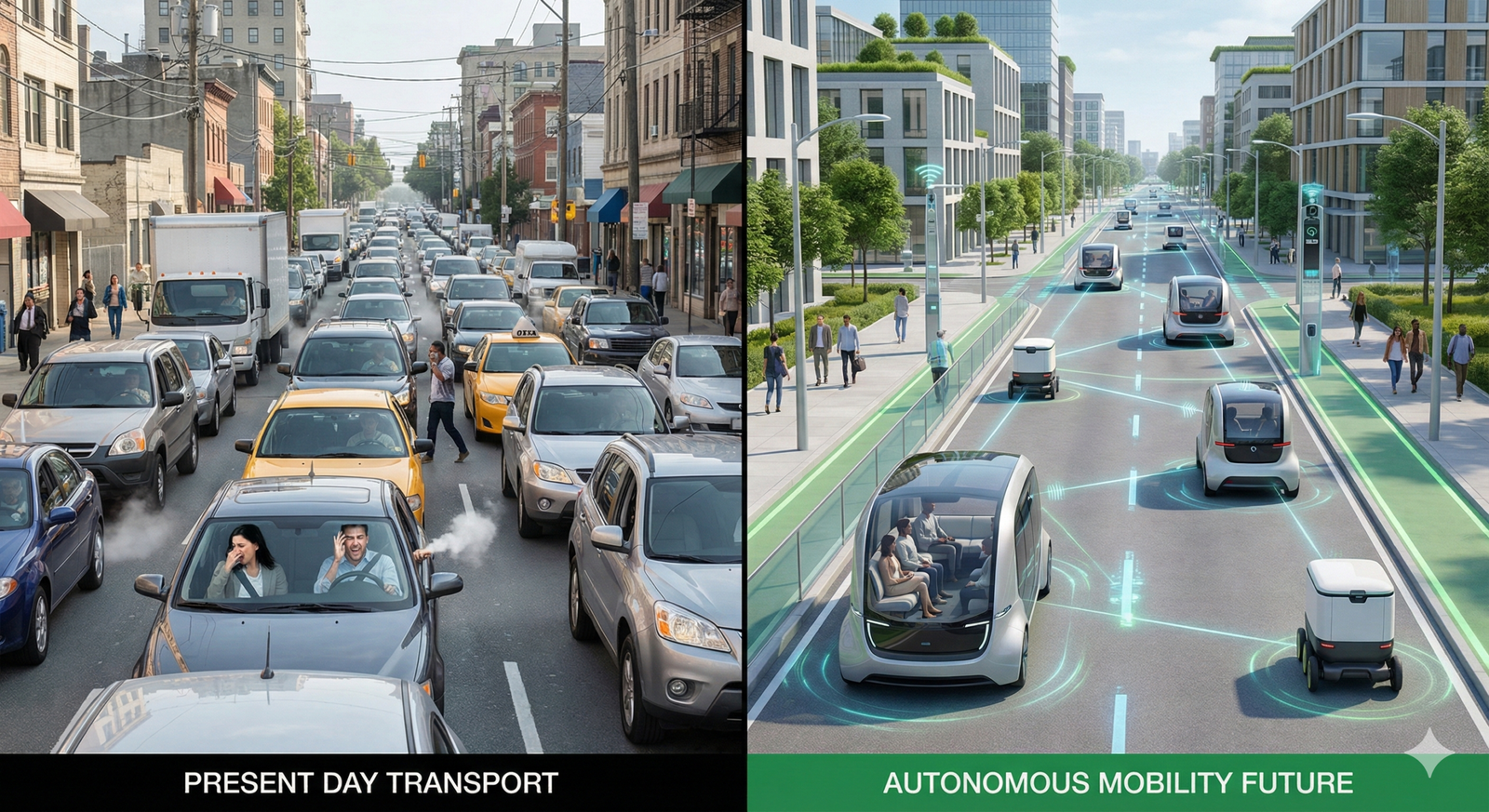
In a Centralized System, a single controller makes all decisions. Think of a traffic light system where one central computer decides the color of every light in the city simultaneously. If that computer fails, the city creates gridlock. Furthermore, the computational load grows exponentially as the city expands.
In a Multi-Agent System, every traffic light could be an agent. It observes local traffic, communicates with neighboring lights (“I have a platoon of cars coming your way”), and decides when to change. The “intelligence” is the emergent result of these local interactions.
What Makes an Environment “Complex”?
The title of this guide specifies “complex environments.” In AI theory, an environment is considered complex if it possesses several of the following properties:
- Inaccessible (Partially Observable): An agent cannot gather complete, up-to-date information about the state of the system (e.g., a rescue robot in a smoky building).
- Non-deterministic: The next state of the environment is not completely determined by the current state and the agent actions (e.g., weather patterns or human behavior).
- Dynamic: The environment changes while the agent is deliberating.
- Continuous: The number of possible states and actions is infinite (e.g., autonomous driving coordinates vs. chess moves).
MAS is the preferred solution for these environments because a single agent simply cannot process the sheer volume of changing variables fast enough.
The Mechanics of Collaboration: How Agents Work Together
The “magic” of a multi-agent system lies in how individual entities—often with limited local knowledge—coordinate to produce a coherent global result. This requires sophisticated mechanisms for communication and decision-making.
1. Communication Protocols
Agents need a common language. Just as humans use English or TCP/IP to communicate, agents use high-level protocols to exchange knowledge, requests, and offers.
- Message Passing: The most common form of interaction. Agents send direct messages to one another.
- Blackboard Systems: A shared memory space (the blackboard) where agents post partial solutions or information. Other agents read this info, improve upon it, and post updates. This is useful when direct communication channels are unreliable.
- FIPA-ACL (Foundation for Intelligent Physical Agents – Agent Communication Language): A standard that defines the “speech acts” of agents. An agent doesn’t just send data; it sends an intent.
- Inform: “It is raining.”
- Request: “Please open the umbrella.”
- Propose: “I can open the umbrella for $5.”
- Refuse: “I will not open the umbrella.”
2. Coordination and Negotiation
Once agents can talk, they must agree on actions. In complex environments, agents often have conflicting goals (e.g., two robots want to use the same charging station).
- Auctions and Voting: Used heavily in resource allocation. If a task comes in (e.g., “Package needs delivery to Zone B”), agents might “bid” on the task based on their battery level and proximity. The system assigns the task to the lowest bidder (most efficient agent).
- Contract Net Protocol: A manager agent announces a task. Potential contractor agents formulate bids. The manager evaluates bids and awards the contract. This mimics real-world subcontracting.
- Negotiation (Game Theory): Agents may use bargaining tactics to reach a compromise. In cooperative systems, they try to maximize the group utility. In competitive systems (like high-frequency trading), they maximize individual utility. The goal is often to reach a Nash Equilibrium, where no agent can benefit by changing their strategy while others keep theirs unchanged.
3. Distributed Planning
In a complex environment, planning cannot be static. Agents use Generalized Partial Global Planning (GPGP) or similar frameworks to align their future actions. They might agree on high-level goals (“We will clean this room”) but leave the low-level details (“I will pick up this specific cup”) to be decided locally and dynamically.
Key Architectures for Multi-Agent Systems
How you structure the “society” of agents determines the system’s speed, robustness, and scalability.
Hierarchical Architecture
Agents are arranged in a tree structure. “Boss” agents give commands to “worker” agents.
- Pros: Clear chain of command; easy to predict behavior; efficient for static tasks.
- Cons: The “Boss” is a bottleneck and a single point of failure. If the top node disconnects, the branch goes rigid.
Holonic Architecture
A “holon” is a unit that is simultaneously a whole and a part. In manufacturing, a robotic arm is a holon. It acts autonomously. But it can group with a conveyor belt holon to form a “packaging station” holon.
- Pros: Highly flexible. Holons can dynamically form hierarchies to solve a specific problem and then dissolve them.
- Cons: Complex to implement; requires sophisticated negotiation protocols.
Subsumption / Reactive Architecture
Popularized by Rodney Brooks in robotics. Agents are composed of layers of simple behaviors (e.g., “avoid obstacle,” “move forward,” “seek light”). Higher levels can subsume (override) lower levels.
- Pros: extremely fast reaction times; robust in chaotic physical environments.
- Cons: Difficult to perform long-term strategic planning; behavior is purely reactive.
Belief-Desire-Intention (BDI)
This is a cognitive architecture. Each agent models the world using:
- Beliefs: Information about the world (which may be incomplete or wrong).
- Desires: Objectives or goals the agent wants to achieve.
- Intentions: The specific desires the agent has committed to achieving now.
- Pros: Very close to human reasoning; easy to explain and audit.
- Cons: Computationally expensive; hard to scale to thousands of agents.
Real-World Applications: MAS in Practice
The theory of multi-agent systems has moved out of academic labs and into the critical infrastructure of the modern world.
1. Smart Grids and Energy Distribution
The modern energy grid is becoming decentralized with the rise of solar panels, wind turbines, and EVs. A central utility can no longer manage power flow efficiently.
- The MAS Solution: Every house, solar array, and battery storage unit acts as an agent.
- In Practice: During a peak load event (e.g., a hot afternoon), “House Agents” negotiate with the “Grid Agent.” A house might agree to dim its lights or delay running the dishwasher in exchange for a lower energy rate. This creates a Virtual Power Plant that stabilizes the grid without building new infrastructure.
2. Supply Chain and Logistics (The “Physical Internet”)
Global supply chains are fraught with delays and uncertainty.
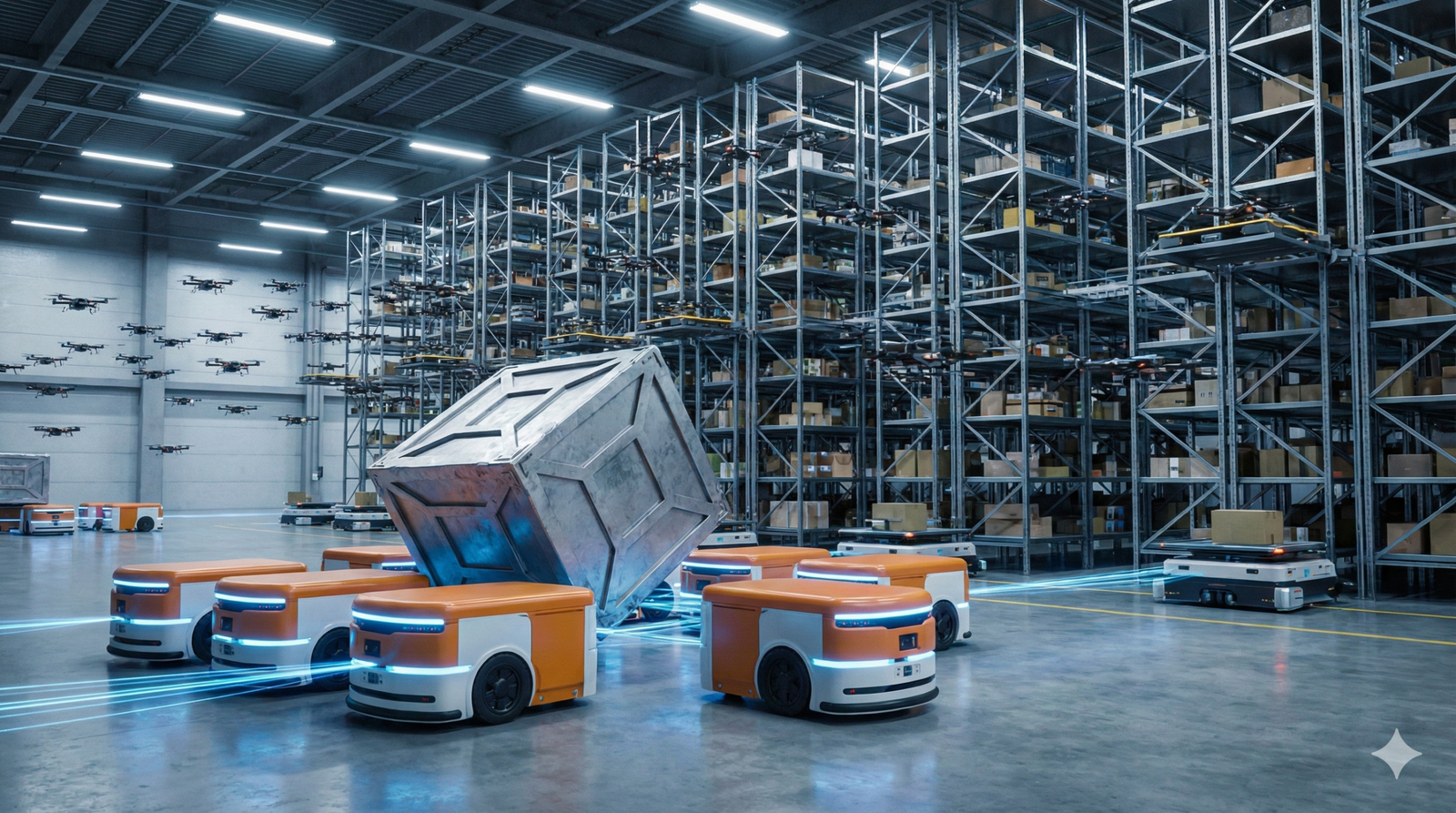
- The MAS Solution: Containers, trucks, and warehouse shelves act as intelligent agents.
- In Practice: A shipping container “knows” its destination and deadline. If its current truck breaks down, the container-agent broadcasts a request for transport. Nearby trucks bid on the job. The container negotiates a new route automatically, notifying the human manager only of the resolution, not the problem.
3. Swarm Robotics and Search & Rescue
In disaster zones (earthquakes, forest fires), GPS is often down, and maps are useless.
- The MAS Solution: A swarm of drones operates using “biomimetic” principles (like flocking birds).
- In Practice: The drones do not send video back to a central server for processing (bandwidth is too low). Instead, they explore locally. If Drone A spots a fire, it signals Drone B and C to converge and triangulate the location. They form a communication chain to relay the data back to base. If one drone crashes, the swarm simply reconfigures the chain.
4. Traffic Management and Autonomous Vehicles
Traffic is the ultimate competitive multi-agent environment.
- The MAS Solution: Connected Autonomous Vehicles (CAVs) act as agents negotiating right-of-way.
- In Practice: At an intersection, instead of waiting for a visual light, cars communicate via V2X (Vehicle-to-Everything). They adjust speeds so they interleave perfectly through the intersection without stopping, drastically reducing congestion and fuel consumption.
Multi-Agent Reinforcement Learning (MARL)
While traditional MAS relies on pre-programmed rules or protocols, the cutting edge is Multi-Agent Reinforcement Learning (MARL). Here, agents learn how to collaborate by trial and error.
The Challenge of Non-Stationarity
In single-agent RL (like an AI playing Mario), the game world is static. The blocks don’t move unless the code says so. In MARL, other agents are learning and changing their behavior simultaneously. To Agent A, the environment looks unstable because Agent B keeps changing its strategy.
Solutions in MARL
- Centralized Training, Decentralized Execution (CTDE): During the training phase (in a simulation), a “critic” algorithm sees everything everyone is doing and gives feedback. Once deployed, the agents (actors) operate only on their local vision, but they carry the “intuition” developed during the centralized training.
- Curriculum Learning: Agents are taught simple tasks first (e.g., “don’t crash into each other”) before moving to complex tasks (e.g., “capture the flag together”).
Common Tools for MARL:
- PettingZoo: A Python library that provides a standard API for multi-agent environments, similar to OpenAI Gym.
- Ray RLlib: An industry-standard library for scaling RL, supporting massive multi-agent populations.
- Unity ML-Agents: Allows developers to use the Unity game engine as a complex physics simulation for training agent teams.
Common Mistakes and Pitfalls
Implementing a multi-agent system is significantly harder than building a monolithic application.
1. The Communication Bottleneck
Mistake: Designing agents that chat too much. Reality: Bandwidth is finite. If every agent broadcasts every status update to every other agent (O(n^2) complexity), the network will collapse. Fix: Use localized communication (talk only to neighbors) or relevance filtering (broadcast only critical anomalies).
2. The “Lazy Agent” Problem (Free-Riding)
Mistake: Assuming all agents will contribute equally in a cooperative setup. Reality: In optimization scenarios, some agents might learn to sit idle while others do the work, if the reward is shared globally. Fix: Implement individual rewards alongside group rewards (“Credit Assignment”) to incentivize participation.
3. Emergent Instability
Mistake: Testing agents only in isolation. Reality: Individually safe behaviors can be collectively disastrous. For example, high-frequency trading bots acting logically individually can trigger a “flash crash” when interacting. Fix: Extensive simulation in “adversarial” conditions before real-world deployment. Use “Digital Twins” to test the swarm behavior.
Future Trends: Human-Agent Teaming
The next frontier is not just machines talking to machines, but machines working seamlessly with humans. This is often called Human-Agent Teaming (HAT).
In this paradigm, the AI is not a tool but a teammate.
- Transparent Communication: The agent must explain why it is making a recommendation.
- Trust Calibration: Humans must trust the agent enough to listen, but not so much that they become complacent (automation bias).
- Dynamic Role Allocation: In a cockpit, the AI might handle navigation while the pilot handles communication. If the pilot becomes overwhelmed, the AI detects the stress (via biometric monitoring) and offers to take over communication as well.
As of early 2026, research in “Theory of Mind” for AI—giving agents the ability to model the mental state of their human partners—is a major focus in making these collaborations smoother.
Conclusion
Multi-agent systems represent a mature, robust approach to handling the complexity of the modern world. By distributing intelligence, we create systems that are more than the sum of their parts—systems that can heal themselves, adapt to the unexpected, and solve problems on a scale that no single entity could manage.
Whether you are optimizing a supply chain or designing the next generation of smart city infrastructure, the principles of MAS—autonomy, local interaction, and emergent order—are your most powerful tools.
Next Steps for Implementation
- Identify the Agents: Look at your system. What are the distinct nouns? (Trucks, Sensors, Orders, Users). Do they have distinct goals?
- Define the Environment: Is it static or dynamic? Do the agents trust each other (cooperative) or not (competitive)?
- Start with Simulation: Do not build physical robots immediately. Use environments like PettingZoo or Unity to prototype interaction protocols.
- Choose a Framework: For Python developers, start exploring Ray RLlib for learning-based agents or JADE (Java Agent Development Framework) for traditional protocol-based development.
FAQs
What is the difference between Distributed Systems and Multi-Agent Systems?
While both involve multiple computers, a Distributed System (like a cloud database) typically works under a central control or a unified goal with rigid protocols. A Multi-Agent System involves autonomous entities that may have different, sometimes conflicting, goals and must negotiate to achieve them. MAS focuses on social interaction and autonomy, whereas distributed systems focus on data consistency and processing power.
Can multi-agent systems work without the internet?
Yes. MAS is often designed specifically for environments with poor connectivity. Agents can communicate via local mesh networks (Bluetooth, Zigbee, LoRaWAN) or even visual signals. This makes them ideal for underwater exploration, underground mining, or space missions where internet access is impossible.
What is the “Credit Assignment Problem” in MAS?
This is a challenge in Multi-Agent Reinforcement Learning (MARL). When a team of agents achieves a win (or a loss), it is difficult to determine which specific agent contributed to that outcome. Did Agent A make the winning move, or did Agent B set it up? Solving this is crucial so that the system reinforces the correct behaviors in the correct agents.
Are multi-agent systems safe?
Like any powerful technology, they have risks. The primary safety concern is emergent behavior—unforeseen outcomes resulting from complex interactions. For example, two trading algorithms might get into a bidding war that destabilizes a currency. Safety engineering in MAS involves creating “guardrails” and formal verification methods to mathematically prove that the system cannot enter a dangerous state, regardless of what individual agents decide.
How do agents handle conflicting goals?
Agents handle conflict through Game Theory. They effectively calculate the payoff of different strategies. In a competitive environment (Zero-Sum Game), they try to beat the opponent. In a cooperative environment, they might use negotiation protocols to find a “Pareto Optimal” solution—a compromise where no one can be made better off without making someone else worse off.
Is Blockchain related to Multi-Agent Systems?
Yes, they often intersect. Blockchain can provide the “trust layer” for multi-agent systems. Smart contracts can act as the binding agreements between autonomous agents. For example, an autonomous truck (Agent A) could pay an autonomous toll road (Agent B) using cryptocurrency, with the transaction verified on a blockchain, removing the need for a central banking authority to mediate.
What programming languages are best for MAS?
Python is currently the leader due to its dominance in AI and libraries like Ray, PettingZoo, and Mesa. Java has a long history in MAS with frameworks like JADE. C++ is used in high-performance scenarios like robotics and high-frequency trading. Julia is gaining traction for large-scale simulations due to its speed.
How does MAS relate to “Swarm Intelligence”?
Swarm Intelligence is a subset of MAS. It typically refers to systems composed of many simple agents (like ants or bees) that follow very basic local rules to achieve complex group behavior. General MAS can involve complex, cognitively advanced agents (like BDI agents) that are capable of complex reasoning and distinct personalities, not just simple stimulus-response behaviors.
References
- Wooldridge, M. (2009). An Introduction to MultiAgent Systems (2nd Edition). Wiley. (A foundational textbook defining the core properties of agents and environments).
- Shoham, Y., & Leyton-Brown, K. (2009). Multiagent Systems: Algorithmic, Game-Theoretic, and Logical Foundations. Cambridge University Press. (Authoritative source on the game-theoretic aspects of agent negotiation).
- Dorigo, M., & Birattari, M. (2011). “Ant Colony Optimization”. Encyclopedia of Machine Learning. Springer. (Source for Swarm Intelligence and bio-inspired agent coordination).
- OpenAI. (2021). “Emergent Tool Use from Multi-Agent Autocurriculum”. OpenAI Research. https://openai.com/research/emergent-tool-use (Demonstrates the power of MARL in complex, competitive environments).
- Gronauer, S., & Diepold, K. (2022). “Multi-agent deep reinforcement learning: a survey”. Artificial Intelligence Review, 55, 895–943. (Up-to-date academic review of MARL techniques and challenges).
- Foundation for Intelligent Physical Agents (FIPA). (2002). FIPA Agent Communication Language Specifications. IEEE Computer Society. (The official standard for agent communication protocols).
- IEEE Power & Energy Society. (2023). “Multi-Agent Systems for Smart Grid Control and Optimization”. IEEE Transactions on Smart Grid. (Source for real-world applications in energy).
- Stone, P., & Veloso, M. (2000). “Multiagent Systems: A Survey from a Machine Learning Perspective”. Autonomous Robots, 8(3), 345-383. (A classic paper distinguishing between varying levels of agent coupling).
- Lowe, R., et al. (2017). “Multi-Agent Actor-Critic for Mixed Cooperative-Competitive Environments”. Advances in Neural Information Processing Systems (NeurIPS). (The seminal paper introducing the MADDPG algorithm for MARL).
- Albrecht, S. V., & Stone, P. (2018). “Autonomous Agents Modelling Other Agents: A Comprehensive Survey and Open Problems”. Artificial Intelligence, 258, 66-95. (Source for Human-Agent Teaming and Theory of Mind in AI).