| Myth | Reality |
|---|---|
| AI is replacing VFX artists and editors on modern film productions. | Studios like DNEG, Framestore, and MARZ use AI as an efficiency layer inside existing pipelines, with artists directing, cleaning up, and approving output rather than being displaced wholesale. |
| Digital doubles and de-aging can now be done with no actor involvement at all. | Techniques like those used in Here required the actor to perform on set with a live AI-assisted feed, and SAG-AFTRA’s digital replica rules require explicit consent for creating and reusing any digital version of a performer. |
| Generative AI scripts and treatments now count as a writer’s work under WGA rules. | Under the WGA agreement, material generated by AI cannot be credited as literary material or count as a writer’s work, and studios cannot require writers to use AI as a condition of employment. |
| AI previz tools are just fancy storyboards with no real production impact. | Some productions now use generative previsualization to inform actual principal photography decisions, including blocking, lensing, and shot selection, not just early mood boards. |
How AI Is Actually Being Used Across the Film Pipeline
The conversation around AI in film has been dominated by extremes: either it is going to replace filmmakers entirely, or it is a gimmick confined to tech demos. Neither captures what is actually happening on real productions in 2027. AI tools have quietly embedded themselves into specific, well-defined tasks across pre-production, production, and post-production, functioning as an efficiency layer that speeds up existing workflows rather than a wholesale replacement for creative decision-making.
This is a technical look at where that integration is real and measurable: previsualization, rotoscoping and VFX cleanup, de-aging and digital doubles, color grading, and script breakdown and scheduling, alongside the union agreements that now explicitly govern how and when AI can be used on unionized productions.
Pre-Production: Previz, Script Breakdown, and Scheduling
Generative Previsualization
Previsualization has traditionally meant rough 3D block-outs or hand-drawn storyboards used to plan complex sequences before expensive shoot days. Generative previz tools now let directors and previz artists generate full-scene mock-ups from a script excerpt or reference images in a fraction of the time, iterating on blocking, camera angles, and pacing before a single crew member is booked. On genuinely advanced productions, this generative pre-visualization work is informing actual principal photography decisions, including lens choice and blocking, rather than staying confined to early mood-board style planning.
Script Breakdown and Scheduling
AI tools are increasingly used to automate the tedious but essential process of script breakdown, identifying every location, prop, character, and time-of-day requirement across a script, and feeding that structured data into scheduling software. This does not replace the judgment of an experienced first assistant director, but it removes hours of manual tagging and cross-referencing, letting production teams get to a workable shooting schedule faster.
Virtual Production and LED Volumes
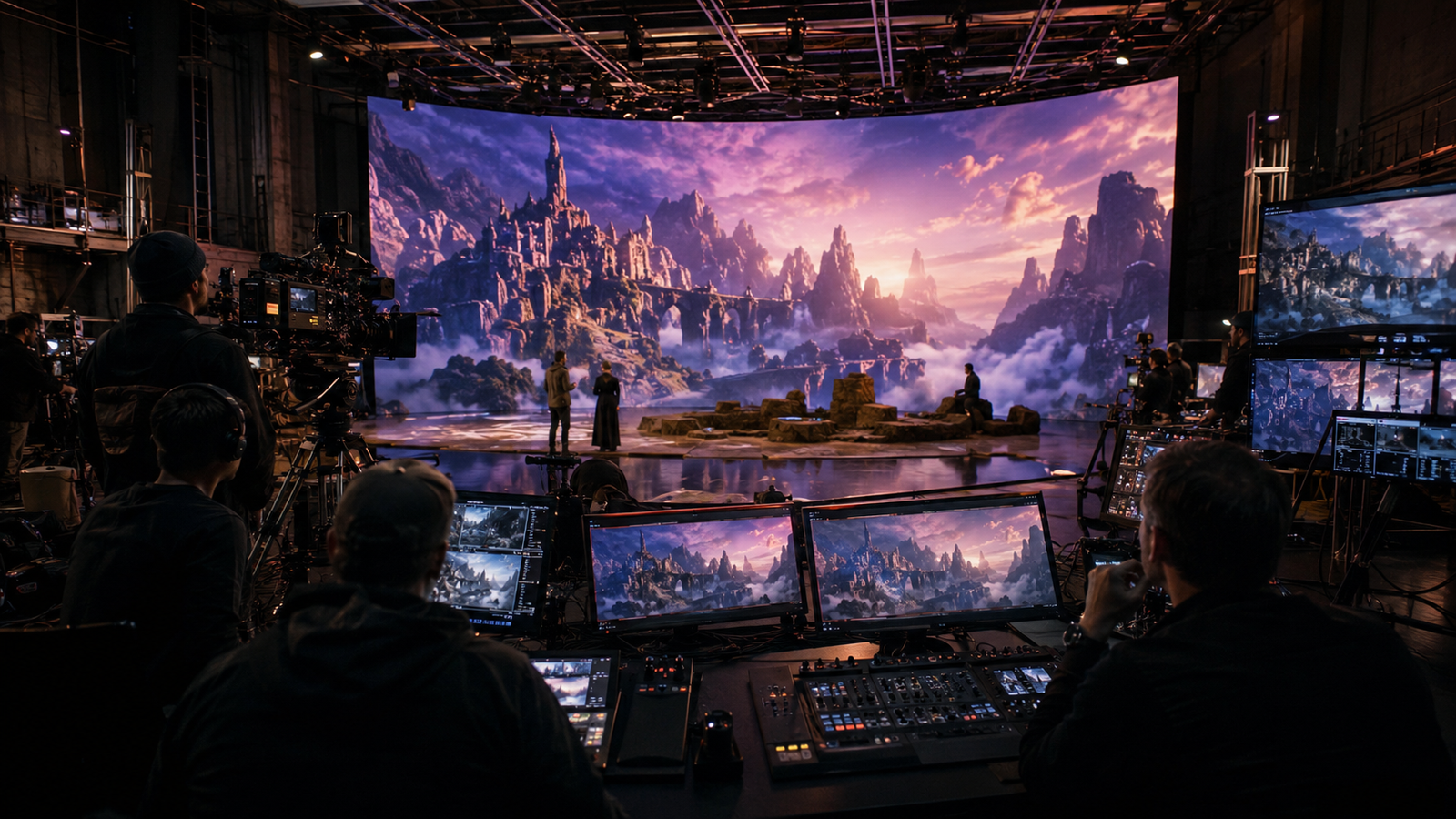
AI-driven real-time 3D generation has become a standard part of populating virtual production environments, particularly LED volume stages where digital backgrounds are displayed live behind actors during filming. Falling hardware costs combined with AI tools capable of driving real-time game-engine rendering have made this approach viable for mid-budget productions, not just tentpole films, letting directors adjust lighting and camera angles on the fly and see near-final-quality results during the shoot itself rather than waiting for post-production.
| Pipeline stage | AI tool category | What it actually speeds up |
|---|---|---|
| Pre-production | Generative previz and storyboard tools | Rapid iteration on blocking and camera planning before the shoot |
| Pre-production | Script breakdown and scheduling software | Automated tagging of locations, props, and cast requirements |
| Production | AI-driven virtual production rendering | Real-time, near-final-quality backgrounds on LED volume stages |
| Post-production | AI rotoscoping and object removal | Frame-by-frame masking and cleanup that used to be done by hand |
| Post-production | AI de-aging and digital doubles | Real-time or near-real-time facial modification during and after filming |
| Post-production | AI-assisted color grading | Faster first-pass color correction and shot-matching across a scene |
Production and VFX: Rotoscoping, De-Aging, and Digital Doubles
Rotoscoping and VFX Cleanup
Rotoscoping, tracing a moving subject frame by frame to separate it from its background, has historically been one of the most labor-intensive and repetitive tasks in VFX. AI-assisted masking tools now handle a significant share of this work automatically, tracking subjects through occlusion and complex motion with far less manual keyframing than before. Similarly, AI inpainting tools can remove unwanted details, a boom mic, a modern sign, a safety wire, across moving footage while preserving perspective, texture, and continuity, a task that previously required painstaking manual paint-out work shot by shot.
De-Aging and Digital Doubles
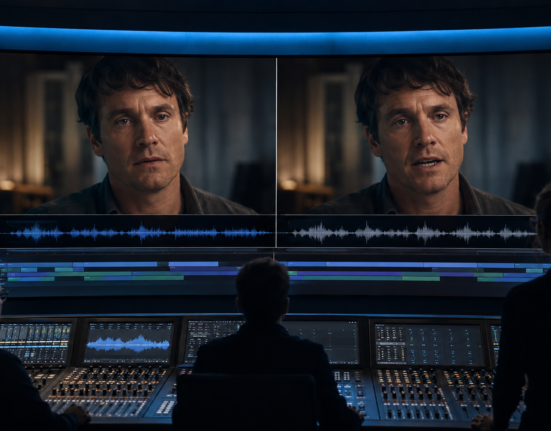
De-aging technology has moved from an expensive, months-long post-production process to something that can happen with a much shorter turnaround, and in some cases live on set. Robert Zemeckis’s Here is a widely cited example: the production used AI-driven de-aging to transform Tom Hanks, Robin Wright, Paul Bettany, and Kelly Reilly across multiple decades within a single film, with the VFX handled through a system that applied the aging or de-aging effect to a live camera feed with only a two-frame delay, letting actors watch a real-time approximation of the final result while performing and adjust their performance accordingly. This represents an important shift: rather than a digital double built entirely in post without the actor’s involvement, the actor performs on set and the AI system modifies that performance, keeping the human performance at the center of the technique.
Studios Leading AI-Enabled VFX Integration
Major VFX houses including DNEG, Framestore, MARZ, and PhantomFX have built AI-enabled pipelines into major episodic and feature work for studios like Netflix, Warner Bros, and Paramount. The framing across these studios is consistent: AI functions as an ultra-efficient digital assistant handling repetitive, well-defined tasks, while artists retain creative and quality control over final output.
Where AI Sits in a Modern VFX and Post Pipeline
Raw footage passes through AI-assisted rotoscoping and cleanup to isolate subjects and remove unwanted elements, then through de-aging or digital double systems where applicable, before AI-assisted color tools perform a first-pass grade that a colorist refines, with human review and approval gating every stage before final delivery.
Post-Production: Color Grading and Assembly
AI-assisted color grading tools can now perform an automated first pass, shot-matching across a scene for consistent exposure and color temperature, before a professional colorist takes over for the creative final grade. Combined with AI-assisted rough-cut assembly and automated scene stabilization, this has contributed to post-production timelines shrinking by roughly 30 percent on productions that adopt these tools, according to industry reporting. Tools like Topaz Video AI are also widely used to upscale resolution, reduce noise, and increase frame rates on footage that would otherwise be unusable at delivery specifications, particularly for archival or lower-quality source material being integrated into modern productions.
| Task | Traditional approach | AI-assisted approach |
|---|---|---|
| Rotoscoping a moving subject | Manual frame-by-frame keyframing | AI tracking and masking with human correction pass |
| Removing an unwanted object from a shot | Manual paint-out across every frame | AI inpainting preserving perspective and texture automatically |
| De-aging or aging a performer | Months of manual post-production VFX work | Live or near-live AI-assisted feed during and after filming |
| First-pass color correction | Colorist manually matches every shot in a scene | AI automates initial shot-matching before creative grading |
Union Agreements Governing AI in Film
The 2023 SAG-AFTRA and WGA agreements, reached after prolonged strikes, put explicit, binding guardrails around AI use that now shape how every unionized production incorporates these tools.
SAG-AFTRA and Digital Replicas
Under the SAG-AFTRA agreement, studios cannot create or reuse a digital replica of a performer, whether a face swap, a voice clone, or a full digital double, without the performer’s explicit, informed written consent. Consent has to specify the scope and terms of use, performers must be informed of and separately compensated for each specific use of their digital replica, and digital replicas cannot be used to circumvent hiring background actors. This directly shapes how techniques like de-aging and digital doubles are deployed, since even the most technically impressive digital double still requires a documented, scoped consent agreement with the performer being replicated.
WGA and Generative AI in Writing
Under the WGA agreement, generative AI cannot be credited as a writer, and material produced by generative AI is not considered literary material under the guild’s minimum basic agreement. Production companies are permitted to offer AI-generated material to a writer as a starting point, but cannot require its use as a condition of employment, and if a writer chooses to use generative AI with company consent, their resulting work is still treated as their own literary material. This framework keeps human authorship, credit, and residuals attached to the writer even where AI tools are part of the process.
Why These Provisions Matter for Production Planning
For production teams integrating AI into a pipeline, these agreements are not abstract policy, they directly determine which tasks can be automated freely, script breakdown and scheduling, rotoscoping, color grading, first-pass previz, and which require a specific, documented consent and compensation process before any AI touches a performer’s image or voice.
- Separate purely technical AI tasks, rotoscoping, color, scheduling, from anything touching a performer’s likeness or voice.
- Secure scoped, written consent before any digital replica or de-aging work involving a specific performer.
- Never present generative AI output to a writer as a condition of employment, per WGA terms.
- Budget previz and virtual production tools as pipeline accelerators, not replacements for a director’s creative judgment.
- Keep a human quality-control gate at every AI-assisted stage before footage moves to the next department.
Common mistake
Productions sometimes assume that because a VFX vendor uses AI tools internally, the underlying performer consent and compensation obligations under SAG-AFTRA’s digital replica provisions are automatically satisfied. In practice, consent has to be specifically scoped to the performer and the intended use, and vendor-level tooling choices do not substitute for that documented agreement.
What worked
Productions that integrated AI most smoothly treated it as a tool for specific, well-scoped tasks, previz iteration, rotoscoping, first-pass color, rather than trying to automate entire departments at once, and built performer consent and compensation conversations into pre-production planning rather than addressing them after a digital double had already been created.
Frequently Overlooked Factors
- Consent scope creepA digital replica consented to for one film or one scene cannot automatically be reused in a sequel or a different project without renegotiation.
- Background actor displacementSAG-AFTRA rules specifically prohibit using digital replicas to avoid hiring background performers, a provision aimed directly at crowd and extras work.
- Vendor tooling transparencyProductions do not always know which specific AI tools a VFX vendor uses internally, which can complicate compliance and disclosure obligations.
- Archival footage integrationUpscaling and restoring older footage with AI tools raises separate questions about the original performers’ consent for that new use.
- Previz-to-production driftDecisions locked in during AI-assisted previz can create false confidence about shots that are technically harder to achieve during an actual shoot.
- Residuals and credit trackingDistinguishing AI-assisted writing support from AI-generated literary material has real consequences for credit and residual calculations under WGA rules.
Glossary
- Previsualization (previz)
- A planning process that creates rough visual mock-ups of scenes before filming, traditionally using 3D block-outs or storyboards, now increasingly generated by AI tools.
- Digital replica
- An artificially created or altered version of a performer’s voice or likeness, covered under SAG-AFTRA agreements requiring explicit consent for creation and use.
- Rotoscoping
- The process of tracing or masking a subject frame by frame to separate it from its background, traditionally manual and now often AI-assisted.
- Virtual production
- A filmmaking approach using real-time rendered digital environments, often displayed on LED volume stages, in place of physical sets or location shoots.
- Literary material
- Under WGA rules, written work credited to a human writer; generative AI output is explicitly excluded from this designation.
Key Takeaways
- AI in film production functions as an efficiency layer across previz, VFX, and post, not a wholesale replacement for creative roles.
- Generative previsualization is now informing real principal photography decisions on advanced productions.
- AI-assisted rotoscoping and inpainting have significantly reduced manual cleanup work in VFX pipelines.
- De-aging techniques like those used in Here keep the actor’s live performance central to the process.
- SAG-AFTRA’s 2023 agreement requires explicit, scoped consent and compensation for any digital replica use.
- The WGA agreement blocks generative AI from receiving writer credit or counting as literary material.
- Productions that succeed treat AI as a tool for specific tasks, with human quality control at every stage.
FAQs
How is AI used in film previsualization today?
Generative previz tools let directors and previz artists create full-scene mock-ups from a script or reference images far faster than traditional 3D block-outs or storyboards, and on advanced productions this now informs actual principal photography decisions like blocking and lensing, not just early planning.
Does AI de-aging replace an actor’s performance?
No. In productions like Here, the actor performs live on set while an AI-assisted system applies the de-aging or aging effect to that performance in near real time, keeping the human performance at the center rather than building a digital double entirely in post without the actor.
What does SAG-AFTRA’s agreement say about digital replicas?
Studios cannot create or reuse a digital replica of a performer, including face swaps, voice clones, or full digital doubles, without explicit informed written consent that specifies scope and terms, and performers must be compensated for each specific use of their replica.
Can a studio use generative AI to write a script under WGA rules?
Generative AI output cannot be credited as a writer and is not considered literary material under WGA agreements. Studios may offer AI-generated material to writers as a starting point but cannot require its use as a condition of employment.
How is AI changing VFX studio pipelines?
Major VFX houses including DNEG, Framestore, and MARZ now use AI for tasks like rotoscoping, object removal, and de-aging within their existing pipelines, functioning as an efficiency layer while artists retain creative and quality control over the final output.
What is virtual production and how does AI fit in?
Virtual production uses real-time rendered digital environments, often on LED volume stages, in place of physical sets. AI-driven rendering has made near-final-quality, real-time backgrounds viable for mid-budget productions, not just major tentpole films.
Does AI-assisted color grading replace colorists?
No. AI tools typically handle a first-pass automated shot-match for consistent exposure and color temperature across a scene, after which a professional colorist performs the creative final grade, contributing to overall post-production timelines shrinking on adopting productions.
Are background actors protected from being replaced by digital replicas?
Yes. SAG-AFTRA’s agreement specifically prohibits using digital replicas to circumvent the hiring of background performers, a provision directly aimed at protecting crowd and extras work from being automated away.
References
- StudioBinder, 16 Best AI Filmmaking Tools in 2026, Organized by Workflow
- Flawless AI, AI in Post Production: 7 Ways It Is Being Used in 2026
- ActionVFX, Top 10 AI Tools Transforming VFX Workflows in 2026
- The Monthly Film Festival, 5 Best AI Previsualization Tools for Filmmakers in 2026
- Respeecher, How De-aging Technology Is Changing Hollywood and the Future of Filmmaking
- SAG-AFTRA, Digital Replicas 101 and Artificial Intelligence Resources
- Authors Guild, SAG-AFTRA Agreement Establishes Important Safeguards for Actors Around AI Use
For related coverage, see our companion deep dive on AI video generation in 2027, the growing debate around synthetic actors and digital likeness rights, and how the industry approaches content provenance for AI-generated media. Post-production teams may also find value in our guides to generative AI workflows for design teams and AI dubbing and lip-sync localisation at scale, alongside our coverage of copyright and training data disputes.