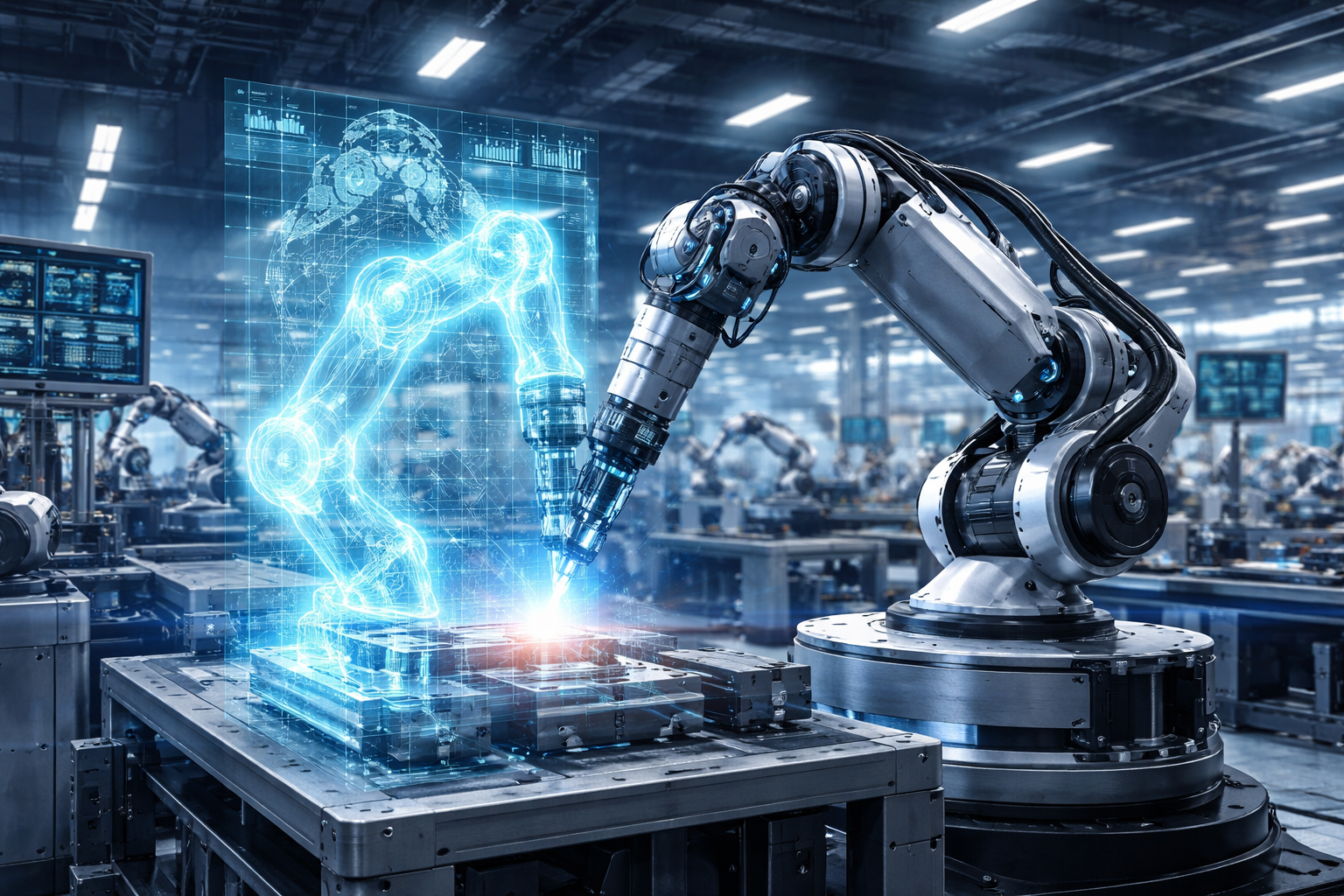
As of March 2026, the global industrial landscape is undergoing its most significant transformation since the steam engine. We are moving away from an era of fragile, hyper-extended global supply chains and toward a model of Sovereign Manufacturing. At the heart of this shift is Physical AI—the intelligence that allows machines to not just process data, but to perceive, reason, and act within the three-dimensional world.
Definition and Core Concept
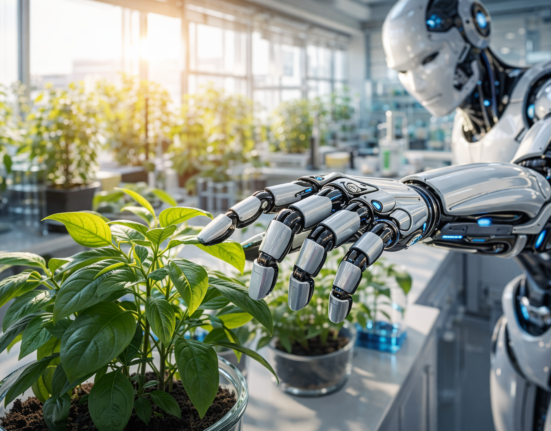
Physical AI refers to the integration of advanced machine learning—specifically foundation models and generative AI—into physical systems like robots, CNC machines, and autonomous mobile robots (AMRs). Unlike “Cyber AI” (which lives in screens and servers), Physical AI possesses “embodiment.” It understands physics, friction, and spatial awareness.
Sovereign Manufacturing is the strategic capability of a nation or region to produce its most critical goods—semiconductors, medical devices, defense equipment, and energy components—within its own borders or via trusted local networks. It is the antithesis of the “just-in-time” global outsourcing model that proved so vulnerable in the early 2020s.
Key Takeaways
- Autonomy over Automation: Traditional automation is rigid; Physical AI is adaptive, allowing factories to switch products instantly.
- Closing the Labor Gap: Physical AI solves the chronic shortage of skilled tradespeople by augmenting human workers with intelligent, collaborative machines.
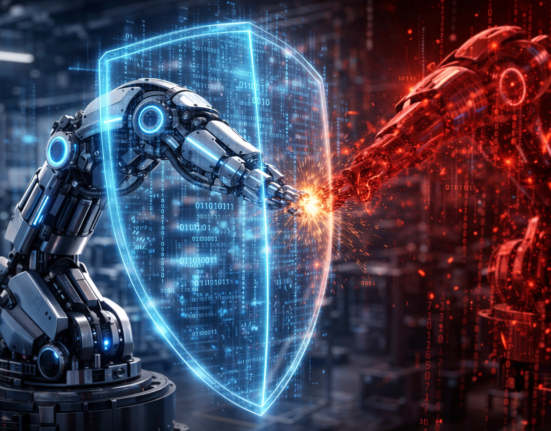
- Data Sovereignty: By processing AI at the “edge” (on the factory floor), nations can keep their industrial IP secure from foreign cyber threats.
- Economic Parity: Physical AI offsets high labor costs in developed nations, making onshoring economically viable.
Who This Is For
This deep dive is designed for industrial C-suite executives looking to future-proof their operations, policymakers focused on national security and economic resilience, and engineering leaders tasked with implementing the next generation of smart factory technologies. If you are concerned about supply chain volatility or the declining workforce in manufacturing, this exploration of Physical AI is your roadmap.
Safety Disclaimer: The implementation of Physical AI involves high-voltage machinery, autonomous kinetic systems, and sensitive data networks. All industrial deployments must adhere to local ISO safety standards (such as ISO 10218 for robots) and cybersecurity frameworks. This article provides strategic oversight and does not replace professional engineering or legal consultation.
1. The Great Decoupling: Why Sovereignty Matters Now
The globalization of the 1990s and 2000s was built on the premise of “efficiency at any cost.” This meant manufacturing moved to wherever labor was cheapest and environmental regulations were most lax. However, by March 2026, that logic has collapsed under the weight of geopolitical tensions, climate-related shipping disruptions, and the realization that dependence on a single geographic region for 90% of a critical component is a national security risk.
Sovereign manufacturing isn’t about isolationism; it’s about resilience. To achieve this, a nation must be able to produce goods competitively despite having higher labor costs or stricter environmental standards. This is where Physical AI enters the fray. It provides the “productivity alpha” needed to make domestic production cheaper and faster than overseas alternatives.
2. Defining the “Physical” in Physical AI
To understand why this technology is a game-changer, we must distinguish it from the AI we use to write emails or generate images. Physical AI requires a different architectural stack.
Perception-Action Loops
In a standard AI model, the “output” is text or pixels. In Physical AI, the output is a torque command or a velocity vector. The system must ingest high-fidelity data from LiDAR, depth cameras, and tactile sensors, process it through a neural network that understands Newtonian physics, and then execute a movement in milliseconds.
The Role of Foundation Models for Robotics
As of 2026, we have moved beyond “hard-coded” robots. In the past, if a part was two millimeters out of place, a robot would fail. Today, Foundation Models for Robotics (trained on massive datasets of physical interactions) allow machines to “generalize.” If a robot has learned how to pick up a plastic bottle, it can now use that same underlying logic to pick up a glass vial it has never seen before. This adaptability is the “key” to sovereign manufacturing because it allows small-to-medium enterprises (SMEs) to automate small-batch, high-variety production.
3. The Pillars of Sovereign Industrial Autonomy
Sovereignty requires control over the three pillars of production: Intelligence, Security, and Energy. Physical AI directly addresses the first two.
Intelligence: The “Brain” on the Shop Floor
By utilizing Physical AI, factories can operate with “dark” or “lights-out” shifts without the risk of catastrophic failure. The AI monitors machine health and predicts failures before they happen. This intelligence allows a nation to maintain high output even with a shrinking or aging demographic workforce.
Security: Edge Intelligence and IP Protection
One of the biggest fears in manufacturing is the theft of intellectual property (IP). When AI models are trained and run in the cloud, data must leave the factory. Sovereign manufacturing demands Edge AI. Physical AI models are increasingly small enough to run on localized “Industrial AI Servers” located within the factory walls. This ensures that a nation’s manufacturing “recipes” remain under its own control.
4. Digital Twins: The Virtual Forge of Sovereign Production
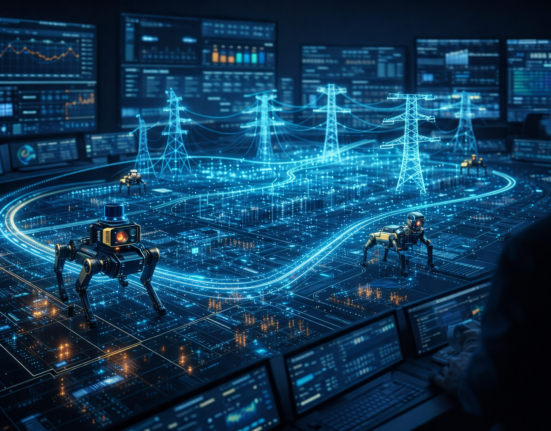
You cannot have Physical AI without a robust Digital Twin. A Digital Twin is more than just a 3D CAD model; it is a live, data-rich simulation of the physical asset.
Bridging the Sim-to-Real Gap
One of the biggest hurdles in Physical AI is the “Sim-to-Real” gap—the difference between how a robot performs in a simulation versus the real world. In 2026, high-fidelity physics engines allow us to train AI agents in virtual environments for millions of hours before they ever touch a piece of metal. This accelerates the deployment of sovereign manufacturing hubs, as the “learning” happens in the cloud, and the “execution” happens locally.
5. Economic Drivers: How Physical AI Makes Onshoring Profitable
The primary argument against sovereign manufacturing has always been cost. If it costs $50 to make a widget in a high-wage country and $5 to make it overseas, the market chooses the latter. Physical AI flattens this curve in three ways:
- Reduced Labor Intensity: While humans move from “manual labor” to “system oversight,” the AI handles the repetitive, high-precision tasks that previously required large teams.
- Waste Reduction: Physical AI optimizes material usage in real-time. Whether it’s additive manufacturing (3D printing) or traditional milling, the AI ensures the path of least resistance and minimum waste.
- Energy Optimization: Sovereign manufacturing is often tied to local, green energy grids. Physical AI can schedule high-energy tasks for when renewable energy is at peak production, lowering the “green premium” of domestic goods.
6. The Geopolitics of the Physical AI Stack
We cannot discuss sovereignty without discussing the hardware that runs the AI. The “Physical AI Stack” includes:
- Specialized Silicon: NPUs (Neural Processing Units) capable of low-latency inference.
- Actuators and Sensors: The “muscles” and “nerves” of the system.
- Data Lakes: Clean, structured industrial data.
Nations are now racing to secure “Physical AI Corridors”—trade agreements that ensure the flow of the components needed to build these intelligent machines. A nation that owns the AI software but relies on a rival for the robotic joints is not truly sovereign.
7. Collaborative Robots (Cobots) and the Human Element
A common misconception is that Physical AI replaces humans. In a sovereign manufacturing context, it actually empowers them.
The Rise of the “Super-Technician”
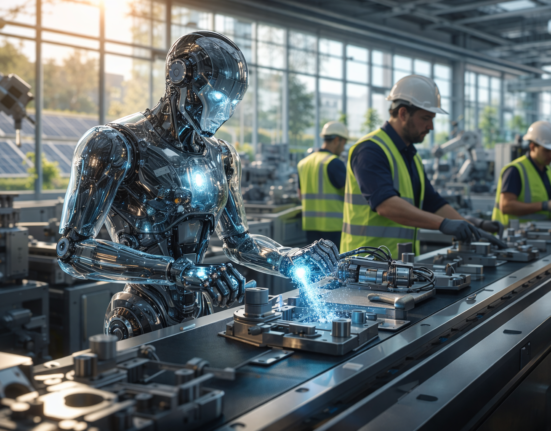
Instead of a worker spending 8 hours a day on a manual assembly line, they now manage a fleet of five Physical AI-driven cobots. These machines handle the ergonomic hazards—heavy lifting, toxic fumes, repetitive strain—while the human focuses on quality assurance, custom configurations, and system troubleshooting. This shift makes manufacturing jobs more attractive to younger, tech-savvy generations, helping to solve the “perception problem” of the industrial sector.
8. Sector-Specific Impact: Where Sovereignty Matters Most
Semiconductor Fabrication
Physical AI is now used to manage the incredibly complex chemical and thermal environments of a wafer fab. By localizing this via AI, nations reduce their reliance on the “Malacca Dilemma” and other shipping chokepoints.
Medical and Pharmaceutical
Sovereign manufacturing allows for “Point of Care” production. Physical AI-driven labs can produce personalized medicine or emergency medical supplies locally, ensuring that a global pandemic or trade war doesn’t cut off life-saving supplies.
Defense and Aerospace
The ability to rapidly prototype and manufacture parts for defense without a 12-month lead time is the ultimate expression of sovereignty. Physical AI allows for “Generative Design,” where the AI suggests a part shape that is lighter and stronger, and then immediately programs the robots to build it.
9. Common Mistakes in Implementing Physical AI
Despite the promise, many organizations fail their transition to Physical AI. Here are the most frequent pitfalls:
- Treating AI as a “Plug-and-Play” Software: Physical AI requires deep integration with mechanical hardware. You cannot simply “download” sovereignty; you have to calibrate it.
- Neglecting Data Quality: AI is only as good as the sensor data it receives. Dirty sensors or uncalibrated LiDAR lead to “hallucinations” in the physical world, which can be dangerous.
- Ignoring the “Human-in-the-loop”: Attempting to remove humans entirely often leads to brittle systems. The most resilient sovereign factories are those that design AI to work with people.
- Over-centralization: Relying on a single, massive “master AI” creates a single point of failure. Distributed, modular Physical AI is the key to resilience.
10. The Regulatory Landscape (As of March 2026)
Regulatory bodies in the US (NIST), EU (AI Act), and Asia have begun implementing “Certification for Embodied AI.” These regulations focus on:
- Explainability: Can we understand why the robot moved that way?
- Safety Interlocks: Ensuring that Physical AI cannot override fundamental hardware safety stops.
- Data Residency: Requiring that the “brain” of critical infrastructure manufacturing stays within national borders.
Adhering to these regulations isn’t just a legal requirement; it’s a component of the “Trust” that defines sovereign manufacturing.
11. Implementing a Sovereign Strategy: A Step-by-Step Guide
For a nation or a company to achieve sovereignty through Physical AI, the following phases are recommended:
Phase 1: The Digital Foundation (Months 1–6)
- Audit existing hardware for sensor-readiness.
- Establish a local data warehouse.
- Implement Digital Twins for the most critical production lines.
Phase 2: Pilot Physical AI (Months 6–12)
- Deploy collaborative robots in one specific department (e.g., quality inspection or packaging).
- Test Sim-to-Real workflows.
- Begin training the workforce in AI oversight.
Phase 3: Scaling Autonomy (Year 2+)
- Integrate Physical AI across the full supply chain.
- Connect to local green energy grids for optimized production.
- Establish a “Sovereign Node” that can operate independently of global cloud outages.
12. Sustainability and the Circular Economy
Sovereign manufacturing is inherently more sustainable. By producing goods closer to the end-user, we eliminate the massive carbon footprint of transoceanic shipping. Furthermore, Physical AI enables a Circular Economy.
In 2026, Physical AI is being used to automate the disassembly of products. Robots can now “see” and “feel” how to take apart a smartphone or an EV battery to recover precious metals. This creates a “closed-loop” sovereign system where the raw materials for tomorrow’s products come from yesterday’s waste, all managed by intelligent machines within the same borders.
13. Challenges and Ethical Considerations
We must address the elephant in the room: Equity. If only wealthy nations can afford the Physical AI stack, does the “Sovereign” movement increase global inequality?
Ethical sovereign manufacturing must include “Technology Transfer” protocols and open-source foundation models for robotics to ensure that developing nations can also build their own resilient local economies. Additionally, the impact on low-skilled labor must be managed through proactive vocational retraining programs.
14. Conclusion: The Future of the Factory
Physical AI is not just another “tool” in the industrial shed; it is the fundamental infrastructure of the 21st century. By bridging the gap between digital intelligence and physical execution, it allows nations to reclaim their manufacturing heritage while leading a high-tech future.
Sovereign manufacturing through Physical AI offers a world where supply chains are shorter, products are more customized, workers are safer, and national economies are shielded from the whims of global instability. The transition is not easy, but for those who value resilience, it is inevitable.
Next Steps: If you are ready to begin your journey toward industrial autonomy, the first step is a Physical AI Readiness Audit. I can help you draft a framework for this audit, focusing on your current hardware capabilities and data infrastructure. Would you like me to generate a checklist for your first pilot program?
FAQs
1. What is the difference between Industrial Automation and Physical AI?
Standard automation follows “if-this-then-that” rules. It is rigid and requires a perfectly controlled environment. Physical AI uses neural networks to “understand” its environment, allowing it to handle unexpected changes, varied parts, and complex tasks that haven’t been pre-programmed.
2. Is Sovereign Manufacturing more expensive for the consumer?
Initially, the capital expenditure (CapEx) for Physical AI is higher. However, over the long term, it reduces costs by eliminating international shipping, reducing waste, lowering energy consumption, and mitigating the massive financial risks of supply chain disruptions.
3. How does Physical AI impact job security?
Physical AI shifts the nature of manufacturing work. While it automates many manual, repetitive tasks, it creates a massive demand for “Robotics Technicians,” “AI Auditors,” and “System Managers.” The goal is to move humans from being “parts of the machine” to “masters of the machine.”
4. Can Physical AI run without an internet connection?
Yes. For sovereign manufacturing, it is often preferred that the AI runs “on the edge” (locally). This ensures the factory remains operational even during a global internet outage or a targeted cyberattack on cloud providers.
5. What role do Digital Twins play in this?
Digital Twins act as the “training ground” for Physical AI. They allow engineers to test different manufacturing scenarios and train AI models in a risk-free virtual world before deploying them to real, expensive machinery on the factory floor.
6. Is Physical AI ready for small businesses?
As of March 2026, “Low-Code” Physical AI platforms have made it possible for small-to-medium enterprises (SMEs) to implement robotics without having a PhD in computer science on staff. This democratizes the ability to participate in sovereign manufacturing.
References
- International Federation of Robotics (IFR). (2025). World Robotics Report 2025: The Rise of Embodied AI. 2. National Institute of Standards and Technology (NIST). (2026). Framework for Sovereign Industrial Autonomy and Edge Security.
- McKinsey & Company. (2026). The Economic Impact of Onshoring via Physical AI.
- IEEE Transactions on Robotics. (2024). Foundation Models in the Physical World: From Simulation to Reality.
- World Economic Forum (WEF). (2025). The Global Risks Report: Resilience through Localized Production.
- Stanford Institute for Human-Centered AI (HAI). (2025). The State of Physical AI: A 2026 Perspective.
- Journal of Manufacturing Systems. (2026). Edge Intelligence: Securing Intellectual Property in the Smart Factory.
- U.S. Department of Commerce. (2026). The CHIPS and Science Act 2.0: Integrating AI into Domestic Fabrication.
- European Commission. (2026). Industry 5.0 and the Digital Decade: A Roadmap for Sovereign Tech.
- Gartner Research. (2025). Top Strategic Technology Trends: Physical AI and the Autonomous Supply Chain.