| Myth | Reality |
|---|---|
| A standard commercial general liability policy already covers autonomous robots. | Most commercial general liability and product liability policies exclude or sharply cap coverage for AI-driven decision-making, which is exactly why insurers are building dedicated robotics endorsements and standalone policies. |
| Premiums for autonomous fleets are priced the same way as premiums for conventional machinery. | Insurers are shifting toward usage-based, telemetry-linked, and provenance-linked pricing because a one-time risk classification cannot capture a machine whose behavior changes with every software release. |
| Underwriters need to fully understand the AI model to price the risk accurately. | Most underwriters price on observable operational signals, incident history, and the quality of the audit trail rather than attempting to open a model that is often commercially protected and technically opaque. |
| Autonomous systems are inherently harder to insure and therefore always cost more to cover. | Operators who can produce strong provenance and monitoring records are increasingly winning lower premiums than comparable human-operated equipment, because their incident data is more complete and root-cause analysis is faster. |
Why Traditional Actuarial Models Break Down for Autonomous Machines
Actuarial science was built on a simple premise: given enough historical claims data on a reasonably stable population of risks, you can estimate the frequency and severity of future losses with acceptable confidence. That premise depends on two things holding roughly steady between the period the data was collected and the period the policy covers: the behavior of the insured asset and the environment it operates in. Autonomous machines violate both assumptions simultaneously.
A conventional forklift behaves the same way in month one of its service life as it does in month thirty, barring mechanical wear that itself follows well-understood curves. An autonomous mobile robot running a perception stack that receives a software update every few weeks does not behave the same way in month one and month thirty. Its object-detection thresholds may have changed, its path-planning heuristics may have been retrained, and its response to an edge case that never appeared in the original training data is, by definition, something no historical claims table can price with confidence.
This is the central actuarial problem the insurance industry is wrestling with in 2026: how do you price a risk that is probabilistic rather than deterministic, and that continues to change after the policy is bound? A human driver’s risk profile drifts slowly, shaped by age, experience, and driving record. An autonomous system’s risk profile can shift overnight with a single over-the-air update. Insurers who have spent decades building loss models around slow-moving human behavior are now pricing an asset class that behaves more like software than machinery, and software risk has historically been underwritten very differently from physical-asset risk.
The result is a genuine actuarial data shortage. Autonomous deployments, whether industrial robots, delivery robots, or autonomous vehicles, simply have not accumulated enough claims history at scale to support the kind of frequency and severity tables that back a conventional auto or general liability line. Insurers are compensating in several ways: leaning on simulation-based loss modeling, pooling data across multiple operators through consortiums, and, increasingly, pricing off real-time operational telemetry rather than static classification alone.
The New Insurance Product Categories Emerging for Robotics Operators
Because existing policy forms were not written with autonomous decision-making in mind, insurers have spent the past two to three years building entirely new product categories rather than simply amending old ones. Several distinct categories have emerged.
System-Centric Policies
Rather than insuring a single physical unit the way a conventional equipment policy does, system-centric policies treat an entire autonomous deployment, hardware, software stack, and the operator’s monitoring and update processes, as the insured unit. This shift is most visible in commercial robotaxi and autonomous freight programs, where insurers are exploring policies that price the vehicle more like a mobile software platform than a traditional car, because a single software defect can affect every unit running that version simultaneously, turning what looks like an individual-unit risk into a correlated fleet-wide risk.
Fleet-Wide Aggregation Coverage
Because a shared software version or shared perception model can produce correlated failures across many machines at once, insurers are building fleet aggregation products that explicitly price for the possibility of a single root cause triggering simultaneous claims across dozens or hundreds of units. This is a meaningful departure from conventional equipment insurance, where each unit’s failure is treated as statistically independent of the others.
Cyber-Physical Liability Endorsements
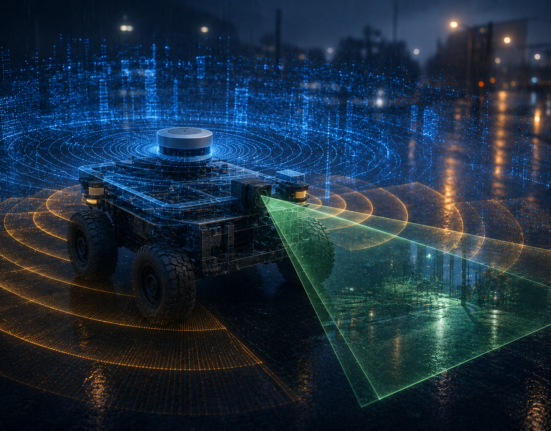
When an autonomous machine’s failure originates in a spoofed sensor feed, a compromised over-the-air update, or a manipulated command channel rather than a mechanical fault, the loss sits awkwardly between traditional cyber insurance and traditional product liability insurance. New endorsements are emerging specifically to bridge that gap, covering physical damage that traces back to a digital intrusion.
Parametric and Usage-Based Robotics Cover
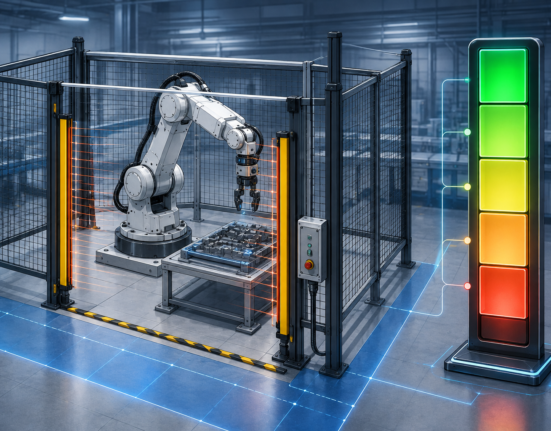
Some insurers are experimenting with parametric structures that trigger payment based on defined operational events, such as a safety-rated monitored stop failing to engage, rather than requiring a full claims investigation. Usage-based pricing, drawing on the same telemetry logic that reshaped auto insurance a decade ago, adjusts premiums based on actual operating hours, environment complexity, and duty cycle rather than a flat annual rate.
| Deployment type | Primary risk driver | Emerging policy response |
|---|---|---|
| Warehouse and logistics robots | Correlated software-version failures across a fleet | Fleet aggregation coverage with per-version risk banding |
| Autonomous delivery and last-mile robots | Public-facing third-party bodily injury and property damage | System-centric liability policies with telemetry-based pricing |
| Robotaxis and autonomous freight | High-severity, low-frequency collision events | Blended manufacturer and operator liability structures |
| Surgical and medical robots | Rare but catastrophic harm with complex causation | Specialty product liability with provenance-based claims support |
| Collaborative industrial robots (cobots) | Human-proximity injury during shared workspace operation | Workers’ compensation adjacent endorsements plus equipment cover |
How Underwriters Are Actually Pricing Premiums Today
Ask an underwriter how they price a fleet of autonomous mobile robots and the honest answer, in most cases, is that they are not yet pricing the model itself. Model internals are frequently proprietary, difficult to audit externally, and not the thing that correlates most reliably with loss experience anyway. Instead, underwriters have converged on a set of observable proxies that are much easier to verify and that tend to track real risk reasonably well.
Operational Signals Over Model Internals
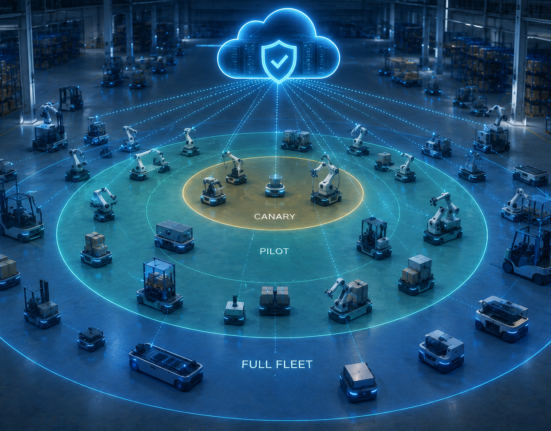
The signals underwriters actually use include incident and near-miss history, the maturity of the operator’s safety case, the frequency and rigor of software validation before a release reaches production machines, and the completeness of monitoring data during actual operation. A fleet operator who can demonstrate a disciplined staged-rollout process for updates, complete with automated regression testing and rollback capability, is treated very differently from an operator who pushes updates to the entire fleet simultaneously with no canary phase.
Deployment Environment Complexity
A robot operating in a tightly controlled, geofenced warehouse aisle presents a fundamentally different risk than one navigating an open urban sidewalk shared with pedestrians and cyclists. Underwriters are building environment-complexity scoring into premium calculations, weighting public exposure, unpredictable third-party behavior, and lighting and weather variability far more heavily than raw operating hours alone.
Severity Versus Frequency Shifts
A recurring pattern across autonomous deployments is that automation tends to reduce the frequency of low-severity incidents, the kind of minor bumps and scrapes that dominate conventional equipment claims, while occasionally producing higher-severity events when an edge case is missed entirely. This frequency-severity shift matters enormously for pricing, because a book of business with fewer but larger claims requires different reserving and reinsurance strategies than one with many small, predictable losses.
Liability Chain Complexity
When an autonomous system causes harm, the chain of potential responsibility can run through the equipment owner, the original manufacturer, the software vendor, the sensor supplier, and the provider of any mapping or training data involved. Underwriters increasingly build policies that anticipate this multi-party liability chain up front, rather than leaving apportionment entirely to post-loss litigation, because unresolved apportionment delays claims payment and increases loss-adjustment expense on both sides.
Provenance Certificates and Audit Data: The New Underwriting Currency
Perhaps the most significant shift in robotics underwriting over the past year has been the emergence of what the industry is informally calling provenance certificates: structured, verifiable records showing which software version was running, what sensor data fed a given decision, and what validation that version passed before deployment. Insurers are beginning to treat access to this kind of documentation the way they treat a clean driving record or a maintenance log for conventional equipment, except that it is generated automatically rather than self-reported.
The practical effect is a direct commercial incentive for operators to invest in auditability. A fleet that can hand an underwriter a clean, timestamped record of every software version, every validation test it passed, and every operational anomaly logged during the policy period is a fundamentally easier risk to price than a fleet that can only offer aggregate uptime statistics. Some underwriters are now offering explicit premium discounts tied to the presence and quality of this kind of documentation, mirroring the discounts telematics-based auto insurers have offered for years to drivers who accept usage monitoring.
Figure: How provenance data moves from engineering record to insurance premium
A signed, timestamped log of software version, sensor health, and validation results is generated at the engineering layer. That same record, rather than being re-created for compliance purposes, is packaged into a provenance certificate that an underwriter reviews alongside incident history. Fleets with complete, tamper-evident certificates move into a lower risk band and a lower premium; fleets that can only supply aggregate summaries are priced more conservatively because the underwriter cannot verify the claim behind the number.
This dynamic creates a feedback loop worth understanding on its own terms. Better provenance data lowers premiums, which gives operators a direct financial reason to invest in the kind of auditability that also happens to make post-incident investigation faster and safety cases stronger. Readers interested in the underlying technical mechanics, cryptographic signing at the edge, ROS 2 security plugins, and distributed ledger approaches for multi-vendor fleets, can find a deeper treatment in our companion piece on digital provenance in robotics, linked near the end of this article. This article’s own focus stays on the insurance-market response rather than the underlying engineering.
Claims and Loss Adjustment: What Happens When an Autonomous Machine Causes Harm
Underwriting is only half the insurance story. The other half is what happens after a loss occurs, and autonomous machines complicate claims handling in ways that conventional equipment and auto claims rarely do.
Multi-Party Causation Investigations
A collision involving an autonomous delivery robot might implicate the fleet operator’s maintenance practices, the software vendor’s perception model, the sensor manufacturer’s hardware, or a third party who interfered with the robot’s operating environment. Claims adjusters increasingly rely on provenance and telemetry records to establish which party’s action or omission actually caused the loss, replacing what used to be a much slower process of expert reconstruction and discovery.
Faster Resolution With Better Records
Operators with strong audit trails tend to see claims resolved faster and with lower legal expense, because the causation question that would otherwise require months of discovery can often be answered directly from the machine’s own signed operational record. This is a major reason insurers are willing to trade lower premiums for better documentation: it reduces their own loss-adjustment expense, not just their exposure to the underlying loss.
Subrogation Against Software and Component Vendors
When a claims investigation determines that a software defect or a faulty sensor, rather than operator error, caused the loss, insurers are increasingly pursuing subrogation claims against the responsible vendor. This is reshaping vendor contracts across the robotics supply chain, with software and component suppliers being asked to carry their own liability coverage and to indemnify operators for losses traceable to their component. Readers interested in how legal liability is allocated across this same set of parties in more depth, including moral responsibility questions that arise when no single party clearly caused a harm, should see the companion analysis on the autonomous liability gap in physical AI ethics linked near the end of this article.
Common mistake
Operators frequently assume that because their autonomous fleet has performed well operationally, insurers will simply extend existing equipment or auto policies to cover it at a similar rate. In practice, many general liability and commercial auto forms contain exclusions for AI-driven or autonomous decision-making that are easy to miss until a claim is denied. The safer approach is to have counsel and a broker who specializes in robotics review the policy language for autonomy exclusions before a program launches, not after an incident.
Building an Insurable Robotics Program: A Practical Checklist
Operators who are treated favorably by underwriters share a recognizable set of practices, regardless of what kind of autonomous machine they run. The comparison below outlines how a program that is easy to insure differs from one that struggles to find affordable coverage.
| Program characteristic | Hard-to-insure profile | Insurer-favored profile |
|---|---|---|
| Software update process | Fleet-wide push with no staged rollout | Canary deployment with automated regression testing and rollback |
| Incident documentation | Manual incident reports written after the fact | Automatic, signed provenance records generated at the time of the event |
| Vendor liability allocation | Ambiguous or undocumented responsibility across suppliers | Contractual indemnification and insurance requirements for each vendor |
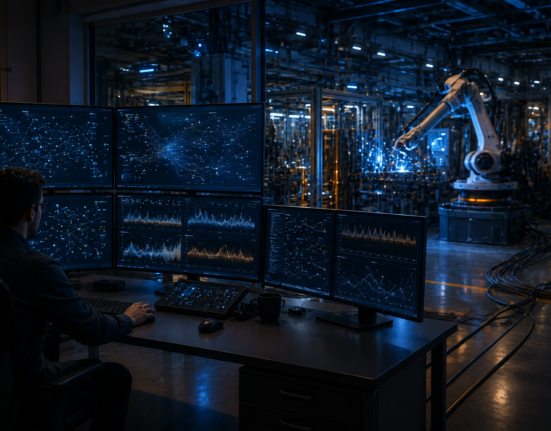
| Monitoring granularity | Aggregate uptime statistics only | Per-unit telemetry available for underwriter and claims review |
| Safety case maintenance | Static, produced once at launch | Living document updated with every material software change |
Operators building toward that insurer-favored profile generally start with the same handful of moves: instrumenting fleets to generate signed operational logs by default rather than as an afterthought, negotiating vendor contracts that clearly allocate liability and require proof of insurance up the supply chain, and bringing a broker with genuine robotics experience into the program design conversation early rather than at renewal time.
What worked
One mid-sized logistics operator running several hundred autonomous forklifts struggled for two renewal cycles to get competitive premiums, largely because their only claims documentation was a spreadsheet updated manually after each incident. Moving to automatic, timestamped provenance logging tied to each software version cut their underwriter’s requested loss-adjustment reserve significantly at the next renewal, because the insurer could verify root cause directly from the record rather than pricing in a margin for investigative uncertainty. The operator did not change their safety record; they changed what they could prove about it.
Frequently Overlooked Details in Robotics Insurance Programs
- Retroactive coverage datesMany robotics policies exclude claims arising from software versions deployed before the policy’s retroactive date, which matters enormously for fleets running mixed software generations across older and newer units.
- Sub-limits on cyber-physical lossA policy that appears to offer broad coverage may carry a much lower sub-limit specifically for losses that trace back to a cyber intrusion rather than a mechanical failure, which is exactly the scenario growing fastest in frequency.
- Third-party data dependency exclusionsSome policies exclude losses that originate from third-party mapping, positioning, or training data providers, leaving a gap when the actual root cause sits one layer removed from the operator’s own systems.
- Aggregate limit exhaustion in correlated eventsA single defective software version affecting many units at once can exhaust a fleet’s aggregate policy limit far faster than the same number of unrelated, independent incidents would.
- Broker specializationGeneral commercial brokers without specific robotics experience frequently miss autonomy exclusions buried in standard equipment or auto forms, so program design benefits from a broker who has placed similar risk before.
Where the Insurance Market Is Headed Next
Several trends look likely to continue shaping this market through the rest of the decade. Consortium-based data pooling, where multiple operators and insurers contribute anonymized incident and telemetry data to a shared actuarial pool, is likely to accelerate as individual operators struggle to reach statistical significance on their own. Regulatory pressure, particularly in jurisdictions treating high-risk AI systems as requiring documented traceability, is likely to make provenance-style record-keeping close to mandatory rather than optional within a few years, which will in turn make it a baseline underwriting expectation rather than a premium discount lever. And as more operators build the kind of automated, signed operational logging described above, expect the gap between the cheapest and most expensive premiums for functionally similar fleets to widen further, rewarding operators who treat auditability as core infrastructure rather than a compliance afterthought.
Key Takeaways
Key Takeaways
- Traditional actuarial models assume slow-moving, deterministic risk and break down when applied to autonomous machines whose behavior changes with every software update.
- Insurers are building new product categories, including system-centric policies, fleet aggregation coverage, cyber-physical endorsements, and parametric usage-based cover, rather than simply amending existing forms.
- Underwriters price mostly on observable operational signals such as update discipline, incident history, and environment complexity rather than attempting to audit AI model internals directly.
- Automation tends to reduce frequent, low-severity claims while occasionally producing rarer, higher-severity events, which changes reserving and reinsurance strategy.
- Provenance certificates and signed operational logs are becoming the new underwriting currency, directly linked to measurable premium discounts.
- Claims involving autonomous machines require multi-party causation investigation, and strong audit trails materially speed resolution and reduce legal expense.
- Operators who invest in staged rollout discipline, vendor liability allocation, and automatic provenance logging are consistently treated as lower-risk by underwriters than those relying on manual documentation.
Glossary
- Provenance certificate
- A structured, verifiable record showing which software version was running, what sensor data informed a decision, and what validation that version passed, increasingly requested by insurers during underwriting.
- System-centric policy
- An insurance product that treats an entire autonomous deployment, hardware, software, and operating process together, as the insured unit, rather than insuring each physical machine independently.
- Fleet aggregation coverage
- A policy structure that explicitly prices for the risk of a single shared software defect causing correlated losses across many units at once, rather than treating each unit as an independent risk.
- Parametric insurance
- A policy that pays out based on a predefined triggering event or measurable threshold rather than requiring a full post-loss claims investigation.
- Subrogation
- The process by which an insurer that has paid a claim pursues recovery from a third party, such as a software vendor or component supplier, that it believes actually caused the loss.
- Usage-based pricing
- A premium model that adjusts cost based on actual operating telemetry, such as hours run and environment complexity, rather than a flat annual classification.
FAQs
Why can insurers not just use existing auto or equipment insurance models for autonomous machines?
Existing models assume slowly changing, largely deterministic risk. Autonomous machines can change behavior with every software update, and their failure modes are often correlated across an entire fleet rather than independent per unit, which conventional actuarial tables were never built to price.
What is a provenance certificate in an insurance context?
It is a structured, tamper-evident record showing the software version, sensor inputs, and validation history behind a machine’s operation. Insurers use it to verify claims about safety practices directly, rather than pricing in extra margin for information they cannot confirm.
Do autonomous machines always cost more to insure than human-operated equipment?
Not necessarily. Operators who can demonstrate disciplined update practices and complete provenance records are increasingly priced favorably, sometimes below comparable human-operated equipment, because their incident data supports faster and more confident underwriting decisions.
Who is liable when an autonomous machine’s software, not its hardware, causes a loss?
Liability can extend to the software vendor rather than only the equipment owner, and insurers increasingly pursue subrogation against that vendor once a claims investigation identifies the software as the root cause, provided the vendor relationship and contract terms support that recovery.
What is fleet aggregation coverage and why does it matter?
It is a policy structure built for the reality that one defective software version can affect many machines simultaneously. Without it, a fleet’s aggregate policy limit can be exhausted far faster in a correlated event than conventional independent-unit claims would suggest.
How does staged software rollout affect insurance pricing?
Underwriters view canary deployments with automated regression testing and rollback capability as evidence of lower operational risk, since a defect is caught on a small subset of units before it can affect an entire fleet, and this discipline is increasingly reflected directly in premium calculations.
Are there insurance products designed specifically for cyber-physical failures in robotics?
Yes. New endorsements are emerging to cover physical damage that originates from a digital intrusion, such as a spoofed sensor feed or compromised update channel, because this loss type falls awkwardly between traditional cyber insurance and traditional product liability coverage.
What should an operator do before launching a new autonomous fleet program to stay insurable?
Build automatic, signed operational logging into the fleet from day one, negotiate vendor contracts that clearly allocate liability and require proof of insurance, and involve a broker with specific robotics underwriting experience early in program design rather than at the first renewal.
For readers who want the underlying legal and ethical liability-gap framework behind these insurance products, our companion piece on the autonomous liability gap in physical AI ethics covers product liability and accountability questions in depth, and our explainer on AI agent liability for autonomous errors addresses the software-agent side of the same problem. For the technical mechanics behind the provenance data insurers are requesting, see digital provenance in robotics. Readers evaluating how formal safety processes intersect with this underwriting shift may also want our explainer on functional safety for robots, and for how regulators across regions are shaping the compliance backdrop to all of this, see our robotics standards landscape overview.
References
- Overlook VC, “Edition 51: Insurance Wasn’t Built for Autonomous Systems,” 2026
- S and P Global Mobility, “Autonomous Vehicles and the Future of Car Insurance,” 2025
- Intel Market Research, “Autonomous Vehicle Insurance Market Outlook 2026 to 2034”
- Francesca Tabor, “AI Insurance Underwriting in 2026: Pricing Risk, Liability, and Coverage in the Age of Artificial Intelligence”
- National Association of Insurance Commissioners, AI Model Bulletin adoption tracker, 2026
- RobotsInsurance, “Insurance Coverage and Warranty Management for Autonomous Fleets,” platform documentation, 2026
- International Federation of Robotics, “AI in Robotics: Trends, Challenges, and Commercial Applications,” 2026