The intersection of artificial intelligence, robotics, and military strategy has given rise to one of the most contentious debates of the 21st century: the ethics and legality of weaponized robotics. As nations race to integrate autonomy into their defense systems, the line between human soldier and machine operator is blurring, challenging the very foundations of the laws of war.
This guide explores the complex landscape of Lethal Autonomous Weapons Systems (LAWS). We will examine the ethical dilemmas they pose, the current state of international law, and the urgent questions facing policymakers, engineers, and global citizens.
Key Takeaways:
- Defining Autonomy: Understanding the difference between remote-controlled drones and fully autonomous systems that select and engage targets without human intervention.
- The Accountability Gap: The legal and ethical struggle to determine who is responsible—the commander, the programmer, or the machine—when an autonomous system commits a war crime.
- International Law: How existing frameworks like the Geneva Conventions apply to new technologies, and where they may fall short.
- The “Killer Robot” Debate: Arguments for and against the ban of fully autonomous weapons, including the Campaign to Stop Killer Robots.
- Strategic Risks: The dangers of lowered thresholds for conflict, accidental escalation, and algorithmic bias in targeting.
Who this is for (and who it isn’t)
This guide is designed for policy students, legal professionals, tech ethicists, military analysts, and concerned citizens who want a deep, balanced understanding of the regulatory and moral landscape of AI warfare.
It is not a technical engineering manual on how to build combat robots, nor is it a sensationalist sci-fi creative writing piece. It focuses on the reality of current technology and international governance as of January 2026.
1. Defining Weaponized Robotics: From Automation to Autonomy
To understand the ethics, we must first agree on the definitions. The term “weaponized robotics” covers a vast spectrum of machinery, but the ethical controversy centers primarily on the level of human involvement in the use of force.
The Spectrum of Autonomy
Military robotics are not a monolith; they exist on a sliding scale of autonomy.
- Human-in-the-Loop: The robot selects a target and waits for a human command to fire. Most current military drones (like the Reaper or Predator) fall into this category. The machine is an extension of the human will.
- Human-on-the-Loop: The robot can select and engage targets on its own, but a human operator monitors the action and can intervene to stop it. This is often used in defensive systems like the Phalanx CIWS on ships, which shoots down incoming missiles faster than a human could react.
- Human-out-of-the-Loop (Full Autonomy): The system can select and engage targets without any human intervention or oversight once activated. These are often referred to as Lethal Autonomous Weapons Systems (LAWS).
Scope of this Guide
In this guide, “weaponized robotics” refers primarily to systems moving toward the Human-on-the-Loop and Human-out-of-the-Loop categories. While remote-controlled drones raise their own ethical issues (such as the psychological distance of the pilot), the profound legal disruption comes from systems that make life-or-death decisions algorithmically.
2. The Core Ethical Arguments
The debate over weaponized robotics is polarized. Proponents argue that precision robotics can save lives, while opponents argue they cross a fundamental moral line.
The Argument for “Humane” Warfare
Advocates for the development of autonomous weapons, including some military strategists and roboticists, argue that machines offer distinct ethical advantages over human soldiers:
- Precision and Restraint: Robots do not act out of fear, rage, or a desire for revenge—emotions that often lead to war crimes and civilian massacres. A robot will not rape, loot, or fire in panic.
- Self-Preservation is Irrelevant: Because a robot does not fear death, it can be programmed to hold fire until it is 100% certain of a target’s identity, taking risks that a human soldier would not justifiable take.
- Reduction of Friendly Casualties: Replacing human soldiers with machines keeps friendly forces out of harm’s way, a primary duty of military commanders.
The Argument Against: Dehumanization and the Accountability Gap
Opponents, including the International Committee of the Red Cross (ICRC) and the Campaign to Stop Killer Robots, raise fundamental moral objections:
- The Principle of Human Dignity: There is a widely held ethical belief that it is fundamentally wrong to allow an algorithm to decide to end a human life. Life-or-death decisions should require human moral agency and empathy.
- The Accountability Gap: If an autonomous weapon bombs a school due to a glitch or an unforeseen edge case, who is tried for the war crime?
- The Programmer? They wrote code years ago, likely for a general purpose, not intending this specific outcome.
- The Commander? They may not have understood the technical intricacies of the “black box” algorithm.
- The Machine? You cannot punish a machine. It has no moral agency to condemn. This creates a legal vacuum where war crimes could occur with impunity.
- Lowering the Threshold for War: If nations can wage war without risking their own soldiers’ lives, the political cost of going to war drops significantly. This could lead to “forever wars” fought perpetually by machines, creating endless instability.
3. International Humanitarian Law (IHL) and Robotics
International Humanitarian Law (IHL), also known as the Law of Armed Conflict (LOAC), provides the framework for judging the legality of any weapon. The key question is whether autonomous systems can comply with the Geneva Conventions and their Additional Protocols.
The Principle of Distinction
The Rule: Parties to a conflict must at all times distinguish between the civilian population and combatants. Attacks may only be directed against military objectives.
The Robotic Challenge: Can an AI reliably distinguish between a combatant and a civilian?
- In modern asymmetric warfare, combatants often do not wear uniforms.
- Visual recognition systems can struggle with context. A person holding a rifle might be a combatant, a police officer, or a civilian protecting their home from looters.
- Current AI (computer vision) is prone to “adversarial attacks,” where small changes to an image (like a sticker on a stop sign) can trick the AI into misidentifying the object entirely.
If a robot cannot distinguish with the same nuance as a human, its deployment in populated areas would be unlawful under IHL.
The Principle of Proportionality
The Rule: It is prohibited to launch an attack which may be expected to cause incidental loss of civilian life or injury which would be excessive in relation to the concrete and direct military advantage anticipated.
The Robotic Challenge: Proportionality is a value judgment, not a mathematical formula.
- How does an algorithm weigh the value of a “high-value target” against the lives of three children nearby?
- Human commanders struggle with this calculus, but they apply moral reasoning and “common sense.” Converting “excessive” into code is arguably impossible because context shifts constantly.
The Principle of Precautions in Attack
The Rule: Constant care must be taken to spare the civilian population.
The Robotic Challenge: This requires judgment during the execution of the attack. If a civilian bus enters the kill zone at the last second, a human pilot can abort. An autonomous missile might not have the sensor fidelity or the programming to recognize the new context shift and abort in time.
The Martens Clause
Found in the preamble of the 1899 Hague Convention, the Martens Clause states that in cases not covered by specific treaties, civilians and combatants remain under the protection of the “principles of humanity and the dictates of the public conscience.”
Many ethicists argue that LAWS violate the dictates of public conscience. Surveys consistently show global public opposition to weapons that select and engage targets without human intervention. If the public conscience finds “killer robots” abhorrent, they may be illegal under customary international law, even without a specific new treaty.
4. Algorithmic Accountability and Governance
Beyond the battlefield rules, there is the issue of governance and lifecycle management of these systems.
The “Black Box” Problem
Deep learning models, specifically neural networks used in image recognition, are often “black boxes.” This means that even the developers cannot explain exactly why the AI made a specific decision.
- In civilian life, if an AI denies you a loan, it is frustrating.
- In warfare, if an AI identifies a school bus as a tank, the inability to audit the decision process makes justice impossible.
Requirement for Explainable AI (XAI): For weaponized robotics to be legally defensible, military organizations may need to mandate Explainable AI. Commanders must understand the logic of the weapon before deploying it to ensure they are not acting recklessly.
Article 36 Weapons Reviews
Under Additional Protocol I to the Geneva Conventions (Article 36), states are required to determine whether the employment of a new weapon would, in some or all circumstances, be prohibited by international law.
- The Challenge: How do you review a system that “learns” or adapts? A weapon might be legal when it leaves the factory (Version 1.0) but evolve into an illegal operating mode after a software update or through reinforcement learning in the field.
- Continuous Review: Governance experts argue that AI weapons require continuous, real-time auditing, not just a one-time stamp of approval.
5. Current Global Initiatives: The State of Play
As of early 2026, there is no specific international treaty banning autonomous weapons, though the pressure to create one is intense.
The Convention on Certain Conventional Weapons (CCW)
The main diplomatic forum for this discussion is the UN’s Convention on Certain Conventional Weapons (CCW) in Geneva.
- Group of Governmental Experts (GGE): Since 2014, the GGE on LAWS has met to discuss potential regulations.
- The Guiding Principles: The GGE has affirmed that international humanitarian law applies to LAWS and that human responsibility must be retained. However, definitions of “meaningful human control” remain vague.
Divergent National Stances
- The Ban Group: Dozens of countries (including Austria, Brazil, and many from the Global South), supported by NGOs like Human Rights Watch, call for a preemptive ban on fully autonomous weapons.
- The Regulatory Group: Major military powers (typically including the US, Russia, China, Israel, and the UK) generally oppose a total ban. They argue that existing IHL is sufficient and that a ban would stifle innovation or put compliant nations at a disadvantage against rogue states. They prefer non-binding “codes of conduct.”
Corporate and Scientific Stances
Thousands of AI researchers and robotics experts have signed open letters warning against an “AI arms race.” Companies like Google (via its AI Principles) have pledged not to develop AI for use in weapons, creating a divide between the commercial tech sector and the defense industrial base.
6. Technological Failure Modes and Risks
Ethics often assumes the technology works as intended. However, in the chaotic environment of war, technology fails.
Hacking and Subversion
Autonomous systems are vulnerable to cyberwarfare.
- Spoofing: An adversary could feed false sensor data to a swarm of drones, causing them to attack their own troops or civilians.
- Hijacking: If the control link or the code is compromised, a fleet of autonomous weapons could be turned against its owners.
Algorithmic Bias
AI models are trained on data. If the training data is biased, the weapon will be biased.
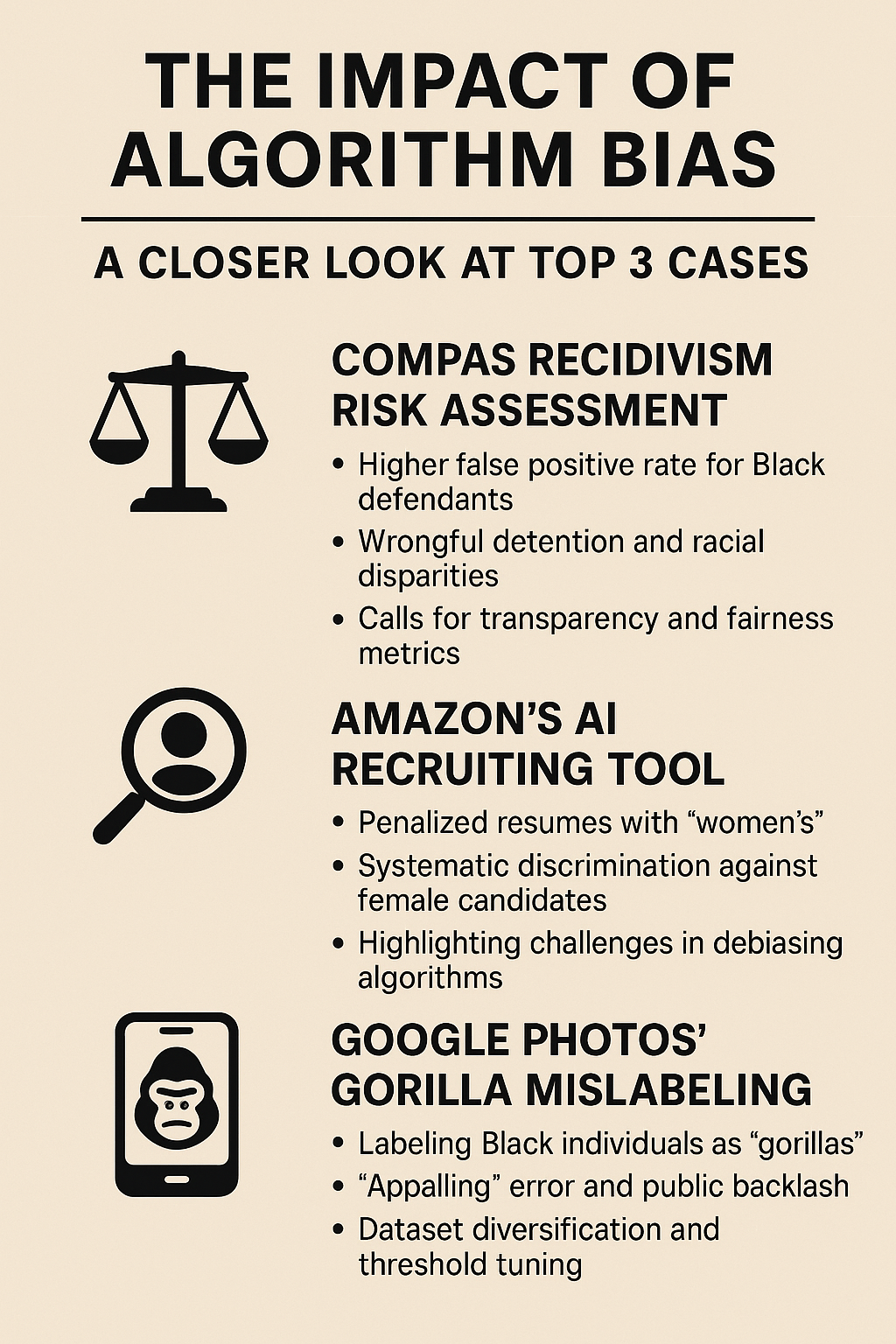
- Facial recognition systems have historically shown higher error rates for people with darker skin tones.
- In a conflict scenario, if a robot is trained primarily on data from one demographic, it might disproportionately misidentify civilians of a certain ethnicity as combatants, leading to discriminatory warfare.
Swarm Dynamics and Unpredictability
Future warfare envisions “swarms”—hundreds of small, autonomous drones communicating and coordinating attacks.
- Emergent Behavior: Complex systems can exhibit behaviors that were not explicitly programmed (emergent properties). A swarm might interact with an enemy swarm in a way that creates an unpredictable escalation loop, triggering a massive engagement that no human commander intended. “Flash wars”—similar to “flash crashes” in the stock market—are a genuine risk.
7. Practical Considerations for Policy Makers
For those tasked with drafting policy or rules of engagement (ROE) regarding weaponized robotics, the following framework is often discussed.
The Human-Machine Command Interface
We must move away from “Human-in-the-Loop” as a binary concept and look at Meaningful Human Control (MHC).
- Contextual Control: The human must understand the context in which the weapon is operating.
- Timely Intervention: The human must have the time and the means to intervene.
- Accountability: The human must know they are personally responsible for the weapon’s actions.
Data Governance in Defense
Policy must dictate strictly how training data is collected and vetted. “Dirty” data leads to war crimes. Audits of training sets for bias and reliability should be as standard as safety checks on physical ammunition.
8. Common Myths vs. Reality
| Myth | Reality |
| “The Terminator” Scenario | The immediate risk is not a sentient AI deciding to kill humanity. The risk is dumb, brittle algorithms making errors in complex environments or being used by authoritarian regimes for suppression. |
| Full Ban is Impossible | While difficult, international bans have worked for other weapons (e.g., chemical weapons, biological weapons, blinding lasers). Verification is harder with software, but norms can be established. |
| AI is Objective | AI encodes the biases of its creators and its data. It is not a neutral arbiter of truth or targets; it is a statistical probability engine. |
9. Future Outlook: Three Scenarios
Where is this heading? We can identify three plausible trajectories for the next decade.
Scenario A: The Proliferation (Arms Race)
Diplomatic talks at the CCW stall. Major powers deploy swarms of autonomous loitering munitions. Non-state actors (terrorist groups) acquire cheap, commercial-grade drones and retrofit them with crude autonomous targeting software. The battlefield becomes chaotic and highly lethal for infantry.
Scenario B: The Regulated Middle Ground
Nations agree on a definition of “Meaningful Human Control.” Full autonomy is banned for nuclear and strategic assets, but permitted for defensive systems (like anti-missile shields) and material targets (attacking tanks in the desert). Strict certification protocols are established.
Scenario C: The Stigmatization
A high-profile tragedy occurs—an autonomous system massacres civilians due to a glitch. Global public outrage forces a comprehensive treaty banning the development and use of human-out-of-the-loop systems, similar to the Landmine Ban Treaty.
Conclusion
The ethics of weaponized robotics is not just a technological debate; it is a debate about the future of humanity in war. While automation offers the seductive promise of efficient, bloodless (for the attacker) warfare, it carries the risk of decoupling war from its moral consequences.
International law provides a robust framework, but it was written for humans, not algorithms. Bridging this gap requires active engagement from engineers refusing to build unethical systems, policymakers demanding “explainability,” and commanders maintaining the moral burden of the trigger pull.
Next steps for the reader: To stay engaged, monitor the reports coming out of the UN Group of Governmental Experts (GGE) on LAWS and follow the publications of the International Committee of the Red Cross (ICRC) regarding AI in armed conflict.
FAQs
What is the difference between a drone and a killer robot?
A standard drone (like a Reaper) is usually remotely piloted by a human; the human makes the decision to fire. A “killer robot” or Lethal Autonomous Weapons System (LAWS) uses sensors and algorithms to identify and engage targets on its own, without real-time human authorization.
Are autonomous weapons currently illegal?
As of 2026, there is no specific treaty explicitly banning them. However, they must comply with existing International Humanitarian Law (Geneva Conventions). If a weapon cannot distinguish between civilians and soldiers, using it is unlawful.
What is “Meaningful Human Control”?
This is a key concept in the regulation debate. It means that a human operator isn’t just pressing a button blindly but has enough information, context, and control to be morally and legally responsible for the weapon’s actions.
Can AI robots refuse an unethical order?
Theoretically, yes, if programmed with “ethical governors.” However, coding ethics is incredibly difficult. For example, how does a robot know if an order to destroy a bridge is unethical (stopping food aid) or ethical (stopping enemy reinforcements)?
Who is liable if a robot commits a war crime?
This is the “accountability gap.” Current law generally holds the commander responsible if they knew (or should have known) the weapon would act unlawfully. However, if the error was a hidden software bug, liability becomes legally murky, potentially shifting to the manufacturer or state.
Why do some countries oppose a ban on LAWS?
Some nations argue that AI weapons can be more precise than humans, reducing civilian casualties. They also fear that if they ban them, adversaries will develop them anyway, putting compliant nations at a severe strategic disadvantage.
What is the Campaign to Stop Killer Robots?
It is a global coalition of non-governmental organizations (NGOs) working to ban fully autonomous weapons and retain meaningful human control over the use of force.
How does AI bias affect weaponized robotics?
If an AI is trained on data where “combatants” look a certain way (e.g., specific clothing or ethnicity), it may incorrectly target civilians matching that description. This could mechanize racial or ethnic profiling in warfare.
References
- International Committee of the Red Cross (ICRC). (n.d.). Artificial intelligence and machine learning in armed conflict: A human-centered approach. Geneva. https://www.icrc.org
- United Nations Office for Disarmament Affairs (UNODA). (2024). Background on Lethal Autonomous Weapons Systems (LAWS). UN GGE. https://disarmament.unoda.org
- Human Rights Watch. (2020). Stopping Killer Robots: Country Positions on Banning Fully Autonomous Weapons and Retaining Human Control. https://www.hrw.org
- U.S. Department of Defense. (2023). Directive 3000.09: Autonomy in Weapon Systems. Washington, D.C. https://www.esd.whs.mil
- Scharre, P. (2018). Army of None: Autonomous Weapons and the Future of War. W. W. Norton & Company.
- Heyns, C. (2013). Report of the Special Rapporteur on extrajudicial, summary or arbitrary executions. UN Human Rights Council. https://www.ohchr.org
- Future of Life Institute. (2015). Autonomous Weapons: An Open Letter from AI & Robotics Researchers. https://futureoflife.org
- Stockholm International Peace Research Institute (SIPRI). (2024). Autonomy in the battlefield: Global trends and regulations. https://www.sipri.org