Recognising Scam Patterns: A Field Guide for Non-Technical Users
Scams are recognizable by their patterns, not by the specific story they tell. Learn to spot manufactured urgency, mismatched sender details, requests to


Scams are recognizable by their patterns, not by the specific story they tell. Learn to spot manufactured urgency, mismatched sender details, requests to

Retail inventory robots now scan entire stores in under an hour and catch out-of-stocks humans miss. Autonomous shelf-scanning robots from vendors like Simbe
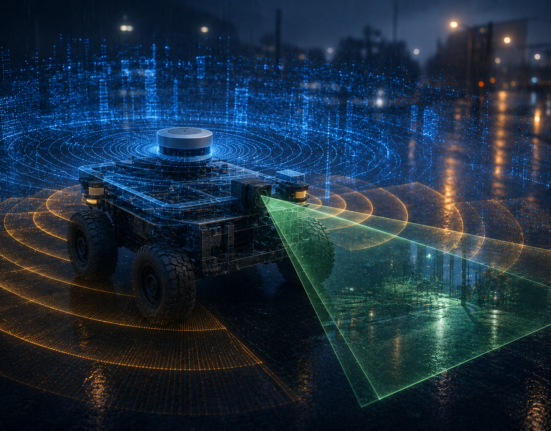
LiDAR, radar, and cameras each solve a different piece of the perception problem, and no single sensor wins outright. LiDAR delivers precise 3D

AI-generated code accumulates technical debt faster and differently than hand-written code. Duplication across generated modules, inconsistent patterns, and dependency bloat compound quietly; measuring

Process mining before automation prevents you from making a broken workflow faster. It maps how work actually happens across systems, exposes rework loops

Generative UI is an approach where an AI system builds the actual structure of an interface at runtime, rather than filling a pre-designed

An AI governance committee only works when it has defined roles, a real cadence, and artifacts to show for its meetings. Most mature

NVIDIA’s share of the Chinese AI chip market fell from over 90% to roughly 50% by early 2026, as US export policy shifted

Most agent tool failures are selection and argument errors, not API errors. The five failure modes ranked by frequency, why tool descriptions are

Quantization trades precision for memory, and the loss is never evenly distributed. What INT8 and INT4 actually cost, why outlier features break naive

The fashion industry, long reliant on intensive manual labor and complex global supply chains, is currently undergoing a seismic shift. As of March

The landscape of robotics has undergone a seismic shift. As of March 2026, the debate over whether robots should have wheels, tracks, or

The global waste crisis is no longer a distant threat; it is an immediate operational and environmental challenge. As of March 2026, the

As of March 2026, the digital landscape has reached a tipping point. The “Dead Internet Theory” once felt like a creepypasta fringe concept,

The transition from passive AI chatbots to active AI agents marks the most significant shift in technology since the dawn of the internet.