Key Takeaways
- The “Human Moat” is essential: As AI lowers the barrier to creating average content, the value of specific, lived human experience increases.
- Algorithms favor consistency, not necessarily quality: Understanding the difference between feeding the machine and feeding your audience is crucial for long-term survival.
- Imperfection is a feature: In a world of polished, synthetic media, rough edges and vulnerability signal humanity and build trust.
- Strategic AI usage: The goal is not to reject AI, but to use it as a scaffold for creativity rather than a replacement for your voice.
- Community over reach: Shifting metrics from vanity numbers (views) to depth metrics (engagement, retention) protects you from algorithmic volatility.
The digital landscape is currently undergoing a seismic shift comparable to the introduction of the internet itself. For over a decade, creators, marketers, and writers have battled algorithms—opaque mathematical rules that dictate who sees what. Now, a new challenger has entered the arena: Generative AI. The result is a perfect storm of saturation. We are seeing an explosion of content that is technically proficient, grammatically perfect, and structurally sound, yet frequently devoid of soul.
This proliferation of synthetic media has led to a widespread feeling of “digital deja vu”—the sense that you have read this article before, seen this image before, or heard this advice before. For creators, the stakes have never been higher. The question is no longer just “How do I get seen?” but “How do I stay real when the internet is becoming increasingly artificial?”
In this guide, “authenticity” refers to the distinct, unreplicable quality of human perspective and voice, while “algorithm” refers to the automated systems (both recommendation engines and generative models) that prioritize engagement and pattern matching over nuance.
Scope of this guide
In Scope:
- Strategies for writers, video creators, and influencers to differentiate themselves.
- Analysis of how algorithms react to AI-generated vs. human content.
- Psychological drivers of human connection in the digital age.
- Practical frameworks for integrating AI without losing your voice.
Out of Scope:
- Technical tutorials on building AI models.
- Legal advice regarding copyright and IP laws (though general principles are mentioned).
- Reviews of specific AI software tools.
The Landscape: The Flood of “Average” and the Crisis of Trust
To understand how to maintain a unique voice, we must first understand the environment we are operating in. We are moving from an era of scarcity (where creating high-quality content was hard) to an era of abundance (where creating average content is instant and free).
The Mechanics of Saturation
Generative AI models are prediction engines. They are trained on vast datasets of human knowledge and creativity. When prompted, they predict the most statistically likely next word, pixel, or note. By definition, they regress to the mean. They produce the “average” of all human output.
This creates a phenomenon often referred to as the “grey goo” of the internet. When everyone uses the same tools to optimize for the same SEO keywords or the same viral hooks, content begins to look and sound identical.
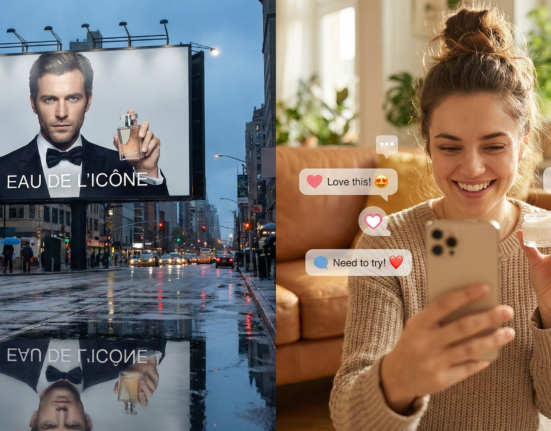
- Visual Homogeneity: Instagram feeds filled with the same mid-journey aesthetic.
- Textual Blandness: LinkedIn posts that follow the exact same “hook-body-lesson” structure, written in a corporate-neutral tone.
- Video Fatigue: TikToks using the same AI voiceovers and stock footage.
The Algorithm’s Dilemma
Historically, algorithms on platforms like YouTube, TikTok, and Google favored consistency and volume. The advice was always “post every day.” However, now that AI allows anyone to post 10, 20, or 50 times a day, the algorithms are facing a signal-to-noise ratio problem.
As of early 2026, we are seeing subtle shifts in how platforms rank content. There is a growing emphasis on “originality signals”—metrics that indicate a user is engaging with a specific person rather than just consuming a topic. Authenticity vs. algorithm is no longer just a philosophical battle; it is a technical ranking factor. If an algorithm detects that users click away from generic AI content faster, it will begin to downrank “perfect” but boring content in favor of “flawed” but engaging human content.
The Trust Deficit
Perhaps the most critical factor is the erosion of trust. When audiences cannot tell if a review, a story, or an opinion is real or hallucinated by a bot, their skepticism skyrockets. This creates a “trust premium.” Creators who can verify their humanity and prove their authentic experience become infinitely more valuable than anonymous publishers.
The “Human Moat”: Why Personal Experience is Uncopyable
In business, a “moat” is a competitive advantage that is difficult for rivals to breach. In the content world, your “Human Moat” is the set of attributes that AI cannot simulate effectively. While an AI can simulate a style, it cannot simulate a life.
1. Context and Nuance
AI models struggle with high-context situations. They can explain what happened, but they often miss why it matters in a specific, messy human context.
- Example: An AI can write a guide on “How to deal with grief.” It will list the five stages and suggest therapy.
- The Human Moat: A human writer shares the specific texture of the armchair they sat in when they received the bad news, the irrational anger they felt at a grocery store clerk, and the non-linear, messy reality of healing. That specific texture is what resonates.
2. Opinion and Risk
Algorithms are risk-averse. Most Large Language Models (LLMs) are fine-tuned to be neutral, safe, and helpful. They avoid taking hard stances or expressing polarizing opinions unless specifically prompted (and even then, they often hedge).
- Authenticity: Humans have skin in the game. When you take a stand, you risk alienation, but you also deepen loyalty. A unique voice is often a polarizing voice. It is the willingness to say, “I think this popular trend is actually harmful,” and explain why based on personal conviction.
3. Imperfection and Vulnerability
We are biologically wired to detect artificiality. In psychology, the “Uncanny Valley” effect describes the revulsion we feel when something looks human but isn’t quite right. A similar effect happens with content. Perfect grammar, perfect lighting, and perfect pacing can feel sterile.
- The Glitch as a Feature: A slight stutter in a video, a typo in a newsletter that proves it wasn’t copy-pasted, a photo that isn’t perfectly composed—these are “proof of life” signals. They tell the audience, “A person made this.”
4. Taste and Curation
Generative AI is a generator; it is not a tastemaker. It doesn’t know what is “cool,” “moving,” or “important” until humans have already labeled it as such.
- The Curator’s Role: Your unique voice isn’t just what you create; it’s what you choose not to create. It’s what you recommend. It’s your filter on the world. Curation is an act of judgment that requires human experience.
Strategies for Maintaining a Unique Voice
Standing out requires a deliberate strategy to inject humanity into every piece of content. Here is a framework for maintaining authenticity vs. algorithm pressures.
1. The “I” Factor: Radical Subjectivity
The easiest way to differentiate your content is to make it impossible to separate the information from the messenger.
- Shift from “How-To” to “How I”: Instead of writing “How to launch a product,” write “How I lost $5,000 launching my first product and what I learned.” The former is a commodity; the latter is a story.
- Include “Useless” Details: AI focuses on efficiency. It strips away the fluff. But in storytelling, the “fluff”—the sensory details, the weather, the smell of coffee, the background noise—is what creates immersion.
- Audit for Voice: Read your content aloud. Does it sound like you speaking to a friend, or does it sound like a brochure? If you removed your name from the byline, would a reader know it was you?
2. Build Parasocial Depth, Not Just Width
Algorithms encourage “width”—reaching millions of people for three seconds each. Authenticity requires “depth”—reaching fewer people but holding their attention for minutes or hours.
- Inside Jokes and Lore: Create a shared language with your audience. Recurring themes, inside jokes, and references to past content create a sense of community that a one-off viral video cannot match.
- Behind the Scenes: Show the process, not just the result. The “making of” is often more humanizing than the final product because it shows effort, struggle, and decision-making.
3. Divergent Thinking vs. Convergent Prediction
AI excels at convergent thinking—taking disparate data and finding the most likely answer. Humans excel at divergent thinking—making illogical leaps, connecting unrelated concepts, and using metaphor.
- The Metaphor Test: Use analogies that are weird, specific, or drawn from your unique hobbies. If you are a marketer who loves gardening, explain marketing funnels using soil pH and composting metaphors. An AI is unlikely to make that specific connection unless prompted, and even then, it won’t have the lived passion behind it.
4. Opinionated Formatting
Even the way you structure your content can be a signature.
- Visual Voice: Use a specific color palette, font hierarchy, or editing style that defies the “best practices” of the moment.
- Structural Risks: Start a video in the middle of a sentence. Write a blog post that is one long, breathless paragraph followed by a list. Break the rules that the algorithm (and the AI training data) follows.
Navigating the “Sameness” Trap: Common Pitfalls
In the quest for growth, many creators inadvertently kill their unique voice by optimizing too heavily for the machine. Here are the traps to avoid.
The SEO-First Trap
Writing exclusively for search engines is a dangerous game in the AI era. If you write purely to answer a query like “best running shoes,” you are competing directly with AI overviews (like Google’s AI Overviews or ChatGPT Search) that can answer that question instantly.
- The Fix: Target “opinion-based” or “experience-based” queries. Instead of “best running shoes,” target “why I regret buying the [Brand X] shoes.”
The “Trend-Jacking” Burnout
Chasing trending audio on TikTok or trending topics on X (formerly Twitter) forces you into a box. You are performing someone else’s script.
- The Fix: If you participate in a trend, subvert it. Do the opposite of what everyone else is doing. Use the trend as a vehicle for your specific niche, not just to get views.
The Over-Polish Problem
Using AI tools to smooth out every rough edge of your work can leave it feeling slippery and unmemorable.
- The Fix: Practice “selective roughness.” If you use AI to edit a video, manually go back and add in a raw take. If you use AI to grammar check, keep your unique idioms or sentence fragments if they add character.
Tools and Workflows: Using AI to Support, Not Replace
The argument of “authenticity vs. algorithm” does not mean you must reject technology. It means you must remain the architect while the AI acts as the carpenter.
The Sandwich Method
A popular workflow for maintaining voice while using AI efficiency:
- Human (Top Bun): You generate the core idea, the angle, the hook, and the primary personal anecdote. You define the “soul” of the piece.
- AI (Meat/Cheese): You use AI to outline, research data points, summarize lengthy transcripts, or suggest 10 variations of a headline. This is the heavy lifting.
- Human (Bottom Bun): You edit the output heavily. You rewrite the intro and conclusion. You inject sensory details. You verify facts. You ensure the tone matches your brand.
Use AI for Divergence, Not Convergence
Instead of asking AI “Write an article about X,” ask it, “What are 10 counter-intuitive perspectives on X that most people disagree with?” Use AI to challenge your thinking, not to do the thinking for you.
Voice Training
Advanced creators are now training local AI models or using “custom instructions” in tools like ChatGPT to mimic their specific style.
- How to do it: Feed the AI your best 50 pieces of content. Ask it to analyze your tone, sentence structure, and recurring themes. Create a “style guide” prompt that you use every time you interact with the bot. This ensures that even the AI-assisted parts of your workflow start from a baseline of your voice.
Case Studies: Authenticity in Action
Let’s look at hypothetical examples of how this plays out in different creative fields.
The Writer: Substack vs. SEO Blog
- The Scenario: A finance writer wants to cover “How to save money.”
- The Algorithmic/AI Approach: A 2,000-word guide titled “10 Tips to Save Money in 2026.” It covers budgeting apps, cutting coffee, and bulk buying. It reads exactly like the top 10 results on Google. It is helpful but forgettable.
- The Authentic Voice: The writer publishes a newsletter titled “The day I realized my $5 latte was the only thing keeping me sane.” They argue against the common advice of cutting small luxuries, referencing their own struggle with burnout. They offer a counter-intuitive budgeting philosophy based on psychology, not math.
- The Result: The SEO blog gets traffic but high bounce rates. The newsletter gets replies, shares, and loyal subscribers who buy the writer’s book later.
The Visual Artist: Midjourney vs. Process Video
- The Scenario: An illustrator wants to grow on Instagram.
- The Algorithmic/AI Approach: They generate stunning, complex fantasy landscapes using Midjourney and post them daily. The images are beautiful but lack a signature style. Comments are mostly “What prompt did you use?”
- The Authentic Voice: The artist uses AI to generate reference images, but then hand-paints the final piece. They post a Reel showing the time-lapse, zooming in on the brushstrokes, and talking about the frustration of getting the lighting right.
- The Result: The audience connects with the labor and the skill, not just the image. The artist builds a brand around their talent, protecting them from being replaced by a prompt engineer.
The Influencer: Polished Lifestyle vs. Reality
- The Scenario: A travel vlogger in Bali.
- The Algorithmic/AI Approach: Drone shots, trending tropical house music, perfect sunsets, AI-enhanced color grading. It looks like a travel agency commercial.
- The Authentic Voice: The vlogger films the beautiful sunset but also films the reality of the traffic jam to get there, the bug bites, and a funny interaction with a local vendor. They use their real voice for narration, not a text-to-speech bot.
- The Result: Viewers trust the recommendations because they see the vlogger as a real person navigating a real world, not a curated highlight reel.
The Psychology of Connection: Why We Trust Humans
At our core, humans are social animals evolved to connect with other humans, not data processing units. This evolutionary biology is the ultimate defense against AI encroachment.
Theory of Mind
“Theory of Mind” is the ability to attribute mental states—beliefs, intents, desires, emotions—to oneself and others. When we consume content, we are subconsciously looking for the mind behind it. We look for intent.
- When we read a novel, we are engaging in a communion with the author’s mind.
- When we watch a vlog, we are simulating a social interaction.
AI has no intent. It has no desire to communicate; it simply executes a command. Subconsciously, audiences can feel this lack of intent. It manifests as a lack of “subtext.” Human communication is layered; we say things we don’t mean, we use irony, we leave things unsaid. AI tends to be explicitly literal. Preserving subtext and intent is key to maintaining a voice that feels human.
The Value of Scarcity
In economics, value is driven by scarcity. When content is infinite, attention is scarce. But trust is even scarcer. Authenticity signals to the audience that you are a scarce resource—a unique individual with a unique perspective—rather than a commodity that can be generated at scale.
Future-Proofing Your Creativity
As we look toward 2030, the battle between authenticity vs. algorithm will likely intensify. AI will get better at mimicking human affectations (stutters, pauses, emotional tone). So, how do you future-proof?
1. Hybridize Your Presence
Don’t rely solely on digital, algorithm-mediated platforms.
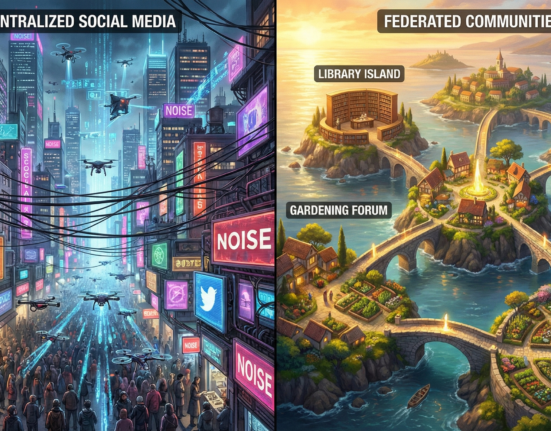
- Own Your Distribution: Email lists, communities (Discord, Slack), and direct subscriptions are safer than social media followings. Algorithms can’t downrank an email in a user’s inbox (mostly).
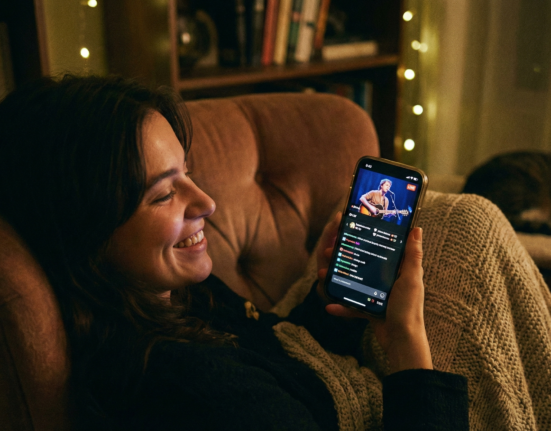
- Offline/Live Elements: Live streaming, in-person meetups, and physical merchandise are high-authenticity channels. You cannot deepfake a handshake or the energy of a live room easily.
2. Double Down on Brand “Point of View” (POV)
Information is becoming a commodity. POV is the asset.
- People don’t read the news just for facts (AI can summarize facts). They read specific columnists for their take on the facts.
- Develop a worldview. What do you believe that others don’t? What is your philosophy? Your content should be the vehicle for your philosophy.
3. Become a Cyborg Creator
The creators who survive will not be those who reject AI, nor those who let AI do everything. They will be the “Cyborgs”—creators who use AI to amplify their human intent. They will use AI to handle the drudgery so they can spend more energy on the high-touch, high-empathy parts of creation.
Conclusion
The “Authenticity vs. Algorithm” debate is not a binary choice. You cannot ignore the algorithm entirely if you want to be seen, but you cannot surrender your authenticity if you want to be remembered.
The winning strategy for the next decade is to view the algorithm as a distribution mechanism, not a creative director. Use it to get in front of people, but use your unique, flawed, messy, and deeply human voice to keep them there. In a sea of infinite, perfect, machine-generated noise, the most disruptive thing you can be is human.
Next Steps:
- Audit your last 5 pieces of content: Is there a personal story or specific opinion in them? If not, rewrite one using the “Sandwich Method.”
- Identify one “imperfection” you usually edit out (a quirk, a specific visual style) and deliberately leave it in your next post.
- Shift one metric focus from “Views” to “Comments/Replies” to prioritize depth over width.
FAQs
Q: Can I use AI tools and still be considered authentic? A: Yes. Authenticity is about the source of the ideas and the intent behind the connection. If you use AI to check grammar, brainstorm topics, or organize your thoughts, but the experiences and opinions are yours, you remain authentic. It becomes inauthentic when you let AI generate the core substance and pass it off as your own thinking.
Q: Doesn’t the algorithm punish content that isn’t perfectly polished? A: Not necessarily. While high production value helps, platforms like TikTok and YouTube have shown a massive shift toward “lo-fi” content. Audiences often associate high polish with ads or corporate media. Raw, handheld footage or conversational writing often has higher retention rates because it feels more personal and trustworthy.
Q: How do I find my “unique voice” if I’m just starting out? A: Your voice is found in the intersection of what you know (expertise), what you believe (values), and how you speak (personality). Don’t try to “find” it abstractly. Start creating. Over time, look at what resonates with people and what felt natural to create. Your voice emerges through the act of doing, not planning.
Q: Is the “Dead Internet Theory” real? A: The “Dead Internet Theory” suggests that a large percentage of web content is bot-generated. While the internet isn’t “dead,” it is increasingly “synthetic.” Reports indicate that a significant portion of web traffic and content creation is non-human. This makes human verification and personal branding more economically valuable than ever before.
Q: How can I tell if my writing sounds like AI? A: AI writing often uses repetitive sentence structures, excessive transition words (e.g., “Moreover,” “Furthermore,” “In conclusion”), and lacks specific sensory details. It tends to be “hedgy” and overly neutral. If your writing feels flat, safe, and could apply to anyone, it might sound like AI. Try injecting strong opinions (“I hate…”) or specific memories (“Last Tuesday…”) to break the pattern.
Q: Will AI eventually be able to fake authenticity perfectly? A: AI may simulate the style of authenticity (e.g., adding “ums” or slang), but it cannot simulate a shared reality. It doesn’t live in the physical world, age, or face consequences. Humans connect over shared struggles and mortality. Even if AI mimics the style, the knowledge that there is no human behind it usually breaks the emotional bond once discovered.
References
- Chayka, K. (2024). Filterworld: How Algorithms Flattened Culture. Doubleday. (Explores the impact of algorithmic homogeneity on culture and art).
- Newport, C. (2024). “The Rise of the Human Moat.” The New Yorker. (Discusses the economic value of human-only capabilities in an AI world).
- YouTube Official Blog. (2023). “Updates to Search and Discovery.” (Documentation on ranking signals prioritizing satisfaction and engagement over pure clicks).
- Edelman Trust Barometer. (2024). “Trust in Technology.” Edelman. (Annual report highlighting the decline in trust regarding synthetic media and AI).
- Instagram Creators. (2025). ” ranking explained.” Instagram.com. (Official guidance on how original content is prioritized over reposted or synthetic aggregations).
- Gartner. (2025). “Predications for GenAI Impact on Social Media.” Gartner Research. (Analysis of content saturation and the shift toward community-based platforms).
- Lanier, J. (2018). Ten Arguments for Deleting Your Social Media Accounts Right Now. Henry Holt and Co. (Foundational text on the manipulative nature of algorithms).
- Pew Research Center. (2024). “Public Attitudes Toward AI in Content Creation.” Pew Research. (Statistics on consumer skepticism regarding AI-generated news and entertainment).