| Myth | Reality |
|---|---|
| If you built good guardrails, you do not need a post-hoc audit trail. | Guardrails reduce the frequency of bad outcomes but cannot eliminate them; once an agent acts autonomously, only a complete audit trail lets anyone reconstruct why a specific decision happened. |
| An application log of API calls is the same thing as an audit trail. | A standard application log captures what happened; an agentic audit trail must also capture the reasoning and intermediate plan that led the agent to call that API in the first place. |
| Post-hoc accountability is only relevant after something goes wrong. | Regular post-hoc review of routine agent decisions, not just incidents, is what lets an organization catch drift and near-misses before they become real failures. |
| Human-in-the-loop accountability models transfer directly to fully autonomous agents. | Human-in-the-loop accountability assumes a person approved the action before it happened; fully autonomous agents require a fundamentally different, retrospective accountability model. |
A Different Accountability Problem Than Guardrails or Human Sign-Off
Most existing writing on agentic AI risk focuses on prevention: how do you design guardrails so an autonomous agent never takes a catastrophic action in the first place, or how do you keep a human in the loop so nothing consequential happens without a person clicking approve. Both of those are legitimate and necessary design questions. But they leave a gap that is becoming impossible to ignore as agentic systems take on more real-world responsibility: what happens after an agent has already acted, entirely on its own, and something needs to be explained, defended, or corrected?
This is a distinct problem from guardrail design. A guardrail is a preventive control, built before the agent acts, intended to stop a specific class of bad outcome from happening. A human-in-the-loop process is a point-in-time control, requiring approval at the moment of decision. Post-hoc accountability is neither of those; it is the capability to go back, after an agent has completed a multi-step task with no human reviewing any individual step, and reconstruct exactly what happened, why the agent believed it was the right course of action, and whether a reasonable agent, held to the standard we would apply to a human employee in the same role, would have acted differently.
This distinction matters because a growing share of real deployments genuinely do not have a human reviewing each decision in real time. Multi-step agentic workflows, an agent that plans a task, calls several tools, adjusts its plan based on intermediate results, and completes the task, are explicitly designed to remove humans from the loop for efficiency. Auditing that kind of system requires different tooling and a different mental model than auditing a system where a human approved every step.
What a Post-Hoc Audit Trail Actually Needs to Contain
An audit trail built for traditional software, the kind that logs which function was called with which parameters at which timestamp, is necessary but nowhere near sufficient for an autonomous agent. The reason is straightforward: traditional logs capture what happened, but they do not capture why the system believed that action was correct. For an agent that plans, reasons, and adapts, the “why” is exactly what an auditor needs to evaluate whether the decision was reasonable.
Full reasoning traces
The most important and most novel component is a record of the agent’s intermediate reasoning, sometimes called a chain-of-thought log, capturing the steps the agent went through to arrive at a plan before executing it. This is not the same as a summary written after the fact; it needs to be the actual reasoning generated during the decision process, timestamped and tied to the specific action it led to. Without this, an auditor can see that an agent transferred funds or sent an email, but has no way to evaluate whether the underlying judgment was sound.
Tool-call logs
Every external action an agent takes, querying a database, calling an API, browsing a webpage, executing code, needs to be logged with its exact parameters, the response received, and how that response fed back into the agent’s next reasoning step. In multi-agent or multi-tool workflows, this quickly becomes the largest volume of data in the trail, which is why structured, queryable logging matters more than raw text dumps.
Decision provenance
Provenance means being able to trace a final action all the way back through every intermediate step that contributed to it: which prompt or goal initiated the task, which plan the agent formed, which tool calls executed that plan, and which specific piece of retrieved information or intermediate result changed the agent’s course along the way. Some practitioners describe this as an action provenance graph, a structured, linked representation rather than a flat chronological log, because a genuinely useful post-hoc audit needs to answer “which upstream fact caused this downstream action” quickly, not require an investigator to read every line in order.
Authorization and identity context
A post-hoc audit also needs to establish which agent, acting under whose authorization, took the action, particularly in organizations running many agents with different permission levels. Emerging governance frameworks increasingly require each agent to carry a verifiable digital identity precisely so that an audit can answer “who authorized this agent to have access to this system” as cleanly as it can answer “what did the agent do.”
| Audit trail component | What it captures | Why guardrail logs alone miss it |
|---|---|---|
| Reasoning trace | The agent’s intermediate judgment and plan before acting | Standard application logs record actions taken, not the reasoning that produced them |
| Tool-call log | Every external call made, its parameters, and the response received | Guardrails typically only log blocked or flagged calls, not the full sequence of permitted ones |
| Decision provenance graph | The linked chain from initiating goal through intermediate results to final action | Flat chronological logs make it slow to trace which upstream fact caused a downstream action |
| Authorization and identity context | Which agent acted, under whose delegated authority, with what permission scope | Agents are often treated as generic service accounts with no dedicated identity or accountability record |
How This Differs From Human-in-the-Loop Accountability Models
Traditional accountability models for automated decisions, including most existing “responsible AI” governance guidance, are built around the assumption that a human reviewed and approved the consequential step. Under that model, accountability is largely established at the moment of approval: a named person signed off, so if something goes wrong, there is a clear individual who exercised judgment and can explain the decision. This is the model behind most existing human-in-the-loop guidance, including sector-specific applications such as legal discovery workflows, where a human attorney remains responsible for reviewing flagged documents before anything is produced or withheld.
Fully autonomous agentic workflows break this model entirely, not because they remove accountability, but because they move it to a different point in time. Nobody approved the specific decision before it happened, so accountability has to be reconstructed afterward, from the evidence the system left behind. This has several concrete implications that a human-in-the-loop framework does not need to worry about.
- The standard of evaluation changes. Instead of asking “did the approving human have enough information to make a good decision,” a post-hoc audit asks “would a reasonable agent, held to a defined competence standard, have acted this way given what it knew at the time.”
- Evidence must be captured automatically, not gathered by a reviewer. A human-in-the-loop process generates a natural paper trail because someone had to review something before clicking approve. A fully autonomous agent generates no such trail unless the system is specifically engineered to log its reasoning, since nothing forces a pause for evidence collection.
- Volume and velocity are different. A human approving individual decisions naturally throttles the pace of action to human reading speed. An autonomous agent can execute hundreds of decisions per hour, which means the audit infrastructure has to scale to a volume that a purely human-reviewed process never had to handle.
- Responsibility becomes organizational rather than individual. Where a human-in-the-loop model can often point to a specific approver, post-hoc accountability for a fully autonomous agent usually points back to the organization that deployed it, its configuration choices, and whoever set its operating boundaries, which changes how liability and remediation get assigned.
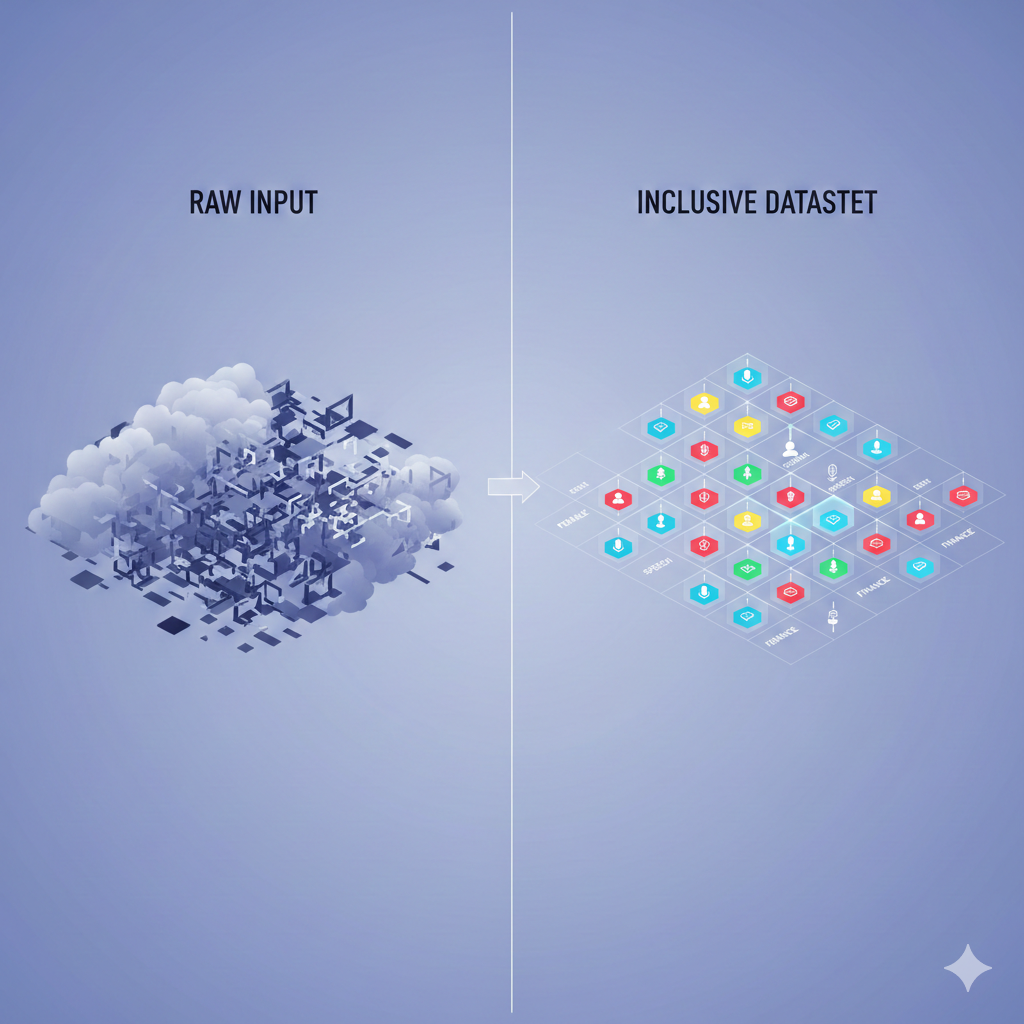
Two accountability models, side by side
On one side, a human-in-the-loop workflow where approval happens before the action and accountability is established at that moment. On the other, a fully autonomous workflow where the action happens first and accountability is reconstructed afterward from a captured reasoning trace, tool-call log, and provenance graph.
Emerging Standards and Tooling for Agentic Audit
The tooling and standards landscape for this specific problem, auditing what an autonomous agent already did, is still forming, but several concrete efforts are worth knowing about. The NIST AI Risk Management Framework already emphasizes “traceability” as a core property, meaning the ability to reconstruct the sequence of events leading to an AI-driven outcome, and the NIST Center for AI Standards and Innovation launched an AI Agent Standards Initiative specifically to address the gap where agents are treated as generic service accounts without dedicated identity, authorization, or accountability controls.
Outside the United States, Singapore’s Model AI Governance Framework for Agentic AI was among the first comprehensive government frameworks focused specifically on autonomous agents, requiring each agent to carry a verifiable digital identity and an audit trail documenting which agent acted under whose authorization. Industry practice is converging around a similar shape even where no regulation yet requires it: structured, queryable logs of reasoning and tool calls, an accountability registry mapping agents to the humans or teams responsible for their configuration, and a defined escalation protocol for when an audit surfaces a problem.
On the tooling side, open-source and commercial platforms increasingly offer purpose-built agent observability layers, distinct from general application monitoring, specifically designed to capture chain-of-thought reasoning alongside tool invocations in a structured, searchable format rather than as unstructured text logs that are technically complete but practically unreviewable at scale.
| Framework or initiative | Jurisdiction or body | Core relevance to post-hoc audit |
|---|---|---|
| NIST AI Risk Management Framework | United States | Establishes traceability as a required property for reconstructing AI-driven outcomes after the fact |
| NIST AI Agent Standards Initiative | United States, Center for AI Standards and Innovation | Addresses the lack of dedicated identity, authorization, and accountability controls for agents |
| Model AI Governance Framework for Agentic AI | Singapore, IMDA | Requires verifiable agent identity and an audit trail of which agent acted under whose authorization |
| EU AI Act, high-risk system obligations | European Union | Requires logging and human oversight capability for autonomous systems classified as high risk |
Building a Post-Hoc Audit Capability: A Practical Sequence
Organizations deploying agents that act without real-time human review generally need to build this capability in roughly the following order, since each step depends on the infrastructure built in the previous one.
- Instrument reasoning capture at the model layer. Ensure the agent’s intermediate reasoning is actually being generated and retained, not discarded once the final action executes, since you cannot audit a reasoning trace that was never captured.
- Structure the tool-call log for queryability. Move beyond flat text logs toward a structured format that lets an investigator filter by agent, time range, tool, or outcome without reading every entry in sequence.
- Build the provenance graph, not just the log. Link reasoning steps, tool calls, and outcomes into a connected structure so an auditor can trace a specific downstream action back to the upstream fact or plan that produced it.
- Establish an accountability registry. Maintain a clear mapping of which team or individual owns each agent’s configuration and permission scope, so a post-hoc review has someone to engage when a decision needs explaining.
- Define the “reasonable agent” standard in advance. Write down, before an incident occurs, what standard of competence and judgment an agent in a given role is expected to meet, so a post-hoc review has a benchmark rather than relying on hindsight alone.
- Run periodic audits on routine decisions, not just incidents. Sample ordinary agent decisions on a regular schedule to catch drift and near-misses before they escalate into the kind of failure that forces a reactive investigation.
Common mistake
Treating the guardrail violation log as the audit trail. Many teams only retain detailed logs for actions that were blocked or flagged by a guardrail, on the assumption that permitted actions do not need scrutiny. This misses the entire point of post-hoc accountability: the actions worth auditing most closely are often the ones that passed every guardrail check yet still turned out, in hindsight, to reflect flawed reasoning. If your logging only gets detailed when something is blocked, you cannot investigate the much larger set of actions that were allowed to proceed.
What worked
Building the provenance graph as a first-class data structure, not an afterthought derived from log files after an incident. Teams that instrument agents to emit structured, linked reasoning and tool-call records from day one can answer “why did this happen” in minutes during a real review. Teams that try to reconstruct provenance retroactively from unstructured text logs after an incident routinely spend days doing forensic archaeology that the upfront instrumentation would have made unnecessary.
Why This Is Not the Same Conversation as Guardrail Design
It is worth being explicit about the boundary here, because the two conversations are often blended together in a way that leaves organizations with neither a solid preventive design nor a solid post-hoc capability. Guardrail design asks how to constrain an agent’s available actions and permissions so that a bad outcome becomes structurally difficult, through sandboxing, tool-use permissions, and rate limiting, before the agent ever runs. That is a valuable and necessary discipline, but it answers a different question than the one this article addresses.
Post-hoc accountability assumes the agent already had the permission and opportunity to act, acted without a human reviewing that specific step, and asks what evidence exists to evaluate the decision after the fact. An organization can have excellent guardrails and still face a moment where an agent, operating entirely within its permitted boundaries, made a judgment call that turned out badly, or where a regulator, court, or internal stakeholder simply needs to understand why an outcome occurred. In both cases, guardrails offer no help, because the action was never blocked in the first place. Only a genuine audit trail, capturing reasoning, tool calls, and provenance, can answer the question at that point.
- Reasoning traceThe captured record of an agent’s intermediate judgment and plan, generated during the decision process itself rather than reconstructed afterward.
- Action provenance graphA structured, linked representation connecting an initiating goal through intermediate reasoning, tool calls, and results to a final action, enabling fast root-cause tracing.
- Accountability registryA maintained mapping of which team or individual owns each deployed agent’s configuration and permission scope, used when a post-hoc review needs a human point of contact.
- Reasonable agent standardA predefined benchmark for the competence and judgment expected of an agent in a given role, used to evaluate a decision in hindsight rather than relying on pure outcome-based judgment.
- Agent identityA verifiable, distinct identifier for an autonomous agent, distinguishing it from a generic service account so its actions and authorizations can be traced individually.
Key Takeaways
- Post-hoc accountability for agentic AI means reconstructing why an autonomous agent acted the way it did, after the fact, when no human reviewed the specific decision.
- This is distinct from guardrail design, which is preventive, and from human-in-the-loop models, which establish accountability at the moment of approval rather than afterward.
- A genuine audit trail needs full reasoning traces, structured tool-call logs, a linked decision provenance graph, and verifiable agent identity and authorization context.
- Standard application logs capture what an agent did but not why it believed the action was correct, which is exactly what a post-hoc audit needs to evaluate.
- Emerging frameworks including the NIST AI Agent Standards Initiative and Singapore’s Model AI Governance Framework for Agentic AI are beginning to formalize identity and audit-trail requirements for autonomous agents.
- The most common failure is logging detail only for actions a guardrail blocked, leaving the much larger set of permitted-but-flawed decisions with no usable audit evidence.
- Building the provenance graph as a first-class data structure from the start is far more effective than trying to reconstruct one from unstructured logs after an incident.
Glossary
- Post-hoc audit
- A review conducted after an autonomous agent has already acted, aimed at reconstructing and evaluating the decision using captured evidence rather than real-time approval.
- Reasoning trace
- A timestamped record of an agent’s intermediate thinking and planning steps, captured during the decision process and linked to the resulting action.
- Tool-call log
- A structured record of every external action an agent takes, including the exact parameters used and the response received from each system or API.
- Decision provenance
- The traceable chain connecting a final agent action back through every intermediate reasoning step, tool call, and piece of information that contributed to it.
- Human-in-the-loop
- An accountability model in which a human must review and approve a decision before it is executed, establishing accountability at the point of approval.
- Agent accountability registry
- An internal record mapping each deployed agent to the team or individual responsible for its configuration, permissions, and post-hoc review.
FAQs
What makes post-hoc audit different from having good guardrails?
Guardrails are preventive controls designed to stop a bad action before it happens. Post-hoc audit assumes the action already occurred, often entirely within permitted boundaries, and focuses on reconstructing and evaluating the reasoning behind it after the fact. An organization can have strong guardrails and still need a robust audit trail, because guardrails do nothing to explain a permitted decision that turns out to have been flawed.
Why is a standard application log not enough for auditing an AI agent?
A standard application log typically records that an action occurred, such as an API call with certain parameters, but not the reasoning that led the agent to take that action. Auditing an autonomous decision requires understanding the “why,” which means capturing the agent’s intermediate reasoning trace alongside the technical log of what it actually did.
What is a decision provenance graph?
It is a structured, linked representation connecting an agent’s final action back through the intermediate reasoning steps, tool calls, and retrieved information that produced it. Unlike a flat chronological log, a provenance graph lets an investigator quickly trace which upstream fact or decision caused a specific downstream outcome.
How does accountability change when no human reviews a decision in real time?
Accountability moves from the moment of approval to a retrospective reconstruction. Instead of a named human who signed off explaining their reasoning, an organization must rely on captured evidence, reasoning traces, tool-call logs, and provenance data, to establish after the fact why the agent acted as it did and whether that judgment met an expected standard.
What is the “reasonable agent” standard mentioned in agentic audits?
It refers to a predefined benchmark describing the competence and judgment an agent in a specific role should meet, established before deployment rather than invented after an incident. Post-hoc audits use this standard to evaluate whether a specific autonomous decision was reasonable given what the agent knew at the time, similar to how professional standards are used to evaluate human judgment calls.
Are there regulations that specifically require agentic audit trails?
Requirements are still emerging rather than universal. Singapore’s Model AI Governance Framework for Agentic AI requires verifiable agent identity and an audit trail of authorization, the NIST AI Risk Management Framework emphasizes traceability as a core property, and the EU AI Act requires logging and human oversight capability for autonomous systems classified as high risk.
What is the most common mistake organizations make with agent audit trails?
The most common mistake is only logging detailed information for actions that a guardrail blocked or flagged, while permitted actions receive minimal logging. This leaves the largest and often most consequential category, decisions that passed every guardrail check but still reflected flawed reasoning, with no usable evidence for later review.
How is this different from the human-in-the-loop model used in legal discovery workflows?
Human-in-the-loop legal discovery workflows keep a human reviewing and approving specific outputs, such as privilege determinations, before they take effect, which establishes accountability at that approval step. Post-hoc audit addresses workflows where no such real-time review happens at all, requiring the accountability to be reconstructed entirely from captured evidence after the agent has already acted.
References
- Fast.io, “AI Agent Audit Trail: Complete Guide for 2026”
- Zylos Research, “AI Agent Governance and Compliance in 2026: Frameworks, Audit Trails, and the Regulatory Reckoning”
- Collibra, “AI Audit Trails: What to Log for Models and Agents”
- ARMO, “What to Log for AI Agent Activity: The Minimum Viable Audit Trail”
- “Reasoning Provenance for Autonomous AI Agents,” arXiv preprint 2603.21692
- “The Eticas AI Risk Taxonomy: Open Infrastructure for Operationalizing AI Audits,” arXiv preprint 2607.02201
- NIST, AI Risk Management Framework (AI RMF 1.0)
- Singapore Infocomm Media Development Authority, Model AI Governance Framework for Agentic AI
For related reading on this site, see our companion pieces on building preventive guardrails for agentic autonomy, human-in-the-loop review in agentic legal discovery, what a good AI transparency report should disclose, the underlying architecture of agentic AI systems, building an AI incident response process, and tooling for machine learning fairness auditing.