
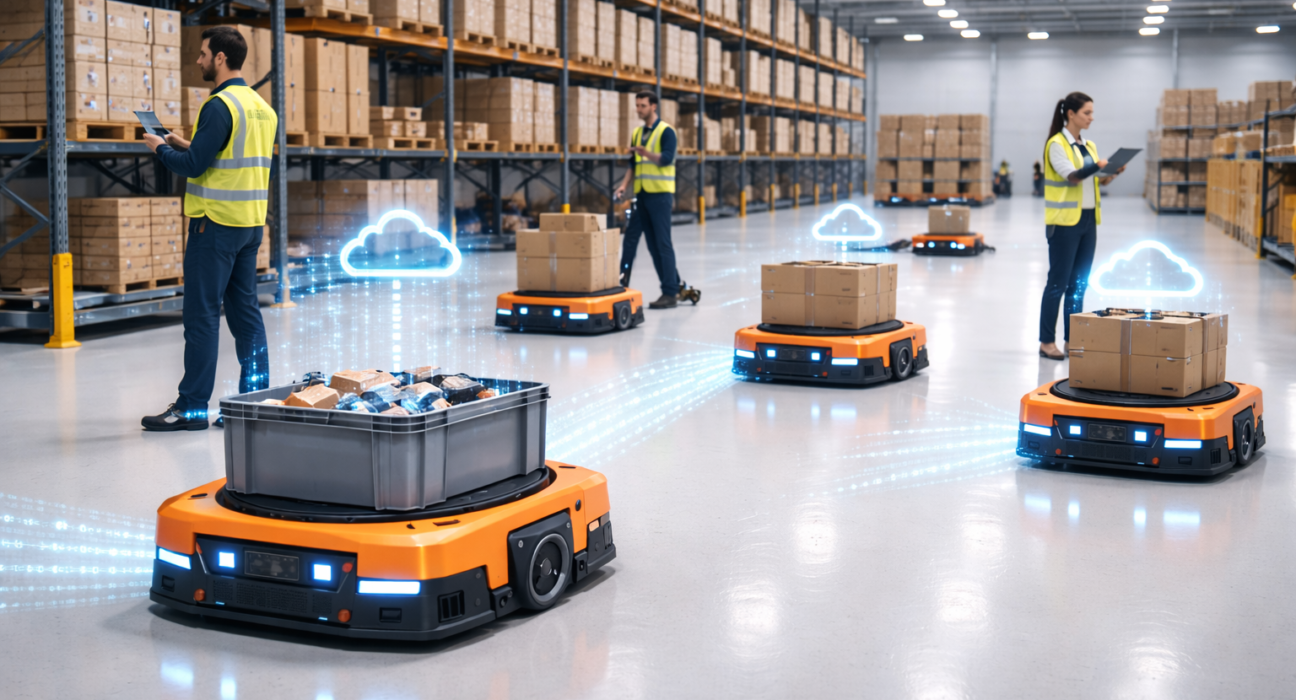
For decades, the word “robotics” conjured images of massive, multi-million dollar automotive assembly lines accessible only to the world’s largest corporations. However, as of March 2026, the landscape of industrial and commercial automation has undergone a seismic shift. Robotics as a Service (RaaS) is a business model where companies lease robotic hardware and integrated software through a subscription or pay-as-you-go arrangement, rather than purchasing the equipment outright. This democratization of technology allows small to medium-sized enterprises (SMEs) to compete on a global scale.
Key Takeaways
- Zero Upfront Capital: RaaS shifts the financial burden from high-risk capital expenditure (CAPEX) to manageable operating expenses (OPEX).
- Scalability: Businesses can increase or decrease their robotic fleet based on seasonal demand without being stuck with idle hardware.
- Maintenance Included: Most RaaS contracts include ongoing software updates, cloud monitoring, and physical repairs.
- Lower Technical Barrier: Providers often handle the complex integration, meaning you don’t need a PhD in robotics to start automating.
Who This Is For
This guide is designed for Operations Managers, CTOs, and small business owners who feel “priced out” of traditional automation. Whether you manage a 50,000-square-foot fulfillment center, a regional hospital, or a precision machine shop, this article provides the roadmap to understanding how RaaS can modernize your workflow without breaking the bank.
What Exactly is Robotics as a Service?
To understand RaaS, one must look at the evolution of Software as a Service (SaaS). Just as we no longer buy physical discs to install software—instead paying monthly for tools like Microsoft 365 or Salesforce—RaaS applies the same logic to physical machines.
In a traditional model, a company buys a robot, pays for a third-party integrator to set it up, and then hires specialized engineers to maintain it. If the robot becomes obsolete in three years, the company loses the investment.
With Robotics as a Service, the “service” aspect is the priority. You are not just paying for a hunk of metal; you are paying for an outcome—whether that is 500 pallets moved per day, 10,000 square feet of floor scrubbed, or 1,000 welds completed. The provider owns the machine, handles the cloud-based “brain” of the robot, and ensures the machine stays operational. If a robot breaks, the provider swaps it out. If the software improves, the robot gets an over-the-air update.
The Components of a RaaS Ecosystem
- The Physical Robot (Hardware): Sensors, actuators, and the chassis (e.g., a cobot arm or an AMR).
- The Cloud Infrastructure: The remote server that handles complex pathfinding, data processing, and AI learning.
- The Subscription Management: The platform where the user monitors performance, manages billing, and requests support.
The Financial Revolution: CAPEX vs. OPEX
The most significant barrier to automation has always been the “Iron Triangle” of cost, risk, and technical expertise. RaaS shatters this triangle by reclassifying the cost of robotics.
Understanding the Shift
- Capital Expenditure (CAPEX): Traditionally, buying a robot required a massive lump sum payment. This is a high-risk move because the ROI (Return on Investment) might take five to seven years to realize. For many SMEs, tying up that much cash in a depreciating asset is a non-starter.
- Operating Expenditure (OPEX): Under RaaS, the cost of the robot is treated like a utility—much like electricity or internet. This comes out of the monthly budget. Because there is no massive upfront cost, the ROI can often be realized in the very first month of operation.
A Practical Example
Imagine a mid-sized warehouse needing three Autonomous Mobile Robots (AMRs) to assist with picking.
- Purchase Model: $150,000 upfront + $20,000 for installation + $15,000 annual maintenance.
- RaaS Model: $0 upfront + $4,500 monthly subscription.
As of 2026, the RaaS model allows that warehouse to keep $170,000 in the bank for other growth initiatives while enjoying the immediate labor-saving benefits of the robots.
Types of Robots Available via RaaS
Not every robot is a candidate for the service model, but the list is growing rapidly. Here are the primary categories dominating the RaaS market today:
1. Autonomous Mobile Robots (AMRs)
Unlike older Automated Guided Vehicles (AGVs) that required magnetic strips on the floor, AMRs use LiDAR and AI to navigate dynamic environments. They are the “poster child” for RaaS in logistics.
- Use Case: Moving bins in an e-commerce fulfillment center.
- Benefit: They can work 24/7 and don’t need breaks, making them perfect for high-volume seasons like the holidays.
2. Collaborative Robots (Cobots)
Cobots are designed to work safely alongside humans without the need for safety cages.
- Use Case: A human worker places a part, and the cobot performs a repetitive screw-driving task or a precise weld.
- Benefit: They are easily “retrained” for different tasks, making them highly versatile for high-mix, low-volume manufacturing.
3. Service and Hospitality Robots
You may have seen these in hotels or hospitals.
- Use Case: Robots delivering linens to rooms or transporting hazardous medical waste.
- Benefit: They free up human staff to focus on patient/guest care, which requires empathy and complex problem-solving.
4. Agricultural Robots
From autonomous tractors to fruit-picking drones, RaaS is solving the chronic labor shortages in farming.
- Use Case: A drone fleet that monitors crop health via multispectral imaging.
- Benefit: Farmers only pay for the service during the growing and harvest seasons, rather than owning expensive machinery that sits idle in the winter.
The Role of AI and Cloud Connectivity
The “Service” in RaaS is powered by the Cloud Robotics framework. As of 2026, high-speed 5G and 6G networks have enabled robots to offload their heavy computing tasks to the cloud.
Collective Learning
One of the most powerful features of RaaS is “Fleet Learning.” If a robot in a warehouse in Chicago encounters a new type of slippery floor surface and learns how to navigate it, that data is processed in the cloud and shared with every other robot in the fleet globally. Your robot becomes smarter every day without you having to lift a finger.
Predictive Maintenance
In the old model, a robot broke, and you called a technician. In the RaaS model, the provider monitors the robot’s sensors in real-time. Using machine learning, the provider can predict that a motor is likely to fail in the next 48 hours based on vibration patterns. They can then send a replacement or a technician before your production line grinds to a halt.
Industry Deep Dives: Where RaaS is Winning
Logistics and Warehousing
The “Amazon Effect” has forced even small retailers to offer fast shipping. RaaS allows these smaller players to use the same technology as Amazon. Companies like Locus Robotics and 6 River Systems have pioneered the “pay-per-pick” model, where you only pay based on the volume of items the robots help move.
Healthcare and Sanitation
During the post-pandemic era, the need for sterile environments reached an all-time high. RaaS providers now offer UV-C disinfection robots on subscription. Hospitals can deploy these units to sanitize operating rooms between surgeries, ensuring a level of consistency that manual cleaning struggle to match.
Retail and Inventory
Robots that roam grocery store aisles to check for out-of-stock items or “spills in aisle 4” are becoming common. For a retail manager, paying a monthly fee for an accurate, real-time inventory map is far more efficient than paying employees to do manual counts after hours.
Step-by-Step RaaS Implementation Guide
If you are considering RaaS, follow this framework to ensure a smooth transition.
Step 1: Identify the “Dull, Dirty, or Dangerous”
Look for tasks that are repetitive (dull), involve unpleasant environments (dirty), or pose a risk of injury to humans (dangerous). These are the prime candidates for automation.
Step 2: Evaluate Your Infrastructure
While RaaS robots are “smart,” they still need a foundation.
- WiFi/Cellular: Do you have dead zones in your facility?
- Flooring: Is your floor level enough for AMRs?
- Charging: Where will the docking stations live?
Step 3: Choose Your Billing Model
RaaS isn’t just one type of contract. Common models include:
- Monthly Subscription: A flat fee for the hardware and software.
- Pay-per-Use: You are billed based on distance traveled, picks made, or hours worked.
- Task-Based: You pay for the successful completion of a specific goal.
Step 4: Pilot Program
Never automate the whole facility on day one. Start with a 30-day pilot of one or two units. Use this time to train your human staff on how to interact with their new “cobots.”
Common Mistakes in RaaS Adoption
Even with the lowered barrier to entry, things can go wrong. Here is what to avoid:
- Ignoring the Human Element: If your staff thinks the robots are there to replace them, they may (intentionally or unintentionally) hinder the project. Frame the robots as “tools that take away the grunt work.”
- Over-Automating Too Fast: It’s tempting to try and automate a complex 12-step process. Start with the simplest 2-step process first.
- Neglecting Data Security: Since RaaS robots are connected to the cloud, they are nodes on your network. Ensure your provider uses end-to-end encryption and complies with local data privacy laws (like GDPR or CCPA).
- Poor Vendor Selection: Don’t just look at the monthly price. Look at the SLA (Service Level Agreement). How fast do they guarantee a replacement if a robot goes down? Is 24/7 remote monitoring included?
The Legal and Ethical Landscape of RaaS
As of March 2026, the legal framework surrounding robotics is still evolving. When you use RaaS, the question of “Liability” becomes complex. If a leased robot causes an accident, who is responsible?
- The User: If the accident was caused by improper use or blocking sensors.
- The Provider: If the accident was caused by a software glitch or mechanical failure.
Most RaaS contracts now include specific liability clauses and insurance requirements. It is vital to have your legal team review these “Service” agreements, as they differ significantly from traditional equipment leases.
The Future Landscape (2027 and Beyond)
The “Service” model is just the beginning. We are moving toward Multi-Vendor Orchestration. In the near future, you won’t just have a fleet of robots from one company. You will have a “Brain” software that manages robots from five different vendors, all communicating through a unified RaaS platform.
Furthermore, we expect to see Human-in-the-loop (HITL) as a Service. When a robot gets stuck or confused, a remote operator in a different time zone can “tele-operate” the robot to get it back on track, ensuring 100% uptime for your facility.
Safety Disclaimer: Automation Risks
This article provides general information regarding business technology. Implementing robotics involves physical safety risks and financial commitments. Always consult with a certified safety engineer to ensure your facility meets OSHA (Occupational Safety and Health Administration) or ISO 10218 standards for human-robot interaction. Financial decisions should be reviewed by a qualified accountant to understand the tax implications of OPEX vs. CAPEX in your specific jurisdiction.
Conclusion: Taking the First Step Toward a Robotic Future
Robotics as a Service has effectively ended the era where automation was a luxury of the elite. By removing the crushing weight of upfront costs and the headache of technical maintenance, RaaS allows businesses of all sizes to focus on what they do best: innovating, creating, and serving their customers.
The “barrier to entry” is no longer a wall; it is a door that is wide open. However, successful adoption requires more than just a signature on a subscription contract. it requires a cultural shift within your organization to embrace a “hybrid” workforce where humans and machines augment each other’s strengths.
Next Steps for Your Business:
- Conduct a Workflow Audit: Spend one week documenting the most repetitive tasks in your operation.
- Calculate Your “Manual Cost”: Determine how much you are currently spending on these tasks in terms of labor hours, errors, and injury risks.
- Request a RaaS Demo: Contact three providers (e.g., Locus, Teradyne, or Avidbots) and ask for a localized ROI projection based on their subscription models.
- Draft a Scale-Up Plan: Define what success looks like for a 2-unit pilot and how you would scale to a full fleet over 18 months.
FAQs
1. Is RaaS cheaper than buying a robot in the long run?
Not necessarily in terms of “total dollars spent” over 10 years, but it is often more cost-effective when you factor in the opportunity cost of capital, the cost of specialized maintenance staff, and the risk of technology obsolescence.
2. What happens if my internet goes down?
Most modern RaaS robots have “Edge Intelligence.” They can continue their basic tasks and safety protocols without a cloud connection. However, they may lose access to advanced pathfinding updates or fleet coordination until the connection is restored.
3. Do I need to hire a robot programmer?
Usually, no. One of the core value propositions of RaaS is that the provider handles the “heavy lifting” of coding and integration. You or your staff will likely use a “no-code” interface (like a tablet) to give the robots their daily tasks.
4. Can RaaS robots work in any environment?
While technology is improving, robots still struggle with extreme temperatures (freezers), very high humidity, or extremely cluttered/unpredictable spaces. Always have a vendor perform a “Site Assessment” before signing a contract.
5. What is the typical length of a RaaS contract?
As of 2026, contracts typically range from 12 to 36 months. Some “RaaS 2.0” providers are beginning to offer month-to-month terms for seasonal businesses, though these often come with a higher monthly premium.
References
- International Federation of Robotics (IFR): “World Robotics Report 2025/2026: The Rise of Service Models.” (Official Industry Statistics)
- Gartner: “Magic Quadrant for Warehouse Management Systems and Autonomous Mobile Robots.” (Market Analysis)
- IEEE Xplore: “Cloud Robotics: Distributed Systems and the Future of RaaS Architecture.” (Technical Academic Paper)
- MIT Technology Review: “How Small Factories are Surviving the Labor Shortage with Subscriptions.” (Case Study)
- DHL Trend Research: “Robotics in Logistics: A Guide to RaaS Implementation.” (Industry Whitepaper)
- OSHA.gov: “Instructional Directive for Worker Safety in Proximity to Collaborative Robots.” (Regulatory Standards)
- Harvard Business Review: “The CAPEX to OPEX Shift in the Fourth Industrial Revolution.” (Financial Strategy)
- NIST (National Institute of Standards and Technology): “Guidelines for Human-Robot Interaction and Safety.” (Official Technical Standards)