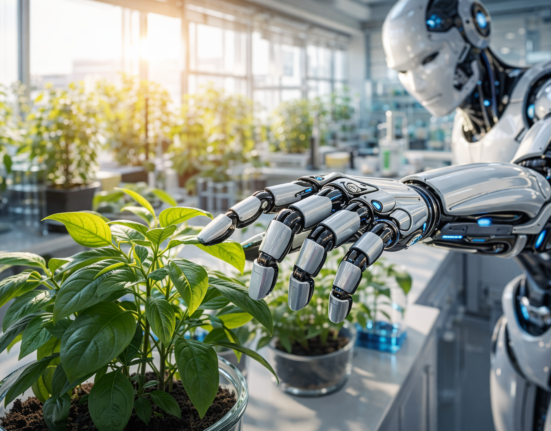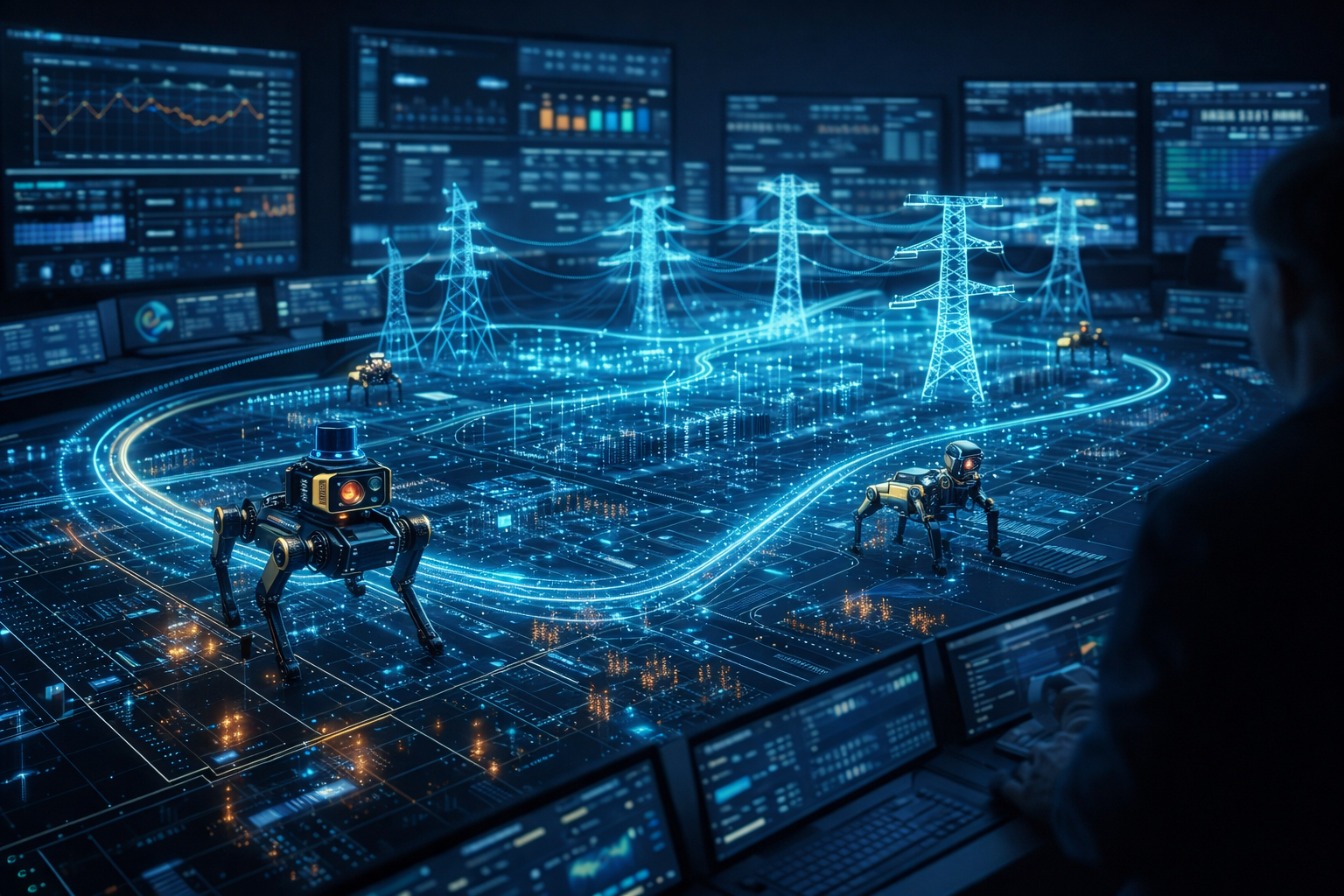
The intersection of the digital and physical worlds has reached a tipping point. For decades, “Artificial Intelligence” primarily lived behind screens—processing text, generating images, or analyzing spreadsheets. However, a new frontier has emerged: Physical AI. This technology doesn’t just think; it moves, touches, and reacts to the tangible world. When applied to our most vital systems—power grids, water treatment plants, and transportation networks—Physical AI is no longer a luxury; it is the cornerstone of modern national security.
Definition and Core Concept
Physical AI refers to the integration of advanced machine learning algorithms directly into physical hardware and environments. Unlike traditional AI, which might reside in a distant cloud server, Physical AI is embedded in “the edge”—sensors, robotic arms, autonomous drones, and industrial controllers. In the context of critical infrastructure, it serves as an autonomous nervous system that can detect structural fatigue, intercept cyber-attacks on hardware, and manage complex mechanical processes without constant human intervention.
Key Takeaways
- Predictive over Reactive: Physical AI shifts security from “fixing what broke” to “preventing the break” through real-time physics-based simulations.
- Hardware-Software Synergy: It bridges the gap between Information Technology (IT) and Operational Technology (OT), securing the points where code meets steel.
- Resilience in Real-Time: Automated systems can isolate damaged sections of a grid or pipeline within milliseconds, preventing cascading failures.
- Human-Centric Augmentation: Physical AI does not replace human engineers; it removes them from high-risk environments while providing them with unprecedented data clarity.
Who This Is For
This guide is designed for Operational Technology (OT) managers, Cybersecurity Architects, Civil Engineers, and Public Policy Makers. If you are responsible for the uptime, safety, or defense of large-scale physical assets, understanding the transition from “smart” systems to “Physical AI” systems is essential for your long-term strategy.
Safety & Regulatory Disclaimer: As of March 2026, the deployment of AI in critical infrastructure is governed by evolving frameworks such as the EU AI Act and NIST’s AI Risk Management Framework. Implementation of Physical AI systems must comply with local safety standards (e.g., NERC CIP for energy) to ensure public safety and environmental protection. Always consult with certified safety engineers before automating kinetic processes.
Understanding the “Physical” in Physical AI
To understand why this matters, we must first distinguish between “Digital AI” (like LLMs) and “Physical AI.” While a chatbot can explain how a turbine works, Physical AI lives inside the turbine’s governor. It uses Sensor Fusion—the blending of data from cameras, lidar, thermometers, and vibration sensors—to build a “situational awareness” that mirrors biological instinct.
The Physics-Informed Neural Network (PINN)
A major breakthrough in this field is the use of Physics-Informed Neural Networks. Traditional AI looks for patterns in data but doesn’t understand gravity, friction, or thermodynamics. Physical AI for infrastructure is trained on the laws of physics. If a pressure sensor in a gas pipeline reports a spike that is physically impossible given the temperature, the AI recognizes this not just as a leak, but potentially as a “sensor spoofing” cyber-attack.
Edge Computing: The Brain at the Source
In critical infrastructure, latency is the enemy. If a power line is about to snap, you cannot wait for data to travel to a cloud server in another state and back. Physical AI relies on Edge Computing, where the “thinking” happens on-site. This decentralization makes the system more secure; even if the central network is hacked or goes offline, the local Physical AI can continue to operate and protect the asset.
Securing the Energy Sector: The Smart Grid Evolution
The power grid is arguably the most complex machine ever built. As we move toward renewable energy, the grid becomes more volatile. Physical AI is the only way to manage this complexity while defending against physical and digital threats.
Autonomous Substation Monitoring
Substations are often located in remote areas, making them targets for physical vandalism. Physical AI-powered security systems now use:
- Acoustic Monitoring: Detecting the specific hum of a transformer that is about to fail or has been tampered with.
- Autonomous Drone Nests: Drones that launch automatically when a perimeter sensor is triggered, providing live thermal feeds to remote operators.
Wildfire Prevention and Load Balancing
In regions prone to extreme weather, Physical AI monitors line tension and wind speeds. As of early 2026, several major utility providers have implemented AI-driven “fast-trip” sensors. These systems can cut power to a falling line before it hits the ground, virtually eliminating the spark risk that causes catastrophic wildfires.
Water and Waste Management: Protecting the Lifeblood
Water systems are frequently targeted because of their direct impact on human life. Physical AI secures these systems by monitoring the “chemical-physical” integrity of the water.
Real-Time Chemical Anomaly Detection
Traditional water testing happens in intervals. Physical AI uses continuous optical sensors to analyze the molecular composition of water. If an unauthorized chemical—whether a pollutant or a malicious agent—is introduced, the Physical AI can automatically trigger a “shunts” to divert contaminated water away from the public supply.
Leak Detection and Infrastructure Aging
Most urban water infrastructure is decades past its intended lifespan. Physical AI uses “Smart Pigs” (robotic sensors that travel through pipes) to identify micro-fractures using ultrasound. By predicting where a burst will occur, cities can perform “surgical” maintenance, saving billions in emergency repair costs and preventing the flooding of critical transport tunnels.
Transportation and Logistics: The Autonomous Backbone
From bridges to high-speed rail, transportation infrastructure is becoming “self-aware.” The role of Physical AI here is to ensure the structural integrity of the nodes that keep society moving.
Smart Bridges and Digital Twins
Modern bridges are being outfitted with thousands of strain gauges. Physical AI creates a Digital Twin—a perfect virtual replica of the bridge. As traffic moves across the physical bridge, the AI simulates the stress on the digital twin. This allows engineers to see “hidden” fatigue that the human eye would miss during a manual inspection.
Rail Security and Obstacle Detection
High-speed rail systems are integrating Physical AI into the locomotives themselves. Using long-range Lidar and Computer Vision, these trains can detect debris, track warping, or unauthorized persons on the line from miles away, initiating regenerative braking far faster than a human operator could.
The Cyber-Physical Threat Landscape
The greatest risk to critical infrastructure today is the “Cyber-Physical Attack.” This is where a hacker gains access to a digital network but uses that access to cause physical destruction (e.g., making a generator spin until it explodes).
Bridging the Air Gap
Historically, we protected infrastructure by “air-gapping” it—keeping it disconnected from the internet. In the age of IoT, air gaps are disappearing. Physical AI acts as a “Physical Firewall.” Even if a hacker sends a command to “Open the Dam Gates,” the Physical AI, which understands the current water levels and structural limits, can override the malicious command if it violates safety physics.
Common Mistakes in AI Security Implementation
- Over-Reliance on Connectivity: Designing a system that fails if it loses its internet connection.
- Ignoring “Hardware-in-the-loop” Testing: Testing software in a vacuum without considering how physical wear and tear (like rust or dust) affects sensor data.
- Data Siloing: Keeping the “Physical Security” team (guards/cameras) separate from the “Cybersecurity” team. Physical AI requires these teams to merge.
Technical Deep Dive: Sensor Fusion and Actuation
To build a resilient Physical AI system, one must understand the “Sense-Think-Act” loop.
1. The Sensing Layer
This involves more than just cameras. It includes:
- Lidar: For 3D spatial mapping.
- Inertial Measurement Units (IMUs): To detect subtle tilts or vibrations in structures.
- Hyperspectral Imaging: To “see” gas leaks or chemical spills invisible to the human eye.
2. The Thinking Layer (The Model)
The models used in Physical AI are often “Reinforcement Learning” models. They are trained in high-fidelity simulators (like NVIDIA Isaac or specialized industrial simulators) where they “experience” millions of failure scenarios—earthquakes, cyber-attacks, component failures—so they know how to react in the real world.
3. The Actuation Layer
This is where the AI takes action. It might be a robotic arm tightening a valve, a switch flipping in a circuit breaker, or an autonomous underwater vehicle (AUV) repairing a subsea cable. The security of the “Actuator” is paramount; if the AI decides to act, the hardware must be robust enough to execute and secure enough not to be hijacked.
Challenges and Roadblocks
While the potential is vast, the road to fully autonomous infrastructure is paved with challenges.
Legacy Systems
Much of our critical infrastructure runs on hardware from the 1980s and 90s. These systems use “PLC” (Programmable Logic Controllers) that were never designed for AI. The challenge is “Retrofitting”—adding a layer of Physical AI on top of ancient hardware without breaking it.
The “Black Box” Problem
Engineers are rightfully hesitant to let an AI make decisions if they don’t understand why it made them. In critical infrastructure, “Explainable AI” (XAI) is a requirement. If an AI shuts down a power plant, it must provide a clear, human-readable log explaining the physical anomaly that triggered the shutdown.
Cost vs. Risk
The initial Capex (Capital Expenditure) for Physical AI is high. However, the Opex (Operating Expenditure) savings from preventing a single major outage often cover the costs for a decade. The transition requires a shift in how governments and corporations calculate “Return on Investment.”
Ethics and Human Oversight: The “Human-in-the-Loop”
We must address the fear of “The Machines Taking Over.” In the context of Physical AI for infrastructure, the goal is Semi-Autonomy.
The AI should handle the “Dull, Dirty, and Dangerous” tasks. It should monitor the 10,000 sensors that a human would find boring, it should inspect the sewers that are dirty, and it should check the high-voltage lines that are dangerous. However, for “Critical Logic” (e.g., permanently decommissioning a facility), a human must always provide the final authorization.
Future Trends (2026–2030)
- Self-Healing Materials: Infrastructure that uses Physical AI to trigger chemical reactions within concrete or metal to “heal” cracks autonomously.
- Swarm Robotics: Instead of one large robot, thousands of tiny sensors/drones work together like an ant colony to protect a perimeter.
- Quantum-Resistant Physical AI: As quantum computing threatens traditional encryption, Physical AI will move toward “Physical Layer Security,” using the unique physical properties of hardware as a form of unhackable ID.
Conclusion
Physical AI is the “immune system” of the 21st century. As our world becomes more interconnected and the threats from both climate change and cyber-warfare escalate, we cannot rely on human reaction speeds alone. By embedding intelligence into our concrete, steel, and wires, we create a resilient foundation that can withstand the unexpected.
The transition to Physical AI-secured infrastructure is not just a technical upgrade; it is a fundamental shift in how we protect the collective well-being of society. For those in charge of these systems, the next step is clear: move beyond digital-only security and start thinking about the physics of the problem.
Next Steps for Implementation:
- Conduct a “Physical-Cyber Audit”: Identify where your digital commands meet physical movement.
- Pilot Edge Computing: Start by placing AI-capable sensors on your most failure-prone assets.
- Bridge the Talent Gap: Hire “Mechatronic Security” specialists who understand both Python and plumbing, both C++ and circuitry.
- Prioritize Data Integrity: Ensure your sensor data is encrypted from the moment it is captured to prevent “data poisoning.”
FAQs
What is the difference between IoT and Physical AI?
IoT (Internet of Things) focuses on connectivity—collecting data and sending it to a human. Physical AI focuses on autonomy—collecting data, processing it locally, and taking physical action to solve a problem without needing a human to click “OK.”
Is Physical AI more vulnerable to hacking?
Because Physical AI often operates at “the edge” without a constant cloud connection, it actually has a smaller “attack surface” than traditional cloud-based systems. However, it requires new types of security to prevent physical tampering with the sensors themselves.
Will Physical AI replace infrastructure jobs?
It changes the nature of the jobs. Instead of a worker climbing a dangerous ladder to inspect a bridge, that worker becomes a “Robot Fleet Manager,” overseeing the AI-driven drones that do the climbing. It shifts labor from manual risk to technical oversight.
How does Physical AI handle “False Positives”?
Physical AI uses “Cross-Validation.” If a camera thinks it sees a fire, but the thermal sensor and smoke detector show normal levels, the AI recognizes a false positive. This multi-modal approach makes it much more accurate than single-sensor systems.
What industries are adopting Physical AI fastest?
Currently, the Energy (Smart Grid) and Defense sectors are the early adopters, followed closely by Automated Manufacturing and Water Treatment.
References
- NIST (National Institute of Standards and Technology): Special Publication 800-82, Guide to Industrial Control Systems (ICS) Security.
- IEEE Xplore: Research on Physics-Informed Neural Networks (PINNs) in Structural Health Monitoring.
- Department of Energy (DOE): Artificial Intelligence & The Future of the Grid (2025 Report).
- International Society of Automation (ISA): ISA/IEC 62443 Series of Standards for Industrial Automation and Control Systems Security.
- Oxford Academic: Journal of Cybersecurity: Cyber-Physical Systems and Critical Infrastructure Protection.
- MIT Technology Review: The Rise of Physical AI and the End of the Digital-Only Era.
- CISA (Cybersecurity & Infrastructure Security Agency): Critical Infrastructure Sector Resilience Guidelines (Updated 2026).
- Nature Machine Intelligence: Autonomous Robotics for Extreme Environments.