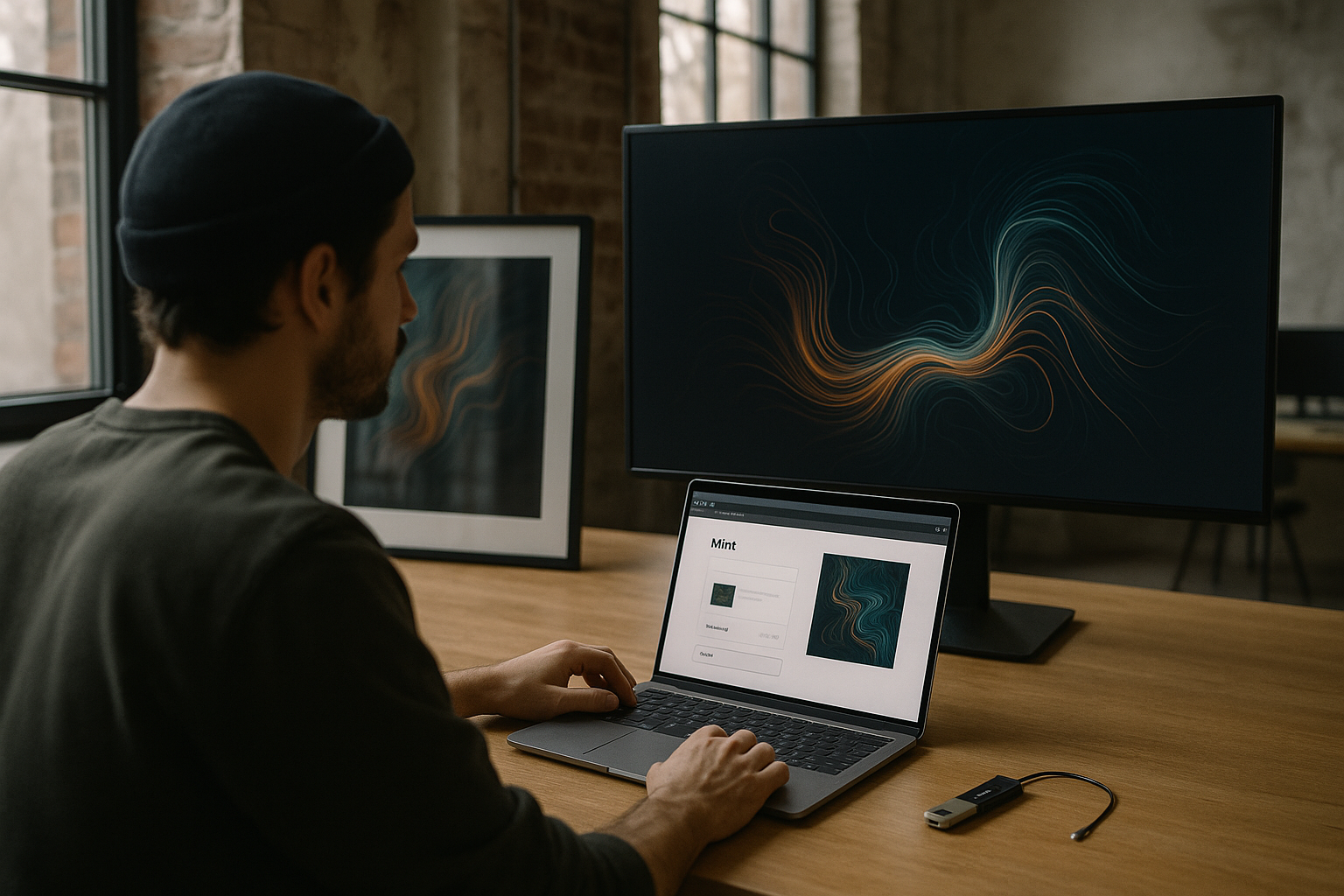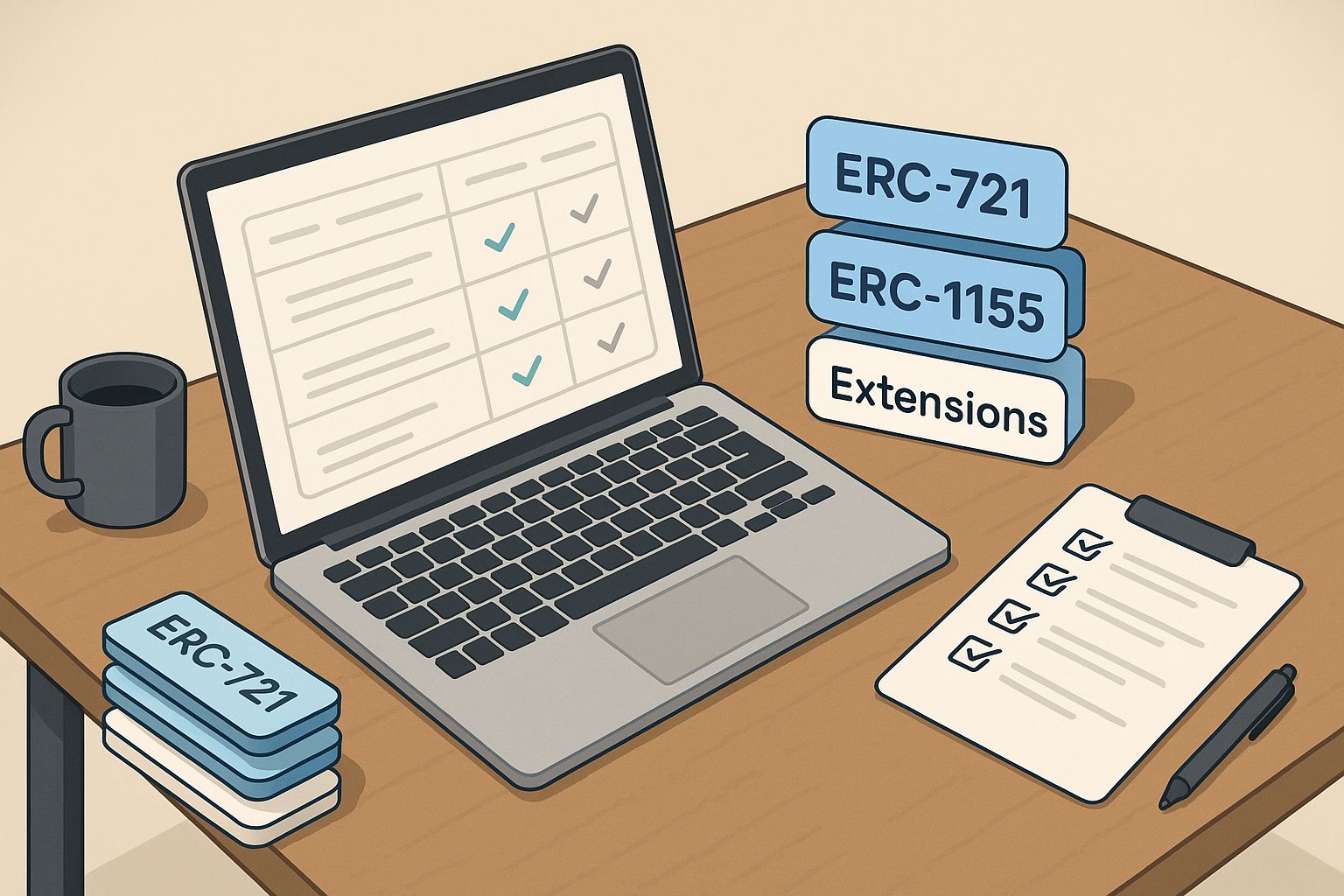
If you’re evaluating NFT minting platforms for creators, you’re choosing between convenience, control, curation, and chain support. Put simply, an NFT minting platform is a tool or marketplace where you deploy a contract or issue tokens (ERC-721 or ERC-1155 on EVM chains, FA2 on Tezos) so collectors can mint directly to their wallets. Below you’ll find a practical comparison and step-by-step guidance to get from idea to mint without guesswork. Quick definition: minting is the on-chain creation of a unique token that points to your media and metadata; it does not, by default, transfer your copyright unless you license or assign it explicitly in your terms. For financial and legal implications, seek professional advice—this guide is informational only.
Fast path overview (skimmable):
- Define the goal (1/1 art, editions, open edition, generative, collectibles).
- Choose a chain (EVM L1/L2 vs Tezos) based on audience, fees, and tooling.
- Pick platform by control need (curated vs no-code vs custom contract tools).
- Prepare media, metadata, and licensing text; decide royalties and splits.
- Dry-run on a test environment when possible; double-check reveal mechanics.
- Launch with an allowlist or public mint; monitor and iterate post-mint.
At-a-glance matrix (for creators)
| Platform | Chains (examples) | Mint path | Royalties setup | Best for |
|---|---|---|---|---|
| OpenSea Studio | Ethereum, Polygon, Arbitrum, Base, Zora, and more | No-code drops/collections | Optional or enforceable if contract supports ERC721-C/1155-C | Fast, wide-reach drops |
| Rarible | Multichain (select at mint), lazy minting | No-code, own or shared collection | Set per item/collection | Beginners, editions |
| Zora | EVM L2 (Zora) + EVM support | No-code + protocol tools | Contract-level royalties | Onchain social mints, low fees |
| Manifold Studio | Ethereum + EVM L2s (via custom contract) | Creator-owned contracts + claim pages | Contract-level | Pro control, advanced mechanics |
| Foundation | Ethereum | Creator-owned collections | Splits, royalties per contract | Fine art, editions, 1/1s |
| Magic Eden Launchpad | Solana, Bitcoin Ordinals, Ethereum, Polygon, Base, and more | Curated launchpad + tools | Per collection | Big retail mints, gaming |
| Nifty Gateway | Primarily Ethereum via NG contracts/publishers | Curated drops + publisher model | Contract/platform settings | Fiat access + curation |
| objkt (Tezos) | Tezos | No-code minting to your collection | Per token/collection | Tezos art scene, low fees |
| SuperRare | Ethereum | Curated, artist-owned minting | Per series/contract | 1/1 cryptoart, curation |
Source docs linked throughout each section for specifics on chains and mechanics.
1. OpenSea Studio: one-stop, no-code drops with multi-chain reach
OpenSea Studio is designed to let you spin up drops and collections without writing code, while tapping the largest general-audience marketplace for discovery. In practice, you create a scheduled Drop so collectors mint directly to their wallets, or you deploy a collection for ongoing releases. The major advantage is distribution: OpenSea supports a broad set of EVM chains and sidechains, so you can meet buyers where they already trade. Creator earnings can be optional or enforceable on OpenSea depending on whether your contract implements compatible hooks (ERC721-C/1155-C with Seaport). For most creators who want speed plus decent control, Studio balances simplicity with useful levers like allowlists, metadata reveals, and drop pages.
How it works
- Create a collection or schedule a Drop in OpenSea Studio.
- Configure supply (fixed, limited, or staged), price, and allowlist logic.
- Upload media and metadata; define creator earnings and payout address.
- Choose chain from OpenSea’s supported list; confirm in wallet.
- Promote the drop page; collectors mint to their wallets at go-time.
Numbers & guardrails
- Gas math (example): if your mint function uses ~120,000 gas and the network gas price is 15 gwei, the on-chain component is about 0.0018 ETH (120,000 × 15 gwei = 1,800,000 gwei = 0.0018 ETH). Adjust for base + priority fees on your chosen chain.
- Royalties reality: on OpenSea, you can set optional creator earnings; enforceability depends on ERC721-C/1155-C compatibility and Seaport hooks. Double-check contract standards before launch to avoid surprises.
Common mistakes
- Treating “optional royalties” as guaranteed revenue.
- Launching on a chain your collectors don’t use.
- Forgetting a staged reveal plan, causing metadata chaos on secondary markets.
Bottom line: Use OpenSea Studio when you want maximum reach with minimal setup, and you’re comfortable aligning earnings enforcement with the contract standard you deploy.
2. Rarible: beginner-friendly, lazy minting, and flexible collections
Rarible offers a straightforward creation flow with the option to mint to a shared collection or deploy your own. You choose a chain at mint, set royalties, and can enable “free” (lazy) minting so your item only hits the chain when first sold or explicitly minted—ideal if you want to minimize upfront gas. The interface is approachable, with toggles for unlockables, properties, and single vs multiple editions. For small to mid-sized creators who want to test, iterate, and learn, Rarible’s balance of simplicity and flexibility remains appealing.
How to do it
- Hit Create → NFT, pick your chain, and select single or multiple.
- Upload media; add royalties and optional unlockables.
- Choose a collection (Rarible’s shared or your own).
- Toggle free (lazy) minting if you don’t want upfront gas.
- Sign the transaction(s); list or hold for later.
Numbers & guardrails
- Royalty math (example): list at 0.05 ETH with a 7.5% royalty; on each secondary sale you’d receive 0.00375 ETH if the marketplace honors it. Always check marketplace policies—some treat royalties as optional.
- Gas planning: lazy minting defers cost to sale, but deploying your own collection contract incurs a separate one-time deployment fee.
Tips
- Use unlockables for high-touch benefits (process videos, files, collector clubs).
- Start on a lower-fee chain to learn, then graduate to your primary chain.
- Batch mint multiples only when your audience expects editions.
Bottom line: Choose Rarible when you need an easy on-ramp with lazy minting and clear creator controls, without diving into custom contract tooling yet.
3. Zora: creator-centric L2 and mint tools with social distribution
Zora pairs approachable, no-code minting with a creator-focused EVM Layer-2 (built on the OP Stack) that aims for low fees and fast settlement. You can mint editions or drops, and tap a social-style feed where every mint is an onchain post—useful for organic distribution. For developers and power users, Zora’s docs and SDKs support deeper integrations, but you can launch as a non-coder in minutes. If you want an L2 tuned for media with a built-in collector culture, Zora is a strong pick.
How it works
- Go to Zora’s mint flow, connect your wallet, and choose Editions or Drops.
- Upload assets and metadata; set price and optional limits (e.g., open edition).
- Publish on Zora Network or supported EVM environments.
- Promote directly in-app; mints propagate across compatible indexers.
Numbers & guardrails
- Fee heuristics: L2 gas often costs a small fraction of L1. If a mint uses ~100,000 gas and the L2 gas price sits near 0.3 gwei equivalent, that’s ~0.00003 ETH—orders of magnitude lower than busy L1 conditions. Actuals vary by congestion and sequencer settings.
- Distribution tip: time your drop to when your followers are most active inside the Zora feed to maximize first-hour momentum.
Tools & examples
- SDKs for custom flows, plus legacy 1155 contracts if you need them.
- Ecosystem guides explain the chain and creator mechanics in plain language.
Bottom line: Use Zora when you want social-native discoverability and L2-level fees without sacrificing EVM compatibility or future developer extensibility.
4. Manifold Studio: pro-level control with creator-owned contracts
Manifold lets you deploy creator-owned ERC-721/1155 contracts and launch with apps like Claim Pages (collectors mint into their wallets), Burn/Redeem, and Gallery—without writing Solidity. Because the contract is yours, provenance and control travel with you across marketplaces. This is ideal if you plan multiple releases, want advanced mechanics, or care about long-term brand control over token names, symbols, and metadata behavior. The learning curve is modest for non-coders, and you can grow into more complex flows over time.
How it works
- Deploy a creator contract from Manifold Studio (ERC-721 or ERC-1155).
- Spin up a Claim Page for open/limited or timed editions; set price/limits.
- Optionally configure Burn/Redeem or auctions in Gallery.
- Promote the claim link; collectors mint and pay gas to receive tokens. Manifold Community Forum
Numbers & guardrails
- Edition revenue sketch: 500 mints × 0.01 ETH = 5 ETH gross before marketplace fees and royalties on secondary. Keep headroom for gas refunds, airdrops, and any allowlist tooling.
- Gas split: with claim pages, collectors pay mint gas; you still pay for your contract deployment and any admin transactions (e.g., setting URIs).
Common mistakes
- Deploying a contract name/symbol you later regret—these are visible forever.
- Forgetting a metadata freeze plan (or intentionally choosing updatable metadata, then not documenting it for collectors).
Bottom line: Use Manifold when you want durable, creator-owned infrastructure with flexible drop mechanics and marketplace-agnostic provenance. docs.manifold.xyz
5. Foundation: artist-owned collections with polished presentation
Foundation focuses on creator-owned collections on Ethereum with an elegant display and collector experience. You deploy your own smart-contract collection and then mint 1/1s or small editions to it, optionally adding payout splits for collaborators. The flow is built for artists first: clean pages, simple auctions or fixed prices, and controls that keep your work under your contract, not a shared pool. If you prize presentation and provenance with minimal complexity, Foundation is purpose-built.
How it works
- Connect your wallet, Create → Collections, and deploy a creator contract.
- Mint NFTs into your collection; list via auctions or fixed price.
- Configure splits to automatically route revenue to collaborators.
- Syndicate to other marketplaces by sharing your contract address.
Tips
- Write clear descriptions and, if relevant, licensing notes in your metadata.
- Keep edition sizes intentional; Foundation collectors often expect scarcity.
- Use “reserve price” strategically to trigger timed auctions.
Mini case
- Split example: two collaborators set a 70/30 split; a 1 ETH primary sale auto-routes 0.70/0.30 ETH on settlement without manual transfers—clean accounting for both parties.
Bottom line: Choose Foundation when you want tasteful presentation, creator-owned contracts, and straightforward monetization with built-in splits.
6. Magic Eden Launchpad: curated, cross-chain mints at scale
Magic Eden’s Launchpad is a curated route to ship collections across multiple chains, including Solana, Bitcoin Ordinals, Ethereum, Polygon, Base, and more. The upside is distribution to a high-velocity retail audience, mint infrastructure built for surges, and chain-specific guidance. The trade-off is an application and review process with selection criteria; not every project is accepted. For gaming, PFPs, or large communities, Launchpad offers orchestration you’d otherwise need to assemble yourself. Magic Eden
How it works
- Apply to Launchpad with project brief, art, team links, and community stats.
- If accepted, coordinate mint specs (supply, price, allowlist, anti-bot).
- Launch on the chosen chain(s) with Magic Eden’s tooling and mint page.
- Post-mint, leverage marketplace liquidity and analytics.
Numbers & guardrails
- Allocation math (example): 3,000 total supply with 30% allowlist = 900 allowlist mints; price the public tranche mindful of demand spikes and network limits.
- Cross-chain note: assets and royalties are chain-specific; document policies per chain so collectors know where price discovery and earnings apply.
Tips
- Warm up your community; Launchpad teams weigh engagement and clarity.
- Ship clear art previews and rarity design to reduce post-mint confusion.
- Keep a playbook for bots; Launchpad has tools, but your allowlist helps.
Bottom line: Use Magic Eden Launchpad when you need scale, curation, and a cross-chain storefront backed by battle-tested mint infra.
7. Nifty Gateway: curated drops and a publisher model with fiat access
Nifty Gateway combines a curated drop pipeline with a Publishers model that lets approved curators run releases, plus creator-owned contract options for certain drops. The appeal is mainstream reach and fiat on-ramps, which can broaden your collector base beyond crypto-native buyers. The trade-off is curation and policy requirements, so timelines and mechanics may be less flexible than DIY tools. If you want gallery-like distribution and easy credit-card access, Nifty Gateway remains a solid option.
How it works
- Apply or collaborate with a Publisher for a curated drop.
- Align on contract type (creator-owned where applicable) and release mechanics.
- Prepare media, metadata, and terms; NG handles storefront and settlement.
- Sell via crypto or fiat; proceeds route to your NG account per terms.
Tips
- Lock your licensing language early; NG’s terms reference creator obligations.
- Align edition sizes and pricing with NG’s audience expectations.
- Treat this like a gallery release—tight curation and storytelling matter.
Bottom line: Choose Nifty Gateway if you value curation, built-in fiat rails, and publisher-driven distribution over total DIY autonomy.
8. objkt (Tezos): low-fee minting in a vibrant art community
On Tezos, objkt offers a clean flow for creating collections and minting tokens (FA2 standard), with noticeably low fees and an art-centric audience. You’ll first create a collection, then mint into it with fields for editions, royalties, and attributes. For many independent artists, Tezos provides a friendly entry point where collectors appreciate experimentation at modest price points. If you want to engage that ecosystem—or simply prefer Tezos economics—objkt is the natural choice.
How it works
- Create a collection on objkt; set collection settings and royalty defaults.
- Mint a token: upload media, define editions, royalties, and properties.
- List or airdrop; manage secondary listings within the Tezos scene.
Numbers & guardrails
- Storage & gas: Tezos charges small network fees and storage costs; larger media and metadata can nudge costs higher. Batch your edits and finalize metadata carefully to avoid re-writes.
- Edition math (example): 50 editions at 8% royalty means 4 resales at the same price would yield 0.32 × the list unit (4 × 0.08) in royalties cumulatively per unit; scale expectations with realistic resale rates.
Tips
- Keep IPFS/Arweave links tidy; collectors care about media permanence.
- Write a concise artist statement—Tezos buyers often read closely.
- Map your Tezos handle to social profiles so collectors recognize you.
Bottom line: Use objkt when you want low-friction, low-fee minting and a community that values experimental art and editions.
9. SuperRare: curated 1/1 cryptoart with artist-owned minting
SuperRare is a curated platform for one-of-one artworks. Artists mint from their own wallets and, with newer series contracts, can deploy sovereign contracts for clearer provenance and labeling. Acceptance requires an application and vetting; in return, you get a collector base that expects originality and strong storytelling. If your practice centers on singular pieces and you prefer a gallery-like environment, SuperRare is the benchmark for curated 1/1s in the EVM world.
How it works
- Apply with a portfolio and intro; if accepted, mint directly from your wallet.
- Choose standard contract minting or deploy a series (sovereign) contract.
- List via timed sales or reserve auctions; focus on presentation and narrative.
Tips
- Avoid prior mints of the same artwork elsewhere; SuperRare prizes exclusivity.
- Write collector notes that explain process, intent, and media details.
- Maintain consistent visual identity across your series contract and metadata. CoinDesk
Bottom line: Choose SuperRare for carefully curated 1/1 releases where provenance, presentation, and community standards carry real weight.
Conclusion
Choosing between NFT minting platforms for creators comes down to a few truths: your audience lives on specific chains and marketplaces; your control level depends on whether you own the contract; your fees are shaped by chain choice and mint mechanics; and your distribution hinges on platform culture plus your own marketing. No-code tools like OpenSea Studio, Rarible, Zora, and objkt help you ship quickly, while Manifold gives you creator-owned infrastructure you can grow into. Curated venues (Magic Eden Launchpad, Nifty Gateway, SuperRare) trade speed for selective exposure and a gallery-style experience. Whatever you pick, publish clear licensing, set realistic edition sizes, and stage your reveal thoughtfully—those three habits prevent most headaches later. Ready to move? Choose one platform, set a small test release, and iterate to your ideal flow.
Copy-ready CTA: Launch your first piece this week—start small, document your steps, and refine with collector feedback.
FAQs
1) What’s the practical difference between ERC-721 and ERC-1155 for creators?
ERC-721 is for unique, 1/1-style tokens; ERC-1155 handles multiple token types (including semi-fungible editions) in one contract, saving gas when minting or transferring batches. If you plan mixed editions or in-contract fungibles, ERC-1155 can be efficient; if your practice is singular art, ERC-721 is the simpler default. Many platforms support both.
2) Do NFTs automatically transfer copyright to buyers?
No. By default, buying an NFT does not transfer copyright; only a license or assignment can do that, and it must be clearly stated. Put your license terms in your listing and metadata, and consider a short human-readable summary plus a link to the full license. When in doubt, consult an IP professional.
3) Are creator royalties guaranteed across marketplaces?
Not universally. Some marketplaces let creators set preferred earnings but treat them as optional on secondary sales. Others enable contract-level enforcement if your contract supports the required hooks. Read your platform’s policy and choose standards that match your expectations before launch. support.opensea.io
4) What’s “lazy minting,” and when should I use it?
Lazy minting defers the on-chain write until first sale or explicit mint, so you avoid upfront gas. It’s great for testing interest or shipping many works without capital risk. Understand that some metadata or collection settings may lock only after on-chain minting occurs. help.rarible.com
5) How should I estimate mint costs?
Multiply your function’s approximate gas by the current gas price. Example: 110,000 gas × 12 gwei ≈ 0.00132 ETH. On L2s, the same function can be orders of magnitude less. Also budget for contract deployment (one-time) and any admin calls (like setting base URIs).
6) Which platform is best for 1/1 fine art?
SuperRare and Foundation are common choices—SuperRare for curation and 1/1 ethos, Foundation for creator-owned collections with polished presentation. You can also mint on your own Manifold contract and list wherever collectors congregate.
7) I want a massive public mint; what should I consider?
Use infrastructure that handles spikes (e.g., Magic Eden Launchpad). Lock allowlist logic, anti-bot measures, and a clear supply/price plan. If cross-chain, declare where royalties apply and where secondary liquidity is expected.
8) Can I start on Tezos and later mint on Ethereum?
Yes, but each chain is its own universe. If you release the “same” artwork on multiple chains, be transparent with collectors and avoid confusing provenance. Many artists keep 1/1s on Ethereum and exploratory editions on Tezos. objkt provides a simple Tezos minting path.
9) Do curated platforms accept everyone?
No. Magic Eden Launchpad, Nifty Gateway, and SuperRare review applicants. Strong portfolios, consistent branding, and active communities improve acceptance odds, but requirements vary and selection isn’t guaranteed. help.magiceden.ushelp.niftygateway.com
10) How do OpenSea’s “enforced” earnings actually work?
OpenSea can enforce earnings when your NFT contract implements compatible validation (e.g., ERC721-C/1155-C) routed through Seaport hooks. Otherwise, earnings are optional and paid at the seller’s discretion on OpenSea’s marketplace. Confirm your contract standard before launching.
References
- “Which blockchains are compatible with OpenSea?”, OpenSea Help Center, n.d., https://support.opensea.io/en/articles/8867082-which-blockchains-are-compatible-with-opensea
- “How do I use OpenSea Studio?”, OpenSea Help Center, n.d., https://support.opensea.io/en/articles/8867080-how-do-i-use-opensea-studio
- “Introducing OpenSea Studio,” OpenSea Blog, 2023-10-03, https://opensea.io/blog/articles/introducing-opensea-studio
- “How do I set creator earnings on OpenSea?”, OpenSea Help Center, n.d., https://support.opensea.io/en/articles/8867026-how-do-i-set-creator-earnings-on-opensea
- “Creator Fee Enforcement,” OpenSea Developer Docs, n.d., https://docs.opensea.io/docs/creator-fee-enforcement
- “How do I create an NFT?”, Rarible Help Center, 2025-01-22, https://help.rarible.com/hc/en-us/articles/10459414174349-How-do-I-create-an-NFT
- “ZORA Docs,” Zora, n.d., https://docs.zora.co/
- “ZORA legacy NFT docs,” Zora, n.d., https://nft-docs.zora.co/
- “How to create a collection and mint an NFT on Foundation,” Foundation Help Center, n.d., https://help.foundation.app/hc/en-us/articles/4419002081051-How-to-create-a-collection-and-mint-an-NFT-on-Foundation
- “Creator Hub & Launchpad,” Magic Eden Help Center, n.d., https://help.magiceden.io/en/collections/3285488-creator-hub-launchpad
- “How to apply to launch on Magic Eden,” Magic Eden Help Center, n.d., https://help.magiceden.io/en/articles/5858610-how-to-apply-to-launch-your-nft-collection-on-magic-eden
- “Understanding the Different Types of Releases,” Nifty Gateway Help Center, 2024-12-20, https://help.niftygateway.com/hc/en-us/articles/1500005495142-Understanding-the-Different-Types-of-Releases
- “Terms of Use,” Nifty Gateway, 2024-01-18, https://www.niftygateway.com/termsofuse/
- “Minting a token,” objkt Docs, 2025-10-15, https://docs.objkt.com/product/product-guides/minting-a-token
- “New to SuperRare—Start here!”, SuperRare Help Center, n.d., https://help.superrare.com/en/articles/10607134-new-to-superrare-start-here
- “Series Contracts 101,” SuperRare Help Center, n.d., https://help.superrare.com/en/articles/5790642-series-contracts-101
- “ERC-721: Non-Fungible Token Standard,” Ethereum EIPs, 2018-01-24, https://eips.ethereum.org/EIPS/eip-721
- “ERC-1155: Multi Token Standard,” Ethereum EIPs, 2018-06-17, https://eips.ethereum.org/EIPS/eip-1155
- “Joint USPTO-USCO Report on NFTs and Intellectual Property,” U.S. Copyright Office, 2024-03-12, https://www.copyright.gov/policy/nft-study/Joint-USPTO-USCO-Report-on-NFTs-and-Intellectual-Property.pdf