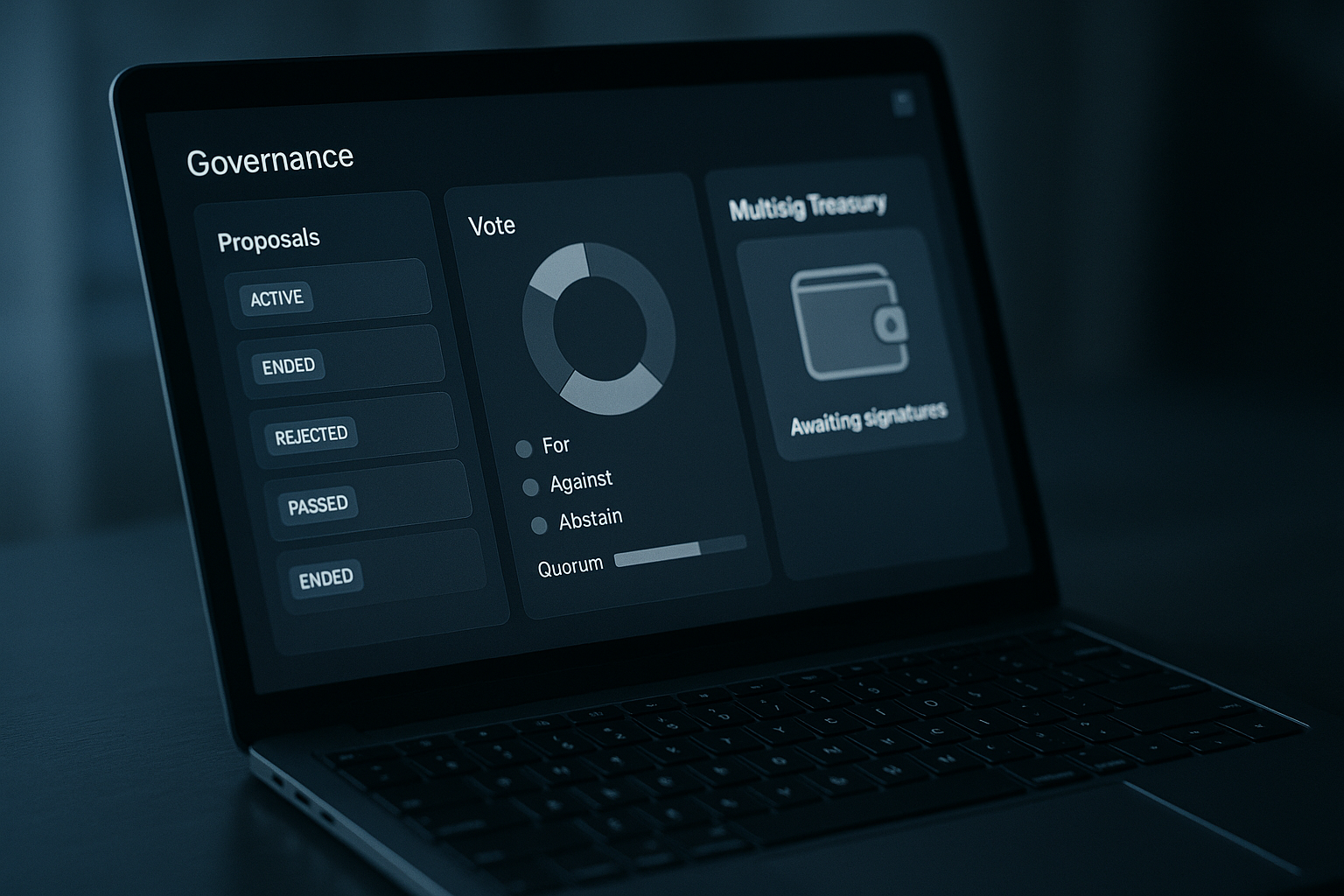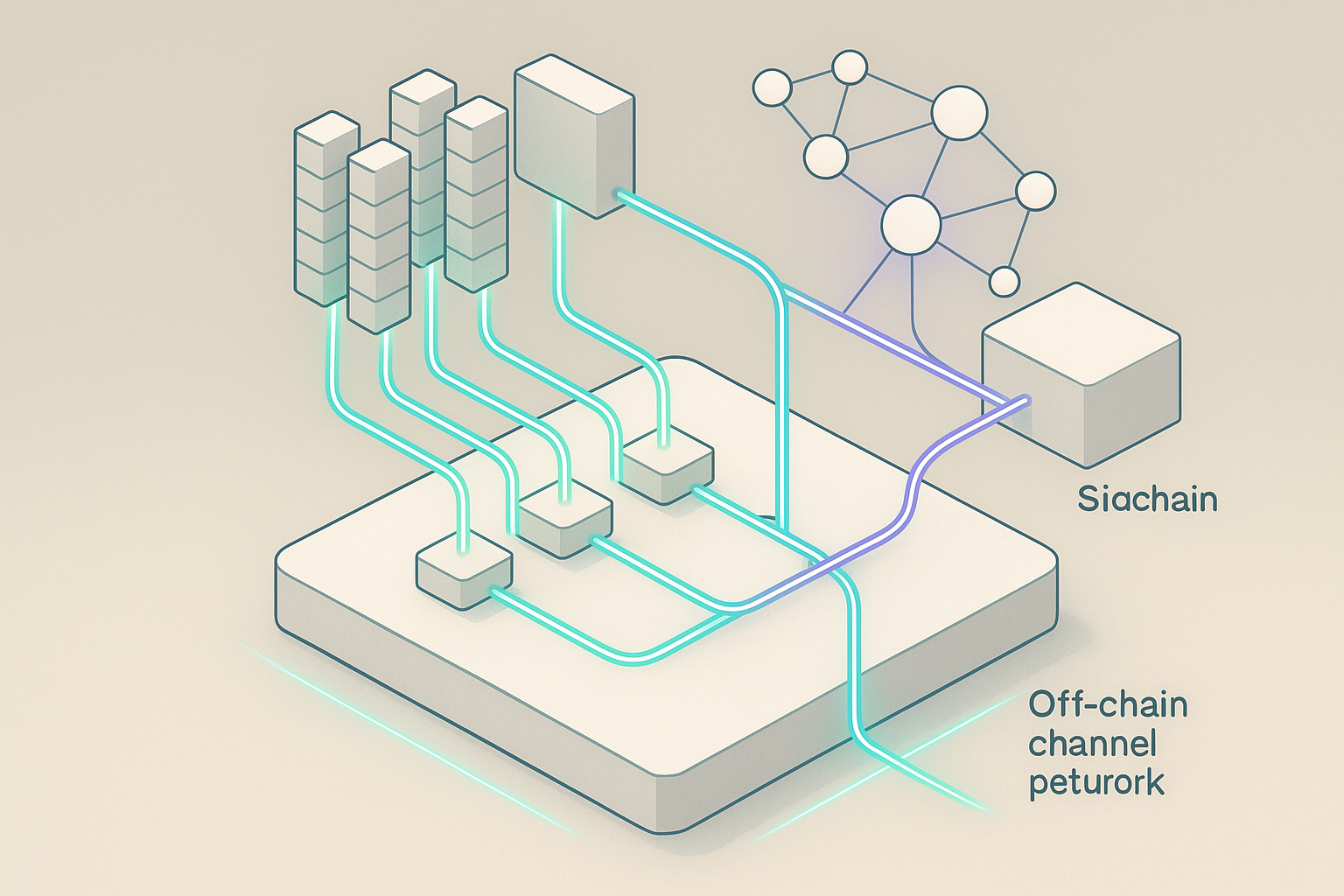
If you’re designing or improving DAO governance frameworks, you need more than a token and a forum. You need a clear way to translate community intent into enforceable outcomes—without grinding progress to a halt or inviting capture. This guide gives you 10 battle-tested frameworks that help you define tokens, choose voting systems, write charters, allocate budgets, resolve disputes, and “right-size” decentralization over time. Definition: a DAO governance framework is the set of rules, roles, processes, and smart-contract controls that turn community preferences into legitimate actions.
A quick application path: (1) define your token’s voting power and supply policy; (2) pick a voting mechanism and quorum/thresholds; (3) standardize the proposal lifecycle; (4) establish delegation and working groups; (5) secure treasury controls; (6) ratify a charter and emergency powers; (7) decide off-chain vs on-chain execution; (8) harden security; (9) set dispute processes; (10) publish transparency routines. Do this well and you’ll reduce governance risk, ship faster, and earn stakeholder trust.
Disclaimer: This article is educational and not legal, tax, or investment advice. DAOs operate across evolving regulatory environments; consult qualified professionals for your jurisdiction.
1. Token Design & Supply Policy
Strong governance starts with a token that encodes who gets a say, how much, and why. Your first decision is whether voting power maps to a governance token, a utility token with governance privileges, soulbound badges, or reputation points that are earned rather than bought. The token’s supply policy (fixed, capped, or inflationary) and distribution (contributors, community, investors, treasury) determine who shows up to vote and how incentives evolve. Lockups, vesting, and non-transferability options can dampen speculation and collusion. Clearly define how new voting power is minted, how inactive power decays, and how conflicting roles (e.g., vendor and voter) are handled. Document the token’s governance uses: proposal creation, voting rights, delegation, and veto limits. Get this wrong and everything else wobbles; get it right and your DAO can evolve without concentrating power in a few wallets.
Why it matters
- Voting power reflects values. If you reward long-term builders, design accretion to favor them.
- Transferability raises participation but also bribery risk; non-transferable reputation reduces markets but raises admin overhead.
- Inflation funds public goods but silently shifts power; fixed supply preserves early distributions—both need explicit trade-offs.
Numbers & guardrails
- Initial allocation: commonly 40–70% to community-facing pools (airdrops, incentives, grants) to avoid early capture.
- Vesting: 12–48-month cliffs/vests for core teams and investors reduce sudden governance swings.
- Decay: reputation systems often decay voting weight by 0.5–2% per epoch to keep power current.
- Anti-whale: cap single-proposal influence (e.g., max 5–10% of total voting power counts) or apply diminishing returns.
Mini-checklist
- Define what confers voting power (token, reputation, badges).
- Decide transferability and vesting/lockups.
- Publish a mint/burn policy and any decay rules.
- Clarify conflict-of-interest expectations for token-rich vendors.
A precise token policy aligns incentives with your mission and narrows the attack surface before votes even start.
2. Voting Mechanisms & Anti-Capture Design
You need a mechanism that balances inclusivity, cost, and resistance to bribery or sybil attacks. The simplest is 1-token-1-vote, which maximizes capital voice and minimizes complexity; it also invites plutocracy. Quadratic voting softens whale dominance by making additional votes cost progressively more voting power. Conviction voting accumulates support over time, favoring sustained preferences instead of flash mobs. Delegated voting (liquid democracy) raises turnout and expertise by letting holders assign their votes to representatives, revocable at any time. Consider ranked choice when selecting among multiple mutually exclusive options. Tie your mechanism to identity measures (proof-of-humanity variants) or stake-weighted slashing to reduce sybils and bribery.
How to choose
- If coordination cost is your bottleneck, start with 1-token-1-vote plus delegation for practicality.
- If plutocracy risk dominates, add quadratic or score-based weighting and an anti-bribery policy.
- For grant pipelines, conviction or approval voting increases throughput.
Numbers & guardrails
- Quorum: 5–25% of circulating voting power is typical; lower for frequent operational votes, higher for constitutional changes.
- Supermajority: 60–67% for irreversible or security-critical actions.
- Voting window: 48–168 hours balances inclusivity with velocity; shorter windows require strong delegation coverage.
- Quadratic caps: cap max influence per wallet (e.g., equivalent to 2–3% of total) to avoid identity-farm exploits.
Common mistakes
- Mixing too many mechanisms at once; start with one primary path and a “fast lane” for low-risk ops.
- No stated anti-bribery norms or conflict rules.
- Ignoring vote costs; off-chain snapshots are cheap but must still bind execution.
The right mechanism plus clear guardrails improves legitimacy without stalling decisions.
3. Proposal Lifecycle, Quorum & Thresholds
A consistent proposal lifecycle prevents governance theater. Define stages from temperature check to formal proposal, voting, timelock, and execution. Require author responsibilities (problem statement, options, budget, success metrics) and reviewer roles (risk, legal, security). Set eligibility for who can post (token threshold, reputation score, or sponsor requirement) to filter noise without erecting gates. Then lock quorum and passing thresholds appropriate to the decision’s blast radius. A timelock between passing and execution gives time for audits and vetoes. Finally, specify post-mortems and sunset reviews so decisions don’t ossify.
Compact reference table
| Decision type | Typical quorum | Passing threshold |
|---|---|---|
| Operational spend ≤ X | 5–10% | >50% |
| Parameter change | 10–20% | ≥60% |
| Constitutional change | 20–25% | ≥67% |
Numbers & guardrails
- Proposal threshold: require 0.1–1.0% of voting power (or a delegate sponsor) to post a binding vote.
- Timelock: 24–72 hours for routine ops; ≥120 hours for upgrades or treasury moves above a cap.
- Cooling-off: mandate 1–2 epochs before retrying a failed proposal to limit spam.
- Bundling rule: one topic per proposal; multi-topic bundles must allow split voting.
Mini-checklist
- Publish a proposal template (context, options, budget, KPIs, risks).
- Define roles: author, security reviewer, fiscal reviewer, facilitator.
- Enforce timelock and cool-down in contracts, not just social norms.
Tight lifecycles raise proposal quality and make outcomes predictable, which in turn improves participation.
4. Delegation, Representation & Working Groups
Delegation converts passive holders into an active legislature. In liquid democracy, holders assign their voting power to delegates who publicly state views, conflict policies, and areas of expertise; holders can reclaim votes anytime. Create working groups or councils—grant reviewers, risk stewards, treasury signers—with clear mandates, term lengths, and removal processes. Representation structures should not drift into closed clubs; require regular mandate renewals, performance reports, and open nomination windows. Publish delegate manifests and voter dashboards so the community can evaluate performance. For sensitive domains (security, legal, compliance), add confidential review paths but keep decisions auditable.
How to do it
- Offer a simple delegate registry with bios, platforms, and contact paths.
- Fund delegate comp transparently (stipends tied to attendance and deliverables).
- Rotate council seats on staggered terms to avoid total resets.
- Require recusal on conflicts and disclose paid relationships.
Tools/Examples
- Delegate dashboards, vote receipts, attendance trackers, and periodic AMA reviews.
- Optional quadratic delegation to spread power across multiple delegates.
Mini-checklist
- Mandate: scope, KPIs, budget, term, re-appointment path.
- Accountability: reporting cadence, conflict policy, recall vote rules.
- Resilience: staggered terms, backup signers, succession plan.
Done well, delegation increases expertise without sacrificing legitimacy—and gives new contributors a path into governance.
5. Treasury, Budgets & Spending Controls
Treasury design is where theory meets money. Use a multisignature safe or module-based controller with spending caps, role separation, and policy-based automation. Maintain a core treasury for long-run reserves and separate operational wallets for grants, streams, and vendor payments. Define budget cycles (e.g., quarterly) with rolling forecasts and circuit breakers for major drawdowns. Stream recurring payments through token streaming contracts to reduce clawback drama. Consider diversification policies to reduce volatility risk, and specify who holds custody keys and how they rotate. Every spend should be traceable to a passed proposal or a standing budget with limits.
Numbers & guardrails
- Signer threshold: 3/5, 4/7, or similar—enough to be safe, not so high it stalls operations.
- Per-tx cap: routine cap (e.g., ≤0.5% of treasury value) above which a full vote or longer timelock is mandatory.
- Runway: target 12–24 months of operating expenses across stable assets and blue-chips; rebalance bands ±10–20%.
- Streamed payouts: cliffs and cancel-ability for missed milestones; audit at preset checkpoints.
Mini case
Suppose the DAO holds 10,000 units of a governance token and 2,000 units of a stable. It approves a 3/5 multisig with a 0.5% per-tx cap. Any transfer above 50 governance tokens or 10 stable requires a full vote and a 72-hour timelock. Grants are streamed at 5 stable per day with monthly reviews. This setup automates routine ops while forcing deliberation for high-impact moves.
Checklist
- Segregate core reserves and ops wallets.
- Publish caps, timelocks, and signer rotations.
- Use streaming for recurring costs; require milestone proofs.
With explicit controls, you can ship budgets quickly while insulating the treasury from single-point failure.
6. Charter, Constitution & Emergency Powers
A charter is your DAO’s source-of-truth: mission, scope, authorities, and rights. It specifies what governance can and cannot do, which powers require supermajority, and how amendments happen. Include rights and obligations for members, transparency expectations, and conflict-of-interest norms. Define emergency powers—who can pause contracts, stop payouts, or trigger recovery—and pair them with strict accountability (short time-boxed authority, automatic reversion, immediate disclosure). Create a constitutional court or review committee if you anticipate recurring interpretation disputes. The charter should be concise, comprehensible, and linked to on-chain controls wherever possible.
How to write it
- Start with mission and scope; describe the “can/can’t” of governance.
- Enumerate decision classes with quorums/thresholds and timelocks.
- Codify amendment paths distinct from routine votes.
- Define emergency playbooks: pause, upgrade, signer replacement, dispute escalation.
- Require plain-language summaries alongside legalese.
Common pitfalls
- Vague amendment rules that allow stealth power grabs.
- Emergency powers without auto-expiry and disclosure.
- Rights statements that are aspirational but unenforceable.
Mini-checklist
- Amendment supermajority and cool-off windows.
- Rights & duties of members, delegates, and councils.
- Emergency scope: who, how long, what logs, what audit.
A tight charter reduces ambiguity, speeds decisions, and makes it easier to onboard new contributors who need to know “how the place works.”
7. Off-Chain vs On-Chain Execution
Governance decisions can be made off-chain (e.g., signed messages stored in a public ledger) and then executed on-chain via multisig or execution modules, or they can be voted and executed fully on-chain through governor contracts. Off-chain voting is cheap and flexible but requires a credible bridge to enforcement. On-chain voting is binding and transparent but costs gas and can be slow without delegation. Many DAOs use off-chain signaling for most proposals and reserve on-chain votes for parameter changes, upgrades, and high-value transfers. Whichever you choose, write down how signals become state changes.
How to do it
- Off-chain: sign votes, publish proofs, and require a transaction-hash-matching execution step by authorized signers.
- On-chain: use audited governor modules with quorum, threshold, and timelock encoded; route execution to a timelocked executor or treasury module.
- Hybrid: off-chain vote triggers pre-authorized batched transactions queued in a timelock.
Numbers & guardrails
- Execution SLA: publish time windows (e.g., execute within 48 hours after timelock) or the proposal expires.
- Batch size caps: limit on-chain batch actions (e.g., ≤10 calls) to keep audits tractable.
- Fallback rule: if off-chain and on-chain results disagree, default to on-chain or auto-escalate to a dispute path.
Mini-checklist
- Document the signal → execute bridge.
- Require public receipts and vote-to-tx mapping.
- Encode quorums/timelocks where possible, not only in docs.
When execution is predictable and auditable, contributors trust that their votes do real work, not just theater.
8. Security, Threat Modeling & Bribery Resistance
Governance is a security surface. Threats include vote buying, delegation capture, proposal bundles, and malicious upgrades. Start with an explicit threat model: who might attack, what they can gain, and how you detect and respond. Contract-level controls (timelocks, pause, upgradability guards) must be paired with process controls (mandatory audits for upgrade proposals, independent risk reviews, and post-mortems). Reduce key risk by separating roles: proposal authors can’t be the only signers; treasury signers can’t also be auditors. Encourage whistleblowing and fund bounties for governance bugs. Publish an anti-bribery policy; while you can’t eliminate private deals, you can stigmatize and sanction explicit markets for votes.
Tools & practices
- Guarded launch: start with higher thresholds and conservative caps; loosen after proven stability.
- Rate limits: daily/weekly transfer caps and function-call allowlists.
- Anomaly detection: alert on unusual delegation shifts or quorum spikes.
- Shadow proposals: run dry-runs to measure turnout and conflicts before binding votes.
Region notes
While governance policies are code-first, bribery and market manipulation may trigger legal concerns in some jurisdictions. Maintain a paper trail, publish policies, and consult counsel when votes affect real-world entities or revenue distribution.
Mini-checklist
- Written threat model and response plan.
- Separation of duties across roles and keys.
- Audit gates for upgrades and large budget moves.
Security isn’t just audits; it’s a culture of stating risks early and structuring incentives so attacks aren’t worth the trouble.
9. Dispute Resolution, Arbitration & Enforcement
Even with clear rules, edge cases will appear. Build a dispute system that handles procedure errors (missed timelock), content disputes (policy interpretation), and member conduct issues. Options include peer juries, third-party arbitration protocols, or a constitutional review committee. Define standing (who can file), evidence formats, funding of appeals, and binding outcomes. Provide graduated sanctions: warnings, suspension, clawbacks, or removal from councils. For on-chain enforcement, connect verdicts to execution modules or time-boxed vetoes. Without a credible dispute path, conflicts spill into social media or court, which erodes legitimacy.
Numbers & guardrails
- Filing windows: 24–72 hours for procedural errors; longer for substantive disputes.
- Appeal bonds: require a stake or fee (e.g., 1–2% of dispute value) to discourage frivolous filings, refundable if the appellant prevails.
- Quorum for juries: odd numbers (e.g., 3, 5, 7) with supermajority to decide; allow one appeal to a larger panel.
How to do it
- Publish a dispute policy with timelines, standing, evidence, and remedies.
- Use randomized juror selection with stake-weighted incentives.
- Encode binding execution paths: if a verdict requires a clawback, the treasury module must support it.
Mini case
A grant recipient allegedly misused 1,000 units from a stream. A member files within 48 hours of discovery, posts a 10-unit bond, and evidence is submitted in a public repository. A 5-juror panel reaches a supermajority to terminate the stream and claw back 300 units. The verdict triggers an on-chain call that pauses the stream and transfers the remainder to the treasury.
A transparent, binding dispute process deters abuse and channels disagreements into constructive resolution.
10. Transparency, KPIs & Accountability Loops
Governance loses credibility when decisions disappear into black boxes. Publish dashboards that track proposals, quorum, turnout, delegate activity, treasury balances, and KPI outcomes. Require after-action reports for funded grants and retroactive evaluations of big decisions: Did results match the assumptions? Use public roadmaps and work logs for working groups. Add a governance changelog to document charter edits, threshold changes, and security incidents. Pair transparency with privacy by design for sensitive operations—aggregate where possible, disclose specifics when safe. Finally, create a ritual: monthly or epochal governance reviews that summarize metrics and highlight upcoming decisions.
How to do it
- Standardize a proposal template with KPIs and review dates.
- Maintain a public budget and grant tracker with statuses.
- Publish delegate scorecards (attendance, votes cast, conflicts disclosed).
- Automate vote receipts and link them to executed transactions.
Numbers & guardrails
- KPI cadence: set review points for major spends (e.g., 30/60/90 days after execution).
- Reporting SLA: after each vote passes, publish an execution receipt within 24–48 hours.
- Turnout targets: aim for steady improvements (e.g., +10% median turnout over two quarters) and adapt thresholds as participation grows.
Mini-checklist
- Dashboards for proposals, treasury, delegates, KPIs.
- Rituals: monthly review calls and written digests.
- Changelog: one source for governance parameter updates.
Visibility makes it easy for newcomers to plug into your DAO and for veterans to keep leaders honest—closing the loop that turns governance from theory into habit.
Conclusion
Effective DAO governance frameworks are not a single mechanism but a system that ties together token design, voting, processes, roles, spending controls, charters, execution paths, security, disputes, and transparency. Each layer constrains the next so that preferences expressed by a broad community become real, auditable actions with minimal friction and maximum legitimacy. Start by writing down your token policy and proposal lifecycle, then choose a voting mechanism and quorum/thresholds that match your risks. Establish delegation and working groups to scale decisions, protect the treasury with caps and timelocks, and codify a charter with explicit emergency powers. Decide your blend of off-chain and on-chain execution, model threats and bribery risks up front, and publish a dispute path that actually binds. Finally, close the loop with dashboards, KPIs, and regular reviews so you learn fast and adapt. If you implement even half of the practices in these 10 frameworks, your DAO will move faster, waste less, and earn durable trust. Ready to apply this? Pick one framework and ship a draft this week.
FAQs
How do I choose between on-chain and off-chain voting?
Pick off-chain when cost and speed are critical and decisions are reversible; pair it with a reliable execution bridge and strong timelocks. Use on-chain for upgrades, parameter changes, and high-value treasury actions where binding transparency matters most. Many DAOs run a hybrid: off-chain for most signals, on-chain for sensitive or irreversible actions.
What’s a sensible quorum for my DAO?
There’s no universal number, but set quorums by decision risk. Operational spends may require 5–10% quorum with a simple majority, while constitutional changes might need 20–25% quorum and a supermajority. Monitor turnout data and adjust if quorums regularly fail; governance should be hard to capture, not impossible to use.
How can I prevent whales from dominating votes?
Consider quadratic or score-based weighting, caps on maximum per-wallet influence, and robust delegation to widen the talent pool. Pair this with anti-bribery norms and identity-aware checks that limit sybil farms. None of these eliminate power imbalances, but they significantly raise the cost of capture.
What belongs in a DAO charter?
A mission statement, scope of governance, decision classes with thresholds and timelocks, amendment rules, rights and obligations of members and delegates, conflict-of-interest policy, and clearly bounded emergency powers with auto-expiry and reporting. Keep it short and link key rules to on-chain controls where possible.
How should we compensate delegates?
Pay for measurable work: attendance, reports, office hours, and voting performance. Use streamed payments with milestone checks and public scorecards. Cap compensation as a share of the budget and require conflict disclosures. The goal is to raise reliability without monetizing every opinion.
What’s the best way to run grants?
Create a dedicated working group with a mandate, budget, and KPIs. Use templates that require problem statements, milestones, and success metrics. Stream funds, add clawback clauses, and require public updates at fixed intervals. For many DAOs, conviction or approval voting increases throughput without sacrificing scrutiny.
How do we handle emergency pauses without centralizing power?
Grant narrow, time-boxed powers to a small emergency committee with mandatory disclosure and automatic expiry. Require public incident reports and post-mortems, and consider a community ratification vote after the fact. Encode the pause and resume functions with logs so the audit trail is complete.
What tools should we start with on day one?
A multisig treasury with sensible caps and signer rotation, a voting mechanism (off-chain or on-chain) with delegation, a proposal template and lifecycle, and a public dashboard for proposals and budgets. Add dispute resolution hooks and advanced modules as complexity grows.
How do we avoid governance becoming a time sink?
Standardize templates, define decision classes, delegate routine calls to working groups under clear caps, and batch similar proposals. Use periodic governance reviews to deprecate outdated processes. Complexity should earn its keep; remove steps that don’t change outcomes.
When should we update quorums and thresholds?
Revisit parameters on a fixed cadence or when data shows persistent under- or over-participation. If turnout rises, you may lower thresholds to ship faster; if turnout falls or concentration grows, raise them and lean on delegation to maintain legitimacy. Always document reasons in a governance changelog.
References
- Governance — OpenZeppelin Contracts, OpenZeppelin Docs, published Apr 5, 2024. https://docs.openzeppelin.com/contracts/5.x/api/governance
- How to set up on-chain governance, OpenZeppelin Docs, published May 2, 2023. https://docs.openzeppelin.com/contracts/4.x/governance
- Snapshot Documentation: Getting Started, Snapshot Docs, published Dec 12, 2024. https://docs.snapshot.box/faq/getting-started
- Aragon Docs: OSx and Plugin Framework, Aragon, published Feb 14, 2025. https://docs.aragon.org/
- Safe (Multisig) Documentation, Safe Docs, published Oct 10, 2025. https://docs.safe.global/
- Kleros Court — Dispute Resolution Protocol, Kleros Docs, published Mar 22, 2024. https://docs.kleros.io/products/court
- Dispute Resolution Integration Plan, Kleros Docs, published Apr 19, 2025. https://docs.kleros.io/integrations/types-of-integrations/1.-dispute-resolution-integration-plan
- A Flexible Design for Funding Public Goods, Buterin, Hitzig, Weyl, Management Science (preprint), published Sep 17, 2018. https://arxiv.org/abs/1809.06421
- Maker Governance Portal, MakerDAO, publication date not specified on page. https://vote.makerdao.com/
- DAOs are not corporations, Vitalik Buterin (personal blog mirror), published Sep 20, 2022. https://vitalik.eth.limo/general/2022/09/20/daos.html
- Gnosis Safe Overview with Governor, Tally Docs, published Jan 23, 2025. https://docs.tally.xyz/set-up-and-technical-documentation/using-governor-with-gnosis-safe/gnosis-safe
- Maker Protocol Technical Docs, MakerDAO Docs, published Nov 4, 2022. https://docs.makerdao.com/