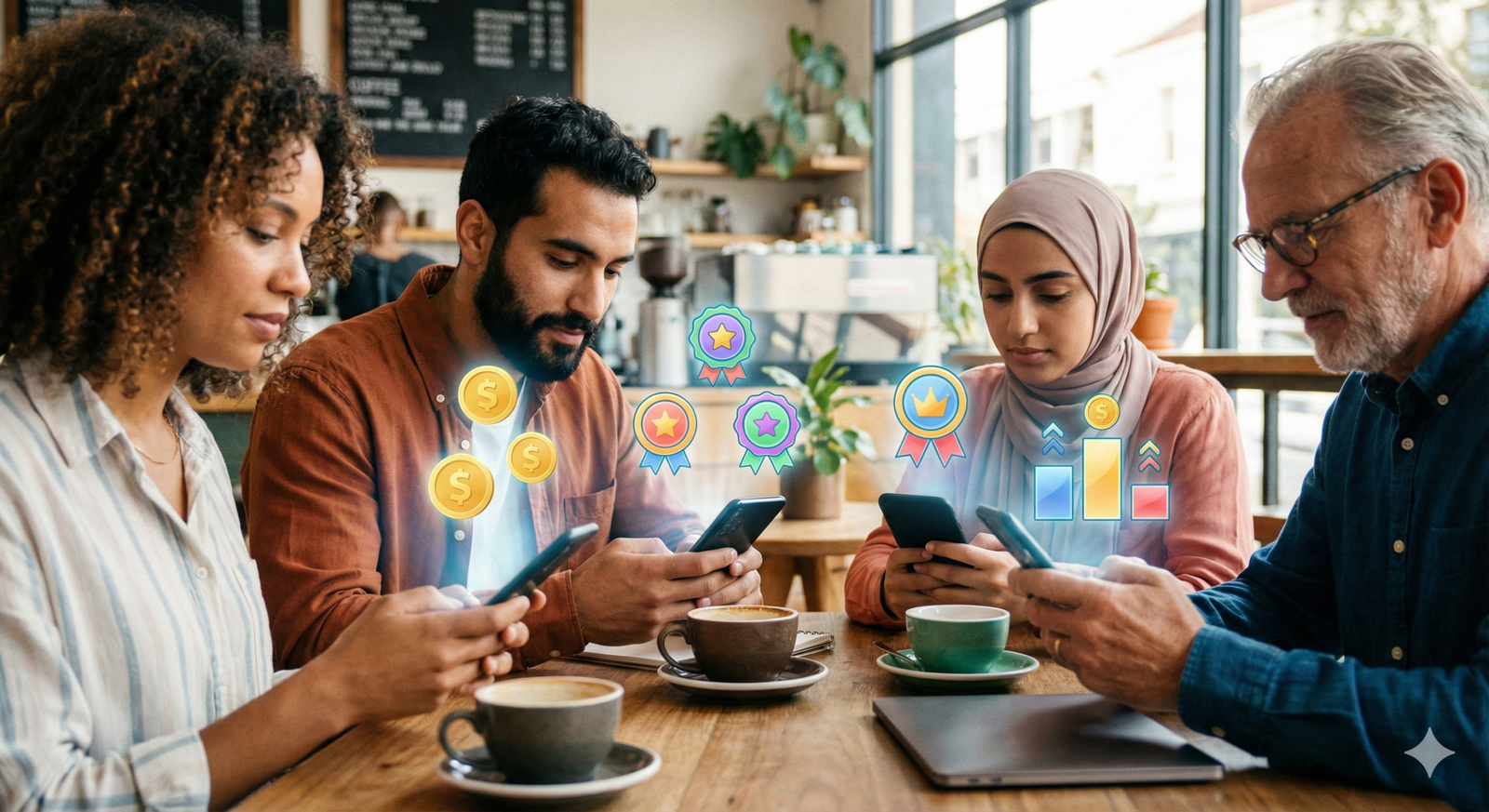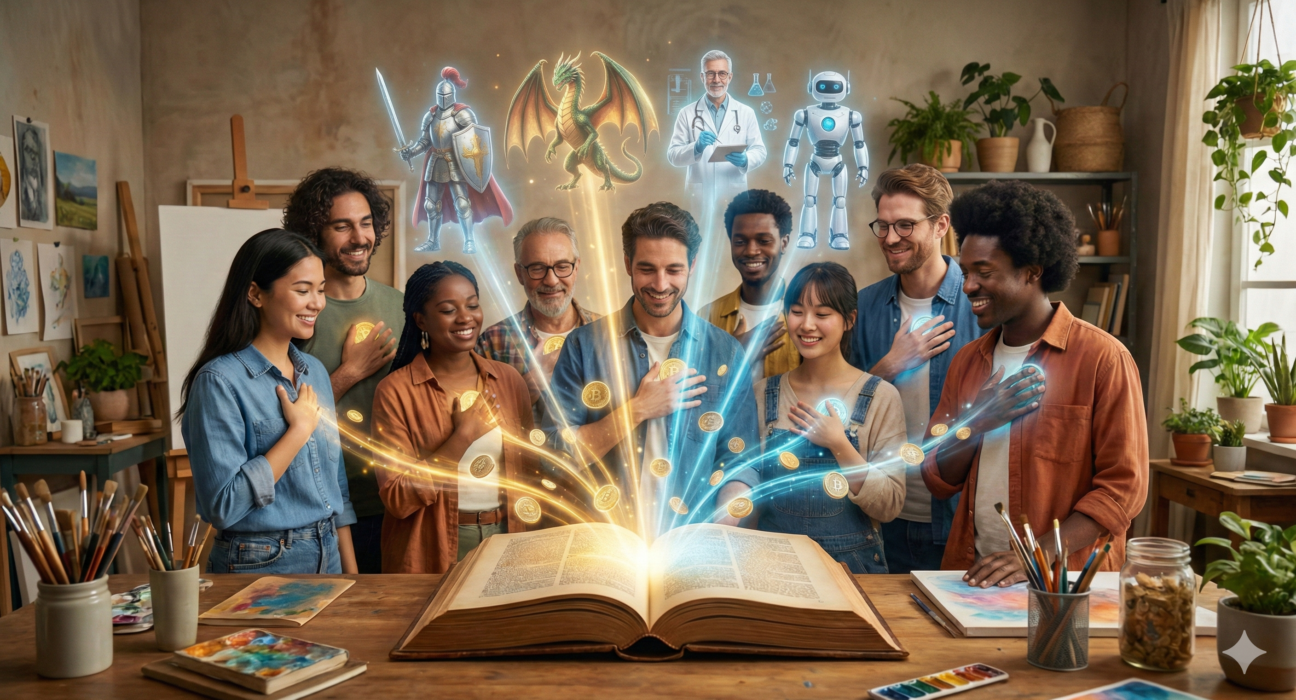
The traditional barriers between the creator and the audience have not just been lowered; in many corners of the internet, they have been completely dismantled. We are witnessing the maturation of the fandom economy, a paradigm shift where passive consumption is replaced by active financial support and creative participation. This is no longer just about buying a movie ticket or purchasing a book; it is about fans funding the inception of a project, influencing its narrative trajectory, and sustaining the livelihoods of creators directly.
In this guide, “fandom economy” refers to the ecosystem where intellectual property (IP) is financed, developed, and distributed through direct transactional and creative relationships between creators and their communities, bypassing traditional gatekeepers like Hollywood studios or legacy publishers.
This shift represents a fundamental democratization of culture. It empowers niche storytellers to build sustainable empires without aiming for mass-market appeal, but it also introduces complex new dynamics regarding ownership, entitlement, and artistic integrity.
Key Takeaways
- From “Consumer” to “Patron”: Fans are moving from purchasing finished products to funding the development process via subscriptions and crowdfunding.
- Democratization of Gatekeeping: Success is no longer determined by a studio executive’s greenlight, but by a creator’s ability to mobilize a “1,000 True Fans” core.
- The Canon is Fluid: Participatory storytelling allows audiences to influence plot points, character designs, and lore, blurring the lines between “canon” and “fanon.”
- Platform Dependency: The economy relies heavily on intermediaries like Kickstarter, Patreon, and Discord, each with its own tax on the creator-fan relationship.
- Double-Edged Sword: High engagement can lead to “audience capture,” where creators feel trapped by the specific demands of their financiers.
Defining the Fandom Economy
To understand where media is going, we must look at the mechanics of the fandom economy. It is distinct from the broader “creator economy” (which includes influencers selling lifestyle products) because it is specifically rooted in narrative, world-building, and shared IP.
The Core Components
- Direct Finance: Money flows directly from the fan to the creator, often before the product exists.
- Community as Infrastructure: The comment section, Discord server, or subreddit is not an afterthought; it is the primary venue where the product is iterated upon.
- Psychological Ownership: Because fans fund the project, they feel a sense of moral ownership over the characters and world, leading to deeper loyalty but higher expectations.
Who This Is For (and Who It Isn’t)
- This guide is for: Independent creators (authors, game devs, podcasters), community managers, brand strategists, and media analysts looking to understand how to build or study sustainable, community-first business models.
- This is not for: Marketers looking for “viral hacks” or creators seeking a traditional publisher/studio route where the audience is kept at arm’s length until launch day.
The Financial Pillars: How Fans Fund Creation
The economic engine of fandom has evolved from simple merchandise sales to complex funding structures. Understanding these models is crucial for anyone attempting to build a career in this space.
1. The “Sprint” Model: Crowdfunding (Kickstarter, BackerKit)
This is project-based funding. It is best used for high-production-value items that require significant upfront capital, such as printing a hardcover novel, manufacturing a board game, or producing an animation pilot.
- How it works: Creators pitch a specific vision with a funding goal. Fans pledge money in exchange for tiered rewards (the product itself, exclusive variants, producer credits).
- The Psychology: This relies on “FOMO” (Fear Of Missing Out) and the excitement of bringing something new into existence. It is an event.
- Evolution: As of late 2025, we are seeing a shift away from generic platforms toward specialist ones (e.g., BackerKit for authors/tabletop) that offer better integration with fandom data.
2. The “Marathon” Model: Subscriptions (Patreon, Substack, Ko-fi)
This is sustenance funding. It provides the creator with a monthly salary, allowing them to quit their day job and focus on art.
- How it works: Fans pay a monthly fee for access to the process—behind-the-scenes blogs, early drafts, discord access, and community hangouts.
- The Psychology: This relies on benevolence and access. Fans pay because they want the creator to keep creating, and they want to be part of the “inner circle.”
- The Lock-in: Unlike a one-off purchase, this model requires constant content output to prevent “churn” (subscribers cancelling).
3. The “Tip Jar” and Micro-transactions (Twitch, YouTube Memberships)
This is performance funding. It is prevalent in livestreaming and video content.
- How it works: During a live interaction, fans donate small amounts to have their message read aloud or to trigger an on-screen effect.
- The Psychology: This is rooted in acknowledgment. It is a momentary interaction where the fan buys a second of the creator’s attention.
4. The “Equity” Model (Web3 and DAOs)
While highly volatile and controversial, the concept of fans owning actual equity in a story franchise via tokens (NFTs or DAO governance tokens) remains a niche part of the fandom economy.
- How it works: Fans buy tokens that theoretically give them voting rights on story direction or a share of royalties.
- Status: As of 2026, this remains a regulatory grey area and often suffers from scams, but the concept of financial upside for early fans persists in various experimental forms.
Participatory Storytelling: When the Audience Writes the Script
The most radical change in the fandom economy is the erosion of the “fourth wall.” In traditional media, the author is God. In the fandom economy, the author is often a Dungeon Master—guiding the story, but reacting to the players (the audience).
Mechanisms of Participation
Voting and Polling
Creators often use polls to let high-tier patrons decide minor (and sometimes major) plot points.
- Example: A fantasy author might ask patrons to vote on which of two side characters survives a battle.
- Impact: This creates immense engagement, as fans campaign for their choices. However, it risks disjointed storytelling if the “popular” choice contradicts the narrative logic.
The “Beta Reader” Ecosystem
In the past, beta readers were a small group of trusted peers. Now, authors release chapters serially to thousands of subscribers. The comment section acts as a massive, real-time focus group. If a plot twist confuses 50% of the audience, the author can rewrite the next chapter to address the confusion before the “final” book is published.
User-Generated Content (UGC) Integration
Smart creators canonize fan creations. If a fan artist draws a character in a specific outfit that the community loves, the creator might incorporate that design into the official work.
- SCP Foundation: This is the ultimate example of decentralized storytelling. The entire universe is built by the community, regulated by community votes and strict licensing (Creative Commons). There is no central “owner,” yet there is a cohesive economy of merchandise, games, and books.
The “Canon” vs. “Fanon” Blur
In traditional IP (like Star Wars), there is a strict line between what “happened” (Canon) and what fans imagine (Fanon/Fan Fiction). In the fandom economy, this line is porous.
- Headcanons becoming reality: Creators often read fan theories. If a theory is more compelling than the original plan, agile creators can pivot the story to match the theory, making the fans feel like geniuses for “guessing” it.
Case Studies: The Fandom Economy in Action
To understand how this looks in practice, we must examine the pioneers who have successfully blended commerce and community.
1. Critical Role: From Home Game to Media Empire
Critical Role began as a group of voice actors playing Dungeons & Dragons on a livestream.
- The Strategy: They relied heavily on the “parasocial” connection. Fans felt like they were sitting at the table.
- The Pivot: When they wanted to make an animated series, they didn’t pitch to Netflix first. They went to Kickstarter.
- The Result: They raised over $11 million, shattering records. This proved to Amazon (who eventually picked up distribution) that the audience was already monetized.
- Lesson: Fan funding gives creators leverage when negotiating with traditional platforms.
2. Brandon Sanderson: The Publishing Anomaly
In 2022, fantasy author Brandon Sanderson launched a Kickstarter for “Four Secret Novels” he wrote during the pandemic.
- The Strategy: He bypassed his publisher (Tor) to sell directly to fans.
- The Result: $41 million raised.
- Lesson: A massive “backlist” of trust allows creators to act as their own retailers. The “economy” here was built on decades of consistent delivery.
3. The “HermitCraft” Model (Minecraft)
A collective of YouTubers play on a single private Minecraft server.
- The Strategy: Each creator tells their own story, but the stories intersect. Fans follow multiple perspectives.
- The Economy: They share a localized economy of attention. A specialized fan event (TCG cards, charity streams) mobilizes millions of dollars across the collective.
- Lesson: Collectives can create a “Cinematic Universe” effect without a studio budget.
The Legal Minefield: IP, Copyright, and Ownership
When fans fund and influence a project, who owns it? This is the most precarious aspect of the fandom economy.
The “Work for Hire” vs. “Community Contribution”
If a fan suggests a character name in a Twitch chat and the creator uses it, does the fan own the copyright? generally, no. Most platforms (Twitch, Patreon, Discord) have Terms of Service stating that creators retain rights to content generated in their spaces, or that suggestions are given freely.
However, this gets ethically murky.
- Best Practice: Creators should have a clear “User Submission Policy.” Explicitly state that by submitting ideas, fans grant a non-exclusive, royalty-free license to use them.
Fan Fiction and Commercialization
Historically, monetizing fan fiction was illegal. The fandom economy has introduced “filing off the serial numbers.”
- Example: Fifty Shades of Grey started as Twilight fan fiction.
- Modern Trend: Platforms like Kindle Vella or specialized fanfic contests act as pipelines to turn fan works into original, sellable IP.
Fair Use in the Reaction Economy
A huge part of the fandom economy is “reaction content”—YouTubers watching shows or playing games.
- The Tension: Game developers generally encourage this (free marketing), while anime and TV studios often issue copyright strikes.
- The Shift: Savvy IP holders are now creating “allow lists” for creators, understanding that the reaction economy drives the actual economy.
Risks and Challenges: The Dark Side of Fandom
While the fandom economy offers independence, it trades the tyranny of the boss for the tyranny of the crowd.
1. Audience Capture
This occurs when a creator becomes a hostage to their audience’s preferences. If a creator attempts to experiment with a new genre or a controversial plot twist, and the funding is tied to monthly subscriptions, they may see an immediate drop in income.
- Consequence: This can lead to artistic stagnation, where creators simply churn out fan service to maintain revenue stability.
2. The “Parasocial” Trap
Fans who fund a creator often feel they are buying friendship, not just content.
- The Conflict: When a creator sets boundaries (e.g., stops replying to DMs, takes a break), “superfans” can feel betrayed. The sentiment can flip from adoration to toxicity overnight.
- Mitigation: Clear boundaries must be set from day one. Creators should frame support as “funding the art,” not “buying the artist.”
3. Burnout and the Content Treadmill
Algorithm-driven platforms and subscription models demand consistency. Missing a week can punish a creator’s visibility.
- Reality: Many creators in the fandom economy work significantly more hours than they would in a traditional job, handling marketing, community management, logistics, and creation simultaneously.
4. Platform Volatility
Building a livelihood on Patreon, Twitch, or TikTok means building on rented land.
- The Risk: If a platform changes its fee structure (as Twitch and Unity have controversially done in the past) or alters its algorithm, a creator’s income can evaporate.
- Solution: Diversification. “Own your audience” via email lists (Substack/newsletters) is the only safety net.
Strategic Framework: Building a Fandom Economy
If you are a creator or brand looking to utilize this model, here is a strategic framework to move from “audience” to “economy.”
Phase 1: Value and Trust (The “Free” Tier)
Before asking for money, you must prove consistency.
- Action: Publish high-quality content on discoverable platforms (YouTube, TikTok, Blogs) for free.
- Goal: Build the “top of funnel.” Establish that you show up when you say you will.
Phase 2: The “1,000 True Fans” Activation (The “Support” Tier)
Once you have a following, identify the superfans.
- Action: Launch a low-friction support channel (Patreon $5 tier, Ko-fi).
- Offer: Community access (Discord) and early access. Do not over-promise physical goods yet.
- Goal: Identify who is willing to open their wallet.
Phase 3: Participatory Integration (The “Co-create” Tier)
Deepen the investment.
- Action: Introduce polls, Q&As, and “name in the credits” rewards.
- Goal: Shift the psychological contract from “consumer” to “producer.”
Phase 4: The High-Value Sprint (The “Product” Tier)
Monetize the built-up demand.
- Action: Launch a crowdfunding campaign for a premium product (hardcover book, course, game).
- Goal: Significant capital injection to scale operations or hire help.
Comparison: Traditional vs. Fandom Economy
| Feature | Traditional Media Economy | Fandom Economy |
| Funding Source | Investors, Studios, Publishers | End-users, Fans, Patrons |
| Greenlight Process | Gatekeepers (Editors/Execs) | Community interest / Funding goals |
| IP Ownership | Usually the Corporation | Usually the Creator |
| Marketing | Broad, Mass-market ads | Niche, Word-of-mouth, Influencer |
| Feedback Loop | Slow (Sales numbers, Reviews) | Instant (Comments, Discord, Polls) |
| Risk | High failure cost (Flops) | Low validation cost (failed Kickstarter) |
Future Trends: Where is Fan Funding Going?
As of 2026, several trends are reshaping this landscape:
1. The Death of the “Middle Class” Creator?
There is a fear that the economy is becoming “winner-take-all.” The top 1% of creators on Patreon take a vast majority of the revenue. However, new tools are enabling “micro-economies” where smaller creators can sustain themselves with fewer, higher-paying fans.
2. AI and Hyper-Personalization
Generative AI is allowing creators to offer personalized content at scale.
- Scenario: A fan pays a premium for a customized short story set in the creator’s universe, generated by an AI trained on the creator’s style, then curated/edited by the creator. This blends technology with the “personal touch” of the fandom economy.
3. “Community-First” IP Acquisition
Traditional studios are no longer looking for scripts; they are looking for communities. We will see more acquisitions where studios buy podcasts or newsletters specifically to acquire the pre-built fandom economy attached to them.
Conclusion
The fandom economy is not a bubble; it is a correction. For a century, mass media required mass manufacturing and mass distribution, which necessitated mass appeal. The internet removed the distribution bottleneck, allowing the economic model to realign around niche, deep passion rather than broad, shallow interest.
For creators, the opportunity is immense: true independence and the ability to tell the stories they want to tell. But the cost is high: they must be entrepreneurs, community managers, and artists all at once. For fans, the era of passive consumption is ending. In the fandom economy, if you love a story, you don’t just watch it—you help keep the lights on.
Next Steps
- For Creators: Audit your current audience. Do you have consumers or fans? If you disappeared tomorrow, would they notice? Start building your “owned” list (email) today.
- For Brands: Stop trying to “buy” fandoms. Look for ways to facilitate them. Sponsor the infrastructure (events, discords) rather than just slapping a logo on a video.
- For Fans: Recognize the power of your dollar. Your support dictates which stories get told.
FAQs
1. What is the difference between the creator economy and the fandom economy?
The creator economy is a broad term encompassing influencers, YouTubers, and anyone monetizing personal brands, often through ads or brand deals. The fandom economy is a subset specifically focused on narrative and IP, where revenue comes primarily from the direct financial support of a fan community invested in a specific story or world.
2. Is the fandom economy sustainable for small creators?
Yes, but it requires a different mindset. You don’t need millions of followers; you need “1,000 True Fans” (a concept by Kevin Kelly). If 1,000 people pay you $100 a year (in subscriptions, merch, or courses), that is a $100,000 revenue stream. It is sustainable if the scope is managed correctly.
3. Does participatory storytelling ruin the quality of the story?
It can if the creator lacks a strong vision. “Design by committee” often leads to bland results. The best examples (like Critical Role) involve the creator maintaining a strong central narrative framework while allowing fans to influence specific, contained elements or side-quests.
4. How do creators handle taxes in the fandom economy?
This is a major hurdle. Funds raised via Kickstarter or Patreon are generally treated as taxable income, not gifts. Creators must account for sales tax (VAT) in different countries where their digital backers reside. “Merchant of Record” services (like Paddle or Patreon’s internal tools) are increasingly essential to handle this compliance.
5. Can a fan-funded project be bought by a major studio?
Yes, and it happens frequently (e.g., The Expanse, Critical Role). However, the transition can be rocky. The original fans may feel “sold out” or worry that the studio will sanitize the content. Smart creators negotiate to keep creative control as part of the acquisition deal.
6. What are the best platforms for starting a fandom economy today?
As of current trends, Patreon remains the leader for recurring subscriptions. BackerKit and Kickstarter are top for one-off projects. Discord is essential for community management. Substack is dominating for writers/journalists.
7. How does copyright work with fan art in these economies?
Technically, selling fan art is copyright infringement. However, in the fandom economy, most creators turn a blind eye or tacitly encourage it because it drives engagement. Some companies, like Games Workshop, are very litigious, while others, like Valve, encourage monetization. It varies entirely by the IP holder.
8. What is “Audience Capture”?
Audience capture is a phenomenon where a creator begins to produce only what their data/analytics tell them the audience wants, effectively becoming an algorithm-chasing employee of their own fanbase. This often leads to burnout and a decline in creative risk-taking.
References
- Kickstarter. (n.d.). Stats: Games and Publishing Categories. Kickstarter. https://www.kickstarter.com/help/stats
- Patreon. (2024). The Creator Economy Report 2024. Patreon Official Blog. https://www.patreon.com/blog
- Kelly, K. (2008). 1,000 True Fans. The Technium. https://kk.org/thetechnium/1000-true-fans/
- Jenkins, H. (2006). Convergence Culture: Where Old and New Media Collide. New York University Press.
- Sanderson, B. (2022). It’s Time to Talk About the Kickstarter. Brandon Sanderson Official Website. https://www.brandonsanderson.com
- BackerKit. (2025). Crowdfunding Trends for Independent Authors. BackerKit Resources. https://www.backerkit.com/blog
- Critical Role. (n.d.). The Legend of Vox Machina Kickstarter Campaign. Kickstarter. https://www.kickstarter.com/projects/criticalrole/critical-role-the-legend-of-vox-machina-animated-s
- SCP Foundation. (n.d.). Licensing Guide. SCP Wiki. https://scp-wiki.wikidot.com/licensing-guide