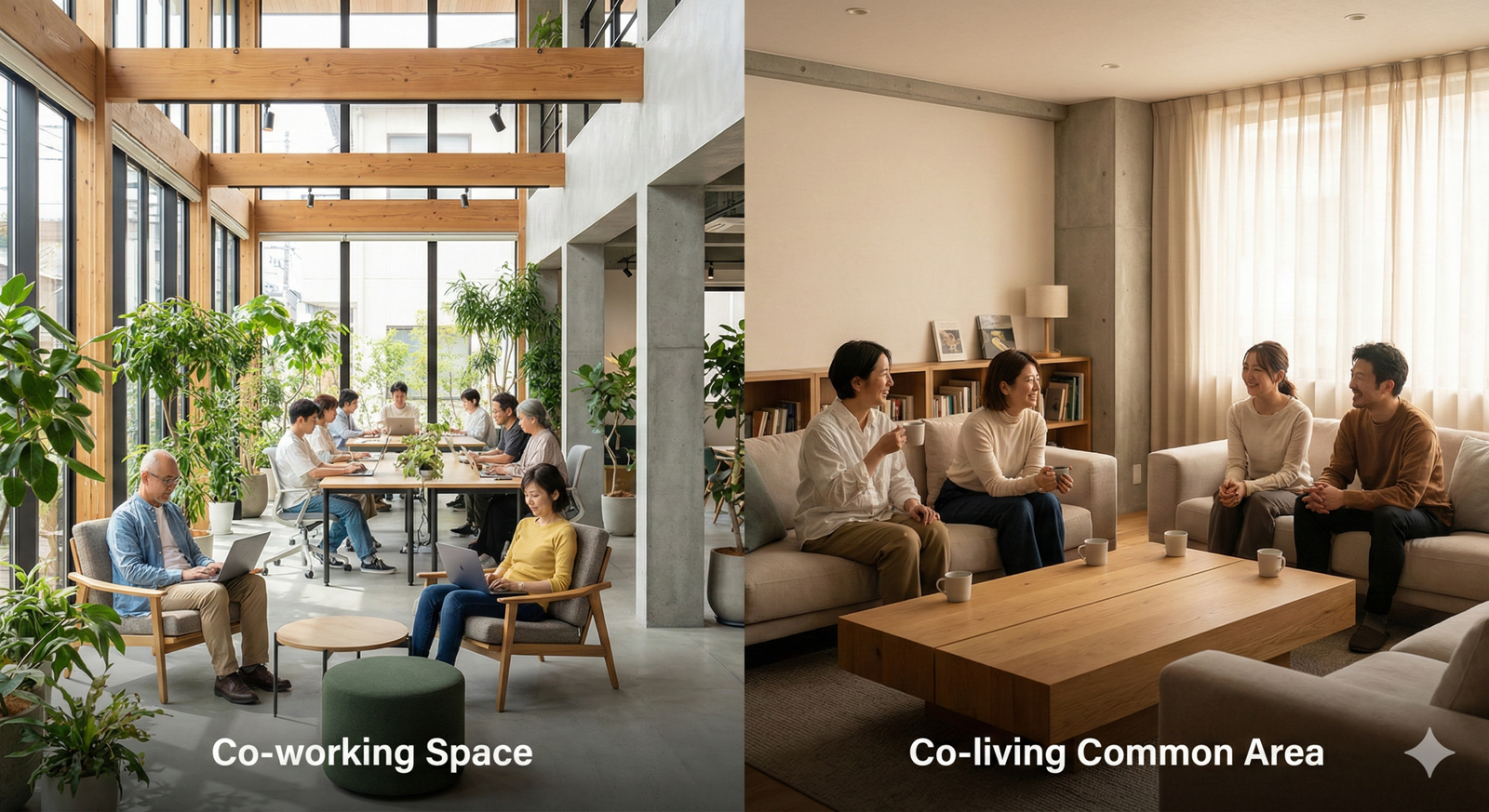
For the modern location-independent professional, the romantic image of a laptop on a sandy beach has long been replaced by a more practical reality: the need for ergonomic chairs, fiber-optic internet, and a community that understands the difference between a vacation and a workday. As the digital nomad lifestyle matures from a niche subculture into a global workforce phenomenon, the infrastructure supporting it has evolved rapidly. It is no longer just about finding a coffee shop with a power outlet; it is about an integrated ecosystem of co-living spaces, dedicated co-working hubs, and curated “workation” packages designed to maximize productivity and minimize loneliness.
In this guide, “digital nomad infrastructure” refers to the physical environments, service layers, and community networks built specifically to support remote work and living. This includes housing designed for mid-term stays (co-living), workspaces optimized for productivity (co-working), and bundled travel experiences that combine both (workations). It does not cover general travel logistics like flight booking engines or basic tourist hotels, unless they have pivoted specifically to serve remote workers.
Key Takeaways
- Infrastructure over Aesthetics: While a view is nice, professional nomads prioritize upload speeds, chair ergonomics, and noise control over scenery.
- Community as a Service: Co-living and workation packages are often priced higher than standard rentals because they bundle “instant community” and networking, reducing the isolation of travel.
- The “Workation” Shift: Companies and freelancers are increasingly using structured workation packages to balance deep work with exploration, moving away from the chaotic DIY travel model.
- Flexibility vs. Stability: The best infrastructure offers the flexibility of a lease-free life with the stability of enterprise-grade facilities.
- Vetting is Vital: Not all “nomad-friendly” labels are accurate; learning to test Wi-Fi latency and assess workspace ergonomics before booking is a crucial skill.
Who this is for (and who it isn’t)
This guide is for:
- Full-time Digital Nomads: Individuals who have given up a fixed permanent residence and travel continuously or semi-continuously.
- Remote Employees: Professionals with location flexibility who want to work from a different city or country for a month or two without sacrificing performance.
- Freelancers and Entrepreneurs: Solopreneurs who need a professional environment and networking opportunities while on the road.
- HR Managers: Leaders looking to understand the facilities available for their remote teams or planning corporate retreats.
This is not for:
- Budget Backpackers: Travelers prioritizing the lowest cost accommodation over productivity amenities (though budget options exist, this guide focuses on professional infrastructure).
- Vacationers: Those looking to disconnect completely; the infrastructure discussed here is built around work.
The Evolution of Nomad Infrastructure
A decade ago, the “infrastructure” for a digital nomad consisted of a heavy backup battery, a 4G dongle, and a list of quiet cafes. Today, an entire industry has emerged to service the needs of the remote workforce. This shift was accelerated significantly by the global events of 2020-2022, which normalized remote work and pushed hospitality brands to pivot.
The evolution has moved through three distinct phases:
- The DIY Phase: Nomads worked from hostels, Airbnbs, and cafes, often struggling with unreliable internet and uncomfortable seating.
- The Adaptation Phase: Hotels and hostels began adding “coworking corners,” and Airbnb introduced “dedicated workspace” filters, though quality varied wildly.
- The Integrated Infrastructure Phase (Current): Purpose-built brands now offer standardized experiences where housing, workspace, and community are integrated into a single subscription or booking.
This maturation means that reliability is now a product. You are not just paying for a bed; you are paying for the assurance that you can join a video conference at 3:00 PM without the connection dropping, and that you will have a quiet room for a client call.
Co-living Spaces: Building Home on the Road
Co-living is perhaps the most significant pillar of modern nomad infrastructure. Unlike a standard apartment rental or a hotel, co-living is designed for community living where residents share common areas (kitchens, lounges, sometimes bathrooms) but have private bedrooms. The defining feature is the curation of residents and the facilitation of social interaction.
What is Co-living for Nomads?
For digital nomads, co-living is distinct from student housing or urban density housing. It is specifically geared towards professionals. These spaces often require a minimum stay (e.g., one week or one month) to foster deeper connections, preventing the revolving-door atmosphere of a hostel.
Core Components:
- Private Space: A bedroom (often en-suite) that serves as a sanctuary.
- Shared Amenities: High-end kitchens, laundry facilities, media rooms, and often a dedicated co-working space within the building.
- Community Manager: A dedicated staff member responsible for organizing events, dinners, and facilitating introductions.
The Value Proposition: Why Choose Co-living?
1. Instant Community and Networking The number one reported challenge for digital nomads is loneliness. Arriving in a new city usually means starting your social life from scratch. Co-living bypasses this friction. You walk into a kitchen and meet a graphic designer from Berlin, a software engineer from Toronto, and a writer from Singapore. The “infrastructure” here is social; the environment is engineered to create serendipitous collisions between like-minded professionals.
2. Turnkey Convenience Setting up a short-term rental involves logistical headaches: setting up utilities, buying condiments, figuring out trash days. Co-living is “plug-and-play.” Utilities, cleaning, fast internet, and often basic supplies (coffee, toilet paper, oil, spices) are included in one bill.
3. Productivity focus Unlike a shared house with random roommates who might be partying or unemployed, nomad co-living spaces curate for people who work. There is a mutual understanding of “quiet hours” and respect for work schedules.
Types of Co-living Models
- The Urban Hub: Located in major cities (London, Lisbon, New York, Tokyo). These are often large buildings with dozens of units, acting as a base for exploring the metropolis.
- The Rural Retreat: Located in nature (Bali, Costa Rica, the Alps). These focus on wellness, hiking, or surfing alongside work. They often have stronger community bonds due to the isolation.
- The Network Subscription: Brands that offer a membership allowing you to hop between their locations worldwide (e.g., Outsite, Selina, Haeckels). This provides a consistent standard of quality regardless of the country.
Co-working Spaces: The Professional Anchor
While many nomads work from their co-living accommodation, the dedicated co-working space remains a vital piece of infrastructure. It provides a physical separation between “work” and “rest,” which is crucial for mental health and burnout prevention.
Beyond the Coffee Shop
Working from a cafe is romanticized but often impractical. Noise levels are unpredictable, power outlets are scarce, and staying for 8 hours can be socially awkward or expensive. Dedicated co-working spaces solve these issues with professional-grade infrastructure.
Critical Amenities for Nomads
When evaluating a co-working space, experienced nomads look for specific technical requirements:
- Redundant Internet Connectivity: Primary fiber lines are standard, but the best spaces have backup lines (sometimes via Starlink or 5G failover) to ensure 99.9% uptime. This is critical in developing regions where infrastructure instability is common.
- Ergonomics: “Ergonomic” is a buzzword, but in infrastructure terms, it means Herman Miller or Steelcase chairs (or equivalent quality), adjustable standing desks, and proper monitor heights. Working from a wooden kitchen chair for months is a recipe for chronic back pain.
- Acoustic Privacy: Phone booths or “Zoom rooms” are the single most requested amenity. Nomads need soundproofed, ventilated small spaces to take calls without disturbing others or leaking confidential client information.
- 24/7 Access: Nomads often work across time zones. A developer in Thailand working for a US company needs a workspace that is open and safe at 2:00 AM. Keyless entry via smartphone apps is the industry standard here.
The Economics of Global Access
For frequent travelers, paying daily drop-in rates ($15–$40/day) becomes prohibitively expensive. The market has responded with:
- Global Passes: Services like Croissant or Priority Pass (for lounges) allow access to networks of independent spaces.
- Brand Memberships: WeWork, Impact Hub, and regional chains offer “roaming” memberships where your home base fee covers access to other locations.
Niches within Co-working
- Tech/Dev Hubs: Spaces with multiple monitors, server racks, and intense quiet focus.
- Creative Studios: Spaces with podcasting gear, green screens, and ample natural light.
- Social Clubs: Hybrid spaces that function as workspaces by day and bars/event venues by night (e.g., Soho House model adapted for nomads).
The Rise of “Workation” Packages
A “workation” (work + vacation) is a specific travel product where the logistics of living and working are bundled into a single package. These are different from standard vacations because the itinerary is built around a standard 9-to-5 (or flexible) work schedule.
How Workation Packages Work
Typically, a provider organizes a trip for a group of 10–30 strangers (or a corporate team). The package includes:
- Accommodation: High-quality private rooms or villas.
- Workspace: Guaranteed access to a co-working space or a verified home office setup.
- Logistics: Airport transfers, SIM cards, local transport.
- Experiences: Weekend excursions, dinners, yoga classes, surf lessons.
The key differentiator is that the activities happen outside of work hours. The schedule respects that participants have jobs to keep.
Who uses them?
- The “Soft Landing” Nomad: Someone trying the lifestyle for the first time who wants a safety net.
- The Time-Poor Professional: Someone earning a high income who doesn’t have time to research Airbnb Wi-Fi speeds or negotiate leases. They pay a premium for someone else to handle the logistics.
- Corporate Teams: Companies sending a department away for a month to bond and work on a specific project in an inspiring location.
The “Retreat” vs. The “Workation”
It is important to distinguish between these two terms:
- Retreat: Usually implies disconnecting. “Digital detox,” intensive workshops, less focus on day-to-day employment.
- Workation: Implies staying connected. Business as usual, just in a better location.
Infrastructure for workations is heavily reliant on the “host.” The host acts as a concierge, IT support, and travel agent. The success of a workation package depends entirely on the reliability of the infrastructure promised. If the “villa with Wi-Fi” turns out to have a spotty 4G connection, the workation fails.
Infrastructure Requirements: A Technical Deep Dive
For the digital nomad, infrastructure is not just physical; it is technical and logistical. Here is what constitutes “good infrastructure” in 2026.
Internet: The Lifeblood
In the hierarchy of nomad needs, internet connectivity sits at the base, even below food.
- Speed Metrics: Nomads look for symmetric speeds. 100 Mbps down is great for streaming Netflix, but if the upload speed is 5 Mbps, a video call will lag. A standard requirement is minimum 20 Mbps upload / 50 Mbps download.
- Latency (Ping): Crucial for real-time communication. Satellite internet (older generations) had high latency. Modern LEO (Low Earth Orbit) satellites like Starlink have revolutionized nomad infrastructure in remote areas (e.g., small islands, mountains) by bringing latency down to usable levels (20-40ms).
- Mesh Networks: In large co-living houses, a single router is insufficient. Professional infrastructure requires mesh networks (e.g., Ubiquiti, Eero) to ensure the corner bedroom has the same signal strength as the living room.
Power Stability
In popular nomad destinations like South Africa, Bali, or parts of Latin America, power outages can be frequent.
- UPS (Uninterruptible Power Supply): Essential for keeping the router running during micro-cuts.
- Generators/Solar Backup: High-end co-working spaces and co-living hubs in unstable grids invest heavily in battery banks and generators to ensure 100% uptime.
Security (Physical and Digital)
- Digital: Open Wi-Fi networks in cafes are security risks. Professional infrastructure provides secure, password-protected networks, often with client isolation (so your device isn’t visible to others on the network).
- Physical: Lockers for laptops, secure access codes for rooms, and CCTV in common areas are standard expectations for co-living spaces to prevent theft of expensive tech gear.
How to Evaluate Nomad Infrastructure: A Checklist
Before booking a month-long stay or signing up for a workation, use this checklist to verify the infrastructure claims.
1. The Wi-Fi Validation
- Don’t ask: “Is the Wi-Fi good?” (Subjective).
- Do ask: “Can you send me a screenshot of a speed test run from the desk in the room I will be booking?”
- Check: Upload speed, Jitter, and Ping.
2. The Workspace Ergonomics
- Don’t ask: “Is there a desk?”
- Do ask: “Is the chair a dedicated office chair or a dining chair? Is the desk height standard (75cm)?”
- Tip: Look at photos carefully. If the workspace is a glass table or a bar stool, your back will hurt after three days.
3. The Community Vibe
- Look for: Reviews mentioning specific events (e.g., “The Tuesday family dinner,” “The Friday skill-share”).
- Avoid: Listings that talk about “party atmosphere” if you have a deadline-driven job.
4. The Fine Print on Co-living
- Guest Policy: Can you have a friend over? (Policies vary strictly).
- Quiet Hours: Are they enforced?
- Cleaning Schedule: How often are common areas cleaned? (Crucial for shared kitchens).
Cost Analysis: DIY vs. Managed Infrastructure
Is it worth paying the premium for dedicated nomad infrastructure?
| Feature | DIY Approach (Airbnb + Cafe) | Managed Infrastructure (Co-living/Coworking) |
| Cost | Generally Lower (variable) | Higher (Premium for convenience) |
| Setup Time | High (Searching, vetting, moving) | Zero (Arrive and work) |
| Internet Reliability | Variable / Risk | High / Guaranteed |
| Community | High effort (Must seek it out) | Built-in (Instant access) |
| Flexibility | High (Any location) | Medium (Limited to provider locations) |
| Workspace Quality | Often Poor (Kitchen tables) | Professional (Ergonomic) |
The Verdict:
- Go DIY if you are on a strict budget, traveling with a partner (who provides social company), or staying in a city with widely known, excellent public infrastructure (e.g., Seoul, Taipei).
- Go Managed if you are traveling solo, earn a high hourly rate (where time spent fixing logistics loses you money), or are going to a destination with known infrastructure challenges (e.g., Tulum, Goa).
Common Mistakes and Pitfalls
1. The “Instagram Trap”
Many accommodations market themselves as “nomad-ready” by placing a laptop on a bed in a photo. Working from a bed is not sustainable. Always verify the existence of a proper desk and chair.
2. Overlooking Time Zones
Booking a fantastic co-living space in Bali while working New York hours (a 12-hour difference) means you will be working whilst everyone else is socializing, and sleeping while everyone else is working. This breaks the value proposition of the community. Choose infrastructure in a longitude that aligns reasonably well with your employer or clients.
3. Underestimating Noise
“Open plan” co-living often means noise travels. If you are a light sleeper or have a job requiring high concentration, ensure the infrastructure includes soundproofing or “quiet zones.” Read reviews specifically searching for the word “noise” or “thin walls.”
4. Relying on One Source of Internet
Even with the best infrastructure, things break. A professional nomad always carries a backup—usually a local SIM card with a generous data plan and a phone capable of tethering. Do not rely 100% on the co-living space’s promise.
Case Examples: What this looks like in practice
Scenario A: The Corporate Manager
- Needs: Privacy for sensitive calls, high reliability, timezone alignment.
- Choice: A private studio within a premium co-living brand (e.g., Outsite) in Lisbon.
- Why: Lisbon aligns with US East Coast mornings and European afternoons. The brand ensures fiber internet. The studio offers privacy, but the shared rooftop lounge allows for evening networking.
Scenario B: The Freelance Creative
- Needs: Inspiration, lower cost of living, collaboration.
- Choice: A co-living villa in Chiang Mai, Thailand.
- Why: Low cost allows for a higher quality of life. The shared workspace fosters collaboration with other creatives. The “workation” aspect is handled by local scooter trips organized by the community manager.
Scenario C: The Tech Team Retreat
- Needs: High bandwidth, large meeting rooms, team bonding activities.
- Choice: A specialized “workation” retreat center in the Canary Islands.
- Why: The islands offer EU-standard infrastructure (legal and digital) but a resort-like atmosphere. The package includes surf lessons for the team, creating a shared bonding experience outside of the sprint planning sessions.
Future Trends in Nomad Infrastructure
The sector is rapidly innovating. Here is what is coming next:
1. Subscription Living (The “Netflix of Housing”)
Brands are moving toward global subscriptions where you pay a flat monthly fee to live anywhere in their network. This eliminates lease logistics entirely and standardizes the quality of life across continents.
2. Digital Nomad Villages
Collaborations between governments and private companies to revitalize rural areas. Examples include the Digital Nomad Village in Madeira, Portugal. These initiatives repurpose existing village infrastructure to support remote workers, creating a symbiotic relationship between locals and nomads.
3. Corporate-Sponsored Workations
As companies struggle to get people back to the office, the compromise is the “sponsored workation.” Companies pay for infrastructure packages for employees to work remotely together for a set period, blending the benefits of remote work with the benefits of in-person collaboration.
4. Family-Centric Infrastructure
The original nomad demographic (20-something singles) is aging and having children. We are seeing the rise of “Fam-working” spaces—co-living that includes daycare, schools, and playgrounds, allowing families to travel without sacrificing their children’s education or social stability.
Conclusion
The infrastructure for digital nomads has graduated from makeshift solutions to a sophisticated global industry. Whether you choose a bustling co-working hub, a community-focused co-living house, or a curated workation package, the goal remains the same: to remove the friction of the lifestyle so you can focus on your work and enjoy the freedom of the location.
The best infrastructure is the kind you don’t notice. It is the Wi-Fi that connects instantly, the chair that doesn’t hurt your back, and the community that welcomes you on day one. By prioritizing these elements over pure aesthetics or rock-bottom pricing, you invest in the sustainability of your career and the quality of your life on the road.
Next Steps: If you are planning your first or next nomad stint, start by listing your non-negotiables (e.g., “Must have private call booth,” “Must have gym on-site”). Then, test a provider for a shorter duration—book one week before committing to a month—to verify the infrastructure meets your professional standards.
FAQs
What is the difference between co-living and a shared apartment?
A shared apartment is usually a long-term arrangement with roommates who may have different lifestyles. Co-living is a managed service designed for flexibility, often fully furnished with utilities included, and curated for a specific community (like remote workers) with a dedicated community manager.
Are workation packages tax-deductible?
This depends heavily on your tax residency and the nature of your work. If the trip is primarily for business purposes (e.g., attending a conference, meeting clients, or a corporate retreat), parts of it may be deductible. However, if it is simply working from a different location for personal preference, it is usually not deductible. Always consult a tax professional in your jurisdiction.
Do I need a special visa to stay in co-living spaces abroad?
Yes, you generally need a visa that permits your stay. Many countries now offer specific “Digital Nomad Visas” that allow for longer stays (6 months to 2 years) and legal remote work. Entering on a tourist visa to work, even remotely, sits in a legal grey area in many countries and can be risky.
How fast does internet speed need to be for digital nomads?
For most general remote work (video calls, cloud-based apps), a stable connection of 20 Mbps download and 10 Mbps upload is the functional minimum. However, for video editors or those transferring large files, 100 Mbps+ symmetric fiber is recommended. Latency (ping) should ideally be under 50ms for smooth video conferencing.
Can families use co-living spaces?
Traditional co-living spaces are often geared towards singles or couples. However, a new niche of “family co-living” or “world-schooling hubs” is emerging. These offer larger family units, childcare facilities, and community activities designed for children. Brands like “Boundless Life” are examples of this trend.
Is co-working worth the cost if I have a desk in my room?
Many nomads find it worth the cost for two reasons: mental separation and social connection. Working where you sleep can lead to burnout and isolation. A co-working space provides a routine, a reason to leave the house, and a natural way to meet other professionals, which can lead to new business opportunities or friendships.
What happens if the internet goes down in a co-living space?
reputable co-living spaces usually have a backup ISP or a 4G/5G failover system. Before booking, it is essential to ask the community manager specifically about their redundancy plan. If they don’t have one, you should ensure you have a personal mobile hotspot with a local SIM card as your own backup.
Are co-living spaces safe for solo female travelers?
generally, co-living spaces are considered safer than generic hostels or isolated Airbnbs because of the vetting process, the presence of community managers, and secure access systems. Many spaces also have female-only dorms or floors, and the built-in community provides a “buddy system” for exploring the local area.
References
- Outsite. (n.d.). The Outsite Membership: Global Co-living for Remote Workers. Outsite. Retrieved from https://www.outsite.co
- Selina. (n.d.). Stay, Work, and Explore. Selina. Retrieved from https://www.selina.com
- Herman Miller. (n.d.). The Art and Science of Ergonomics. Herman Miller Research. Retrieved from https://www.hermanmiller.com/research/
- MBO Partners. (2023). State of Independence in America 2023: The Rise of the Digital Nomad. MBO Partners. Retrieved from https://www.mbopartners.com/state-of-independence/
- SafetyWing. (n.d.). Remote Health and Nomad Insurance. SafetyWing. Retrieved from https://safetywing.com
- Starlink. (n.d.). Starlink for RVs and Roam. SpaceX. Retrieved from https://www.starlink.com/roam
- WeWork. (n.d.). Global Access and On-Demand Solutions. WeWork. Retrieved from https://www.wework.com
- Nomad List. (n.d.). Best Places to Live for a Digital Nomad. Nomad List. Retrieved from https://nomadlist.com