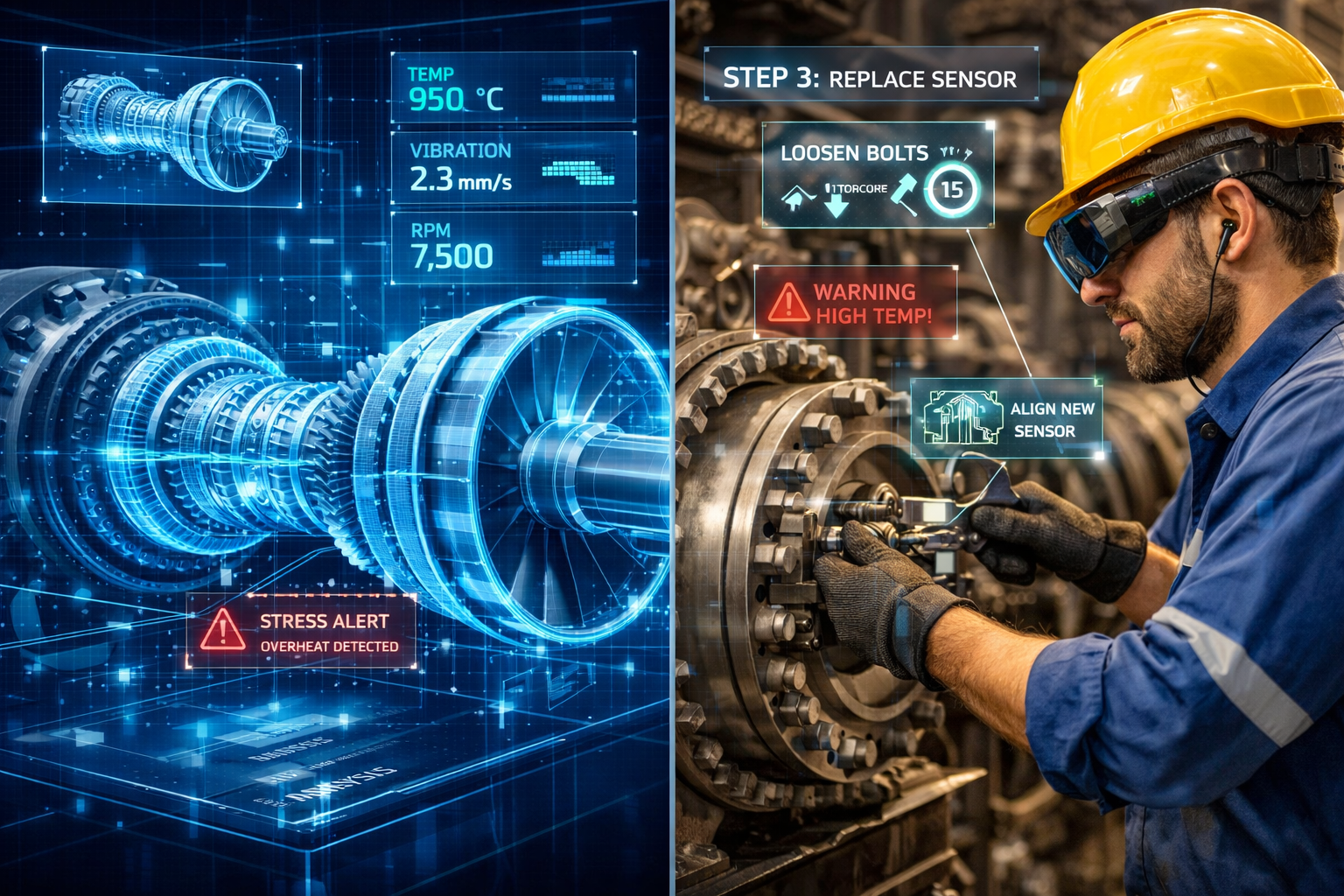
The landscape of field service has undergone a radical transformation. We have moved past the era of “digitalization”—where mobile apps and GPS tracking were the gold standard—into the era of Autonomous Field Service Operations. In 2026, autonomy does not simply mean self-driving vans; it refers to a self-orchestrating ecosystem where artificial intelligence (AI), the Internet of Things (IoT), and “agentic” systems manage the entire service lifecycle with minimal human intervention.
Definition and Core Concept
Autonomous Field Service Operations (AFSO) is a strategic framework where service delivery is governed by intelligent systems capable of sensing, diagnosing, and resolving issues independently. This involves “agentic AI” that doesn’t just suggest a schedule but executes it, orders parts, and initiates remote fixes. It is the transition from reactive (fixing what is broken) to prescriptive (preventing failure via automated logic).
Key Takeaways for 2026
- Predictive to Prescriptive: Systems now tell you what to do, not just when something might break.
- Agentic Orchestration: AI agents handle 70% of dispatching and part-logistics without human oversight.
- Digital Twins as Standard: Every major asset has a virtual mirror for remote diagnostics.
- Technician as “Knowledge Worker”: Augmented Reality (AR) has turned every junior tech into an expert by overlaying real-time data.
- The “Amazon” Effect: Customers expect real-time transparency and “self-healing” solutions as a baseline.
Who This Is For
This guide is designed for Chief Operating Officers (COOs), Service Directors, and IT Architects in industries ranging from HVAC and heavy manufacturing to medical device servicing and telecommunications. Whether you are leading a legacy enterprise or a tech-forward startup, understanding the move toward autonomy is no longer optional—it is a survival requirement.
1. The Evolution: From Digital to Autonomous
To understand where we are in March 2026, we must look at the four stages of service maturity. Many organizations are currently stuck in Stage 2 or 3, struggling to make the leap to full autonomy.
Stage 1: Manual and Reactive
The “clipboard era.” Service is triggered by a customer phone call. Scheduling is done on whiteboards or spreadsheets. Data is siloed, and the technician’s primary tool is physical intuition.
Stage 2: Digital and Connected
The “mobile era.” Organizations adopted Field Service Management (FSM) software. Technicians use tablets, and managers track vans via GPS. While “digital,” the decision-making remains 100% human-driven.
Stage 3: AI-Assisted
The “predictive era.” IoT sensors begin feeding data into dashboards. AI suggests optimal routes or alerts managers to a high probability of failure. However, a human “dispatcher” still has to click “Accept” for every action.
Stage 4: Fully Autonomous (AFSO)
The “agentic era.” In 2026, the system is the dispatcher. If a sensor on an MRI machine detects a coolant leak, the system:
- Diagnoses the specific part needed.
- Checks local inventory and orders the part if unavailable.
- Finds the technician with the right certification and proximity.
- Reschedules lower-priority jobs automatically.
- Notifies the customer with a precise ETA and a live-tracking link.
2. The Core Tech Stack of 2026
The backbone of autonomous operations isn’t a single software package; it is an integrated “Tech Mesh.”
Agentic AI and Large Action Models (LAMs)
Unlike the Generative AI of 2023, which mostly wrote emails, the AI of 2026 is “agentic.” It uses Large Action Models to interact with software interfaces. It can log into a legacy ERP, navigate to the inventory screen, and execute a purchase order. It doesn’t just “talk”; it “does.”
Ambient IoT and Edge Computing
As of March 2026, “Ambient IoT” has reduced the cost of sensors to pennies. These sensors do not require batteries, drawing power from radio waves or vibration. Edge Computing ensures that data is processed locally on the machine or the technician’s device.
The latency is reduced to milliseconds, allowing for “Self-Healing” actions. For example, an industrial pump might detect a harmonic vibration and automatically adjust its RPM to avoid a catastrophic seal failure—all before a human even knows there was a risk.
5G and 6G Connectivity
Reliable connectivity is the oxygen of AFSO. With the rollout of 5G Advanced and early 6G pilots, technicians in remote mines or deep basements maintain high-bandwidth connections for 3D Digital Twin streaming.
3. Predictive vs. Prescriptive Maintenance: The New Frontier
The most significant shift in 2026 is the dominance of Prescriptive Maintenance (RxM) over Predictive Maintenance (PdM).
Understanding the Difference
- Predictive (PdM): “Based on vibration data, this motor has an 80% chance of failing in the next 14 days.”
- Prescriptive (RxM): “This motor will fail in 14 days. I have reduced the load by 15% to extend its life to 21 days. A replacement bearing is scheduled to arrive Tuesday at 10:00 AM. Technician Sarah is assigned for an 11:00 AM install.”
The Reliability Formula in the Autonomous Age
Modern reliability engineering uses refined metrics to measure the success of autonomous systems. Consider the relationship between Mean Time Between Failures (MTBF) and Mean Time To Repair (MTTR). In an autonomous world, we aim to maximize the former and minimize the latter through automated intervention:
$$Availability = \frac{MTBF}{MTBF + MTTR}$$
By using prescriptive algorithms to identify “failure precursors” early, systems can trigger a “soft-fix” (like a software reboot or load balancing), effectively increasing the $MTBF$ by delaying the actual hardware breakdown.
4. Digital Twins and Spatial Intelligence
In 2026, the “Digital Twin” is no longer just a 3D CAD model. it is a living, breathing data entity.
Remote Diagnostics and “Virtual First”
Before a technician is ever dispatched, a remote expert (or an AI agent) performs a “Virtual Inspection.” By looking at the Digital Twin, which mirrors the real-time telemetry of the physical asset, 40% of issues are resolved via remote software adjustments.
AR-Guided Repairs
When a technician arrives on-site, they are no longer carrying a 500-page manual. Using AR glasses (like the latest iterations of the Apple Vision Pro or industrial HoloLens), the Digital Twin is overlaid onto the physical machine.
Common Use Case: A technician looks at a complex circuit board. The AR interface highlights the specific capacitor that needs replacement and provides a 3D animation of the desoldering process.
5. Workforce 2.0: The Human-in-the-Loop
A common fear is that “Autonomous” means “No Humans.” In 2026, the reality is the opposite. Humans are more important than ever, but their roles have shifted.
The Rise of the “Super-Technician”
Autonomy handles the “boring” parts—scheduling, parts ordering, basic diagnostics. This allows technicians to focus on complex problem-solving and customer empathy. We call this the Super-Technician: a hybrid of a data analyst, a mechanic, and a brand ambassador.
Solving the Skills Gap
The industry is facing a massive retirement wave. Autonomous systems capture the “tribal knowledge” of veteran technicians. When a 30-year veteran retires, their expertise is encoded into the AI’s diagnostic logic, ensuring that a rookie technician can perform at an expert level on day one.
Hybrid Workforce Management
In 2026, your “workforce” includes:
- Full-time Employees: For mission-critical, high-security jobs.
- Gig/Contract Technicians: Automatically onboarded and dispatched via the platform for surge capacity.
- Robotic Assistants: Drones for roof inspections or robotic dogs (like Boston Dynamics’ Spot) for hazardous environment monitoring.
6. The Customer Experience (CX) Revolution
In the autonomous era, the “Customer Experience” is measured by invisibility. The best service is the one the customer never had to think about.
Zero-Touch Service
Customers in 2026 value “uptime” above all else. Subscription-based “as-a-service” models (e.g., “Air-as-a-Service” instead of buying an HVAC unit) mean the customer only pays for the result. The autonomous system ensures that result by performing maintenance in the middle of the night or during low-usage windows without the customer ever needing to pick up the phone.
Hyper-Transparency
When a human is required, the customer gets the “Uber-ized” experience:
- Live Map: Seeing the technician’s van move in real-time.
- Bio-Data: Knowing the technician’s name, certifications, and even their safety rating.
- Real-time Communication: An AI-powered portal that answers questions like “When will my power be back on?” with 99% accuracy based on real-time repair progress.
7. Common Mistakes in Implementation
Transitioning to autonomous operations is fraught with pitfalls. Based on data from early adopters through 2024 and 2025, here are the most common failures:
1. The “Data Swamp” Problem
Many firms collect vast amounts of IoT data but have no way to clean or label it. Autonomous systems require high-fidelity data. If your sensors are miscalibrated, the AI will make “prescriptive” mistakes, leading to unnecessary truck rolls.
2. Over-Automating Empathy
While customers love efficiency, they hate “cold” service. A common mistake is removing the human element during a crisis. If a hospital’s backup generator fails, they don’t want to talk to an AI agent; they want a human expert who understands the gravity of the situation.
3. Ignoring Legacy Integration
You cannot build an autonomous future on top of a 20-year-old COBOL-based ERP system. The “friction” at the integration layer often causes the AI to stall. A “Middle-Ware First” approach is usually necessary.
4. Cultural Resistance
Technicians often see “Autonomous Scheduling” as “Micro-management by Robot.” Without proper change management and a focus on how the tech helps the tech (e.g., reducing “windshield time” or unpaid overtime), adoption will fail.
8. Safety, Ethics, and Regulation (Important)
Safety Disclaimer: Autonomous field service in high-risk environments (electrical grids, chemical plants, medical facilities) must always include a “Human-in-the-Loop” override. Never allow an autonomous system to bypass physical lockout/tagout (LOTO) procedures without human verification.
Regulatory Compliance in 2026
New laws, such as the Cyber Resilience Act (CRA) and the Sustainable Product Initiative, require that all autonomous service systems:
- Report Carbon Footprints: Every service route must be optimized for the lowest CO2 emissions.
- Explainability: If an AI denies a warranty claim or prioritizes one customer over another, it must be able to “explain” its logic in a human-auditable format.
9. Industry-Specific Use Cases
Healthcare
Autonomous systems monitor MRI and CT scanners. When a helium leak is detected, the system autonomously orders the gas and schedules the repair for 2:00 AM, ensuring zero cancelled patient appointments the next day.
Utilities and Smart Cities
Drones autonomously patrol power lines using computer vision to detect frayed wires or encroaching vegetation. When an issue is found, a work order is generated, and a crew is dispatched with the exact GPS coordinates and a 3D map of the tower.
Manufacturing (Industry 4.0)
The “Lights-Out Factory” relies on autonomous maintenance. If a robotic arm’s motor starts to run hot, the factory’s local “Central Intelligence” re-routes the production line to a different cell while the autonomous service system handles the repair.
10. The Path to Maturity: A 12-Month Roadmap
If you are starting today, March 14, 2026, here is your path to autonomy:
| Month | Focus Area | Action Step |
| 1-3 | Data Foundations | Audit your IoT sensors. Ensure every asset has a unique “Digital ID.” |
| 4-6 | Pilot Prescriptive AI | Implement AI in one high-value area (e.g., route optimization or part-demand forecasting). |
| 7-9 | Worker Enablement | Deploy AR tools to your top 20% of technicians. Gather feedback on UI/UX. |
| 10-12 | Full Orchestration | Connect your FSM to your ERP and Inventory systems to enable “Agentic” workflows. |
Conclusion
The future of field service is not a destination; it is a state of continuous, autonomous optimization. By March 2026, the competitive gap between “Reactive” and “Autonomous” firms has become an unbridgeable chasm. Organizations that embrace the “Agentic” shift—where systems sense, think, and act—are seeing 30% reductions in operational costs and 25% increases in technician productivity.
However, the technology is only half the battle. The true winners are those who use autonomy to empower their people, not replace them. By offloading the logistical burden to AI, we free our human technicians to do what they do best: provide expert, empathetic service that builds lifelong customer loyalty.
Next Steps:
- Assess your current “Maturity Stage.”
- Conduct a “Data Health Audit” to see if your current IoT feeds are clean enough for AI.
- Schedule a “Future of Work” workshop with your field teams to address concerns about automation and highlight the benefits of AR and AI assistance.
FAQs
What is the difference between Automation and Autonomy in field service?
Automation follows a pre-set rule (e.g., “If X happens, do Y”). Autonomy uses AI to make decisions based on changing contexts (e.g., “X happened, but based on traffic, technician skill, and part availability, I will choose Z instead of Y”).
Will AI replace field technicians?
No. AI replaces the administrative tasks (scheduling, searching for manuals, logging data). The physical repair and complex troubleshooting still require a human touch, augmented by technology.
How much does it cost to implement Autonomous Field Service?
While the upfront cost for Enterprise AI and IoT can be high, most organizations see a full ROI within 18–24 months through reduced fuel costs, higher first-time fix rates, and increased asset longevity.
Is my data secure in an autonomous system?
In 2026, data security is paramount. Modern systems use End-to-End Encryption and “Federated Learning,” where the AI learns from your data without that data ever leaving your secure cloud environment.
Does this work for small businesses?
Yes. Many FSM providers now offer “Autonomy-as-a-Service” tiers, allowing smaller companies to use advanced scheduling and AI diagnostic tools without a massive internal IT team.
References
- Gartner (2025): “The Rise of Agentic AI in Field Service Management.”
- IDC MarketScape (2026): “Worldwide Manufacturing Service Life Cycle Management Applications.”
- Journal of Reliability Engineering (2025): “Prescriptive vs. Predictive Maintenance: A Comparative Study of Industrial ROI.”
- Salesforce State of Service (6th Edition, 2024): “Trends in Mobile Workforce Management.”
- IEEE Xplore (2026): “Ambient IoT and the Future of Zero-Power Sensing in Industrial Environments.”
- Harvard Business Review (Jan 2026): “Leading the Autonomous Workforce: Cultural Change in the Age of AI.”
- ServiceMax (2025): “The Digital Twin Maturity Model for Field Service Organizations.”
- EU Cyber Resilience Act (CRA) Guidelines (2024): “Compliance Requirements for Autonomous Software Systems.”