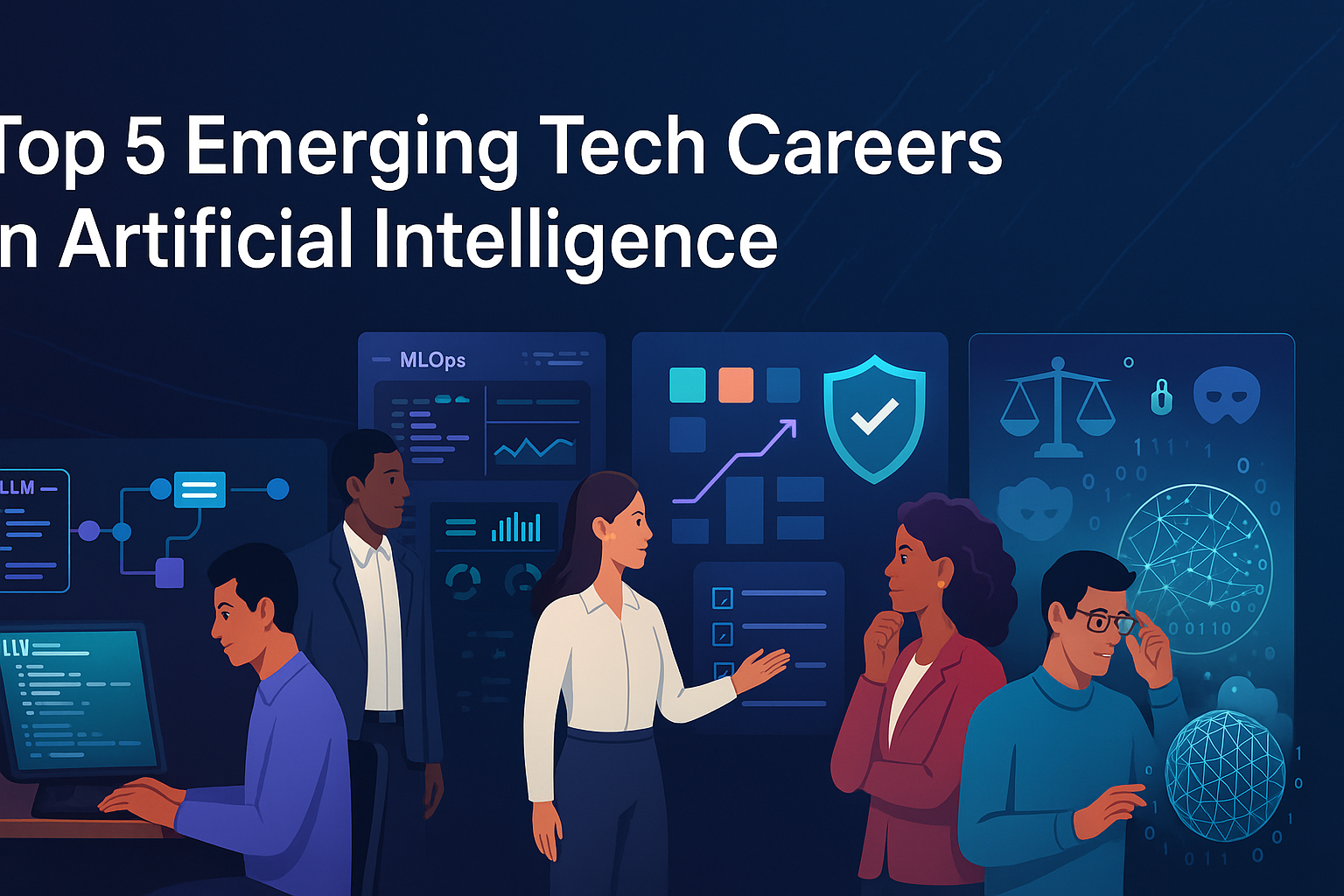
The landscape of work is undergoing a tectonic shift. We are witnessing what industry analysts call “The Great Reskill,” a period where the shelf life of technical skills is shortening, and the demand for specialized knowledge in artificial intelligence (AI), cybersecurity, and data science is outstripping supply. For professionals looking to pivot, this represents a window of unprecedented opportunity, but also significant confusion.
A tech career transition is not merely about learning to code or memorizing acronyms; it is a fundamental restructuring of your professional identity. Whether you are a marketer looking to leverage data analytics, a logistics manager eyeing supply chain AI, or a complete novice seeking the stability of cybersecurity, the path forward requires strategic planning, not just random course-taking.
In this guide, “tech career transition” refers to the deliberate process of acquiring new technical skills to move from a non-technical or legacy-tech role into a high-demand specialization. We will focus specifically on three dominant tracks: Artificial Intelligence, Cybersecurity, and Data Science.
Key Takeaways:
- The “Hybrid” Advantage: Your past experience is not a sunk cost; domain expertise combined with new tech skills creates a powerful “hybrid” profile that employers crave.
- The Skill Hierarchy: Foundational skills (math, logic, basic coding) must precede flashy tools; you cannot master AI without understanding data fundamentals.
- Certifications vs. Skills: In cybersecurity, certifications are gatekeepers; in AI and Data, portfolios and GitHub repositories often speak louder than certificates.
- The Reality of Entry-Level: Reskilling often means taking a step back in seniority to take two steps forward in growth potential.
- Continuous Learning: The transition doesn’t end with the first job; the rate of change in these fields requires a commitment to lifelong learning.
Who this is for (and who it isn’t)
This guide is for:
- Mid-career professionals in fields like finance, healthcare, marketing, or operations who want to pivot into tech to future-proof their earnings.
- Legacy tech workers (e.g., sysadmins, manual QA testers) who need to update their stack for the cloud and AI era.
- Recent graduates from non-STEM disciplines realizing the market demand lies elsewhere.
- Self-starters willing to dedicate 6–12 months to rigorous study and practice.
This guide is NOT for:
- People looking for a “get rich quick” scheme; tech transitions are grueling and require patience.
- Those unwilling to touch code or technical interfaces; while “no-code” exists, high-value careers in these fields require technical literacy.
- Readers looking for strictly academic theory; this is a practical roadmap for employability.
1. The Landscape of Demand: Why Pivot Now?
Understanding the market forces driving these three pillars—AI, Cyber, and Data—helps in selecting the right track for your personality and aptitude.
The AI Revolution
Artificial Intelligence is no longer an R&D experiment; it is an operational imperative. Companies are moving from “exploring” AI to “implementing” it. This creates a vacuum not just for PhD researchers, but for “AI Implementers”—people who can clean data, fine-tune models, and integrate AI APIs into existing products. The demand is high for professionals who understand the limitations of AI as much as its capabilities.
The Cybersecurity Imperative
As the world digitizes, the attack surface expands. Cybersecurity has a notorious “negative unemployment rate,” meaning there are more jobs than qualified people to fill them. This field is unique because it values varied backgrounds; a background in psychology helps in Social Engineering defense, while a background in law helps in Governance, Risk, and Compliance (GRC).
The Data Deluge
Data is the fuel for AI and the compass for business strategy. Organizations are drowning in data but starving for insights. The transition from “reporting” (what happened) to “analytics” (why it happened) and “prediction” (what will happen) creates tiered entry points for career switchers, ranging from Data Analysts (accessible) to Data Scientists (math-heavy) and Data Engineers (infrastructure-heavy).
2. Assessing Your Baseline: The Transferable Skills Audit
Before buying a Python course, perform an audit of your existing assets. A common mistake in tech career transitions is scrubbing the resume of past lives. In reality, your “soft” skills are your competitive advantage against fresh computer science graduates.
The “Domain Expertise” Multiplier
Tech companies don’t just need coders; they need coders who understand specific industries.
- Finance background + Data Science: You aren’t just a Data Scientist; you are a FinTech Analyst who understands regulatory reporting and liquidity risk.
- Healthcare background + Cybersecurity: You aren’t just a Security Analyst; you are a HIPAA Compliance Specialist who understands patient data privacy.
- Retail background + AI: You are a Supply Chain Optimization Specialist who knows the pain points of inventory management.
Actionable Step:
Write down your top three “domain” skills. Next to each, hypothesize how technology could solve a problem in that domain. This is your niche.
Soft Skills Translation Matrix
- Project Management $\rightarrow$ Scrum/Agile Methodology: If you can manage timelines, you can learn to manage Sprints.
- Client Relations $\rightarrow$ Requirements Gathering/User Acceptance Testing: If you can talk to customers, you can translate their needs into technical specs.
- Research/Writing $\rightarrow$ Documentation/Technical Writing: Code needs to be explained. Good writers are rare in deep tech.
- Crisis Management $\rightarrow$ Incident Response: If you can keep a cool head during a PR crisis, you have the temperament for a cyber breach response.
3. Track 1: Reskilling for Artificial Intelligence
The AI track is currently the most hyped, which means it is also the noisiest. To transition successfully, you must distinguish between “building AI” (Machine Learning Engineering) and “applying AI” (AI Integration/Operations).
Phase 1: The Prerequisites
You cannot skip the foundations.
- Mathematics: You don’t need a PhD, but you need a solid grasp of Linear Algebra (for understanding how models handle data), Calculus (for understanding how models learn/optimize), and Statistics/Probability (for interpreting results).
- Programming: Python is the non-negotiable language of AI. You need to be comfortable with libraries like NumPy and Pandas.
Phase 2: Core Competencies
- Machine Learning (ML) Fundamentals: Understanding supervised vs. unsupervised learning, regression, classification, and clustering.
- Deep Learning: Neural networks, backpropagation, and architectures like Transformers (the “T” in GPT).
- Frameworks: Proficiency in PyTorch or TensorFlow/Keras.
Phase 3: The “New” AI Stack (GenAI)
As of early 2026, the market demands familiarity with Generative AI stacks.
- LLM Integration: Using APIs (OpenAI, Anthropic) and orchestration frameworks like LangChain.
- RAG (Retrieval-Augmented Generation): Connecting AI models to private data sources (vector databases like Pinecone or Milvus).
- Prompt Engineering: Moving beyond basic prompts to structural prompting and chain-of-thought reasoning.
Roles to Target
- AI Product Manager: For those with strong leadership skills.
- AI Solution Architect: Designing how AI fits into enterprise systems.
- Data Labeling/Quality Specialist: An entry-level route focusing on dataset curation.
- ML Ops Engineer: For those with a background in DevOps or system administration.
Common Pitfall: Jumping straight to “building a chatbot” without understanding the underlying data pipelines. An AI model is only as good as the data it is fed.
4. Track 2: Breaking into Cybersecurity
Cybersecurity is often perceived as a field for “hackers in hoodies,” but it is actually a massive corporate function involving policy, analysis, and defense. It is arguably the most accessible track for non-coders, though technical skills are still required for advancement.
Phase 1: Networking Fundamentals
You cannot secure a network if you don’t know how it works.
- TCP/IP & OSI Model: Understanding how data packets move.
- DNS, HTTP/S, VPNs: The plumbing of the internet.
- Operating Systems: Proficiency in Linux (command line) and Windows internals.
Phase 2: Security Essentials & Certifications
Unlike AI and Data, where portfolios reign supreme, Cybersecurity relies heavily on certifications to get past HR filters.
- CompTIA Security+: The gold standard for entry-level. It proves you know the vocabulary and basic concepts.
- Google Cybersecurity Certificate: A newer, practical alternative often used for foundational knowledge.
- Network+: Recommended if your networking knowledge is weak.
Phase 3: Specialization
- Blue Team (Defense): Monitoring logs, configuring firewalls, incident response. Tools: SIEM (Splunk), Wireshark.
- Red Team (Offense/Pentesting): Ethical hacking. Tools: Metasploit, Burp Suite.
- GRC (Governance, Risk, Compliance): Policy creation, auditing, ensuring adherence to laws (GDPR, CCPA). Ideal for legal/finance transitions.
Roles to Target
- SOC Analyst (Tier 1): The “front line” monitoring security alerts. High burnout, but the standard entry point.
- Identity and Access Management (IAM) Specialist: Managing user permissions.
- Compliance Analyst: Auditing security controls.
- Security Awareness Trainer: Teaching employees not to click phishing links (great for educators).
Common Pitfall: Obsessing over “hacking” tools while ignoring the boring reality of log analysis and report writing. Most entry-level jobs are Blue Team (Defense), not Red Team.
5. Track 3: The Data Science and Analytics Path
This is the bridge between business and technology. If you love puzzles, finding patterns, and convincing people with facts, this is your track.
Phase 1: The Analyst Toolkit (Low Code)
- Spreadsheets: Excel/Google Sheets mastery (VLOOKUP, Pivot Tables) is still the bedrock of business data.
- SQL (Structured Query Language): The absolute most important skill. You must be able to “talk” to databases to extract data.
- Visualization: Tools like Tableau, PowerBI, or Looker. The ability to make a chart that executives understand is a high-value skill.
Phase 2: The Scientist Toolkit (Code Heavy)
- Programming: Python (preferred) or R. Focus on cleaning data (Pandas) and visualization libraries (Matplotlib, Seaborn).
- Statistics: A/B testing, distributions, hypothesis testing. You need to know if a data trend is statistically significant or just noise.
Phase 3: Data Engineering (Infrastructure)
- ETL/ELT: Extract, Transform, Load. Moving data from source A to destination B.
- Cloud Data Warehouses: Snowflake, BigQuery, AWS Redshift.
Roles to Target
- Data Analyst: Analyzing historical data to answer business questions.
- Business Intelligence (BI) Developer: Building dashboards and reporting tools.
- Data Scientist: Using algorithms to predict future trends.
- Data Engineer: Building the pipelines that Scientists and Analysts use.
Common Pitfall: Focusing on complex machine learning models before mastering SQL and data cleaning. 80% of data work is cleaning and prepping data, not modeling.
6. The “Degree vs. Bootcamp vs. Self-Taught” Debate
One of the first hurdles in a tech career transition is deciding how to learn. There is no single right answer, only trade-offs involving time, money, and signaling value.
University Degrees (Masters/Post-Bacc)
- Pros: High prestige, deep theoretical foundation, strong alumni networks, bypasses some HR filters.
- Cons: Expensive ($20k–$60k+), slow (1–2 years), curriculum may lag behind industry trends.
- Verdict: Best for those pivoting into highly specialized roles (e.g., theoretical AI research) or those who need the structure of academia.
Bootcamps
- Pros: Fast (3–6 months), career-focused curriculum, career services support (resume reviews, mock interviews).
- Cons: Expensive ($10k–$20k), variable quality (many are “diploma mills”), intense pace leads to high dropout rates.
- Verdict: Good for those who need accountability and a quick pivot, but research the provider extensively. Look for “outcome reports” (audited job placement rates).
Self-Taught (MOOCs/Docs)
- Pros: Cheap/Free (Coursera, edX, YouTube, Official Docs), flexible schedule, demonstrates extreme self-motivation.
- Cons: No structure, lonely, hard to know what to study, lacks “signaling” power to employers.
- Verdict: Best for disciplined learners. To succeed, you must build a public portfolio to prove your skills, as you lack institutional validation.
Hybrid Approach: A common winning strategy is to start self-taught to test aptitude, take a specific certification (like Security+) to get a foothold, and perhaps use employer tuition reimbursement later for a degree.
7. Building a Portfolio: Proof of Competence
In a tech career transition, your resume claims you can do the job; your portfolio proves you have done the job. For career switchers, the portfolio is the equalizer.
What constitutes a “Project”?
A project is not following a tutorial to build a To-Do list app. A project is solving a unique problem.
- Bad Project: “Titanic Survival Prediction” (This is the “Hello World” of data science; everyone has done it).
- Good Project: “Scraping local real estate data to predict rental prices in my specific neighborhood using Python and visualizing it in Tableau.”
Tailoring Portfolios by Track
- AI/Data:
- GitHub: Clean, commented code. Readme files that explain what the code does and why you made those choices.
- Kaggle: Participation in competitions shows you can work with messy, real-world data.
- Blog: Write-ups explaining your methodology. “How I reduced model error by 5%.”
- Cybersecurity:
- Home Lab: Build a virtual network using VirtualBox. Attack it (Kali Linux) and defend it. Document the process.
- CTF (Capture The Flag): Participation in Hack The Box or TryHackMe. Publish “Walkthroughs” of how you solved challenges.
- Bug Bounties: Even listing participation (and responsible disclosure) shows initiative.
The “capstone” principle: Aim for one deep, complex project rather than ten shallow ones. Employers want to see how you handle complexity and failure.
8. Networking and the Hidden Job Market
Applying via “Easy Apply” on LinkedIn is often a black hole for career changers because Applicant Tracking Systems (ATS) filter for specific keywords and years of experience that you may lack. You must bypass the algorithm.
The “Informational Interview”
This is your most powerful tool. Reach out to professionals in your target role—not to ask for a job, but to ask for advice.
- Script: “I’m a marketing manager transitioning into data analytics. I’ve admired your work on [Project/Company]. I’d love 15 minutes to ask how your team handles [Specific Challenge].”
- People love talking about themselves. If you impress them with your curiosity, they become your internal referral.
Communities
- Discord/Slack: Join communities like “Tech Is Hiring,” specific Python groups, or local tech meetups.
- LinkedIn: Engage with content. Don’t just “like”; comment with thoughtful questions or insights. Build a “digital brand” as someone who is learning and growing.
Hackathons and Meetups
Attending local hackathons puts you in a room with hiring managers. Even if you don’t contribute much code initially, your domain expertise (e.g., presenting the pitch, managing the team) is valuable and visible.
9. Overcoming Barriers: Imposter Syndrome and Ageism
Transitioning is psychologically taxing. You are moving from being an “expert” in your old field to a “beginner” in a new one.
Imposter Syndrome
You will feel like a fraud. This is a feature, not a bug, of the tech industry. Even senior engineers Google basic syntax daily.
- Reframing: Realize that “not knowing” is the default state in tech. The skill isn’t knowing the answer; it’s knowing how to find the answer.
- Documentation: Keep a “Brag Document” of things you learned each week. When you feel stuck, review how far you’ve come.
Ageism and “Overqualification”
Mid-career pivots often worry about being “too old” or “too expensive.”
- Combatting Ageism: Emphasize your adaptability. Show you are current with the latest tools. Energy and curiosity are proxies for youth in tech.
- The Salary Dip: Be prepared for a potential initial pay cut. Frame it as an investment. An entry-level Cyber role might pay less than a Senior Marketing Director role, but the ceiling in Cyber is significantly higher.
- Leveraging Seniority: Your maturity is an asset. You show up on time, you communicate well, and you navigate office politics. Junior devs often lack these skills.
10. Common Mistakes in Tech Transitions
- Tutorial Hell: Watching coding videos endlessly without building anything. Fix: Stop watching, start building. Struggle is where learning happens.
- The “Lone Wolf” Mentality: Trying to learn everything in isolation. Fix: Join a cohort, find a study buddy, or get a mentor.
- Ignoring Soft Skills: Focusing 100% on Python and 0% on communication. Fix: Highlight your communication skills in your portfolio and interviews.
- Generic Resumes: Sending the same resume to 50 jobs. Fix: Tailor every resume. Map your old skills to the new job description keywords.
- Chasing Trends: Learning a niche tool because it’s trending on Twitter/X, rather than learning fundamentals. Fix: Stick to the boring basics (SQL, Python, Linux) first.
11. Future-Proofing: Learning How to Learn
The tools you learn today (ChatGPT-4, Python 3.12, Splunk) will be obsolete or evolved in five years. The only skill that remains constant is the ability to learn.
Meta-Learning Strategies:
- Just-in-Time Learning: Don’t memorize the encyclopedia. Learn enough to solve the immediate problem, then move on.
- Reading Documentation: Get comfortable reading dry technical manuals. It is the primary source of truth.
- Experimentation: Build small prototypes to test new technologies.
A tech career is not a destination; it is a commitment to perpetual beta.
Conclusion
Reskilling for a career in AI, Cybersecurity, or Data is a formidable challenge that requires resilience, humility, and strategy. It involves shedding the comfort of competence in your current field to embrace the discomfort of growth. However, the rewards—intellectual engagement, financial growth, and career longevity—are immense.
The barrier to entry is high, but the barrier to staying is low if you rely solely on hype. By building a solid foundation, leveraging your past experience, and creating a tangible portfolio, you can navigate this transition successfully. The industry needs diverse perspectives to solve complex problems; your unique background is not baggage, it is leverage.
Next Steps:
- Pick a Track: Choose between AI (Engineering), Cyber (Defense), or Data (Analytics).
- Audit Skills: List your transferable domain expertise.
- Start Small: Commit to 5 hours of study this week on a foundational skill (e.g., Python syntax or Network+ basics).
- Join a Community: Find one online forum or local meetup related to your track and introduce yourself.
FAQs
1. Do I need a Computer Science degree to switch to AI or Cyber?
No, you do not need a CS degree for most roles, especially in operations, analytics, and cybersecurity defense. However, for specialized research roles in AI or high-level cryptography, advanced degrees are still preferred. For most practitioners, a portfolio, certifications, and demonstrated skills weigh heavier than a specific degree.
2. How long does a tech career transition take?
Realistically, expect a timeline of 6 to 18 months to become job-ready, depending on your current technical aptitude and the time you can dedicate. “Zero to Hero” in 12 weeks is marketing hype. A sustainable transition involves learning, building projects, networking, and interviewing, which takes time.
3. Which certification is best for a beginner in Cybersecurity?
CompTIA Security+ is widely regarded as the best entry-level certification. It provides a broad overview of security concepts and is recognized by HR departments and government contractors (DoD compliance). After that, certifications branch out based on specialization (e.g., CySA+ for analysts, OSCP for penetration testers).
4. Is the job market for Data Scientists saturated?
The market for entry-level Data Scientists with generic skills is competitive. However, there is a shortage of experienced Data Scientists and those with deep domain expertise. Furthermore, the demand for Data Analysts and Data Engineers remains very high and is often a better entry point than shooting straight for a Scientist role.
5. Can I learn AI if I am bad at math?
You can learn to apply AI (using APIs, pre-trained models, and tools) with basic math skills. However, to become a Machine Learning Engineer who builds and fine-tunes models, you will need a solid grasp of linear algebra, calculus, and statistics. There are many roles in the AI ecosystem (Product, Ethics, Operations) that are less math-intensive.
6. Will AI replace entry-level coding jobs?
AI is changing entry-level jobs, not necessarily replacing them. It automates boilerplate coding, which means junior developers need to focus more on problem-solving, system design, and reviewing AI-generated code. The bar for entry is rising; knowing how to code is less valuable than knowing what to code and why.
7. How do I address the “experience gap” in interviews?
Focus on your “hybrid” value. Acknowledge you are new to the specific tech stack, but emphasize your years of professional experience in delivering projects, managing stakeholders, or solving complex problems. Frame your transition as a deliberate move to apply your domain knowledge with new tools, rather than starting from scratch.
8. What is the difference between a Data Analyst and a Data Scientist?
Generally, a Data Analyst focuses on describing current and historical data to answer specific business questions (using SQL, Excel, Tableau). A Data Scientist focuses on predicting future trends using algorithms and machine learning (using Python, R, Statistics). Analyst roles are often more accessible for career switchers.
9. Is age a factor in tech career transitions?
Ageism exists in tech, as in many industries, but it can be mitigated. Mature workers bring reliability, soft skills, and business acumen that younger workers often lack. Focus on up-to-date skills, demonstrate curiosity, and target companies that value stability and domain expertise (like healthcare, finance, or government) rather than early-stage startups.
10. Should I quit my job to study full-time?
If you have the financial runway (6-12 months of living expenses) and learn better with immersion, full-time study can be faster. However, for most people, studying part-time while keeping a job is safer. It reduces financial stress and allows you to apply new skills in your current role immediately (e.g., automating a spreadsheet report with Python), which is a great resume builder.
References
- World Economic Forum. (2023). The Future of Jobs Report 2023. Retrieved from https://www.weforum.org/reports/the-future-of-jobs-report-2023/
- CompTIA. (n.d.). CompTIA Security+ Certification Exam Objectives. Retrieved from https://www.comptia.org/certifications/security
- ISC2. (2023). ISC2 Cybersecurity Workforce Study. Retrieved from https://www.isc2.org/Research/Workforce-Study
- Coursera. (2024). Global Skills Report 2024. Retrieved from
- US Bureau of Labor Statistics. (2024). Occupational Outlook Handbook: Information Security Analysts. Retrieved from https://www.bls.gov/ooh/computer-and-information-technology/information-security-analysts.htm
- Kaggle. (2023). 2023 Kaggle Machine Learning & Data Science Survey. Retrieved from
- IBM. (n.d.). Data Science vs. Data Analytics. Retrieved from https://www.ibm.com/topics/data-science-vs-data-analytics
- Google Career Certificates. (n.d.). Google Cybersecurity Professional Certificate. Retrieved from https://grow.google/certificates/cybersecurity/
- DeepLearning.AI. (n.d.). AI for Everyone Course. Retrieved from https://www.deeplearning.ai/courses/ai-for-everyone/
- GitHub. (2024). The State of Open Source and AI. Retrieved from https://octoverse.github.com/