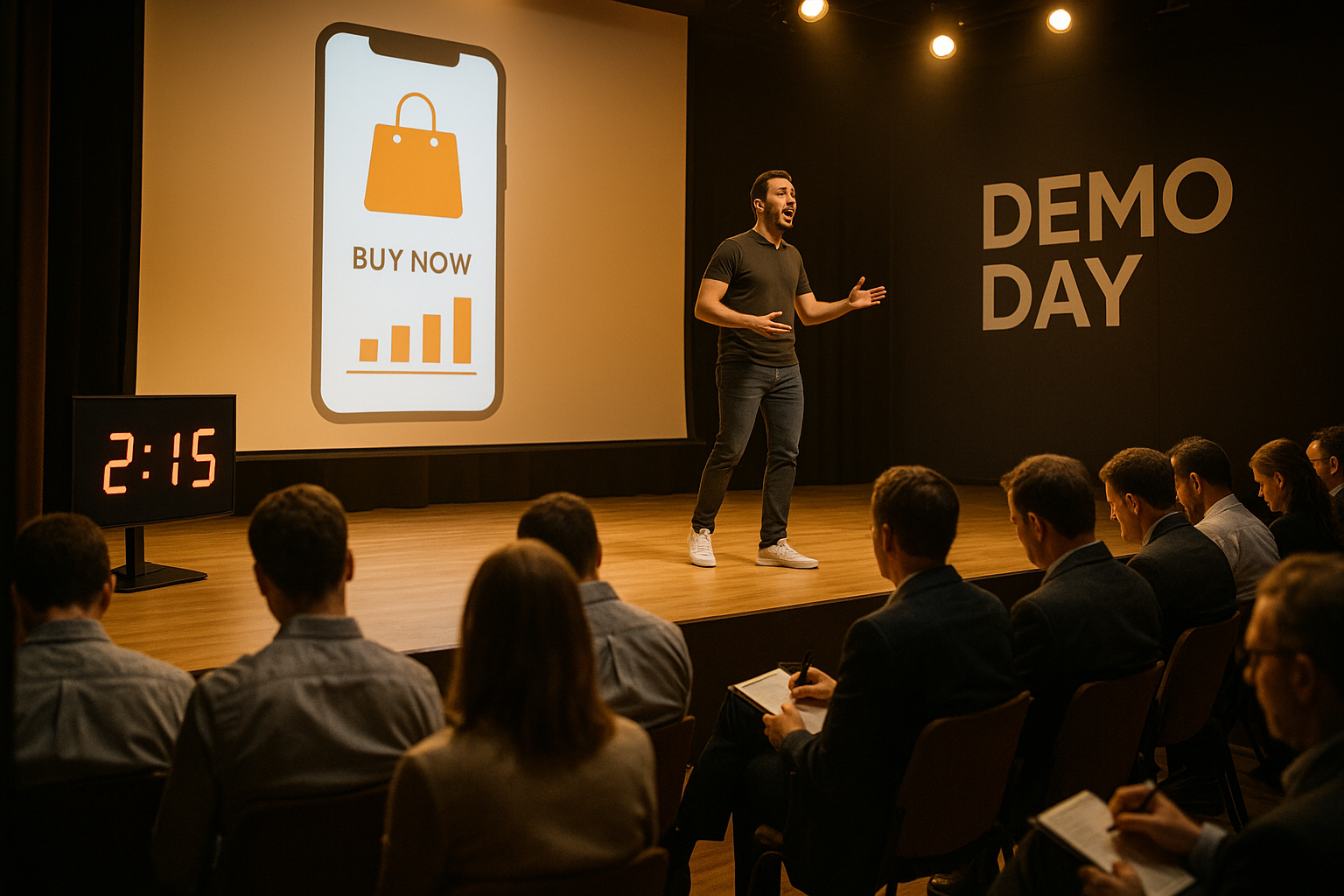
Startup events in fundraising create concentrated moments of attention where you can spark new investor relationships, compress diligence timelines, and convert interest into commitments. In plain terms, they are structured touchpoints—demo days, summits, roadshows, meetups, and invite-only salons—that help you move investors through an outreach → meeting → diligence → term-sheet funnel. This article takes a human-first, practical look at how these events actually work and how to make them pay off. It is educational, not legal or financial advice. In one sentence: use events to build a qualified investor pipeline, verify fit fast, and close with discipline. At a glance, your repeatable flow is: (1) set the event’s fundraising goal; (2) target the right investors; (3) prep a compliant pitch and crisp collateral; (4) run a tight event day; (5) follow up within 24–48 hours; (6) maintain weekly momentum; (7) measure ROI and iterate.
1. Treat Events as Funnel Accelerators, Not Endpoints
Events work best when you treat them as accelerators inside your fundraising funnel, not as one-off hail-mary pitches. The immediate goal is rarely to close a term sheet on the spot; it’s to create a surge of qualified first meetings and fast “no’s” that save time. Start by mapping your pre-event baseline: number of open investor conversations, your median time from first meeting to term sheet, and your hit rates between funnel stages. Then define the event’s job in that flow—top-of-funnel (TOFU) awareness, mid-funnel (MOFU) conviction building, or bottom-of-funnel (BOFU) diligence. A three-minute stage pitch is a TOFU tool; a curated roundtable with five domain GPs is MOFU; a partner-level onsite or virtual deep-dive is BOFU. This clarity ensures your content, collateral, and follow-ups match the moment. Build a simple capacity model as well: how many conversations can you schedule and service in the first two weeks post-event without dropping balls? That number determines your outreach and your on-site meeting targets.
Mini table — event formats at a glance
| Event type | Primary goal | Typical format | Primary KPI |
|---|---|---|---|
| Demo day (accelerator) | TOFU → MOFU surge | 2–4 min pitches + matching | # qualified meetings booked |
| Industry summit | MOFU credibility | Panels, booths, side-meetings | # ICP investors engaged |
| Private salon/roundtable | MOFU → BOFU | Curated 6–12 person dialogue | # partner-level next steps |
| Roadshow days | BOFU | Back-to-back partner calls | # diligence threads opened |
How to apply it
- Define one primary KPI before the event (e.g., “20 qualified first meetings within 7 days”).
- Set MOFU/BOFU milestones (e.g., “5 data room opens; 3 partner meetings”).
- Pre-block follow-up time on the calendar; events fail when the post-event week fills up.
Close the loop by reporting against those few numbers, not vanity metrics like booth scans. That discipline turns events into a compounding system rather than episodic adrenaline.
2. Design Your Pitch for the Actual Format and Attention Window
The fastest way to squander an event is to use a “one-size-fits-all” deck. A demo day pitch with a hard three-minute cap needs ruthless prioritization: a one-line value proposition, the “why now,” the specific ICP and use case, one proof point (live demo or traction), and a clear ask. Longer conference talks allow more narrative but must still be built as modular blocks you can expand or compress on the fly. Prepare a 1-pager, a 5-slide “lite deck,” and a full partner deck; all three should tell the same story at different fidelities. If there’s a live demo, constrain it to 45–60 seconds with a single “aha,” not a tour. Rehearse the cold open and the closing ask until they’re automatic; most event rooms are noisy, and you’ll need muscle memory when the timer blinks red. Align visuals to the room: big fonts, high contrast, no dense tables. And remember: events optimize for clarity and charisma, but investors fund repeatable economics; leave clear breadcrumbs to those numbers.
Numbers & guardrails
- Stage pitch: 3 minutes ≈ ~450–500 spoken words; aim for 5–6 slides max.
- “Lite deck” for quick sends: 5–8 slides (Problem, Solution, Why Now, Traction, Business Model, Team, Ask).
- Demo: ≤60 seconds; 1 flow; 1 KPI (“user activates in 30 seconds”).
Common mistakes
- Overcrowding slides to “prove” rigor; save the detail for partner meetings.
- Vague asks (“we’re raising”) instead of specific ranges and use-of-funds focus.
- Running a live demo on shaky Wi-Fi without an offline fallback video.
Crafting to format is not about dumbing down—it’s about fitting the message to the moment so investors can quickly self-qualify and lean in.
3. Target Investors Like a Sales Team—With a Narrow ICP and Real Pre-Work
Great event outcomes start weeks earlier with precise investor targeting. Build an investor ICP (ideal customer profile): stage, check size, sector, geo, thesis keywords, and signals like portfolio adjacencies. Use a CRM to track status, last touch, and next action; treat every investor like a pipeline account. Warm introductions beat cold outreach, so map second-degree paths and ask for specific, easy forwardables. Send a short pre-read to high-priority targets: the 1-pager, a 60–90-second product video, and a crisp “why this event is the best moment to meet.” Create a shortlist of 30–60 investors you’d actually want on your cap table and focus there rather than spraying hundreds. Be explicit about time slots you’ve reserved around the event venue to reduce scheduling friction. If the event offers matchmaking tools, populate your profile with concrete traction and a specific ask so you show up in filters that matter.
Numbers & guardrails
- Typical early-stage patterns: ~50–60 targeted sends can yield ~25–35 meetings and ~8–12 active threads when your fit is strong.
- Aim for <48-hour response times during the event window; speed signals competence.
- Maintain a 3:1 ratio of first meetings to active threads; if it’s lower, your targeting or story is off.
Mini-checklist
- Investor ICP defined and documented
- Warm intros prioritized; cold cadences written
- Calendar holds around the venue blocked
- Short pre-reads queued for top targets
By narrowing the top of the funnel and increasing relevance, you convert event attention into dense, high-quality conversations rather than a pile of business cards.
4. Stay Compliant: Know the Boundaries for Demo Days and Private Placements
You can and should market your company at events, but you must understand the rules of the road. In the U.S., communications at qualifying “demo day” events can avoid being deemed a general solicitation when they meet specific criteria under a defined safe harbor; that means you may present without foreclosing common private offering exemptions, provided you stay within those guardrails. Separately, certain offerings do permit general solicitation if all purchasers are accredited and you take reasonable steps to verify that status; that’s a different pathway with its own obligations. Outside the U.S., financial-promotion regimes are stricter about who can receive investment invitations, with exemptions for high-net-worth and sophisticated investors and detailed rules for marketing communications. What matters in practice: tailor the content to the event type, avoid public mass advertising of offering terms unless you’re using a framework that allows it, and get counsel to review your materials and your process. Clear, compliant communications protect both the raise and your reputation.
How to do it
- Confirm whether the event qualifies for a demo-day safe harbor and what content is permitted.
- If you plan to generally solicit, align your process to accredited-investor verification and documentation.
- For cross-border outreach, map who can receive what under local financial-promotion rules; when in doubt, gate materials and use disclaimers.
Common mistakes
- Publishing offer terms on unrestricted websites or social media when relying on private-offering exemptions that prohibit general solicitation.
- Assuming “any event” is automatically compliant; the details of the sponsor, attendee composition, and content matter.
- Ignoring jurisdictional differences when inviting international investors.
Treat compliance as a design constraint, not a blocker—setting the rules early lets your team move fast without rework later.
5. Nail Demo Day: Compress Discovery, Orchestrate Scarcity, and Capture Demand
A well-run demo day can generate a sharp spike of investor attention—but only if you make it easy for the right investors to engage and hard for momentum to dissipate. Your three-minute pitch should open with a direct claim and an undeniable proof: a live user flow, a concrete traction stat, or a before/after. Keep the arc simple: problem → “why now” → product “aha” → traction → team → ask. If the organizer offers a platform to request meetings, monitor it in real time and respond within minutes; batch same-day slots near the venue so investors can act on impulse. Prepare a short follow-up email template while you’re calm so you can send within 24 hours, including your 1-pager, lite deck, and scheduling link. Where appropriate, design scarcity ethically: limited allocation windows, a clear close target, and specific progress updates. Remember the social layer—investors talk; courteous, prompt handling of “no’s” and “not yet” builds long-term goodwill that compounds across batches and cohorts.
Numbers & guardrails
- A strong demo day can yield 20–40 qualified meeting requests for a compelling seed-stage company with a tight ICP.
- Respond within ≤2 hours on event day; conversions fall off steeply after a day.
- Cap on-site meetings to the number you can service with quality next-steps in the coming week (often 8–12).
Tools/Examples
- Short demo video hosted privately as a fallback.
- Event-platform auto-replies that route investors to calendar holds.
- A public “what we’re building” page without offer terms to satisfy curiosity safely.
Demo day is the spark; thoughtful orchestration before and after is the oxygen that turns it into a steady, closing fire.
6. Go Beyond Demo Day: Side Events, Summits, and Targeted Conferences
Most capital is committed outside the spotlight. Industry summits, niche meetups, and private side events let you go deeper with the exact investors who fit your thesis. Pick events where your buyer and your investors overlap—fintech founders do well at payments and risk conferences; climate founders at grid and storage gatherings; bio founders at translational science forums. Decide your footprint: speaking slot, small booth, hosted roundtable, or a private salon near the venue. If you sponsor, negotiate for a curated investor list and scheduled intros; “scan fishing” rarely converts. Build a side-event pipeline: a breakfast for 8–12 investors with a structured discussion and one live customer case; a short “show-and-tell” with three companies and two portfolio-friendly GPs; or a 45-minute “reverse pitch” where investors share what they’re actively hunting now. Make the conversation useful for attendees regardless of a check; that is what earns follow-through.
How to do it
- Publish a simple “office hours” form two weeks before the conference to pre-qualify meetings.
- Pair every panel or talk with a private calendar link for same-day slots near the venue.
- Leverage customers: a five-minute customer cameo on reliability, savings, or ROI is worth ten generic claims.
Common mistakes
- Measuring success by badge scans instead of investor next steps.
- Hosting noisy happy hours where nobody can have a substantive conversation.
- Over-scheduling; deep work after an event needs protected time.
When you engineer smaller, high-signal interactions around big gatherings, you turn diffuse attention into concentrated conviction.
7. Follow Up Within 24–48 Hours With a Tight Diligence Pack
Speed is a fundraising advantage. Send a concise recap while the conversation is fresh: your 1-liner, the top proof point that resonated, your clear ask, and three links—a lite deck, a short product video, and a data-room folder with a minimal, well-labeled structure. Inside the room, provide the essentials: financial model with key assumptions, cohort and retention views, pipeline snapshots, security posture, product roadmap, and customer references. Grant view-only access first; expand as interest deepens. Maintain a weekly update with the same header blocks so busy investors can skim: growth highlights, product ship list, pipeline traction, hiring, and one hard problem you’re tackling. Keep every thread moving with an explicit next step and a calendar hold. Make it effortless to say yes—or a fast, respectful no.
Numbers & guardrails
- Aim to send first follow-ups within 24 hours; 48 hours is the outer limit before attention decays.
- A lean early-stage data room often fits in 10–14 clearly named folders; resist the urge to overstuff.
- Convert ~30–40% of strong first meetings into a second meeting when the thread is serviced quickly and materials are crisp.
Mini-checklist
- Follow-up template ready before the event
- Standardized data-room structure and naming
- Weekly update template with 5 repeatable blocks
- Calendar holds in all follow-ups
Fast follow-through signals operational excellence; it also prevents your best conversations from going stale while you recover from the event.
8. Host Your Own Micro Demo Day to Curate the Room You Need
Sometimes the most effective “event” is the one you host. A micro demo day flips the dynamic: you choose the timing, the agenda, and the investors in the room. Keep it intimate—10 to 20 carefully selected investors with a clear, shared thesis alignment—and design the format for dialogue rather than monologues. For example: three short founder demos interleaved with ten-minute Q&A rounds, followed by rotating 1:1s in pre-assigned time blocks. Offer optional small-group breakouts on topics investors care about (e.g., technical moat, regulatory landscape, or customer adoption patterns). Secure a quiet venue with strong Wi-Fi, crisp A/V, and private rooms for follow-ups. If cross-border investors are invited, be deliberate about who hears what and on which materials. Send an explicit “how to engage” email upfront with logistics, what to expect, and your allocation plan. Close with a short sign-up for diligence and references so momentum carries into the next week.
How to do it
- Time it to coincide with a relevant conference in town so travel is already justified.
- Provide a 2-page attendee brief with company cheat-sheets and “why now” drivers.
- Pair each investor with a suggested path to diligence based on their focus (e.g., security review vs. customer calls).
Numbers & guardrails
- Curated micro events often convert 40–60% of attendees into active threads because fit is pre-qualified.
- Keep the total runtime to 90–120 minutes; longer sessions introduce fatigue and drop-offs.
- Limit presentation time to 6–8 minutes per company; prioritize Q&A.
Owning the room lets you compress discovery cycles and align investors around your thesis without the noise of a massive expo hall.
9. Use Virtual Formats to Scale Reach Without Diluting Quality
Virtual demo days, webinars, and 1:many product briefings can extend your reach and tighten scheduling. Treat a virtual session like a production: clear agenda, crisp audio, clean screen-share, and a moderator who keeps Q&A flowing. Open with a two-minute value and proof summary, then a tight demo and a single deep-dive (e.g., unit economics or go-to-market engine). Encourage real-time engagement with polls and structured Q&A, and publish a same-day recap with the recording and next steps. Gate materials appropriately if your raise relies on private-offering exemptions. Use a booking link to turn interest into 1:1s while attention is high, and pre-block slots in the next 72 hours. Virtual formats also shine for portfolio-friendly backchannels: briefings for operators or customers who can validate your claims quickly.
Numbers & guardrails
- Expect ~30–50% attendance of registrants for virtual sessions; design for re-watch with chaptered recordings.
- Keep the main program to 25–35 minutes; plan optional deep-dives in separate links.
- Target 5–10 qualified 1:1s in the 72 hours after the session; more than that and quality drops.
Common mistakes
- Treating virtual like a lecture; the best sessions are interactive and decision-oriented.
- Using dense slides on small screens; go bigger, fewer, and higher contrast.
- Omitting the booking CTA in-room and in the recap.
Virtual events are not a downgrade—they’re a force multiplier when you design them for interactivity and swift conversion to real conversations.
10. Measure ROI: Cost of Capital Acquisition and Conversion Math
To decide whether to repeat an event, quantify the return. Add up direct costs (tickets, travel, sponsorships, production), indirect costs (team time, opportunity cost), and any discounts or in-kind support. Track event-sourced opportunities separately in your CRM with consistent tags. Then calculate conversion rates through the funnel: % of qualified first meetings, % of active threads, % of term sheets, and % closed. Cost of capital acquisition (CoCA) is a useful north-star: total event cost divided by dollars closed that you can tie to the event. Layer in time-to-close, which affects runway risk and internal bandwidth. Finally, evaluate strategic value that won’t show up immediately—customer intros made by investors met at the event, advisor relationships, and follow-on visibility.
Numeric mini-case
- Inputs: $12,000 total cost (tickets, travel, booth), 60 targeted outreaches, 28 first meetings, 9 active threads, 2 term sheets, 1 close at $1,500,000.
- CoCA: $12,000 ÷ $1,500,000 = 0.8%.
- Time-to-close: 9 weeks from event start to signed docs; your baseline was 14 weeks → 5-week compression.
Mini-checklist
- Consistent event tagging in CRM
- Simple dashboard: cost, meetings, threads, term sheets, close, days to close
- Retrospective within two weeks with “repeat/redo/retire” decisions
By treating events like an acquisition channel—complete with cost and conversion math—you make better calls about where to show up and how big to go next time.
11. Build the Long Game: Relationships, Social Proof, and Momentum
Fundraising rewards compounding trust. Use events to seed long-term relationships that mature over quarters, not just days. Keep a short, high-signal investor update cadence even after a “no,” because “no for now” often becomes “yes” when the story evolves. Turn event wins into social proof: customer logos you earned through an investor intro, a short user case quoted with permission, or a product milestone aligned to a thesis an investor cares about. Engage the alumni and operator communities around accelerators and ecosystems; many of the best introductions come from founders a stage or two ahead. Offer value: share a candid teardown, host a working session, or make a founder-to-founder introduction that solves someone else’s problem. Events are a stage, but the real game is the network you nurture between them.
How to do it
- Maintain a living list of “future fits” and send milestone updates quarterly.
- Schedule lightweight, thematic salons where investors and operators swap notes; don’t always make it about your raise.
- Keep a running “thanks” log and close the loop when an intro turns into a win.
Common mistakes
- Disappearing after a raise; investors watch how you operate when you’re not asking for money.
- Treating events as extractive; networks thrive on reciprocity.
- Spraying updates without tailoring; segment by thesis and what each person cares about.
When you invest in the relationship fabric, each event becomes a catalyst in a compounding flywheel rather than a standalone roll of the dice.
Conclusion
Events are force multipliers when you give them a defined job in your fundraising funnel, design content to fit the actual format, and move quickly from attention to action. The playbook is straightforward: clarify your KPI, target with intent, prepare a crisp and compliant story, run the room with momentum, follow up within 24–48 hours, and measure ROI so you can scale what works. Along the way, host your own curated moments to shape the room you need, and balance splashy demo days with smaller, deeper interactions that better match your stage and thesis. The most durable edge is consistency: a steady drumbeat of progress, clear communication, and respectful speed. Put this to work on your next event, and turn crowded rooms into committed partners—one intentional conversation at a time. Ready to make your next event count? Block a follow-up week now and send your first five targeted invites today.
FAQs
How do I choose between a demo day and a private salon for my current raise?
Decide based on your funnel job. If you need a surge of first meetings and brand awareness in a relevant investor community, a demo day can be ideal. If you already have warm interest and need to deepen conviction, a salon or curated roundtable creates the quiet, high-signal space to answer nuanced questions and align on diligence plans. Consider your bandwidth for follow-ups: demo days generate volume, while salons generate depth. Both can work in sequence when timed well.
What should be in a minimal early-stage data room right after an event?
Keep it lightweight and decision-oriented: a clearly labeled folder structure with a financial model and key assumptions, cohort/retention views, GTM pipeline snapshots, security measures, product roadmap, major contracts/templates, and 2–3 customer references. Add legal docs and deeper analytics later in diligence. Label versions and include a “read me” so busy partners can navigate quickly. View-only access first, expand as needed.
How do I comply with rules if I want to talk about my raise at public events?
Design communications to align with the kind of event and the offering path you’re using. Some demo-day formats have safe-harbor criteria that reduce the risk of communications being deemed general solicitation; other pathways allow broad solicitation but require that all purchasers are accredited and that you verify that status. The specifics matter, especially across jurisdictions, so have counsel review your plan and materials. Use gating where appropriate and avoid putting offer terms on unrestricted public channels.
How many investors should I target around a single event?
Quality beats quantity. A focused list of ~50–60 investors who tightly match your stage, check size, and thesis is often more productive than blasting hundreds. That scope is large enough to discover fit but small enough to service well with fast follow-ups and tailored materials. If your conversion from first meeting to active thread is consistently below one in three, revisit your targeting and the clarity of your “why now.”
How do I structure a three-minute stage pitch?
Open with one crisp line that states the value and “why now,” then show one proof (live demo or traction). Cover ICP and use case, business model in one sentence, team credibility in one line, and a specific ask. Keep slides to 5–6 with large fonts and high contrast. Rehearse the open and the close until they’re automatic; noisy rooms and timers demand muscle memory.
What ROI should I expect from sponsoring a conference?
Sponsorships can work, but only when you trade dollars for real access—curated intros, stage time with the right audience, or private list access. Evaluate expected qualified meetings, not badge scans. A practical target is to break even on CoCA within your expected round; track cost, meetings, active threads, term sheets, and close rate. If an event can’t commit to meaningful access, invest in side events or your own micro demo day instead.
What’s the best cadence for follow-ups after an event?
Send the first follow-up within 24 hours with a short recap and links to your lite deck, product video, and data room. In the following two weeks, maintain weekly updates to any active threads with a consistent format so partners can skim. Always include a proposed next step and a scheduling link. After the surge, move to a monthly or quarterly investor update cadence for your broader “future fit” list.
How should I handle “no” or “not yet” after an event?
Thank them, ask if you can keep them on your update list, and—if appropriate—request one piece of feedback that would change their mind. Archive the thread but keep it alive with milestone updates. Many investors revisit companies when traction lines bend or when a new product line aligns to their thesis. Professional handling of “no” is part of building long-term trust.
Are virtual events worth it, or are in-person events always better?
Both work when designed well. Virtual sessions scale reach and scheduling, especially for cross-border investors, and convert best when they’re interactive with immediate CTAs to book 1:1s. In-person formats are stronger for building conviction and chemistry. Use virtual to widen the top of the funnel and in-person to deepen diligence and close.
How do I keep momentum from dying after a big event?
Pre-book calendar holds for the week after the event, prepare follow-up templates and a tidy data room, and send updates on a fixed weekly cadence. Create small deadlines—customer calls scheduled this week, technical deep-dive next week, allocation windows—to orchestrate movement. Momentum is engineered ahead of time; the event itself is only the trigger.
References
- General Solicitation — SEC Small Business Resources. U.S. Securities and Exchange Commission. Publication date provided on page. https://www.sec.gov/resources-small-businesses/capital-raising-building-blocks/general-solicitation
- General Solicitation — Rule 506(c). U.S. Securities and Exchange Commission. Publication date provided on page. https://www.sec.gov/resources-small-businesses/exempt-offerings/general-solicitation-rule-506c
- Does a Demo Day or Venture Fair Necessarily Constitute a General Solicitation? Division of Corporation Finance Q&A. U.S. Securities and Exchange Commission. Publication date provided on document. https://www.sec.gov/files/corpfin/securities-act-rules-031225-256-33.pdf
- Question 256.27: Communications About an Offering Without a Pre-Existing Relationship. Division of Corporation Finance Q&A. U.S. Securities and Exchange Commission. Publication date provided on document. https://www.sec.gov/files/corpfin/securities-act-rules-031225-256-27.pdf
- Demo Day FAQ. Y Combinator. Publication date provided on page. https://www.ycombinator.com/demoday/faq
- Startup Fundraising Playbook. DocSend. Publication date provided on page. https://www.docsend.com/startup-fundraising/
- Pitch Deck Interest Metrics. DocSend. Publication date provided on page. https://www.docsend.com/pitch-deck-metrics/
- Q2 PitchBook–NVCA Venture Monitor. National Venture Capital Association / PitchBook. Publication date provided on page. https://pitchbook.com/news/reports/q2-2025-pitchbook-nvca-venture-monitor
- State of Private Markets (Data Reports). Carta. Publication dates provided on pages. https://carta.com/data/
- Financial Promotion Exemptions for High Net Worth and Sophisticated Investors (Consultation Response). HM Treasury (UK). Publication date provided on document. https://assets.publishing.service.gov.uk/media/65491981bdb7ef000d4af915/Consultation_response_document_-_updates_to_financial_promotion_exemptions.pdf
- Finalised Guidance on Financial Promotions on Social Media. Financial Conduct Authority (UK). Publication date provided on document. https://www.fca.org.uk/publication/finalised-guidance/fg24-1.pdf
- Guidelines on Marketing Communications Under the Regulation on Cross-Border Distribution of Funds. European Securities and Markets Authority. Publication date provided on page. https://www.esma.europa.eu/document/guidelines-marketing-communications-under-regulation-cross-border-distribution-funds