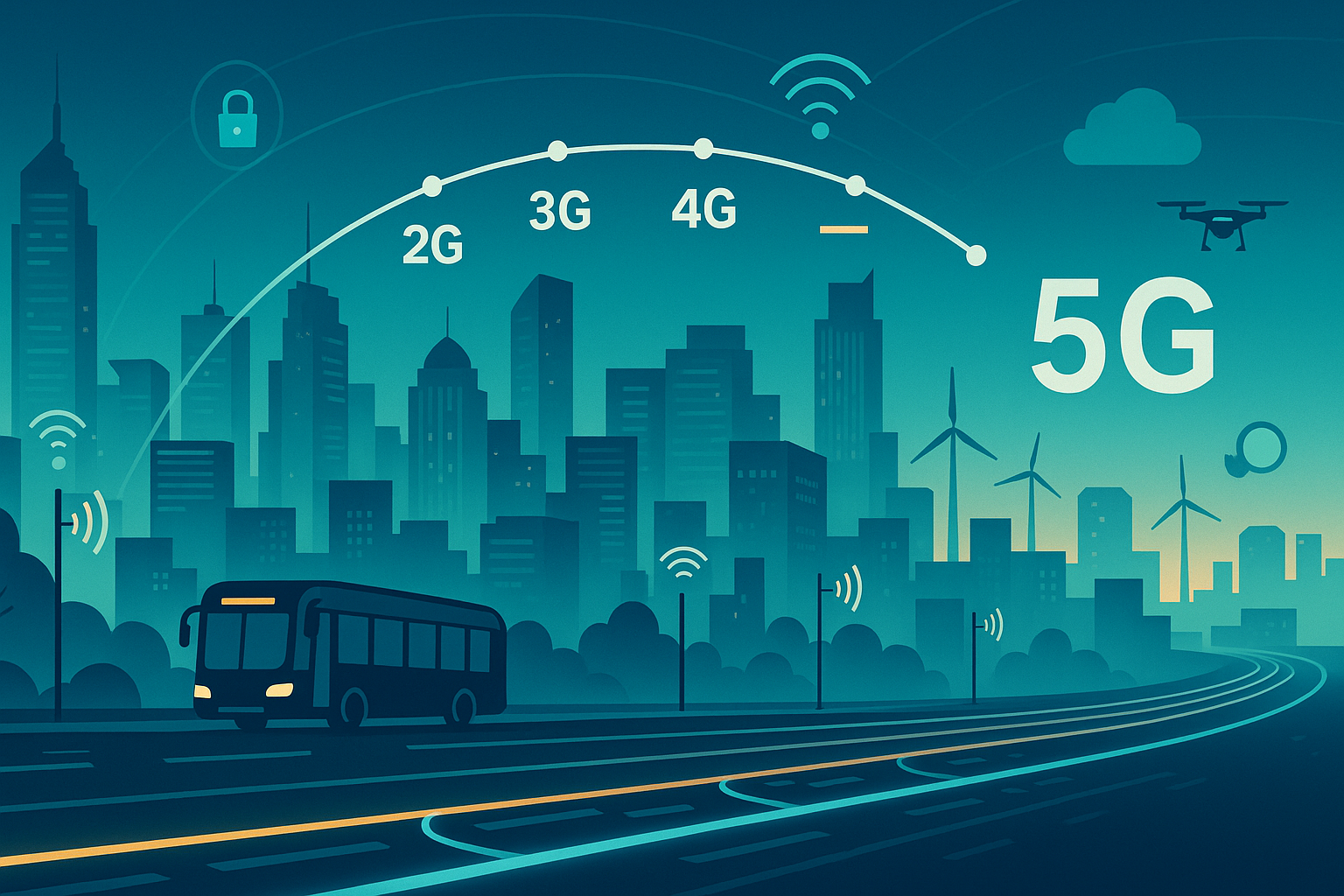
Smart street lighting uses networked controls, sensors, and open interfaces to deliver the right light, in the right place, for the right time—automatically. In practice, adaptive lighting trims wattage and runtime without compromising visibility by responding to traffic, pedestrians, ambient light, and context. Below you’ll find 12 concrete strategies that municipalities and campuses use to reduce electricity consumption, extend asset life, and improve maintenance outcomes. If your lighting decisions affect safety or legal compliance, treat the guidance here as educational, and consult qualified engineers and applicable standards before acting. A short path to action: audit your network, set dimming rules, choose open standards (DALI-2, ANSI C136.41, Zhaga Book 18), adopt a TALQ-capable CMS, and monitor kWh and light levels to lock in persistent savings. Together, these steps help you cut energy use materially while preserving standards-based lighting quality.
1. Establish a baseline and quantify adaptive potential
Start by mapping what you have and how it currently performs, because every subsequent control strategy depends on accurate inventory, photometric targets, and energy data. Build a lamp-by-lamp register with wattage, mounting height, arm length, optic type, driver dimming capability (0–10 V or DALI-2), photocontrol presence, and control interface (e.g., ANSI C136.41 7-pin or Zhaga Book 18). Then confirm required lighting classes and design criteria using recognized guidance so your dimming plans do not undercut visibility. Typical road lighting design references outline luminance or illuminance targets, uniformity ratios, disability glare limits, and veiling luminance constraints by roadway type and pedestrian conflict level; these become your non-negotiables. Finally, meter or model load profiles to determine how many kilowatt-hours are available to save with scheduling, occupancy response, and lumen maintenance. The output of this step is a baseline report, a standards map for your network (which classes apply to which corridors), and a prioritized shortlist of circuits and locations where adaptive strategies deliver the best return with manageable risk.
How to do it
- Inventory each luminaire’s controllability (driver type, dimming leads, sockets) and location attributes (setback, SCL, glare risks).
- Map corridors to lighting classes and design criteria before setting any dimming limits.
- Log typical dusk-to-dawn hours and switching behavior to spot “day-burners” and early turn-on bias.
- Tag candidate sites for pilots where pedestrian conflict is low and traffic variability is high.
- Produce baseline kWh by feeder and by corridor to size savings potential.
Close this step by aligning savings ambition with standards-based lighting performance; the baseline prevents you from dimming below acceptable classes and anchors later M&V. my.ies.orgThe ANSI Blog
2. Use time-of-night (astroclock) dimming to harvest off-peak savings
Time-of-night dimming—sometimes called “astroclock” dimming—reduces output during predictable low-activity hours using schedules synchronized to sunset/sunrise. It’s the fastest, lowest-friction way to capture savings because it requires no sensors and can run in stand-alone drivers or through a central management system (CMS). You set staged setpoints (for example, 100% at dusk, 80% in the evening, 60% late night, 80% before dawn), then apply exceptions at intersections, crossings, or locations with higher pedestrian conflict. This strategy is standards-friendly because it can be tied to lighting class policies and curfews defined in your design guidance. It also pairs well with lumen-maintenance features in modern LED drivers, which maintain perceived brightness while drive current drops as optics and LEDs age. Properly configured schedules avoid under-lighting by respecting minimum maintained luminance/illuminance and uniformity limits for the road class.
Numbers & guardrails
- A simple profile like 100% (dusk–22:00), 80% (22:00–00:00), 60% (00:00–05:00), 80% (05:00–dawn) often yields double-digit kWh reductions on off-peak corridors.
- Ensure scheduled setpoints stay within the lighting class requirements you mapped in Step 1; do not exceed uniformity or glare limits when dimmed.
- Use a CMS with calendar logic rather than fixed clock times to avoid seasonal drift and unintended “early-on” hours.
Mini-case
If a 70 W LED luminaire runs 4,200 hours per year and you average 25% dimming for half those hours, you trim roughly 36.75 kWh per fixture annually (70 W × 0.25 × 2,100 h ÷ 1,000). Scaling this to 10,000 luminaires results in about 367 MWh saved, before demand and maintenance effects. Tie the profile to recognized roadway lighting practices so reductions never drop you below the intended lighting class.
3. Add presence-based dimming with occupancy sensors on appropriate links
Presence-based dimming raises or lowers light output when people or vehicles are detected, unlocking savings where activity is intermittent: mid-block collectors, residential streets, shared-use paths, parking lay-bys, and campus roads. Unlike fixed schedules, sensors enable dynamic light when and where it’s needed, allowing deeper reductions during long quiet periods and swift ramps for approach. Options include passive infrared (PIR) for pedestrian zones, microwave radar for longer ranges and better peripheral detection, and integrated camera or thermal sensors where classification is needed. For networked streetlights, sensor triggers can propagate “group raises,” brightening the next few poles along a person’s path. The key is to tune detection zones, hold times, fade rates, and minimum levels so the experience feels seamless and compliant with your lighting class targets. Presence response must also avoid nuisance triggers from tree movement or distant traffic.
Sensor options at a glance (one-page comparison)
| Sensor type | Typical strengths | Typical cautions | Common uses |
|---|---|---|---|
| PIR | Low cost, good for walking speeds | Narrower field, line-of-sight | Paths, alleys, parks |
| Microwave radar | Wider coverage, vehicle detection | Potential false triggers if untuned | Mid-blocks, collectors |
| Video/thermal | Rich classification, analytics | Cost, privacy governance | Complex nodes, trial sites |
Numbers & guardrails
- Pair presence response with a baseline schedule (e.g., 60% base, 100% on detection), aiming for ≥20 s hold and smooth fades to avoid glare.
- Use group addressing so two to four downstream luminaires pre-raise as a traveler approaches.
- Maintain minimums so the dimmed state still meets the applicable lighting class for low-activity periods per your standards framework.
Presence-based control is where many cities see the biggest incremental savings beyond scheduling, provided tuning respects visibility and local policy; it pairs best with a CMS and open interfaces for rapid iteration.
4. Tie lighting levels to traffic and context with adaptive classes
Traffic-responsive dimming aligns light output to actual road use and context, switching between “lighting classes” that standards describe for different speeds, volumes, and pedestrian conflicts. When volumes fall and conflicts are low, you may step down from a higher to a lower class within the same type (motorized, conflict area, or pedestrian), meeting visibility needs with less light. Implementations can use loop detectors, radar counts, or feeds from traffic management systems. The control logic should verify that reduced level periods maintain uniformity, threshold increment (TI) limits, and veiling luminance constraints. In zones near schools, crossings, and town centers, lock higher classes during expected activity windows and allow reductions only when conditions demonstrably ease. Make class transitions gradual to avoid discomfort glare and perceptual jumps, and log every class change for audit.
Numbers & guardrails
- Use thresholds tied to locally validated demand bands (e.g., step down when volume is below a defined percentile for a sustained duration).
- Keep reductions within the class framework to ensure consistency with luminance/illuminance and uniformity targets.
- Document and review edge cases (events, detours) so the system fails safely to higher output when uncertainty is high.
Mini-case
On a collector road with low late-night volumes, mapping to a lower class for four off-peak hours at 60–70% light output can drive meaningful kWh savings while staying inside standards’ quality criteria, particularly if glare limits and uniformity are checked for the dimmed state.
5. Activate constant light output (CLO) and lumen-maintenance trims
LEDs are typically over-driven at the start of life to ensure that, after lumen depreciation, the installation still meets target levels. Constant light output (CLO) reverses that logic: it reduces initial drive current and gradually ramps it over life to keep perceived brightness constant. The result is lower early-life wattage and less thermal stress. Many drivers also support “lumen maintenance trim,” letting you shave a few extra percent where optics and surface reflectance comfortably exceed requirements. For energy savings, CLO is straightforward, universal, and invisible to citizens when configured correctly. It pairs especially well with time-of-night dimming, compounding reductions without adding complexity.
Numbers & guardrails
- Initial trims of 5–15% are typical for CLO, depending on target lifetime and depreciation assumptions; validate against your photometric file and class minimums.
- Monitor driver telemetry via DALI-2 or equivalent to verify that light output follows the intended curve over time.
- Combine with scheduled or adaptive strategies only after confirming the lowest combined state still meets class requirements.
Mini-case
If a luminaire designed for 70 W “full” draws 63 W in its early years due to CLO (a 10% trim), that alone saves ~26.5 kWh per year per luminaire at 4,200 hours. Across thousands of luminaires, CLO delivers durable, maintenance-free savings while preserving required lighting levels.
6. Choose open, upgradeable control interfaces (DALI-2, ANSI C136.41, Zhaga Book 18) and a TALQ-capable CMS
Energy savings hinge on interoperability: you want drivers, nodes, sensors, and CMS software that speak common languages so future strategies remain available. At the luminaire level, DALI-2 (IEC 62386) enables reliable dimming, monitoring, and intra-luminaire data exchange; it replaces self-declared compatibility with independently verified certification. For external control nodes, ANSI C136.41 defines the 7-pin twist-lock receptacle that brings dimming and data pins to the top of luminaires, while Zhaga Book 18 provides a low-profile alternative interface for compact control and sensing modules. At the network level, the TALQ Smart City Protocol defines an open interface between outdoor device networks (ODNs) and central management software. Together, these standards let you mix components and evolve from simple scheduling to presence-based and traffic-responsive control without stranded assets.
Tools/Examples
- Driver & control bus: DALI-2 certified drivers and controllers for consistent, verified behavior.
- Node interfaces: ANSI C136.41 7-pin or Zhaga Book 18 sockets to add/replace control or sensing modules.
- Head-end software: TALQ-capable CMS to avoid vendor lock-in and unify control across different ODNs.
Build your spec around these interfaces and certification marks, and you’ll preserve choice, enable richer data, and keep every energy-saving strategy on the table as technology evolves.
7. Calibrate photocells and astro settings to stop “day-burners” and early turn-on
Poorly tuned photocontrols and conservative settings can waste a surprising amount of energy by turning lights on too early, keeping them on too late, or failing to switch off at dawn. A CMS with astronomical calculations and local horizon offsets can correct systematic bias, while high-quality photocontrols reduce individual variance. Hysteresis and delay parameters prevent nuisance cycling during twilight and storms. On corridors with varied horizons, per-group offsets align switching to local conditions so poles aren’t burning in full daylight. Regular exception reports for unusual runtimes flag stuck relays and failed nodes. This is basic, unglamorous work—but eliminating “day-burners” and shaving even 10–15 minutes per day of unneeded runtime across a network adds up quickly.
Numbers & guardrails
- Trimming 15 minutes of unnecessary burn per day saves roughly 6.6 hours per month; at 70 W, that’s ~0.46 kWh per fixture per month.
- Specify locking-type photocontrol receptacles and controls that support dimming pins; quality matters for switching accuracy and later upgrades.
- Use CMS analytics to spot outliers: fixtures with consistently longer burn hours or atypical on/off times.
Mini-case
A network of 15,000 luminaires eliminating 10 minutes of extra runtime per night saves roughly 1,278 kWh per day across the fleet at 70 W—before any dimming strategies are applied—purely by fixing switching hygiene.
8. Leverage CMS analytics to detect faults, optimize profiles, and persist savings
A capable CMS is more than a “remote on/off” tool; it’s an analytics platform that turns lamp telemetry and schedules into steady, persistent savings. With energy monitoring and event logs, you can quantify where dimming profiles over- or under-perform and iterate toward the best compromise between savings and perceived brightness. Fault analytics find “always-on” fixtures, failed drivers running at full, and controls with stale firmware. Group controls let you A/B test different schedules on sister corridors and roll out successful profiles citywide with a click. When the CMS implements an open smart city protocol, it can manage heterogeneous device networks without confining you to one vendor’s hardware, preserving upgrade paths and pricing leverage over time.
Numbers & guardrails
- Prioritize corridors with the largest runtime variance for profile refinement; small per-fixture gains multiply.
- Track kWh, average dim level, failure rate, and complaint rate; savings that increase callbacks aren’t net wins.
- Require audit logs for every configuration change; you’ll need this to defend dimming decisions if questioned.
Mini-case
Cities adopting a TALQ-capable CMS report easier cross-vendor control and smoother migrations while maintaining common profiles and dashboards—vital for institutional memory and persistence of savings across staff changes and contracts.
9. Select the right connectivity (LoRaWAN, Wi-SUN, cellular) for reliable control at scale
Network choice affects reliability, latency, and cost—key levers for dependable adaptive lighting. LoRaWAN offers long-range, low-power star networking that can work well for wide areas with modest message rates. Wi-SUN FAN provides an open, IPv6-based mesh suited to dense urban canopies where self-healing is valuable and latency targets are tighter. Cellular (LTE-M/NB-IoT) works where carrier coverage is strong and you prefer managed backhaul without deploying gateways. All three can coexist under a TALQ-capable CMS that abstracts the ODN specifics. The right answer varies by topology, building density, and IT policy. If your corridors run under trees and high-rises, resilient mesh may outperform long-range star links; if you have broad arterials with good line-of-sight and sparse furniture, long-range star can be economical.
Numbers & guardrails
- For presence-based group raises, ensure end-to-end latency keeps fades smooth; mesh with local decision-making often helps.
- Plan for redundancy: dual gateways per cluster for star networks; high node density and channel planning for mesh.
- Include ownership costs (gateways, SIMs, maintenance) in your life-cycle model; cheap radios with expensive upkeep are false economies.
Tools/Examples
Independent alliances publish guidance and case material you can use to frame RFP requirements and evaluate vendor claims for each topology; use these to anchor decisions in open standards rather than proprietary tie-ins.
10. Measure & verify (M&V) with real numbers—then lock savings into policy
Energy savings only count when you can demonstrate them. That means metering, interval data, and consistent KPIs. At the device level, DALI-2 and related intra-luminaire data models (often branded D4i) expose power, runtime, and diagnostic metrics you can roll up in your CMS. At the corridor level, compare pre- and post-profiles with weather-normalized hours of darkness so results aren’t skewed by seasonal shifts. Maintain “guardrail metrics” alongside kWh: citizen complaints, safety incidents, and night-time traffic volumes. Write your lighting policy to encode maximum dim levels and minimum maintained classes so savings persist beyond a single champion’s tenure. Finally, document tuning rationales so future staff understand why each corridor runs the way it does.
Numbers & guardrails
- Track at least: kWh/fixture, average dim level, runtime, alarm rate, and schedule versions.
- Verify that lower setpoints still meet lighting class minima and quality criteria; keep those checks in your M&V binder.
- When confident, promote proven profiles to “policy” rather than “pilot” to prevent backsliding.
Mini-case
Organizations that implement metered verification at the device and feeder level can credibly claim and retain reductions, avoiding the common trap where early savings erode due to drift, reprogramming, or undocumented overrides. dali-alliance.org
11. Align adaptive lighting with safety, visibility, and community acceptance
Energy savings must never come at the expense of safety or trust. Use risk-based dimming rules that keep higher levels during periods or locations with elevated pedestrian conflict, complex geometry, or history of incidents, and allow deeper reductions only where conditions consistently support them. Communicate clearly with communities about what “adaptive” means—lights aren’t “off,” they are “right-sized” for the moment—and publish your guardrails. Conduct pilots with surveys and before/after visibility checks to ensure drivers and pedestrians perceive ramps as smooth, not startling. Where policies allow, prefer warm-white dimmed states for comfort near homes but keep cooler, higher output at complex intersections to support contrast. Document your rationale under recognized practice so decisions can be defended as thoughtful and evidence-based, not solely cost-driven.
How to do it
- Keep adaptive rules conservative near crossings, transit stops, schools, and complex junctions.
- Use gradual fades and minimum floor levels to avoid sudden perceived darkness.
- Publish corridor-level profiles and escalation contacts; transparency builds trust.
- Review complaints and incident data quarterly; raise levels where justified by evidence.
By pairing adaptive control with standards-aligned safety guardrails, you’ll earn community confidence while still banking substantial kWh savings.
12. Procure for outcome and commission like you mean it
Savings are locked—or lost—during procurement and commissioning. Write specs that require open interfaces (DALI-2, ANSI C136.41 or Zhaga Book 18), a TALQ-capable CMS, tunable schedules and presence response, over-the-air updates, and metered kWh. Demand commissioning plans that include photometric checks at dimmed levels, verification of schedule offsets, and validation of presence group behavior. Pilot on representative corridors, not pristine demos, and keep pilots long enough to capture seasonality. Make it easy to adopt “control-ready” luminaires now with sockets and drivers in place, even if your first phase uses only scheduling. Finally, require training and clear documentation so staff can adjust profiles safely without vendor intervention or regression.
How to do it
- Reference open standards and certification programs by name in RFPs; ask vendors to prove compliance, not just claim it.
- Require a model specification for adaptive control and remote monitoring, plus device-level energy reporting.
- Include acceptance tests: on/off timing tolerances, profile adherence, dimmed-state light level checks, and telemetry integrity.
- Structure pricing to encourage upgrades (e.g., tiered license rates for adding presence response later).
A procurement that encodes openness and commissioning that verifies outcomes will deliver energy savings you can sustain and scale without lock-in or drift. buildings.comNEMA
Conclusion
Adaptive lighting transforms smart street lighting from a fixed-output utility into a responsive, standards-aligned service that supplies the light people need—and no more. The core playbook is simple: baseline your network, implement time-of-night dimming, add presence response where appropriate, and align output to traffic-derived lighting classes. Underneath those strategies sit open interfaces (DALI-2, ANSI C136.41, Zhaga Book 18), a TALQ-capable CMS, and a connectivity fabric (LoRaWAN, Wi-SUN, or cellular) that keeps control reliable. Measurement and verification ensure savings survive turnover, while safety guardrails and clear communication preserve trust. If you sell or specify lighting controls, anchor recommendations in open standards and outcome-based commissioning so buyers can start with schedules today and layer on richer responsiveness tomorrow. Ready to begin? Start with one corridor: set a conservative dimming profile, verify levels, and measure kWh for 90 days—then scale what works citywide.
Copy-ready CTA: Make your next corridor adaptive—spec open interfaces, set a schedule, and meter the results.
FAQs
1) What is the difference between smart street lighting and adaptive lighting?
Smart street lighting is the broader system: luminaires, drivers, controls, sensors, networks, and software. Adaptive lighting is a capability within that system that changes light levels in response to time, presence, traffic, or ambient conditions. In other words, all adaptive lighting lives inside a smart lighting system, but not all smart lighting is adaptive; adding adaptive control is what unlocks energy savings beyond the basic LED retrofit.
2) How do I ensure adaptive dimming stays compliant with roadway lighting practice?
Map corridors to lighting classes and quality criteria, then make sure every dimmed state still meets the class minima. Standards describe luminance/illuminance targets and other quality limits; your profile must respect those. Commission by measuring light levels in dimmed states at representative locations and verifying uniformity and glare remain within bounds.
3) Which is better for controls: ANSI C136.41 or Zhaga Book 18?
They solve similar problems differently. ANSI C136.41’s 7-pin twist-lock is widely used on the luminaire top for control nodes and offers extra pins for dimming and data. Zhaga Book 18 provides a low-profile, often side-mounted interface for compact nodes and sensors. Many cities specify both so future modules can be added or swapped as needs evolve. Choose based on your luminaire form factor, aesthetic preferences, and vendor ecosystem.
4) Do I need sensors everywhere to save energy?
No. Start with time-of-night dimming to capture predictable off-peak savings, then add presence-based control where activity is intermittent and risk is low. Sensors are most valuable on mid-blocks, paths, and residential streets with long quiet periods; high-complexity intersections often remain at higher levels or use gentler dimming. Federal Highway Administration
5) How much energy can networked controls save on top of LED retrofits?
Savings vary by context, but connected controls routinely add substantial reductions beyond the LED baseline through scheduling, occupancy, and lumen maintenance. Independent studies of networked lighting controls show significant additional savings, though exact percentages depend on use patterns and tuning; the key is to meter results and iterate. designlights.org
6) What network should I pick—LoRaWAN, Wi-SUN, or cellular?
Pick based on topology, IT policy, and latency needs. LoRaWAN favors long-range, low-power star networks; Wi-SUN offers resilient, IPv6 mesh; cellular reduces gateway management but depends on carrier coverage and costs. An open, TALQ-capable CMS lets you mix these where it makes sense and avoid lock-in.
7) How do constant light output (CLO) and lumen-maintenance trims work?
CLO reduces initial drive current and gradually increases it over life to keep perceived brightness steady, lowering early-life wattage and heat. Lumen-maintenance trims further reduce output where measurements show comfortable margins above your class minimums. Both tactics are driver-level features, often exposed and monitored through DALI-2.
8) What’s the role of a Central Management System (CMS)?
A CMS schedules and commands luminaires, gathers telemetry, supports analytics, and proves savings. When it implements an open smart city protocol, it can manage devices from multiple vendors and networks. Use it to tune profiles, roll out updates, detect faults, and document decisions for accountability.
9) Can adaptive lighting improve maintenance as well as energy?
Yes. Telemetry flags day-burners, failed drivers, and degrading components, letting crews fix the worst offenders first. Fewer night patrols and faster repairs reduce truck rolls and energy waste. The same open interfaces that enable dimming also provide diagnostics that make maintenance proactive.
10) What procurement language helps avoid vendor lock-in?
Specify DALI-2 drivers and control devices, ANSI C136.41 or Zhaga Book 18 sockets, and a TALQ-capable CMS. Require device-level kWh reporting, over-the-air updates, and exportable schedules. Include acceptance tests for dimmed states and telemetry integrity. These requirements preserve choice and keep pathways open for future strategies.
References
- Recommended Practice: Lighting Roadway and Parking Facilities (RP-8) — Illuminating Engineering Society — (publication date not provided) — https://store.ies.org/product/recommended-practice-lighting-roadway-and-parking-facilities/
- ANSI/IES RP-8 Overview — ANSI Blog — (publication date not provided) — https://blog.ansi.org/ansi/ansi-ies-rp-8-22-design-roadway-lighting/
- CIE: Lighting of Roads for Motor and Pedestrian Traffic — CIE — (publication date not provided) — https://cie.co.at/publications/lighting-roads-motor-and-pedestrian-traffic-2nd-edition
- DALI-2 and IEC 62386 Overview — DALI Alliance — (publication date not provided) — https://www.dali-alliance.org/standards/IEC62386.html
- Overview of DALI-2 Certification — DALI Alliance — (publication date not provided) — https://www.dali-alliance.org/dali2/
- ANSI C136.41: Locking-Type Control and Dimming Interface — NEMA — (publication date not provided) — https://www.nema.org/standards/view/For-Roadway-and-Area-Lighting-Equipment-Dimming-Control-Between-an-External-Locking-Type-Photocontrol-and-Ballast-or-Driver
- Zhaga Book 18: Smart Interface Between Outdoor Luminaires and Nodes — Zhaga Consortium — (publication date not provided) — https://www.zhagastandard.org/books/overview/smart-interface-between-outdoor-luminaires-and-sensing-communication-modules-18.html
- The TALQ Smart City Protocol — TALQ Consortium — (publication date not provided) — https://www.talq-consortium.org/
- FHWA: Guidelines for the Implementation of Reduced Lighting on Roadways — Federal Highway Administration — (publication date not provided) — https://highways.dot.gov/media/4406
- DOE SSL: Roadway Lighting Research — U.S. Department of Energy — (publication date not provided) — https://www.energy.gov/eere/ssl/roadway-lighting-research
- Wi-SUN Smart City Lighting — Wi-SUN Alliance — (publication date not provided) — https://wi-sun.org/smart-city-lighting/
- LoRa Alliance: Smart Street Lighting Resources — LoRa Alliance — (publication date not provided) — https://resources.lora-alliance.org/smart-cities/optimizing-urban-lighting-networks-with-lorawan-a-key-enabler-for-scalable-smart-city-services