
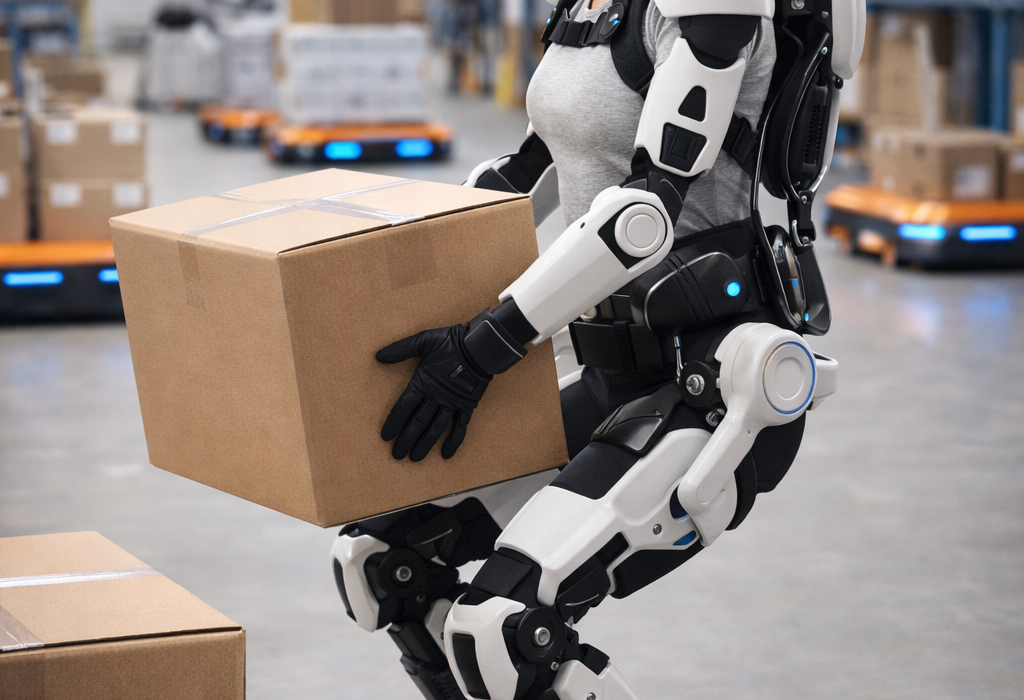
Imagine a world where a person who has suffered a debilitating stroke can walk again, not just with assistive devices, but with a fluid, natural gait that retrains their neural pathways. Imagine a factory worker who lifts heavy components all day, yet returns home without the debilitating back pain that has plagued generations of manual laborers. Imagine a first responder who can carry equipment up twenty flights of stairs without fatigue, arriving at the scene ready to save lives.
This is no longer the realm of science fiction. It is the rapidly evolving reality of smart exoskeletons—wearable robotic devices that represent the pinnacle of human augmentation technologies. These sophisticated systems, situated precisely at the intersection of medical rehabilitation (health) and human capability enhancement (performance), are fundamentally redefining what the human body can achieve and endure. A smart exoskeleton is a wearable mobile machine that is powered by electric motors, pneumatics, levers, hydraulics, or a combination of technologies that allow for limb movement with increased strength and endurance. The “smart” designation is critical: it means these systems are not merely passive braces, but active, intelligent partners that interpret the user’s intent and provide context-aware assistance.
| Key Takeaways |
| Active vs. Passive: Smart exoskeletons are active, meaning they use sensors, motors, and artificial intelligence to provide dynamic, powered assistance. Passive exoskeletons use springs and counterweights to redistribute load. |
| Health Impact: They are vital tools for neurorehabilitation (post-stroke, spinal cord injury) and for preventing musculoskeletal disorders (MSDs) in industrial settings through ergonomic support. |
| Performance Boost: They increase metabolic efficiency, reduce fatigue, enhance strength, and improve endurance, benefiting workers, athletes, and military personnel. |
| Human-Centric: The ultimate goal is augmentation, not replacement. Success depends on a seamless human-machine interface (HMI). |
This comprehensive guide is for healthcare professionals (physicians, physical therapists), occupational health and safety managers, industrial engineers, technology enthusiasts, and anyone interested in the future of human health and performance. We will explore how these devices work, their diverse applications, the challenges we face in their widespread adoption, and the exciting future that awaits.
What Are Smart Exoskeletons?
At their core, smart exoskeletons, also known as powered orthotics or robotic suits, are anthropomorphic, wearable devices designed to boost a person’s physical capabilities. They are a subset of wearable robotics, distinguished by their active nature. Unlike a passive brace that limits motion or provides static support (like a rigid knee brace), or a passive exoskeleton that purely redistributes weight, a smart exoskeleton adds energy to the human system.
Distinguishing Active vs. Passive Systems
To understand smart exoskeletons, one must first understand the broader classification of the field.
- Passive Exoskeletons: These are the simplest form of exoskeleton. They use mechanical elements like springs, dampers, and counterweights to capture kinetic energy from one movement and release it to assist another, or to redistribute a load from one part of the body (like the shoulders) to another (like the hips). They have no external power source, motors, or computer processing. They are excellent for specific, static tasks, such as assisting a worker who must keep their arms overhead for long periods.
- Active (or Powered) Exoskeletons: These are the definition of “smart.” They include an onboard power source (usually a battery pack), sensors (accelerometers, gyroscopes, force sensors), actuators (electric motors, hydraulics, or pneumatics), and a microcomputer “brain.” The computer processes sensor data in real-time to understand what the user is doing—whether they are standing, walking, lifting, or climbing—and activates the motors to provide the correct amount of assistance at the right moment.
For example, when a user is walking in an active lower-limb exoskeleton, the sensors might detect the leg swinging forward. The onboard computer calculates the necessary torque and signals the electric motor at the hip or knee joint to apply a force, making the leg movement easier.
The ‘Smart’ Element: AI and Machine Learning
The true differentiator for a “smart” exoskeleton is the control algorithm, which increasingly relies on Artificial Intelligence (AI) and machine learning. A fundamental challenge in wearable robotics is seamlessly interpreting the user’s cognitive intent and translating it into fluid machine movement.
In the past, control systems were rigid, following pre-programmed “walking loops.” Modern smart systems use machine learning to adapt to the individual user’s specific biomechanics. They observe the unique timing, gait pattern, and force profile of the wearer over time. If a system notices that a user struggles more with the “push-off” phase of a step, the AI can adjust the control parameters to provide additional powered assistance precisely during that phase.
This adaptability enables a variety of complex behaviors, such as variable impedance control, which allows the joint to be stiff and supportive when standing, yet free and loose during a swing phase. It is this intelligent adaptation that creates a sense of synergy, minimizing the cognitive load on the user and making the exoskeleton feel like an extension of their own body rather than a clunky external machine.
The Health Frontier: Restoration and Protection
The most profound application of smart exoskeletons lies within the healthcare sector, where they serve two vital and distinct roles: restoring function to those with impaired mobility and protecting the able-bodied workforce from acute or chronic injury.
Medical Exoskeletons in Neurorehabilitation
Medical exoskeletons are transforming the landscape of physical therapy robotics. Traditionally, neurorehabilitation for patients recovering from a stroke or a spinal cord injury (SCI) required multiple therapists to manually move a patient’s limbs, a process that is physically demanding, inconsistent, and difficult to quantify.
Smart exoskeletons provide a solution that is both “repetitive” and “task-specific,” two cornerstones of neuroplasticity (the brain’s ability to reorganize itself by forming new neural connections). When a patient is “walked” by a therapist, they are passive. When they are walked by an exoskeleton that is responding to their intent and providing varying levels of assistance (a concept called “assist-as-needed”), their nervous system is actively engaged.
Stroke Rehabilitation
For stroke survivors who experience hemiparesis (weakness on one side), smart exoskeletons can be used to retrain a proper gait pattern. The “smart” control system can provide targeted assistance only on the affected side, helping the patient regain symmetry and preventing the development of compensatory, maladaptive walking strategies that can lead to further joint damage.
Spinal Cord Injury Recovery
In cases of incomplete SCI, where some neural pathways remain, active exoskeletons can provide the necessary power to stand and take steps, offering the intensive, repeatable practice required to strengthen those remaining connections. Furthermore, for those with complete SCI who are unable to regain movement, powered suits like those from ReWalk or Ekso Bionics offer the profound psychological and physiological benefits of upright mobility—improved bowel and bladder function, increased bone density, and reduced spasticity.
Exoskeletons for Musculoskeletal Disorders (MSDs)
The second significant domain within the health frontier is the prevention of Musculoskeletal Disorders (MSDs). MSDs, such as chronic back pain, carpal tunnel syndrome, and tendinitis, are the leading cause of occupational disability worldwide. These injuries often arise not from a single trauma, but from repetitive strain, overexertion, and poor ergonomics.
Smart, active industrial exoskeletons provide ergonomic support by augmenting the user’s power during specific, high-risk movements. While passive suits are effective at redistributing static loads, active suits can actively reduce the torque on a joint during dynamic lifting tasks.
For a nurse who must frequently lift and reposition patients, a smart back-support exoskeleton can detect the initial motion of bending and lifting. Its motors can then apply supporting torque to the lower back, reducing the activity of the spinal erector muscles by a significant margin. By managing these acute loading events, smart exoskeletons can reduce the cumulative fatigue that leads to long-term MSDs, keeping workers healthy, pain-free, and productive.
Case Studies in Health Applications
The theoretical benefits are validated by real-world applications.
- Ekso Bionics (EksoNR): This FDA-cleared device is used in rehabilitation centers globally. Studies have shown that stroke patients using EksoNR in their therapy achieved greater gait symmetry and speed compared to conventional therapy alone. The system allows therapists to customize resistance and assistance for each leg in real-time, adapting the therapy as the patient progresses.
- SuitX (now part of Ottobock): In industrial trials, SuitX’s back and shoulder exoskeletons have demonstrated significant reductions (up to 50%) in muscle activity during common lifting and overhead work tasks, directly correlating to a reduced risk of MSD development in manufacturing and logistics sectors.
The Performance Frontier: Enhancement and Endurance
While medical applications focus on restoration and protection, the performance domain is about pushing the boundaries of human capability. In industry, athletics, and the military, smart exoskeletons are used to extend endurance, increase strength, and improve efficiency.
Industrial Exoskeletons and Workforce Safety
Industrial powered orthotics are moving past the early adoption phase. The focus is not only on preventing injury but on optimizing workflow. A fatigued worker is not only a worker at risk of injury but also one who works more slowly and is prone to errors.
By reducing metabolic cost (the energy the body consumes) and muscle fatigue, smart exoskeletons allow workers to maintain peak performance for longer periods. For example, a warehouse worker using a powered back exoskeleton might be able to pick and place items 15% more efficiently over an eight-hour shift because they are not experiencing the typical midday fatigue slump. This is where the intersection of performance and health is most evident: a high-performing worker is a healthy worker, and a healthy worker is a high-performing one.
Sports Performance and Endurance
The sports world is exploring smart exoskeletons for two purposes: elite performance enhancement and rapid recovery.
Strength and Speed Enhancement
For sports that involve repetitive power, such as competitive rowing or even sprinting, powered devices could theoretically be used to help an athlete train “at a higher potential.” For example, a lower-limb suit could provide dynamic assistance during the push-off phase of running, allowing a runner to experience and train their neurological system for a stride speed and power they cannot achieve on their own.
Training and Metabolic Efficiency
Research is also exploring “exosuits”—soft, fabric-based powered orthotics—that are specifically designed to improve metabolic efficiency. By optimizing the mechanics of walking or running (e.g., providing a burst of power at the precise moment of maximum hip extension), these soft suits have shown the potential to reduce the metabolic cost of walking by more than 20%. For an elite marathon runner or endurance hiker, this efficiency gain is revolutionary.
Military Applications: The Soldier of the Future
Military interest in exoskeletons dates back decades, driven by the need to increase a soldier’s mobility while they carry increasingly heavy equipment. The contemporary soldier might carry 100+ pounds (45+ kg) of gear, including body armor, ammunition, communications equipment, and batteries.
Smart military exoskeletons focus on:
- Load Carriage: Transferring the weight of the backpack directly to the ground via a powered lower-limb structure.
- Fatigue Reduction: Increasing a soldier’s operational range and endurance, allowing them to traverse difficult terrain with less metabolic strain.
- Mobility: Designing suits that do not restrict freedom of movement, enabling running, jumping, crawling, and climbing. The challenge in this domain is balancing raw power with agility and stealth.
The Technological Foundation: Sensors, Actuators, and HMI
A smart exoskeleton’s success hinges on a sophisticated interplay of three critical subsystems: the Human-Machine Interface (HMI), the sensing network, and the actuation (power delivery) system.
Human-Machine Interface (HMI) and Sensory Feedback
The HMI is the method by which the user communicates their intention to the suit and receives information from it. This is arguably the most complex and critical link in the chain. Current HMIs primarily use biomechanical sensors to detect intent.
Biomechanical Intent Detection
Most smart industrial and medical systems use a “control by torque” or “control by kinematics” approach. Force-torque sensors located at the user-machine connection points (like the thigh or foot) detect the initial force the user applies. Alternatively, encoders and IMUs (Inertial Measurement Units) detect the initial acceleration and angle of a limb. The AI computer interprets these signals—for example, a forward force on the thigh cuff means “I want to take a step”—and commands the actuators to assist.
Electromyography (EMG) and Deeper HMI
A more direct, albeit more challenging, approach involves detecting user intent before movement occurs. This is done through Electromyography (EMG) sensors placed on the skin over active muscles. When the brain commands a muscle to contract, it generates a small electrical signal. EMG sensors detect this “myoelectric signal,” allowing the exoskeleton’s control system to anticipate the intended movement and activate its motors simultaneously with, or even milliseconds before, the user’s actual muscle contraction. This approach is highly effective for prosthetic control and is being integrated into advanced exoskeletons for neurorehabilitation, as it fosters the most seamless integration.
Actuation Systems
Actuators are the “muscles” of the exoskeleton. They are the mechanisms that generate the torque or force required to assist movement. The two dominant types are electromagnetic and fluidic (hydraulic/pneumatic).
| Actuator Type | Advantages | Disadvantages | Best For |
| Electric Motors | Precise control, high energy efficiency, reliable, relatively quiet. | Low torque-to-weight ratio (requires heavy gearboxes to create sufficient force), can be bulky. | Lower-limb medical, upper-limb industrial, and most current commercial systems. |
| Fluidic (Hydraulic) | Extremely high power density (massive force in a small package), robust, can manage high impact loads. | Lower energy efficiency (energy lost in pumping), noisy, leak risk (making them less suitable for medical settings). | Heavy-duty military and industrial applications requiring maximum strength. |
| Fluidic (Pneumatic) | Compliance (inherently “soft” and safe), lightweight, low cost, fast actuation. | Difficult to achieve precise position control (air is compressible), low energy density (requires bulky air tanks). | Specialized upper-limb rehab, soft “exosuits,” and applications where safety-by-design is critical. |
The current industry trend is towards highly efficient, high-torque electric motors, particularly for medical and ergonomic applications where quiet, clean, and precise operation is essential.
Challenges and Ethical Considerations
The field of smart exoskeletons is still relatively young, and significant hurdles remain before we see ubiquitous adoption. These challenges are technical, physiological, and ethical.
Current Technical and Design Limitations
- Battery Life: This remains a critical limiting factor for all active, mobile systems. Powering heavy electric motors or hydraulic pumps requires massive energy. For a soldier or industrial worker, a 3-hour battery is insufficient. We need advances in high-energy-density batteries or novel power management strategies.
- Weight and Bulk: The current “iron man” suits are, ironically, heavy. The weight of the actuators, structure, and batteries adds a burden that the user must carry, which can sometimes negate the metabolic benefits of the powered assistance. The holy grail is a lightweight, low-profile device that feels like clothing.
- Cost and Accessibility: Smart exoskeletons are currently expensive, with medical units often costing tens of thousands of dollars. This limits access for many people with SCI or stroke survivors who could benefit. Industrial units, while cheaper, still represent a significant capital investment for small businesses.
Common Mistakes in Implementation
When organizations or individuals adopt exoskeleton technology, certain pitfalls are common:
- Treating Exoskeletons as PPE: For industrial applications, exoskeletons should be treated as an ergonomic control, not Personal Protective Equipment (PPE). PPE like a hard hat is mandatory; an exoskeleton is a tool. Making it mandatory without addressing underlying ergonomic issues can lead to misuse and discomfort.
- Insufficient Training: Users require proper training to walk or work with an exoskeleton, particularly when learning to interact with an active exoskeleton‘s variable assistance. Users who aren’t properly trained may find the technology hindering or counterintuitive.
- Ignoring the Cognitive Load: A poorly optimized control system increases the user’s cognitive load, forcing them to think about every step or lift. The best exoskeleton is one the user forgets they are wearing.
Ethical and Societal Impact
The development of human augmentation technologies raises important ethical questions that we must address.
- Augmentation vs. Replacement: There is an important distinction between restoring health and replacement. We must ensure that the goal remains augmentation (helping humans work better and stay healthy) and not replacement (requiring workers to wear exoskeletons to do superhuman work, effectively turning them into a biological machine).
- Equity of Access: If exoskeletons provide significant cognitive and physical advantages, will they be accessible to all, or only to the affluent or specific high-performance sectors like elite sports and the military? This could create a performance divide in society.
- Data Privacy: Smart exoskeletons are sophisticated data collectors. They track a user’s every movement, torque profile, and even physiological state. Who owns this data, and how can we ensure it is not used for invasive workplace monitoring?
As of May 2024, regulations regarding exoskeleton data privacy are varying by region and are still evolving. However, GDPR in Europe and similar laws globally are beginning to provide frameworks for protecting this user data.
Safety Disclaimer
While smart exoskeletons hold immense promise for health and performance, they are complex systems.
- Medical Disclaimer: Medical exoskeletons must only be used under the direct supervision of trained clinicians (physicians or physical therapists). They are not suitable for all patients and can cause injury (e.g., pressure sores, joint strain) if used incorrectly or by individuals with contraindicated conditions (e.g., severe contractures or bone density issues). Always consult your medical provider.
- Industrial/Military Disclaimer: These systems can malfunction. Users must be trained on how to safely deactivate or egress from the device. Mechanical failure can cause joint hyper-extension or loss of balance.
The Future of Smart Exoskeletons
The future of smart exoskeletons is focused on achieving three key goals: miniaturization, seamless integration, and profound adaptability.
Soft Exosuits and Miniaturization
The “iron man” form factor is evolving. The future lies in soft exosuits, which use fabric-based structures and tensile actuators (similar to artificial muscles) rather than rigid metal links. By strategically placing these fabric bands to mimic the human musculoskeletal structure and powering them with miniature, quiet, cable-driven actuators, exosuits can provide significant metabolic benefits for walking or running without the bulk and rigidity of a traditional exoskeleton. The goal is a truly “wearable robot” that can be worn all day, under normal clothing.
Cognitive Integration and Advanced AI
The next major breakthrough will be the transition from biomechanical to cognitive HMIs. This involves non-invasive Brain-Computer Interfaces (BCI). Research is underway to use EEG (Electroencephalography) caps to directly interpret neural signals associated with the intent to move. For a patient with a complete spinal cord injury, a BCI-controlled exoskeleton could bypass the injured spinal cord entirely, enabling them to control their walking suit directly with their thoughts.
Simultaneously, AI will make the exoskeletons not just passive observers but active predicting agents. Future AIs will be able to map a user’s unique motor signature so precisely that the suit will know when they plan to stop, turn, or lift before they even begin the motion.
Conclusion
Smart exoskeletons are far more than futuristic novelties; they are foundational technologies that are redefining the boundaries of human potential. They stand as a testament to the powerful synergy that occurs when we leverage technology not to replace human workers or minimize human effort, but to restore health and elevate human performance. By integrating sensors, actuators, and the power of AI, they become intelligent partners that can protect a worker’s back, heal a stroke survivor’s brain, and extend an athlete’s limits.
We have explored the two critical frontiers of this technology: the health domain, where they prevent injury and restore mobility, and the performance domain, where they optimize workforce efficiency and endurance. We have also confronted the significant technological and ethical hurdles that must be overcome, from battery limitations and data privacy concerns to the crucial importance of maintaining a human-centric approach.
The path forward requires a unified effort. Engineers must continue to miniaturize and optimize; clinicians must develop data-driven rehabilitation protocols; policymakers must create ethical frameworks for data and equity; and occupational health leaders must implement these tools as part of a holistic approach to employee well-being.
The future of human mobility is not about replacing our natural capabilities with superior machines. It is about creating a profound synthesis, a state of true augmentation where the human and the machine work in perfect harmony. The next step on this journey is not tomorrow; it is happening today. If you are a healthcare leader, an industrial manager, or an innovator, now is the time to engage with this technology, pilot its applications, and contribute to a future where everyone has the opportunity to walk, work, and perform to their fullest potential.
Frequently Asked Questions
What is the difference between active and passive exoskeletons?
Active exoskeletons are powered by an external source (like a battery) and use sensors, motors, and computational systems to actively add force and assist user movements. This assistance is context-aware and dynamic. Passive exoskeletons use purely mechanical means (springs, counterweights) to redistribute a static load or to capture and release a user’s own kinetic energy. Passive suits do not add net energy to the system and are generally less adaptable.
Are medical exoskeletons FDA-approved for home use?
The regulatory landscape is changing. As of May 2024, some devices, such as the ReWalk Personal Exoskeleton, have been cleared by the FDA for “home and community use” for people with spinal cord injuries who meet specific criteria (e.g., sufficient upper body strength). Other devices, like the EksoNR, are predominantly cleared for use in a “rehabilitation setting” under clinical supervision. Always check the specific manufacturer’s clearance status and consult a physician.
Can industrial exoskeletons eliminate worker injuries?
No. Exoskeletons are not a silver bullet. They are a valuable ergonomic tool that can reduce metabolic cost and muscle fatigue, thus decreasing the risk of acute and chronic musculoskeletal disorders (MSDs). However, they cannot eliminate injuries caused by other factors like poor workplace design, improper lifting technique, worker error, or excessive workloads. They must be implemented as part of a broader, holistic ergonomic and safety program.
Do smart exoskeletons track user data?
Yes, “smart” devices generate significant amounts of data. To adapt to the user and improve performance, they use multiple sensors to track joint angles, velocity, acceleration, force application, and power distribution. This biomechanical data can be invaluable for therapists to track progress or for managers to monitor occupational risk. However, this raises important data privacy questions, and users should be informed about what data is collected, how it is stored, and who has access to it.
Can smart exoskeletons make you super strong?
No. Smart industrial and military exoskeletons are designed for augmentation, not for granting superhuman strength. They help reduce the metabolic cost of a task (making a 40 lb lift feel like 10 lbs) and extend endurance, but they do not typically double or triple raw lifting capability. The design focuses on ensuring safety, mobility, and preventing user muscle atrophy, rather than creating incredible power.
What is a human-machine interface (HMI)?
The HMI in an exoskeleton is the technology that bridges the user and the device, allowing the exoskeleton to “understand” what the human wants to do. Current commercial HMIs use biomechanical sensors to detect the user’s initial motion or force and then command the actuators to provide assistance. Advanced HMI systems, primarily in the research phase, are exploring myoelectric control (EMG) or Brain-Computer Interfaces (BCI) for more direct neural control.
References
- Borghese, N. A., Grasso, R., & Lacquaniti, F. (1996). Dynamics of the motor scheme for human walking. Journal of Neurophysiology, 76(6), 4061-4076. (Academic foundational study on gait mechanics relevant to all lower-limb exoskeletons).
- Centers for Disease Control and Prevention (CDC). (2020). Ergonomics and Musculoskeletal Disorders. (Official source for MSD prevention, relevant to industrial application).
- Ekso Bionics. (n.d.). Clinical Data. (Company-provided summaries of real clinical trials and studies for EksoNR).
- Forbes. (2022). How Soft Robotic Exosuits Are Shaping the Future of Augmentation. (Provides industry context on soft exosuit development).
- Herr, H. (2009). Exoskeletons and orthoses: classification, design challenges and future directions. Journal of NeuroEngineering and Rehabilitation, 6(1), 1-13. (Foundational academic review).
- Kim, J., Colonnese, P., Lee, J., Ding, Y., Mooney, L. M., Walsh, C. J., & Baud, O. (2019). Reducing the metabolic cost of running with a lightweight soft exosuit. Science Robotics, 4(30), eaav7873. (Academic proof-of-concept for performance-enhancing soft exosuits).
- Mayer, J. (2018). Occupational exoskeletons: A review of current research and future potential. Ergonomics, 61(12), 1667-1681. (Academic review of industrial application).
- NIH National Institute of Neurological Disorders and Stroke (NINDS). (n.d.). Stroke Hope Through Research. (Authoritative source on neuroplasticity and recovery).
- Rade, J. (2021). Powered exoskeletons for gait rehabilitation in patients with spinal cord injury: A systematic review. PMR, 13(7), 785-796. (Authoritative academic analysis).
- ReWalk Robotics. (n.d.). Clinical and Scientific Support for ReWalk Personal System. (Contains official clinical publications supporting ReWalk home-use models).
- SuitX by Ottobock. (2023). SuitX Industrial Portfolio & Studies. (Company resource detailing ergonomic studies supporting industrial devices).
- Young, A. J., & Ferris, D. P. (2017). State of the art and future directions for lower limb robotic exoskeletons. IEEE Transactions on Neural Systems and Rehabilitation Engineering, 25(2), 171-182. (Academic overview of lower-limb exoskeleton tech).