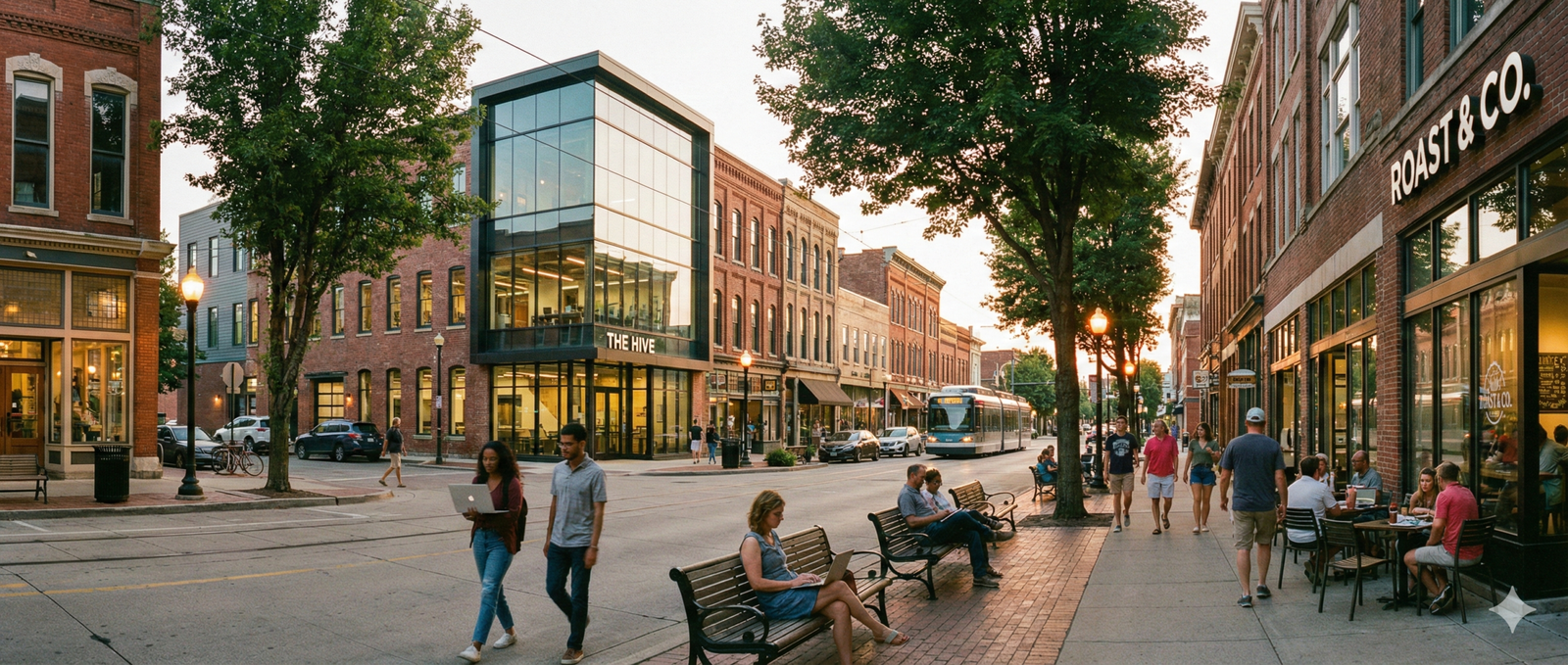
The geography of work has undergone a seismic shift. For decades, the career ladder was inextricably linked to a handful of “superstar cities”—London, New York, San Francisco, Tokyo. If you wanted access to high-paying jobs, venture capital, or world-class networking, you paid the premium in rent and density. However, the widespread normalization of distributed teams has decoupled location from ambition. We are currently witnessing a “Great Reshuffling,” where rural towns and secondary cities are emerging not just as affordable alternatives, but as primary hubs of innovation and lifestyle—true remote work havens.
This guide explores the mechanisms driving this migration, the economic and social realities of moving to a “Zoom town,” and how individuals and communities are navigating this new landscape. Whether you are a digital nomad looking to put down roots, a family seeking more square footage, or a community leader hoping to attract talent, this deep dive covers the practicalities, the pitfalls, and the potential of the decentralized future.
Scope of This Guide
In this article, “secondary cities” refers to mid-sized metropolitan areas (often with populations between 200,000 and 1 million) that offer urban amenities without the hyper-inflation of global capitals. “Rural towns” refers to smaller communities (populations under 50,000) that are leveraging connectivity to attract residents.
We will cover:
- The drivers behind the exodus from major metros.
- The economics of geo-arbitrage and cost-of-living adjustments.
- Incentive programs (cash-for-relocation) and their requirements.
- Infrastructure realities: Internet, healthcare, and transit.
- Social dynamics: Integrating into established communities vs. gentrification.
- Decision frameworks for choosing your next location.
Key Takeaways
- Geo-arbitrage is powerful: Moving to a remote work haven can effectively double your disposable income, but it requires careful tax and salary planning.
- Connectivity is the new utility: High-speed internet is the single biggest predictor of a town’s success in attracting remote workers; scenery is secondary to bandwidth.
- Incentives are real but competitive: Programs like Tulsa Remote and Ascend West Virginia have proven that cash incentives work, but they are becoming increasingly selective.
- The “Third Place” matters: Successful remote work havens invest heavily in co-working spaces, cafes, and parks to combat isolation.
- Community integration is critical: Sustainable migration requires newcomers to contribute to the local economy and culture, rather than living in a “remote bubble.”
1. The Drivers of the Migration: Push and Pull Factors
To understand why secondary cities and rural towns are booming, we must look at the interplay between what is pushing people out of major hubs and what is pulling them toward smaller communities.
The Push: The Saturation of Superstar Cities
For years, knowledge workers tolerated exorbitant housing costs, long commutes, and noise pollution as the “tax” for career advancement. As of 2025 and moving into 2026, that value proposition has eroded. When the office is a laptop, the justification for paying $4,000 a month for a studio apartment diminishes rapidly.
- Cost of Living Crisis: In Tier 1 cities, housing often consumes 40-50% of a professional’s income.
- Quality of Life: The desire for green space, cleaner air, and a slower pace has moved from a retirement dream to a mid-career requirement.
- Infrastructure Strain: Major metros often struggle with aging transit and overcrowded services, creating daily friction.
The Pull: The Renaissance of the “Middle”
Secondary cities (think Boise, Idaho; Chattanooga, Tennessee; or Madison, Wisconsin) and rural towns are positioning themselves as the “Goldilocks” solution—not too big, not too small.
- Access to Nature: Many remote work havens are adjacent to mountains, lakes, or coastlines, allowing workers to hike or surf on their lunch breaks.
- Housing Affordability: The ability to purchase a single-family home with a yard for the price of a city down payment is a massive draw, particularly for millennials engaging in family formation.
- Community Impact: In a city of 8 million, an individual is a drop in the ocean. In a town of 15,000, a remote worker can join the school board, support local businesses, and see the tangible impact of their presence.
2. The Economic Equation: Geo-Arbitrage and Wealth Building
The financial implication of moving to a remote work haven is arguably the strongest motivator. This concept is often called “geo-arbitrage”—earning money in a strong currency or high-salary market while spending it in a lower-cost market.
Salary vs. Cost of Living
While some companies adjust salaries based on location (localization), many tech and creative industries have moved toward “national” or “regional” pay bands that barely distinguish between New York and a rural town in Vermont.
- Disposable Income: If a worker keeps a $120,000 salary but moves from San Francisco (Cost of Living Index ~269) to a town in the Midwest (Index ~85), their purchasing power nearly triples.
- Asset Acquisition: This surplus income allows for aggressive retirement savings, real estate investment, and debt repayment.
The Local Economic Multiplier
For the towns themselves, the arrival of remote workers is an economic lifeline.
- Imported Wealth: Remote workers import salaries from outside the local economy. Every dollar they spend at a local grocery store or mechanic is “new money” entering the ecosystem.
- Tax Base Expansion: New residents pay property taxes and sales taxes, funding schools and infrastructure without necessarily adding rush-hour traffic (since they work from home).
The Gentrification Risk
We must acknowledge the friction this creates. An influx of high earners can drive up housing prices, pricing out locals who earn local wages.
- The $15 vs. $100 Hour: When a remote software engineer moves next door to a local service worker, the disparity in buying power can lead to rapid inflation in housing and services.
- Ethical Considerations: Ethical remote work havens are those that plan for housing density and protect existing residents, ensuring the growth benefits everyone, not just the newcomers and landlords.
3. Infrastructure: The Digital Backbone
A scenic view is useless to a remote worker if they cannot join a video conference. The non-negotiable requirement for any aspiring remote work haven is enterprise-grade connectivity.
The Fiber Optic Revolution
Historically, rural internet was synonymous with slow DSL or high-latency satellite. This has changed dramatically due to federal grants and local cooperatives.
- Municipal Broadband: Towns like Chattanooga, TN, pioneered gigabit internet as a public utility, creating a blueprint for others.
- Rural Cooperatives: Electric co-ops in states like Missouri and Arkansas have strung fiber along existing power lines, bringing gigabit speeds to farms and hamlets.
Starlink and Low-Earth Orbit (LEO) Satellites
For areas where fiber is geographically impossible, LEO satellite constellations (like Starlink) have been a game-changer. Unlike traditional satellite (high latency), LEO systems offer latency low enough for Zoom calls and online collaboration tools. This has opened up “deep rural” areas—cabins in the woods, desert towns—to the remote workforce.
The “Third Place” Infrastructure
Remote workers rarely want to work from their living rooms 24/7. Successful remote work havens invest in:
- Co-working Spaces: Flexible offices that offer reliable internet, coffee, and meeting rooms.
- Hybrid Libraries: Modern libraries are rebranding as digital hubs, offering free workspaces and community meeting areas.
- Main Street Wi-Fi: Public Wi-Fi zones in town centers encourage workers to get out of the house and patronize local businesses.
4. “Zoom Towns” and Cash Incentives
To accelerate migration, dozens of cities and regions have launched formal incentive programs. These programs essentially “pay” talent to move there.
Prominent Incentive Programs (as of late 2025/early 2026 context)
While specific terms change, the archetypes of these programs remain consistent:
- Tulsa Remote (Oklahoma): The gold standard of remote incentives. It typically offers $10,000 in cash, free desk space at a co-working facility, and intense community programming to help newcomers make friends.
- Ascend West Virginia: Focuses on outdoor enthusiasts. Offers cash (often $12,000 paid out over time) plus free gear rentals and outdoor activity passes.
- Choose Topeka (Kansas): Offers incentives specifically tied to buying a home or renting, often partnering with employers.
- Remote Shoals (Alabama): Targets high earners to move to the Shoals area, offering cash incentives to boost the local tax base.
What Programs Look For in Applicants
It is a common misconception that these programs accept everyone. They are competitive. They typically look for:
- Full-time Remote Employment: You must already have a job that allows you to move. They generally do not provide jobs.
- Income Thresholds: Many require a minimum salary (e.g., $80k+) to ensure you have disposable income to spend locally.
- Community Mindset: They want “stickiness.” Applicants who express a desire to volunteer, join clubs, and stay long-term are preferred over digital nomads just passing through for the cash.
The “Golden Handcuffs” of Incentives
Most programs structure the payout to ensure retention. For example, you might get $2,000 upfront for moving costs, $500 a month for a year, and a final “bonus” at the end of year one. If you leave early, you lose the remaining money. This protects the town from “incentive hoppers.”
5. Community and Culture: Beyond the Screen
The biggest challenge regarding remote work is not productivity; it is loneliness. Rural towns and secondary cities are addressing this by engineering social collision.
Nurturing Micro-Communities
In a large city, you might find a niche community for anything. In a smaller town, community is often broader and more intersectional.
- The “Newcomer” Mixer: Towns are hosting regular meetups for remote workers. This sounds trivial, but it provides an essential landing pad for people who don’t have a physical office to make friends in.
- Skill Sharing: Remote workers often bring specialized skills (coding, marketing, design). Successful havens facilitate workshops where these workers teach locals, bridging the “town vs. gown” divide.
Revitalizing Main Street
Remote work havens often see a “coffee shop renaissance.” Remote workers need places to go. This demand supports artisan bakeries, breweries, and specialty shops that might not survive on the local population alone. This revitalization restores the civic pride of the town, creating a virtuous cycle that attracts even more residents.
The Politics of Migration
New residents bring new ideas and, often, new politics. This can create tension in traditionally conservative rural areas or traditionally working-class cities.
- Integration: Successful newcomers approach the town with humility (“How can I help?”) rather than arrogance (“Here is how we did it in New York”).
- Local Governance: We are seeing more remote workers running for city council or school board positions, aiming to modernize local systems while trying to respect local traditions.
6. Challenges and Pitfalls of Rural Havens
Moving to a remote work haven is not a fairytale. It involves trade-offs that can be jarring for those accustomed to metropolitan conveniences.
Healthcare Deserts
In major cities, specialized medical care is minutes away. In rural areas, a level-one trauma center or a pediatric specialist might be a three-hour drive.
- Telehealth Limitations: While telehealth handles minor issues, chronic conditions or emergencies require physical infrastructure that may be lacking.
- Provider Shortages: Many rural areas struggle to attract doctors and dentists, leading to long wait times.
The “Convenience Gap”
- Delivery Services: UberEats, DoorDash, and same-day Amazon delivery are often non-existent or severely limited.
- Transit: You almost certainly need a car. Public transit in secondary cities is often sparse, and in rural towns, it is usually absent.
- Entertainment: While nature is abundant, access to concerts, museums, and diverse dining options will be significantly reduced compared to a Tier 1 city.
Professional Isolation
While digital tools connect you to your team, you lose the “osmosis” of industry hubs. If you work in a hyper-specialized field (e.g., fintech, biotech), moving away from the hub can reduce serendipitous networking opportunities, potentially slowing career growth if not actively managed through travel and conferences.
Limited Housing Inventory
Small towns were not built for a sudden influx of buyers. Inventory is often low. This can lead to bidding wars that frustrate locals and newcomers alike. Furthermore, the housing stock in rural areas is often older, requiring significant maintenance or renovation—a skill set many urbanites lack.
7. How to Choose Your Remote Haven: A Decision Framework
If you are considering partaking in this migration, do not choose a location based solely on a scenic Instagram photo or a $10,000 check. Use this framework to evaluate fit.
Step 1: The Connectivity Audit
Do not trust the “up to” speeds listed on real estate sites.
- Ask the landlord/seller for a screenshot of a speed test run inside the house.
- Check LTE/5G cell maps for backup connectivity.
- Verify if there is a local co-working space as a contingency plan.
Step 2: The Time Zone Reality
Working remotely does not mean working asynchronously. If you move to a mountain town in the Rockies but your team is in London, you will be waking up at 3:00 AM. Ensure your target location aligns with your required collaboration hours.
Step 3: The “Vibe Check” (The Trial Run)
Never buy sight unseen.
- Rent for a Month: Use Airbnb or a short-term rental to live in the town for at least two weeks, ideally a month.
- Test the “Boring” Days: Do not just hike on Saturday. Test a rainy Tuesday. Can you get groceries? Is the internet stable during a storm? Do you feel lonely?
- Visit the Grocery Store: This is the best place to gauge the local demographic, cost of living, and general “vibe” of the community.
Step 4: Access to Hubs
Choose a “Hub and Spoke” model. A rural town is much more sustainable if it is within 90 minutes of a major airport or a larger city. This allows for easy travel for business meetings and access to specialized healthcare when needed.
8. Specific Regions to Watch
While trends shift, several regions have established themselves as enduring remote work havens.
The Mountain West (USA)
Towns in Utah, Montana, and Colorado offering high access to outdoors.
- Pros: Incredible lifestyle, health-focused culture.
- Cons: Becoming very expensive (the “Aspen effect”), fire risks.
The Southern Appalachians
Asheville (NC), Chattanooga (TN), Roanoke (VA).
- Pros: High biodiversity, moderate climate, strong fiber infrastructure (especially Chattanooga).
- Cons: Humidity, variable healthcare access in deep rural pockets.
The Rust Belt Revitalized
Buffalo (NY), Pittsburgh (PA), Cleveland (OH).
- Pros: Very affordable housing stock, urban amenities (museums, sports) remaining from their industrial peaks, climate resilience.
- Cons: Gray winters, older infrastructure.
Southern Europe (International Context)
For those with citizenship or digital nomad visas, villages in Portugal, Spain, and Italy are selling “1 Euro homes” or offering tax breaks to repopulate aging towns.
- Pros: Culture, food, weather, low cost.
- Cons: Bureaucracy, language barriers, time zone differences with US employers.
Conclusion
The rise of rural towns and secondary cities as remote work havens is not a temporary anomaly; it is a correction of the over-concentration of talent that defined the early 21st century. This shift offers a rare “win-win-win”: workers get a better quality of life, companies get happier (and often cheaper) talent, and neglected communities get a renewed economic engine.
However, this transition requires intention. It requires workers to be mindful neighbors, not just consumers of cheap housing. It requires towns to build infrastructure that serves long-term residents as well as digital nomads.
If you are looking to make the leap, look beyond the financial incentives. Look for a place where you want to live, not just a place where you want to work. The desk looks the same everywhere; it’s what happens when you step away from it that defines a haven.
Next Steps: If you are serious about relocating, start by listing your non-negotiables (e.g., “must be within 1 hour of an airport,” “must have fiber internet”). Then, pick three potential towns and schedule a “work-cation” trial run in the next six months.
FAQs
What qualifies a city as a “secondary city”?
A secondary city is typically defined as a mid-sized metropolitan area, often with a population between 200,000 and 1 million. These cities function as regional economic hubs but lack the massive global influence and extreme population density of primary “superstar” cities like New York, London, or Tokyo. Examples include Austin, Nashville, or Manchester. They often offer many of the same cultural and infrastructural amenities as major cities but with a lower cost of living and less congestion.
Are remote work incentive programs taxable?
Yes, in most jurisdictions, particularly the United States, cash incentives received for relocating (like those from Tulsa Remote) are considered taxable income. You will likely receive a 1099 form and must report this money to the IRS. Additionally, some programs offer “forgivable loans” for housing, which have their own specific tax implications. It is crucial to consult with a tax professional before factoring the incentive money into your budget.
Will my salary decrease if I move to a cheaper area?
This depends entirely on your employer’s compensation policy. Some tech giants have implemented “location-based pay,” where they reduce your salary if you move from a high-cost area to a low-cost area (often a 10-20% cut). However, many remote-first startups and progressive companies pay a “national rate” regardless of location. Before moving, you must explicitly ask HR about their localization policies to avoid a surprise pay cut.
How do I find reliable internet in rural areas?
Do not rely on the ISP’s marketing materials. Use the FCC broadband map (in the US) to see reported speeds in specific census blocks. Better yet, check the “verified” reviews on local community forums (like Reddit or Nextdoor) for the specific town. Look for towns served by local fiber cooperatives or municipal broadband, as these often offer better service and customer support than large national telecom providers in rural areas.
What is the difference between a digital nomad and a remote settler?
A digital nomad typically has no fixed address, moving from location to location every few weeks or months, prioritizing travel and flexibility. A “remote settler” (or location-independent settler) uses the freedom of remote work to permanently relocate to a place they otherwise couldn’t work, buying a home and integrating into the local community. Remote work havens generally prefer settlers because they contribute to the long-term tax base and civic life.
Can I get a mortgage in a rural town with remote income?
Generally, yes. Lenders have become much more accustomed to remote work income verification. However, they will require a letter from your employer stating that you are permitted to work remotely permanently. If your employment status is “hybrid” and the town is 500 miles from the office, lenders may deny the loan because they view the commute as unsustainable. Ensure your HR status is officially “fully remote.”
References
- Economic Innovation Group. (2024). The Great Reshuffling: How Remote Work is Reshaping the American Map. https://eig.org
- MakeMyMove. (2025). Marketplace of Remote Worker Incentives and Relocation Programs. https://www.makemymove.com
- Tulsa Remote. (n.d.). Official Program Guidelines and Impact Reports. https://tulsaremote.com
- Brookings Institution. (2023). The geography of remote work. https://www.brookings.edu
- Pew Research Center. (2024). Urban to Rural Migration Trends in the Post-Pandemic Era. https://www.pewresearch.org
- Vermont Department of Economic Development. (n.d.). New Remote Worker Grant Program Details. https://thinkvermont.com
- National Rural Electric Cooperative Association (NRECA). (2024). Broadband Case Studies: Bringing Fiber to Rural America. https://www.electric.coop
- Harvard Business Review. (2023). Is Your Organization Ready for Asynchronous Work? https://hbr.org