Disclaimer: This article discusses emerging technologies in healthcare and personal assistance. It is for informational purposes only and does not constitute medical advice. For specific health concerns or care decisions, please consult with qualified medical professionals or geriatric care specialists.
The intersection of artificial intelligence and robotics is rapidly reshaping how we approach caregiving. As global populations age and the demand for care workers outstrips supply, technology is stepping in to fill the gap. No longer the stuff of science fiction, robots and AI companions for care are becoming practical, functional realities in private residences and professional facilities alike.
This guide explores the current landscape of these technologies, moving beyond the hype to examine how they work, where they add value, and the ethical complexities they introduce. Whether you are a family member seeking support for an aging parent, a healthcare administrator looking to augment staff capabilities, or a tech enthusiast tracking the evolution of human-machine interaction, this analysis covers the essential ground.
Key Takeaways
- The “Care Gap” Driver: The primary catalyst for this technology is the global shortage of human caregivers paired with a rapidly aging demographic (the “Silver Tsunami”).
- Two Main Categories: Care technologies generally fall into Assistive Robotics (physical tasks like lifting or fetching) and Social AI/Robots (companionship, cognitive stimulation, and monitoring).
- Proactive vs. Reactive: Modern AI companions, unlike traditional smart speakers, are proactive—they initiate conversations, remind users to hydrate, and check in on emotional well-being.
- Privacy is Paramount: Bringing cameras and microphones into private spaces, especially for vulnerable populations, raises significant data privacy and consent issues.
- Augmentation, Not Replacement: The most successful implementations use AI to handle routine tasks and monitoring, freeing up human caregivers to focus on empathy, complex decision-making, and physical touch.
Who This Is For (And Who It Isn’t)
This guide is designed for:
- Family Caregivers: Individuals looking for tools to help aging relatives maintain independence at home (“aging in place”).
- Facility Administrators: Managers of nursing homes, assisted living facilities, and hospices investigating technological solutions for staff support and resident engagement.
- Policy Makers and Ethics Boards: Professionals evaluating the regulations and moral implications of automated care.
This guide is NOT for:
- Industrial Robotics Engineers: While we touch on technology, this is not a deep-dive coding or hardware engineering manual.
- Those Seeking a Human Replacement: This guide argues heavily against the notion that robots can or should fully replace human interaction in care settings.
The Rise of the Automated Caregiver
The context for robots and AI companions for care is a demographic inevitability. According to the World Health Organization, the proportion of the world’s population over 60 years of age will nearly double from 12% to 22% between 2015 and 2050. Simultaneously, many developed nations are facing a critical shortage of nursing staff and home health aides.
Into this vacuum enters the “automated caregiver.” These are not necessarily humanoid robots walking around on two legs; they are a diverse array of form factors ranging from robotic seals to tablet-based avatars and voice-activated AI agents.
Why Now?
Three technological converging points have made this possible as of early 2026:
- Generative AI: The ability of AI to hold natural, non-scripted conversations has transformed “dumb” chatbots into engaging companions that can reminisce, tell jokes, and offer comfort.
- Sensor Affordability: Lidar, cameras, and biometric sensors are cheaper and smaller, allowing for unobtrusive monitoring of falls or health vitals.
- Connectivity: High-speed home internet and 5G allow these devices to process data in the cloud and alert human caregivers instantly.
Defining the Landscape: Types of Care Technologies
To understand the market, it helps to categorize the technology by its primary function. Most robots and AI companions for care fall into one of three buckets: Social, Physical, or Cognitive.
1. Social and Therapeutic Robots
These devices are designed primarily for emotional connection. They address loneliness, anxiety, and agitation, particularly in patients with dementia.
- Animal-Like Robots: The most famous example is PARO, a therapeutic robotic seal. It responds to touch, makes soft sounds, and moves its eyes and tail. It has been shown to lower stress levels in patients and reduce the use of psychotropic medications in some care facilities.
- Humanoid Companions: Robots like Pepper or newer iterations (often smaller, desktop-sized) use faces and gestures to communicate. They can lead bingo games, guide breathing exercises, or simply chat.
2. Cognitive Support and AI Avatars
These are often screen-based or stationary devices that focus on brain health, memory, and routine.
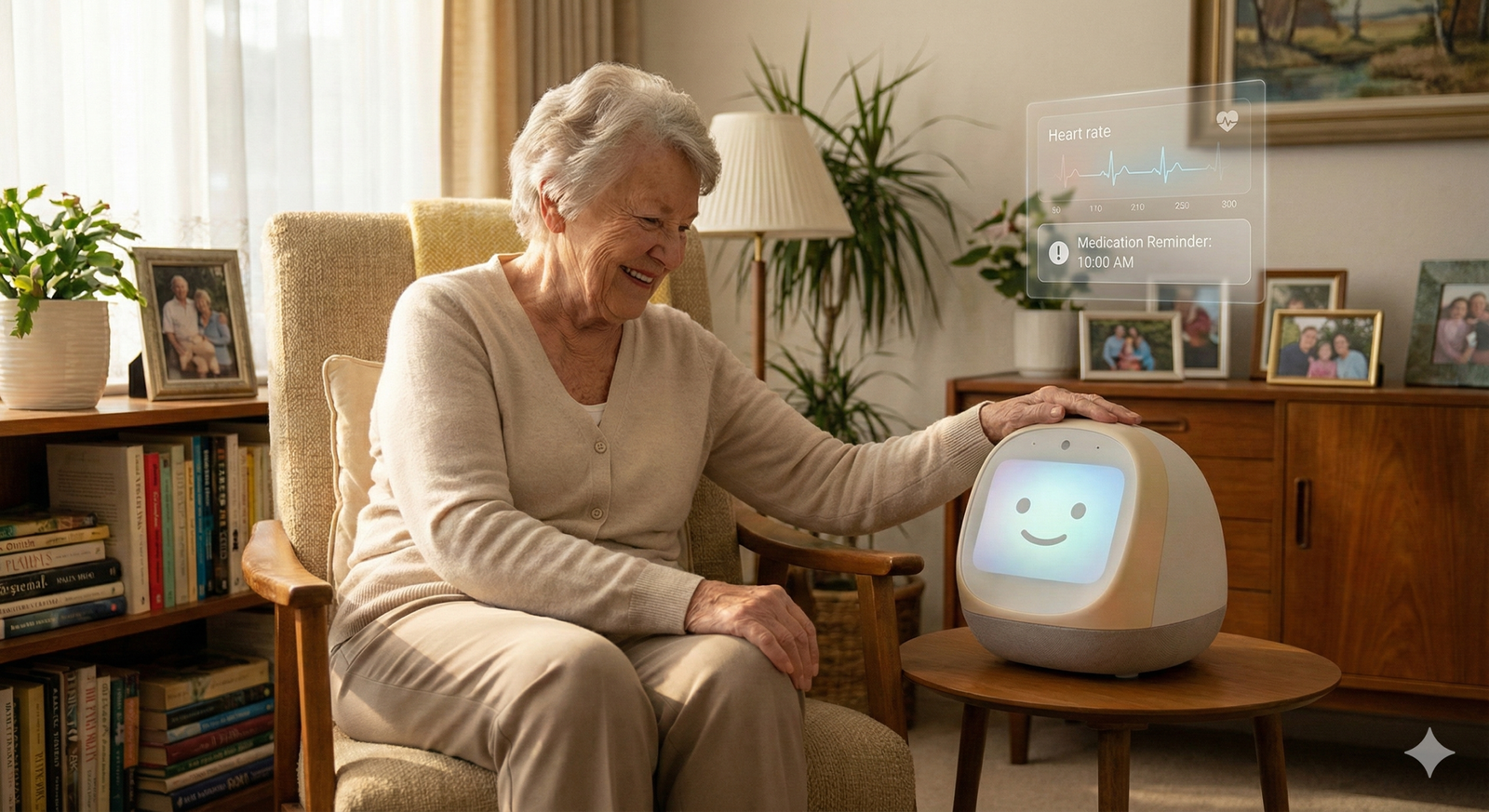
- Proactive Care Companions: Devices like ElliQ differ from standard smart speakers (like Alexa or Siri) because they are proactive. Instead of waiting for a “wake word,” they might light up and say, “Good morning, it looks sunny outside. Have you taken your medication yet?”
- Virtual Pets/Avatars: Screen-based cats, dogs, or human avatars that “live” on a tablet, providing companionship without the hardware maintenance of a physical robot.
3. Physical Assistive Robotics
These are functional machines designed to perform labor.
- Mobile Service Robots: Autonomous platforms that can deliver food trays, linens, or medication in hospital corridors, reducing the walking burden on nurses.
- Mobility Aids: Robotic exoskeletons or smart walkers that help elderly individuals stand up or walk with stability, preventing falls.
- Fetch/Manipulation Robots: Arms mounted on mobile bases (often still in research or high-end deployment) that can pick up a dropped remote or open a fridge door.
Applications in Private Homes: Aging in Place
The goal for most seniors is “aging in place”—remaining in their own home for as long as possible rather than moving to a facility. Robots and AI companions for care are critical enablers of this lifestyle.
Safety Monitoring Without Intrusion
One of the greatest fears for seniors living alone is falling without anyone knowing. Traditional pendant alarms require the user to be conscious and press a button.
- AI Solution: Smart home systems and wall-mounted radar sensors (which do not use cameras, preserving privacy) can detect a fall pattern and ask the resident, “Are you okay?” via a companion bot. If there is no response, the bot calls emergency contacts.
Medication Management
Non-adherence to medication is a leading cause of hospital readmissions.
- AI Solution: A tabletop robot doesn’t just beep; it engages. “It’s 10:00 AM, time for your blue pill. Remember, Dr. Smith said this one helps with your blood pressure.” Some advanced units dispense the pill and watch (via computer vision) to ensure it is taken.
Combating Isolation
Loneliness is as damaging to health as smoking 15 cigarettes a day.
- AI Solution: Generative AI companions can discuss news, play trivia, or capture “life stories” by asking the user questions about their childhood and recording the answers for the family. This keeps the mind active and provides a sense of social presence.
Applications in Care Facilities: Staff Augmentation
In nursing homes and assisted living facilities, the dynamic is different. Here, robots are not replacing family; they are supporting professional staff who are often overworked and dealing with high resident-to-staff ratios.
The “Runner” Robot
Nurses spend a significant portion of their shift walking—fetching supplies, delivering meals, or taking samples to the lab.
- Application: Autonomous mobile robots (AMRs) handle these logistics. By offloading the “fetching,” nurses can spend more time at the bedside providing human comfort and clinical care.
Night Shift Monitoring
The night shift is notoriously difficult to staff.
- Application: Monitoring robots can patrol hallways silently. Equipped with thermal cameras or depth sensors, they can detect if a resident has wandered out of bed or if a room temperature is abnormal, alerting the nurse station immediately. This reduces the need for disruptive physical room checks that might wake residents.
Group Entertainment and Therapy
Activity directors often struggle to engage every resident, especially those with varying levels of cognitive decline.
- Application: Social robots can lead group activities. A robot might run a “Guess that Song” quiz for a group of five residents, keeping them socially engaged while the activity director focuses on a resident who needs one-on-one attention.
The Technology Behind the Companions
To trust these systems, it helps to understand how they function. The leap in capability over the last few years is driven by three core technologies.
Natural Language Processing (NLP) and LLMs
Early care bots ran on decision trees (if user says X, say Y). This felt robotic and frustrating. Today, Large Language Models (LLMs) allow companions to understand intent, nuance, and even emotional tone. If a user says, “I’m feeling a bit down today,” the AI doesn’t just say “Command not recognized.” It can reply, “I’m sorry to hear that. Would you like to talk about it, or would you prefer I play some soothing music?”
Computer Vision and Emotion Recognition
Cameras combined with AI software can map facial landmarks to detect expressions (pain, confusion, joy). In a care setting, an AI might log that a resident looks consistently grimaced during physical therapy, suggesting to the human therapist that the pain levels might be higher than reported.
Ambient Intelligence
This refers to the ecosystem of sensors. The robot is rarely acting alone; it is often the interface for a network of motion sensors, smart pill bottles, and wearables. The “Brain” of the system synthesizes this data to make decisions.
Benefits of AI and Robotics in Care
The integration of robots and AI companions for care offers distinct advantages when implemented correctly.
1. Consistent, Patience-Free Interaction
Human caregivers can get tired, frustrated, or burnt out, especially when answering the same question for the 20th time from a patient with Alzheimer’s. A robot never gets impatient. It will answer the question the 20th time with the same tone as the first, preserving the dignity of the patient and reducing stress in the environment.
2. Data-Driven Health Insights
Humans are bad at noticing ultra-slow changes. An AI companion can track data points over months. It might notice, “Mrs. Jones is taking 20% longer to walk from the bedroom to the kitchen than she did last month,” alerting doctors to potential mobility decline before a fall occurs.
3. Autonomy for the User
Paradoxically, robotic help can increase human dignity. Many people feel embarrassed asking a son or daughter to help them to the bathroom or to pick up dropped items. Asking a robot to do it carries no social debt or embarrassment, allowing the user to feel more independent.
Ethical Considerations and Risks
This is the most critical section for any buyer or policy maker. The introduction of robots and AI companions for care is fraught with ethical landmines.
Privacy and Surveillance
To work effectively, these systems need data—video, audio, and health metrics.
- The Risk: A camera in a bedroom or bathroom (for fall detection) is a massive invasion of privacy. If the data is hacked or sold to insurance companies, the consequences are severe.
- Mitigation: Look for “edge computing” devices where data is processed locally on the robot and not sent to the cloud. Prefer radar/Lidar over cameras for bathrooms.
The “Deception” of Empathy
Sherry Turkle, an MIT professor, describes the “Simulated Thinking” trap.
- The Issue: When a robot says “I care about you,” it is lying. It is code executing a script. Vulnerable users, especially those with cognitive impairments, may form deep emotional bonds with these machines. Is it ethical to let a person believe a machine loves them?
- The Counterpoint: Some ethicists argue that if the “deception” brings genuine comfort and reduces misery, it is a virtuous deception, similar to validation therapy used in dementia care.
Infantilization
There is a risk of treating elderly adults like children by giving them “toy” robots. Design matters. A robot for an adult should look and behave respectfully, not like a nursery toy, unless specifically requested by the user.
Socioeconomic Disparity
There is a real risk of a two-tier care system: “warm hands” (human care) for the rich, and “cold metal” (robot care) for the poor. Technology should be an affordable baseline that elevates care for everyone, not a replacement for human contact for those who can’t afford better.
Human-in-the-Loop: The Hybrid Model
The consensus among experts is that robots and AI companions for care should never be a 1:1 replacement for humans. The ideal model is the Hybrid Model.
In this framework, the technology acts as a “force multiplier.”
- The Robot does the heavy lifting, the repetitive monitoring, the medication reminders, and the basic entertainment.
- The Human (family or professional) uses the data provided by the robot to deliver high-quality, targeted interventions.
For example, instead of a daughter calling her mother daily just to ask “Did you take your pills?”, the robot handles that. The daughter can then use her phone call to talk about the grandkids, politics, or feelings—higher-level emotional connection that the robot cannot replicate.
Implementation Guide: Choosing the Right Companion
If you are considering this technology, use this checklist to evaluate options.
1. Identify the Primary Need
- Is it loneliness? Look for generative AI conversationalists or social robots (e.g., ElliQ, specialized tablet apps).
- Is it safety? Look for fall detection systems and passive monitoring.
- Is it dementia? Look for simple, therapeutic robots like PARO that do not require complex cognitive interaction.
2. Evaluate Connectivity and Complexity
- Does the home have reliable Wi-Fi? (Essential for most AI).
- Is the user tech-savvy? If not, the device must be “zero-touch” (voice activated or autonomous).
3. Check the Privacy Policy
- Does the company sell data?
- Can you delete the data history?
- Is video footage stored in the cloud or processed on the device? (Crucial).
4. Assess Long-Term Costs
- Many of these devices have an upfront hardware cost plus a monthly subscription for the AI service/cellular connection. Ensure this fits the budget long-term.
Common Mistakes and Pitfalls
Overestimating Capabilities
Don’t expect a robot to handle emergencies. If a robot detects a fall, it can call for help, but it cannot pick the person up (unless it is a highly specialized, industrial-grade lift robot, which is rare in homes).
Ignoring User Consent
Forcing a robot on a parent who fears technology will fail. implementation must be gradual. Start with a voice assistant; if that goes well, introduce a screen; then perhaps a robotic presence.
The “Set and Forget” Error
Installing a robot and then visiting less often is a mistake. The robot is there to keep the user safe between visits, not to replace the visits.
Future Trends in Care Robotics
Looking ahead, the landscape of robots and AI companions for care is evolving rapidly.
Soft Robotics
Current robots are often hard plastic and metal. Future “soft robotics” use materials like silicone and fabrics that feel more like skin or clothing. These will be safer for physical interaction, lifting, and hugging.
Emotionally Intelligent Generative AI
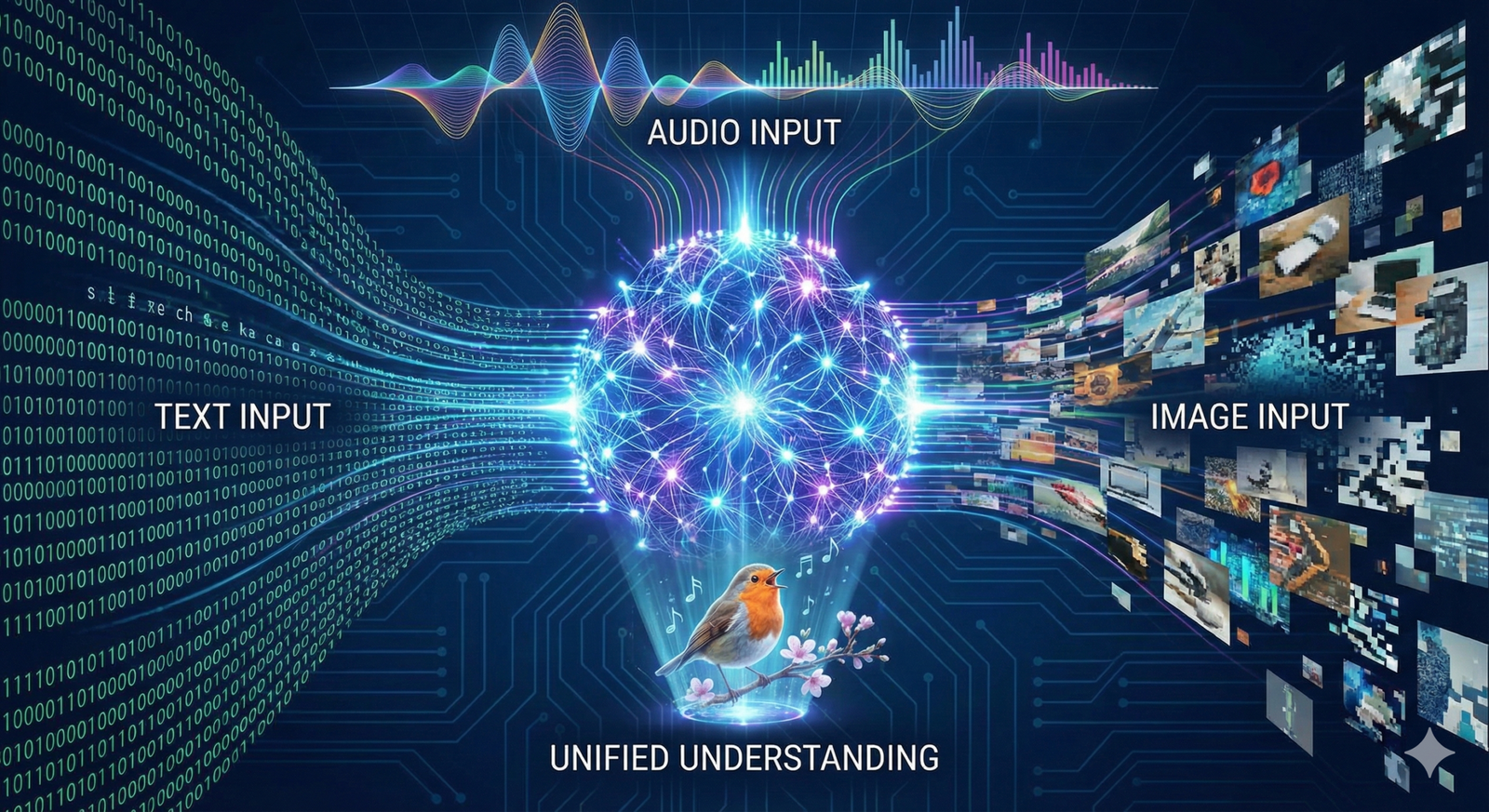
As of 2026, we are seeing the emergence of “multimodal” AI models that can see, hear, and speak simultaneously with near-zero latency. This will make interruptions, laughter, and emotional mirroring much more natural, reducing the “uncanny valley” effect.
Integration with Wearables
The robot will cease to be a standalone device and will become the “face” of a network including smart watches and clothing. The robot will know you are dehydrated because your smart shirt detected it, and will bring you water before you even ask.
Conclusion
Robotics and AI companions for care represent a profound shift in how we manage aging and disability. They offer a promising solution to the crisis of caregiver shortages and the epidemic of loneliness. By handling routine tasks, monitoring safety, and providing cognitive engagement, these technologies allow seniors to maintain independence and dignity for longer.
However, they are tools, not replacements. The warmth of a human hand, the complexity of human empathy, and the moral weight of caregiving decisions remain strictly human domains. The future of care is not robot vs. human; it is robot and human, working together to create a safer, more connected environment for the most vulnerable among us.
Next Steps: If you are exploring this for a loved one, start small. research “proactive care companions” available in your region, read their privacy transparency reports, and discuss the idea with your loved one to gauge their comfort level before investing.
FAQs
1. Can robots truly replace human caregivers?
No. Robots excel at repetitive tasks, monitoring, and data collection, but they lack genuine empathy, moral judgment, and the ability to perform complex, unpredictable physical care tasks. They are best used to support human caregivers, not replace them.
2. How much do AI care companions cost?
Prices vary widely. Simple AI avatar apps may cost a monthly subscription of $20-$50. Dedicated hardware robots like ElliQ or PARO can range from $800 to $6,000 upfront, often with ongoing service fees. Insurance coverage is currently limited but evolving.
3. Are these robots safe for people with dementia?
Yes, specific robots like the PARO seal are designed for dementia care. They are durable, have no small parts, and respond to touch in a way that reduces agitation. However, supervision is always recommended during initial interactions.
4. What happens if the internet goes down?
Most modern AI companions require an internet connection to process language and send alerts. However, essential functions (like local alarms or basic responses) may work offline depending on the model. Always check for “cellular backup” options for critical safety monitoring.
5. Is it ethical to use a robot for companionship?
This is debated. While it may feel deceptive, many experts argue that if the interaction reduces suffering, anxiety, and loneliness, it is ethically justifiable, provided the technology is not used to justify neglecting human visits.
6. Can these robots detect medical emergencies like heart attacks?
Some advanced systems paired with wearables can detect irregular heart rhythms or falls. However, they are not diagnostic doctors. They detect anomalies and alert human responders; they do not treat medical conditions.
7. Do these devices record everything in the house?
Most “listening” devices record only after a wake word is detected, but fall detection cameras monitor continuously. Privacy-focused devices use “stick figure” processing or radar (no video) to ensure nudity or private moments are not recorded visually.
8. How do I introduce a robot to a skeptical senior?
Focus on utility and independence, not “care.” Frame it as a tool to help them stay in their own home, organize their calendar, or listen to audiobooks, rather than a “babysitter.” Let them control the device as much as possible.
9. What is the difference between a smart speaker and a care companion?
A smart speaker (like Alexa) is reactive; it waits for a command. A care companion is proactive; it initiates conversation, reminds you of appointments, suggests activities, and checks in on your mood without being prompted.
10. Where is the data stored?
It depends on the manufacturer. Secure devices encrypt data and store it on compliant cloud servers (HIPAA or GDPR compliant). Always ask if the company sells anonymized data to third parties before purchasing.
References
- World Health Organization (WHO). (2022). Ageing and health. WHO. https://www.who.int/news-room/fact-sheets/detail/ageing-and-health
- National Institute on Aging (NIA). (2024). Aging in Place: Growing Older at Home. U.S. Department of Health and Human Services. https://www.nia.nih.gov/health/aging-place/aging-place-growing-older-home
- Turkle, S. (2011). Alone Together: Why We Expect More from Technology and Less from Each Other. Basic Books. (Discussion on “simulation of empathy”).
- Bemelmans, R., et al. (2012). Socially Assistive Robots in Elderly Care: A Systematic Review into Effects and Effectiveness. Journal of the American Medical Directors Association. https://www.jamda.com/
- Intuition Robotics. (n.d.). ElliQ: The Sidekick for Happier Aging. Official Product Documentation. https://elliq.com/
- PARO Robots U.S. (n.d.). PARO Therapeutic Robot. Official Site. http://www.parorobots.com/
- Sharkey, A., & Sharkey, N. (2012). Granny and the robots: ethical issues in robot care for the elderly. Ethics and Information Technology.
- American Psychological Association. (2023). The risks of social isolation. Monitor on Psychology. https://www.apa.org/monitor/2019/05/ce-corner-isolation
- European Commission. (2024). Excellence in Trustworthy AI: The Coordinated Plan on Artificial Intelligence. Digital Strategy. https://digital-strategy.ec.europa.eu/en/policies/plan-ai
- Vandemeulebroucke, T., et al. (2018). The Ethics of Socially Assistive Robotics in Aged Care. Science and Engineering Ethics.