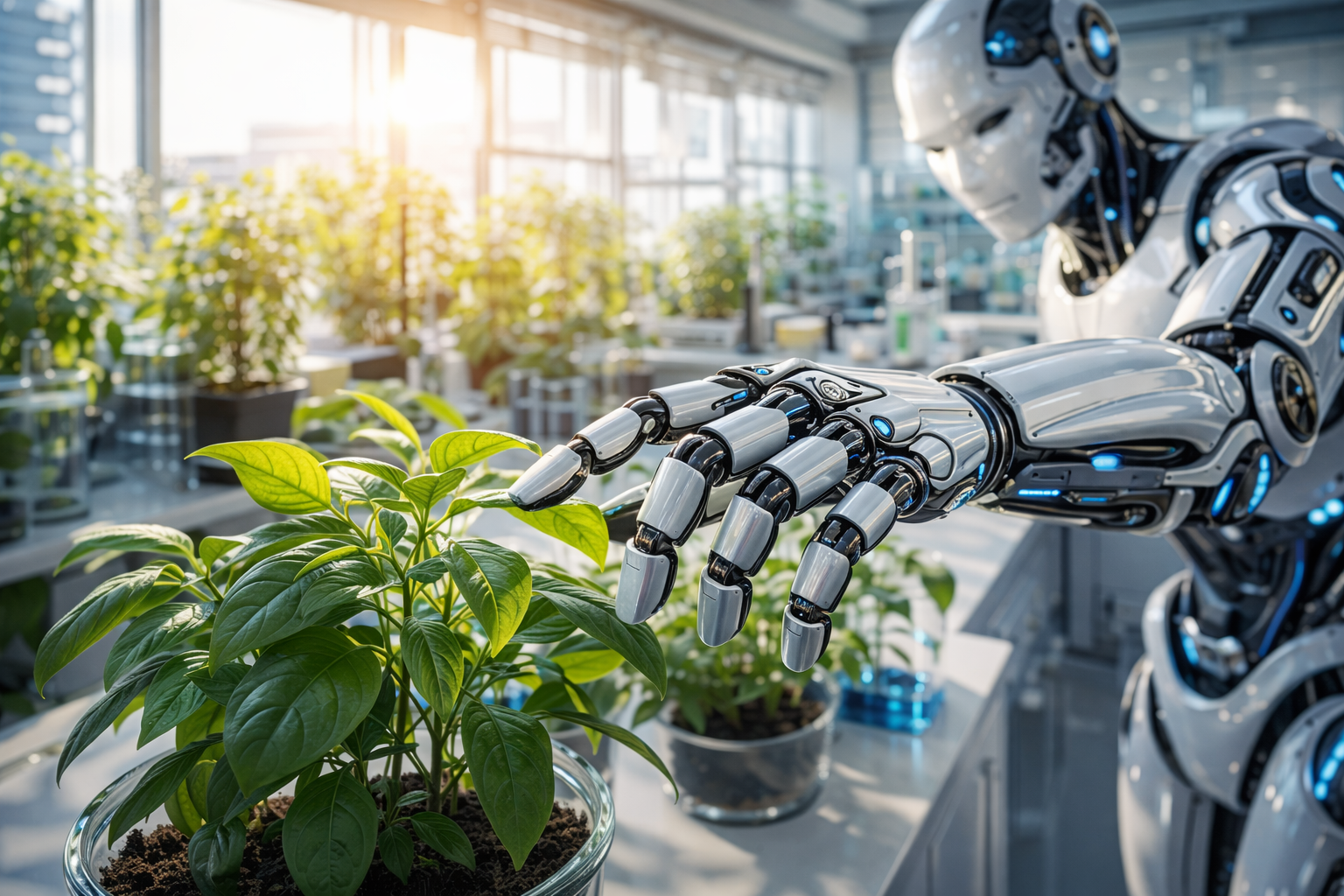
For the past decade, artificial intelligence has been a ghost in the machine. It lived in our pockets, processed our emails, and generated breathtaking art on our screens, but it remained fundamentally detached from the world of atoms. As of March 2026, that boundary is dissolving. We are entering the era of Physical AI—also known as embodied intelligence—where the cognitive power of large-scale neural networks is being integrated into physical forms that can touch, move, and manipulate the world around them.
Definition of Physical AI
Physical AI is the integration of advanced machine learning models with physical hardware (robotics, sensors, and actuators) to enable machines to perceive, reason, and act in the real world. Unlike “Digital AI,” which operates in a closed loop of text, code, or pixels, Physical AI must contend with the unpredictable laws of physics, gravity, and friction.
Key Takeaways
- Embodiment is the New Frontier: Intelligence requires a body to reach its full potential, moving from passive observation to active participation.
- Foundation Models for Action: The same technology behind LLMs is now being used to create “World Models” that understand physical cause and effect.
- Hardware-Software Convergence: Advances in actuators and battery density are finally catching up to our software capabilities.
- Economic Shift: We are moving from “Software as a Service” (SaaS) to “Robotics as a Service” (RaaS) in major sectors like logistics and healthcare.
Who This Is For
This guide is designed for industry leaders, technology developers, and curious observers who want to understand how the next phase of the AI revolution will impact the physical landscape. Whether you are an engineer looking at the technical stack or a business owner considering automation, this deep dive explains why the screen is no longer the limit.
The Great Migration: From Pixels to Particles
To understand Physical AI, we must first look at why AI was “stuck” in screens for so long. Traditionally, AI development followed a path of least resistance. It is significantly easier to train a model on a dataset of billions of internet photos than it is to teach a robotic arm how to pick up a strawberry without crushing it.
The digital world provides a perfect sandbox. In a digital environment, there is no “broken hardware” if a model makes a mistake. If a chatbot hallucinates a fact, it’s a bug; if a two-ton autonomous excavator “hallucinates” its surroundings, it is a catastrophe.
However, as of March 2026, several factors have converged to push intelligence out of the screen:
- Data Saturation: We have reached the point of diminishing returns for purely text-based training data.
- Multimodal Breakthroughs: Modern AI can now “see” and “hear” with the same fluency it uses to “read.”
- Sensor Affordability: High-fidelity LiDAR and depth cameras have dropped in price by nearly 70% over the last five years.
The Anatomy of Embodied Intelligence
Physical AI is not just a robot with a brain; it is a holistic system where the “brain” and “body” are deeply coupled. This system relies on three primary pillars:
1. High-Fidelity Sensing (The Nerves)
For a machine to act physically, it must perceive its environment with extreme precision. This involves sensor fusion, where data from various sources is synthesized into a single “world view.”
- Computer Vision: Moving beyond simple object detection to 3D scene reconstruction.
- Tactile Sensing: “Electronic skin” that allows robots to feel pressure, texture, and temperature.
- Proprioception: The internal sense of where one’s limbs are in space, essential for balance and coordination.
2. Edge Computing and On-Board Processing (The Brain)
Physical AI cannot afford the latency of the cloud. If a humanoid robot is about to trip, it cannot wait 200 milliseconds for a data center in another state to tell it how to adjust its weight. Edge AI chips allow for real-time inference, enabling the machine to make split-second decisions locally.
3. Actuators and Kinematics (The Muscles)
The “muscles” of Physical AI are the motors, gears, and hydraulic systems that translate digital commands into physical force. The challenge here is latency-to-torque. Modern Physical AI uses sophisticated algorithms to calculate the exact amount of force needed, often utilizing $F = ma$ (Force = mass × acceleration) in real-time simulations to ensure fluid, human-like movement.
World Models: How AI Learns the Laws of Physics
One of the most significant breakthroughs in 2026 is the development of World Models. Unlike a chatbot that predicts the next word in a sentence, a World Model predicts the next state of a physical environment.
Imagine an AI watching a ball roll toward a ledge. A digital-only AI might recognize the “ball” and the “ledge.” A Physical AI with a World Model understands that the ball has momentum, gravity will pull it down once it leaves the surface, and it will bounce upon impact.
This “common sense physics” is learned through:
- Video Pre-training: Watching millions of hours of real-world footage to understand cause and effect.
- Reinforcement Learning (RL): A trial-and-error process where the AI is “rewarded” for successfully completing a task, such as opening a door.
- Sim-to-Real Transfer: Training the AI in a hyper-realistic digital twin (a simulation) before deploying it to a physical body. This allows the AI to “fail” millions of times in seconds without damaging expensive hardware.
Industrial Revolution 5.0: Physical AI in the Workforce
The shift to Physical AI is triggering what many are calling the “Fifth Industrial Revolution.” This era is defined by the collaboration between humans and embodied agents.
Smart Logistics and the “Dark Warehouse”
We have moved past the era of simple conveyor belts. Today’s logistics hubs utilize Physical AI agents that can navigate unstructured environments. Unlike traditional AGVs (Automated Guided Vehicles) that follow magnetic strips on the floor, Physical AI agents use SLAM (Simultaneous Localization and Mapping) to weave through moving human workers and shifting pallet locations.
Healthcare: Precision Beyond Human Limits
In the medical field, Physical AI is manifesting in microsurgery and elderly care. Surgical robots are no longer just “puppets” controlled by a doctor; they now have “active assistance” features that prevent the surgeon from making a cut that would hit a major artery, essentially acting as a physical “spell-check” for human error.
Domestic and Service Environments
The “holy grail” of Physical AI has always been the home. As of early 2026, we are seeing the first generation of general-purpose domestic helpers capable of folding laundry and loading dishwashers—tasks that were considered “AI-impossible” just five years ago due to the sheer variety of shapes and textures involved.
The Rise of the Humanoid: Form Factor and Function
While Physical AI can take many shapes (drones, arms, rovers), the humanoid form factor has seen a massive resurgence. Why? Because the world we live in—our stairs, our doorknobs, our tools—was designed by humans, for humans.
Companies like Figure, Tesla (with the Optimus Gen 3), and Boston Dynamics have pivoted toward humanoids not for the sake of novelty, but for utility.
- Generalization: A humanoid can theoretically do any job a human can, from working on an assembly line to clearing a dinner table.
- Scale: By focusing on one versatile form factor, manufacturers can achieve the economies of scale needed to bring the cost of these machines down to that of a mid-sized sedan.
Technical Barriers: The “Taxes” on Physical Reality
Despite the progress, Physical AI faces hurdles that digital AI never had to consider.
1. The Energy Density Problem
Software doesn’t need to eat, but hardware needs power. Running high-performance GPU clusters on-board a mobile robot drains batteries rapidly. Current Physical AI systems often struggle to exceed 4–6 hours of heavy labor before needing a recharge.
2. The Latency Gap
In the digital world, a 1-second delay in a search result is an annoyance. In the physical world, a 1-second delay in a braking system is a catastrophe. Achieving “sub-millisecond” latency between perception and action remains the primary engineering challenge.
3. Material Science
We are reaching the limits of traditional metals and plastics. To truly mimic human dexterity, Physical AI requires “soft robotics”—actuators that can be both rigid for strength and soft for safety.
Common Mistakes in Physical AI Adoption
As businesses rush to integrate embodied intelligence, several recurring errors have emerged:
- Overestimating “Zero-Shot” Capabilities: Just because an AI is smart doesn’t mean it knows how your specific warehouse works. Physical AI still requires a “fine-tuning” phase in its local environment.
- Ignoring Edge Cases: The real world is messy. A puddle of oil, a rogue piece of plastic wrap, or a change in lighting can confuse a system that hasn’t been hardened against environmental “noise.”
- Neglecting Human Factors: Introducing Physical AI into a workspace requires a psychological transition. If workers don’t trust the machine or find it unpredictable, the efficiency gains are lost to friction and safety concerns.
- Hardware Under-investing: Many firms try to run cutting-edge models on legacy robotic hardware. This is like trying to run modern gaming software on a computer from the 90s; the “body” simply cannot keep up with the “mind.”
Safety and Ethics: The “Uncanny Valley” of Interaction
Safety Disclaimer: Physical AI systems involve heavy machinery and autonomous movement. Always adhere to local safety regulations, such as ISO 10218 for industrial robots, and ensure all systems have physical emergency-stop (E-stop) mechanisms that bypass software controls.
The transition from screen to world brings new ethical dilemmas. When an AI makes a physical mistake, who is responsible?
- The Manufacturer?
- The Software Developer?
- The Owner?
As of March 2026, many jurisdictions are adopting “Proactive Liability” frameworks, requiring Physical AI to have a “black box” similar to aircraft to record the reasoning behind physical actions.
Furthermore, there is the social impact. As intelligence leaves the screen, it enters our personal space. This raises concerns regarding privacy (robots have cameras that see everything) and the “Uncanny Valley”—the psychological discomfort humans feel when interacting with machines that look or move too much like us but not perfectly so.
Conclusion: The End of the Beginning
Physical AI represents the final stage of the AI revolution. We have spent seventy years teaching computers how to think; we are now teaching them how to be.
By removing the barrier of the screen, we are enabling a future where intelligence is a utility that exists in 3D space. This isn’t just about robots taking over chores; it’s about a fundamental shift in how we interact with our environment. We are moving toward a world where objects are not just “smart” (connected to the internet), but “intelligent” (capable of independent action and adaptation).
For the reader, the next steps are clear:
- Audit your physical workflows: Where could autonomous movement or manipulation solve a bottleneck?
- Invest in data infrastructure: Physical AI thrives on spatial data. Start mapping your environments digitally now.
- Focus on safety first: Embodiment brings risk. Ensure your organization understands the difference between digital security and physical safety.
The screen was always just a training ground. The real world is where AI was meant to live.
FAQs
1. How is Physical AI different from traditional industrial robotics?
Traditional robots are “blind” and follow pre-programmed paths (e.g., a car assembly arm). Physical AI is “perceptive” and “adaptive,” meaning it uses sensors to navigate and can change its behavior based on what it sees in real-time, even in environments it has never seen before.
2. Is Physical AI going to replace human labor?
In the short term, Physical AI is targeting “The 3 Ds”: Dull, Dirty, and Dangerous jobs. While it will automate certain tasks, it is primarily designed to work alongside humans as “co-bots,” augmenting human capabilities rather than replacing them entirely.
3. What is “Sim-to-Real” and why is it important?
Sim-to-Real is the process of training an AI in a high-fidelity computer simulation and then transferring that knowledge to a physical robot. This is crucial because training in the real world is slow, expensive, and dangerous. Simulation allows for millions of hours of training in a matter of minutes.
4. Can Physical AI learn from watching humans?
Yes. Through a process called Imitation Learning or Video-to-Action, modern Physical AI can watch a video of a human performing a task (like tying a shoe or soldering a circuit) and translate those visual movements into robotic commands.
5. What are the biggest hardware limitations right now?
The two primary limitations are battery life and tactile feedback. Most mobile AI units can only operate for a few hours before needing a charge, and we still haven’t perfectly replicated the sensitive touch of human fingertips.
References
- NVIDIA Project GR00T: Official documentation on foundation models for humanoid robots.
- Tesla Optimus Gen 3 Specifications: Technical whitepaper on actuator design and edge inference (March 2026 update).
- Stanford Institute for Human-Centered AI (HAI): “The State of Embodied Intelligence 2025” Annual Report.
- IEEE Robotics & Automation Society: Standards for human-robot interaction and safety protocols.
- MIT CSAIL: Research papers on “Liquid Neural Networks” for real-time robotic control.
- Oxford Robotics Institute: Studies on SLAM and long-term autonomy in unstructured environments.
- OpenAI Robotics Division: Documentation on multimodal large models (MLMs) and physical reasoning.
- NASA Valkyrie Project: Case studies on autonomous manipulation in extreme environments.
- International Federation of Robotics (IFR): World Robotics Report 2025/2026.
- Figure AI: Technical blog on general-purpose humanoid deployments in logistics.