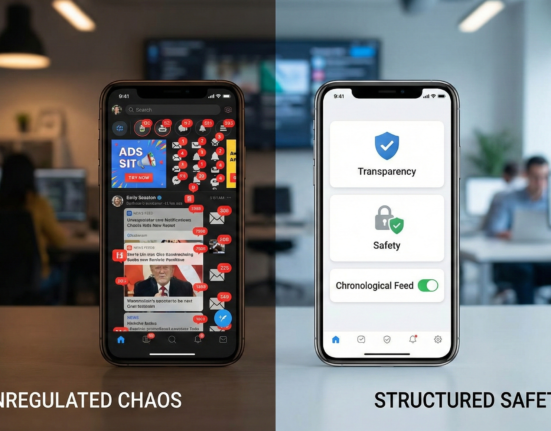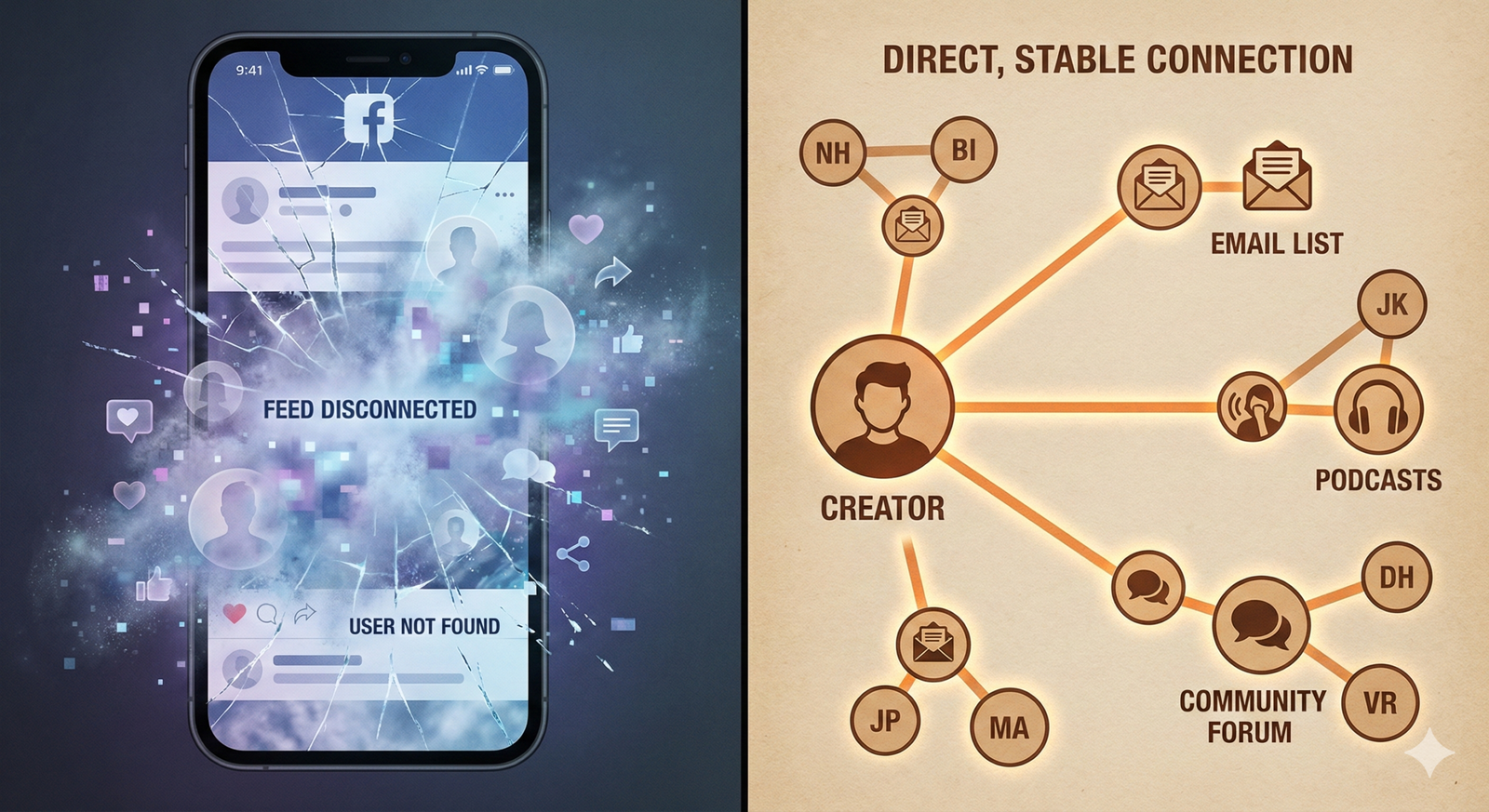
In the fast-paced ecosystem of digital content, a harsh reality has settled in for creators and brands alike: if you build your entire business on social media, you are building a castle on rented land. A single algorithmic update, a change in terms of service, or a sudden platform ban can wipe out years of audience building in an instant. The concept to “own your audience” has transitioned from a nice-to-have marketing tactic to a fundamental survival strategy for the modern creator economy.
Owning your audience means establishing direct channels of communication where you control the distribution, the data, and the relationship, free from the interference of algorithmic gatekeepers. It is the shift from broadcasting to the masses on Instagram, TikTok, or LinkedIn, to conversing directly with individuals via newsletters, podcasts, and private communities.
This guide explores the strategic imperative of audience ownership. We will examine why the “rented land” model is failing, how to build robust “owned” channels, and the practical steps required to migrate casual social media followers into loyal, long-term community members.
Key Takeaways
- The Platform Risk: Relying solely on social media algorithms leaves creators vulnerable to volatility, censorship, and declining reach.
- Direct Access: “Owning” an audience means having a direct line of communication (like an email address or RSS feed) that no third party can sever.
- The “Bridge” Strategy: Success lies in using social media for discovery (top of funnel) and moving users to owned channels for retention (bottom of funnel).
- Three Pillars of Ownership: Newsletters provide portability and ROI; podcasts offer depth and intimacy; communities foster peer-to-peer value.
- Monetization Sovereignty: Owned audiences allow for higher-margin monetization models, such as memberships and direct sales, compared to ad-revenue splits.
Who This Is For (and Who It Isn’t)
This guide is designed for content creators, solopreneurs, brand marketers, and thought leaders who currently rely heavily on social media for traffic but want to build a resilient, long-term business asset.
It is not for casual social media users looking for viral hacks or those who treat content creation solely as a hobby without intent to monetize or build a sustainable brand presence.
The Trap of Rented Land: Why Social Media Is Not Enough
To understand the urgency of owning your audience, one must first recognize the inherent instability of “rented land.” Social media platforms—whether Meta (Facebook/Instagram), TikTok, X (formerly Twitter), or YouTube—are businesses designed to maximize their own ad revenue, not your reach.
The Volatility of Algorithms
Social media reach is governed by “black box” algorithms that change frequently. A creator might enjoy thousands of views per post in January, only to see that engagement drop by 80% in February because the platform decided to prioritize a new content format (e.g., the shift from photos to Reels, or long-form video to Shorts). When you rely on an algorithm, you are constantly auditioning for your own audience. You do not have the right to speak to them; you only have the opportunity to be heard if the algorithm deems your content “sticky” enough in that specific moment.
The Lack of Data Ownership
On social platforms, you do not know who your followers are. You generally cannot access their names, email addresses, purchase history, or specific interests beyond broad, anonymized analytics. If a platform shuts down (like Vine) or gets banned in a specific region, that data evaporates. You cannot “export” your TikTok followers to another platform. This lack of portability is the defining characteristic of rented land.
The “Pay-to-Play” Shift
As platforms mature, organic reach almost invariably declines. This is a documented cycle in the platform economy. Initially, platforms offer high organic reach to attract creators. Once the user base is saturated, reach is throttled to encourage brands and creators to pay for visibility (advertising). Relying on organic social media creates a dependency on a system that is economically incentivized to eventually hide your content unless you pay.
Pillar 1: The Newsletter as Your Digital Anchor
The humble email newsletter remains the most powerful tool for audience ownership. despite the rise of flashy new technologies, email offers something unique: an open protocol. No single company owns email. If your email service provider (ESP) shuts down or raises prices, you can download your CSV list of subscribers and upload it to a competitor within minutes.
Why Email ROI Remains Unbeaten
Statistically, email continues to offer the highest Return on Investment (ROI) in digital marketing. This is because the inbox is a personal, curated space. While a social feed is infinite and algorithmic, the inbox is finite and chronological. When someone subscribes to your newsletter, they are giving you permission to enter their personal digital space.
- Portability: Your list is a portable asset. It increases the valuation of your business because it represents a direct line to customers.
- Segmentation: Unlike a social post that goes to everyone, email allows for sophisticated segmentation. You can send one message to new subscribers and a different one to loyal customers who have purchased from you before.
- Format Agnosticism: Newsletters can handle text, video, audio, and images. They are not constrained by the 280-character limits or 60-second video caps of social platforms.
Selecting the Right Platform
As of 2026, the landscape of newsletter platforms has bifurcated into two main categories:
- Editorial-First Platforms: Tools like Substack and Beehiiv are designed for writers and creators. They prioritize ease of writing, built-in growth networks (where creators recommend each other), and simple subscription monetization. These are best for creators whose primary product is the content.
- Marketing-First Platforms: Tools like ConvertKit (now Kit), ActiveCampaign, and Mailchimp are designed for sophisticated marketing. They offer complex automation, tagging, and sales funnels. These are best for creators selling courses, coaching, or physical products.
Strategies for Newsletter Growth
Building an owned audience requires a “bridge” strategy to move people from social media to email.
- ** The Lead Magnet:** Offer immediate value in exchange for an email. This could be a checklist, a free mini-course, a template, or an exclusive industry report. “Join my newsletter” is rarely a compelling pitch. “Get my 5-step framework for negotiating brand deals” is.
- The “Open Loop” Content: Create social media content that tells part of a story or offers a tip, but directs users to the newsletter for the full deep dive. This leverages curiosity gaps to drive conversions.
- Social Proof: Regularly share screenshots of replies or praise from newsletter subscribers on your social channels. Show the social audience what they are missing by not being on the list.
Pillar 2: Podcasting for Deep Connection and Intimacy
While newsletters capture the mind through text, podcasts capture the heart through voice. Podcasting is an owned channel (distributed via RSS, another open protocol) that excels at building trust and parasocial relationships.
The “Time Spent” Metric
On TikTok, a “view” might last 3 seconds. On YouTube, a good retention rate might be 4 minutes. In podcasting, it is common for listeners to consume 30, 45, or even 60 minutes of content at a time. This depth of engagement is unrivaled. When a listener invites you into their ears while they commute, wash dishes, or exercise, you become a companion in their daily life.
RSS Feeds: The Technical Backbone of Ownership
Similar to email, the power of podcasting lies in the RSS (Really Simple Syndication) feed. When you host a podcast, you generate an RSS feed that is pushed to directories like Apple Podcasts, Spotify, and Overcast. If you decide to change your hosting provider, you redirect your RSS feed. You do not lose your subscribers. This stands in stark contrast to YouTube, where your subscribers are locked within the Google ecosystem.
Building Authority Through Audio
Podcasts are particularly effective for B2B creators and educators because they allow for nuance. Complex topics that are difficult to explain in a short tweet or caption can be unpacked in a long-form conversation. This establishes the host as a subject matter expert.
Practical Implementation:
- Consistency is Key: Audio habits are built on routine. Releasing episodes on the same day and time helps listeners integrate your show into their weekly schedule.
- Guest Strategy: Interviewing guests allows you to borrow their authority and reach their audience, but the goal should always be to bring those new listeners back to your owned ecosystem (your newsletter or community).
- Private Podcasting: A growing trend is the “private podcast” feed, available only to paying members or newsletter subscribers. This combines the intimacy of audio with the exclusivity of a membership model.
Pillar 3: Building Resilient Communities (Many-to-Many)
The ultimate form of audience ownership is transitioning from an audience (one-to-many broadcast) to a community (many-to-many connection). In an audience, the relationship is strictly between the creator and the follower. In a community, the followers interact with each other, creating a network effect where the value of the group increases with each new member.
Beyond the Comment Section
Social media comment sections are poor substitutes for community. They are often toxic, unthreaded, and fleeting. True community building happens in dedicated spaces—such as Slack, Discord, Circle, or Skool—where conversations are organized, archived, and moderated.
The Value of Peer-to-Peer Connection
When you build a community, you stop being the sole source of value. Members answer each other’s questions, share resources, and provide support. This reduces the pressure on the creator to be on a constant “content treadmill.” The community itself becomes the product.
Platforms for Owned Communities
- Discord: Originally for gamers, now widely used for crypto, tech, and casual communities. It is real-time and chat-based, which creates high energy but can be overwhelming.
- Circle / Skool: These platforms combine course hosting with community features. They are structured more like forums or social feeds, allowing for slower, more thoughtful asynchronous discussions.
- Slack: Best for professional B2B communities where members are already using the tool for work.
The “Cold Start” Problem
Launching a community is difficult because an empty room has no value. To overcome this:
- Start Small: Invite a “beta” group of your most engaged 50 followers to seed discussions before opening the doors publicly.
- Rituals: Establish weekly rituals (e.g., “Win of the Week” on Fridays, “Goal Setting” on Mondays) to prompt engagement.
- Active Moderation: In the early stages, the creator must reply to almost every post to make members feel heard and validated.
The “Bridge” Strategy: Execution and Workflow
Owning your audience is not about abandoning social media; it is about changing your relationship with it. Social media becomes the top of your funnel (Discovery), while newsletters, podcasts, and communities become the middle and bottom (Retention and Monetization).
The Funnel Architecture
- Top of Funnel (Social Media): High-volume, short-form content designed for virality and algorithmic reach. The goal here is purely awareness.
- Action: Post Reels, Tweets, LinkedIn updates.
- CTA: “Link in bio” or “Sign up for the deep dive.”
- Middle of Funnel (Opt-in): The mechanism that captures the user’s contact info.
- Action: Landing page for a newsletter or a lead magnet download.
- Value Exchange: The user gives data; you give exclusive value.
- Bottom of Funnel (Owned Trust): Consistent, high-value content delivered via email or audio.
- Action: Weekly newsletter, podcast episodes, community discussions.
- Goal: Trust, authority, and eventually, sales.
Avoiding “Platform Lock-in” Within Owned Tools
Even when moving to “owned” channels, be wary of proprietary ecosystems. For example, if you build a paid newsletter on a platform that takes a high percentage of revenue and prevents you from exporting your Stripe customer data, you are essentially trading one landlord for another. Always verify that you can export your list, your content, and your payment data (customer tokens) before committing to a platform.
Monetization: The Economic Benefit of Ownership
The shift to owned audiences is not just philosophical; it is financial. Social media monetization is notoriously fickle. Ad revenue sharing (like YouTube AdSense) requires massive views to generate significant income, and brand deals are unpredictable. Owned audiences unlock higher-margin, more predictable revenue streams.
1. Subscription and Membership Models
When you own the direct relationship, you can ask for direct support. Paid newsletters (Substack model) or community memberships allow creators to generate recurring revenue from a relatively small number of “true fans.” You do not need millions of views; you need 1,000 people willing to pay $10 a month to sustain a six-figure business.
2. Digital Products and Courses
Selling courses or eBooks on social media often results in low conversion rates (typically 0.5% – 1%). Selling the same products to an email list often yields conversion rates of 3% – 5% or higher. The trust built through the inbox warms the lead significantly more than a fleeting video.
3. Direct Sponsorships
Instead of relying on programmatic ads (where the platform decides the price), owning your audience allows you to negotiate direct sponsorships. You can sell ad space in your newsletter or podcast based on the quality and niche of your audience, not just the raw numbers. A newsletter with 5,000 highly engaged biotech executives is worth far more to a specific advertiser than a generic Instagram account with 100,000 followers.
4. Affiliate Marketing with Context
Affiliate links on social media are often viewed as spammy. In a newsletter or podcast, where you have the time to explain why you use a tool and how it helps, affiliate recommendations feel like genuine advice. This context drives higher click-through and conversion rates.
Common Pitfalls and How to Avoid Them
Transitioning from a social-first to an owned-audience mindset requires a shift in operations. Here are the most common mistakes creators make.
Mistake 1: Treating Email Like Social Media
Do not just blast your email list with links to your latest Instagram post. Your newsletter must provide standalone value. If a subscriber feels they can get the same content by following you on X or LinkedIn, they will unsubscribe. The owned channel must be the “premium” experience.
Mistake 2: Inconsistent Cadence
Algorithms sometimes forgive a week off; email subscribers might forget you. Consistency builds habit. Whether it is weekly or bi-weekly, pick a cadence and stick to it. Reliability builds trust.
Mistake 3: Neglecting the Onboarding Sequence
When someone joins your email list or community, what happens next? If they just get thrown into the next scheduled broadcast, they might feel lost. Create an automated “Welcome Sequence”—a series of 3-5 emails that introduce who you are, your best content, and what they can expect. This creates an immediate bond.
Mistake 4: Trying to Build Everything at Once
Do not launch a newsletter, a podcast, and a community simultaneously. You will burn out. Start with the newsletter (it is the lowest friction). Once that is established, consider adding audio. Add a community only when you have the resources to moderate it properly.
Future-Proofing: Web3 and the Sovereign Creator
Looking ahead, the concept of audience ownership is evolving toward even greater sovereignty through Web3 technologies. While currently niche, decentralized social protocols (like Lens Protocol or Farcaster) promise a future where the social graph itself is owned by the user.
In this model, your “followers” are recorded on a blockchain. If you leave one interface (app) and move to another, your followers move with you automatically. While mass adoption of these technologies is still on the horizon, the philosophy remains the same: Digital Sovereignty.
The creators who thrive in the next decade will be those who view platforms as utility companies—pipes for distribution—rather than as their employers. They will use the reach of big tech to build their own micro-economies, insulated from the shockwaves of corporate policy changes.
Conclusion
“Owning your audience” is the process of diversifying your digital portfolio. It involves recognizing that social media followers are vanity metrics, while email subscribers and community members are business assets. By leveraging newsletters for direct contact, podcasts for intimacy, and communities for network effects, you insulate yourself from the whims of algorithms and build a sustainable, resilient career.
The best time to start building your email list was the day you started creating content. The second best time is today. Do not wait for the next algorithm update to destroy your reach before you decide to lay the foundation of your own castle.
Next Steps
- Audit your current following: What percentage of your audience can you contact without an algorithm?
- Choose one owned channel: If you have none, start a newsletter this week.
- Create a Lead Magnet: Build a simple resource that incentivizes your social followers to subscribe.
- Promote the Bridge: Dedicate at least 20% of your social media calls-to-action (CTAs) to moving users to your owned channel.
FAQs
What is the difference between an owned audience and a rented audience?
A rented audience consists of followers on social media platforms (Instagram, TikTok, YouTube) where the platform controls reach and access via algorithms. An owned audience consists of direct contacts (email lists, phone numbers, podcast subscribers) where you can reach them directly without an intermediary filtering your message.
Do I really need a newsletter if I have a large following on Instagram?
Yes. Instagram reach can decline instantly due to algorithm updates or account bans. A newsletter acts as an insurance policy, ensuring you can always contact your most loyal fans regardless of what happens to the Instagram platform.
How often should I send a newsletter?
Consistency matters more than frequency. Weekly is the industry standard for keeping top-of-mind awareness without annoying subscribers. However, bi-weekly or even monthly can work if the content is high-density and valuable. The key is to set an expectation and meet it.
Is podcasting saturated?
While there are millions of podcasts, most are inactive. “Podfading” (quitting after a few episodes) is common. There is always room for high-quality, consistent shows that serve a specific niche. Unlike general entertainment, niche podcasts for specific industries or interests have less competition and highly valuable audiences.
How do I monetize a small email list?
You do not need a massive list to monetize. With a small, engaged list (e.g., 500-1,000 people), you can sell high-ticket consulting, coaching, or niche digital products. Sponsorships are also possible with small lists if the audience demographics are highly targeted (e.g., a list of 500 enterprise software decision-makers).
Can I move my social media followers to a community platform directly?
It is difficult to move casual followers directly to a paid community. It is usually better to move them to a newsletter (free value) first to build trust, and then upsell the community membership to the most engaged subscribers within that newsletter.
What is an RSS feed and why does it matter?
RSS (Really Simple Syndication) is a web standard that allows users to access updates to online content in a standardized format. For podcasters, it means your show exists as a file you control, which is then read by apps like Spotify or Apple. If you control the RSS feed, you control the distribution, making it an owned channel.
Which newsletter platform is best for beginners?
For writers focused on growth, Substack or Beehiiv are excellent starting points due to their user-friendly interfaces and built-in recommendation networks. For creators who plan to sell products and need complex automation, ConvertKit (Kit) is the industry standard.
References
- Li, Jin. “The Creator Economy: solidifying the shift from renting to owning.” Andreessen Horowitz (a16z). https://a16z.com/
- Newport, Cal. Digital Minimalism: Choosing a Focused Life in a Noisy World. Portfolio/Penguin, 2019. (Concepts on digital attention and autonomy).
- Pew Research Center. “Social Media Fact Sheet.” Pew Research Center, 2024. https://www.pewresearch.org/internet/fact-sheet/social-media/
- Beehiiv. “State of the Newsletter Economy Report.” Beehiiv Blog, 2025. https://www.beehiiv.com/
- Godin, Seth. Permission Marketing: Turning Strangers into Friends and Friends into Customers. Simon & Schuster, 1999. (Foundational text on email marketing philosophy).
- ConvertKit. “The State of the Creator Economy.” ConvertKit Tradecraft, 2024. https://convertkit.com/state-of-the-creator-economy
- Anderson, Chris. The Long Tail: Why the Future of Business is Selling Less of More. Hyperion, 2006. (Relevant for niche podcasting and community theory).
- Council for Creators. “Standardizing Digital Rights for Influencers.” Digital Rights Group, 2025. (Context on data ownership).