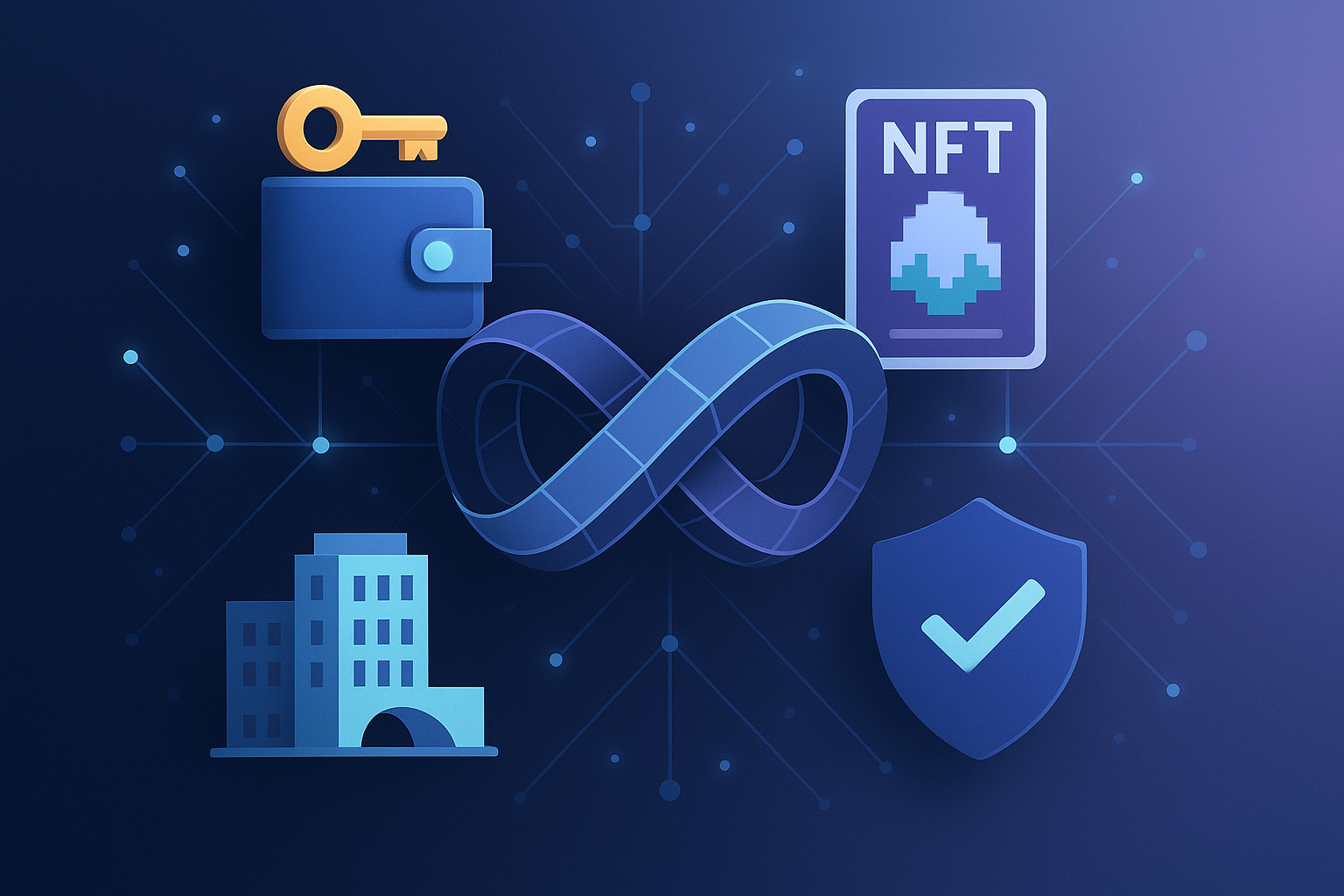
Non-fungible tokens (NFTs) let artists prove ownership of scarce digital works, embed programmable rights, and connect with collectors in ways traditional formats could never support. At their core, NFTs are unique digital tokens that point to a work and its metadata and record provenance on a public ledger. In plain language: you can make one-of-one masterpieces or limited editions that anyone can verify, trade, or use to unlock experiences. While this article explores creative and commercial potential, it isn’t financial, legal, or tax advice—always consult qualified professionals before making significant decisions. In the next sections, you’ll learn the top ways NFTs in digital art change how you create, sell, and collaborate, with practical steps, numbers, and guardrails to avoid common pitfalls.
If you’re just getting started, here’s the quick path you can follow:
- Pick a wallet you control and secure it with a hardware device.
- Choose a standard (often ERC-721 for 1/1s, ERC-1155 for editions) and prepare immutable metadata.
- Mint thoughtfully (supply, pricing, royalties), then list on a reputable marketplace.
- Add utility (token-gated content, community, or experiences) and communicate roadmaps clearly.
- Protect your rights with explicit licensing and keep long-term storage in mind.
1. Verifiable Ownership & Provenance Make Digital Scarcity Real
A blockchain ledger records creation and transfers so collectors can verify a piece’s authenticity and history without trusting a middleperson. That matters because digital files are infinitely copyable; scarcity comes from the token’s provable uniqueness, not from hiding the file itself. For you, this means you can issue a single canonical token for a work, track primary and secondary sales, and display a transparent chain of custody that mirrors—and often exceeds—gallery catalogues. When an artwork’s token adheres to a widely adopted standard (such as ERC-721), wallets and marketplaces understand it instantly, which makes discovery and resale easier. Most artists store artwork files or hashes using content-addressed systems so the token always points to the same content; the hash is like a fingerprint that won’t change if the file doesn’t. The result is a clean separation: the image can be visible to all, while ownership of the token is scarce, tradable, and verifiable.
How to do it
- Use a standard like ERC-721 for 1/1 works; it’s widely supported across wallets and marketplaces.
- Store artwork via IPFS (content-addressed) and consider Arweave for long-term permanence; avoid mutable HTTP links.
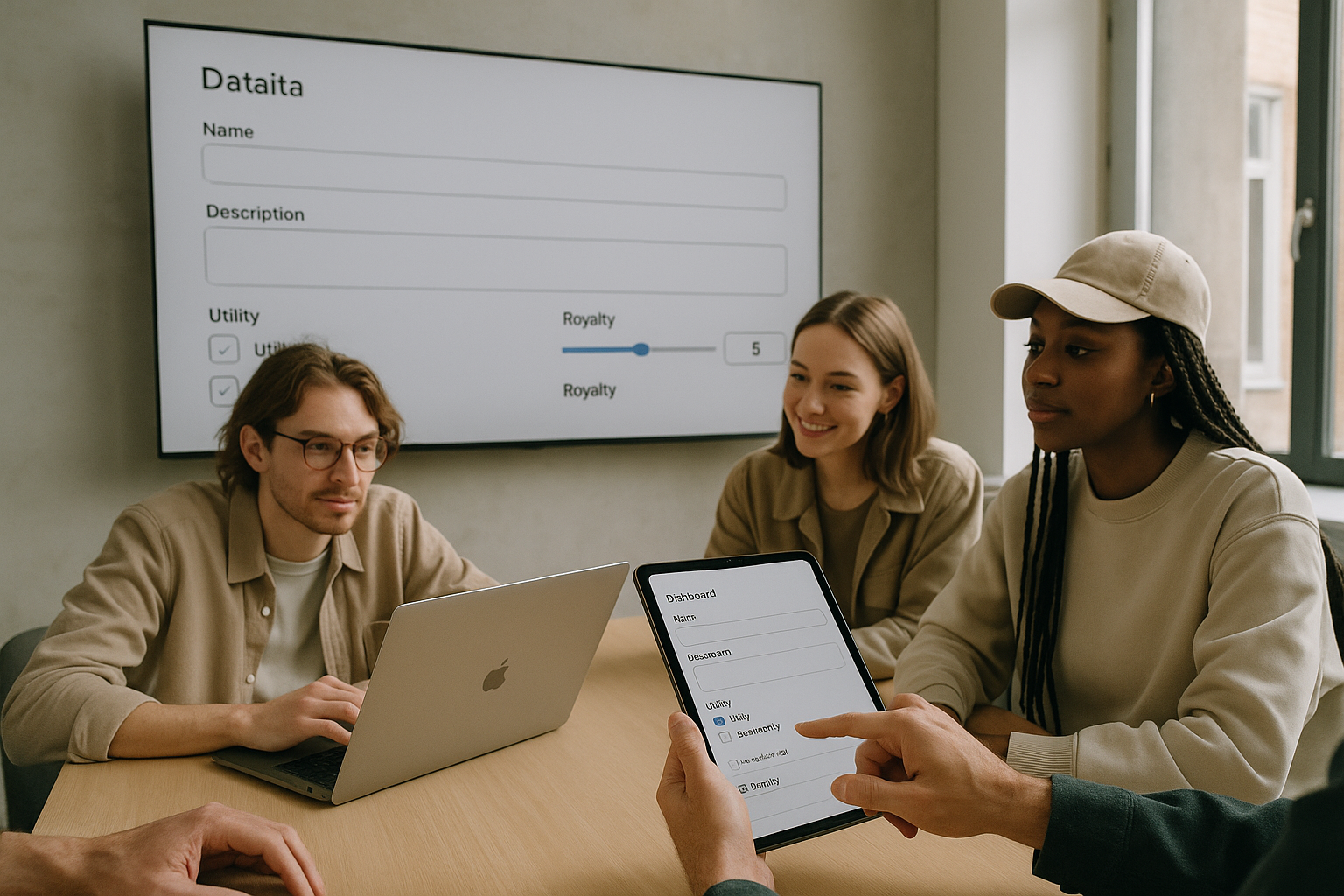
- Include creator and creation info in metadata (name, description, attributes) to aid discovery and verification.
- Keep private keys off your computer; one compromised key can irreversibly transfer your token.
Mini case
You mint a 1/1 piece as ERC-721 and pin its 12 MB PNG to IPFS. Years later, the token still points to the same CID (content identifier), and the on-chain record shows each transfer price and owner. A web gallery can pull that history to create a provenance view without contacting you.
Synthesis: By anchoring authenticity to an open standard and immutable pointers, you turn infinitely copyable pixels into a scarce, ownable, and auditable digital object.
2. Programmable Royalties Sustain Artists Beyond the First Sale
NFTs can signal royalty information so marketplaces that support it can pay a percentage to you on resales. In practice, a royalty standard (like EIP-2981) lets a contract publish “who to pay” and “how much” for a given sale price; marketplaces that honor royalties can calculate and route the payment automatically. This changes incentives: you’re no longer relying solely on the first sale; long-term community growth can sustain you through secondary trading. It also introduces expectations—buyers weigh royalty rates alongside price and supply when deciding to collect. Be clear in your listing about your royalty policy and where it’s likely to be enforced. Remember that royalties are a signal; not every venue enforces them, so design your pricing and utility such that collectors want to participate where creators are paid.
Numbers & guardrails
- Common royalty ranges: 5%–10%.
- If a piece resells for 2 ETH with a 7.5% royalty, you receive 0.15 ETH from that transaction.
- Over 20 resales averaging 1 ETH each at 5%, cumulative royalties would total 1 ETH—a meaningful back catalog stream.
- Put the royalty rate in metadata and in your collection docs; ambiguity erodes trust.
How to do it
- Implement or select a contract that supports EIP-2981.
- Publish a royalty policy and align utility (airdrops, token-gated perks) with venues that honor it.
- Track royalties in your accounting; treat them as recurring income with variability.
Synthesis: Royalties align creator and collector incentives by rewarding long-term cultural and market growth, not just the initial drop.
3. Editions, Series & Fractional Access Expand Your Collector Base
You don’t have to choose between elite scarcity and inclusive access. ERC-1155 supports editions efficiently, letting you mint, say, 50 or 500 copies in a single contract with shared metadata. This makes pricing and distribution flexible: a single image can exist as a small edition with a higher price or a larger edition as a lower-cost entry point for new collectors. Beyond editions, fractionalization can represent shares in a single NFT using fungible tokens. That’s not the same as co-owning copyright, but it can enable shared patronage or decentralized governance over how a work is displayed or used. The key is matching supply to intent: artistic projects that emphasize cultural reach may deliberately increase edition size, while landmark pieces stay 1/1.
Numbers & guardrails
- Example: 100 editions at 0.05 ETH each → 5 ETH gross. With a 2.5% marketplace fee, your net is 4.875 ETH before gas and taxes.
- Fractionalization often uses 10,000 shares; at $25 per share, that’s $250,000 in aggregate value—ensure your docs explain utility and risks.
- Clarify that fractions typically represent economic claims in a vault, not copyright.
Mini-checklist
- Decide edition size and pricing tiers before minting.
- Use ERC-1155 for efficient batch minting and transfers.
- Write clear language about what buyers receive (display rights, perks).
- If fractionalizing, document governance and redemption rules.
Synthesis: Editions and fractional access widen participation while letting you reserve true scarcity for the works that merit it.
4. Dynamic & Generative NFTs Turn Art into Living Systems
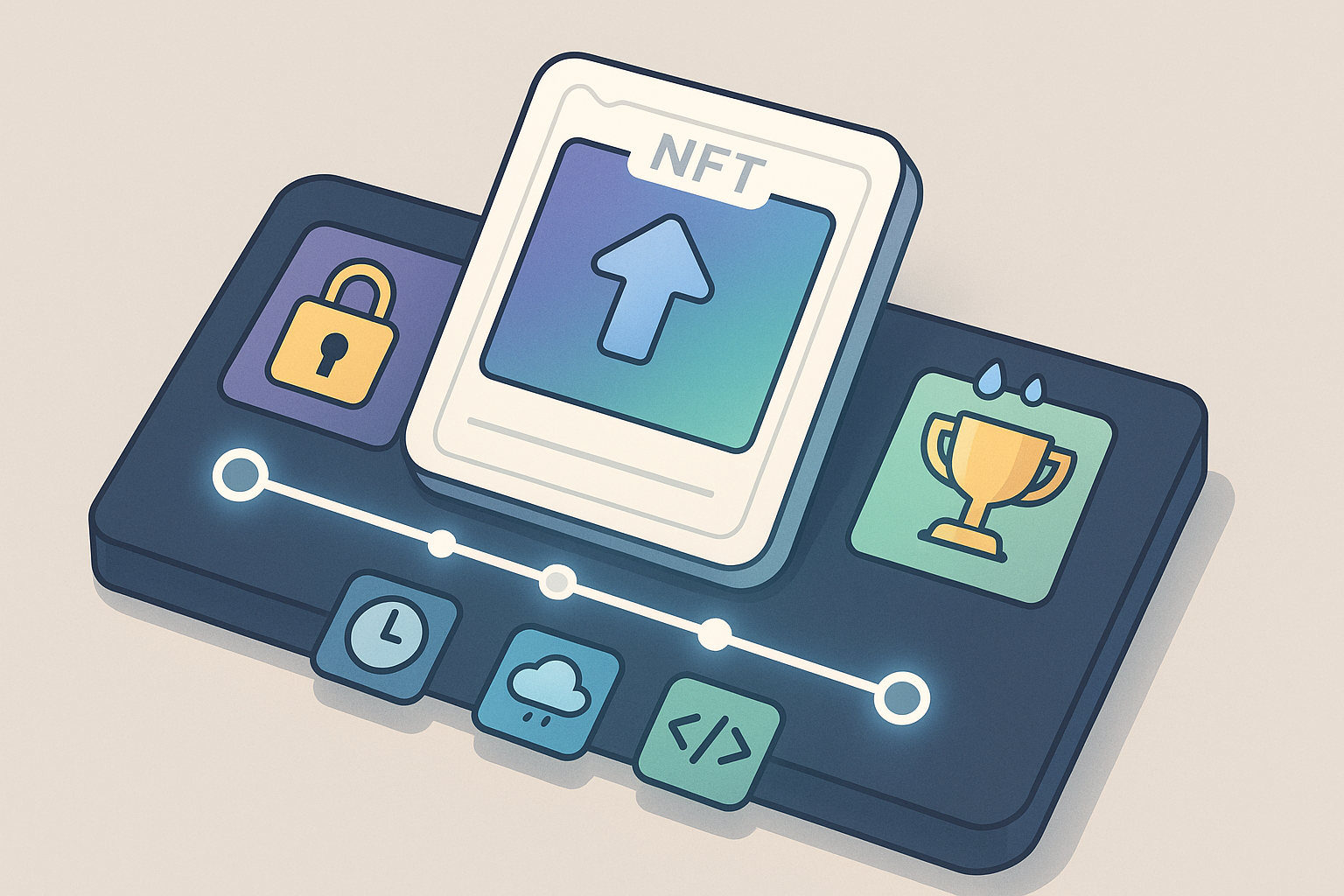
NFTs aren’t static by default. With dynamic NFTs, a token’s metadata can change based on predefined rules—weather feeds, exhibition milestones, or collector interactions. Generative artists can store algorithms on-chain or reference them off-chain, so each mint produces a unique output within a constrained system. This expands your canvas: artworks can evolve, react to real-world data via oracles, or unlock states after community goals are met. The creative challenge is to design evolution paths that feel intentional and respectful of collectors’ expectations, with rules disclosed up front.
Why it matters
- Evolution adds narrative and replay value; viewers return to see changes.
- Oracles connect art to external data (e.g., tides, air quality).
- Clear rulebooks prevent surprises that feel like “rug pulls.”
Numbers & guardrails
- Suppose you cap a series at 500 generative mints at 0.08 ETH each → 40 ETH gross.
- Reserve 10% of tokens for collaborations and exhibitions to avoid sell-out scarcity blocking future programming.
- Publish a “states” map: State 1 (mint) → State 2 (after 1,000 views) → State 3 (after a community vote).
Synthesis: By encoding change into the artwork, you shift from selling a static file to curating an evolving art experience.
5. Token-Gated Communities & Utility Turn Collectors into Members
Owning a token can be a key that unlocks content, events, drops, or discounts. Token-gated access aligns well with art: patrons get behind-the-scenes posts, studio livestreams, or early access to prints. For brands and galleries, gating product pages or in-person events to holders creates a measurable membership layer. The mechanics are straightforward: a website checks wallet ownership against an allowlist or trait filter, then unlocks the experience. The art stays open for all to see; the perks reward patronage. Be clear about what is and isn’t included—utility promises are optional, but once you make them, treat them like commitments.
Mini case
You mint 2,000 membership passes at $50 each, raising $100,000 to fund residencies and studio upgrades. Holders get quarterly studio calls and an annual print claim. If 35% of holders claim the print and each costs $9 to produce and ship, your annual fulfillment expense is roughly $6,300, leaving room for programming.
How to do it
- Gate web pages or Discord channels based on token ownership.
- Offer perks that fit your practice (process notes, edition holds).
- Track redemption and set capacity caps so experiences remain special.
Synthesis: Utility is a promise of relationship; done well, it deepens patron engagement without overshadowing the art.
6. Interoperability & Composability Let Art Travel and Combine
NFTs are most powerful when other apps instantly understand them. Standards like ERC-721 and ERC-1155 make it simple for galleries, wallets, and virtual spaces to display your work. Metadata conventions (name, description, image, attributes) help marketplaces index and filter pieces by traits. New patterns like token-bound accounts (often referenced via ERC-6551 discussions) let an NFT own other assets, enabling avatars that carry their own inventories or artworks that hold interactive components. Composability means artworks and tools can snap together—curation contracts, on-chain exhibitions, and lending protocols can use your token without custom integrations.
Table: Token standards at a glance
| Standard | Best for | Editions | Royalty signaling | Notable feature |
|---|---|---|---|---|
| ERC-721 | 1/1 unique works | No | Via EIP-2981 | Broadest ecosystem support |
| ERC-1155 | Editions & mixed tokens | Yes | Via EIP-2981 | Gas-efficient batch mints |
| EIP-2981 | Royalties | – | Yes | Standard way to fetch royalty info |
| ERC-4907 | Rentals/usage rights | N/A | Via EIP-2981 | Time-bound “user” role |
| (e.g., 6551) | Token-bound accounts | N/A | Contract-specific | NFTs that hold assets |
Mini-checklist
- Conform to common metadata fields (name, description, image, attributes).
- Use traits consistently so filters and rarity tools work correctly.
- If you plan rentals or token-bound features, disclose compatibility.
Synthesis: Interoperability is the difference between a static token and a portable building block that works anywhere collectors go.
7. Authenticity, Attribution & Licensing Reduce Friction and Disputes
NFTs prove token ownership, but they don’t automatically transfer copyright or usage rights. Your collectors deserve clarity about what they can do with the art—display it, resell it, maybe even use it commercially if you allow it. You can publish a custom license, use a familiar framework (such as CC0 for public-domain dedication), or retain all rights with explicit display permission. Clear licensing language prevents misunderstandings, helps platforms moderate counterfeits, and gives buyers confidence. For cultural heritage or collaborations, name all contributors and their roles in metadata or collection docs.
How to do it
- Link a human-readable license from your collection page and include a hash or CID in metadata for immutability.
- Distinguish token ownership from copyright plainly; say what is and isn’t granted.
- For collaborations, define revenue splits and credit in writing.
Mini case
A photographer sells an edition with a license that permits personal display and prohibits commercial use. A magazine requests usage; instead of a license dispute, the artist offers a separate commercial license. The token adds provenance; the contract adds clarity.
Synthesis: Licensing and attribution don’t dampen creativity—they enable wider, safer use by removing ambiguity.
8. Storage & Permanence: Make Your Art Resilient
Your token can outlive any single server, but only if you point it to resilient storage. IPFS uses content addressing: a CID derived from the file’s hash, so the link changes if the content changes. Arweave adds economic incentives for long-term persistence on the “permaweb,” with a one-time payment model designed for lasting availability. Some creators keep both: IPFS for distribution and Arweave for permanence, then record the relevant identifiers in metadata. Avoid generic HTTP links that can go dark if a host disappears. For large generative projects, consider storing the core algorithm on-chain; for bitmap images, aim for durable off-chain storage with tamper-evident addressing.
Numbers & guardrails
- Typical published ranges for Arweave storage hover around single-digit USD per GB one-time. A 20 MB image (~0.02 GB) could cost roughly $0.06–$0.20, depending on market conditions and bundling.
- A practical approach: store the master file (lossless) and embed a CID for the display asset in metadata; keep a local archive with checksums.
Mini-checklist
- Prefer CIDs (IPFS/Arweave) over mutable URLs.
- Document where files live in your collection README and metadata.
- Periodically verify that your CIDs resolve and keep multiple pins.
Synthesis: Durable storage is creative insurance—collectors buy confidence that the artwork they love will still resolve years from now.
9. Pricing, Auctions & Release Mechanics Align Incentives
How you launch matters. Fixed-price mints work for editions; auctions suit 1/1s or rare pieces. Dutch auctions (descending price) can help discover a fair market price without gas wars; English auctions (ascending bids) can maximize returns for highly demanded works. Bonding-curve sales, where price rises as supply dwindles, can align long-term incentives but require careful communication. Whatever you choose, keep fees, royalties, and supply transparent so collectors understand what they’re paying for and why.
Numbers & guardrails
- Dutch auction example: start at 1.00 ETH, drop 0.05 ETH every 5 minutes, floor 0.40 ETH. If the work sells at 0.65 ETH, there’s a clear, documented clearing price that others can reference.
- Edition example: 300 copies at 0.03 ETH → 9 ETH gross; if your royalty is 6%, a later resale at 0.5 ETH returns 0.03 ETH to you.
- Publish start/end times, step size, and any preset reserves so buyers can plan.
How to do it
- For 1/1s, test reserve auctions with a trusted marketplace.
- For editions, consider allowlists for early supporters to reduce botting.
- Avoid over-supply; consider staging releases tied to your creative cadence.
Synthesis: A fair, well-documented sale format builds trust, reduces confusion, and spotlights the art.
10. Rentals, Access Rights & Time-Bound Utility Create New Experiences
Sometimes a collector needs use, not permanent ownership—think gallery display rights for a month or access to a virtual exhibition space. Rental-style patterns add a “user” role with an automatic expiration so the original owner stays in control. This is powerful for games, metaverse installations, or event passes and aligns with how people already borrow physical works or lease usage rights. With clear terms, you can monetize access while protecting long-term scarcity.
Mini case
You lease an artwork’s display rights to a festival for 30 days at a flat fee. The token records the permitted “user” address and expiry. After the period ends, the user loses access automatically—no extra transaction needed from you.
How to do it
- Encode time-bound “user” permissions so usage ends automatically.
- Specify the scope: display only, no derivatives, non-transferable during lease.
- Combine rentals with token-gated event pages to simplify logistics.
Synthesis: Time-boxed access maps real-world licensing into code, expanding how and where your art can live.
11. Environmental Footprint & Efficiency: Choose Greener Paths
Energy profiles vary by network and design. Today’s dominant NFT chains rely on proof-of-stake consensus or layer-2 scaling that improves throughput while lowering energy per transaction. While “green” isn’t a single switch, you can make responsible choices: use networks and tools with transparent energy documentation, batch transactions when possible, and avoid needlessly complex on-chain storage when hashes or CIDs suffice. Communicate your approach in collection notes—many collectors value creators who balance innovation with stewardship.
Numbers & guardrails
- Prefer proof-of-stake networks and/or layer-2s for mints and drops to reduce per-transaction energy.
- For large generative sets, store algorithms compactly; keep heavy assets off-chain with CIDs and strong pinning.
- If you ship physicals, factor in packaging and shipping footprints just as you do on-chain choices.
Mini-checklist
- Publish a short “sustainability notes” section for your collection.
- Avoid wasteful re-mints; fixable metadata should be planned up front.
- Educate your community about why you chose specific networks and storage.
Synthesis: Efficient choices signal care for your audience and the world, without compromising your artistic goals.
12. Security, Safety & Collector Care Protect Your Practice
Creative freedom rests on operational security. Private keys, approvals, and contract settings determine who can move assets or mint on your behalf. Most artist losses stem from phishing, malicious approvals, or signing unknown transactions—problems you can prevent with habits and tooling. Treat your studio like a small creative business: separate hot and cold wallets, document processes, and test contracts on a testnet before inviting collectors. When in doubt, slow down. It’s better to miss a moment than to sign a bad transaction you can’t reverse.
Mini-checklist
- Use a hardware wallet for minting and vault storage; keep a separate hot wallet for browsing and day-to-day claims.
- Verify contract addresses and URLs; bookmark official links and never sign blind signatures.
- Limit approvals; regularly revoke unused marketplace approvals.
- Back up seed phrases offline in two geographically separate locations.
- Run dry-runs on testnets; audit complex contracts or use well-reviewed templates.
Numbers & guardrails
- Budget $70–$150 for a hardware wallet; the cost is negligible compared to a single artwork.
- Set daily mint caps in your contract and require multisig for treasury operations if you run a collective.
- Publish a “safety page” for collectors (official links, support channels, scam examples).
Synthesis: Security is creative infrastructure; strong habits keep your focus on making art instead of recovering from avoidable mistakes.
Conclusion
NFTs don’t replace art—they expand what’s possible around it. With verifiable ownership, programmable royalties, editions and rentals, token-gated experiences, composability, clear licensing, durable storage, thoughtful release mechanics, and solid security, you can reach more supporters and build longer-lived bodies of work. None of this requires gimmicks; it rewards clarity and craft. Start small, document your choices, and iterate as you learn what resonates with your audience. Above all, let the technology serve your practice, not define it. Ready to apply this? Choose one of the twelve areas, make a single improvement this week, and share the story with your collectors.
FAQs
1) Do NFTs give buyers copyright to my artwork?
No. Owning a token is separate from owning copyright. Unless you grant explicit rights in a license, buyers typically receive a token and permission to display the work, plus any utility you promise. To avoid confusion, publish a simple, plain-English license that states what is allowed (e.g., non-commercial display) and what isn’t (e.g., creating derivatives).
2) What’s the difference between ERC-721 and ERC-1155 for art?
ERC-721 is optimized for unique 1/1 pieces; each token ID maps to a single, distinct asset. ERC-1155 supports multiple token types in one contract and is efficient for editions or mixed collections (tokens with supply greater than one). Choose ERC-721 for singular works and ERC-1155 when you need editions or batch operations.
3) How do royalties actually get paid?
Royalty information can be signaled by your contract so supporting marketplaces can calculate and route payments on resales. Because not every venue enforces royalties, treat them as a design lever rather than a guarantee. Align your utility and community perks with marketplaces that honor royalties to nudge trading where creators are compensated.
4) What is a dynamic NFT and why would I use one?
A dynamic NFT changes its metadata based on rules you define—seasonal palettes, evolving states after exhibitions, or data-driven traits via oracles. This transforms a static file into an ongoing artwork. Ensure you publish how and why the piece will change so collectors understand what they’re collecting and what to expect over time.
5) Are editions bad for scarcity?
Not at all—editions are a tool. They let you invite more collectors at accessible price points, while reserving 1/1s for landmark works. The key is intentionality: predefine edition size, pricing, and perks; keep the narrative consistent so collectors know why an edition exists alongside unique pieces.
6) How should I price a drop?
Anchor price to your audience size, demand signals, and comparable sales—not hype. For 1/1s, auctions can discover price; for editions, fixed pricing with allowlists can reward early supporters. Publish fees, royalties, and supply so buyers can evaluate the offer without surprises.
7) Where should I store my files?
Prefer content-addressed storage like IPFS and consider Arweave for long-term permanence. Record the content identifiers (CIDs) in your metadata so anyone can verify that the file hasn’t changed. Avoid mutable HTTP links that can break, and keep a private archive with checksums as a belt-and-suspenders approach.
8) What does “token-gated” access mean in practice?
Your website or app checks whether a connected wallet holds a specific token or trait; if yes, it unlocks pages, downloads, or event registrations. It’s a membership key you control, and it’s easy to adjust perks over time. Communicate clearly so holders know how to claim benefits.
9) Can I rent out display rights to my art?
Yes. Rental patterns let you grant time-bound usage without transferring ownership. This is handy for exhibitions, pop-ups, or virtual venues. Spell out scope and duration, and set the contract to revoke access automatically at the end of the term.
10) How do I avoid scams?
Use a hardware wallet, verify URLs, revoke stale approvals, and never sign transactions you don’t understand. Keep an official links page and educate your community about common phishing patterns. When in doubt, stop and ask for help in a trusted channel before clicking or signing.
11) Do NFTs have to be expensive to be meaningful?
No. Price is a tool, not a value judgment. Thoughtful editions, open editions with well-designed caps, or even free claim passes that unlock experiences can all deepen your practice. Focus on the story, craft, and collector journey more than the headline figure.
12) What happens if a platform shuts down?
If your token follows open standards and points to content-addressed files, other tools can still read the work and show it. That’s the power of open infrastructure. To reduce platform risk, avoid platform-specific lock-ins and keep your own documentation and CIDs handy.
References
- ERC-721: Non-Fungible Token Standard, Ethereum Improvement Proposals — Created January 24, 2018 — https://eips.ethereum.org/EIPS/eip-721
- ERC-1155 Multi-Token Standard, ethereum.org — Page last update September 16, 2025 — https://ethereum.org/developers/docs/standards/tokens/erc-1155/
- ERC-2981: NFT Royalty Standard, Ethereum Improvement Proposals — Created September 15, 2020 — https://eips.ethereum.org/EIPS/eip-2981
- Metadata Standards, OpenSea Docs — (publication date not listed) — https://docs.opensea.io/docs/metadata-standards
- Content Identifiers (CIDs), IPFS Docs — (publication date not listed) — https://docs.ipfs.tech/concepts/content-addressing/
- Ethereum Energy Consumption, ethereum.org — (publication date not listed) — https://ethereum.org/energy-consumption/
- What Is a Dynamic NFT (dNFT)?, Chainlink Education — Last updated December 5, 2023 — https://chain.link/education-hub/what-is-dynamic-nft
- The Metaverse and Intellectual Property (incl. NFTs), World Intellectual Property Organization — (publication date not listed) — https://www.wipo.int/en/web/frontier-technologies/metaverse-and-ip
- Non-Fungible Tokens and Intellectual Property Rights (flyer), Eurojust — (publication date not listed) — https://www.eurojust.europa.eu/sites/default/files/assets/eurojust-nfts-intellectual-property-rights-flyer.pdf
- ERC-4907: Rental NFT, an Extension of EIP-721, Ethereum Improvement Proposals — March 11, 2022 — https://eips.ethereum.org/EIPS/eip-4907
- About NFT Distribution, Shopify Developer Docs — (publication date not listed) — https://shopify.dev/docs/apps/build/blockchain/nft-distribution
- Token Gating for Retailers, Shopify Blog — August 23, 2025 — https://www.shopify.com/blog/token-gating
- Arweave Lightpaper: The Permanent Information Storage Protocol, arweave.org — 2023 — https://www.arweave.org/files/arweave-lightpaper.pdf
- Introducing Token-Bound Accounts (ERC-6551), Ethereum Magicians forum — February 23, 2023 — https://ethereum-magicians.org/t/erc-6551-non-fungible-token-bound-accounts/13030
- How Can I Stay Safe and Protect My NFTs?, OpenSea Help Center — (publication date not listed) — https://support.opensea.io/en/articles/8867129-how-can-i-stay-safe-and-protect-my-nfts