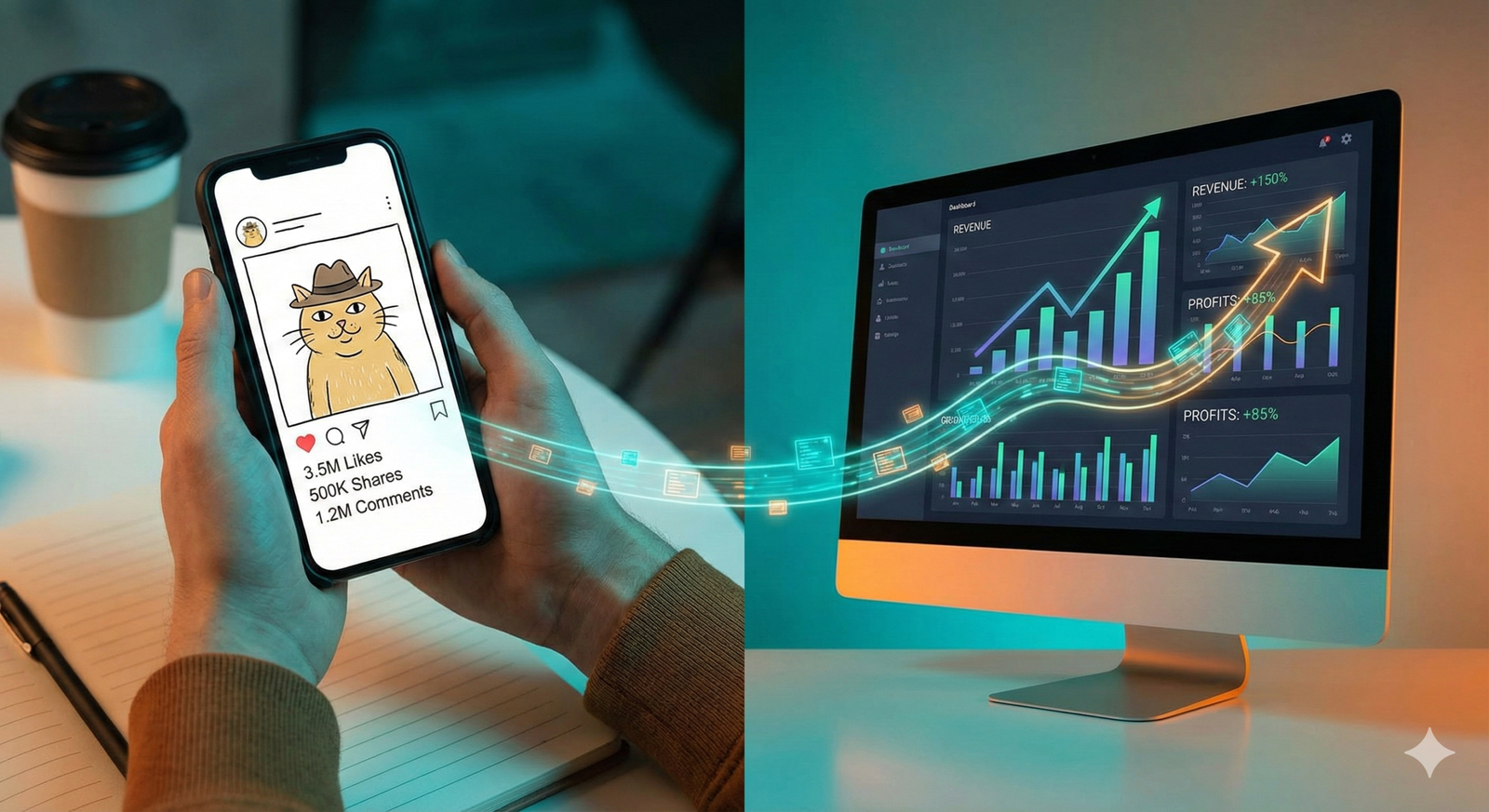
The internet moves fast, but money moves faster. In the early days of the web, a viral image or video was simply a moment of shared laughter—a fleeting cultural touchpoint that offered social currency but little financial reward. Today, that landscape has shifted entirely. We have entered the era of meme economics, a sophisticated segment of the creator economy where viral moments are treated as distinct asset classes, capable of generating six-to-seven-figure returns for creators, platforms, and savvy brands.
When a video of a cat bobbing its head or a specific reaction GIF spreads across social media, it is no longer just “content.” It is a commodity in the attention economy. For the creators behind these moments, the transition from “viral sensation” to “sustainable business” requires a strategic understanding of intellectual property, licensing, merchandising, and brand partnerships.
In this guide, “meme economics” refers to the systems, strategies, and financial mechanisms used to monetize viral internet culture. We will explore how fleeting attention is converted into tangible currency, the infrastructure that supports this industry, and the legal frameworks that protect—or expose—creators.
Key Takeaways
- Attention is the asset: In meme economics, the primary currency is attention; monetization is the process of capturing and converting that attention before it fades.
- Speed is critical: The lifecycle of a meme is short. Successful monetization often requires executing merchandise or licensing deals within 48 to 72 hours of peak virality.
- Licensing is the bedrock: Long-term revenue rarely comes from ad views alone; it comes from licensing the underlying IP to media outlets, commercials, and brands.
- Diversification protects against irrelevance: Creators must diversify into physical goods, newsletters, or broader content strategies to survive after the meme dies.
- Legal ownership is complex: Copyright laws are struggling to keep pace with remix culture, making “who owns the joke” a million-dollar question.
What Is Meme Economics?
At its core, meme economics is the study and practice of extracting financial value from viral internet phenomena. It operates at the intersection of marketing, intellectual property law, and behavioral psychology. Unlike traditional entertainment economics, which relies on long development cycles and established distribution channels (like movie theaters or TV networks), meme economics relies on speed, decentralization, and community participation.
The Value of “Relatability”
Why do memes generate money? Because they scale human connection. A meme is essentially a packet of compressed cultural information—a shorthand for a specific feeling, awkwardness, or triumph. When millions of people share a meme, they are signaling a shared experience. Brands and platforms pay a premium to access that trust and relatability.
In the current digital landscape, a single viral video can launch a career or save a failing product line. The economy surrounding this includes:
- Direct Monetization: Ad revenue share from platforms (YouTube, TikTok, X).
- Asset Management: Viral management agencies (like Jukin Media or ViralHog) that manage rights.
- Merchandising: Print-on-demand services allowing instant product creation.
- Brand Integration: Companies paying to be part of the joke.
- Digital Assets: The sale of ownership via mechanisms like NFTs (though highly volatile).
Scope of This Guide
What is IN Scope:
- Strategies for creators to monetize their own viral moments.
- How brands license and use memes legally.
- The role of third-party agencies and platforms.
- Analysis of revenue streams like merch, licensing, and appearance fees.
What is OUT of Scope:
- Technical tutorials on how to make a meme (editing software, etc.).
- Investment advice regarding specific “memecoins” or cryptocurrencies (we will discuss the mechanism, not specific tokens).
- Deep academic sociology of why things go viral (we focus on the financial aftermath).
The Lifecycle of a Monetizable Meme
To understand the economics, one must understand the product lifecycle. A meme functions similarly to a fast-fashion trend, but on an accelerated timeline.
Phase 1: Incubation and Eruption
This is the “zero to one” moment. Content is posted, often without the intent of monetization. The algorithm picks it up.
- Economic Activity: Low. Revenue is limited to platform ad share (if eligible).
- Critical Action: The creator must identify that virality is happening immediately to prepare for Phase 2.
Phase 2: The Peak (The “Cash-In” Window)
This occurs 48 hours to two weeks after the initial explosion. Global news outlets may cover it; celebrities may repost it.
- Economic Activity: High. This is when licensing deals are signed, merchandise stores are launched, and press interviews are booked.
- Opportunity Cost: Every hour delayed in this phase can result in thousands of dollars in lost revenue.
Phase 3: Standardization and Remixing
The meme becomes a template. Other people are using the format to make their own jokes. The original creator’s face or voice is everywhere, but they aren’t necessarily in the new videos.
- Economic Activity: Moderate to High (if rights are managed). If the creator owns the copyright to the video or image, every unauthorized commercial use is a potential licensing fee. If they don’t enforce rights, they make nothing here.
Phase 4: Decline and Nostalgia
The internet moves on. The meme is considered “cringe” or “dead.”
- Economic Activity: Low/Residual. Revenue comes from “retro” licensing, cameo appearances, or selling the digital asset to collectors.
1. Licensing and Rights Management: The Engine Room
While selling T-shirts is visible, licensing is the invisible engine that drives the most significant revenue in meme economics. When a video goes viral, major media outlets (CNN, MTV, Fox News), tv shows, and advertising agencies want to use it. They cannot legally just take it from TikTok or YouTube without permission—they must pay a licensing fee.
How Viral Licensing Agencies Work
Most creators are not lawyers. When a video hits 10 million views, the creator’s inbox is flooded with requests. This is where companies like Jukin Media, ViralHog, or Storyful step in.
- Representation: The agency contacts the creator and offers to represent the video.
- Copyright Protection: The agency issues “takedown” notices to unauthorized re-uploads that are monetizing the content without permission.
- Sales: The agency has a sales team that pitches the video to TV producers and ad agencies.
- Revenue Split: They typically take a percentage (often 30% to 50%) of all licensing fees and ad revenue collected.
The Economics of a License
- News usage: Might pay anywhere from $150 to $1,000 for a one-time usage.
- Commercial usage: If a brand like Coca-Cola or Nike wants to use a viral clip in a global TV spot, fees can range from $10,000 to $100,000+ depending on the duration and reach.
- Settlements: Agencies often find unauthorized commercial use after the fact and demand retroactive payment, which acts as a penalty fee.
In Practice: Imagine you film a funny video of your dog. It goes viral.
- Scenario A (Solo): You get millions of views, maybe $2,000 from the platform creator fund, but thousands of other accounts repost it and make money while you get nothing.
- Scenario B (Managed): An agency rights-manages the video. They claim the revenue on those reposts (via Content ID systems) and sell the clip to a dog food commercial for $15,000. You split the profit.
Copyright vs. The “Template” Problem
This is a critical distinction in meme economics. You can copyright a specific image or video you created. You usually cannot copyright an idea or a format.
- Owned: The photo of “Disaster Girl” (Zoe Roth) smiling at a burning house. She owns that specific image.
- Not Owned: The concept of putting text over a smiling girl to make a joke. If a brand uses the actual photo, they pay. If they recreate the photo with their own actor smiling at a fire, they usually do not pay, provided it’s distinct enough (though this veers into “Right of Publicity” laws if the actor looks too similar).
2. Merchandising: Turning Pixels into Products
Merchandising is the most direct way for a creator to capture value from their audience. In the past, this required warehousing inventory. Today, Print-on-Demand (POD) allows creators to sell products with zero upfront cost.
The “Drop” Model
Because meme attention is fleeting, the “drop” model works best. This involves releasing merchandise for a limited time (e.g., “Available for 72 hours only”). This creates urgency and capitalizes on the hype cycle.
Common Merchandise Categories:
- Apparel: T-shirts and hoodies with the catchphrase.
- Home Goods: Mugs, stickers, and posters.
- Novelty Items: Plush toys (massive for animal memes) or bobbleheads.
Strategic Considerations
- Speed to Market: If the meme is funny on Tuesday, the shirt needs to be purchasable by Wednesday. Services like Teespring, Redbubble, or Shopify plugins allow this speed.
- Design Rights: Creators must ensure they actually own the artwork. If a meme uses a screenshot from a copyrighted movie (e.g., a Marvel movie meme), the creator cannot legally sell merchandise of it. They can only monetize original content memes (e.g., a video they filmed themselves).
- Quality Control: A quick cash-grab with low-quality shirts can destroy a creator’s reputation. Sustainable meme economics requires balancing speed with decent product quality.
3. Brand Sponsorships and “Meme-Jacking”
“Meme-jacking” is a marketing term where brands hijack a trending meme to promote their product. For the creator of the meme, this presents a massive opportunity for sponsorship deals.
The Brand Deal Structure
When a meme format takes off, savvy brands stop trying to create their own trends and instead partner with the source.
- The Cameo: The viral star is hired to appear in a social media ad, essentially recreating their viral moment but with the product in hand.
- The Account Takeover: The creator takes over the brand’s social handles for a day to inject their “voice” into the corporate entity.
- The Consult: Brands pay the creator to advise on how to stay relevant.
Value Metrics
How much is a meme worth to a brand?
- Engagement Rate: Memes typically have significantly higher engagement rates than polished corporate content. Brands pay for this “heat.”
- Cultural Relevance: Partnering with a current meme makes a legacy brand look modern (“cool by association”).
- CPM (Cost Per Mille): While standard influencer rates might be $20-$50 per 1,000 views, viral meme creators can sometimes command premiums due to the shareability of the content.
The Risk of “Selling Out”
There is a fine economic line. If a meme creator pivots too hard into sponsored content, the audience may reject them. The humor often relies on authenticity and a “lo-fi” aesthetic. High-gloss commercials can strip the meme of the very quality that made it valuable. Successful integrations usually require the brand to allow the creator to maintain their rough, chaotic style.
4. Digital Assets: NFTs and Crypto
Disclaimer: The crypto market is highly volatile and speculative. This section describes the mechanism of revenue, not investment advice.
In recent years, a new revenue stream emerged: selling the “original” digital file of a meme as a Non-Fungible Token (NFT). This allows the creator to sell digital ownership rights to a collector, much like selling a physical painting.
The Logic of Digital Ownership
Why would someone buy a meme they can download for free? For the same reason collectors buy the original Mona Lisa when prints exist: provenance and status.
- Historical Sales: Iconic memes like “Disaster Girl,” “Nyan Cat,” and “Overly Attached Girlfriend” have sold for figures ranging from $400,000 to nearly $600,000 (at the time of sale).
- Creator Royalty: A key economic feature of NFTs is the “secondary market royalty.” If the collector resells the meme later for a profit, the original creator can automatically receive a percentage (often 10%) of that resale price. This provides perpetual revenue potential.
The Market Reality
While 2021-2022 saw a gold rush in this sector, the market has since matured and cooled. It is no longer a guaranteed lottery ticket. However, for iconic, internet-history-defining memes, there remains a collector’s market for the “original” digital artifact.
5. Creator Funds and Platform Incentives
Platforms like YouTube (Shorts), TikTok, Snapchat, and Instagram (Reels) are in a war for attention. They pay creators directly to keep users scrolling.
The “Shorts” Economy
Short-form video is the native format of modern memes.
- YouTube Shorts Fund / RevShare: YouTube now shares ad revenue with Shorts creators. This is often considered the most stable “rent” a meme creator can earn.
- TikTok Creator Rewards: TikTok pays based on views and engagement, though rates can fluctuate wildly (RPMS—Revenue Per Mille—can vary from $0.10 to over $1.00 depending on the audience).
The Volume Trap: To make a living wage solely from platform funds, a creator needs tens of millions of views monthly. This forces a “hamster wheel” effect where creators must churn out content constantly. This is why smart meme economists use platform funds merely as a baseline, focusing on licensing and brand deals for real profit.
Case Study Archetypes: Applied Economics
To illustrate these concepts without relying on fleeting trends, let’s look at three distinct archetypes of meme monetization.
Archetype A: The “Accidental Face”
- The Situation: A person’s school photo or home video becomes a reaction image. They did not intend to be famous.
- Monetization Path:
- Identity Claim: They must publicly verify they are the person in the meme (often via a “blind reveal” video).
- Reputation Management: They engage a manager to handle press.
- Asset Sale: They may sell the NFT of the original photo.
- Licensing: They pursue companies using their face in ads.
- Outcome: A sudden windfall of cash, followed by a return to normal life, perhaps with a nice nest egg.
Archetype B: The “Character Creator”
- The Situation: A creator invents a skit character (e.g., a “Karen” character or a specific workplace persona) that goes viral.
- Monetization Path:
- Series Expansion: They turn the one-off video into a recurring series.
- Merch Line: They sell catchphrase apparel.
- Touring: They may do live comedy shows or appearances.
- Brand Deals: They integrate products into the skits.
- Outcome: A sustainable career as a comedian or influencer.
Archetype C: The “Curator”
- The Situation: An account doesn’t film original content but aggregates funny videos (a “meme page”).
- Monetization Path:
- Volume Ad Revenue: High volume of posts generates steady platform income.
- Promo Posts: They charge other creators or brands to “repost” content to their millions of followers.
- Affiliate Marketing: Posting links to products in their bio.
- Outcome: A media business model that relies on curation rather than personality.
Legal Issues: The Wild West of Copyright
Meme economics is fraught with legal peril. The culture relies on remixing—taking copyrighted music, movie clips, or other people’s videos and adding a spin. The law, however, relies on ownership.
Fair Use vs. Infringement
- Fair Use: In the US, this is a defense that allows limited use of copyrighted material for commentary, criticism, or parody. Many memes fall under parody.
- The Danger Zone: Selling a T-shirt with SpongeBob on it is not fair use. That is trademark and copyright infringement. Even if you drew SpongeBob yourself, the character belongs to Nickelodeon.
Right of Publicity
You cannot put a celebrity’s face on a billboard to sell your soda just because that celebrity is a meme. Everyone has a “Right of Publicity”—the right to control the commercial use of their identity.
- Example: If a brand tweets a meme of a famous actor looking surprised to promote their flash sale, they risk being sued by that actor for unauthorized commercial endorsement.
The “Milkshake Duck” Phenomenon
Brands must vet meme stars before hiring them. The internet moves so fast that a beloved viral hero today can be revealed as a problematic figure tomorrow (a phenomenon known as “Milkshake Ducking”). Contracts often include “morality clauses” allowing brands to claw back money if the meme creator generates scandal.
Common Pitfalls in Monetizing Memes
Creators often fumble the bag by making these common economic errors:
- Waiting Too Long: Launching merch three months later is useless. The internet has amnesia.
- Over-Valuing the Asset: Asking for $50,000 for a license when the market rate is $5,000 will result in the brand walking away or finding a different meme.
- Bad Contracts: Signing away “perpetual, exclusive rights” to a viral agency for a small upfront fee ($500) creates a ceiling on future earnings. Creators should aim for non-exclusive deals or shorter terms if possible.
- Ignoring Community: Aggressively suing fans for sharing the meme can kill the virality that gives it value. Enforcement must be targeted at commercial misuse, not social sharing.
The Future of Meme Finance
As we look toward the future, several trends are shaping meme economics:
AI-Generated Memes
Artificial Intelligence is beginning to generate memes at scale. This floods the market with content but places a premium on human connection. Authenticity will likely become even more valuable as synthetic memes saturate feeds.
Micro-Licensing on Blockchain
Technology may eventually allow for frictionless micro-licensing. Imagine a system where sharing a meme automatically sends a fraction of a cent to the creator via blockchain rails. This would solve the issue of millions of un-monetized shares.
Memes as Corporate Assets
We are seeing companies acquiring meme pages and viral accounts as strategic assets. Rather than building an audience from scratch, media conglomerates are buying the “distribution pipes” of meme culture.
Conclusion
Meme economics is no longer a joke; it is a complex, high-stakes segment of the digital media landscape. For the creators who provide the internet with its daily dopamine hits, understanding these economic levers is the difference between fifteen minutes of fame and a life-changing financial event.
The pathway from viral joke to real revenue requires a shift in mindset: seeing the content not just as art or comedy, but as intellectual property. By leveraging licensing, merchandise, and strategic partnerships—and navigating the legal minefields carefully—creators can build empires on a foundation of laughter.
Next Steps for Creators: If you find yourself going viral, pause. Do not sign the first DM you receive. Register your content with the US Copyright Office (or regional equivalent), set up a basic email for business inquiries, and treat your 15 seconds of fame like a business launch, not a lottery win.
FAQs
Can I legally sell merchandise with a meme on it?
It depends. If you created the original image or video, yes. If the meme uses a character, logo, or image owned by a corporation (like Disney or Netflix), no. You cannot sell another company’s intellectual property, even if it is a “meme.”
How much do viral licensing agencies take?
Most standard contracts involve a revenue split, typically 50/50, 60/40, or 70/30 (in favor of the creator). Be wary of agencies asking for 100% ownership for a small one-time fee.
Do I need to pay taxes on meme income?
Yes. Income from licensing, merch, or platform funds is taxable income. If you sell an NFT, capital gains taxes may apply depending on your jurisdiction. Always consult a tax professional.
What is the “Right of Publicity”?
This is the legal right of an individual to control the commercial use of their name, image, or likeness. It prevents brands from using a random person’s viral photo in an advertisement without paying them.
How quickly should I launch merch after going viral?
Immediately. Ideally within 48 to 72 hours. The half-life of a viral trend is incredibly short. Use print-on-demand services to avoid holding inventory.
Can I trademark a catchphrase?
Yes, if it is unique enough and you are using it in commerce (like on clothing). However, you generally cannot trademark a common phrase just because you said it in a video.
What is a “derivative work”?
A derivative work is a new creation that includes major elements of a previously copyrighted work. In memes, a remix is often a derivative work. Whether you can monetize it depends on Fair Use laws and the platform’s policies.
Is it worth minting a meme as an NFT?
As of late 2025/early 2026, the market is niche. It is worth it only if the meme is historically significant and you have a collector base. For average viral clips, the cost of minting and marketing may outweigh the return.
References
- Jukin Media. (n.d.). Licensing Viral Video Content. Jukin Media Official Site. https://www.jukinmedia.com
- United States Copyright Office. (n.d.). More Information on Fair Use. Copyright.gov. https://www.copyright.gov/fair-use/more-info.html
- Influencer Marketing Hub. (2024). The State of the Creator Economy. InfluencerMarketingHub. https://influencermarketinghub.com
- Know Your Meme. (n.d.). Meme Database and History. KnowYourMeme. https://knowyourmeme.com
- Harvard Law Review. (2023). Copyright in the Age of Memes. Harvard Law Review. https://harvardlawreview.org
- The Verge. (2022). The Economics of Viral Fame. TheVerge.com. https://www.theverge.com
- Shopify. (2025). Print on Demand: A Guide for Creators. Shopify.com. https://www.shopify.com/blog/print-on-demand