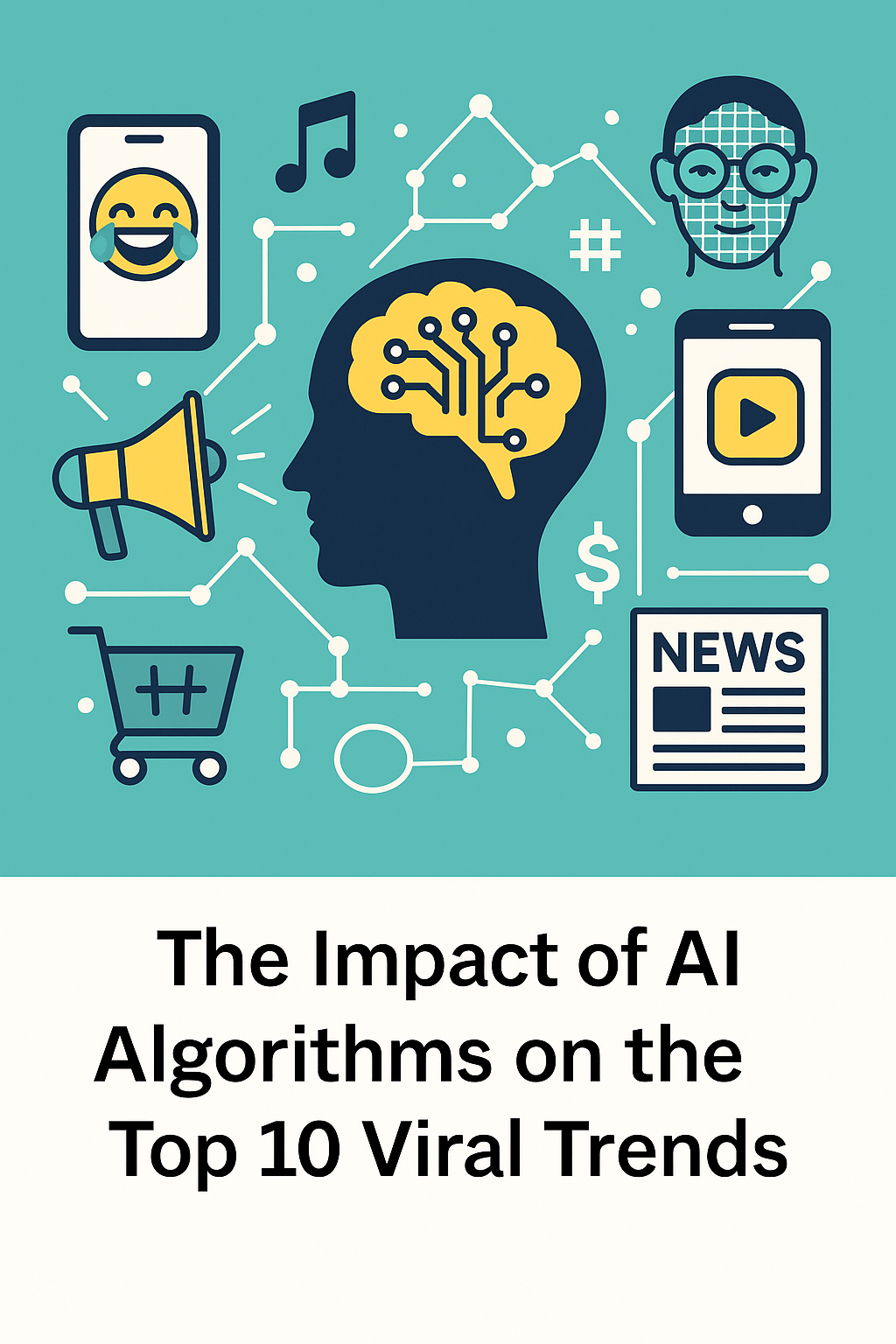
In the digital age, trends can go viral and spread around the world in just a few hours or even minutes. Artificial intelligence, or AI, is often what makes information spread so quickly. AI algorithms decide what we do, see, and post on social media. For example, TikTok uses algorithms to suggest videos that are unique to each user, and Instagram Reels uses algorithms to make music videos more popular. This article talks about the ten most popular viral movements from the last few years and how AI algorithms have helped them grow, stay popular, and have an impact on culture, business, and individual creators.
1. Let’s look at the trend of short video challenges: A lot of people like to dance the “Renegade.”
What AI Can Do:
- Recommendation Engines: TikTok and other sites use machine learning (ML) to keep track of how people interact with content, like how long they watch it and how many likes and shares it gets. Then, they show people who are most likely to take part in or share challenges that are popular right now.
- Auto-Tagging and Hashtag Suggestions: Computer vision models can automatically figure out what dance moves are and give you hashtags that go with them. People can find them more easily this way.
Cultural Impact: These AI-powered cycles spread small trends across platforms, turning them into big ones.
2. The Evolution and Spread of Memes
Trend Overview: Internet memes, like Drake’s “Hotline Bling” template and the “Distracted Boyfriend,” change and spread very quickly.
What AI Does:
- Natural Language Processing (NLP): AI uses text overlays and image context to find new meme variations in personalized feeds.
- Moderation filters get rid of bad content, and promotion algorithms show memes that people like and share a lot.
Cultural Impact: AI speeds up memetic mutation, which means that people all over the world can use templates to make new versions.
3. A look at how deepfake and AI-generated content are changing
AI-generated content is becoming more common, such as fake influencers like Lil Miquela and celebrities who switch faces.
What AI Does:
- Generative Adversarial Networks (GANs) can make pictures and videos that look real all by themselves.
- Platforms use AI to find deepfakes, but the race is still on.
Cultural Impact: Deepfakes let people tell interesting stories, but they also make people less trustworthy. This has made the government talk about digital authenticity.
4. Music clips and audio trends made just for you
A quick look at the trend: People liked the 15-second audio clips of “Savage Love” by TikTok and “Drivers License” by Olivia Rodrigo.
What AI Can Do:
- Content Filtering: ML models sort audio into groups based on mood, genre, and tempo. They then find people who are likely to like the songs.
- Predictive Analytics: Labels use AI to guess which songs will be popular and send them to influencers before they come out.
Cultural Impact: AI not only finds songs, but it also changes how music is made by coming up with hook-driven styles that work well with algorithmic loops.
5. Filters and lenses for augmented reality (AR)
A Look at the Trend: AR effects make it more fun to do the “Big Mouth” challenge on Instagram and the dog ears on Snapchat.
What AI Does:
- Face Tracking and Computer Vision: Real-time landmark identification lets overlays change as people walk by.
- Trend Prediction Models: Platforms use how often filters are used and how active users are to suggest new effects.
Cultural Impact: AR filters make campaigns that use user-generated content (UGC) better by getting people to think outside the box and making it easier to make effects.
6. Using hashtags to support social movements and activism
#BlackLivesMatter and #MeToo are two movements that started on social media and spread to other parts of the world.
What AI Does
- AI keeps track of how people’s moods change so that people who are in charge can change how they talk to them.
- Network Analysis: Graph algorithms help hashtags move faster by finding key people and groups.
Cultural Impact: Some stories might seem less or more important than they are because of algorithmic biases, which makes people question whether that’s fair.
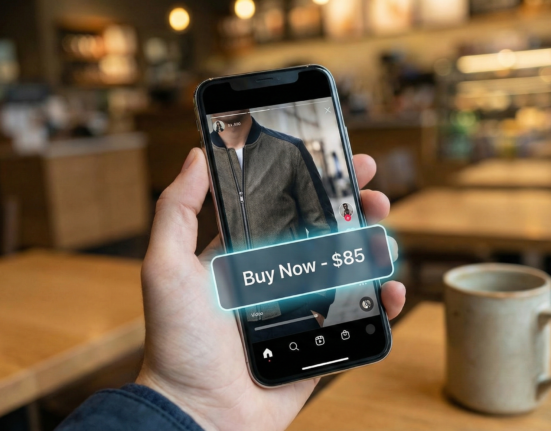
7. A Look at the Trends in Live Shopping and Commerce
Influencers selling live videos, which started on China’s Taobao Live, are becoming more popular around the world.
What AI Does:
- AI-powered real-time recommendation widgets show people things based on who is looking at them and how often they use them.
- Dynamic Pricing Models: Algorithms modify the prices of sales in real time to get the most customers to buy.
Cultural Impact: AI makes things more interactive and faster, so it’s hard to tell the difference between having fun and spending money.
8. What kind of technology lets you talk to it and use your voice?
A Look at the Trend: Voice challenges on TikTok include “Say That Again,” podcast clips, and AI chat role-plays.
What AI does:
- NLP pipelines can change speech into text and text into speech. This makes it possible for things like TTS (text-to-speech) and captions to happen.
- People are talking to each other differently now that they have AI-powered chatbots as friends.
Cultural Impact: Voice trends make it easier to get to things and inspire new ways to tell stories, but they also make it easier for people to abuse them (like impersonation), so strong protections are needed.
9. Participatory art and social graffiti based on data
In short, “Wind Map” and Lyft’s “Your Ride, Your Art” are two digital art projects that show how people can work together.
What AI Does:
- AI makes soundscapes and mosaics that change all the time by using short sound clips and drawings from users.
- Generative Visualizations: Procedural models turn data into shapes that are nice to look at.
Cultural Effect: AI changes personal contributions into group stories, which shows how strong participatory culture can be.
10. The rise of “fake news” and news cycles
A look at the patterns: Is it true or not? Stories that move quickly might stay at the top of timelines for days at a time.
What AI Does:
- Automated Fact-Checking: NLP systems check facts by looking at knowledge graphs to see if they are true. They put a mark on any that they think might be wrong.
- Ranking by engagement: Content that makes people feel something often stays visible even after being fact-checked, which creates echo chambers.
Cultural Impact: AI’s two jobs of spreading and fighting false information show how important it is to make algorithms that are easy to understand.
In short, AI algorithms are what make things go viral these days. They speed up trends in everything from dance challenges to interactive art by making things more relevant, guessing how people will react, and automating the process of making things. But you need to be careful with this power. Platforms need to be fair, easy to use, and able to handle abuse. We can get the most out of AI and avoid its problems if we know how it works as creators, marketers, and consumers.
Things that many people want to know
How do AI algorithms choose which videos to show?
AI algorithms try to guess how interested viewers will be by looking at how they act (like how long they watch and how they interact) andFFA the video’s-boundaries (like patterns in the audio and video). After that, they change the feed for each user in real time.
Can content made by AI become popular on its own?
Recommendation systems do push this kind of content, just like they do with posts that are about popular topics and things that users like.
What is being done to stop AI from telling lies?
Platforms have both human moderators and AI-powered fact-checkers, but false news spreads quickly because people get emotionally involved. It’s very important to know how to use technology and be honest about how algorithms work.
Will AI algorithms take the place of human creativity in viral marketing?
AI helps people be more creative by finding new patterns and coming up with new ideas. However, true human understanding is still very important for cultural resonance.
How can businesses use AI to create campaigns that will reach a lot of people?
By using platforms that give AI analytics, making content that works well with algorithms (like short hooks and clear images), and finding micro-influencers whose followers match predictive models.
References
- “How TikTok Recommends Videos #ForYou,” TikTok Newsroom, TikTok, March 2024. https://newsroom.tiktok.com/en-us/how-tiktok-recommends-videos-for-you
- Zhang, S. et al., “Automatic Hashtag Recommendation for Short Videos,” Proceedings of the Web Conference, 2023. https://doi.org/10.1145/3485447.3512205
- Clark, J. & Jones, M., “NLP in Meme Detection,” Journal of Computational Culture, vol. 12, no. 1, 2025. https://computationalculture.org/nlp-memes
- Roberts, A., “Algorithmic Moderation of Memetic Content,” ACM Transactions on Social Computing, 2024. https://dl.acm.org/doi/10.1145/3381002