The rapid advancement of artificial intelligence has shifted the professional landscape from a focus on computational efficiency to a premium on human-centric capabilities. As algorithms become increasingly proficient at processing data, generating code, and creating content, the unique value of human contribution is being redefined. In this new paradigm, human skills in the AI era—specifically creativity, critical thinking, and empathy—are no longer just “nice-to-haves” or “soft skills.” They are the essential currency of the future economy.
This guide explores why these distinctively human traits are becoming more valuable as automation scales, and provides actionable frameworks for cultivating them to future-proof your career.
Key Takeaways
- The “AI Paradox”: As AI handles technical and routine cognitive tasks, the economic value of social and emotional skills rises.
- Creativity is Intentional: While AI can generate infinite variations, only humans can provide the original intent, context, and cultural meaning behind an idea.
- Critical Thinking as a Firewall: Humans are necessary to discern truth from hallucination, verify sources, and make ethical judgments that algorithms cannot.
- Empathy Cannot be Automating: Genuine connection, trust-building, and emotional nuance remain the exclusive domain of biological intelligence.
- The Centaur Approach: The most successful professionals will not compete against AI but will combine their human skills with AI tools to achieve superior results.
Who This Is For (And Who It Isn’t)
This guide is designed for knowledge workers, students, team leaders, and educators who are concerned about the impact of automation on their careers and wish to strategically upskill. It is ideal for those seeking to understand where human labor will retain value over the next decade.
This article is not a technical tutorial on how to program AI models, nor is it a Luddite manifesto arguing against the use of technology. It assumes AI is a permanent fixture in the workplace and focuses on adaptation rather than resistance.
The Shift from Knowledge Economy to Human Economy
For the past few decades, we have lived in the “Knowledge Economy,” where value was largely derived from the accumulation and application of technical information. If you knew how to code, calculate complex finances, or memorize legal precedents, your career was secure. However, as of January 2026, Generative AI models have commoditized much of this retrieval and processing work.
We are now transitioning into what many experts call the “Human Economy” or the “Relationship Economy.” In this environment, access to knowledge is universal and instant. The differentiator is no longer what you know, but how you synthesize that knowledge, how you relate to others, and how you solve novel problems where data is incomplete or ambiguous.
Moravec’s Paradox
To understand why human skills in the AI era are so vital, we must look at a concept known as Moravec’s Paradox. Formulated in the 1980s by AI researchers, it observes that:
“It is comparatively easy to make computers exhibit adult level performance on intelligence tests or playing checkers, and difficult or impossible to give them the skills of a one-year-old when it comes to perception and mobility.”
While the paradox originally applied to physical robotics, a similar dynamic applies to cognitive work. It is surprisingly easy for AI to pass the Bar Exam or debug software (high-level reasoning). It remains incredibly difficult for AI to navigate a sensitive negotiation between two feuding department heads or to understand the unspoken cultural subtext of a marketing campaign (social/emotional reasoning).
This paradox creates a safety zone for human workers. The messy, unstructured, and emotional aspects of work are where humans still reign supreme.
Creativity: Beyond Pattern Recognition
When we discuss creativity in the context of AI, it is crucial to distinguish between generative output and imaginative intent. AI models are prediction engines; they are trained on vast datasets of human history and creativity. When an AI generates a poem or a logo, it is essentially predicting the next likely pixel or token based on patterns it has seen before.
Human creativity operates differently. It involves intentionality—the desire to express a specific internal state or solve a specific external problem in a way that resonates with other humans.
Combinatorial vs. Transformational Creativity
- Combinatorial Creativity: This involves mashing up existing ideas—for example, “a cat in the style of Van Gogh.” AI excels at this. It can generate thousands of combinations in seconds.
- Transformational Creativity: This involves breaking the rules of the system itself to create something fundamentally new. It requires understanding the “why” behind the rules and consciously deciding to subvert them to make a point. This is where human skills in the AI era remain unmatched.
The Role of Taste and Curation
As AI lowers the barrier to creation, the value of curation skyrockets. In a world flooded with AI-generated content, human taste becomes a critical filter. A human must decide which of the 50 AI-generated headlines actually fits the brand voice, or which architectural concept actually serves the community’s needs.
In Practice: Consider a graphic designer. Before AI, they might spend 80% of their time on the technical execution of placing pixels. Now, AI can handle the rendering. The designer’s role shifts to 80% concept development, strategy, and curation. The skill is no longer just “using Photoshop”; the skill is “visual storytelling and brand strategy.”
Cultivating Creativity in an Automated World
To sharpen this skill:
- Engage in Divergent Thinking: Practice generating multiple disparate solutions to a single problem without judgment before converging on a solution.
- Cross-Pollinate Interests: AI is trained on specific datasets. You can create unique connections by learning about unrelated fields (e.g., applying biology concepts to business management).
- Focus on the “Why”: Always ask why a piece of art or a solution works. AI can replicate the what, but understanding the why allows you to innovate.
Critical Thinking: The Human Firewall
In an age of information abundance, critical thinking acts as the firewall against misinformation, bias, and mediocrity. Large Language Models (LLMs) are prone to “hallucinations”—confidently stating facts that are entirely invented. They also inherit the biases present in their training data.
Critical thinking involves objectively analyzing and evaluating an issue in order to form a judgment. It requires skepticism, logic, and the ability to detect nuance.
Judgment Under Uncertainty
AI thrives when data is structured and historical patterns are relevant. It struggles when data is scarce, noisy, or when the future is likely to look nothing like the past (e.g., a “Black Swan” event).
Human leaders must make high-stakes decisions based on incomplete information. This requires:
- Contextual Awareness: Understanding political landscapes, personal histories, and unspoken power dynamics.
- Risk Assessment: Weighing the ethical and reputational costs of a decision, not just the statistical probability of success.
Evaluating Sources and “Truth”
As of 2026, the internet is saturated with synthetic media. A core component of human skills in the AI era is media literacy.
- Source Verification: Tracing claims back to primary evidence rather than accepting summaries.
- Detecting Bias: Recognizing when an AI summary might be sanitizing a controversial topic or favoring a dominant cultural narrative.
- Logical Consistency: Checking if the conclusion actually follows from the premises, a task where deep reasoning models still occasionally stumble.
In Practice: A financial analyst uses AI to process quarterly earnings reports. The AI highlights a trend of declining revenue. A purely algorithmic approach might suggest selling the stock. However, the human analyst uses critical thinking to recognize that the revenue drop is due to a strategic pivot that will yield long-term gains, a nuance the AI missed because it was focused on short-term numeric patterns.
Empathy: The Irreplaceable Connection
Empathy is perhaps the most insulated skill from automation. While “Affective Computing” (AI that recognizes and simulates human emotion) is advancing, there is a profound difference between simulating care and actually caring.
The Biology of Trust
Human relationships are built on shared vulnerability and biological resonance. We trust a doctor not just because they have the correct diagnosis, but because we feel they care about our survival. We follow a leader not just because their strategy is sound, but because we feel they understand our struggles.
AI can say “I understand how you feel,” but a human knows that the AI cannot feel. It has no body, no mortality, and no stakes. Therefore, deep trust cannot be formed with an algorithm in the same way it is formed with a human.
Emotional Intelligence (EQ) in Leadership
In a hybrid workforce, the role of a manager shifts from “task overseer” to “coach and connector.”
- Conflict Resolution: AI can suggest compromises, but it cannot navigate the ego, history, and emotional wounds involved in a workplace dispute.
- Motivation: Inspiring a team requires understanding what drives each individual—fear, ambition, recognition, or security.
- Psychological Safety: Creating an environment where people feel safe to fail and innovate is a purely human endeavor dependent on empathetic leadership.
The Care Economy
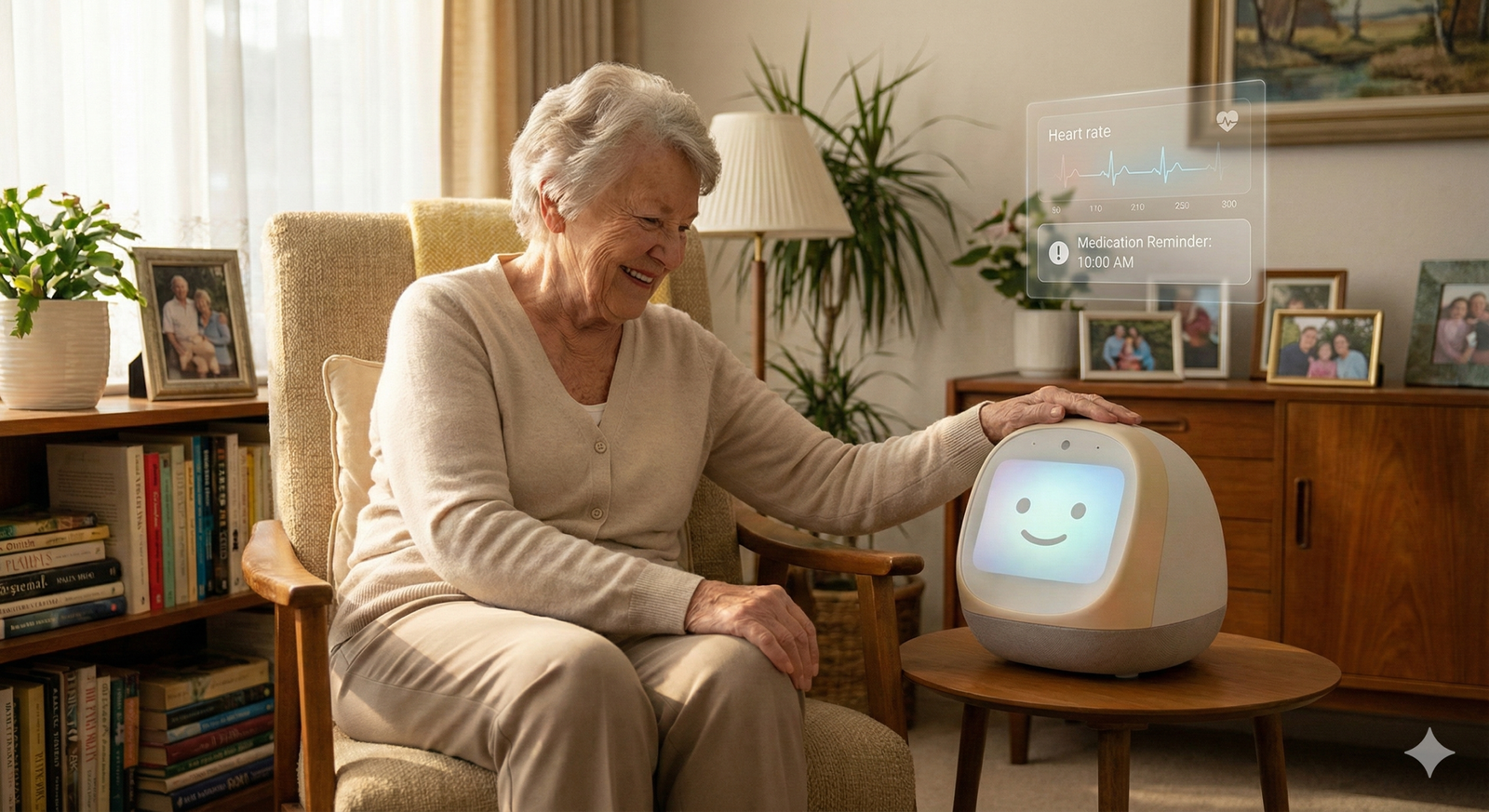
Sectors like healthcare, therapy, coaching, and elder care rely heavily on the human touch. While robots can lift patients or deliver medication, the act of comforting a frightened patient or listening to a grieving family member creates value that is fundamentally human.
In Practice: In customer service, AI chatbots handle 90% of routine queries (returns, balance checks). This leaves the human agents to handle the top 10% of cases—the ones involving angry, confused, or distressed customers. The human agent’s primary skill here is not technical knowledge of the database, but de-escalation and empathy. They must validate the customer’s frustration to restore brand loyalty.
The New “Meta-Skill”: Adaptability and Cognitive Flexibility
Binding creativity, critical thinking, and empathy together is the meta-skill of adaptability. The half-life of a learned technical skill is shrinking. What you learn today about a specific software package may be obsolete in 18 months.
Cognitive Flexibility
This refers to the mental ability to switch between thinking about two different concepts, and to think about multiple concepts simultaneously. In the AI era, this manifests as:
- Unlearning: The ability to discard outdated methods without ego.
- Resilience: Maintaining mental stability and focus despite rapid changes in workflow and tools.
- Interdisciplinary Synthesis: Connecting dots between technology, liberal arts, and business.
Learning to Learn
The most valuable workers are those who can rapidly digest new information and apply it. This involves:
- Curiosity: Actively seeking out new tools and methodologies.
- Experimentation: Being willing to be a beginner again and again.
- Knowledge Management: Building personal systems to organize and retrieve insights (often assisted by AI).
Human-AI Collaboration: The Centaur Model
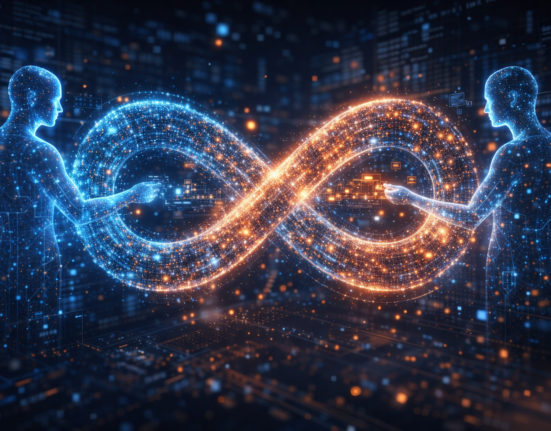
The narrative of “AI vs. Humans” is a false dichotomy. The most effective future is “AI + Human,” often referred to as the “Centaur” model (half human, half horse/machine). In chess, “Centaur” teams (human players assisted by AI) have historically beaten both solo humans and solo supercomputers.
Moving Up the Value Chain
AI allows humans to offload the “drudgery” of cognitive labor—the scheduling, the transcribing, the basic coding, the first draft writing. This frees up energy for “Deep Work,” a concept popularized by Cal Newport.
Deep Work in the AI Era includes:
- Strategy: Deciding what problems are worth solving.
- Ethics: Deciding if a problem should be solved.
- People Management: Aligning teams toward the solution.
Prompt Engineering as Communication
Communicating with AI (prompt engineering) is, ironically, a test of human communication skills. To get a good result from an AI, you must be:
- Precise: Clearly articulating intent.
- Context-aware: Providing necessary background.
- Iterative: Using critical thinking to refine the output. Thus, technical literacy and language literacy are merging.
Common Mistakes: Over-Relying on Tech
As we embrace AI, there are pitfalls that can erode human skills if we are not careful.
1. The Atrophy of Basic Skills
If we use GPS for everything, we lose our sense of direction. Similarly, if we use AI to write every email or solve every math problem, our fundamental cognitive muscles may atrophy. It is important to continue practicing “unassisted” thinking to keep the mind sharp.
2. The Echo Chamber Effect
AI algorithms are designed to maximize engagement, often by feeding us what we already believe. This degrades critical thinking. We must actively seek out opposing viewpoints and uncomfortable data to counter this.
3. “Automating” Relationships
Using AI to write personal notes, condolences, or performance reviews is a dangerous shortcut. It saves time but destroys the authenticity that gives the relationship value. People can tell when a message is generic.
Practical Framework for Upskilling
How do you practically develop these human skills in the AI era? Here is a step-by-step approach to auditing and improving your skillset.
Step 1: The Skills Audit
Create a two-column list of your daily tasks.
- Column A ( susceptible to automation): Repetitive, data-heavy, predictable, rules-based. (e.g., Data entry, basic translation, scheduling).
- Column B (Human-centric): ambiguous, emotional, creative, strategic. (e.g., Client negotiation, brainstorming, mentoring).
Goal: Shift your schedule so that 70% of your time is spent on Column B tasks. Use AI to automate Column A.
Step 2: Targeted “Soft Skills” Training
Unlike technical skills, soft skills are harder to measure but can be trained.
- For Empathy: Take courses on “Active Listening” or “Non-Violent Communication.” seek feedback from peers on your emotional intelligence.
- For Critical Thinking: Engage in debate clubs, read philosophy, or take courses on logic and fallacies.
- For Creativity: adopt a hobby that is purely analog (painting, woodworking, writing fiction) to reconnect with the physical process of creation.
Step 3: The “Sandwich” Workflow
Adopt a workflow where the human is the bun and AI is the meat.
- Human (Top Bun): Define the strategy, the prompt, and the goal.
- AI (Meat): Generate the draft, the code, or the data analysis.
- Human (Bottom Bun): Edit, refine, fact-check, and apply the final “voice” or ethical check.
Related Topics to Explore
To further deepen your understanding of the changing landscape, consider exploring these related concepts:
- Digital Minimalism: Strategies for maintaining focus in a distracted world.
- Algorithmic Bias and Ethics: Understanding how AI can perpetuate social inequalities.
- The Gig Economy Evolution: How platforms are changing freelance work alongside AI.
- Neuroplasticity: The science of how the adult brain can continue to learn and change.
- Organizational Psychology: How team dynamics shift in remote and hybrid environments.
Conclusion
The rise of AI does not signal the obsolescence of humanity; rather, it signals a purification of the human contribution. By automating the routine, the robotic, and the predictable, AI forces us to become more human.
The winners in this new era will not be those who can compute faster than a machine—that is a losing battle. The winners will be those who can dream (creativity), discern (critical thinking), and connect (empathy). These human skills in the AI era are your competitive advantage. They are the un-automatable core of your professional identity.
Next Steps: Review your calendar for next week. Identify three meetings or tasks where you can consciously practice “transformational creativity” or “deep empathy,” and identify three routine tasks you can delegate to an AI tool to buy yourself the time to do so.
FAQs
1. Will AI replace the need for human creativity?
No, AI changes the nature of creativity but does not replace it. AI acts as a powerful tool for generation and iteration, but it lacks the intentionality, life experience, and emotional depth that drive true human innovation. Humans provide the “spark” and the curation; AI provides the volume.
2. What are the top 3 human skills needed in the AI era?
The three most critical skills are Creativity (originating new ideas), Critical Thinking (evaluating information and making complex judgments), and Empathy (connecting with others and managing relationships). These are the areas where AI currently struggles the most.
3. Can critical thinking be taught?
Yes, critical thinking is a disciplined process of conceptualizing, applying, analyzing, and evaluating information. It can be improved through education, practice in logic and debate, and by actively questioning assumptions and verifying sources in daily life.
4. How does empathy protect my job from automation?
Jobs that require high degrees of empathy—such as nursing, therapy, teaching, and complex management—rely on building trust and understanding human nuance. AI cannot genuinely “care” or read subtle emotional cues, making these roles highly resistant to full automation.
5. What is the “Centaur” model of work?
The Centaur model refers to a hybrid workflow where a human works in tandem with an AI. The human provides the strategic direction and ethical oversight, while the AI handles data processing and generation. This combination often outperforms either humans or AI working alone.
6. Is prompt engineering a technical skill or a human skill?
It is a blend of both. While it involves understanding how the model works (technical), effective prompting relies heavily on language, logic, clear communication, and an understanding of context—which are fundamentally human soft skills.
7. Why is adaptability considered a meta-skill?
Adaptability is the ability to learn and unlearn rapidly. Because AI accelerates the pace of technological change, specific technical skills become obsolete quickly. The ability to adapt ensures you can navigate these changes without becoming obsolete yourself.
8. How can I assess my current soft skills?
You can use 360-degree feedback tools where colleagues rate you, take validated Emotional Intelligence (EQ) assessments, or work with a career coach. Self-reflection and journaling about how you handled recent conflicts or complex problems also provide insight.
9. What is Moravec’s Paradox?
Moravec’s Paradox is the observation that high-level reasoning (like playing chess or calculating math) requires little computation for computers, while low-level sensorimotor and social skills (like walking or having a conversation) require enormous computational resources. This explains why “human” skills are harder to automate.
10. Are technical skills still important?
Yes, but their role is changing. You may not need to write boilerplate code manually, but you need to understand the logic of coding to supervise the AI. “Tech literacy”—understanding what tools can do and how to govern them—is essential, even if manual execution decreases.
References
- World Economic Forum. (2023). The Future of Jobs Report 2023. World Economic Forum. https://www.weforum.org/publications/the-future-of-jobs-report-2023/
- Harvard Business Review. (2023). Reskilling in the Age of AI. Harvard Business Publishing. https://hbr.org/2023/09/reskilling-in-the-age-of-ai
- McKinsey & Company. (2023). The economic potential of generative AI: The next productivity frontier. McKinsey Global Institute. https://www.mckinsey.com/capabilities/mckinsey-digital/our-insights/the-economic-potential-of-generative-ai-the-next-productivity-frontier
- Newport, C. (2016). Deep Work: Rules for Focused Success in a Distracted World. Grand Central Publishing.
- Autor, D. H. (2015). Why Are There Still So Many Jobs? The History and Future of Workplace Automation. Journal of Economic Perspectives. https://www.aeaweb.org/articles?id=10.1257/jep.29.3.3
- IBM Institute for Business Value. (2023). Augmented work for an automated, AI-driven world. IBM. https://www.ibm.com/thought-leadership/institute-business-value/en-us/report/augmented-workforce
- OECD. (2023). OECD Employment Outlook 2023: Artificial Intelligence and the Labour Market. OECD Publishing. https://www.oecd.org/employment-outlook/2023/
- UNESCO. (2024). Artificial Intelligence and Education: Guidance for Policy-makers. UNESCO. https://www.unesco.org/en/digital-education/ai-technology